
Market Insights
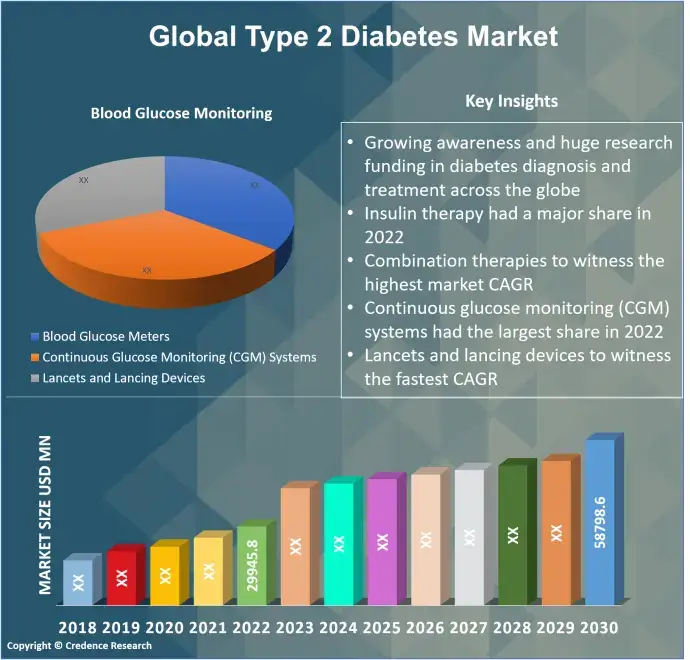
- The global demand for type 2 diabetes was valued at USD 29945.8 Million in 2022 and is expected to reach USD 58798.6 Million in 2030, growing at a CAGR of 8.8% between 2023 and 2030.
- The insulin therapy segment is the market leader in medications and therapies, accounting for more than 20% of total value in 2022, while the combination therapies segment is anticipated to grow rapidly over the projection period.
- The diabetic nephropathy management category is expected to expand quickly in the forecast period, while the diabetic neuropathy segment has the greatest market share in 2022.
- Continuous glucose monitoring (CGM) systems dominate the global need for type 2 diabetes, accounting for more than 40% in 2022 and are predicted to expand at a high CAGR.
- The hospital's category dominated the market with 30% of the total revenue share by end users. In contrast, the clinics and specialty centers segment will expand fastest over the projected time frame.
- The adult category dominated the market with 60% of the total revenue share by age group segment.
- North America is propelling the growth of the type 2 diabetes industry, accounting for more than one-third of the market in 2022, while Asia Pacific and Europe account for just under 54% of the market in 2022. In 2022, Europe held more than 20% of the market.
- Type 2 diabetes continues to be a global health concern, with a growing prevalence linked to factors like unhealthy diets, sedentary lifestyles, and obesity.
- The market has witnessed ongoing R&D of innovative medications, including GLP-1 receptor agonists and SGLT-2 inhibitors, which offer new treatment options beyond traditional oral medications and insulin.
- Emerging lifestyle interventions, including weight management programs and exercise regimes, have gained global prominence as complementary approaches to managing type 2 diabetes.
Executive Summary
Market Definition
The type 2 diabetes market encompasses the entire ecosystem dedicated to addressing the prevention, diagnosis, treatment, and management of type 2 diabetes mellitus. Pharmaceutical firms, producers of medical devices, healthcare organisations, insurers, researchers, and governmental organisations all collaborate to provide a wide range of goods and services aimed at assisting people with type 2 diabetes in controlling their blood sugar levels, minimising complications, and improving their general well-being. It includes pharmaceuticals, insulin delivery devices, digital health solutions, lifestyle interventions, patient education programs, and regulatory frameworks, all aimed at improving patient outcomes, reducing healthcare costs, and managing the chronic nature of type 2 diabetes.
Market Overview
The global type 2 diabetes market has witnessed rapid growth in recent years and is expected to grow at a CAGR of 8.8% between 2023 and 2030. The market was valued at USD 29945.8 million in 2022 and is expected to reach USD 58798.6 million in 2030.
Diabetes drugs are medications used to treat type 1 & type 2 diabetes by reducing the body's blood glucose level. Diabetes is treated with various groups of drugs that are delivered orally, intravenously, and subcutaneously. The increased prevalence of diabetes, particularly type-2 diabetes, and a growing need for effective diabetic drug therapy are some of the factors expected to contribute to the diabetes medications market growth throughout the forecast duration.
Type 2 diabetes is a prevalent metabolic illness that is closely linked to obesity and metabolic problems. According to the National Centre for Biotechnology Information, there were 89 million cases of type 2 diabetes in 2014, with 380 million cases expected by 2024. As a result, the rising global prevalence of diabetes is propelling the type 2 diabetes market forward.
Governments all over the world are working continuously to develop the type 2 diabetes sector. Government agencies are cooperating with leading industry players to offer new products in the global type 2 diabetes market. Market players are not only releasing novel pharmaceuticals and therapies but also technologies and instruments for the treatment and diagnosis of type 2 diabetes. In addition, governments in developing countries provide tax benefits, such as tax incentives and subsidies, to the companies that make treatments and medications for type 2 diabetes.
Segmentation by Medications and Therapies
- The combination therapies segment will exhibit the highest CAGR in the projected period. The increasing trend of combining multiple medications for more effective glycemic control is driving this segment's growth.
- Insulin therapy currently dominates the market share, accounting for over 20% in 2022. This segment's leadership is attributed to its established role in diabetes management, especially for patients with advanced disease stages or insulin resistance.
Segmentation by Blood Glucose Monitoring
- The lancets and lancing devices segment is expected to witness the highest CAGR in the forecasted period. This growth is fueled by the emphasis on painless and minimally invasive blood glucose monitoring techniques.
- Continuous glucose monitoring (CGM) systems hold the majority of the market share, commanding over 40% in 2022. The demand for real-time, continuous monitoring to improve glycemic control is driving the dominance of this segment.
Segmentation by End User
- Hospitals dominate the end-user category, accounting for more than 30% of the global demand for type 2 diabetes management in 2022. Their pivotal role in managing acute diabetes-related complications and providing specialized care contributes to this strong market presence.
- Clinics and specialty centers fulfill the remaining need for type 2 diabetes management. These facilities play a key role in routine diabetes care, patient education, and long-term management.
Segmentation by Complications Management
- Diabetic neuropathy emerges as the leading category in type 2 diabetes applications, capturing a substantial 34% share in 2022. The high prevalence of neuropathic symptoms and the need for effective pain management drive the prominence of this segment.
- The diabetic nephropathy and retinopathy segments are expected to experience rapid growth over the coming years, reflecting the increasing focus on preventing and managing kidney and eye complications associated with type 2 diabetes.
Segmentation by Age Group
- The pediatric segment is projected to exhibit the highest CAGR in the projection period, underscoring the growing concern about early-onset diabetes in children and adolescents.
- The adult segment currently leads the market share, accounting for over 60% in 2022. The majority of type 2 diabetes cases occur in adults, particularly in middle-aged and older populations.
Segmentation by Region
- North America stands as a highly profitable region for industry players in the type 2 diabetes market, with a dominant share of over one-third in 2022. This market's strength is attributed to advanced healthcare infrastructure, higher disease prevalence, and robust R&D activities.
- Asia Pacific and Europe collectively represent just under 54% of the market share in 2022. Europe, with a share of over 20% in the same year, demonstrates a strong market presence owing to a well-established healthcare system.
- The rest of the world, including Latin America, the Middle East, and Africa, contributes to the remaining demand for type 2 diabetes management, with untapped potential for growth. Emerging economies in these regions are witnessing an increase in diabetes cases due to changing lifestyles and are thus becoming essential markets for future expansion.
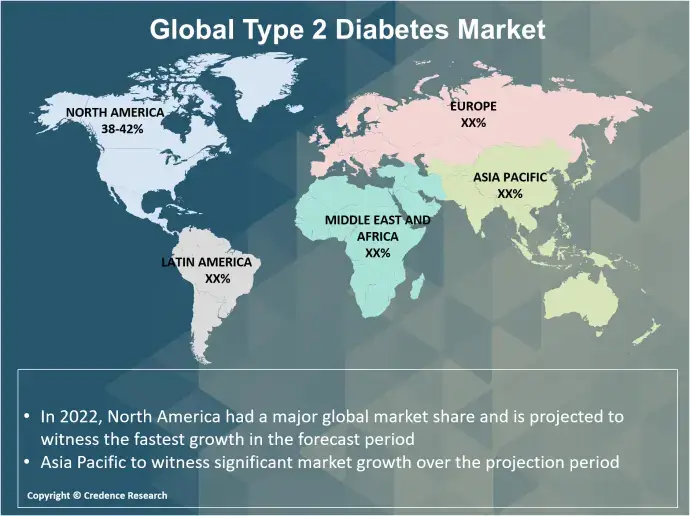
North America led the type 2 diabetes market in 2022, accounting for 35% of global revenue. North America, particularly the United States, has one of the greatest prevalence rates of type 2 diabetes globally. Around 37 million Americans have diabetes, with type 2 diabetes accounting for 90–95% of cases, according to the Centres for Disease Control & Prevention. Type 2 diabetes mainly impacts people over the age of 45, while it is increasingly impacting teenagers, adolescents, and young adults. This high disease burden has driven the demand for diabetes-related products and services, making it a leading global market. North America also has a high level of healthcare spending, with a substantial portion allocated to diabetes management. This investment in healthcare has driven the market's growth and innovation.
Over the projection period, Asia Pacific is expected to be the fastest-growing region in the global type 2 diabetes market due to several key factors. This region is home to a substantial percentage of the world's population, with countries like China and India having the largest populations. As a result, even a moderate increase in the prevalence of type 2 diabetes translates into a substantial patient base and market potential. Rapid urbanization in the region has led to lifestyle changes, including decreased physical activity and the adoption of Western diets, contributing to the rise in type 2 diabetes cases. Many countries in the Asia Pacific are also experiencing robust economic growth, which is improving access to healthcare services and increasing disposable income. This, in turn, is driving demand for advanced diabetes management solutions.
Key Highlights of the Report
The global type 2 diabetes market is segmented by medications and therapies, blood glucose monitoring, end user, complications management, age group, and region. Combination therapies are emerging as a high-growth segment, driven by their effectiveness in glycemic control and improved patient outcomes. The trend towards combining multiple medications continues to gain momentum. CGM systems dominate the blood glucose monitoring segment, providing real-time data for better glycemic control. The demand for continuous and convenient monitoring solutions remains robust. Hospitals play a leading role in type 2 diabetes management, addressing acute complications and providing specialized care. Their role is expected to continue growing at a high rate. The pediatric segment is projected to exhibit significant growth, highlighting the concern regarding early-onset diabetes in children and adolescents.
The global type 2 diabetes market is mainly driven by the persistent increase in diabetes prevalence due to lifestyle factors, rising awareness, and the imperative need for effective prevention and management solutions. Ongoing pharmaceutical & technological innovations, particularly in combination therapies, insulin delivery systems, and digital health technologies, are propelling market growth. Additionally, the aging global population, government initiatives to combat diabetes, and the expansion of healthcare infrastructure contribute significantly to the market's development. However, the market faces challenges such as high healthcare costs, disparities in access to care, the burden of comorbid conditions, regulatory complexities, and the demand for more personalized treatment approaches, making it a complex landscape to navigate.
North America stands as the dominant regional market in the global type 2 diabetes landscape, commanding a significant share of market revenue. The region benefits from well-established healthcare infrastructure, a high prevalence of type 2 diabetes, and robust R&D activities. Supportive government initiatives and substantial investments in diabetes management further drive regional market growth. Meanwhile, Asia Pacific is positioned to exhibit the highest CAGR over the estimated period. The regional pharmaceutical sector has seen rapid expansion, particularly in India and China, contributing to its growing prominence. Japan, with its substantial senior population, plays a pivotal role in driving product acceptance and innovation in the Asia Pacific region.
What Are The Main Drivers Of The Global Type 2 Diabetes Market?
The main drivers of the global type 2 diabetes market are the continuously rising prevalence of type 2 diabetes due to lifestyle factors like poor diets and sedentary habits, increasing awareness of the condition, and the urgent need for effective prevention and management solutions. Additionally, ongoing research & development efforts, particularly in the areas of innovative medications, advanced insulin delivery systems, and digital health technologies, are driving market growth. Moreover, the aging global population and the associated higher risk of diabetes, as well as government initiatives to address the diabetes epidemic and improve healthcare infrastructure, contribute significantly to the expansion of the type 2 diabetes market.
What Are The Major Challenges Faced By The Global Type 2 Diabetes Market?
The global type 2 diabetes market faces several major challenges, including the escalating healthcare costs associated with diabetes management and complications, especially in aging populations. Besides, there is a need for improved access to diabetes care and medications, particularly in low- and middle-income countries. The market must also address the rising concerns of treatment affordability and disparities in healthcare access. Furthermore, the increasing prevalence of comorbid conditions, such as obesity and cardiovascular disease, complicates diabetes management. Regulatory hurdles, drug pricing pressures, and the demand for more personalized treatment approaches add to the complexity of the market.
What Are The Growth Opportunities In The Global Type 2 Diabetes Market?
The global type 2 diabetes market presents growth opportunities driven by several factors, including the increasing global prevalence of type 2 diabetes, particularly in emerging markets, which offers potential for market expansion. Innovations in pharmaceuticals, insulin delivery systems, and continuous glucose monitoring devices provide opportunities for developing and marketing new, more effective treatments. Furthermore, the adoption of digital health solutions, telemedicine, and data analytics for diabetes management offers avenues for technology-driven growth. Lifestyle interventions, preventive programs, and patient education initiatives represent areas where targeted efforts can lead to reduced incidence and better outcomes, creating room for growth.
Market Drivers
Several factors drive the global type 2 diabetes market. The following are the key drivers of the global type 2 diabetes market:
Rising Diabetes Prevalence
Growing diabetes incidence, sedentary lifestyles, and numerous other chronic conditions, such as hypertension, primarily drive the global type 2 diabetes market growth. The International Diabetes Federation (IDF) estimates that around 537 million adults (20-79 years old) have diabetes, with the number of diabetic patients anticipated to climb to 643 million by 2030 and 783 million by 2045. As more individuals are diagnosed with type 2 diabetes, there is an expanding demand for products and services related to its management and treatment. The increase in prevalence has also led to greater awareness of the disease among both healthcare providers and the general population, prompting earlier diagnosis and intervention.
Diabetes can also be inherited, and it is linked to a patient's family history and genetics. Although not everyone inherits it, persons with a family history are more inclined to get diabetes. Besides, increased public awareness of diabetes self-management supports market expansion. Furthermore, the growth in diabetes-causing parameters like family history, lifestyle choices, food, obesity, and geography propels the market forward. Obesity is a substantial risk factor for diabetes development. According to the World Population Review, 36.2% of the adult population in the United States will be obese by the end of 2023. Diabetes is also caused by environmental factors such as dirty air, water, and soil, a lack of vitamin D, enterovirus exposure, and immune cell destruction.
Market Restraints
The global type 2 diabetes market faces challenges that may hinder its growth. These include the following:
High Healthcare Costs
One of the primary restraints on the global type 2 diabetes market is the higher cost associated with diabetes care and management. This includes the expense of medications, insulin, monitoring devices, regular check-ups, and potential hospitalizations for complications. The financial burden of managing diabetes can be particularly challenging for patients without adequate health insurance or in regions with limited access to affordable healthcare services. Additionally, the cost of newer, more advanced medications and technologies, while offering improved outcomes, can be prohibitive for some patients and healthcare systems. High healthcare costs can result in delayed or inadequate treatment, leading to poorer health outcomes and an increased risk of diabetes-related complications.
Opportunities
The global type 2 diabetes market offers significant growth opportunities. These include the following:
Emerging Digital Health and Telemedicine Solutions
The robust growth of digital health technologies and telemedicine presents a major opportunity in the type 2 diabetes industry. These technologies offer innovative ways to deliver diabetes care, monitor patients remotely, and provide real-time support and education. Digital health solutions include smartphone apps for glucose monitoring, wearable devices for continuous glucose monitoring (CGM), and telemedicine platforms for remote consultations with healthcare providers. These technologies not only improve patient engagement and convenience but also enable healthcare professionals to collect and analyze vast amounts of data for better decision-making. With the increasing adoption of digital health and telemedicine, patients with type 2 diabetes can access care more easily, receive timely interventions, and benefit from ongoing remote monitoring, potentially leading to improved glycemic control and reduced healthcare costs.
Competitive Landscape
Key Players
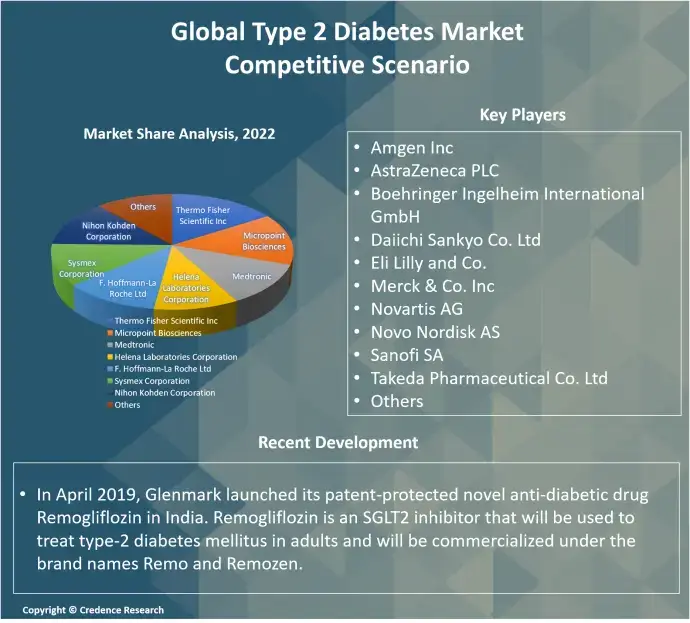
The worldwide type 2 diabetes market is extremely competitive and characterized by the existence of several pharmaceutical firms, medical device makers, and healthcare service providers. The following are some of the top market players and their market shares:
- Amgen Inc
- AstraZeneca PLC
- Boehringer Ingelheim International GmbH
- Daiichi Sankyo Co. Ltd
- Eli Lilly and Co.
- Merck & Co. Inc
- Novartis AG
- Novo Nordisk AS
- Sanofi SA
- Takeda Pharmaceutical Co. Ltd
- Others
These market players focus on developing and marketing a wide range of diabetes medications, insulin delivery systems, and digital health solutions to gain a competitive edge. Besides, partnerships and collaborations between pharmaceutical firms, technology companies, and healthcare providers are becoming increasingly common, aiming to offer integrated solutions that encompass medication, monitoring, and patient support.
The competitive landscape is also influenced by regulatory dynamics, pricing pressures, and evolving healthcare policies, which shape the strategies and market positioning of key industry players. Moreover, the emergence of biosimilars and generic medications is contributing to competitive pricing and expanding access to diabetes treatments, further impacting market dynamics.
In January 2022, Novo Nordisk India developed an oral formulation of an anti-diabetic medicine that was previously only available as injections, claiming that the new drug can help adults with type 2 diabetes better regulate their insulin levels and weight.
In September 2019, Rybelsus (semaglutide) oral tablets were given authorization by the FDA (Food & Drug Administration) to help adult patients with type 2 diabetes better regulate their blood sugar levels in conjunction with diet and exercise. Rybelsus is the first non-injected glucagon-like peptide (GLP-1) receptor protein therapy licensed in the United States.
In May 2019, AstraZeneca gained FDA approval for the utilization of Qternmet as an oral adjunct drug to diet and exercise to enhance glycemic control in individuals with type 2 diabetes.
Summary of Key Findings
- The prevalence of type 2 diabetes is expected to continue increasing globally, driven by factors such as unhealthy lifestyles and an aging population.
- Market segmented by medications and therapies, blood glucose monitoring, end user, complications management, age group, and region.
- Combination therapies are expected to exhibit strong growth, reflecting the trend toward using multiple medications for effective glycemic control.
- Continuous glucose monitoring (CGM) systems dominate the market, offering real-time data for better glycemic control. The market also sees increasing interest in less invasive blood glucose monitoring techniques using lancets and lancing devices.
- Hospital end-users play a major role in diabetes management, particularly in handling acute complications and providing specialized care.
- Diabetic neuropathy is the leading complications management category, reflecting the high prevalence of neuropathic symptoms.
- The adult segment continues to dominate due to the majority of type 2 diabetes cases occurring in this age group.
- Healthcare systems globally face challenges related to the rising costs of diabetes management, including medications and monitoring devices.
Future Outlook
- Continuous glucose monitoring (CGM) systems and insulin delivery devices have seen significant technological advancements, enhancing the management of diabetes.
- Various governments are launching public health campaigns and policies aimed at preventing and managing diabetes, including sugar taxation and education programs.
- There is an increasing recognition of the association between type 2 diabetes and other health conditions, such as cardiovascular diseases, leading to a more comprehensive approach to diabetes care.
- Healthcare providers are increasingly adopting collaborative care models involving multidisciplinary teams to address the various aspects of type 2 diabetes management, including nutrition, mental health, and lifestyle.
Segmentation
- By Medications and Therapies
- Oral Antidiabetic Drugs (OADs)
- Insulin Therapy
- GLP-1 Receptor Agonists
- Combination Therapies
- Non-Pharmacological Interventions
- Insulin Delivery Devices
- Insulin Pens
- Insulin Syringes
- Insulin Pumps
- Insulin Jet Injectors
- By Blood Glucose Monitoring
- Blood Glucose Meters
- Continuous Glucose Monitoring (CGM) Systems
- Lancets and Lancing Devices
- By End User
- Hospitals
- Clinics and Specialty Centers
- Retail Pharmacies
- Home Use
- By Complications Management
- Diabetic Neuropathy
- Diabetic Nephropathy
- Diabetic Retinopathy
- Cardiovascular Complications
- By Age Group
- Pediatric
- Adult
- By Region
- North America
- The U.S.
- Canada
- Mexico
- Europe
- Germany
- France
- The U.K.
- Italy
- Spain
- Rest of Europe
- Asia Pacific
- China
- Japan
- India
- South Korea
- South-east Asia
- Rest of Asia Pacific
- Latin America
- Brazil
- Argentina
- Rest of Latin America
- Middle East & Africa
- GCC Countries
- South Africa
- Rest of the Middle East and Africa
- North America
Adjacent Markets
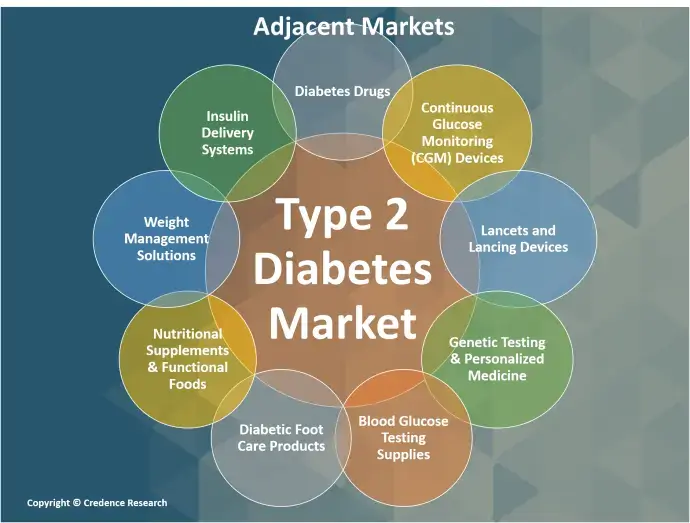
In the type 2 diabetes market, several adjacent markets have high revenue growth opportunities. The key adjacent markets for type 2 diabetes market –

Request a Free Sample
Fill in your details and we'll send you a free sample report.
- Sample data tables & charts
- Research methodology
Market Dynamics
Rising Global Prevalence of Type 2 Diabetes
The increasing incidence of type 2 diabetes, driven by factors such as unhealthy diets, sedentary lifestyles, and obesity, is expanding the patient pool and fueling demand for prevention, diagnosis, and management solutions.
Advancements in Medications and Therapies
Ongoing R&D has led to the introduction of innovative drugs like GLP-1 receptor agonists and SGLT-2 inhibitors, as well as combination therapies, offering more effective and tailored treatment options for patients.
Technological Innovation in Glucose Monitoring
The adoption of continuous glucose monitoring (CGM) systems and minimally invasive devices is improving glycemic control and patient convenience, driving growth in the monitoring segment.
Government Initiatives and Healthcare Infrastructure Expansion
Supportive government policies, public health campaigns, and investments in healthcare infrastructure, especially in emerging markets, are increasing access to diabetes care and supporting market expansion.
Aging Population and Associated Comorbidities
The global rise in the elderly population, who are at higher risk for type 2 diabetes and related complications, is increasing demand for comprehensive diabetes management solutions.
Need a Custom Version of This Report?
Tailor the scope, geography, or segments to your exact requirements.
- Custom geography or segment scope
- Direct access to our analyst team
Frequently Asked Questions
What is the current size of the global type 2 diabetes market?
What is the expected growth rate of the type 2 diabetes market between 2023 and 2030?
Which segment is leading the market share in terms of medications and therapies?
Which blood glucose monitoring segment governs the demand for type 2 diabetes in the world?
Which complications management segment will post the highest CAGR in the forecast period?
Which region is fueling the growth of the type 2 diabetes industry?
Who are the major players in the global type 2 diabetes market?
What are the major market drivers of the type 2 diabetes industry?
What are the major market restraints of the type 2 diabetes industry?
What are the major market opportunities of the type 2 diabetes industry?
Table of Content
Chapter 1 Market Segmentation
- 1.1 Segmentation Framework
- 1.1.1 Product and Service Classification
- 1.1.2 Application and End-Use Classification
- 1.1.3 Technology and Solution Classification
- 1.1.4 Customer and Distribution Channel Classification
- 1.1.5 Geographic Segmentation
- 1.1.6 Market Segment Definitions and Boundaries
- 1.2 By End User
- 1.2.1 Hospitals
- 1.2.2 Clinics and Specialty Centers
- 1.2.3 Retail Pharmacies
- 1.2.4 Home Use
- 1.3 By Blood Glucose Monitoring
- 1.3.1 Blood Glucose Meters
- 1.3.2 Continuous Glucose Monitoring (CGM) Systems
- 1.3.3 Lancets and Lancing Devices
- 1.4 By Complications Management
- 1.4.1 Diabetic Neuropathy
- 1.4.2 Diabetic Nephropathy
- 1.4.3 Diabetic Retinopathy
- 1.4.4 Cardiovascular Complications
- 1.5 By Medications and Therapies
- 1.5.1 Oral Antidiabetic Drugs (OADs)
- 1.5.2 Insulin Therapy
- 1.5.3 GLP-1 Receptor Agonists
- 1.5.4 Combination Therapies
- 1.5.5 Non-Pharmacological Interventions
Chapter 2 Introduction
- 2.1 Report Objectives and Scope
- 2.2 Product Definition and Industry Terminology
- 2.3 Market Inclusions and Exclusions
- 2.4 Research Process
- 2.4.1 Primary Research and Expert Interviews
- 2.4.2 Secondary Research and Source Review
- 2.4.3 Top-Down and Bottom-Up Estimation
- 2.4.4 Data Triangulation and Verification
- 2.5 Market Size Measurement Basis
- 2.5.1 2022: USD 29945.8 Million → 2030: USD 58,798.6 million
- 2.6 Historical and Forecast Reference Periods
- 2.6.1 Base Year: 2022
- 2.6.2 Forecast Period: 2022-2030
- 2.7 Research Assumptions and Limitations
Chapter 3 Executive Summary
- 3.1 Market Snapshot and Key Findings
- 3.2 Base-Year Market Size, 2022
- 3.3 Forecast Market Size, 2030
- 3.4 Revenue and Volume Growth Outlook
- 3.5 Key Demand and Supply Indicators
- 3.6 Leading Market Segments
- 3.7 Fastest-Growing Market Opportunities
- 3.8 Regional Performance Highlights
- 3.9 Technology and Industry Transformation
- 3.10 Competitive Landscape Summary
- 3.11 Analyst View and Strategic Implications
Chapter 4 Global Type 2 Diabetes Market Trends and Developments
- 4.1 Historical Industry Development
- 4.2 Recent Market Trends and Developments
- 4.3 Demand and Customer Behavior Trends
- 4.4 Technology and Product Innovation
- 4.5 Artificial Intelligence, Automation and Digitalization
- 4.6 Local Manufacturing and Supply Chain Realignment
- 4.7 Industry Partnerships, Mergers and Acquisitions
- 4.8 Sustainability and Circular Economy Developments
- 4.9 Government and Private Sector Investment Trends
- 4.10 Emerging Business Models and Commercialization
- 4.11 Industry Developments and Announcements
Chapter 5 Global Type 2 Diabetes Market Production, Supply and Demand Analysis
- 5.1 Demand Trend and Consumption Analysis
- 5.2 Demand Forecast, 2022-2030
- 5.3 Production and Output Trend
- 5.4 Production and Output Forecast, 2022-2030
- 5.5 Installed Capacity and Capacity Utilization
- 5.6 Company-Wise Production Plants and Statistics
- 5.6.1 Installed Production Capacity
- 5.6.2 Actual Production
- 5.6.3 Planned Capacity and Expansion Targets
- 5.7 Supply Chain Structure and Procurement Trends
- 5.8 Supply-Demand Gap and Bottlenecks
- 5.9 Import Dependence and Sourcing Structure
- 5.10 Contract Manufacturing and Outsourcing
- 5.11 Regional Supply and Demand Concentration
Chapter 6 Global Type 2 Diabetes Market Pricing Analysis
- 6.1 Pricing Structure and Measurement
- 6.2 Historical Pricing Trends
- 6.3 Pricing Outlook, 2022-2030
- 6.4 Average Selling Price and Unit Economics
- 6.5 Pricing by Product and Market Segment
- 6.6 Geographic Pricing Differences
- 6.7 Key Input, Energy, Labor and Logistics Costs
- 6.8 Contract Pricing and Purchasing Models
- 6.9 Pricing Sensitivity and Competitive Positioning
- 6.10 Price, Margin and Profitability Implications
Chapter 7 Global Type 2 Diabetes Market Dynamics
- 7.1 Market Growth Drivers
- 7.1.1 Demand-Side Drivers
- 7.1.2 Technology and Innovation Drivers
- 7.1.3 Infrastructure and Investment Drivers
- 7.1.4 Regulatory and Policy Drivers
- 7.2 Market Restraints
- 7.2.1 Cost and Affordability Constraints
- 7.2.2 Technology and Adoption Barriers
- 7.2.3 Supply Chain and Operational Constraints
- 7.3 Market Challenges
- 7.3.1 Competitive Pressure and Margin Erosion
- 7.3.2 Skills, Infrastructure and Implementation Gaps
- 7.4 Emerging Market Opportunities
- 7.5 Market Dynamics Impact and Time-Horizon Assessment
Chapter 8 Global Type 2 Diabetes Value Chain Analysis
- 8.1 Industry Value Chain Overview
- 8.2 Upstream Suppliers and Critical Inputs
- 8.3 Technology and Component Providers
- 8.4 Manufacturing or Service Delivery
- 8.5 Distribution, Channel Partners and Integrators
- 8.6 Downstream Applications and End Users
- 8.7 Value Addition and Profit Pools
- 8.8 Vertical Integration and Outsourcing
- 8.9 Supplier Concentration and Risk
- 8.10 Supply Chain Localization and Resilience
Chapter 9 Global Type 2 Diabetes Market Regulations and Policies
- 9.1 Relevant Laws, Standards and Compliance Frameworks
- 9.2 Product, Service, Safety and Quality Requirements
- 9.3 Government Policies, Incentives and Subsidies
- 9.4 Imports, Exports and Trade Barriers
- 9.5 Public Procurement and Local Content Requirements
- 9.6 Environmental and Sustainability Compliance
- 9.7 Upcoming Policy Changes and Market Implications
Chapter 10 Global Type 2 Diabetes Market Hotspots and Opportunities
- 10.1 Market Opportunity Mapping and Growth Hotspots
- 10.2 High-Growth Applications and Customer Groups
- 10.3 Underserved Markets and White-Space Opportunities
- 10.4 Emerging Technology and Product Opportunities
- 10.5 New Capacity and Investment Hotspots
- 10.6 Market Entry and Expansion Opportunities
- 10.7 Distribution and Partnership Opportunities
- 10.8 Near-Term and Long-Term Commercial Potential
- 10.9 Opportunity Attractiveness and Execution Risks
Chapter 11 Global Type 2 Diabetes Market Outlook, 2022-2030
- 11.1 Market Size and Analysis
- 11.1.1 Revenue (Market Measurement: 2022: USD 29945.8 Million → 2030: USD 58,798.6 million)
- 11.1.2 Market Volume and Quantity Sold
- 11.1.3 Historical Market Size
- 11.1.4 Base-Year Market Size, 2022
- 11.2 Market Forecast, 2022-2030
- 11.2.1 Revenue Forecast to 2030
- 11.2.2 Volume Forecast to 2030
- 11.2.3 CAGR and Year-on-Year Growth
- 11.2.4 Incremental Revenue Opportunity
- 11.3 Forecast Assumptions and Scenario Analysis
- 11.3.1 Base-Case Forecast
- 11.3.2 Optimistic and Conservative Scenarios
- 11.3.3 Technology, Pricing and Policy Sensitivities
- 11.4 Market Attractiveness and Growth Outlook
Chapter 12 Global Type 2 Diabetes Market Segmentation and Outlook
- 12.1 Segmentation Summary and Market Shares, 2022
- 12.2 Largest and Fastest-Growing Segments
- 12.3 By End User - Market Size and Forecast, 2022-2030
- 12.3.1 Segment Definition and Scope
- 12.3.2 Historical Market Size
- 12.3.3 Revenue Forecast, 2022-2030
- 12.3.4 Volume Forecast, 2022-2030
- 12.3.5 Base-Year Market Share, 2022
- 12.3.6 Segment CAGR and Growth Drivers
- 12.3.7 Subsegment Market Size and Forecast
- 12.3.7.1 Hospitals
- 12.3.7.2 Clinics and Specialty Centers
- 12.3.7.3 Retail Pharmacies
- 12.3.7.4 Home Use
- 12.3.8 Subsegment Pricing and Adoption Trends
- 12.3.9 Leading Suppliers and Competition
- 12.3.10 Regional Demand and Opportunities
- 12.4 By Blood Glucose Monitoring - Market Size and Forecast, 2022-2030
- 12.4.1 Segment Definition and Scope
- 12.4.2 Historical Market Size
- 12.4.3 Revenue Forecast, 2022-2030
- 12.4.4 Volume Forecast, 2022-2030
- 12.4.5 Base-Year Market Share, 2022
- 12.4.6 Segment CAGR and Growth Drivers
- 12.4.7 Subsegment Market Size and Forecast
- 12.4.7.1 Blood Glucose Meters
- 12.4.7.2 Continuous Glucose Monitoring (CGM) Systems
- 12.4.7.3 Lancets and Lancing Devices
- 12.4.8 Subsegment Pricing and Adoption Trends
- 12.4.9 Leading Suppliers and Competition
- 12.4.10 Regional Demand and Opportunities
- 12.5 By Complications Management - Market Size and Forecast, 2022-2030
- 12.5.1 Segment Definition and Scope
- 12.5.2 Historical Market Size
- 12.5.3 Revenue Forecast, 2022-2030
- 12.5.4 Volume Forecast, 2022-2030
- 12.5.5 Base-Year Market Share, 2022
- 12.5.6 Segment CAGR and Growth Drivers
- 12.5.7 Subsegment Market Size and Forecast
- 12.5.7.1 Diabetic Neuropathy
- 12.5.7.2 Diabetic Nephropathy
- 12.5.7.3 Diabetic Retinopathy
- 12.5.7.4 Cardiovascular Complications
- 12.5.8 Subsegment Pricing and Adoption Trends
- 12.5.9 Leading Suppliers and Competition
- 12.5.10 Regional Demand and Opportunities
- 12.6 By Medications and Therapies - Market Size and Forecast, 2022-2030
- 12.6.1 Segment Definition and Scope
- 12.6.2 Historical Market Size
- 12.6.3 Revenue Forecast, 2022-2030
- 12.6.4 Volume Forecast, 2022-2030
- 12.6.5 Base-Year Market Share, 2022
- 12.6.6 Segment CAGR and Growth Drivers
- 12.6.7 Subsegment Market Size and Forecast
- 12.6.7.1 Oral Antidiabetic Drugs (OADs)
- 12.6.7.2 Insulin Therapy
- 12.6.7.3 GLP-1 Receptor Agonists
- 12.6.7.4 Combination Therapies
- 12.6.7.5 Non-Pharmacological Interventions
- 12.6.8 Subsegment Pricing and Adoption Trends
- 12.6.9 Leading Suppliers and Competition
- 12.6.10 Regional Demand and Opportunities
- 12.7 Segment Growth Comparison
- 12.8 Segment Attractiveness and Priority Matrix
Chapter 13 Global Type 2 Diabetes End-Use and Application Market Outlook
- 13.1 End-Use Industry and Customer Demand Structure
- 13.2 Leading Applications and Customer Groups
- 13.3 End-Use Market Size, Share and Forecast
- 13.4 Major End-Use Industry Deep Dives
- 13.4.1 Customer Requirements and Use Cases
- 13.4.2 Demand and Replacement Cycles
- 13.4.3 Technical and Regulatory Considerations
- 13.4.4 Purchasing and Procurement Models
- 13.4.5 Leading Vendors and Distribution Channels
- 13.4.6 Forecast and Commercial Opportunities
- 13.5 Emerging Applications and Cross-Segment Demand
- 13.6 End-Use Industry Investment Priorities
Chapter 14 Global Type 2 Diabetes Geographic Market Outlook, 2022-2030
- 14.1 Regional Market Size and Share, 2022
- 14.2 Regional Market Forecast, 2022-2030
- 14.3 Regional Pricing, Production and Demand Differences
- 14.4 North America
- 14.4.1 United States
- 14.4.2 Canada
- 14.4.3 Mexico
- 14.5 Europe
- 14.5.1 Germany
- 14.5.2 France
- 14.5.3 Italy
- 14.5.4 United Kingdom
- 14.5.5 Spain
- 14.5.6 Poland
- 14.5.7 Russia
- 14.5.8 Netherlands
- 14.5.9 Belgium
- 14.5.10 Sweden
- 14.5.11 Denmark
- 14.5.12 Norway
- 14.5.13 Rest of Europe
- 14.6 Asia Pacific
- 14.6.1 China
- 14.6.2 India
- 14.6.3 Japan
- 14.6.4 South Korea
- 14.6.5 Thailand
- 14.6.6 Indonesia
- 14.6.7 Vietnam
- 14.6.8 Malaysia
- 14.6.9 Australia
- 14.6.10 Rest of Asia Pacific
- 14.7 Latin America
- 14.7.1 Brazil
- 14.7.2 Argentina
- 14.7.3 Colombia
- 14.7.4 Chile
- 14.7.5 Rest of Latin America
- 14.8 Middle East
- 14.8.1 Saudi Arabia
- 14.8.2 United Arab Emirates
- 14.8.3 Turkey
- 14.8.4 Israel
- 14.8.5 Iran
- 14.8.6 Rest of the Middle East
- 14.9 Africa
- 14.9.1 South Africa
- 14.9.2 Egypt
- 14.9.3 Nigeria
- 14.9.4 Morocco
- 14.9.5 Rest of Africa
- 14.10 Regional Investment, Policy and Supply Chain Differences
- 14.11 Regional Competitive Landscape
- 14.12 Geographic Growth Hotspots
Chapter 15 Global Type 2 Diabetes Technology, Innovation and Sustainability Outlook
- 15.1 Technology Landscape and Maturity
- 15.2 Product, Process and Service Innovation
- 15.3 AI, Automation and Digital Tools in the Industry
- 15.4 Technology Adoption and Performance Benchmarking
- 15.5 Innovation Pipeline and R&D Investment
- 15.6 Patent and Intellectual Property Trends
- 15.7 Energy Efficiency and Resource Management
- 15.8 Sustainability, Recycling and Circularity
- 15.9 Technology Roadmap, 2022-2030
- 15.10 Risks of Obsolescence and Technology Substitution
Chapter 16 Global Type 2 Diabetes Market Key Strategic Imperatives
- 16.1 Growth and Market Entry Priorities
- 16.2 High-Return Products and Segments
- 16.3 Pricing, Profitability and Cost Optimization
- 16.4 Technology Investment and Product Differentiation
- 16.5 Supply Chain Localization and Resilience
- 16.6 Distribution and Customer Acquisition
- 16.7 Partnership, Acquisition and Capacity Strategy
- 16.8 Regional Expansion Priorities
- 16.9 Short-, Medium- and Long-Term Actions
Chapter 17 Competition Outlook
- 17.1 Industry Competition Characteristics
- 17.2 Market Structure and Concentration
- 17.3 Market Share and Competitive Positioning, 2022
- 17.4 Company-Wise Revenue and Product Benchmarking
- 17.5 Production and Service Capacity Benchmarking
- 17.6 Technology, Pricing and Differentiation
- 17.7 Regional Footprint and Distribution Strength
- 17.8 Mergers, Acquisitions and Strategic Alliances
- 17.9 New Entrants and Competitive Threats
- 17.10 Porter's Five Forces and Industry Attractiveness
- 17.11 Competitive Outlook, 2022-2030
Chapter 18 Company Profiles
- 18.1 Company Coverage and Selection Criteria
- 18.2 Novo Nordisk AS
- 18.2.1 Business Description
- 18.2.2 Company Ownership and Geographic Presence
- 18.2.3 Product and Service Portfolio
- 18.2.4 Manufacturing and Operating Footprint
- 18.2.5 Production Capacity and Expansion Plans
- 18.2.6 Financial Performance and Investment
- 18.2.7 Market Share and Competitive Position
- 18.2.8 Technology and Innovation Capabilities
- 18.2.9 Strategic Alliances or Partnerships
- 18.2.10 Recent Developments
- 18.2.11 Growth Strategy and Outlook
- 18.3 Sanofi SA
- 18.4 Eli Lilly and Co.
- 18.5 AstraZeneca PLC
- 18.6 Merck & Co. Inc
- 18.7 Boehringer Ingelheim International GmbH
- 18.8 Takeda Pharmaceutical Co. Ltd
- 18.9 Novartis AG
- 18.10 Amgen Inc
- 18.11 Daiichi Sankyo Co. Ltd
- 18.12 Other Relevant Market Participants
Note: Every listed company is profiled on the structure shown under the first company. The company list is preliminary and may change based on research findings, market developments, data availability and client requirements.
Chapter 19 Disclaimer
- 19.1 Research and Forecast Disclaimer
- 19.2 Data Source and Estimation Limitations
Note: The depth of individual sections depends on data availability for this market. Volume, capacity, trade and other unit-based metrics are included where applicable.

