
| REPORT ATTRIBUTE | DETAILS |
|---|---|
| Historical Period | 2020-2023 |
| Base Year | 2024 |
| Forecast Period | 2025-2032 |
| U.S. Spine Degenerative Disk Disease Treatment Market Size 2024 | USD 4,135.69 million |
| U.S. Spine Degenerative Disk Disease Treatment Market, CAGR | 4.97% |
| U.S. Spine Degenerative Disk Disease Treatment Market Size 2032 | USD 6,098.89 million |
Market Overview
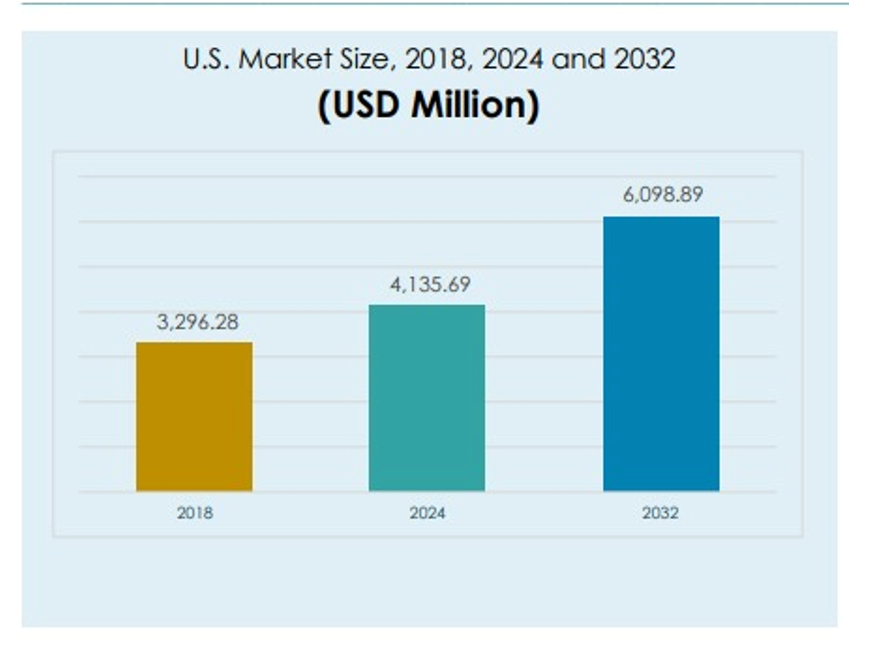
The U.S. Spine Degenerative Disk Disease (DDD) Treatment Market size was valued at USD 3,296.28 million in 2018, increased to USD 4,135.69 million in 2024, and is anticipated to reach USD 6,098.89 million by 2032, at a CAGR of 4.97% during the forecast period.
The U.S. Spine Degenerative Disk Disease (DDD) Treatment market is led by key players such as Medtronic, DePuy Synthes, Stryker – VB Spine, B. Braun Medical Inc., Pfizer, Novartis, Bayer HealthCare LLC, ATEC Spine, Spinal Elements, and Kenvue Brands LLC. These companies dominate through diverse portfolios ranging from advanced spinal fusion devices to pharmaceuticals like NSAIDs and muscle relaxants. Medtronic and DePuy Synthes hold notable shares due to their leadership in spinal implants and surgical innovation. Regionally, the South leads the market with a 32% share, driven by a large aging population, high disease burden, and strong outpatient infrastructure.
Market Insights
- The U.S. Spine Degenerative Disk Disease (DDD) Treatment market was valued at USD 3,296.28 million in 2018, reached USD 4,135.69 million in 2024, and is projected to hit USD 6,098.89 million by 2032, growing at a CAGR of 4.97% during the forecast period.
- Market growth is driven by the rising geriatric population, increasing incidence of spine disorders, and growing adoption of minimally invasive and motion-preserving surgical procedures.
- Technological advancements in spinal fusion devices, neuromodulation systems, and robotic-assisted surgeries are reshaping treatment approaches and expanding outpatient procedure volumes.
- Medtronic, DePuy Synthes, Stryker – VB Spine, and B. Braun Medical Inc. dominate the device segment, while Pfizer and Novartis lead in pharmaceuticals; however, high device costs and reimbursement complexities remain key restraints.
- Regionally, the South holds the largest share at 32%, followed by the Northeast (26%), Midwest (22%), and West (20%); Devices segment leads with over 60% market share.
Market Segmentation Analysis:
By Product:
In the U.S. Spine Degenerative Disk Disease (DDD) Treatment market, the Devices segment holds the dominant share, accounting for over 60% of the market in 2024. Within this segment, Fusion Devices lead due to their widespread adoption in surgical interventions aimed at stabilizing the spine and relieving nerve compression. Rising demand for minimally invasive spine surgeries, technological advancements in implants, and favorable reimbursement policies have driven the device segment’s expansion. Although Medications such as NSAIDs and muscle relaxants remain critical for early-stage and non-surgical management, their long-term efficacy limitations have shifted focus towards device-based interventions.
- For instance, Medtronic reported that over 91,000 procedures have been performed globally using its Infuse™ Bone Graft technology, indicating widespread adoption in spinal fusion surgeries.
By Application:
The Lumbar Spine segment dominates the application category, contributing over 50% of the market share in 2024. This dominance stems from the high incidence of lumbar disc degeneration caused by aging, poor posture, and occupational stressors. The lumbar region is more prone to degeneration due to bearing the majority of body weight and movement, prompting frequent surgical interventions and targeted therapies. The cervical spine follows closely, supported by increasing sedentary lifestyles and screen exposure. Treatment advancements and diagnostic improvements for localized disc degeneration continue to enhance application-specific therapeutic outcomes across the board.
- For instance, Stryker’s Tritanium® Posterior Lumbar Cage System, used specifically for lumbar interbody fusion, has seen usage in over 35,000 documented cases since its launch, reflecting the high volume of lumbar spine procedures.
By End User:
Hospitals account for the largest market share among end users, making up nearly 55% of the U.S. DDD treatment market in 2024. This is attributed to their access to advanced surgical equipment, multidisciplinary care teams, and reimbursement support for complex procedures such as spinal fusion and neuromodulation. Hospitals also serve as referral hubs for chronic and complicated cases requiring inpatient care. Meanwhile, orthopedic centers and ambulatory surgical centers are gaining traction due to shorter recovery times and cost-effective outpatient solutions, particularly for motion-preserving and minimally invasive procedures.
Market Overview
Rising Aging Population and Associated Spinal Conditions
The steady increase in the U.S. geriatric population is a primary driver of the DDD treatment market. With aging, the risk of spinal degeneration escalates due to natural disc wear and reduced regenerative capacity. This demographic trend has significantly raised the prevalence of lumbar and cervical spine disorders, pushing demand for both surgical and non-surgical treatment modalities. Furthermore, the elderly population often presents with comorbidities requiring specialized care, prompting hospitals and orthopedic centers to expand spine-related services and invest in advanced technologies.
- For instance, DePuy Synthes reported treating more than 70,000 spinal patients aged 65 and above with its suite of spine care products in 2023 alone.
Technological Advancements in Spine Surgery Devices
Rapid innovation in spinal implants and surgical tools is fueling market growth. Modern fusion devices, motion-preserving implants, and neuromodulation systems offer enhanced clinical outcomes with reduced recovery times and procedural risks. The integration of robotics, image-guided navigation, and 3D printing has transformed surgical precision and patient-specific customization. These advancements support the growing preference for minimally invasive surgeries and outpatient spinal procedures, expanding the market for both hospitals and ambulatory centers. As these technologies gain FDA approvals and clinical validation, adoption across U.S. healthcare facilities continues to rise.
- For instance, Globus Medical’s ExcelsiusGPS® robotic system surpassed 30,000 spine procedures in the U.S. by early 2024, highlighting its rapid uptake in precision spine surgery.
Increased Awareness and Diagnosis of Spine Disorders
Greater public awareness and improved diagnostic techniques have significantly contributed to early identification and treatment of spine-related conditions. Widespread access to MRI and CT imaging, coupled with educational initiatives by healthcare providers, has led to a growing number of diagnoses of degenerative spine diseases. Patients are now more informed about their treatment options, including conservative therapies and surgical interventions. This shift towards early-stage intervention has boosted demand for both medication and device-based solutions, fostering market growth across multiple care settings.
Key Trends & Opportunities
Shift Toward Minimally Invasive and Motion-Preserving Procedures
There is a growing trend in the U.S. market toward minimally invasive and motion-preserving spine treatments. Patients and clinicians are increasingly favoring procedures that reduce hospital stays, limit tissue damage, and preserve natural spine biomechanics. Motion-preserving devices like artificial discs and dynamic stabilization systems are gaining traction as alternatives to spinal fusion, especially among younger, active patients. These advancements open significant growth opportunities for medical device manufacturers and ambulatory centers focused on outpatient spine care.
- For instance, Zimmer Biomet’s Mobi-C® Cervical Disc has been implanted in more than 60,000 patients across the U.S., reinforcing the demand for motion-preserving implants.
Expansion of Outpatient Surgical Facilities and Orthopedic Centers
The rise of ambulatory surgical centers and specialized orthopedic facilities presents a key opportunity in the DDD treatment landscape. These centers offer cost-effective, streamlined procedures with faster patient recovery and lower infection risks. As reimbursement models evolve to support outpatient care and patients demand convenience, many spine surgeries are shifting away from traditional hospital settings. This transition is creating new revenue channels for device manufacturers and enabling the adoption of cutting-edge techniques in a more accessible environment.
- For instance, Medtronic reported that over 50,000 spinal procedures were conducted in outpatient settings using its Mazor™ robotic guidance system by the end of 2023, indicating rapid integration of advanced technology in ambulatory care environments
Key Challenges
High Cost of Advanced Surgical Devices and Treatments
Despite technological advancements, the high cost of surgical devices and procedures remains a significant barrier. Fusion systems, neuromodulation implants, and robotic-assisted surgeries often carry premium pricing, limiting access for patients without comprehensive insurance. The financial burden on healthcare systems and patients can delay or deter treatment adoption, particularly in non-urgent cases. Addressing this challenge requires better pricing strategies, broader insurance coverage, and cost-effective innovation from device manufacturers.
Regulatory Hurdles and Reimbursement Complexity
Stringent FDA regulations and evolving reimbursement frameworks pose challenges for both product development and market access. The approval process for novel spine technologies can be lengthy and resource-intensive, delaying commercialization. Additionally, reimbursement policies are often inconsistent, especially for newer procedures like motion-preserving surgeries or neuromodulation therapies. These uncertainties may hinder adoption among healthcare providers and limit market penetration, especially for startups or smaller companies lacking regulatory expertise.
Limited Long-Term Efficacy of Conservative Treatments
While medications such as NSAIDs, steroids, and muscle relaxants are widely prescribed for early-stage DDD, their long-term efficacy is often limited. Over-reliance on pharmacological management may delay necessary surgical interventions, leading to worsening conditions. Furthermore, concerns regarding side effects and dependency-especially with opioid-based analgesics have prompted a shift in treatment strategies. This challenge underscores the need for comprehensive care models that integrate effective conservative management with timely surgical solutions.
Regional Analysis
Northeast Region
The Northeast region holds approximately 26% of the U.S. Spine Degenerative Disk Disease (DDD) Treatment market, driven by the presence of top-tier hospitals, academic medical centers, and a large aging population. States like New York, Massachusetts, and Pennsylvania contribute significantly due to high healthcare expenditure and accessibility to specialized spine care. The region also benefits from advanced diagnostic infrastructure and a strong base of orthopedic and neurosurgical specialists. Increased awareness, early diagnosis, and a preference for innovative surgical techniques continue to support market growth in this region, with demand rising for both fusion devices and motion-preserving technologies.
Midwest Region
The Midwest accounts for around 22% of the total market share, supported by a growing elderly population and expanding orthopedic service lines across community hospitals and specialty clinics. States like Illinois, Ohio, and Michigan have witnessed a steady rise in spinal disorders due to occupational stress and sedentary lifestyles. The region is also seeing increased investments in ambulatory surgical centers and outpatient spine care. While adoption of advanced technologies is slower than in coastal regions, ongoing improvements in healthcare access and physician training are gradually boosting procedural volumes and driving market expansion across both urban and rural areas.
South Region
The South holds the largest share, approximately 32%, of the U.S. Spine DDD Treatment market, fueled by its large and aging population, particularly in states like Florida, Texas, and Georgia. High prevalence of obesity and physically demanding jobs contributes to the region's significant burden of spinal degeneration. The South is also a major hub for outpatient surgical centers, which are seeing increased demand for minimally invasive procedures. Healthcare providers in the region are increasingly investing in neuromodulation and spinal decompression systems, supported by favorable reimbursement trends and a growing network of orthopedic and spine-focused facilities.
West Region
The West region represents roughly 20% of the market share, led by innovation hubs in California and Washington. This region benefits from strong adoption of advanced surgical technologies, including robotic-assisted spine surgery and motion-preserving devices. High healthcare awareness and emphasis on minimally invasive solutions have propelled demand across both hospital and outpatient settings. The region’s diverse demographics and tech-driven medical infrastructure enable early adoption of cutting-edge spine treatments. Additionally, growing collaborations between research institutions and device manufacturers further strengthen the market outlook, making the West a key contributor to future innovation in the U.S. spine care landscape.
Market Segmentations:
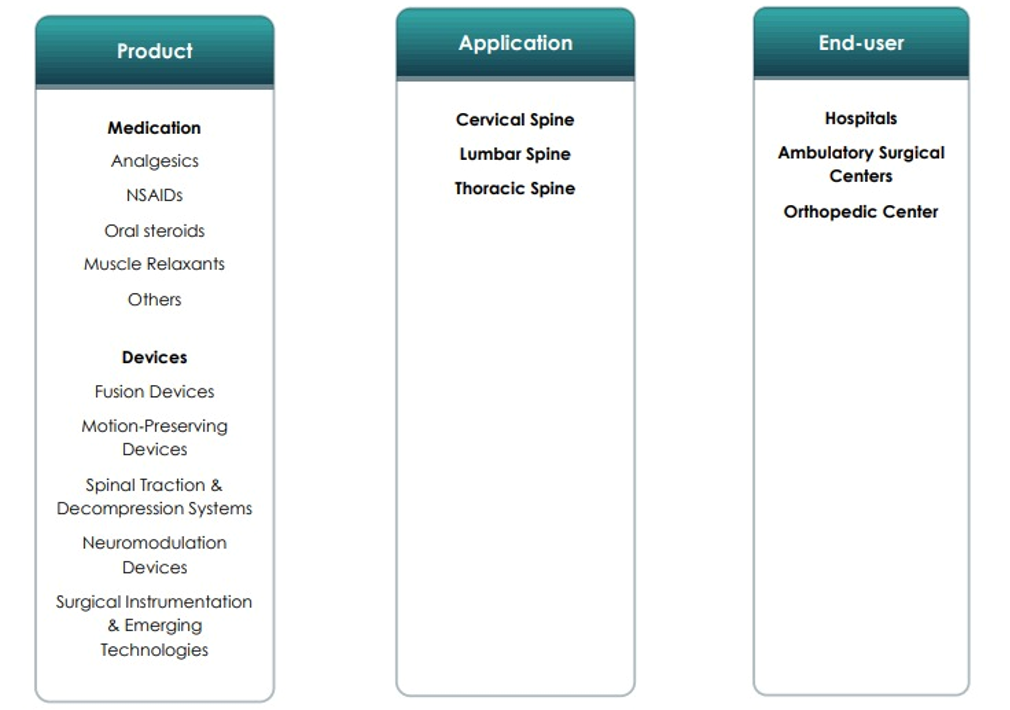
By Product:
- Medication
- Analgesics
- NSAIDs
- Oral Steroids
- Muscle Relaxants
- Others
- Devices
- Fusion Devices
- Motion Preserving Devices
- Spinal Traction & Decompression Systems
- Neuromodulation Devices
- Surgical Instrumentation & Emerging Technologies
By Application:
- Cervical Spine
- Lumbar Spine
- Thoracic Spine
By End User:
- Hospitals
- Ambulatory Surgical Centers
- Orthopedic Centers
By Geography:
- Northeast Region
- Midwest Region
- South Region
- West Region
Competitive Landscape
The U.S. Spine Degenerative Disk Disease (DDD) Treatment market is characterized by the presence of several prominent players offering a wide range of pharmaceutical and device-based solutions. Key companies such as Medtronic, DePuy Synthes, Stryker – VB Spine, and B. Braun Medical Inc. dominate the device segment through extensive product portfolios, technological innovation, and strategic partnerships. These players focus heavily on developing advanced spinal implants, motion-preserving devices, and minimally invasive surgical tools to address evolving clinical needs. Meanwhile, pharmaceutical giants like Pfizer, Novartis, and Bayer HealthCare LLC contribute significantly to the medication segment with analgesics, NSAIDs, and muscle relaxants. Emerging companies such as ATEC Spine, Spinal Elements, and Kenvue Brands LLC are gaining traction by introducing next-generation spinal solutions and targeting underserved market segments. The competitive environment is further intensified by ongoing R&D investments, FDA approvals, and mergers aimed at expanding regional presence and enhancing product pipelines to meet the rising demand for spine care.
Key Player Analysis
- DePuy Synthes
- Braun Medical Inc.
- Stryker – VB Spine
- ATEC Spine, Inc.
- Spinal Elements, Inc.
- Novartis
- Pfizer
- Medtronic
- Kenvue Brands LLC
- Bayer HealthCare LLC
Recent Developments
- In April 2025, B. Braun introduced the EZCOVER® Probe Cover Set for improved ultrasound safety in peripheral nerve block procedures, further supporting pain management in spine interventions.
- In February 2025, Alphatec (ATEC) unveiled advancements in their Prone Transpsoas (PTP) technique for minimally invasive corpectomy, extending its use to more complex cases of Degenerative Disc Disease (DDD). Simultaneously, they highlighted the integration of EOS Insight technology to improve surgical planning and patient outcomes.
- In January 2025, Stryker finalized the sale of its U.S. spinal implants business to Viscogliosi Brothers, forming VB Spine, LLC. This newly formed entity will focus on robotics and AI-driven spine surgery, particularly for degenerative disc disease (DDD) and other spinal conditions, utilizing Stryker's Mako Spine and Copilot technologies, which VB Spine now has exclusive access to.
- In January 2025, B. Braun launched the Clik-FIX® Epidural/Peripheral Nerve Block (PNB) Catheter Securement Device. While not a direct implant for DDD, this device supports pain management in spine procedures by improving catheter securement during regional anesthesia, which is often part of perioperative care for DDD patients.
Market Concentration & Characteristics
The U.S. Spine Degenerative Disk Disease (DDD) Treatment Market exhibits moderate to high market concentration, with a few key players dominating the device and pharmaceutical segments. Companies such as Medtronic, DePuy Synthes, and Stryker control a significant portion of the spinal implant and surgical systems market, supported by robust R&D capabilities and extensive distribution networks. It features a strong focus on innovation, with continuous product development in fusion systems, motion-preserving devices, and neuromodulation technologies. The market is characterized by high regulatory oversight, strong hospital and specialist influence, and a growing preference for outpatient and minimally invasive procedures. Geographic demand remains uneven, with higher procedure volumes in states with aging populations and better access to advanced care. The market also shows strong alignment with technological integration, particularly in robotic-assisted surgeries and image-guided tools. Pharmaceutical solutions maintain relevance in conservative treatment, though long-term reliance remains limited. Hospitals dominate end-user adoption, though ambulatory surgical centers are gaining share due to evolving reimbursement frameworks and patient demand for convenience. The U.S. Spine Degenerative Disk Disease (DDD) Treatment Market reflects a mature structure with expanding opportunities in precision-based and motion-preserving therapies.
Report Coverage
The research report offers an in-depth analysis based on Product, Application, End-User and Geography. It details leading market players, providing an overview of their business, product offerings, investments, revenue streams, and key applications. Additionally, the report includes insights into the competitive environment, SWOT analysis, current market trends, as well as the primary drivers and constraints. Furthermore, it discusses various factors that have driven market expansion in recent years. The report also explores market dynamics, regulatory scenarios, and technological advancements that are shaping the industry. It assesses the impact of external factors and global economic changes on market growth. Lastly, it provides strategic recommendations for new entrants and established companies to navigate the complexities of the market.
Future Outlook
- The market is expected to witness steady growth driven by the rising prevalence of spinal disorders in the aging U.S. population.
- Demand for minimally invasive and outpatient spine procedures will continue to increase across hospitals and ambulatory surgical centers.
- Technological advancements in spinal implants, robotic-assisted surgeries, and neuromodulation systems will shape future treatment protocols.
- Motion-preserving devices are likely to gain popularity over traditional fusion techniques among younger and active patients.
- Orthopedic centers and specialized spine clinics will play a larger role in delivering targeted, efficient care.
- Continued development of patient-specific and image-guided surgical tools will improve procedural accuracy and outcomes.
- Market competition will intensify as emerging players introduce innovative spine care solutions and expand into underserved areas.
- Reimbursement reforms and broader insurance coverage may improve patient access to advanced treatments.
- Growing awareness and early diagnosis of DDD will boost demand for both conservative and surgical interventions.
- Strategic collaborations among device manufacturers, hospitals, and research institutions will accelerate innovation and clinical adoption.

Request a Free Sample
Fill in your details and we'll send you a free sample report.
- Sample data tables & charts
- Research methodology
Market Dynamics
Rising Aging Population and Associated Spinal Conditions
The increasing proportion of elderly individuals in the U.S. is leading to a higher prevalence of degenerative disk disease, as age-related wear and tear accelerates spinal degeneration. This demographic trend is directly expanding the patient pool requiring both surgical and non-surgical interventions.
Technological Advancements in Spine Surgery Devices
Innovations such as minimally invasive fusion devices, motion-preserving implants, neuromodulation systems, and robotic-assisted surgical tools are improving clinical outcomes and reducing recovery times. These advancements are driving adoption among providers and patients, fueling market growth.
Shift Toward Minimally Invasive and Outpatient Procedures
There is a growing preference for minimally invasive and motion-preserving treatments that reduce hospital stays and preserve spinal mobility. The expansion of ambulatory surgical centers and orthopedic clinics is making advanced procedures more accessible and cost-effective, increasing overall procedure volumes.
Increased Awareness and Early Diagnosis of Spine Disorders
Improved diagnostic imaging and educational initiatives have led to earlier detection of degenerative disk disease. This has resulted in more patients seeking timely treatment, boosting demand for both conservative therapies and advanced device-based interventions.
Favorable Reimbursement and Evolving Care Models
Reimbursement reforms and insurance coverage expansion for advanced spine procedures, especially in outpatient settings, are reducing financial barriers for patients. This is encouraging healthcare providers to adopt new technologies and expand spine care services.
Need a Custom Version of This Report?
Tailor the scope, geography, or segments to your exact requirements.
- Custom geography or segment scope
- Direct access to our analyst team
Frequently Asked Questions
What is the current size of the U.S. Spine Degenerative Disk Disease (DDD) Treatment Market?
What are the key segments within the U.S. Spine Degenerative Disk Disease (DDD) Treatment Market?
What are some challenges faced by the U.S. Spine Degenerative Disk Disease (DDD) Treatment Market?
Who are the major players in the U.S. Spine Degenerative Disk Disease (DDD) Treatment Market?
Table of Content
Chapter 1 Market Segmentation
- 1.1 Segmentation Framework
- 1.1.1 Product and Service Classification
- 1.1.2 Application and End-Use Classification
- 1.1.3 Technology and Solution Classification
- 1.1.4 Customer and Distribution Channel Classification
- 1.1.5 Geographic Segmentation
- 1.1.6 Market Segment Definitions and Boundaries
- 1.2 By Product
- 1.2.1 Medication
- 1.2.2 Devices
- 1.3 By End User
- 1.3.1 Hospitals
- 1.3.2 Ambulatory Surgical Centers
- 1.3.3 Orthopedic Centers
- 1.4 By Application
- 1.4.1 Cervical Spine
- 1.4.2 Lumbar Spine
- 1.4.3 Thoracic Spine
- 1.5 By Device Type
- 1.5.1 Fusion Devices
- 1.5.2 Motion Preserving Devices
- 1.5.3 Spinal Traction & Decompression Systems
- 1.5.4 Neuromodulation Devices
- 1.5.5 Surgical Instrumentation & Emerging Technologies
- 1.6 By Medication Type
- 1.6.1 Analgesics
- 1.6.2 NSAIDs
- 1.6.3 Oral Steroids
- 1.6.4 Muscle Relaxants
- 1.6.5 Others
Chapter 2 Introduction
- 2.1 Report Objectives and Scope
- 2.2 Product Definition and Industry Terminology
- 2.3 Market Inclusions and Exclusions
- 2.4 Research Process
- 2.4.1 Primary Research and Expert Interviews
- 2.4.2 Secondary Research and Source Review
- 2.4.3 Top-Down and Bottom-Up Estimation
- 2.4.4 Data Triangulation and Verification
- 2.5 Market Size Measurement Basis
- 2.5.1 2024: USD 4,135.69 million → 2032: USD 6,098.89 million
- 2.6 Historical and Forecast Reference Periods
- 2.6.1 Base Year: 2024
- 2.6.2 Forecast Period: 2024-2032
- 2.7 Research Assumptions and Limitations
Chapter 3 Executive Summary
- 3.1 Market Snapshot and Key Findings
- 3.2 Base-Year Market Size, 2024
- 3.3 Forecast Market Size, 2032
- 3.4 Revenue and Volume Growth Outlook
- 3.5 Key Demand and Supply Indicators
- 3.6 Leading Market Segments
- 3.7 Fastest-Growing Market Opportunities
- 3.8 Regional Performance Highlights
- 3.9 Technology and Industry Transformation
- 3.10 Competitive Landscape Summary
- 3.11 Analyst View and Strategic Implications
Chapter 4 U.S. Spine Degenerative Disk Disease Treatment Market Trends and Developments
- 4.1 Historical Industry Development
- 4.2 Recent Market Trends and Developments
- 4.3 Demand and Customer Behavior Trends
- 4.4 Technology and Product Innovation
- 4.5 Artificial Intelligence, Automation and Digitalization
- 4.6 Local Manufacturing and Supply Chain Realignment
- 4.7 Industry Partnerships, Mergers and Acquisitions
- 4.8 Sustainability and Circular Economy Developments
- 4.9 Government and Private Sector Investment Trends
- 4.10 Emerging Business Models and Commercialization
- 4.11 Industry Developments and Announcements
Chapter 5 U.S. Spine Degenerative Disk Disease Treatment Market Production, Supply and Demand Analysis
- 5.1 Demand Trend and Consumption Analysis
- 5.2 Demand Forecast, 2024-2032
- 5.3 Production and Output Trend
- 5.4 Production and Output Forecast, 2024-2032
- 5.5 Installed Capacity and Capacity Utilization
- 5.6 Company-Wise Production Plants and Statistics
- 5.6.1 Installed Production Capacity
- 5.6.2 Actual Production
- 5.6.3 Planned Capacity and Expansion Targets
- 5.7 Supply Chain Structure and Procurement Trends
- 5.8 Supply-Demand Gap and Bottlenecks
- 5.9 Import Dependence and Sourcing Structure
- 5.10 Contract Manufacturing and Outsourcing
- 5.11 Regional Supply and Demand Concentration
Chapter 6 U.S. Spine Degenerative Disk Disease Treatment Market Pricing Analysis
- 6.1 Pricing Structure and Measurement
- 6.2 Historical Pricing Trends
- 6.3 Pricing Outlook, 2024-2032
- 6.4 Average Selling Price and Unit Economics
- 6.5 Pricing by Product and Market Segment
- 6.6 Geographic Pricing Differences
- 6.7 Key Input, Energy, Labor and Logistics Costs
- 6.8 Contract Pricing and Purchasing Models
- 6.9 Pricing Sensitivity and Competitive Positioning
- 6.10 Price, Margin and Profitability Implications
Chapter 7 U.S. Spine Degenerative Disk Disease Treatment Market Dynamics
- 7.1 Market Growth Drivers
- 7.1.1 Demand-Side Drivers
- 7.1.2 Technology and Innovation Drivers
- 7.1.3 Infrastructure and Investment Drivers
- 7.1.4 Regulatory and Policy Drivers
- 7.2 Market Restraints
- 7.2.1 Cost and Affordability Constraints
- 7.2.2 Technology and Adoption Barriers
- 7.2.3 Supply Chain and Operational Constraints
- 7.3 Market Challenges
- 7.3.1 Competitive Pressure and Margin Erosion
- 7.3.2 Skills, Infrastructure and Implementation Gaps
- 7.4 Emerging Market Opportunities
- 7.5 Market Dynamics Impact and Time-Horizon Assessment
Chapter 8 U.S. Spine Degenerative Disk Disease Treatment Value Chain Analysis
- 8.1 Industry Value Chain Overview
- 8.2 Upstream Suppliers and Critical Inputs
- 8.3 Technology and Component Providers
- 8.4 Manufacturing or Service Delivery
- 8.5 Distribution, Channel Partners and Integrators
- 8.6 Downstream Applications and End Users
- 8.7 Value Addition and Profit Pools
- 8.8 Vertical Integration and Outsourcing
- 8.9 Supplier Concentration and Risk
- 8.10 Supply Chain Localization and Resilience
Chapter 9 U.S. Spine Degenerative Disk Disease Treatment Market Regulations and Policies
- 9.1 Relevant Laws, Standards and Compliance Frameworks
- 9.2 Product, Service, Safety and Quality Requirements
- 9.3 Government Policies, Incentives and Subsidies
- 9.4 Imports, Exports and Trade Barriers
- 9.5 Public Procurement and Local Content Requirements
- 9.6 Environmental and Sustainability Compliance
- 9.7 Upcoming Policy Changes and Market Implications
Chapter 10 U.S. Spine Degenerative Disk Disease Treatment Market Hotspots and Opportunities
- 10.1 Market Opportunity Mapping and Growth Hotspots
- 10.2 High-Growth Applications and Customer Groups
- 10.3 Underserved Markets and White-Space Opportunities
- 10.4 Emerging Technology and Product Opportunities
- 10.5 New Capacity and Investment Hotspots
- 10.6 Market Entry and Expansion Opportunities
- 10.7 Distribution and Partnership Opportunities
- 10.8 Near-Term and Long-Term Commercial Potential
- 10.9 Opportunity Attractiveness and Execution Risks
Chapter 11 U.S. Spine Degenerative Disk Disease Treatment Market Outlook, 2024-2032
- 11.1 Market Size and Analysis
- 11.1.1 Revenue (Market Measurement: 2024: USD 4,135.69 million → 2032: USD 6,098.89 million)
- 11.1.2 Market Volume and Quantity Sold
- 11.1.3 Historical Market Size
- 11.1.4 Base-Year Market Size, 2024
- 11.2 Market Forecast, 2024-2032
- 11.2.1 Revenue Forecast to 2032
- 11.2.2 Volume Forecast to 2032
- 11.2.3 CAGR and Year-on-Year Growth
- 11.2.4 Incremental Revenue Opportunity
- 11.3 Forecast Assumptions and Scenario Analysis
- 11.3.1 Base-Case Forecast
- 11.3.2 Optimistic and Conservative Scenarios
- 11.3.3 Technology, Pricing and Policy Sensitivities
- 11.4 Market Attractiveness and Growth Outlook
Chapter 12 U.S. Spine Degenerative Disk Disease Treatment Market Segmentation and Outlook
- 12.1 Segmentation Summary and Market Shares, 2024
- 12.2 Largest and Fastest-Growing Segments
- 12.3 By Product - Market Size and Forecast, 2024-2032
- 12.3.1 Segment Definition and Scope
- 12.3.2 Historical Market Size
- 12.3.3 Revenue Forecast, 2024-2032
- 12.3.4 Volume Forecast, 2024-2032
- 12.3.5 Base-Year Market Share, 2024
- 12.3.6 Segment CAGR and Growth Drivers
- 12.3.7 Subsegment Market Size and Forecast
- 12.3.7.1 Medication
- 12.3.7.2 Devices
- 12.3.8 Subsegment Pricing and Adoption Trends
- 12.3.9 Leading Suppliers and Competition
- 12.3.10 Regional Demand and Opportunities
- 12.4 By End User - Market Size and Forecast, 2024-2032
- 12.4.1 Segment Definition and Scope
- 12.4.2 Historical Market Size
- 12.4.3 Revenue Forecast, 2024-2032
- 12.4.4 Volume Forecast, 2024-2032
- 12.4.5 Base-Year Market Share, 2024
- 12.4.6 Segment CAGR and Growth Drivers
- 12.4.7 Subsegment Market Size and Forecast
- 12.4.7.1 Hospitals
- 12.4.7.2 Ambulatory Surgical Centers
- 12.4.7.3 Orthopedic Centers
- 12.4.8 Subsegment Pricing and Adoption Trends
- 12.4.9 Leading Suppliers and Competition
- 12.4.10 Regional Demand and Opportunities
- 12.5 By Application - Market Size and Forecast, 2024-2032
- 12.5.1 Segment Definition and Scope
- 12.5.2 Historical Market Size
- 12.5.3 Revenue Forecast, 2024-2032
- 12.5.4 Volume Forecast, 2024-2032
- 12.5.5 Base-Year Market Share, 2024
- 12.5.6 Segment CAGR and Growth Drivers
- 12.5.7 Subsegment Market Size and Forecast
- 12.5.7.1 Cervical Spine
- 12.5.7.2 Lumbar Spine
- 12.5.7.3 Thoracic Spine
- 12.5.8 Subsegment Pricing and Adoption Trends
- 12.5.9 Leading Suppliers and Competition
- 12.5.10 Regional Demand and Opportunities
- 12.6 By Device Type - Market Size and Forecast, 2024-2032
- 12.6.1 Segment Definition and Scope
- 12.6.2 Historical Market Size
- 12.6.3 Revenue Forecast, 2024-2032
- 12.6.4 Volume Forecast, 2024-2032
- 12.6.5 Base-Year Market Share, 2024
- 12.6.6 Segment CAGR and Growth Drivers
- 12.6.7 Subsegment Market Size and Forecast
- 12.6.7.1 Fusion Devices
- 12.6.7.2 Motion Preserving Devices
- 12.6.7.3 Spinal Traction & Decompression Systems
- 12.6.7.4 Neuromodulation Devices
- 12.6.7.5 Surgical Instrumentation & Emerging Technologies
- 12.6.8 Subsegment Pricing and Adoption Trends
- 12.6.9 Leading Suppliers and Competition
- 12.6.10 Regional Demand and Opportunities
- 12.7 By Medication Type - Market Size and Forecast, 2024-2032
- 12.7.1 Segment Definition and Scope
- 12.7.2 Historical Market Size
- 12.7.3 Revenue Forecast, 2024-2032
- 12.7.4 Volume Forecast, 2024-2032
- 12.7.5 Base-Year Market Share, 2024
- 12.7.6 Segment CAGR and Growth Drivers
- 12.7.7 Subsegment Market Size and Forecast
- 12.7.7.1 Analgesics
- 12.7.7.2 NSAIDs
- 12.7.7.3 Oral Steroids
- 12.7.7.4 Muscle Relaxants
- 12.7.7.5 Others
- 12.7.8 Subsegment Pricing and Adoption Trends
- 12.7.9 Leading Suppliers and Competition
- 12.7.10 Regional Demand and Opportunities
- 12.8 Segment Growth Comparison
- 12.9 Segment Attractiveness and Priority Matrix
Chapter 13 U.S. Spine Degenerative Disk Disease Treatment End-Use and Application Market Outlook
- 13.1 End-Use Industry and Customer Demand Structure
- 13.2 Leading Applications and Customer Groups
- 13.3 End-Use Market Size, Share and Forecast
- 13.4 Major End-Use Industry Deep Dives
- 13.4.1 Customer Requirements and Use Cases
- 13.4.2 Demand and Replacement Cycles
- 13.4.3 Technical and Regulatory Considerations
- 13.4.4 Purchasing and Procurement Models
- 13.4.5 Leading Vendors and Distribution Channels
- 13.4.6 Forecast and Commercial Opportunities
- 13.5 Emerging Applications and Cross-Segment Demand
- 13.6 End-Use Industry Investment Priorities
Chapter 14 U.S. Spine Degenerative Disk Disease Treatment Geographic Market Outlook, 2024-2032
- 14.1 Domestic Market Distribution and Demand Clusters
- 14.2 State- or Province-Wise Market Size and Forecast, 2024-2032
- 14.3 City and Metropolitan Market Outlook
- 14.4 Industrial, Manufacturing and Commercial Clusters
- 14.5 Geographic Concentration of Key End Users
- 14.6 Local Pricing and Purchasing Differences
- 14.7 Domestic Production Facilities and Capacity Map
- 14.8 Local Infrastructure and Project Pipeline
- 14.9 State-Level Policy and Incentive Differences
- 14.10 Subnational Investment Hotspots and Opportunities
- 14.11 Distribution and Logistics Networks
- 14.12 Domestic Competitive Footprint
Chapter 15 U.S. Spine Degenerative Disk Disease Treatment Technology, Innovation and Sustainability Outlook
- 15.1 Technology Landscape and Maturity
- 15.2 Product, Process and Service Innovation
- 15.3 AI, Automation and Digital Tools in the Industry
- 15.4 Technology Adoption and Performance Benchmarking
- 15.5 Innovation Pipeline and R&D Investment
- 15.6 Patent and Intellectual Property Trends
- 15.7 Energy Efficiency and Resource Management
- 15.8 Sustainability, Recycling and Circularity
- 15.9 Technology Roadmap, 2024-2032
- 15.10 Risks of Obsolescence and Technology Substitution
Chapter 16 U.S. Spine Degenerative Disk Disease Treatment Market Key Strategic Imperatives
- 16.1 Growth and Market Entry Priorities
- 16.2 High-Return Products and Segments
- 16.3 Pricing, Profitability and Cost Optimization
- 16.4 Technology Investment and Product Differentiation
- 16.5 Supply Chain Localization and Resilience
- 16.6 Distribution and Customer Acquisition
- 16.7 Partnership, Acquisition and Capacity Strategy
- 16.8 Regional Expansion Priorities
- 16.9 Short-, Medium- and Long-Term Actions
Chapter 17 Competition Outlook
- 17.1 Industry Competition Characteristics
- 17.2 Market Structure and Concentration
- 17.3 Market Share and Competitive Positioning, 2024
- 17.4 Company-Wise Revenue and Product Benchmarking
- 17.5 Production and Service Capacity Benchmarking
- 17.6 Technology, Pricing and Differentiation
- 17.7 Regional Footprint and Distribution Strength
- 17.8 Mergers, Acquisitions and Strategic Alliances
- 17.9 New Entrants and Competitive Threats
- 17.10 Porter's Five Forces and Industry Attractiveness
- 17.11 Competitive Outlook, 2024-2032
Chapter 18 Company Profiles
- 18.1 Company Coverage and Selection Criteria
- 18.2 Medtronic
- 18.2.1 Business Description
- 18.2.2 Company Ownership and Geographic Presence
- 18.2.3 Product and Service Portfolio
- 18.2.4 Manufacturing and Operating Footprint
- 18.2.5 Production Capacity and Expansion Plans
- 18.2.6 Financial Performance and Investment
- 18.2.7 Market Share and Competitive Position
- 18.2.8 Technology and Innovation Capabilities
- 18.2.9 Strategic Alliances or Partnerships
- 18.2.10 Recent Developments
- 18.2.11 Growth Strategy and Outlook
- 18.3 DePuy Synthes
- 18.4 Stryker – VB Spine
- 18.5 B. Braun Medical Inc.
- 18.6 Pfizer
- 18.7 Novartis
- 18.8 Bayer HealthCare LLC
- 18.9 ATEC Spine
- 18.10 Spinal Elements
- 18.11 Kenvue Brands LLC
- 18.12 Other Relevant Market Participants
Note: Every listed company is profiled on the structure shown under the first company. The company list is preliminary and may change based on research findings, market developments, data availability and client requirements.
Chapter 19 Disclaimer
- 19.1 Research and Forecast Disclaimer
- 19.2 Data Source and Estimation Limitations
Note: The depth of individual sections depends on data availability for this market. Volume, capacity, trade and other unit-based metrics are included where applicable.

