
ADNOC Approves Ruwais Diyab, Its First Large-Scale Unconventional Gas Project, for 2029 Start
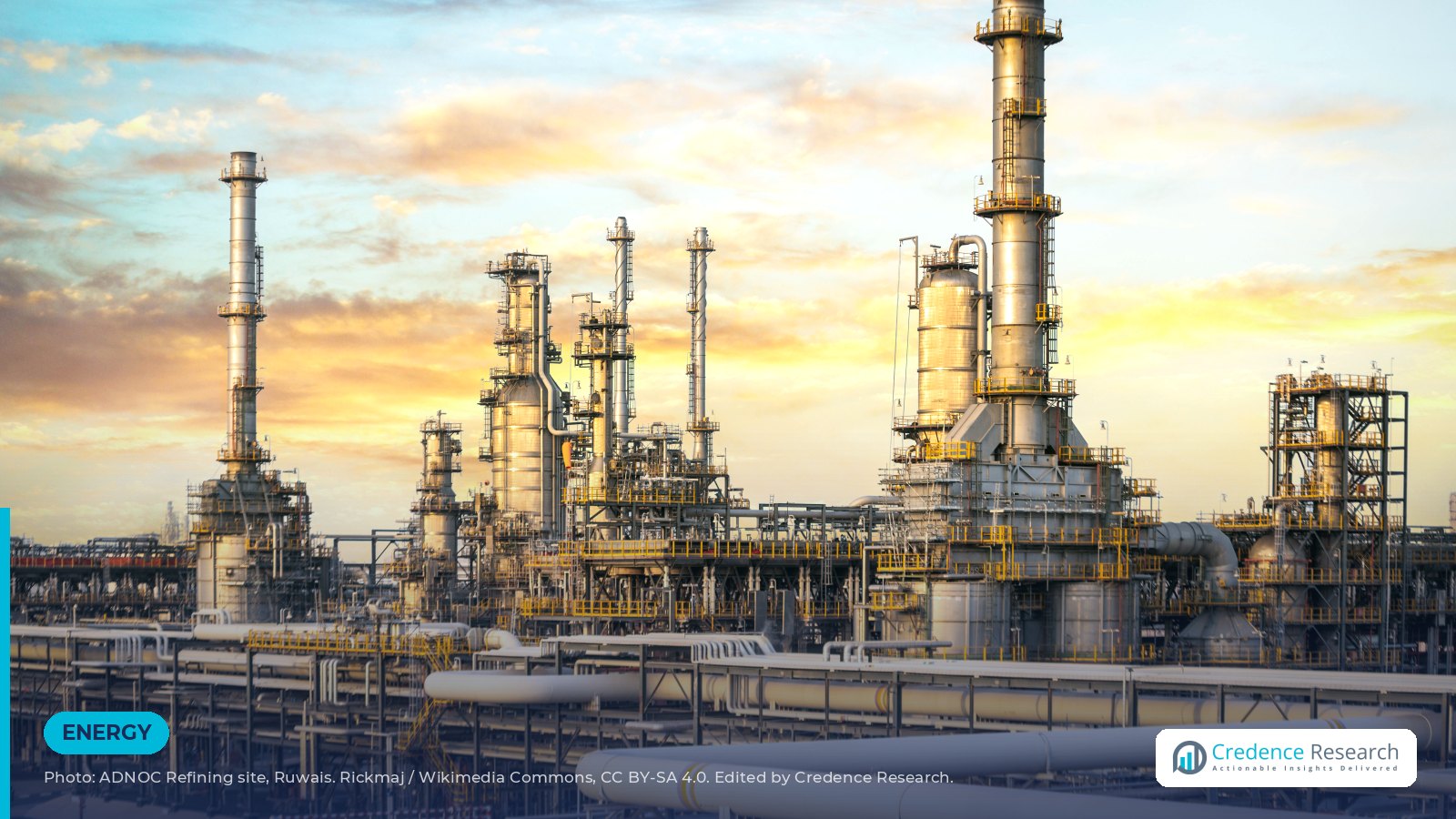
Abu Dhabi National Oil Co. has approved the development of the Ruwais Diyab unconventional gas project, committing the state energy group to its first large-scale push into hydraulically fractured gas. ADNOC announced the final investment decision on Nov. 2 at the ADIPEC energy conference in Abu Dhabi, with first supply targeted for 2029 and a design rate of 345 million standard cubic feet per day of raw gas.
Key developments
- ADNOC took a final investment decision on the Ruwais Diyab Unconventional Gas Development, which Managing Director and Group CEO Sultan Al Jaber called "ADNOC's first large-scale unconventional gas development."
- The project is designed to supply 345 million standard cubic feet per day of raw gas from 2029 over a 25-year period, with potential to reach 1 billion cubic feet per day later.
- Gas will be processed on site and tied into the UAE gas network through new pipelines.
- ADNOC Onshore will deliver the project under a design-build-operate model. MEED, citing unnamed sources, reported that China's Jereh Group won the contract; ADNOC did not name a contractor in its statement.
Industry background
Ruwais Diyab sits about 200 kilometers west of Abu Dhabi city, near the Ruwais industrial area. ADNOC signed the concession with TotalEnergies, then known as Total, in November 2018, and the company describes it as the region's first unconventional gas concession agreement. A year later, Abu Dhabi's Supreme Petroleum Council announced 160 trillion standard cubic feet of recoverable unconventional gas resources.
In November 2020, the partners announced first unconventional gas from the concession into the pipeline network, delivered through a purpose-built line and a centralized early production facility. ADNOC's project page now lists the company as direct operator with a 90% holding and TotalEnergies with the remaining 10%, compared with the 40% stake Total took in 2018.
The new decision moves the asset from appraisal and early production to committed commercial development. ADNOC said the decision followed technical studies, field testing and subsurface analysis intended to reduce development risk. Its project page says it uses hydraulic fracturing along with AI-driven drilling and digital tools, and that Turnwell, a joint venture of ADNOC Drilling, SLB and Patterson-UTI, drilled the unconventional wells behind the program's early results.
Industry implications
Unconventional gas development differs from conventional Gulf production in a basic way: output depends on continuous drilling and stimulation rather than a limited number of long-lived wells. A 25-year supply plan therefore implies sustained demand for rigs, completion crews, proppant, water handling and surface equipment across the life of the project, and not only during an initial construction phase.
The design-build-operate structure matters for the same reason. It places delivery and operating responsibility in a single package under ADNOC Onshore's oversight, a format that fits a repeatable, factory-style drilling program. World Oil reported that ADNOC intends the project to serve as a scalable platform for future unconventional work, which would make Ruwais Diyab a template for other acreage if the wells perform as planned.
The gap between initial and potential output is also worth noting. In 2020, ADNOC said it aimed to produce 1 billion cubic feet per day from the concession before 2030. The approved plan starts at about a third of that level in 2029 and leaves the higher rate as a later possibility, a more staged path than the one set out six years ago.
Competitive and supply chain implications
MEED's report points to a notable sourcing outcome. It said the contract covers the project's second phase and that a formal kick-off meeting between ADNOC and Jereh was expected later in November. Contract value was not disclosed, and the award remains attributed to MEED's sources until ADNOC or Jereh confirms it. A Chinese oilfield equipment and services group taking a central role would stand out in a segment where ADNOC has also publicly drawn on U.S. shale expertise.
The existing service chain has a stake as well. Turnwell's role in earlier wells gives ADNOC Drilling, SLB and Patterson-UTI direct experience in the reservoir, while the on-site gas processing and new pipelines add separate scopes for fabricators and engineering firms. ADNOC has not published a full contractor list for those packages.
The decision also links upstream supply to ADNOC's downstream gas plans. Oil & Gas Journal reported that the Ruwais LNG plant, with 9.6 million tons a year of capacity, is expected to begin commercial production in the second half of 2028. ADNOC said the Diyab gas will support domestic supply and industrial growth as well as its LNG export plans, though it has not said how volumes will be split among those uses.
Regional implications
For the UAE, the project supports ADNOC's stated aim of national gas self-sufficiency. ADNOC says the country holds the world's seventh-largest gas reserves, with 298 trillion cubic feet of conventional gas and 160 trillion cubic feet of unconventional resources. Moving part of that second category into production gives Abu Dhabi another domestic supply source for industrial and other users.
The decision also adds to a broader Gulf shift toward harder-to-produce gas. Saudi Aramco is developing its Jafurah unconventional field, and more Gulf activity of this kind could add to demand for specialized fracturing equipment and crews. Water use is a particular regional concern for this type of development in an arid setting, and ADNOC says it is funding research into water efficiency and management.
Credence Research analysis
The most important signal in this decision is commitment, not volume. A rate of 345 million standard cubic feet per day is modest beside ADNOC's wider gas system, but the decision converts a concession that has been in appraisal since 2018 into a funded, 25-year program. That shift suggests ADNOC has gathered enough well and reservoir data to accept the cost and execution risks of a continuous drilling model outside North America, where such programs have historically proved hard to replicate.
The open question is unit economics. ADNOC did not disclose an investment figure, well count or cost target, so outsiders cannot yet judge how the project compares with conventional and sour gas developments in its portfolio. The clearest evidence will come from whether the company moves toward the 1 billion cubic feet per day case, and how soon. A rapid follow-on decision would indicate that performance met expectations; a long pause would suggest Ruwais Diyab is a bounded supply addition rather than the start of a large new basin.
What comes next
- A formal kick-off meeting between ADNOC and Jereh, which MEED expected later in November.
- Any official confirmation of the contractor, contract value and project scope.
- Construction of on-site processing facilities and new pipelines into the UAE gas network.
- Commercial production at Ruwais LNG, expected in the second half of 2028, according to Oil & Gas Journal.
- First supply from the Ruwais Diyab development in 2029, followed by any decision on higher output.
Sources
- Abu Dhabi Media Office: ADNOC takes final investment decision on Ruwais Diyab
- ADNOC: Unconventional gas project page
- MEED: Adnoc awards contract for Ruwais Diyab unconventional gas
- Oilfield Technology: ADNOC and Total begin unconventional gas production in UAE (2020)
Image: ADNOC Refining site at Ruwais, by Rickmaj via Wikimedia Commons, CC BY-SA 4.0. Cropped and edited by Credence Research.

About the Author

Senior News Editor at Credence Research Inc