
| REPORT ATTRIBUTE | DETAILS |
|---|---|
| Historical Period | 2019-2022 |
| Base Year | 2023 |
| Forecast Period | 2024-2032 |
| Grid Modernization Market Size 2024 | USD 42,640.50 million |
| Grid Modernization Market, CAGR | 17.81% |
| Grid Modernization Market Size 2032 | USD 1,58,269.32 million |
Market Overview
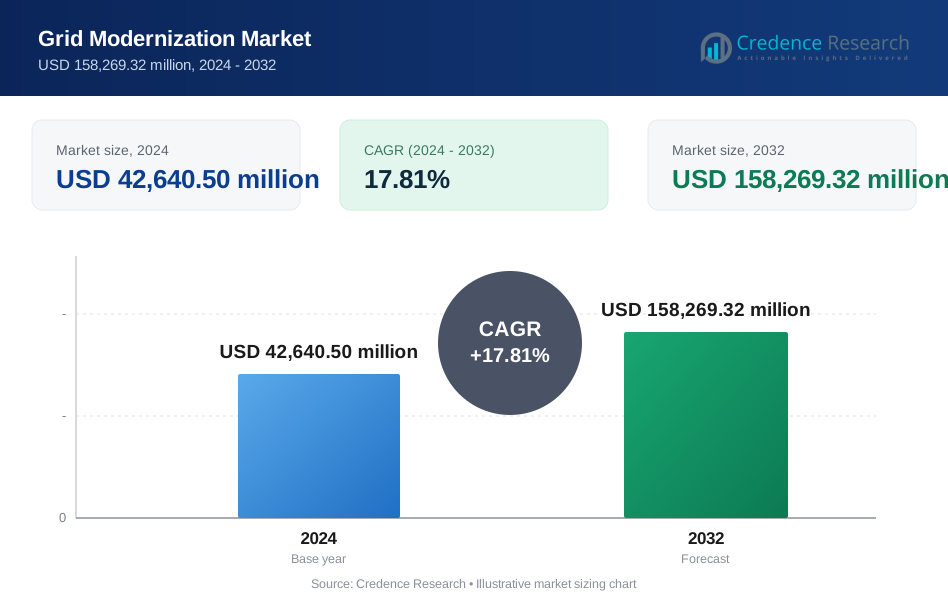
Global Grid Modernization market size was valued at USD 42,640.50 million in 2024 and is anticipated to reach USD 1,58,269.32 million by 2032, at a CAGR of 17.81% during the forecast period (2024-2032).
The Global Grid Modernization market is driven by the increasing demand for reliable, resilient, and efficient energy systems. Aging infrastructure across many regions is prompting governments and utilities to invest in grid upgrades, while the growing integration of renewable energy sources, such as solar and wind, requires advanced grid capabilities for effective distribution. Technological advancements in smart grid technologies, including IoT, AI, and automation, are enhancing grid efficiency and enabling real-time monitoring and control. Furthermore, the shift towards decarbonization and sustainable energy solutions is pushing for greener grids with reduced carbon footprints. Additionally, the rising need for energy security and disaster resilience is further accelerating investments in grid modernization. These factors, combined with government policies supporting energy infrastructure development, are expected to maintain a strong growth trajectory in the market throughout the forecast period.
The Global Grid Modernization market is experiencing significant growth across various regions, driven by increasing investments in energy infrastructure upgrades and the integration of smart grid technologies. North America and Europe lead the market due to strong government initiatives, technological advancements, and a focus on renewable energy integration. Meanwhile, the Asia-Pacific region is witnessing rapid expansion due to rising electricity demand, industrialization, and smart grid initiatives in countries like China, India, and Japan. Latin America and the Middle East & Africa are also emerging as key regions, with increasing investments in modernizing aging power grids and improving energy efficiency. Several prominent players are driving innovation in this market, including General Electric, Siemens AG, Schneider Electric, ABB Ltd., Honeywell International Inc., Hitachi Energy, Mitsubishi Electric Corporation, Cisco Systems, Inc., Itron, Inc., and Eaton Corporation. These companies are focusing on digital grid solutions, automation, and sustainable energy management to enhance power distribution and reliability worldwide.
Market Insights
- The Global Grid Modernization market was valued at USD 42,640.50 million in 2024 and is expected to reach USD 158,269.32 million by 2032, growing at a CAGR of 17.81% from 2024 to 2032.
- Increasing investments in smart grid technologies and energy infrastructure upgrades are driving market growth.
- Adoption of renewable energy sources and the integration of AI-driven grid management systems are key market trends.
- Leading companies such as General Electric, Siemens AG, and Schneider Electric are focusing on advanced grid automation solutions.
- High implementation costs and cybersecurity concerns pose challenges to market expansion.
- North America and Europe lead the market due to strong policy support, while Asia-Pacific is witnessing rapid growth due to rising electricity demand.
- The transition toward decentralized energy systems and the growing penetration of electric vehicles are creating new market opportunities.
Market Drivers
Aging Infrastructure and Need for Upgrades
A significant driver for global grid modernization is the aging energy infrastructure in many regions. For instance, in the United States, a considerable portion of the grid's transmission lines and power transformers are well past their prime, highlighting the urgent need for upgrades to meet current energy demands. Existing electrical grids, especially in developed nations, were built decades ago and are often unable to handle the increasing demand for electricity, let alone support newer, more sustainable energy sources. Utilities are facing rising maintenance costs and inefficiencies due to outdated technology, prompting the need for modernized grids that can improve reliability, reduce downtime, and handle growing energy consumption. As a result, investments in infrastructure upgrades are essential to ensure a secure and stable energy supply.
Integration of Renewable Energy Sources
The transition to renewable energy sources like solar, wind, and hydropower is a key factor driving grid modernization. These energy sources are often intermittent and geographically dispersed, requiring advanced grid technologies to efficiently manage their integration into the existing grid. Smart grids equipped with real-time monitoring, energy storage solutions, and enhanced forecasting capabilities help optimize the distribution of renewable energy. This integration ensures that energy supply meets demand, even during periods of low renewable generation, driving the need for advanced grid infrastructure.
Technological Advancements in Grid Automation
Technological advancements in grid automation, IoT, and AI are playing a critical role in the modernization of global grids. Automation allows for real-time monitoring, predictive maintenance, and quick responses to disruptions, significantly improving grid reliability. AI and machine learning algorithms help optimize energy distribution, reduce losses, and enhance grid efficiency. These innovations enable grid operators to better manage fluctuating demand and supply, offering cost-effective solutions that reduce operational complexities, making grid modernization a necessity for future energy systems.
Policy Support and Sustainability Initiatives
Government policies and sustainability initiatives are driving investments in grid modernization across the globe. For instance, in India, the private sector's overall investment in infrastructure has seen a notable increase, indicating a growing commitment to support renewable energy integration. Many countries are implementing regulations and offering incentives aimed at reducing carbon emissions and enhancing energy efficiency. These initiatives include subsidies for renewable energy integration, tax incentives for smart grid technology adoption, and grants for research and development in grid technologies. As governments emphasize energy security, resilience, and decarbonization, the demand for modernized grids that can support these objectives continues to rise, further fueling the market's growth.
Market Trends
Increasing Adoption of Smart Grid Technologies
One of the key trends in the Global Grid Modernization market is the growing adoption of smart grid technologies. These grids incorporate advanced digital communication, automation, and control systems that enable utilities to monitor and manage electricity distribution in real time. Smart grids optimize energy flow, reduce operational costs, and improve reliability by identifying potential issues before they become critical. For instance, the U.S. Department of Energy is investing USD 100 million through its Smart Grid Program to support the deployment of smart grid technologies and smart integrated systems. With the integration of IoT devices, smart meters, and advanced sensors, utilities can provide consumers with more accurate billing, enable dynamic pricing, and enhance overall grid performance, which is driving the demand for grid modernization solutions.
Rise of Energy Storage Solutions
Energy storage systems are gaining prominence as an essential component of grid modernization. With the growing share of renewable energy in the global energy mix, energy storage plays a crucial role in addressing the intermittent nature of solar and wind power. These systems store excess energy during periods of high generation and release it during peak demand times, helping to stabilize the grid. The increased focus on battery storage, pumped hydro storage, and other energy storage technologies is contributing to the shift towards more flexible and resilient grids that can manage the variability of renewable energy sources, thus driving modernization efforts.
Focus on Cybersecurity and Data Protection
As grids become more connected and digitalized, the need for enhanced cybersecurity measures has become a significant trend in grid modernization. With the increasing use of remote monitoring, automation, and cloud-based systems, grids are more vulnerable to cyberattacks and data breaches. To mitigate these risks, utilities are prioritizing robust cybersecurity strategies, including encryption, multi-factor authentication, and continuous monitoring. Ensuring the security of critical infrastructure and protecting sensitive data is crucial to maintaining the integrity and reliability of modernized grids, leading to greater investment in advanced security solutions.
Expansion of Decentralized Energy Systems
Another emerging trend in grid modernization is the expansion of decentralized energy systems, such as microgrids and distributed energy resources (DERs). These systems allow for localized energy generation and consumption, reducing the strain on centralized grids and enhancing energy security. Microgrids, in particular, offer the ability to operate independently during grid outages, providing a reliable power source for critical infrastructure. The integration of DERs, such as rooftop solar panels and home energy storage, enables consumers to participate in energy generation, further decentralizing energy systems and contributing to the ongoing modernization of grids worldwide.
Market Challenges Analysis
High Initial Capital Investment
One of the primary challenges in global grid modernization is the substantial initial capital investment required for infrastructure upgrades. Modernizing grids involves significant costs, including the installation of advanced technology such as smart meters, sensors, energy storage systems, and automation tools. For instance, the U.S. Department of Energy invested $4.5 billion through the American Recovery and Reinvestment Act to jumpstart the modernization of the nation's aging energy infrastructure. Utilities and governments must allocate considerable resources to retrofit existing grids or build entirely new infrastructure to support these advancements. While long-term benefits, such as improved efficiency, reliability, and integration of renewable energy, are substantial, the high upfront investment remains a major hurdle, especially for regions with limited financial resources or budget constraints.
Regulatory and Policy Barriers
Grid modernization efforts often face challenges stemming from regulatory and policy barriers. In many regions, outdated regulations and slow-moving policy frameworks hinder the adoption of new technologies and investment in grid infrastructure. Grid operators must navigate complex regulatory landscapes, which can delay the implementation of modernization projects. Additionally, inconsistent policies regarding energy pricing, incentives for renewable energy integration, and funding for infrastructure improvements can create uncertainty, discouraging investment in modernization efforts. The lack of standardization across countries and regions further complicates the adoption of best practices, slowing down the global pace of grid modernization and limiting the realization of its full potential.
Market Opportunities
Growth in Renewable Energy Integration
A significant opportunity in the Global Grid Modernization market lies in the growing integration of renewable energy sources. As countries shift towards cleaner, more sustainable energy solutions, modern grids equipped with advanced technologies can better handle the intermittent nature of solar and wind power. This presents a valuable opportunity for grid operators to invest in smart grids, energy storage systems, and flexible grid management tools that can balance supply and demand efficiently. The increasing adoption of renewable energy presents both a challenge and an opportunity for grid modernization, driving the need for innovative solutions that enhance grid reliability, reduce operational costs, and support sustainability goals.
Investment in Energy Storage and Automation
The rising demand for energy storage solutions and grid automation presents another opportunity in the grid modernization sector. Energy storage systems, such as advanced batteries, pumped hydro storage, and other technologies, help stabilize the grid by storing excess energy and releasing it during peak demand times. Automation technologies, including real-time monitoring, predictive analytics, and AI-driven optimization, allow for more efficient grid management and improved operational performance. As utilities and governments increasingly prioritize energy resilience, efficiency, and sustainability, investments in these technologies will play a crucial role in modernizing grids, creating a wide range of opportunities for industry players to develop innovative solutions that meet the evolving needs of the global energy market.
Market Segmentation Analysis:
By Component:
The Global Grid Modernization market is segmented by component into hardware, software, and services. Hardware plays a crucial role in upgrading aging infrastructure, incorporating advanced technologies such as smart meters, sensors, and automated control systems to enhance grid efficiency and reliability. Increasing investments in grid automation and energy storage solutions are driving the demand for modernized hardware. Software solutions, including grid management systems and AI-driven analytics, are vital for real-time monitoring, predictive maintenance, and energy distribution optimization. These solutions enable utilities to improve grid resilience and integrate renewable energy sources efficiently. Additionally, services such as consulting, deployment, and maintenance support the seamless implementation of grid modernization projects. Utilities and government bodies are increasingly relying on service providers to ensure smooth grid transitions and long-term operational stability. As the demand for smart grids and decentralized energy systems grows, advancements in all three segments will continue to shape the future of grid modernization, ensuring enhanced energy efficiency, sustainability, and reliability worldwide.
By Application:
Based on application, the Global Grid Modernization market is categorized into residential, commercial, and industrial sectors. The residential segment is witnessing significant growth due to the increasing adoption of smart home technologies, distributed energy resources, and energy management systems that enhance power efficiency and consumer control. Rising electricity demand and the need for resilient power supply drive modernization efforts in commercial applications, where businesses are integrating smart grid solutions to optimize energy usage, reduce operational costs, and ensure uninterrupted power. The industrial segment remains a major contributor to grid modernization, with industries increasingly adopting advanced grid infrastructure to enhance power reliability, manage peak demand, and integrate renewable energy. Large manufacturing plants, data centers, and energy-intensive industries require efficient grid solutions to minimize energy losses and improve productivity. With governments and private players investing heavily in modern grid technologies across all sectors, the market is poised for sustained growth, ensuring enhanced grid resilience, energy security, and long-term sustainability.
Segments:
Based on Component:
- Hardware
- Software
- Services
Based on Application:
- Residential
- Commercial
- Industrial
Based on End-User:
- Utilities
- Independent Power Producers (IPPs)
- Government and Municipalities
Based on the Geography:
- North America
- U.S.
- Canada
- Mexico
- Europe
- UK
- France
- Germany
- Italy
- Spain
- Russia
- Belgium
- Netherlands
- Austria
- Sweden
- Poland
- Denmark
- Switzerland
- Rest of Europe
- Asia Pacific
- China
- Japan
- South Korea
- India
- Australia
- Thailand
- Indonesia
- Vietnam
- Malaysia
- Philippines
- Taiwan
- Rest of Asia Pacific
- Latin America
- Brazil
- Argentina
- Peru
- Chile
- Colombia
- Rest of Latin America
- Middle East
- UAE
- KSA
- Israel
- Turkey
- Iran
- Rest of Middle East
- Africa
- Egypt
- Nigeria
- Algeria
- Morocco
- Rest of Africa
Regional Analysis
North America
North America holds a dominant share in the Global Grid Modernization market, accounting for approximately 35% of the total market in 2024. The region's leadership is driven by strong government initiatives, significant investments in smart grid technology, and the rapid adoption of renewable energy sources. The U.S. and Canada are actively modernizing their power grids to enhance resilience, improve energy efficiency, and integrate distributed energy resources (DERs). Federal and state-level programs, such as the U.S. Department of Energy’s Grid Modernization Initiative, have accelerated the deployment of advanced grid infrastructure. Additionally, the growing adoption of electric vehicles (EVs) and energy storage solutions is fueling demand for smart grids and automation technologies. Utility providers are investing in digital transformation, deploying AI-driven grid management systems and cybersecurity solutions to enhance grid reliability and security. The increasing focus on reducing carbon emissions and transitioning toward sustainable energy solutions will further propel grid modernization in North America.
Europe
Europe holds a significant 28% market share in the Global Grid Modernization market, supported by stringent regulatory frameworks and ambitious climate goals. The European Union’s Clean Energy Package and policies such as the Fit for 55 initiative aim to reduce carbon emissions and promote the adoption of smart grid technologies. Countries like Germany, France, and the U.K. are investing heavily in grid automation, renewable energy integration, and energy storage solutions to enhance grid resilience. The rise of decentralized energy systems, including microgrids and community-based renewable projects, is further driving grid modernization efforts. Utilities are leveraging digital technologies such as real-time monitoring, AI-powered analytics, and blockchain-based energy trading platforms to optimize energy distribution. Additionally, the increasing penetration of electric vehicles and demand-side management solutions is encouraging investments in advanced grid infrastructure. With ongoing policy support, technological advancements, and a strong commitment to sustainability, Europe is poised to witness continued growth in grid modernization efforts.
Asia-Pacific
The Asia-Pacific region is witnessing the fastest growth in grid modernization, holding an estimated 22% market share in 2024. Rapid urbanization, industrial expansion, and increasing electricity demand are key drivers of market growth, particularly in China, India, Japan, and South Korea. Governments across the region are investing in smart grid initiatives to improve power reliability, enhance energy security, and integrate renewable energy sources. China, the largest energy consumer, is leading the way with large-scale investments in ultra-high voltage (UHV) transmission networks and AI-driven grid automation. India’s Smart Grid Mission is accelerating infrastructure upgrades to minimize power losses and ensure stable electricity distribution. Additionally, Japan and South Korea are focusing on energy storage solutions and smart grid technologies to optimize energy consumption and enhance grid flexibility. As the demand for electricity rises and sustainability goals become a priority, Asia-Pacific will continue to be a major player in the global grid modernization landscape.
Latin America
Latin America holds a 15% market share in the Global Grid Modernization market, with growing investments in energy infrastructure upgrades. The region faces challenges such as aging power grids, high transmission losses, and frequent power outages, driving the need for modernization. Countries like Brazil, Mexico, and Chile are implementing smart grid projects to enhance energy efficiency and improve grid resilience. Government policies and international funding initiatives are supporting the deployment of advanced grid technologies, including smart meters, automated distribution systems, and renewable energy integration. Brazil’s regulatory reforms are promoting the adoption of smart grid solutions, while Mexico is expanding its renewable energy projects to reduce dependency on fossil fuels. The increasing penetration of distributed energy resources and microgrid developments in remote areas are creating opportunities for grid modernization. As Latin America continues to address infrastructure challenges and attract investments, the region is expected to experience steady growth in modern grid deployments.
Key Player Analysis
- General Electric
- Siemens AG
- Schneider Electric
- ABB Ltd.
- Honeywell International Inc.
- Hitachi Energy
- Mitsubishi Electric Corporation
- Cisco Systems, Inc.
- Itron, Inc.
- Eaton Corporation
Competitive Analysis
The Global Grid Modernization market is highly competitive, with leading players focusing on innovation, strategic partnerships, and technological advancements to strengthen their market position. Key players such as General Electric, Siemens AG, Schneider Electric, ABB Ltd., Honeywell International Inc., Hitachi Energy, Mitsubishi Electric Corporation, Cisco Systems, Inc., Itron, Inc., and Eaton Corporation are actively investing in smart grid solutions, automation, and digital energy management. These companies are leveraging artificial intelligence (AI), Internet of Things (IoT), and advanced analytics to enhance grid efficiency, reliability, and sustainability. For instance, General Electric is a leader in the development of digital grid technologies and advanced energy storage solutions, which increase the overall efficiency of power systems. Strategic collaborations and acquisitions are common strategies among these market leaders to expand their geographic footprint and product portfolios. For instance, companies are increasingly focusing on AI-powered grid optimization, smart meters, and cybersecurity solutions to meet evolving regulatory requirements. Additionally, investments in renewable energy integration and energy storage solutions are shaping the competitive landscape. As the market continues to grow, companies that emphasize innovation and adaptability will maintain a strong competitive edge in the evolving grid modernization sector.
Recent Developments
- In October 2024, Hitachi Energy introduced Grid-enSure in India to advance the country's transition to sustainable energy. The company also announced plans to invest around INR 2,000 crore over the next four to five years in capacity expansion and upgrades for various transformer factories.
- In August 2024, Hitachi Energy called for urgent action to expand global power grids, reduce connection bottlenecks, and accelerate the energy transition. They launched Grid-enSure™ at the CIGRE 2024 Paris Session, a portfolio of solutions to enhance grid flexibility, resilience, and stability.
- In May 2024, Siemens revealed the Gridscale X software, a "co-pilot" for flexible low voltage grid management, aiming to reduce outages by up to 30%.
Market Concentration & Characteristics
The Global Grid Modernization market is characterized by a moderate to high concentration, with a few dominant players holding substantial market shares. Major companies such as General Electric, Siemens AG, Schneider Electric, ABB Ltd., Honeywell International Inc., Hitachi Energy, Mitsubishi Electric Corporation, Cisco Systems, Inc., Itron, Inc., and Eaton Corporation are at the forefront, offering comprehensive solutions across grid automation, energy management, and renewable energy integration. These leaders leverage their extensive technological expertise, global presence, and financial strength to lead innovation in smart grid technologies. While the market is concentrated around these key players, the increasing demand for grid resilience, sustainability, and energy efficiency has opened opportunities for smaller and specialized firms to contribute through niche offerings.
The market is defined by rapid technological advancements, particularly in AI-driven solutions, IoT integration, and advanced energy storage systems. Strategic collaborations, mergers, and acquisitions are prevalent, allowing companies to expand their product portfolios and geographic reach. The focus on improving grid reliability, reducing energy losses, and integrating decentralized energy resources is a key characteristic. Furthermore, the market is influenced by strong regulatory frameworks and government-backed initiatives promoting clean energy adoption. As utilities globally modernize their infrastructure, competition remains high, pushing firms to innovate continuously and meet the growing demand for smarter, more efficient grids.
Report Coverage
The research report offers an in-depth analysis based on Component, Application, End-User, and Geography. It details leading market players, providing an overview of their business, product offerings, investments, revenue streams, and key applications. Additionally, the report includes insights into the competitive environment, SWOT analysis, current market trends, as well as the primary drivers and constraints. Furthermore, it discusses various factors that have driven market expansion in recent years. The report also explores market dynamics, regulatory scenarios, and technological advancements that are shaping the industry. It assesses the impact of external factors and global economic changes on market growth. Lastly, it provides strategic recommendations for new entrants and established companies to navigate the complexities of the market.
Future Outlook
- The Global Grid Modernization market is expected to grow significantly, driven by increasing investments in smart grid infrastructure.
- Advancements in AI, IoT, and machine learning will continue to revolutionize grid automation and management.
- The integration of renewable energy sources will become a key focus for grid modernization projects.
- The demand for energy storage solutions will rise as grids evolve to accommodate renewable energy fluctuations.
- Smart meters and real-time monitoring systems will become standard components in grid management.
- Decentralized energy systems, including microgrids, will gain popularity, enhancing grid resilience.
- Increased government and regulatory support for sustainable energy solutions will propel market growth.
- Cybersecurity will be a critical concern, with companies focusing on securing digital grid technologies.
- The rise of electric vehicles will drive demand for advanced grid infrastructure and charging solutions.
- Collaborative partnerships between technology providers, utilities, and governments will play a key role in shaping the future of grid modernization.
Request a Free Sample
Fill in your details and we'll send you a free sample report.
- Sample data tables & charts
- Research methodology
Need a Custom Version of This Report?
Tailor the scope, geography, or segments to your exact requirements.
- Custom geography or segment scope
- Direct access to our analyst team
Frequently Asked Questions
What is the current size of the Global Grid Modernization market?
What factors are driving the growth of the Global Grid Modernization market?
What are some challenges faced by the Global Grid Modernization market?
Who are the major players in the Global Grid Modernization market?
Table of Content
Chapter 1. Report Introduction
- 1.1 Report Description & Purpose
- 1.1.1 Report Title & Market Definition
- 1.1.2 Unique Selling Propositions (USP) & Key Differentiators
- 1.1.3 Value Proposition for Stakeholders
- 1.2 Research Objectives
- 1.2.1 Market Sizing Objectives (Volume & Revenue) (Volume Where Applicable)
- 1.2.2 Segmentation Objectives
- 1.2.3 Competitive Intelligence Objectives
- 1.2.4 Forecast & Scenario Objectives
- 1.3 Report Scope
- 1.3.1 Grid Modernization Scope – Segments & Subsegments Covered
- 1.3.2 Geographic Scope – Regions & Countries Covered
- 1.3.3 Historical Period, Base Year & Forecast Period (2024; forecast to 2032)
- 1.3.4 Inclusions & Exclusions
- 1.4 Industry Classification & Applicable Codes
- 1.5 Currency, Measurement Units & Valuation Basis
- 1.6 Target Stakeholders
- 1.7 Limitations & Assumptions
Chapter 2. Executive Summary
- 2.1 Global Grid Modernization Market Snapshot
- 2.1.1 Market Size – Historical (2024) & Forecast (2024-2032) (2024: USD 42,640.50 million → 2032: USD 158,269.32 million)
- 2.1.2 Volume & Revenue – Global Totals (Volume Where Applicable)
- 2.1.3 Key Market Highlights – Top Five Facts
- 2.2 Grid Modernization Market Segmentation Snapshot
- 2.2.1 Market Split by Region – 2024 vs. 2032
- 2.3 Competitive Snapshot
- 2.3.1 Top 10 Players by Revenue Share – 2024
- 2.3.2 Top 10 Players by Volume Share – 2024 (Volume Where Applicable)
- 2.3.3 Recent Strategic Developments (18-Month Summary)
- 2.4 Key Investment Highlights & Strategic Conclusions
Chapter 3. Grid Modernization Market Dynamics & Industry Analysis
- 3.1 Market Overview & Context
- 3.1.1 Grid Modernization Market Position in the Broader Industry Value Chain
- 3.1.2 Demand Structure & Purchasing Dynamics
- 3.1.3 Market Maturity & Development Stage by Region
- 3.2 Grid Modernization Market Drivers
- 3.3 Grid Modernization Market Restraints & Challenges
- 3.4 Grid Modernization Market Opportunities
- 3.5 Porter's Five Forces Analysis
- 3.5.1 Threat of New Entrants
- 3.5.2 Bargaining Power of Suppliers
- 3.5.3 Bargaining Power of Buyers
- 3.5.4 Threat of Substitutes
- 3.5.5 Competitive Rivalry – Intensity Assessment
- 3.6 Grid Modernization Value Chain Analysis
- 3.6.1 Upstream – Key Inputs, Resources & Suppliers
- 3.6.1.1 Key Input/Resource 1
- 3.6.1.2 Key Input/Resource 2
- 3.6.1.3 Key Input/Resource 3
- 3.6.2 Midstream – Core Operations & Value Creation
- 3.6.2.1 Operating Model & Process Overview
- 3.6.2.2 Key Operating Locations & Capabilities by Company
- 3.6.3 Downstream – Market Channels & End Users
- 3.6.3.1 Direct Sales & Customer Engagement Channels
- 3.6.3.2 Indirect Sales, Intermediaries & Partner Channels
- 3.6.4 Value Chain Profitability Analysis
- 3.6.1 Upstream – Key Inputs, Resources & Suppliers
- 3.7 PESTEL Analysis
- 3.7.1 Political Factors
- 3.7.2 Economic Factors
- 3.7.3 Social Factors
- 3.7.4 Technological Factors
- 3.7.5 Environmental Factors
- 3.7.6 Legal Factors
- 3.8 Grid Modernization Supply Chain Analysis
- 3.8.1 Critical Input & Resource Availability Risk Assessment
- 3.8.2 Supplier & Operational Concentration Risk (Geographic Exposure)
- 3.8.3 Supply & Service Disruption Impact Analysis
- 3.9 Regulatory & Policy Landscape
Note: The regulatory and policy landscape section covers regulations based on their applicability to the market, Grid Modernization category, geography, and scope of the study. Only regulatory frameworks with a material impact on operations, compliance, trade, sustainability, or market access are analyzed in detail.
Chapter 4. Key Investment Pockets & Opportunity Analysis
- 4.1 Grid Modernization Market Attractiveness Analysis
- 4.1.1 By Region – Investment Attractiveness Matrix (Market Size × CAGR)
- 4.2 Absolute Revenue Growth Opportunity
- 4.2.1 By Region – Absolute Revenue Growth Through 2032
- 4.3 Incremental Demand Opportunity
- 4.3.1 By Region – Incremental Demand Through 2032
- 4.3.2 Segment – Incremental Demand
- 4.4 Emerging Submarket Opportunity Deep Dive (Subject to Applicability)
- 4.5 Priority Market Opportunity Scorecards
- 4.5.1 United States
- 4.5.2 Europe
- 4.5.3 Asia
- 4.5.4 Middle East & Africa
Note: Priority market opportunity scorecards reflect the geographic scope and strategic relevance of the study. Listed markets are indicative and may be adapted to the industry.
Chapter 5. Grid Modernization Cross-Border Trade & Market Access Analysis
- 5.1 International Trade & Cross-Border Activity Overview
- 5.1.1 Global Export Value by Country (2024)
- 5.1.2 Global Export Volume by Country (2024) (Volume Where Applicable)
- 5.1.3 Global Import Value by Country (2024)
- 5.1.4 Global Import Volume by Country (2024) (Volume Where Applicable)
- 5.1.5 Net Trade Balance by Country (2024)
- 5.2 Export Analysis – Segment
- 5.2.1 Category 1 (Applicable Classification Code)
- 5.2.2 Category 2 (Applicable Classification Code)
- 5.2.3 Category 3 (Applicable Classification Code)
- 5.2.4 Category 4 (Applicable Classification Code)
- 5.2.5 Category 5 (Applicable Classification Code)
- 5.3 Import Analysis – Segment
- 5.3.1 Category 1 (Applicable Classification Code)
- 5.3.2 Category 2 (Applicable Classification Code)
- 5.3.3 Category 3 (Applicable Classification Code)
- 5.3.4 Category 4 (Applicable Classification Code)
- 5.3.5 Category 5 (Applicable Classification Code)
- 5.4 Cross-Border Pricing & Transaction Benchmarks
- 5.4.1 Export Pricing – Segment & Country
- 5.4.2 Import Pricing – Segment & Source Country
- 5.4.3 Price Trends (2024)
- 5.5 Key Cross-Border Trade & Delivery Routes
- 5.5.1 Cross-Border Trade/Delivery Route 1
- 5.5.2 Cross-Border Trade/Delivery Route 2
- 5.5.3 Cross-Border Trade/Delivery Route 3
- 5.5.4 Cross-Border Trade/Delivery Route 4
- 5.5.5 Cross-Border Trade/Delivery Route 5
- 5.6 Trade Policy & Market Access Impact Assessment
- 5.6.1 Tariff & Non-Tariff Barriers
- 5.6.2 Regional Trade & Economic Integration Frameworks
- 5.6.3 Bilateral & Multilateral Trade Agreements
- 5.6.4 Cross-Border Operating, Licensing & Localization Requirements
Note: This chapter applies where cross-border trade or delivery is relevant to Grid Modernization. Goods, services, and digital offerings are assessed using applicable classifications and transaction measures. Import-export volumes, trade balances, and route analyses are included only where meaningful to the market.
Chapter 6. Competitive Landscape & Company Benchmarking
- 6.1 Grid Modernization Market Concentration & Structure
- 6.1.1 Herfindahl-Hirschman Index (HHI) – the historical period vs. 2024
- 6.1.2 Leading, Mid-Sized & Emerging Player Structure
- 6.1.3 Global, Regional & Local Player Dynamics
- 6.2 Grid Modernization Market Share Analysis – 2024
- 6.2.1 Global Revenue Share by Company
- 6.2.2 Global Volume Share by Company (Volume Where Applicable)
- 6.2.3 Regional Revenue Share
- 6.2.4 Market Share Evolution (the historical period vs. 2024)
- 6.2.5 Company Market Share by Key Segment
- 6.2.6 Company Market Share by Customer Group
- 6.3 Operating Scale, Capacity & Infrastructure Analysis
- 6.3.1 Global Operating Scale & Supply Capacity
- 6.3.2 Resource Utilization & Operating Efficiency
- 6.3.3 Output, Service Delivery & Activity Metrics
- 6.3.4 Operating Footprint & Infrastructure Map
- 6.3.5 Planned Operational & Capacity Expansion
- 6.4 Grid Modernization Competitive Benchmarking Matrix
- 6.4.1 Revenue, Growth, Profitability & Operating Metric Comparison
- 6.4.2 Channel Revenue Mix
- 6.4.3 Geographic Revenue Exposure
- 6.4.4 R&D Intensity
- 6.4.5 Sustainability Maturity
- 6.5 Strategic Developments in Grid Modernization (Last 24 Months)
- 6.5.1 Mergers, Acquisitions & Divestments
- 6.5.2 New Products, Services & Solutions in Grid Modernization
- 6.5.3 Operational & Infrastructure Expansions
- 6.5.4 Strategic Alliances, Joint Ventures & Partnerships
- 6.5.5 Distribution Expansion & Market Entry
- 6.5.6 Sustainability & ESG Initiatives
- 6.6 Competitive Strategy Mapping
- 6.6.1 Leader, Challenger, Follower & Niche Classification
- 6.6.2 Pricing Strategy Comparison
- 6.6.3 Channel Strategy Matrix
Note: Strategic developments are included based on their materiality and the availability of reliable information.
Chapter 7. Global Grid Modernization Market – By Sales & Delivery Channel
- 7.1 Segment Overview
- 7.1.1 Volume & Revenue Split by Channel (2024 & 2032) (Volume Where Applicable)
- 7.1.2 Channel Mix Evolution (2024-2032)
Chapter 8. Regional Market Analysis – Global Overview
- 8.1 Global Regional Overview
- 8.1.1 Regional Volume Share (Volume Where Applicable)
- 8.1.2 Regional Revenue Share
- 8.1.3 Regional Volume by Region (Volume Where Applicable)
- 8.1.4 Regional Revenue by Region
- 8.1.5 Regional Forecast Through 2032
- 8.2 Cross-Regional Segment Analysis
- 8.2.1 By Sales & Delivery Channel
- 8.2.2 By Competitive Positioning & Price Tier
Chapter 9. North America Grid Modernization Market
- 9.1 United States
- 9.2 Canada
- 9.3 Mexico
Chapter 10. Europe Grid Modernization Market
- 10.1 Germany
- 10.2 France
- 10.3 Italy
- 10.4 United Kingdom
- 10.5 Spain
- 10.6 Poland
- 10.7 Russia
- 10.8 Netherlands
- 10.9 Belgium
- 10.10 Sweden
- 10.11 Denmark
- 10.12 Norway
- 10.13 Rest of Europe
Chapter 11. Asia Pacific Grid Modernization Market
- 11.1 China
- 11.2 India
- 11.3 Japan
- 11.4 South Korea
- 11.5 Thailand
- 11.6 Indonesia
- 11.7 Vietnam
- 11.8 Malaysia
- 11.9 Australia
- 11.10 Rest of Asia Pacific
Chapter 12. Latin America Grid Modernization Market
- 12.1 Brazil
- 12.2 Argentina
- 12.3 Colombia
- 12.4 Chile
- 12.5 Rest of Latin America
Chapter 13. Middle East Grid Modernization Market
- 13.1 Saudi Arabia
- 13.2 United Arab Emirates
- 13.3 Turkey
- 13.4 Israel
- 13.5 Iran
- 13.6 Rest of the Middle East
Chapter 14. Africa Grid Modernization Market
- 14.1 South Africa
- 14.2 Egypt
- 14.3 Nigeria
- 14.4 Morocco
- 14.5 Rest of Africa
Chapter 15. Grid Modernization Company Profiles
- 15.1 [Company 01]
- 15.1.1 Company Overview
- 15.1.2 Key Management Personnel
- 15.1.3 Products & Services Portfolio
- 15.1.4 Financial Performance
- 15.1.5 Key Market Focus & Geographic Presence
- 15.1.6 Recent Developments & Strategic Initiatives
Note: The company profile list is preliminary and may change based on research findings, market developments, data availability, and client requirements.
Chapter 16. Appendices
- Appendix A – List of Abbreviations & Acronyms
- Appendix B – Industry Classification Code Reference – Full Series
- Appendix C – Supply, Output & Operating Capacity Data Tables
- Appendix D – End-Use & Demand Base Tables
- Appendix E – Demand, Adoption & Usage Assumptions
- Appendix F – Pricing & Revenue Metric Reference Tables
- Appendix G – Company Operations & Infrastructure Database
- Appendix H – Cross-Border Trade & Activity Data Tables (Where Applicable)
- Appendix I – Regulatory Summary Tables
- Appendix J – Primary Research Participant List (Anonymized)
- Appendix K – Primary Research Questionnaire Framework
- Appendix L – Data Sources & Bibliography
- Appendix M – Market Size Divergence & Source Comparison
Chapter 17. Research Methodology
- 17.1 Research Framework & Philosophy
- 17.2 Secondary Research – Sources, Hierarchy & Data Extraction
- 17.3 Data Modeling – Bottom-Up & Top-Down Market Sizing
- 17.4 Primary Research – Stakeholder Framework, LOI & Sample Sizes
- 17.5 Forecast Methodology – Regression, Scenario & Sensitivity Analysis
- 17.6 Quality Control – Four-Layer Validation Framework
- 17.7 Limitations & Standard Assumptions
- 17.8 Disclaimer
