
AST SpaceMobile Signs $1.3 Billion Firefly Engine Deal to Build Its Own Blacklift Rocket
AST SpaceMobile plans to build its own reusable rocket, called Blacklift, around engines licensed from Firefly Aerospace, the two companies said on Nov. 6, 2026. The satellite operator, based in Midland, Texas, agreed to pay Firefly more than $1.3 billion in cash and stock for 36 rocket engines, a perpetual license to manufacture them and three years of engineering support, with the first Blacklift launches targeted for late 2028.
Key developments
- Firefly will deliver 36 engines, 27 Miranda first-stage engines and nine vacuum-optimized Vira engines, to power AST SpaceMobile's first three Blacklift rockets.
- AST SpaceMobile will pay about $800 million upfront for a perpetual manufacturing license, made up of $400 million in cash and 10 million to 14 million Class A shares priced on a forward volume-weighted average.
- A separate $250 million supply agreement covers the engines for the first three launches, and another $250 million covers engineering support services over three years.
- AST SpaceMobile will produce Miranda and Vira engines at a new U.S. engine facility; Firefly keeps full ownership of the engine intellectual property.
- Blacklift is designed for reuse and is intended to carry up to five BlueBird satellites per launch to low Earth orbit.
Industry background
AST SpaceMobile is building a constellation of large BlueBird satellites designed to connect directly with ordinary mobile phones, a model often called direct-to-device service. The company has so far relied on outside launch providers to put them in orbit. In its Nov. 6 release, AST SpaceMobile said it has launch agreements covering more than 100 BlueBird satellites for deployment in 2027 and 2028, and that satellites are in production through BlueBird 51 at its Midland facilities.
Firefly, headquartered in Leander, Texas, flies the Alpha small launch vehicle and is developing larger rockets. Firefly says Miranda produces 230,000 pounds of thrust, has completed more than 175 hot-fire tests totaling over 4,200 seconds, and recently ran a flight-like test at 110% power that lasted 20 seconds beyond its 206-second nominal flight duration. The company says Miranda and Vira were scaled up from its Reaver and Lightning engines.
AST SpaceMobile described Blacklift as a vehicle built for simple, mission-specific and repetitive launches to low Earth orbit using tested fuels and materials, rather than a general-purpose rocket competing for outside customers.
Industry implications
The deal is an unusual case of a satellite operator moving into launch vehicle manufacturing. Most constellation builders buy rides from launch companies; AST SpaceMobile is choosing to own the rocket while licensing the most difficult subsystem, the engine, from a supplier with test history. AST SpaceMobile President Scott Wisniewski said the Miranda engine would let the company skip much of the traditional five-to-ten-year development cycle for a new launcher.
For Firefly, the agreement creates a new revenue model built on licensing and engineering services alongside hardware sales. Firefly CEO Jason Kim argued that the engine is the hardest and highest-stakes choice for any company building its own rocket. If the model works, other operators with heavy, recurring launch needs could weigh similar arrangements instead of developing engines in-house.
The structure also shifts risk. AST SpaceMobile takes on vehicle integration, manufacturing scale-up and flight testing, areas where new launch programs have historically faced delays. The company's own release flags Blacklift timing and performance, along with regulatory approvals, as forward-looking risks.
Competitive and supply chain implications
Owning a dedicated launcher could reduce AST SpaceMobile's exposure to the scheduling and pricing of outside providers, a recurring constraint for operators deploying large satellites in quick succession. The company is not abandoning those providers. It said it will continue to use external launches and has access to additional U.S. government launches tied to its DPAS-rated program, giving it parallel paths to orbit while Blacklift is developed.
On the supply side, the agreement moves engine production toward a two-site model. Firefly will build and deliver the initial 36 engines, and the deal funds new test bays at its Rocket Ranch in Briggs, Texas, where Miranda completed full-power firing. AST SpaceMobile will then need to stand up its own engine plant, workforce and supplier base for turbomachinery, valves, combustion chambers and precision machined parts. That build-out will draw on the same specialized aerospace supply chain that other launch developers rely on.
The share component of the license payment, subject to lock-up periods according to Firefly, also gives Firefly a financial stake in AST SpaceMobile's execution.
Regional implications
The program concentrates activity in Texas. AST SpaceMobile assembles BlueBird satellites in Midland, Firefly's engineering, manufacturing and test operations are co-located in central Texas, and the new test bays will be built in Briggs. Neither company has named the location of AST SpaceMobile's new U.S. engine facility or a launch site for Blacklift, two decisions that will determine where the next wave of jobs and infrastructure investment lands.
The launch site choice will also involve federal licensing and range access. AST SpaceMobile has so far launched BlueBird satellites from Florida's Space Coast on outside rockets, and a dedicated vehicle would need its own pad arrangements and approvals.
Credence Research analysis
The agreement reflects a broader push by constellation operators to control the pace of deployment rather than wait for capacity on third-party rockets. By paying roughly $800 million upfront for a license and $500 million more for engines and support, AST SpaceMobile is buying time and tested hardware rather than starting a propulsion program from scratch. The trade-off is that it now carries the integration, production and flight-test risks that have slowed many new launch vehicles, and the late-2028 target leaves little margin for the slips common in first flights.
For Firefly, the deal gives Miranda a large commercial customer while the engine's record rests on ground testing, and the licensing structure could become a template for monetizing propulsion technology across multiple customers. The key questions are whether AST SpaceMobile can replicate Firefly's engine quality in a new factory and whether reusability delivers the launch cadence the company needs. The external launch agreements covering more than 100 satellites suggest management views Blacklift as a long-term cost and control lever rather than a near-term replacement.
What comes next
- AST SpaceMobile will unveil Blacklift at an event in New York City on Thursday, Nov. 12, 2026, with a webcast on its investor relations site.
- Firefly will discuss the agreement on its third quarter 2026 earnings call at 5 p.m. ET on Tuesday, Nov. 10, 2026.
- AST SpaceMobile is expected to name the site of its new U.S. engine facility and a launch location for Blacklift.
- Firefly will build new test bays in Briggs, Texas, and begin delivering engines for the first three rockets.
- External launches covering more than 100 BlueBird satellites are planned for 2027 and 2028, with Blacklift launches starting in late 2028.
Sources
- AST SpaceMobile press release, Form 8-K Exhibit 99.1, Nov. 6, 2026
- Firefly Aerospace press release, Nov. 6, 2026
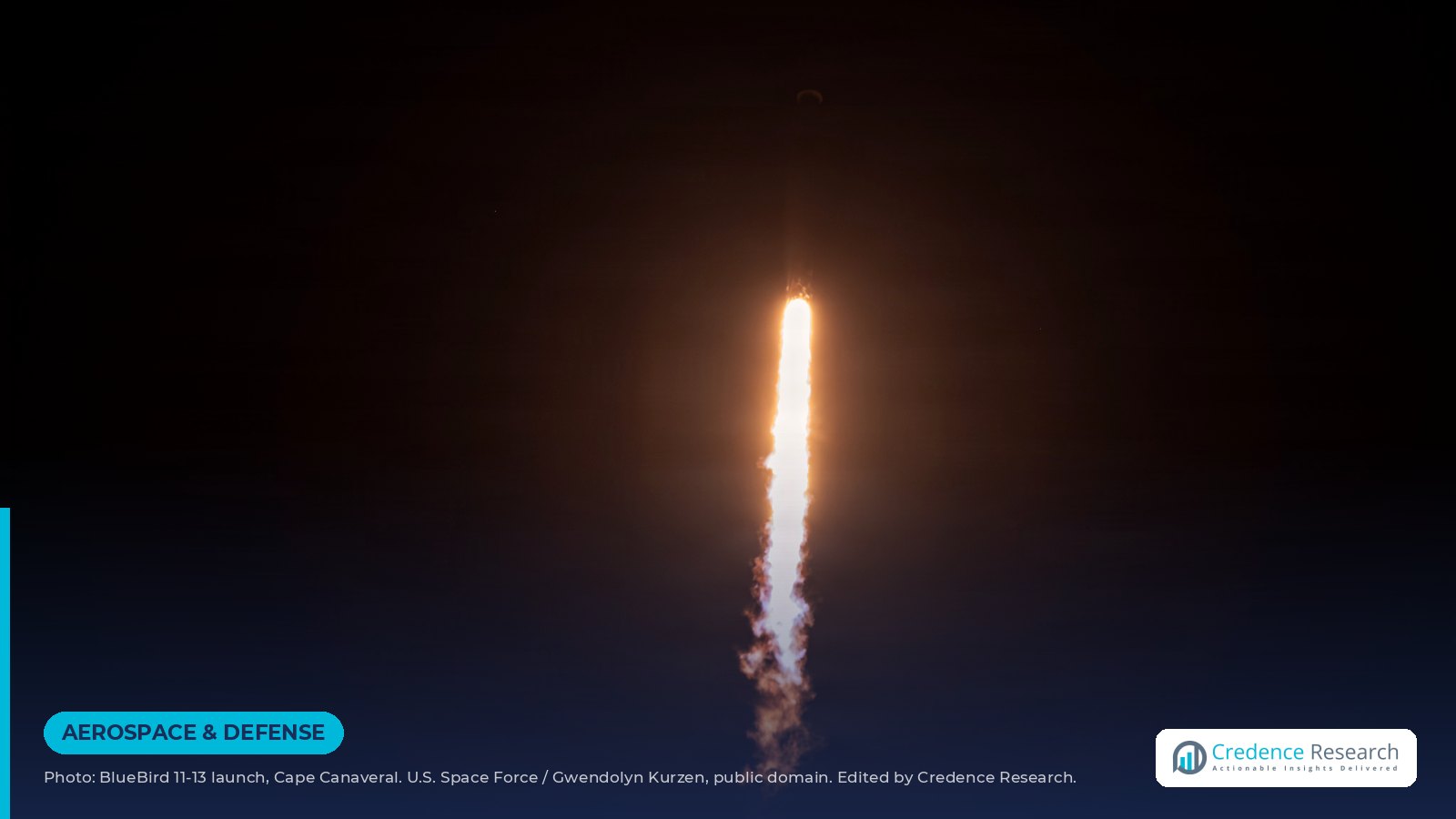
Image: Launch of AST SpaceMobile BlueBird 11-13 satellites from Cape Canaveral Space Force Station, by Gwendolyn Kurzen, U.S. Space Force, via Wikimedia Commons, public domain. Cropped and edited by Credence Research.

About the Author

Senior News Editor at Credence Research Inc