
CVS Health to Split Into Two Companies, Separating Aetna and Caremark From CVS Pharmacy
CVS Health Corp. plans to split into two independent, publicly traded companies, separating its Aetna insurance, Caremark pharmacy benefit and specialty pharmacy operations from its roughly 9,000-store retail pharmacy chain. The Woonsocket, Rhode Island-based company announced the decision on Nov. 4, 2026, after a strategic review by its board, and expects to complete the separation in the first half of 2028.
Key developments
- A healthcare solutions company, called CVS Health in the interim, will combine Aetna, CVS Caremark, CVS Specialty, Oak Street Health and Signify Health, along with the group's value-based care and in-home health businesses.
- A separate company, CVS Pharmacy, will hold about 9,000 retail pharmacies, mail pharmacy, MinuteClinic including virtual care, and the Health100 technology services business.
- David Joyner, chairman and CEO of CVS Health, will lead the healthcare solutions company, while Group President Prem Shah will become CEO of CVS Pharmacy.
- The separation is intended to be tax-free to the company and its shareholders for U.S. federal income tax purposes, and current shareholders will own shares in both companies.
- Completion depends on final board approval, an effective Form 10 registration statement with the Securities and Exchange Commission and customary confirmation of the tax-free treatment.
Industry background
CVS Health spent nearly two decades assembling one of the most vertically integrated businesses in U.S. health care. It bought pharmacy benefit manager Caremark in 2007 and health insurer Aetna in 2018, then added primary care operator Oak Street Health and home health company Signify Health. The thesis was that owning the insurer, the benefit manager, the pharmacy counter and the clinic would let the company manage cost and care across the full patient journey.
According to the company's disclosures, the combined group operated about 9,000 retail pharmacy locations and more than 1,000 walk-in and primary care clinics as of Sept. 30, 2026. Its pharmacy benefit manager served about 87 million plan members, and an estimated 37 million people were served through its health insurance products and related services. The retail business employs nearly 30,000 pharmacists.
The model came under strain in recent years. Healthcare Dive reported that higher-than-expected medical spending at Aetna weighed on results, prompting cost cuts, store closures and an executive overhaul, and that the company had considered a breakup during a 2024 strategic review.
Industry implications
The plan reverses the vertical integration strategy that defined the largest U.S. health care companies over the past decade. On the Nov. 4 investor call, Joyner described the rationale in terms of focus, capital allocation, agility and simplicity, and said the decision came from a position of strength rather than distress. He also said the retail pharmacy has long operated behind a firewall and negotiated with Caremark at arm's length, which suggests the operational links between the two sides are thinner than the corporate structure implied.
The remaining CVS Health will look structurally closer to other insurer and benefit manager groups that pair a health plan, a pharmacy benefit manager and care delivery assets. CVS Pharmacy, by contrast, becomes a standalone retail health company built around dispensing, walk-in clinics and a consumer technology platform. Joyner said in the release that CVS Pharmacy would serve "as the front door to health and care in our country."
The split also lands amid policy pressure on common ownership of benefit managers and pharmacies. Healthcare Dive reported that CVS is challenging Arkansas and Tennessee laws that would bar pharmacies and benefit managers from sharing a parent company, and that a bipartisan federal bill with similar aims has been introduced. Joyner said regulation was not the reason for the separation, although the new structure would place the retail chain outside the scope of such rules.
Competitive and supply chain implications
Specialty pharmacy stays with the healthcare solutions company. Joyner said on the call that the connection between specialty, the benefit manager and Aetna remains intact, and described specialty as a key cost management tool for payers. That keeps the highest-value drug dispensing channel inside the payer side of the business, while CVS Pharmacy retains mail-order and retail dispensing.
The two companies will be tied together by commercial agreements rather than shared ownership, and management said those terms would be worked out over the next 15 to 18 months. The structure of those contracts will matter for drug manufacturers, wholesalers and rival pharmacies, because network access, reimbursement rates and specialty routing between Caremark and CVS Pharmacy will now be negotiated between two separately governed companies with separate shareholders.
For competing retail chains, a standalone CVS Pharmacy will compete without the implicit advantage of a corporate sibling running a large benefit manager. For insurers and benefit managers, the remaining CVS Health becomes a focused peer with its own specialty pharmacy and care delivery assets. Both are expected to carry solid investment grade ratings.
Regional implications
The effects will be felt most directly in the United States, where CVS Pharmacy operates its store network and Aetna and Caremark serve employer, Medicare and Medicaid clients. The company said customers, patients and clients will continue to receive medicine, care, benefits and services without interruption during the transition, and that the business will operate as it does today until the separation is complete.
State policy is a regional variable to watch. Arkansas and Tennessee have moved to restrict joint ownership of pharmacies and benefit managers. A standalone CVS Pharmacy would no longer be the type of jointly owned entity those laws target, which could ease its position in states that adopt such rules.
Credence Research analysis
The decision signals that the integrated payer, benefit manager and retail pharmacy model has delivered less operating synergy than investors once expected, at least on the retail side. Management's own description of an existing firewall and arm's-length dealings with Caremark indicates that the pharmacy counter was not functioning as a captive channel, which lowers the strategic cost of separating it. Keeping specialty pharmacy with the payer business shows where CVS sees the durable value in integration: in managing high-cost drug spend, not in retail traffic.
The main execution risk sits in the commercial agreements and in stranded costs. Management said one-time costs are included in guidance and that ongoing costs from running two public companies are manageable, but it gave no dollar figure. The terms between Caremark and CVS Pharmacy will determine how much volume and margin the retail company can count on, and the 15-to-18-month window before those terms are set gives both regulators and competitors time to respond. Retail health also depends on Health100, which management called the "connective tissue" between the companies, so the platform's adoption will be an early test of whether the split preserves the consumer links CVS built.
What comes next
- CVS Health is expected to name additional leadership positions and board members for both companies.
- Commercial agreements between the healthcare solutions company and CVS Pharmacy are to be developed over the next 15 to 18 months.
- CVS Pharmacy will file a Form 10 registration statement with the SEC, which must become effective before the separation.
- The company must obtain final board approval and customary confirmation of the transaction's tax-free status.
- Completion is targeted for the first half of 2028.
Sources
- CVS Health Corp. Form 8-K, Nov. 4, 2026 (SEC)
- CVS Health press release, Exhibit 99.1 (SEC)
- Healthcare Dive: CVS to split into two companies
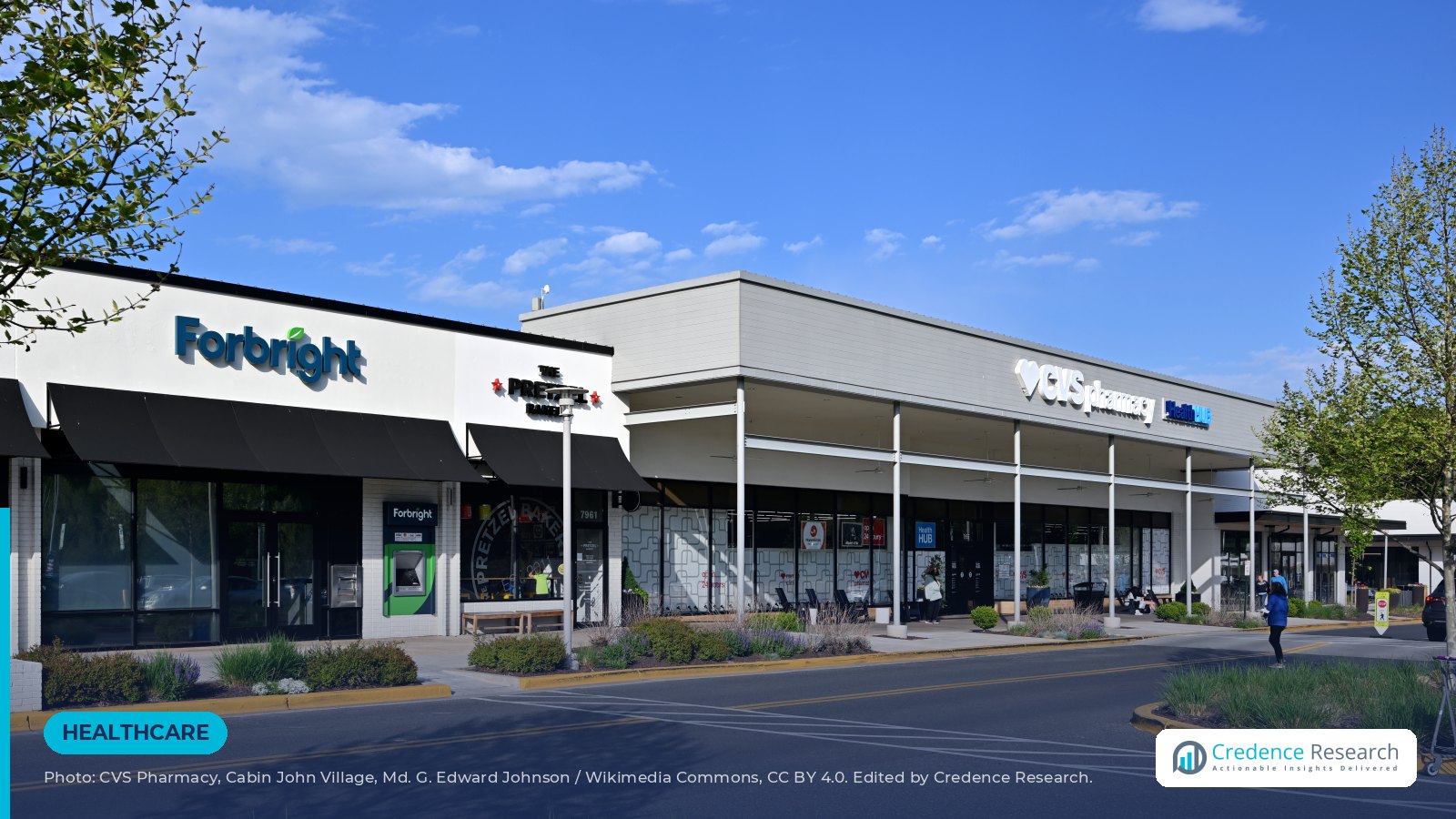
Image: CVS Pharmacy store at Cabin John Village, Maryland, by G. Edward Johnson via Wikimedia Commons, CC BY 4.0. Cropped and edited by Credence Research.

About the Author

Senior News Editor at Credence Research Inc