
SAIC and Qingtao Start Production at 10 GWh Solid-State Battery Plant in Kunshan
SAIC Motor's battery partner Qingtao has started production at the first phase of a solid-state power battery plant in Kunshan, a manufacturing city in China's Jiangsu province, giving the Shanghai automaker a dedicated domestic source of next-generation cells. A production launch ceremony for the 8 billion yuan (about $1.1 billion) project was held Oct. 21, according to a release from the Kunshan government published the following day. The first phase is designed as a 10-gigawatt-hour (GWh) production base, and its output is earmarked mainly for SAIC's new energy vehicles.
Key developments
- Qingtao Power Technology Development (Kunshan) Co., Ltd. held the production launch ceremony for Phase 1 of its solid-state power battery project in Kunshan on Oct. 21.
- The project company was set up jointly by HASCO (Huayu Automotive Systems Co., Ltd.), SAIC Motor's core auto parts platform, and Qingtao (Kunshan) Energy Development Group.
- Total investment in the project is 8 billion yuan, and Phase 1 builds a 10 GWh solid-state power battery production base.
- The batteries will mainly meet power battery demand for SAIC's new energy vehicles, with research and cell production in Kunshan and vehicle installation in Shanghai.
- SAIC Chairman and Party Secretary Wang Xiaoqiu, SAIC Vice President and Chief Engineer Zu Sijie, and Suzhou Party Secretary Fan Bo attended the ceremony and toured the production workshop.
How the technology and partnership developed
Solid-state batteries replace some or all of the flammable liquid electrolyte in a conventional lithium-ion cell with a solid material. Developers pursue the design for higher energy density and better thermal safety, but manufacturing solid electrolytes at automotive volume and cost has proved difficult. In China, the label "solid-state" is often applied to semi-solid or solid-liquid hybrid cells, which keep a reduced amount of liquid electrolyte, as well as to all-solid-state designs that remain at an earlier stage.
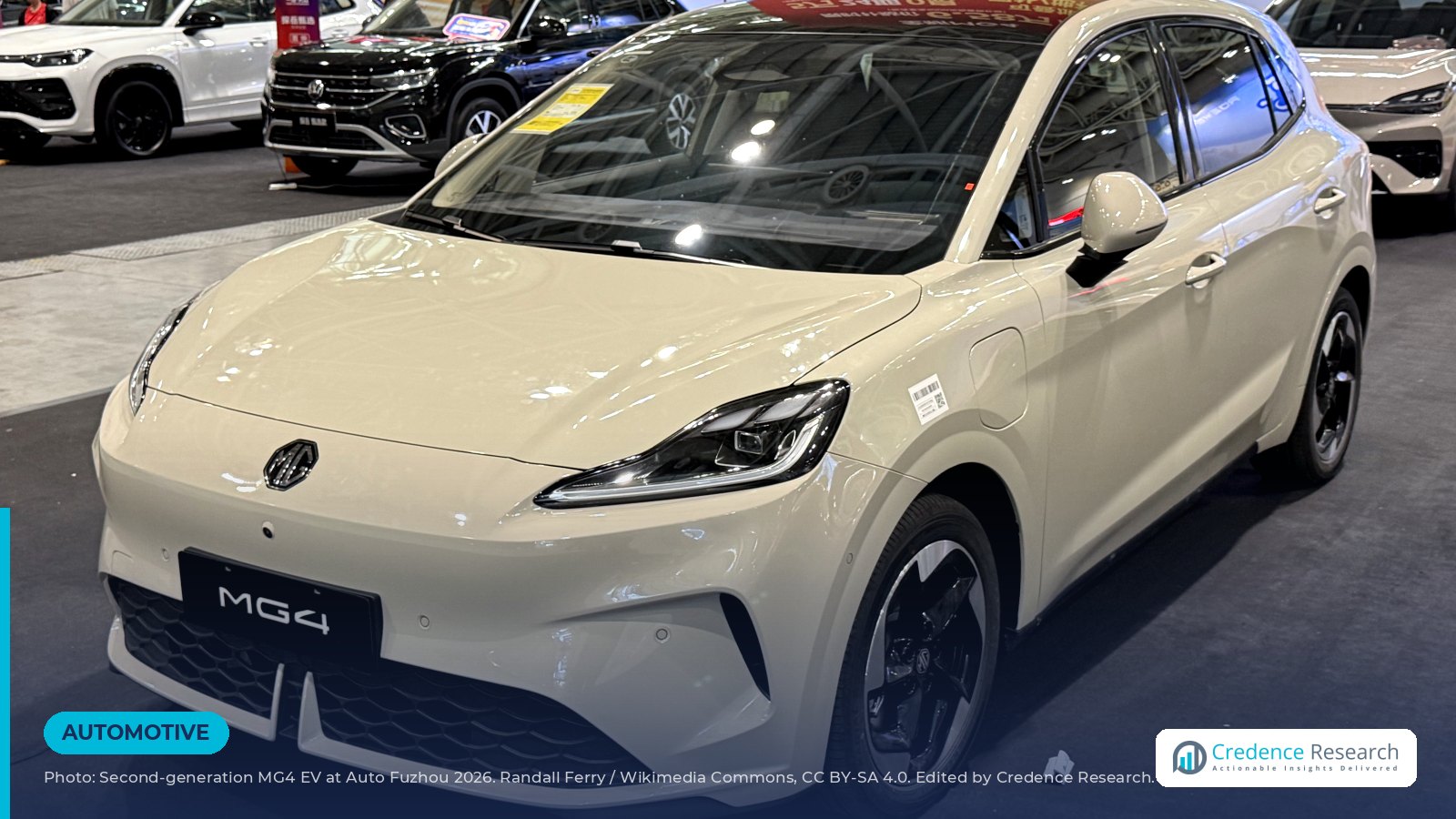
The Kunshan government release said solid-state battery technology developed by SAIC and Qingtao Energy is already used in mass-produced vehicle models. ChinaEVHome reported that Qingtao's semi-solid-state batteries are used mainly in SAIC's MG4 and MG07. The release described Qingtao Energy as a national high-tech enterprise that develops and makes solid-state lithium batteries, key battery materials and production equipment, and said it already runs a mass-production line for solid-state power batteries.
The financial ties between the two companies run deeper than a supply contract. My Battery Network, citing Qingtao's listing documents, reported that Qingtao Energy filed for a main board listing in Hong Kong in April 2026 and that SAIC indirectly holds a 14.24% stake in the company. The same outlet reported that Qingtao began production on a 3.5 GWh line in Taizhou, Zhejiang province, in March 2026, with two more lines of the same size planned there.
Industry implications
The Kunshan plant moves SAIC further toward controlling its own battery supply at a time when most Chinese automakers buy cells from a small group of large suppliers. A joint venture anchored by HASCO gives SAIC influence over cell chemistry, production scheduling and integration into vehicle platforms, rather than depending on a supplier's product roadmap.
The project also signals that solid-state cells are moving from pilot lines toward dedicated, automaker-linked factories. A 10 GWh base is a meaningful industrial commitment, though it is modest beside the conventional lithium iron phosphate and nickel-based lines that dominate China's battery sector. Neither the government release nor media reports specified how much of the Kunshan capacity will produce semi-solid cells versus all-solid-state cells, or how quickly the line will ramp to full output.
Policy is pushing in the same direction. ChinaEVHome reported that the Ministry of Industry and Information Technology and six other departments issued a plan for the new battery industry in September that calls for initial large-scale application of all-solid-state batteries by 2030. The outlet also reported that the International Electrotechnical Commission approved China's proposal for a first international standard covering solid-state batteries for electric vehicle propulsion in August.
Competitive and supply chain implications
The plant places SAIC and Qingtao among the earliest groups to attach dedicated solid-state capacity to a specific automaker's vehicle program. Rival Chinese automakers and battery makers have announced solid-state road maps of their own, and the first companies to show reliable volume production, consistent yields and acceptable costs are likely to shape customer expectations and supplier qualification standards across the industry.
For the supply chain, solid-state production depends on materials and equipment that differ from those used for liquid electrolyte cells, including solid electrolyte materials and new processing tools. Qingtao's business spans batteries, materials and production equipment, which may help it control more of that chain internally. The arrangement, with cells built in Kunshan and installed in vehicles in Shanghai, also keeps logistics short across the Yangtze River Delta, where SAIC's assembly operations and a dense base of parts suppliers are concentrated.
HASCO's role is notable as well. The release described the SAIC unit as focused on intelligent driving, intelligent cockpits and bodies, and intelligent power systems, and said it holds more than 10,000 patents. Bringing battery cell production into that parts group positions HASCO as a supplier of energy systems as well as components.
Regional implications
Kunshan, part of Suzhou and next to Shanghai, has built an auto parts cluster that the government release said includes nearly 1,000 automotive companies supplying close to 30 mainstream automakers. The solid-state battery plant adds a higher-value product to that base and strengthens the city's link to SAIC's vehicle assembly in Shanghai.
For export markets, SAIC's MG brand sells electric vehicles in Europe, Southeast Asia and other regions. Any expansion of semi-solid or solid-state cells into export models would draw attention from regulators and competitors in those markets, particularly in Europe, where Chinese-built electric vehicles already face additional tariffs.
Credence Research analysis
The Kunshan launch is less a technology breakthrough than a manufacturing commitment. SAIC and Qingtao have already put semi-solid cells into production vehicles, so the main question now is whether a dedicated 10 GWh base can deliver consistent quality at a cost that lets solid-state packs move beyond niche trims. The absence of disclosed details on cell chemistry mix, yields, ramp schedule and pricing means the industrial significance will only become clear as output data and vehicle applications emerge.
The ownership structure points to a broader strategy. Through HASCO and its indirect equity stake in Qingtao, SAIC is building a vertically linked battery supply rather than relying on outside cell makers. If the Kunshan line performs, it gives SAIC a differentiated technology story at a time when price competition in China's electric vehicle sector is intense and product differentiation is scarce. If yields lag, the automaker carries more of the risk than it would under a conventional supply deal.
What comes next
- Production ramp at the Kunshan Phase 1 line and disclosure of output volumes and the mix of semi-solid and all-solid-state cells.
- Announcements of which SAIC and MG models will use cells from the Kunshan base, including any export models.
- Progress on Qingtao Energy's proposed Hong Kong main board listing, which would bring more financial and operational disclosure.
- Further capacity steps at Qingtao's Taizhou site and any later phases of the Kunshan project.
- Implementation of national battery industry policy targeting initial large-scale use of all-solid-state batteries by 2030.
Sources
- Kunshan government release via The Paper: Qingtao Power solid-state power battery project production ceremony held in Kunshan (Oct. 22, 2026)
- My Battery Network via Sina: Qingtao Power solid-state battery project Phase 1 enters production (Oct. 22, 2026)
- ChinaEVHome: SAIC Motor and Qingtao commission 10 GWh solid-state battery plant (Oct. 23, 2026)
Image: Second-generation MG4 electric vehicle at Auto Fuzhou 2026, by Randall Ferry via Wikimedia Commons, CC BY-SA 4.0. Cropped and edited by Credence Research.

About the Author

Senior News Editor at Credence Research Inc