
EU Parliament Committee Backs 87.5% Car CO2 Cut for 2035, Softening the Combustion Engine Phaseout
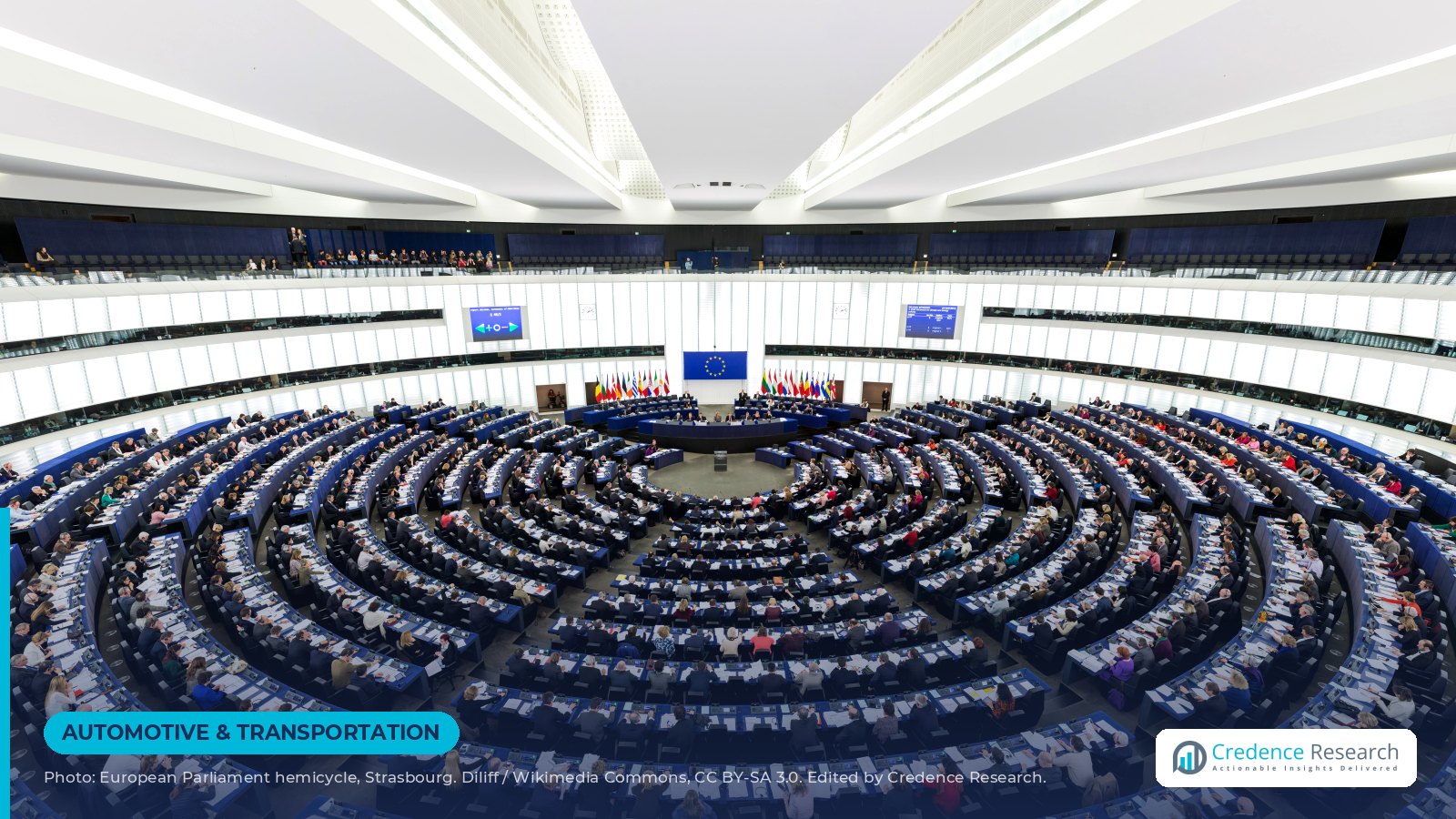
Automakers selling in Europe would no longer have to eliminate fleet-average tailpipe carbon dioxide by 2035 under a position adopted Nov. 4 by the European Parliament's Environment Committee. Lawmakers voted 48-30, with two abstentions, to cut the 2035 target for new cars from 100% to 87.5%, a lower starting point than the 90% the European Commission proposed in December 2025. The text is not law. It still needs a vote by the full Parliament and talks with EU governments.
Key developments
- The committee set the 2035 fleet-wide car target at 87.5%, with credits for low-carbon steel produced in the EU intended to bring the effective level to 95%.
- Vans would face a 35% reduction in 2030, compared with 40% in the Commission's proposal and 50% under current rules. Their 2035 target would fall from 100% to 80%, with steel credits capped at 7.5%.
- Vehicles running exclusively on qualifying renewable and low-carbon fuels would count as zero-emission vehicles alongside those with no tailpipe CO2.
- EU-made small electric cars up to 4.2 meters long would count as 1.4 vehicles in fleet calculations, and highly efficient EU-made electric cars would count as 1.2.
- Parliament is expected to vote on its negotiating mandate at the December plenary session.
Regulatory background
Current EU law requires a 55% reduction in new car emissions by 2030 and a 100% reduction by 2035, measured against 2021 levels. For vans, the figures are 50% and 100%. In practice, the 2035 requirement would end sales of new cars with combustion engines, which made it the central target of industry and government lobbying.
The Commission responded on Dec. 16, 2025, with a proposal known as COM(2025)995, part of a wider automotive package. According to a European Parliamentary Research Service briefing, it set a 90% target for 2035 for both cars and vans. Carmakers would offset remaining car emissions with credits for low-carbon EU steel, capped at 7%, and sustainable renewable fuels, capped at 3%. It also proposed multiannual compliance for 2030 through 2032 and a 1.3 multiplier for small zero-emission cars made in the EU until 2034.
The committee's text, a compromise among the center-right European People's Party, the Socialists and Democrats and Renew Europe, as reported by Eunews, moves further in several places. Rapporteur Massimiliano Salini, an Italian member of the EPP, said the agreement "marks a turning point for the European automotive industry." He also said combustion-engine cars could still be registered without compensation obligations.
Industry implications
For carmakers, the vote points toward a post-2035 lineup that can still include plug-in hybrids, range-extended vehicles and some combustion models, though each would carry a compliance cost through the fleet average. That matters for engine and transmission programs, which require long lead times.
The manufacturers' lobby was not satisfied. The European Automobile Manufacturers' Association (ACEA) called the vote a further step toward a more pragmatic framework and welcomed broader recognition of renewable fuels and low-carbon materials. It also said the passenger car provisions remain "too limited in both scope and duration," and it looked to EU governments to develop the text further.
The multipliers carry their own commercial signal. Because a qualifying small electric car would count as 1.4 vehicles, or 1.5 if sold through a social leasing program, each sale would do more to reduce a manufacturer's fleet average. Highly efficient models would count as 1.2, or 1.3 with social leasing. EU-made electric vans would count as 1.2 until the end of 2034 and 1.4 from 2035.
Competitive and supply chain implications
The steel credits extend the regulation into the materials supply chain. Automakers could use credits for low-carbon steel made in the EU as soon as the rules enter into force, although through the end of 2034 those credits could provide no more than 3% toward compliance. Steelmakers building lower-emission capacity in Europe would gain a new source of demand tied directly to vehicle regulation, if the provision survives negotiations.
The local production conditions also separate manufacturers by footprint. The multipliers apply only to vehicles built in the EU, so brands that import small electric cars would not earn the same compliance benefit as rivals that assemble them in the bloc. Parts suppliers tied to engines, exhaust systems and fuel systems would gain a longer runway under the committee's text, while battery and electric drivetrain suppliers would face less regulatory certainty about the pace of demand after 2035.
Fuel producers have a separate stake. Treating vehicles that run only on eligible fuels as zero-emission would give renewable and low-carbon fuels a clearer route into the post-2035 rules, subject to the criteria set in the final law.
Regional implications
The vote arrived weeks after Germany and France announced a joint position on Oct. 16. Euronews reported that the two governments backed a 90% target without an obligation to offset the remaining 10%, linked to European-content rules covering 70% of car components, excluding batteries, and 10% of battery content. That position differs from both the Commission's draft and the committee's text, and it carries weight because Council decisions require a qualified majority.
Italy has also pressed for more flexibility. Eunews reported that Confindustria and Germany's BDI welcomed the compromise but want an unconditional 90% target, stronger technology neutrality, no mandatory quotas for company fleets and a tailored approach for small-volume manufacturers. Earlier government requests came from Germany and Italy in October 2025 and from Bulgaria, Czechia, Hungary, Italy, Poland and Slovakia in December 2025, according to the Parliament briefing.
Credence Research analysis
The most consequential change may be the shift in how compliance gets paid for, more than the headline number. The committee ties flexibility to steel made in the EU and multipliers to vehicles made in the EU, which turns a climate regulation into an instrument of industrial policy. Manufacturers with deep European production and supplier networks stand to benefit most, and the Franco-German focus on local content suggests that direction will persist even if the percentages change.
The gap between 87.5% with credits and 90% without them also shows that the real dispute concerns conditions. A lower target with steel obligations attached could cost an automaker more or less than a higher target without them, depending on credit pricing, steel availability and the final text on fuels. Until those terms are settled, product planners face uncertainty over how many combustion and hybrid models to keep developing for the next decade, and that uncertainty may itself delay some investment decisions.
What comes next
- The full Parliament is expected to vote on its negotiating mandate at the December 2026 plenary session.
- EU governments must reach their own Council position, which requires a qualified majority of at least 15 countries representing at least 65% of the EU population, as Electrive noted.
- Three-way talks among Parliament, the Council and the Commission would follow to settle a final text.
- Negotiators will have to reconcile the 87.5% target with the Franco-German 90% position and decide how far steel credits and fuel provisions extend.
Sources
- European Parliament release on the Environment Committee vote, as republished by EuropaWire
- European Parliamentary Research Service briefing on the CO2 standards revision
- ACEA statement on the committee vote, as republished by EuropaWire
- Euronews report on the Franco-German position
Image: The hemicycle of the European Parliament in Strasbourg, by Diliff via Wikimedia Commons, CC BY-SA 3.0. Cropped and edited by Credence Research.

About the Author

Senior News Editor at Credence Research Inc