
ArcelorMittal Books $852 Million Ukraine Impairment, Restarts All European Blast Furnaces
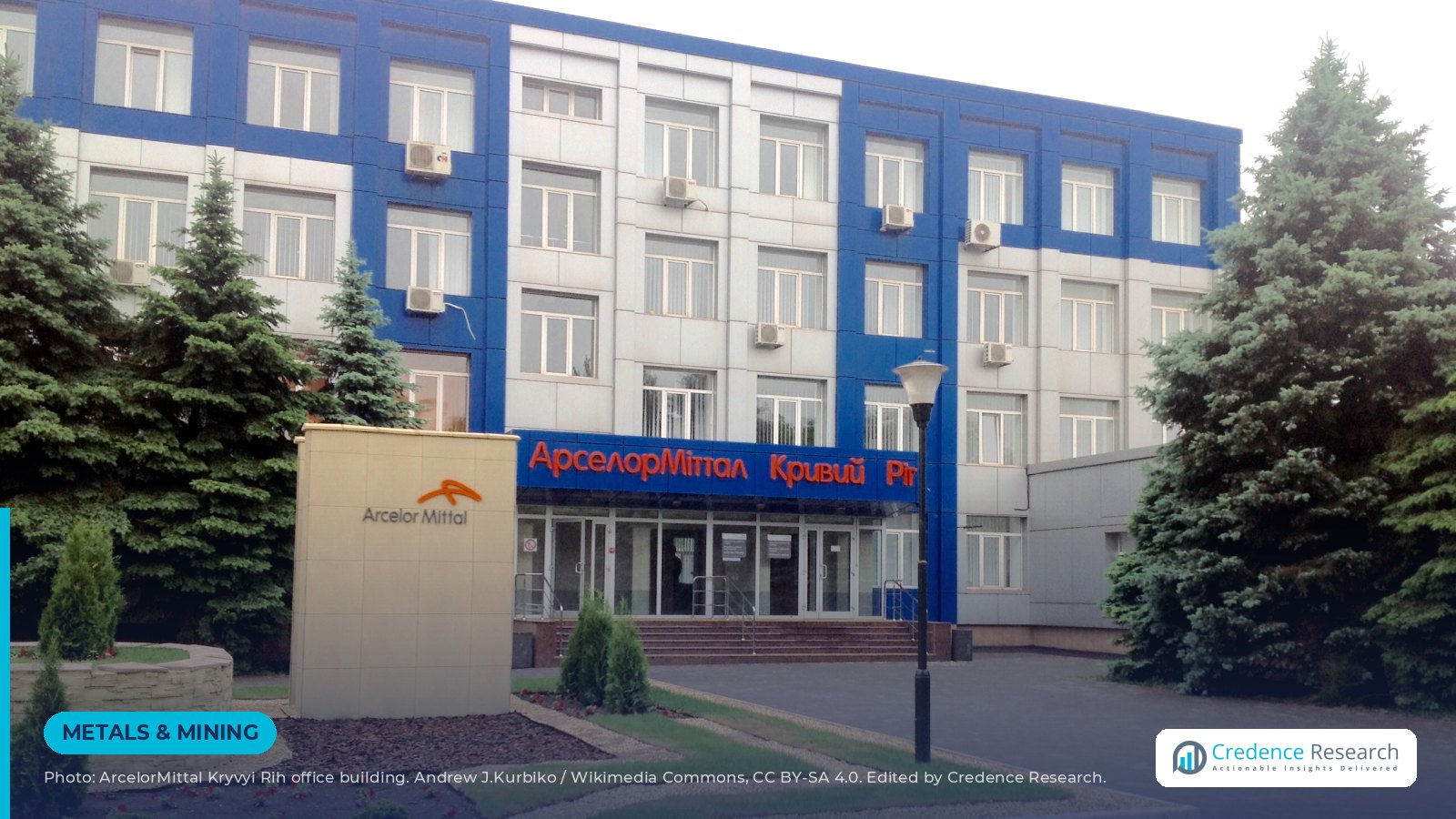
ArcelorMittal swung to a third-quarter net loss of $391 million after recording an $852 million impairment and $293 million in exceptional charges tied to idling its Kryvyi Rih steelworks in Ukraine, the Luxembourg-based steelmaker said Thursday, Nov. 5. The company also said it has brought all of its European blast furnaces back into operation under the EU's new steel import regime, and that its 2 million metric ton electric arc furnace project at Dunkirk, France, has moved into execution.
Key developments
- ArcelorMittal reported third-quarter EBITDA of $2.02 billion, up 34% from a year earlier and slightly below the $2.06 billion earned in the second quarter. Adjusted net income was $868 million.
- Charges linked to Kryvyi Rih comprised an $852 million impairment, $293 million in exceptional items and a $170 million reduction in deferred tax assets.
- All European blast furnaces are back in operation, which the company attributes to the new EU tariff rate quota framework.
- Electric arc furnace projects at Gijon (1.1 million tons) and Sestao (1.6 million tons) in Spain remain on track for commissioning in the fourth quarter of 2026, and Dunkirk has entered execution.
- The company cut expected 2026 iron ore shipments from Liberia to about 16 million tons from about 18 million tons.
How the quarter took shape
The Ukrainian charges trace back to Sept. 25, when ArcelorMittal told the government in Kyiv it could not safely and sustainably restart the Kryvyi Rih plant. The company said four missile strikes over five weeks, the latest on Sept. 21, had killed five people, injured 17 employees and caused extensive damage to production facilities. At the time, it estimated a non-cash impairment of about $1 billion, mostly for property, plant and equipment. It also said it had provided more than $700 million in financial support to the subsidiary since the war began.
The European recovery has a different origin. Regulation (EU) 2026/1384 took effect July 1, replacing the bloc's expired steel safeguard with a tariff-free quota of about 18.3 million metric tons a year and a 50% duty on volumes above it. A requirement for importers to prove where steel was first melted and poured followed on Oct. 1. ArcelorMittal said its European flat product shipments rose 1.1% from the second quarter to 5.19 million tons, running against normal seasonal patterns, and it linked that to early effects of the quota system.
Those volumes have not yet translated into stronger European earnings. EBITDA in the segment fell to $548 million from $697 million in the second quarter, and the company attributed the decline to a temporary mismatch between rapidly rising input costs and realized selling prices, along with lower long product shipments.
Industry implications
The results give steel buyers and policymakers an early operating read on the EU's move from safeguards to a permanent quota system. A producer bringing all of its European blast furnaces back into operation is a concrete response to a trade measure, and it comes only about four months after the regime began. ArcelorMittal's chief executive, Aditya Mittal, said the Carbon Border Adjustment Mechanism and the quota framework are creating a more balanced and sustainable operating environment.
The company also pointed to further policy steps, including scheduled reviews of the quota's product scope and political alignment on extending the carbon border charge to downstream products. Both matter to automakers, machinery builders and construction suppliers, because they determine whether protection stops at primary steel or reaches goods made from it.
Pricing remains the unresolved variable. ArcelorMittal said steel prices are still adjusting to higher energy costs, and that annual contracts covering more than 25% of its European flat product volumes have yet to reflect the new conditions.
Competitive and supply chain implications
Running blast furnaces while building electric furnaces puts ArcelorMittal on two tracks at once. Its Dunkirk unit, a 1.3 billion euro investment confirmed in February with half the cost covered by French energy efficiency certificates, is scheduled to start up in 2029. Together, the Gijon, Sestao and Dunkirk projects are expected to add about 3.9 million tons of electric furnace capacity by that year.
Those furnaces shift the raw material question toward scrap, power prices and grid access, which are all contested inputs in Europe. Import limits may also tighten supply for downstream buyers who relied on non-EU steel.
The loss of Kryvyi Rih removes an integrated steelmaking and rolling complex from a Ukrainian industry already damaged by the war. Its customers must look elsewhere for rolled products while the site stays idle. The company's iron ore shipment shortfall in Liberia adds a separate pressure inside its mining business, where segment EBITDA fell to $128 million from $179 million on lower iron ore prices and higher freight costs.
Regional implications
In Ukraine, the decision carries consequences beyond one balance sheet. Kryvyi Rih is a major employer and industrial anchor, and ArcelorMittal said it is discussing the plant's future with the government, with spending limited to asset preservation, security and environmental compliance while restart options stay open.
In France and Spain, the investments support long-term steelmaking at established sites. Commissioning at Gijon and Sestao would bring Spain's two furnaces online well ahead of Dunkirk, with ramp-up running through 2027.
Elsewhere, ArcelorMittal said it is conducting advanced studies for a potential second 1.5 million ton electric furnace at Calvert, Alabama, which remains unapproved. In India, detailed engineering is underway on a possible expansion at Hazira to 24 million tons a year from 15 million tons once the current build is complete. An announced 8.2 million ton greenfield project in Andhra Pradesh still depends on regulatory approvals and a long-term iron ore supply agreement with NMDC.
Credence Research analysis
The quarter shows how far apart geopolitical risk and trade policy can pull a single global steelmaker. War forced a major write-down in Ukraine, while EU protection revived capacity elsewhere in Europe within the same reporting period. The evidence suggests European steel economics now depend on regulation as much as on demand, which ties capital decisions such as Dunkirk more closely to how Brussels administers the quota and carbon border rules in the years ahead.
The weaker segment EBITDA is the more cautionary detail. Higher flat product volumes and restarted furnaces did not lift European earnings in the quarter, because costs moved faster than realized prices. The test for ArcelorMittal is whether selling prices and the pending annual contracts catch up before input costs move again. The net debt increase to $10.3 billion from $9.5 billion, which the company ties in part to temporary working capital, gives investors a second measure to watch as it carries $4.5 billion to $5 billion in planned 2026 capital spending.
What comes next
- Fourth quarter 2026: Scheduled commissioning of the Gijon and Sestao electric arc furnaces, with ramp-up through 2027.
- Fourth quarter 2026: Liberia is expected to reach its nameplate rate, with annualized shipments in line with 20 million tons of design capacity.
- February 2027: Full-year results, including economics for the Tubarao and potential Pecem downstream projects in Brazil.
- Ongoing: EU reviews of the steel quota's product scope and talks on extending the carbon border charge downstream.
- 2029: Planned start-up of the Dunkirk electric arc furnace.
Sources
- ArcelorMittal: Third quarter 2026 results
- ArcelorMittal: Statement on Kryvyi Rih operations
- ArcelorMittal: Dunkirk electric arc furnace confirmation
- European Commission: New EU steel rules enter into application
Image: ArcelorMittal Kryvyi Rih office building, by Andrew J.Kurbiko via Wikimedia Commons, CC BY-SA 4.0. Cropped and edited by Credence Research.

About the Author

Senior News Editor at Credence Research Inc