
FDA Grants J&J's Rybrevant Faspro Accelerated Approval in Head and Neck Cancer, Its First Use Beyond Lung
The U.S. Food and Drug Administration on Nov. 5, 2026, granted accelerated approval to Johnson & Johnson's Rybrevant Faspro for adults with recurrent or metastatic head and neck squamous cell carcinoma that progressed on or after platinum-based chemotherapy and an anti-PD-(L)1 antibody, moving the subcutaneous EGFR and MET antibody beyond lung cancer for the first time. The company announced the decision from New Brunswick, New Jersey, and the agency described it as the first approval in 10 years for previously treated patients who had received platinum-based chemotherapy.
Key developments
- The approval covers single-agent amivantamab and hyaluronidase-lpuj, sponsored by Janssen Biotech. It excludes HPV-associated oropharyngeal squamous cell carcinoma, as defined by p16 testing.
- The decision rests on Cohort 1 of the Phase 1b/2 OrigAMI-4 trial, in which 102 patients showed a 42% overall response rate (95% CI, 32% to 52%) on blinded independent central review, with complete responses in 15% and partial responses in 28%.
- Among responders, 56% kept their response for six months or longer. The FDA said currently approved therapies produce response rates of about 20% or less.
- The drug is given as a five-minute subcutaneous injection every three or four weeks, according to the recommended schedule.
- Continued approval may depend on confirmatory data. J&J's Phase 3 OrigAMI-5 trial is testing the drug with carboplatin and pembrolizumab as first-line treatment.
Disease background
Head and neck squamous cell carcinoma arises in the lining of the mouth, throat and larynx. J&J's release puts it at about 4.5% of cancers worldwide and ranks it the seventh most common cancer globally. About 80% of recurrent or metastatic cases are not driven by HPV, the group this label addresses. Patients in that setting typically move through platinum chemotherapy and checkpoint inhibitors, and few options remain once both stop working. Barbara Burtness, a medical oncologist at Yale Cancer Center, said in the company's release that outcomes remain poor once the disease progresses and that treatment options are limited.
The scientific rationale centers on two receptors. EGFR and MET are overexpressed in 80% to 90% of recurrent or metastatic tumors, according to J&J, and amivantamab is a bispecific antibody built to engage both. EGFR has long been a target in this cancer, but MET signaling is one route tumors can use to sidestep EGFR blockade, which is the logic behind hitting the pair together. J&J calls this the first approval of a dual-targeted therapy in the setting.
The product itself is not new. The FDA had already cleared Rybrevant Faspro for EGFR-mutated non-small cell lung cancer, and in February 2026 it added a once-monthly option in first-line lung cancer. The head and neck program then advanced quickly, with Breakthrough Therapy designation in February 2026 and Priority Review in July 2026, ahead of the Nov. 5 decision.
Industry implications
The decision shows how a single-platform biologic can be extended into a new tumor type on the strength of response data from a modest single-arm cohort. Accelerated approval suits this setting because patients have few alternatives and response rates can be read quickly, but it carries obligations. The FDA said long-term clinical benefit has not been confirmed and required further studies, so the commercial position depends on later evidence rather than on this label alone.
Safety will shape adoption as much as efficacy. The most common adverse reactions were rash at 79%, fatigue at 39%, nail toxicity at 35%, stomatitis at 32% and edema at 28%. Serious adverse reactions occurred in 39% of patients and fatal adverse reactions in 6%. Warnings cover hypersensitivity and administration-related reactions, interstitial lung disease, dermatologic reactions, ocular toxicity and embryo-fetal harm. Oncology practices will need dermatologic management plans in place, particularly for a population already burdened by mucosal and swallowing problems.
The delivery format matters too. A five-minute injection replaces the hours-long infusions that defined amivantamab's early use, a change that frees chair time at infusion centers.
Competitive and supply chain implications
J&J reaches the market first, but the field is moving. On Oct. 28, 2026, Genmab reported that petosemtamab, another EGFR-targeting bispecific, paired with pembrolizumab met both primary endpoints at the first interim analysis of the Phase 3 LiGeR-HN1 trial in first-line, PD-L1-positive disease, with an overall survival hazard ratio of 0.50. Genmab plans to engage global regulators but has not given a filing date. The trials cover different lines of therapy and populations, so their results cannot be compared directly.
J&J is also building its own first-line case. At the ESMO Congress in October, it reported a 77% confirmed response rate among 22 non-HPV-associated patients who received the drug with pembrolizumab and carboplatin in OrigAMI-4 Cohort 5. Those are early data from a small group, and the pivotal test falls to OrigAMI-5.
On the supply side, Rybrevant Faspro is co-formulated with rHuPH20, Halozyme's ENHANZE drug delivery technology. Each new indication therefore extends the reach of a licensed excipient platform, and it ties a growing J&J franchise more closely to that component. Neither the FDA nor J&J disclosed launch timing or manufacturing changes tied to this approval.
Regional implications
The decision applies to the United States only. J&J says the subcutaneous product is approved in multiple markets for EGFR-mutated lung cancer, but its release does not describe any head and neck approval or filing outside the U.S. That makes the U.S. the first real-world setting for this use.
For U.S. providers, the practical effect will be felt in community oncology, where a short injection could widen access beyond large academic centers. The requirement to exclude HPV-associated oropharyngeal disease also makes p16 testing a gating step, which reinforces the role of pathology laboratories in treatment selection.
Credence Research analysis
The most consequential number in this approval may be the comparison the FDA itself drew: a 42% response rate against about 20% or less for existing therapies. A gap that wide, in a single-arm study, is what allowed a regulator to act before survival data matured. It also sets a clear reference point for any later entrant in the post-platinum, post-immunotherapy setting. The 15% complete response figure is also worth watching if responses prove durable.
The strategic contest, though, sits in first-line treatment. Genmab's survival result gives petosemtamab a Phase 3 claim that J&J cannot yet match in head and neck cancer, while J&J has an approved product, physician familiarity from lung cancer and a subcutaneous format already on the market. Whether being first in later-line disease translates into an advantage upstream will depend on OrigAMI-5 and on how each sponsor's data hold up across HPV status and PD-L1 expression. For now, J&J holds the label and Genmab holds the survival data.
What comes next
- Launch details from J&J, which did not state a commercial availability date in its release.
- Progress on the Phase 3 OrigAMI-5 trial in first-line disease.
- Further readouts from the remaining OrigAMI-4 cohorts, part of a six-cohort program across settings and regimens.
- Genmab's regulatory engagement on petosemtamab and presentation of full LiGeR-HN1 results at a medical meeting.
- Any filings for the head and neck indication outside the United States.
Sources
- FDA: FDA Grants Accelerated Approval to a New Treatment for Head and Neck Squamous Cell Carcinoma
- Johnson & Johnson: U.S. FDA approval of Rybrevant Faspro for advanced head and neck cancer
- Johnson & Johnson: OrigAMI-4 first-line combination data at ESMO 2026
- Genmab: Petosemtamab LiGeR-HN1 first interim analysis
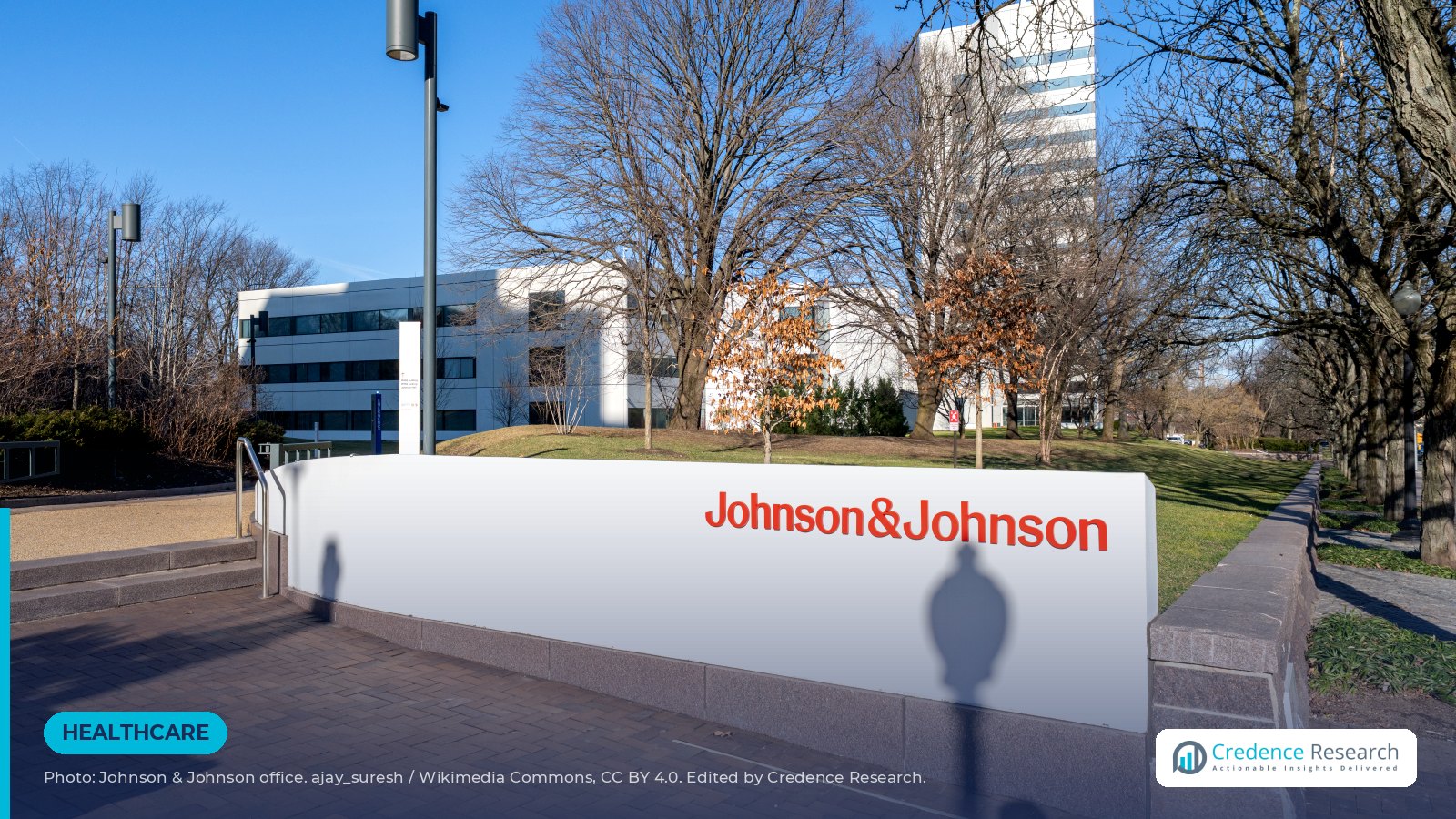
Image: Johnson & Johnson office sign, by ajay_suresh via Wikimedia Commons, CC BY 4.0. Cropped and edited by Credence Research.

About the Author

Senior News Editor at Credence Research Inc