
FDA Approves Bayer's Sunharbo, First Factor XIa Inhibitor, to Cut Risk of Repeat Stroke
The U.S. Food and Drug Administration on Nov. 9, 2026, approved Bayer's Sunharbo (asundexian), the first factor XIa inhibitor cleared in the United States, to reduce the risk of stroke in adults after a recent mild-to-moderate non-cardioembolic ischemic stroke or a high-risk transient ischemic attack. The once-daily 50 mg tablet is taken with antiplatelet therapy, and the approval went to Bayer HealthCare Pharmaceuticals of Whippany, New Jersey, two weeks after China became the first country to authorize the drug.
Key developments
- The FDA approved Sunharbo 50 mg tablets on Nov. 9, 2026, under Fast Track and Priority Review, making it the first factor XIa inhibitor approved in the U.S.
- Approval rests on the phase 3 OCEANIC-STROKE trial of 12,327 adults, in which Sunharbo cut ischemic stroke risk by 26% versus placebo over a median treatment duration of 14.2 months, with both arms on antiplatelet therapy.
- Overall major bleeding was similar to placebo, but the FDA noted more major bleeding in patients older than 75 and in the first 90 days of treatment, and more gastrointestinal bleeding.
- The drug is not approved for stroke prevention in patients with atrial fibrillation, where an earlier asundexian trial was stopped for lack of efficacy.
- BioPharma Dive reported that a Bayer spokesperson put the list price of a 30-day supply at $748.50.
How the drug works
Factor XI sits upstream in the coagulation cascade. Researchers have long viewed it as a target that could limit the growth of harmful clots while leaving more of the body's normal ability to stop bleeding intact, because the protein plays a smaller role in sealing damaged vessels than it does in amplifying clot formation. Established oral anticoagulants act further downstream, on factor Xa or thrombin, and carry bleeding risks that make physicians cautious about adding them to antiplatelet regimens in stroke survivors.
OCEANIC-STROKE tested that idea in a population where anticoagulants are not standard. Patients were randomized within 72 hours of symptom onset and received asundexian or placebo on top of single or dual antiplatelet therapy. According to Bayer's data release from the International Stroke Conference in February, ischemic stroke fell with a cause-specific hazard ratio of 0.74, any stroke occurred in 6.6% of patients on asundexian versus 8.8% on placebo, and ISTH major bleeding was 1.9% versus 1.7%, a difference that was not statistically significant. Full results were published in The New England Journal of Medicine.
The path to approval was uneven. In November 2023, Bayer stopped the OCEANIC-AF trial in atrial fibrillation after an independent data monitoring committee found asundexian less effective than apixaban, while recommending that OCEANIC-STROKE continue. The FDA filing was accepted with Priority Review in May 2026, and China's National Medical Products Administration approved the drug on Oct. 26.
Industry implications
The approval establishes factor XIa inhibition as a commercial drug class in the U.S. rather than a research hypothesis. For more than a decade, the oral anticoagulant field has been defined by factor Xa inhibitors, and the next wave of antithrombotic development has centered on whether factor XI agents can separate efficacy from bleeding. A positive regulatory outcome in secondary stroke prevention, a setting with no new oral antithrombotic class in years, gives the field its first label and its first real-world safety data set to come.
The label also shows where the class still has limits. The FDA's warnings on bleeding in older patients and early in treatment, the exclusion of atrial fibrillation and the advice against use with combined P-gp and strong CYP3A4 inducers will shape prescribing. Bayer told BioPharma Dive that stroke neurologists will drive early uptake, with primary care becoming a larger focus over time, and that payer access is the main potential constraint.
Competitive and supply chain implications
Bayer now holds a first-mover position in a class where several large rivals are still in late-stage testing. BioPharma Dive noted that Bristol Myers Squibb and Johnson & Johnson's oral factor XIa inhibitor milvexian has faced clinical setbacks and is still being studied in large stroke and atrial fibrillation trials, that Novartis is developing an injectable antibody obtained through its acquisition of Anthos Therapeutics, and that City Therapeutics has an early-stage RNA-based candidate. Readouts from those programs will determine whether Sunharbo's lead holds or the class becomes contested on dosing, route of administration and indication breadth.
For Bayer, the launch arrives as its established anticoagulant Xarelto faces generic competition outside the U.S., where Bayer sells it. A small-molecule, once-daily tablet relies on conventional oral solid-dose manufacturing, which lowers supply complexity compared with biologic anticoagulant approaches. The heavier commercial lift lies in building awareness among stroke centers, neurologists and payers, and in post-marketing safety monitoring for the bleeding signals named in the label.
Regional implications
The U.S. is the second major market to approve the drug after China, which approved it on Oct. 26 following a priority review by its Center for Drug Evaluation. Japan's Ministry of Health, Labour and Welfare accepted a new drug application in May, and Bayer has said submissions to other health authorities are continuing. The pace of those decisions will determine whether Bayer can position asundexian as a global standard in secondary prevention within a short window.
In the U.S., the FDA cited stroke as a leading cause of disability and death. BioPharma Dive cited health authority estimates of more than 795,000 strokes a year in the country, about a quarter of them in people who have had a prior stroke, the population Sunharbo targets.
Credence Research analysis
The approval matters less for its single indication than for what it validates. OCEANIC-AF showed that factor XIa inhibition could fail against an active anticoagulant, while OCEANIC-STROKE showed it could add protection on top of antiplatelet therapy without a significant increase in major bleeding. The FDA has now endorsed that second proposition. That outcome reframes factor XI programs across the industry around specific clinical settings instead of a broad replacement of factor Xa drugs, and it raises the bar for competitors that must show either a cleaner bleeding profile or efficacy in atrial fibrillation, where Bayer's drug fell short.
The label's warnings point to where the commercial contest will be fought. Increased bleeding in patients over 75 and during the first 90 days overlaps with the period just after a stroke, when physicians make treatment decisions. Real-world data on bleeding in older patients, adherence on top of dual antiplatelet therapy and payer coverage will likely matter as much as the 26% risk reduction. Bayer's two-market head start gives it time to build that evidence before milvexian or other rivals report.
What comes next
- U.S. commercial launch of Sunharbo, initially focused on stroke neurologists and stroke centers, according to Bayer comments reported by BioPharma Dive.
- A regulatory decision in Japan on the new drug application accepted in May 2026, along with reviews in other markets.
- Payer coverage decisions on a drug priced at a reported $748.50 for a 30-day supply.
- Results from milvexian's ongoing stroke and atrial fibrillation trials, which will test whether a second oral factor XIa inhibitor reaches the market.
- Post-marketing safety data on bleeding in older patients and early in treatment.
Sources
- U.S. FDA: FDA approves first factor XIa inhibitor to help prevent stroke in certain adults at high risk
- Bayer: Asundexian approved in China for stroke risk reduction after priority review
- Bayer: OCEANIC-AF study stopped early due to lack of efficacy
- BioPharma Dive: Bayer wins FDA nod for a new kind of blood thinner
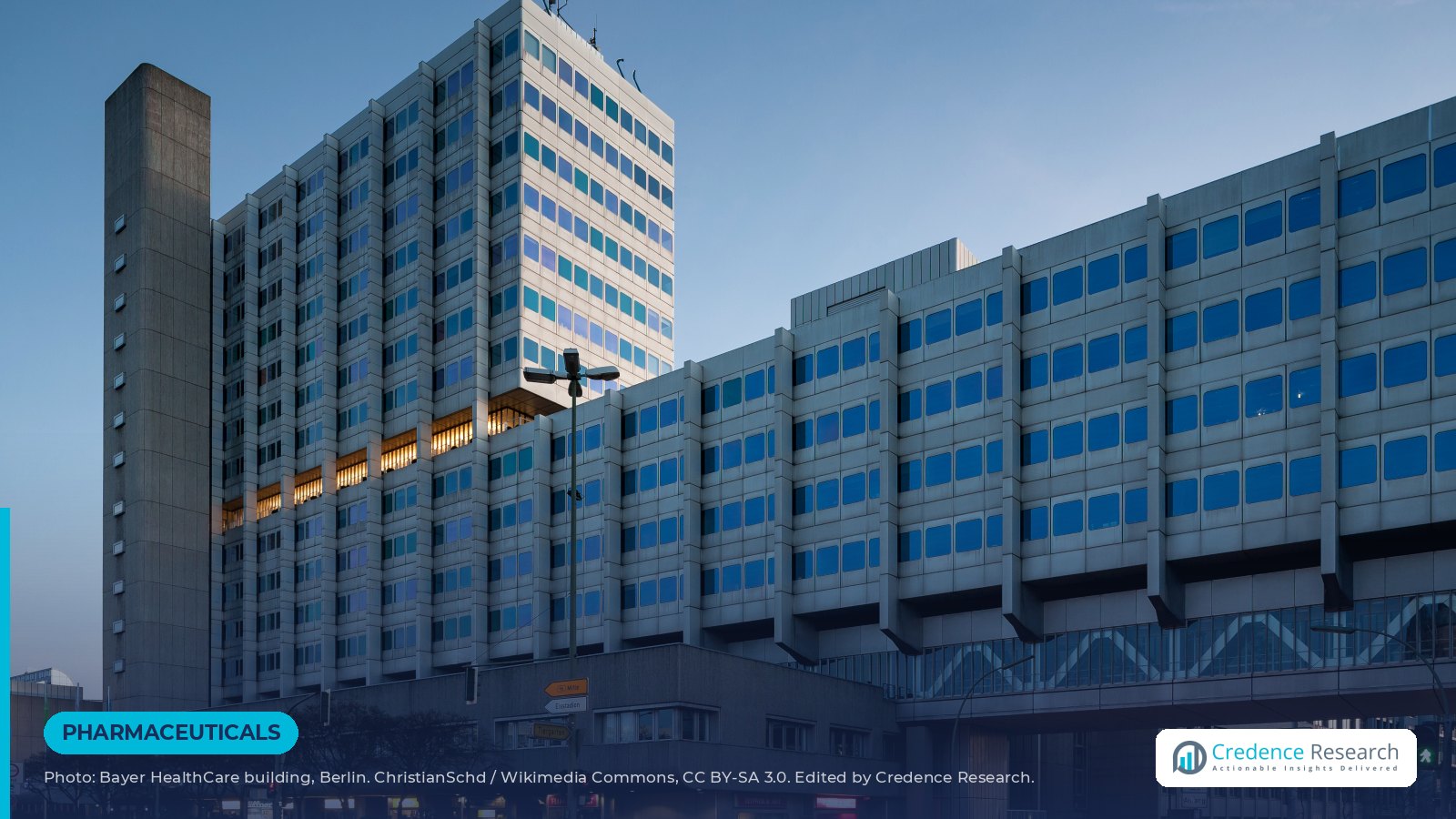
Image: Bayer HealthCare office building in Berlin-Wedding, by ChristianSchd via Wikimedia Commons, CC BY-SA 3.0. Cropped and edited by Credence Research.

About the Author

Senior News Editor at Credence Research Inc