
| REPORT ATTRIBUTE | DETAILS |
|---|---|
| Historical Period | 2020-2023 |
| Base Year | 2024 |
| Forecast Period | 2025-2032 |
| Australia Retail Pharmacy Market Size 2024 | USD 19,864.19 million |
| Australia Retail Pharmacy Market, CGR | 5.00% |
| Australia Retail Pharmacy Market Size 2032 | USD 29,342.27 million |
Market Overview
The Australia Retail Pharmacy Market is projected to grow from USD 19,864.19 million in 2024 to an estimated USD 29,342.27 million by 2032, with a compound annual growth rate (CAGR) of 5.00% from 2025 to 2032. This growth is driven by factors such as an aging population, increasing healthcare awareness, and the rising demand for over-the-counter (OTC) medications and health products.
Key drivers of this market include the expanding elderly demographic, which heightens the need for prescription and wellness products, and a growing preference for self-medication and preventive healthcare. Technological advancements, such as e-prescriptions and telepharmacy services, are enhancing accessibility and convenience for consumers. Additionally, government initiatives and subsidies are improving affordability and encouraging the expansion of pharmacy services across the country.
Geographically, Australia's retail pharmacy market is characterized by a mix of urban and rural dynamics. Major players include Chemist Warehouse, Priceline Pharmacy, Amcal, TerryWhite Chemmart, Guardian Pharmacy, and Discount Drug Stores, which collectively dominate the market. These companies are expanding their reach through both physical stores and online platforms, adapting to consumer preferences for convenience and accessibility.
Market Insights
- The Australian retail pharmacy market is projected to grow from USD 19,864.19 million in 2024 to USD 29,342.27 million by 2032, with a CAGR of 5.00% from 2025 to 2032.
- The Global Retail Pharmacy Market is expected to grow from USD 14,45,920.00 million in 2024 to USD 19,65,958.05 million by 2032, at a CAGR of 3.92% from 2025 to 2032.
- Key drivers include an aging population, rising healthcare awareness, and increased demand for over-the-counter (OTC) medications and wellness products.
- The rise of e-prescriptions and telepharmacy services are enhancing accessibility and convenience for consumers, contributing to market growth.
- Government initiatives, including subsidies and affordability programs, are driving expansion in pharmacy services across Australia.
- Price competition, particularly from online pharmacies, and stringent regulations around pricing and medication dispensing present challenges for traditional retail pharmacies.
- New South Wales and Victoria lead the market, with Queensland and Western Australia showing strong growth, especially in rural and remote areas.
- Major players like Chemist Warehouse, Priceline, and Amcal dominate the market, focusing on both physical stores and expanding online platforms.
Report Scope
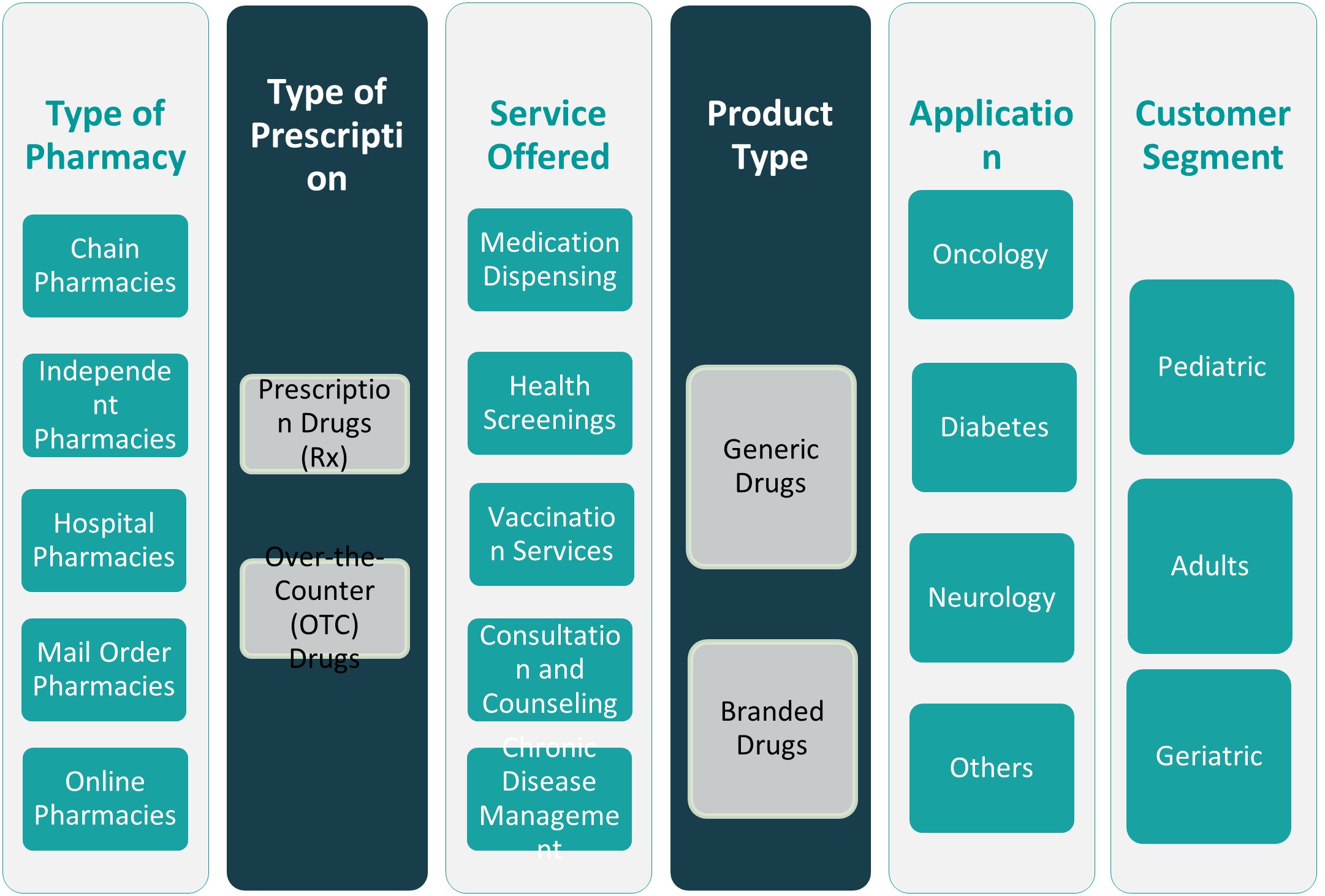
This report segments the Australia Retail Pharmacy Market as follows:
Market Drivers
Technological Advancements in Healthcare and E-commerce Integration
Technology is becoming a core growth lever for the Australia Retail Pharmacy sector as community pharmacies blend e-commerce, electronic prescriptions, telepharmacy, automated refill systems and doorstep delivery into everyday care. The shift is particularly powerful because patients increasingly expect healthcare to match the convenience of digital banking or online grocery ordering, while pharmacies need faster, safer workflows to manage prescription demand and improve service capacity. A strong supporting indicator comes from the Australian Digital Health Agency, which reported that more than 370 million electronic prescriptions had been generated since the national rollout in 2021, showing how quickly digital prescription infrastructure has become embedded in pharmacy operations. This adoption helps reduce transcription errors, improves medicine safety, supports remote access and allows pharmacies to link online ordering with in-store fulfilment or home delivery. As retailers invest in mobile apps, wellness tracking, loyalty platforms and virtual pharmacist access, digital integration is expanding customer reach while strengthening adherence, convenience and long-term engagement.
Government Initiatives and Pharmaceutical Subsidies
Government policy remains a powerful structural driver for the Australia Retail Pharmacy sector, with the Pharmaceutical Benefits Scheme supporting affordable access to essential medicines and creating stable prescription flows through community pharmacies. The PBS reduces patient cost barriers, encourages generic substitution and helps pharmacies serve as the everyday access point for medicines across metropolitan, regional and remote communities. A key supporting measure is that the Australian Government lowered the general patient co-payment from 42.50 Australian dollars to 30 Australian dollars per PBS-subsidised prescription from January 2023, a change estimated to save patients more than 280 million Australian dollars annually. This affordability support directly reinforces pharmacy traffic, particularly among patients managing recurring therapies, while complementary policies such as 60-day dispensing for eligible stable chronic conditions improve medicine continuity and convenience. By combining subsidies, safety-net protections and expanded pharmacist services, Australia’s public healthcare framework strengthens pharmacies as trusted, cost-effective access points within the broader healthcare system.
Aging Population and Increased Demand for Healthcare Products
Australia’s aging population is reshaping retail pharmacy demand as older adults require more prescription medicines, chronic disease support, medication reviews, mobility aids, pain-management products, supplements and preventive services. This creates recurring engagement with pharmacies, especially for patients managing multiple long-term conditions and complex treatment regimens that require counselling and adherence support. A strong demographic signal comes from the Australian Institute of Health and Welfare, which reported that 4.4 million Australians were aged 65 and over in 2023, accounting for 17 percent of the population, highlighting the scale of the senior consumer base that increasingly depends on community pharmacy access. Retail pharmacies are responding with dose administration aids, home delivery, blood pressure monitors, diabetes care products, continence products and pharmacist-led medication management services. As more Australians age in place, pharmacies are positioned as practical, local healthcare partners that support safe medicine use, reduce avoidable complications and provide caregivers with accessible advice and reliable product availability.
Rising Healthcare Awareness and Preventive Healthcare Trends
Rising health awareness is pushing the Australia Retail Pharmacy sector toward a broader wellness model, with consumers increasingly using pharmacies for vitamins, supplements, smoking cessation aids, cold and flu products, skin health, first aid, vaccination and self-care advice. This preventive-care orientation gives pharmacies a larger role before illness escalates, particularly as consumers seek trusted guidance for minor ailments and convenient access to non-prescription products. A strong supporting indicator is the Australian Institute of Health and Welfare’s PBS analysis showing cardiovascular medicines were the most commonly dispensed class in 2023, averaging 4.2 PBS-subsidised prescriptions per person, underlining the ongoing need for preventive and maintenance care around chronic risk factors such as blood pressure and cholesterol. Pharmacies are well placed to translate this demand into services such as health checks, vaccination reminders, adherence programs and lifestyle counselling. By combining professional advice with convenient product access, pharmacies are becoming practical wellness destinations for consumers managing everyday health proactively.
Market Trends
Telepharmacy and Remote Consultation Services
Telepharmacy services are rapidly gaining popularity in Australia, especially in rural and underserved regions. These services offer consumers the ability to consult with pharmacists remotely, receive advice on medication management, and access pharmaceutical care without the need to visit a physical store. This is particularly beneficial for elderly patients or those with chronic conditions who may find it difficult to travel to pharmacies. The growing integration of telemedicine with pharmacy services is allowing customers to get prescription renewals, medication counseling, and health consultations through virtual platforms. Retail pharmacies are partnering with telehealth providers to offer comprehensive healthcare solutions, making it easier for patients to manage their medications and access expert advice. Telepharmacy is also seen as a means to bridge the gap in rural healthcare access, where pharmacies may be few and far between, thus enhancing the convenience and quality of pharmaceutical care.
Personalized Pharmaceutical Services and Medication Management
Personalization in pharmacy services is becoming a key trend in the Australian retail pharmacy market. Retail pharmacies are increasingly offering tailored medication management services that cater to the individual needs of customers. This includes personalized consultations with pharmacists, customized medication blister packs, and follow-up services to ensure that patients adhere to prescribed treatment plans. Additionally, pharmacies are integrating technology to offer personalized recommendations for supplements, health products, and medications based on customers' health profiles. With advancements in digital health technologies and data analytics, pharmacies are able to offer more targeted services, improving medication adherence and patient outcomes. This shift towards personalized care is being driven by a greater focus on patient-centric healthcare, where consumers expect a more customized and responsive approach to their health management. By providing personalized care, retail pharmacies are strengthening customer loyalty and improving overall satisfaction.
Growth of Online Pharmacy Services
The Australian retail pharmacy market is increasingly witnessing a shift towards digital platforms. With the rise of e-commerce, more consumers are turning to online pharmacies for convenience, competitive pricing, and accessibility. For instance, during the COVID-19 pandemic, online pharmacy services in Australia saw a significant surge, with some platforms reporting a 200% increase in orders for prescription medications and health products. Retail pharmacies are responding by enhancing their digital infrastructure and offering services like e-prescriptions, online consultations, and automated prescription refills. Furthermore, the integration of mobile applications for managing medications, booking appointments, and tracking health metrics is further boosting the growth of online pharmacy services. This trend is expected to continue, with a rising number of pharmacies adopting e-commerce models to meet consumer demand for flexibility and convenience.
Expansion of Health and Wellness Offerings
The growing demand for health and wellness products is another prominent trend in Australia’s retail pharmacy market. Consumers are becoming increasingly health-conscious, seeking out products that contribute to long-term well-being and prevent the onset of chronic diseases. For example, sales of vitamins and supplements in Australian pharmacies increased by approximately 15% in the past year, reflecting the rising interest in preventive health solutions. Pharmacies are also incorporating fitness-related products like fitness trackers, sports nutrition, and personal care items into their offerings. The demand for holistic health solutions, which focus on both physical and mental well-being, is driving this expansion, and retail pharmacies are positioning themselves as one-stop shops for all health-related needs.
Market Challenges
Intense Price Competition and Margin Pressure
One of the key challenges facing the Australian retail pharmacy market is the intense price competition, particularly in an environment of rising operational costs and margin pressures. Pharmacies are faced with the challenge of maintaining profitability while offering competitive pricing to attract consumers. The growing popularity of online pharmacies has intensified price competition, as these platforms often provide lower prices and the convenience of home delivery. Traditional brick-and-mortar pharmacies are struggling to compete with these online services, especially in a market where consumers are increasingly price-sensitive and value-driven. Additionally, the Pharmaceutical Benefits Scheme (PBS) in Australia, which provides subsidized prices for certain prescription medications, creates pressure on pharmacies to adjust their pricing strategies while managing government regulations. The pricing structure in the Australian retail pharmacy market is tightly regulated, and as a result, pharmacies have limited flexibility in setting prices for prescription drugs, which affects their profit margins. This challenge is compounded by increasing operational expenses, including rent, wages, and the cost of technology adoption. For instance, Australian pharmacies, on average, spend approximately $200,000 annually on wages, reflecting the high cost of retaining staff in the sector. These factors make it difficult for pharmacies to sustain high-profit margins. As a result, retail pharmacies are forced to find innovative ways to differentiate themselves, such as by offering additional services or expanding their product range, in order to maintain customer loyalty and competitiveness.
Regulatory Compliance and Changing Government Policies
The Australian retail pharmacy market faces significant challenges in navigating a complex and ever-evolving regulatory environment. Regulatory compliance is crucial for pharmacies to maintain their licenses and operate legally within the healthcare system. The government imposes strict guidelines on the sale of pharmaceutical products, including the requirements for proper dispensing, record-keeping, and reporting of sales. Any breach of these regulations can lead to penalties, fines, or even the closure of the pharmacy. Moreover, with the increasing focus on improving healthcare quality and accessibility, there is an ongoing shift in government policies that affect the retail pharmacy sector. For example, the introduction of new regulations concerning the dispensing of prescription medications and the growing push towards digital health solutions, such as e-prescriptions, requires pharmacies to constantly adapt to new requirements. This presents a challenge, especially for smaller, independent pharmacies that may lack the resources to implement complex regulatory changes and invest in the necessary infrastructure. Additionally, government policies such as those related to pricing controls, reimbursement rates, and subsidies for pharmaceutical products can impact the financial stability of retail pharmacies, particularly if they are not able to adapt quickly to changes in the regulatory landscape. As these regulations evolve, pharmacies must invest in compliance measures and stay informed about policy updates to avoid costly mistakes and remain competitive in a highly regulated market.
Market Opportunities
Expansion of Online and Omnichannel Pharmacy Services
The increasing demand for convenience and digital solutions presents a significant opportunity for the Australian retail pharmacy market. Online pharmacy services have gained popularity, especially following the COVID-19 pandemic, as consumers seek the convenience of home delivery for both prescription medications and over-the-counter products. Retail pharmacies have the opportunity to expand their digital presence through e-commerce platforms, offering online ordering, e-prescriptions, and telehealth consultations. By integrating omnichannel strategies, such as allowing customers to pick up online orders in-store or offering virtual consultations, pharmacies can enhance customer convenience and loyalty. This expansion into digital services is also an avenue for pharmacies to reach underserved populations, particularly in rural and remote areas, where access to physical pharmacies may be limited. As consumers increasingly demand flexibility in how they receive healthcare products and services, pharmacies that successfully adopt and enhance their digital and omnichannel capabilities stand to gain a competitive advantage in the growing market.
Growth in Health and Wellness Product Offerings
With rising consumer interest in health and wellness, retail pharmacies in Australia have a significant opportunity to expand their offerings beyond traditional prescription medications. There is increasing demand for products such as vitamins, dietary supplements, organic skincare, and natural remedies. This shift toward preventive healthcare and self-medication is driving consumers to seek wellness products that support both physical and mental well-being. Retail pharmacies can capitalize on this trend by diversifying their product range to include health supplements, fitness products, and holistic wellness solutions. By positioning themselves as comprehensive health destinations, pharmacies can attract a broader customer base and increase revenue streams. Offering personalized services, such as health consultations or tailored wellness packages, further enhances this market opportunity.
Market Segmentation Analysis
By Type of Pharmacy
The Australian retail pharmacy market is segmented into several types of pharmacies, including chain pharmacies, independent pharmacies, hospital pharmacies, mail-order pharmacies, and online pharmacies. Chain pharmacies, such as Chemist Warehouse and Priceline Pharmacy, dominate the market due to their extensive network, brand recognition, and ability to offer competitive pricing. These large pharmacy chains benefit from economies of scale, enabling them to provide a wide range of pharmaceutical products and services at lower prices. Independent pharmacies, while smaller in size, often provide personalized services, establishing strong community relationships with customers. These pharmacies cater to niche markets, offering specialized advice and unique products. Hospital pharmacies play a crucial role in providing prescription medications and counseling services to patients within healthcare settings, contributing to the overall healthcare infrastructure. Mail-order pharmacies and online pharmacies have seen significant growth, driven by the increasing consumer preference for convenience, e-prescriptions, and home delivery services, especially post-pandemic. These segments offer convenience and accessibility, with online phamacies becoming an integral part of the market.
By Type of Prescription
The retail pharmacy market in Australia is segmented by prescription type, which includes prescription drugs (Rx) and over-the-counter (OTC) drugs. Prescription drugs make up a significant portion of the retail pharmacy market, driven by the aging population and increasing prevalence of chronic diseases, such as diabetes, cardiovascular issues, and respiratory conditions. These medications require a prescription and are essential for managing various health conditions. On the other hand, OTC drugs are gaining traction, driven by consumer demand for self-care products and wellness solutions. OTC medications, which can be purchased without a prescription, are commonly used for common ailments such as headaches, colds, and digestive issues. The growing trend towards preventive healthcare and self-medication is driving the demand for OTC drugs.
Segments
Based on Type of Pharmacy
- Chain Pharmacies
- Independent Pharmacies
- Hospital Pharmacies
- Mail Order Pharmacies
- Online Pharmacies
Based on Type of prescription
- Prescription Drugs (Rx)
- Over-the-Counter (OTC) Drugs
Based on Service offered
- Medication Dispensing
- Health Screenings
- Vaccination Services
- Consultation and Counseling
- Chronic Disease Management
Based on Product Type
- Generic Drugs
- Branded Drugs
Based on Application
- Oncology
- Diabetes
- Neurology
- Others
Based on Customer
- Paediatric
- Adults
- Geriatric
Based on Region
- New South Wales
- Victoria
- Queensland
- Western Australia
- South Australia
- Tasmania
Regional Analysis
New South Wales (33%)
New South Wales is the largest contributor to the Australian retail pharmacy market, accounting for approximately 33% of the total market share. This dominance is driven by the state's large population, which includes Sydney, Australia’s most populous city. NSW benefits from a high concentration of pharmacies, both chain and independent, providing easy access to pharmaceutical products and services. The region also has a strong healthcare infrastructure, with hospitals and specialized clinics driving the demand for prescription medications and wellness services. Moreover, the growth of online pharmacies and e-commerce platforms is particularly pronounced in NSW, given its technological adoption and urban consumer base.
Victoria (27%)
Victoria, which includes Melbourne, holds a market share of approximately 27%. As one of Australia’s most populous states, Victoria exhibits high demand for retail pharmacy services, particularly in urban areas. The state is home to a diverse consumer base, with a significant focus on health and wellness, contributing to the growth of OTC drugs and health supplements. The aging population in Victoria is also a significant driver for the market, as elderly consumers require specialized medications and chronic disease management services. The region has seen increasing expansion of chain pharmacies, as well as a rise in health and wellness offerings.
Key players
- Chemist Warehouse
- Priceline
- Amcal
- Terry White Chemists
- Discount Drug Stores
- Soul Pattinson
- My Chemist Retail Group
Competitive Analysis
The Australian retail pharmacy market is highly competitive, with major players such as Chemist Warehouse, Priceline, Amcal, Terry White Chemists, Discount Drug Stores, Soul Pattinson, and My Chemist Retail Group dominating the sector. Chemist Warehouse leads the market with its extensive network of stores, cost-effective pricing strategy, and strong brand recognition. Priceline follows closely with a focus on a comprehensive range of beauty, health, and wellness products, attracting a diverse customer base. Amcal and Terry White Chemists offer personalized services and strong community relationships, with Amcal focusing on family healthcare and Terry White Chemists emphasizing customer trust and quality service. Discount Drug Stores capitalizes on its competitive pricing and promotional strategies, while Soul Pattinson and My Chemist Retail Group maintain strong regional presences. These players are increasingly focusing on expanding their online platforms and integrating e-commerce solutions to meet growing consumer demand for convenience and accessibility.
Recent Developments
- In December 2025, API, a Wesfarmers Health company, appointed receivers and administrators to 56 pharmacies within Infinity Pharmacy Group, which operated 92 pharmacies, including 72 Priceline Pharmacies; Wesfarmers Health clarified in January 2026 that the affected Priceline Pharmacy stores were continuing to trade and were not closing.
- In January 2026, Priceline Pharmacy and Chemist Warehouse were named finalists in Power Retail’s All Star Bash 2026 Awards, with Priceline recognised across customer experience, loyalty, direct marketing and viral campaign categories, while Chemist Warehouse was shortlisted for the major Number One Retailer award.
- In February 2026, Wesfarmers reported that Priceline Pharmacy delivered strong first-half FY2026 performance, supported by network expansion, promotional campaigns and differentiated personal-care products; the update also noted 13 new Priceline stores, expansion of the Atomica beauty format, growth in InstantScripts, two new Health Hub pilot outlets, a new Priceline app and Sister Club reaching 10 million members.
- In February 2026, Sigma Healthcare’s retail network update showed 13 new Chemist Warehouse-branded stores were added in Australia during the half-year period, taking the Australian Chemist Warehouse-branded store count to 550.
- In April 2026, Wesfarmers Health launched a cross-retail OnePass customer offer involving Priceline Pharmacy, Bunnings, Kmart, Target and Officeworks, giving new members a six-month free trial with delivery and loyalty benefits, including extra Sister Club points for eligible Priceline and Priceline Pharmacy purchases.
- In May 2026, Chemist Warehouse was named Pharmacy of the Year in the Roy Morgan Consumer Satisfaction Awards, marking its fourth consecutive win and fifth title overall, with the company recognised for leading monthly customer satisfaction rankings across the calendar year.
Market Concentration and Characteristics
The Australia retail pharmacy market is characterized by a relatively high level of concentration, with a few key players dominating the sector, including Chemist Warehouse, Priceline, Amcal, and Terry White Chemists. These large pharmacy chains control a significant portion of the market share, benefiting from their extensive networks of physical stores and the ability to offer competitive pricing through economies of scale. Despite the dominance of these key players, the market also features a large number of independent pharmacies that cater to niche markets and focus on providing personalized services. The market is highly fragmented in terms of service offerings, with companies differentiating themselves through specialized products such as wellness solutions, chronic disease management, and a growing range of online and mail-order pharmacy services. The increasing shift toward e-commerce and the expansion of online platforms have also contributed to the evolving landscape, driving further competition and innovation within the market.
Report Coverage
The research report offers an in-depth analysis based on Type of Pharmacy, Type of prescription, Service offered, Product Type, Application, Customer and Region. It details leading market players, providing an overview of their business, product offerings, investments, revenue streams, and key applications. Additionally, the report includes insights into the competitive environment, SWOT analysis, current market trends, as well as the primary drivers and constraints. Furthermore, it discusses various factors that have driven market expansion in recent years. The report also explores market dynamics, regulatory scenarios, and technological advancements that are shaping the industry. It assesses the impact of external factors and global economic changes on market growth. Lastly, it provides strategic recommendations for new entrants and established companies to navigate the complexities of the market.
Future Outlook
- The shift toward online pharmacies will continue to expand, driven by increased consumer demand for convenience and home delivery services. Digital platforms will play an increasingly critical role in the sector's evolution.
- As consumer awareness of preventive healthcare rises, retail pharmacies will increasingly diversify their offerings to include vitamins, dietary supplements, and organic wellness products. This trend will cater to health-conscious individuals seeking self-care solutions.
- Retail pharmacies will continue to integrate advanced technology, such as e-prescriptions and telehealth services, to enhance customer experience and streamline pharmacy operations. Automation and AI will also drive efficiency and personalization in service offerings.
- The growing elderly population in Australia will drive demand for prescription medications and chronic disease management services. Pharmacies will focus more on tailored care plans for managing age-related health issues like diabetes, hypertension, and arthritis.
- The retail pharmacy sector will face ongoing changes in government regulations, especially around pricing, subsidies, and medication dispensing. Compliance with new regulations will require pharmacies to adapt their practices to maintain competitive advantage.
- The rise in telehealth and telepharmacy services will continue as a convenient healthcare delivery model, especially in rural and remote regions, offering patients access to professional guidance and medication without in-person visits.
- With growing environmental concerns, the demand for eco-friendly and sustainable pharmacy practices will increase. Retail pharmacies will focus on reducing waste, offering eco-friendly packaging, and implementing sustainable business operations.
- Personalization in pharmacy services will grow, with pharmacies offering customized medication management, health consultations, and tailored wellness solutions. This will enhance customer loyalty and improve overall patient care.
- With a greater focus on wellness, preventive healthcare will become more prominent, with retail pharmacies offering more health screening services, vaccinations, and advice on lifestyle modifications to reduce the risk of chronic diseases.
- Competitive pricing strategies will continue to play a crucial role in the retail pharmacy market. Pharmacies will focus on maintaining affordable pricing, offering discounts, and increasing price transparency to attract cost-conscious consumers while remaining compliant with regulations.

Request a Free Sample
Fill in your details and we'll send you a free sample report.
- Sample data tables & charts
- Research methodology
Market Dynamics
Aging Population and Chronic Disease Prevalence
Australia’s growing elderly demographic is increasing demand for prescription medications, chronic disease management, and wellness products, driving recurring engagement with retail pharmacies for ongoing healthcare needs.
Technological Advancements and E-commerce Integration
The rapid adoption of e-prescriptions, telepharmacy, and online ordering platforms is making pharmacy services more accessible and convenient, expanding customer reach and streamlining pharmacy operations.
Government Initiatives and Pharmaceutical Subsidies
Policies such as the Pharmaceutical Benefits Scheme and reduced patient co-payments are making medicines more affordable, boosting pharmacy traffic and supporting stable prescription flows through community pharmacies.
Rising Healthcare Awareness and Preventive Care Trends
Consumers are increasingly seeking preventive healthcare solutions, such as vitamins, supplements, and wellness products, positioning pharmacies as key destinations for proactive health management and self-care.
Expansion of Online and Omnichannel Pharmacy Services
The shift toward digital and omnichannel models is enabling pharmacies to reach underserved populations, particularly in rural and remote areas, while meeting consumer demand for convenience and flexible access to healthcare products and services.
Need a Custom Version of This Report?
Tailor the scope, geography, or segments to your exact requirements.
- Custom geography or segment scope
- Direct access to our analyst team
Frequently Asked Questions
What is the market size of the Australia Retail Pharmacy Market in 2023 and 2032?
What are the key drivers of growth in the Australia Retail Pharmacy Market?
How is technology impacting the Australia Retail Pharmacy Market?
What is the geographical distribution of the Australia Retail Pharmacy Market?
Table of Content
Chapter 1 Market Segmentation
- 1.1 Segmentation Framework
- 1.1.1 Product and Service Classification
- 1.1.2 Application and End-Use Classification
- 1.1.3 Technology and Solution Classification
- 1.1.4 Customer and Distribution Channel Classification
- 1.1.5 Geographic Segmentation
- 1.1.6 Market Segment Definitions and Boundaries
- 1.2 By Service Offered
- 1.2.1 Medication Dispensing
- 1.2.2 Health Screenings
- 1.2.3 Vaccination Services
- 1.2.4 Consultation and Counseling
- 1.2.5 Chronic Disease Management
- 1.3 By Type of Pharmacy
- 1.3.1 Chain Pharmacies
- 1.3.2 Independent Pharmacies
- 1.3.3 Hospital Pharmacies
- 1.3.4 Mail Order Pharmacies
- 1.3.5 Online Pharmacies
- 1.4 By Type of Prescription
- 1.4.1 Prescription Drugs (Rx)
- 1.4.2 Over-the-Counter (OTC) Drugs
Chapter 2 Introduction
- 2.1 Report Objectives and Scope
- 2.2 Product Definition and Industry Terminology
- 2.3 Market Inclusions and Exclusions
- 2.4 Research Process
- 2.4.1 Primary Research and Expert Interviews
- 2.4.2 Secondary Research and Source Review
- 2.4.3 Top-Down and Bottom-Up Estimation
- 2.4.4 Data Triangulation and Verification
- 2.5 Market Size Measurement Basis
- 2.5.1 2024: USD 19,864.19 million → 2032: USD 29,342.27 million
- 2.6 Historical and Forecast Reference Periods
- 2.6.1 Base Year: 2024
- 2.6.2 Forecast Period: 2024-2032
- 2.7 Research Assumptions and Limitations
Chapter 3 Executive Summary
- 3.1 Market Snapshot and Key Findings
- 3.2 Base-Year Market Size, 2024
- 3.3 Forecast Market Size, 2032
- 3.4 Revenue and Volume Growth Outlook
- 3.5 Key Demand and Supply Indicators
- 3.6 Leading Market Segments
- 3.7 Fastest-Growing Market Opportunities
- 3.8 Regional Performance Highlights
- 3.9 Technology and Industry Transformation
- 3.10 Competitive Landscape Summary
- 3.11 Analyst View and Strategic Implications
Chapter 4 Australia Retail Pharmacy Market Trends and Developments
- 4.1 Historical Industry Development
- 4.2 Recent Market Trends and Developments
- 4.3 Demand and Customer Behavior Trends
- 4.4 Technology and Product Innovation
- 4.5 Artificial Intelligence, Automation and Digitalization
- 4.6 Local Manufacturing and Supply Chain Realignment
- 4.7 Industry Partnerships, Mergers and Acquisitions
- 4.8 Sustainability and Circular Economy Developments
- 4.9 Government and Private Sector Investment Trends
- 4.10 Emerging Business Models and Commercialization
- 4.11 Industry Developments and Announcements
Chapter 5 Australia Retail Pharmacy Market Production, Supply and Demand Analysis
- 5.1 Demand Trend and Consumption Analysis
- 5.2 Demand Forecast, 2024-2032
- 5.3 Production and Output Trend
- 5.4 Production and Output Forecast, 2024-2032
- 5.5 Installed Capacity and Capacity Utilization
- 5.6 Company-Wise Production Plants and Statistics
- 5.6.1 Installed Production Capacity
- 5.6.2 Actual Production
- 5.6.3 Planned Capacity and Expansion Targets
- 5.7 Supply Chain Structure and Procurement Trends
- 5.8 Supply-Demand Gap and Bottlenecks
- 5.9 Import Dependence and Sourcing Structure
- 5.10 Contract Manufacturing and Outsourcing
- 5.11 Regional Supply and Demand Concentration
Chapter 6 Australia Retail Pharmacy Market Pricing Analysis
- 6.1 Pricing Structure and Measurement
- 6.2 Historical Pricing Trends
- 6.3 Pricing Outlook, 2024-2032
- 6.4 Average Selling Price and Unit Economics
- 6.5 Pricing by Product and Market Segment
- 6.6 Geographic Pricing Differences
- 6.7 Key Input, Energy, Labor and Logistics Costs
- 6.8 Contract Pricing and Purchasing Models
- 6.9 Pricing Sensitivity and Competitive Positioning
- 6.10 Price, Margin and Profitability Implications
Chapter 7 Australia Retail Pharmacy Market Dynamics
- 7.1 Market Growth Drivers
- 7.1.1 Demand-Side Drivers
- 7.1.2 Technology and Innovation Drivers
- 7.1.3 Infrastructure and Investment Drivers
- 7.1.4 Regulatory and Policy Drivers
- 7.2 Market Restraints
- 7.2.1 Cost and Affordability Constraints
- 7.2.2 Technology and Adoption Barriers
- 7.2.3 Supply Chain and Operational Constraints
- 7.3 Market Challenges
- 7.3.1 Competitive Pressure and Margin Erosion
- 7.3.2 Skills, Infrastructure and Implementation Gaps
- 7.4 Emerging Market Opportunities
- 7.5 Market Dynamics Impact and Time-Horizon Assessment
Chapter 8 Australia Retail Pharmacy Value Chain Analysis
- 8.1 Industry Value Chain Overview
- 8.2 Upstream Suppliers and Critical Inputs
- 8.3 Technology and Component Providers
- 8.4 Manufacturing or Service Delivery
- 8.5 Distribution, Channel Partners and Integrators
- 8.6 Downstream Applications and End Users
- 8.7 Value Addition and Profit Pools
- 8.8 Vertical Integration and Outsourcing
- 8.9 Supplier Concentration and Risk
- 8.10 Supply Chain Localization and Resilience
Chapter 9 Australia Retail Pharmacy Market Regulations and Policies
- 9.1 Relevant Laws, Standards and Compliance Frameworks
- 9.2 Product, Service, Safety and Quality Requirements
- 9.3 Government Policies, Incentives and Subsidies
- 9.4 Imports, Exports and Trade Barriers
- 9.5 Public Procurement and Local Content Requirements
- 9.6 Environmental and Sustainability Compliance
- 9.7 Upcoming Policy Changes and Market Implications
Chapter 10 Australia Retail Pharmacy Market Hotspots and Opportunities
- 10.1 Market Opportunity Mapping and Growth Hotspots
- 10.2 High-Growth Applications and Customer Groups
- 10.3 Underserved Markets and White-Space Opportunities
- 10.4 Emerging Technology and Product Opportunities
- 10.5 New Capacity and Investment Hotspots
- 10.6 Market Entry and Expansion Opportunities
- 10.7 Distribution and Partnership Opportunities
- 10.8 Near-Term and Long-Term Commercial Potential
- 10.9 Opportunity Attractiveness and Execution Risks
Chapter 11 Australia Retail Pharmacy Market Outlook, 2024-2032
- 11.1 Market Size and Analysis
- 11.1.1 Revenue (Market Measurement: 2024: USD 19,864.19 million → 2032: USD 29,342.27 million)
- 11.1.2 Market Volume and Quantity Sold
- 11.1.3 Historical Market Size
- 11.1.4 Base-Year Market Size, 2024
- 11.2 Market Forecast, 2024-2032
- 11.2.1 Revenue Forecast to 2032
- 11.2.2 Volume Forecast to 2032
- 11.2.3 CAGR and Year-on-Year Growth
- 11.2.4 Incremental Revenue Opportunity
- 11.3 Forecast Assumptions and Scenario Analysis
- 11.3.1 Base-Case Forecast
- 11.3.2 Optimistic and Conservative Scenarios
- 11.3.3 Technology, Pricing and Policy Sensitivities
- 11.4 Market Attractiveness and Growth Outlook
Chapter 12 Australia Retail Pharmacy Market Segmentation and Outlook
- 12.1 Segmentation Summary and Market Shares, 2024
- 12.2 Largest and Fastest-Growing Segments
- 12.3 By Service Offered - Market Size and Forecast, 2024-2032
- 12.3.1 Segment Definition and Scope
- 12.3.2 Historical Market Size
- 12.3.3 Revenue Forecast, 2024-2032
- 12.3.4 Volume Forecast, 2024-2032
- 12.3.5 Base-Year Market Share, 2024
- 12.3.6 Segment CAGR and Growth Drivers
- 12.3.7 Subsegment Market Size and Forecast
- 12.3.7.1 Medication Dispensing
- 12.3.7.2 Health Screenings
- 12.3.7.3 Vaccination Services
- 12.3.7.4 Consultation and Counseling
- 12.3.7.5 Chronic Disease Management
- 12.3.8 Subsegment Pricing and Adoption Trends
- 12.3.9 Leading Suppliers and Competition
- 12.3.10 Regional Demand and Opportunities
- 12.4 By Type of Pharmacy - Market Size and Forecast, 2024-2032
- 12.4.1 Segment Definition and Scope
- 12.4.2 Historical Market Size
- 12.4.3 Revenue Forecast, 2024-2032
- 12.4.4 Volume Forecast, 2024-2032
- 12.4.5 Base-Year Market Share, 2024
- 12.4.6 Segment CAGR and Growth Drivers
- 12.4.7 Subsegment Market Size and Forecast
- 12.4.7.1 Chain Pharmacies
- 12.4.7.2 Independent Pharmacies
- 12.4.7.3 Hospital Pharmacies
- 12.4.7.4 Mail Order Pharmacies
- 12.4.7.5 Online Pharmacies
- 12.4.8 Subsegment Pricing and Adoption Trends
- 12.4.9 Leading Suppliers and Competition
- 12.4.10 Regional Demand and Opportunities
- 12.5 By Type of Prescription - Market Size and Forecast, 2024-2032
- 12.5.1 Segment Definition and Scope
- 12.5.2 Historical Market Size
- 12.5.3 Revenue Forecast, 2024-2032
- 12.5.4 Volume Forecast, 2024-2032
- 12.5.5 Base-Year Market Share, 2024
- 12.5.6 Segment CAGR and Growth Drivers
- 12.5.7 Subsegment Market Size and Forecast
- 12.5.7.1 Prescription Drugs (Rx)
- 12.5.7.2 Over-the-Counter (OTC) Drugs
- 12.5.8 Subsegment Pricing and Adoption Trends
- 12.5.9 Leading Suppliers and Competition
- 12.5.10 Regional Demand and Opportunities
- 12.6 Segment Growth Comparison
- 12.7 Segment Attractiveness and Priority Matrix
Chapter 13 Australia Retail Pharmacy Geographic Market Outlook, 2024-2032
- 13.1 Domestic Market Distribution and Demand Clusters
- 13.2 State- or Province-Wise Market Size and Forecast, 2024-2032
- 13.3 City and Metropolitan Market Outlook
- 13.4 Industrial, Manufacturing and Commercial Clusters
- 13.5 Geographic Concentration of Key End Users
- 13.6 Local Pricing and Purchasing Differences
- 13.7 Domestic Production Facilities and Capacity Map
- 13.8 Local Infrastructure and Project Pipeline
- 13.9 State-Level Policy and Incentive Differences
- 13.10 Subnational Investment Hotspots and Opportunities
- 13.11 Distribution and Logistics Networks
- 13.12 Domestic Competitive Footprint
Chapter 14 Australia Retail Pharmacy Technology, Innovation and Sustainability Outlook
- 14.1 Technology Landscape and Maturity
- 14.2 Product, Process and Service Innovation
- 14.3 AI, Automation and Digital Tools in the Industry
- 14.4 Technology Adoption and Performance Benchmarking
- 14.5 Innovation Pipeline and R&D Investment
- 14.6 Patent and Intellectual Property Trends
- 14.7 Energy Efficiency and Resource Management
- 14.8 Sustainability, Recycling and Circularity
- 14.9 Technology Roadmap, 2024-2032
- 14.10 Risks of Obsolescence and Technology Substitution
Chapter 15 Australia Retail Pharmacy Market Key Strategic Imperatives
- 15.1 Growth and Market Entry Priorities
- 15.2 High-Return Products and Segments
- 15.3 Pricing, Profitability and Cost Optimization
- 15.4 Technology Investment and Product Differentiation
- 15.5 Supply Chain Localization and Resilience
- 15.6 Distribution and Customer Acquisition
- 15.7 Partnership, Acquisition and Capacity Strategy
- 15.8 Regional Expansion Priorities
- 15.9 Short-, Medium- and Long-Term Actions
Chapter 16 Competition Outlook
- 16.1 Industry Competition Characteristics
- 16.2 Market Structure and Concentration
- 16.3 Market Share and Competitive Positioning, 2024
- 16.4 Company-Wise Revenue and Product Benchmarking
- 16.5 Production and Service Capacity Benchmarking
- 16.6 Technology, Pricing and Differentiation
- 16.7 Regional Footprint and Distribution Strength
- 16.8 Mergers, Acquisitions and Strategic Alliances
- 16.9 New Entrants and Competitive Threats
- 16.10 Porter's Five Forces and Industry Attractiveness
- 16.11 Competitive Outlook, 2024-2032
Chapter 17 Company Profiles
- 17.1 Company Coverage and Selection Criteria
- 17.2 Chemist Warehouse
- 17.2.1 Business Description
- 17.2.2 Company Ownership and Geographic Presence
- 17.2.3 Product and Service Portfolio
- 17.2.4 Manufacturing and Operating Footprint
- 17.2.5 Production Capacity and Expansion Plans
- 17.2.6 Financial Performance and Investment
- 17.2.7 Market Share and Competitive Position
- 17.2.8 Technology and Innovation Capabilities
- 17.2.9 Strategic Alliances or Partnerships
- 17.2.10 Recent Developments
- 17.2.11 Growth Strategy and Outlook
- 17.3 Priceline Pharmacy
- 17.4 Amcal
- 17.5 TerryWhite Chemmart
- 17.6 Guardian Pharmacy
- 17.7 Discount Drug Stores
- 17.8 Soul Pattinson
- 17.9 My Chemist Retail Group
- 17.10 Other Relevant Market Participants
Note: Every listed company is profiled on the structure shown under the first company. The company list is preliminary and may change based on research findings, market developments, data availability and client requirements.
Chapter 18 Disclaimer
- 18.1 Research and Forecast Disclaimer
- 18.2 Data Source and Estimation Limitations
Note: The depth of individual sections depends on data availability for this market. Volume, capacity, trade and other unit-based metrics are included where applicable.

