
FDA Approves Inovio's Voceryq, First Plasmid DNA Immunotherapy, for Recurrent Respiratory Papillomatosis
The U.S. Food and Drug Administration on Oct. 30 granted accelerated approval to Voceryq, an immunotherapy from Plymouth Meeting, Pennsylvania-based Inovio Pharmaceuticals, to reduce the frequency of surgery in adults with recurrent respiratory papillomatosis, a rare and chronic airway disease caused by human papillomavirus. The agency called the product the first plasmid DNA-based immunotherapy approved in the United States. The decision is also Inovio's first product approval and sets up a direct commercial contest with Precigen, whose gene-based therapy for the same disease reached the market last year.
Key developments
- The FDA approved Voceryq (doruxapapogene ralaplasmid and lalikinogene sifuplasmid-gxfd), formerly known as INO-3107, on its Oct. 30 target action date under the accelerated approval pathway.
- In the open-label RRP-001 trial, 7 of 26 patients in the efficacy population (27%) needed no surgical removal of papillomas during 12 months of follow-up. Those patients had needed a median of 4.5 surgeries in the year before treatment.
- The product is given as intramuscular injections over a 9-week regimen using Inovio's CELLECTRA 5PSP electroporation device, which the FDA approved in combination with the drug.
- Inovio expects ordering and shipping to begin in about 60 days, with full commercial launch in the first quarter of 2027.
- Continued approval depends on a confirmatory study. The FDA requires a draft protocol by the end of 2026, with final protocol alignment expected by mid-2027.
Disease and technology background
Recurrent respiratory papillomatosis is driven by HPV types 6 and 11, which cause wart-like growths mainly around the larynx and vocal cords. The growths are usually benign, but they can obstruct breathing, damage the voice and, in some cases, turn cancerous over time. Because the virus persists in tissue after the growths are cut out, papillomas return, and many patients undergo several surgeries each year. Inovio estimates there are at least 25,000 prevalent patients in the United States, based on its analysis of claims data.
Voceryq combines two DNA plasmids, which are small circular pieces of DNA. One carries instructions for HPV 6 and 11 proteins, and the other encodes interleukin-12, an immune signaling molecule. Once delivered into muscle cells by brief electrical pulses, the plasmids prompt the body to produce these proteins and mount a T cell response against infected tissue. Patients undergo standard surgical debulking of visible papillomas before the first dose, and no additional surgery was required during the dosing window in the trial.
The RRP-001 study enrolled 32 adults who had at least two papilloma surgeries in the prior year. All 32 completed the study. The most common adverse reactions were injection site reactions, headache, fatigue, high blood pressure, nausea and dizziness, and most treatment-related reactions were mild or moderate and transient. The FDA also listed effects tied to electroporation, including brief muscle contractions and vasovagal reactions. The product previously received Breakthrough Therapy and Orphan Drug designations in the U.S. and orphan designation from the European Commission.
Industry implications
The approval matters well beyond one rare disease. DNA vaccines and plasmid therapeutics have long struggled to deliver strong immune responses in humans, and Inovio had no approved product before this decision. An FDA approval for a plasmid product delivered by electroporation gives the modality a regulatory precedent, including a reviewed manufacturing and device package, that other developers of non-viral genetic medicines can reference.
The decision also shows how the FDA's Center for Biologics Evaluation and Research is applying accelerated approval in rare diseases. The agency accepted a reduction in surgical procedures as an intermediate endpoint reasonably likely to predict clinical benefit, based on a single-arm study of 32 patients. CBER Director Karim Mikhail described the decision as a scientific breakthrough and said it could mean fewer surgeries and fewer disruptions for patients.
Competitive and supply chain implications
Voceryq enters a market with one established rival. Precigen's Papzimeos, which uses a modified adenovirus vector to target the same HPV types, won full FDA approval in August 2025 as the first medicine for the disease and began shipping in November 2025. Precigen shares fell about 27% in after-hours trading after the Inovio decision, according to Stocktwits, while Inovio shares jumped 257% in extended trading, Reuters reported.
The two products will compete on convenience, durability and regulatory standing. Papzimeos carries a full approval, while Voceryq's accelerated approval remains conditional on confirmatory data. Inovio, in turn, can point to a non-viral platform that does not rely on a viral vector. Physician experience with the electroporation device and the burden of the dosing schedule will shape uptake at specialty ENT centers.
On the supply side, Inovio has built a lean, outsourced commercial model. The company has engaged Syneos Health as its contract sales organization and has said it lined up a third-party logistics provider, a specialty distributor, a specialty pharmacy and a patient support hub. Inovio reported $36.7 million in cash and short-term investments at June 30, excluding about $18.3 million in net proceeds from a July offering, and said those funds would support operations into late first-quarter 2027, assuming no further capital raises.
Regional implications
The approval applies only to the United States, where treatment will concentrate at academic otolaryngology centers that already manage recurrent surgical cases. The pivotal study's lead investigator, Simon Best of Johns Hopkins University, noted that every surgery carries a risk of laryngeal injury, which frames the clinical case U.S. specialists will weigh.
Outside the U.S., Inovio holds orphan designation in the European Union but has not announced a marketing application there. For European and other regulators, the FDA decision offers a reference point on how to evaluate surgery reduction as an endpoint in a rare disease with limited options.
Credence Research analysis
The approval is more significant as a platform validation than as a near-term commercial event. Inovio now has a licensed plasmid product, a licensed delivery device and an inspected manufacturing chain, which together lower the technical risk investors and partners have long attached to DNA medicines. The open question is whether the company can convert that validation into revenue fast enough, given a cash runway that, on its own projections, extends only into early 2027 without new funding.
Competition with Precigen will likely hinge on real-world durability and how physicians weigh full versus accelerated approval. With a 27% complete response rate in a small single-arm trial, Voceryq's long-term position will depend heavily on the confirmatory study's design and timing. A rare disease that once had no approved drug now has two mechanistically distinct options within roughly 15 months, which should push payers and clinicians toward clearer treatment sequencing.
What comes next
- Inovio hosts a conference call on Nov. 2 at 8 a.m. ET to discuss label details and commercialization plans.
- Product ordering and shipping are expected to begin in about 60 days, around the end of 2026.
- Inovio must submit a draft confirmatory trial protocol to the FDA by the end of 2026.
- Full field deployment and commercial launch are planned for the first quarter of 2027.
- Alignment with the FDA on the final confirmatory protocol is expected by mid-2027.
Sources
- U.S. FDA: FDA Approves First Plasmid DNA-based Immunotherapy for Adults with Recurrent Respiratory Papillomatosis
- INOVIO: INOVIO Announces FDA Accelerated Approval of VOCERYQ (PR Newswire)
- INOVIO: Second Quarter 2026 Financial Results and Business Highlights
- Reuters: US FDA approves Inovio's treatment for rare throat disease; shares surge
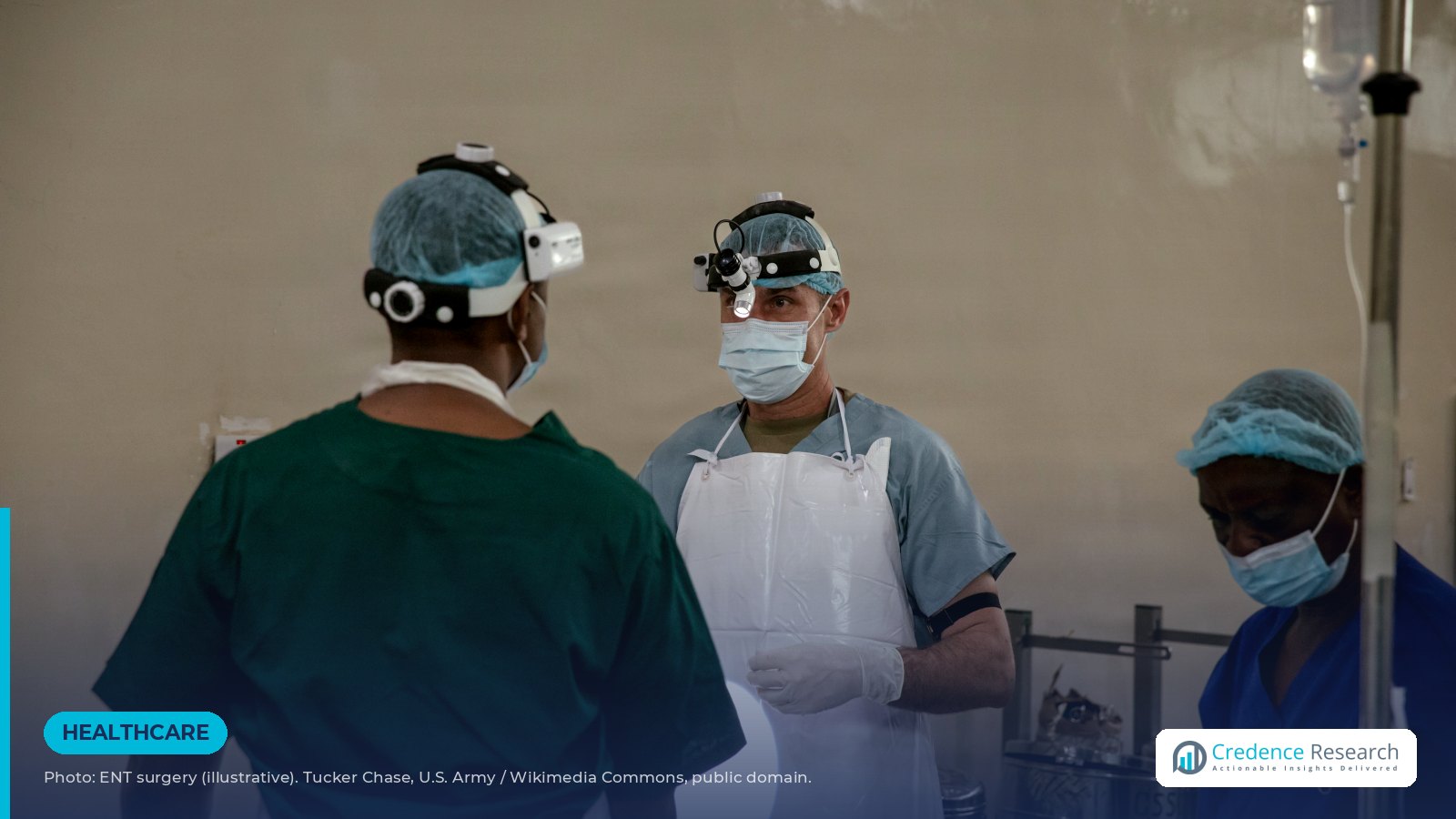
Image: Otolaryngology surgery during a medical exercise (illustrative), by 1st Lt. Tucker Chase, U.S. Army, via Wikimedia Commons, public domain. Cropped and edited by Credence Research.

About the Author

Senior News Editor at Credence Research Inc