
Bracco Imaging to Invest $230 Million in First U.S. Contrast Media Plant in Sanford, North Carolina
Bracco Imaging, the Milan-based maker of diagnostic imaging agents, will invest $230 million to build a sterile manufacturing plant for injectable contrast media in Sanford, North Carolina, Gov. Josh Stein announced on Oct. 27, 2026. The Lee County project is expected to create 200 jobs, and state officials described it as the family-owned company's first U.S. manufacturing plant, a step that moves production of a hospital staple closer to its largest customer base.
Key developments
- Bracco Imaging plans to invest $230 million in a new sterile plant in Sanford that will produce injectable contrast media used in diagnostic imaging, according to the N.C. Department of Commerce.
- The project is expected to create 200 jobs across manufacturing, engineering, technical, quality, warehousing, support and administrative roles, adding an estimated $20.6 million or more in annual payroll.
- North Carolina's Economic Investment Committee approved a Job Development Investment Grant of up to $2,859,300 over 12 years, paid only after the company meets annual job and investment targets.
- Because Lee County is a Tier 2 county, the state's Industrial Development Fund Utility Account may provide up to $317,700 for infrastructure tied to the project.
- Local officials in Lee County and Sanford offered incentive packages worth up to about $7 million, and the new jobs carry an average salary of $103,000, WRAL reported, citing public notices and local officials.
Contrast media and the supply chain background
Contrast media are drugs injected before or during a scan to make blood vessels, organs and tissue stand out on CT, MRI, X-ray and ultrasound images. Iodinated agents used in CT are consumed in large volumes by hospitals, supporting emergency stroke workups, trauma imaging, cancer staging and cardiac procedures. As sterile injectables, they require aseptic filling lines and facilities that take years to qualify.
Bracco, founded in Milan in 1927, makes contrast agents for X-ray, CT, MRI and ultrasound, along with molecular imaging agents and injection systems. Its product line traces back to iopamidol, which the company launched in Europe in 1981. The state release said Bracco currently has production sites in Europe, Asia and Canada, which means U.S. hospitals buying its agents have relied on imported finished product.
The vulnerability of that model became clear in 2022. A COVID-19 lockdown in Shanghai temporarily shut GE Healthcare's iodinated contrast plant, and the American Hospital Association warned in May 2022 that shortages of iohexol and iodixanol were affecting hospitals across the country. At one point the plant ran at 25% of capacity, product was flown in from Ireland, and hospitals were placed on allocations, prompting many radiology departments to conserve contrast and postpone some nonurgent scans.
Industry implications
The Sanford plant addresses a supply chain gap that hospital groups have been flagging since that shortage. The AHA said at the time that it was pressing federal agencies and suppliers to strengthen resilience through domestic and near-shore manufacturing. A sterile contrast plant inside the United States shortens the distance between a filling line and a CT suite, which reduces exposure to port delays, air freight disruptions and foreign lockdowns.
Bracco Vice Chairman and CEO Fulvio Renoldi Bracco said producing injectable contrast media in Sanford brings supply closer to American hospitals and patients, and noted that the United States is the company's largest market. The company expects shorter delivery times and lower transportation costs. For hospital supply chain leaders, a second geographic source for a product category that has already failed once offers tangible negotiating and continuity value.
The decision fits a broader pattern of foreign drug and medtech makers adding U.S. capacity for products hospitals cannot easily substitute.
Competitive and supply chain implications
Contrast media supply is concentrated among a small number of global producers, including GE HealthCare, Bayer, Guerbet and Bracco. A U.S. plant gives Bracco a logistics and reliability argument when it competes for group purchasing contracts and health system tenders, particularly with buyers that now score suppliers on manufacturing location and redundancy. Rivals with offshore-heavy production may face pressure to explain their own contingency plans.
The project also creates demand further up the chain. A sterile injectable plant needs pharmaceutical-grade glass vials and prefilled packaging, cleanroom services, quality testing and specialized engineering talent. North Carolina's established contract manufacturing and biologics base gives Bracco access to that ecosystem, while the state has committed workforce support through the N.C. Community College System, Central Carolina Community College and the N.C. Biotechnology Center.
Key unknowns remain. The state release did not specify a construction start, an operating date, annual output or which agents the plant will produce first.
Regional implications
For Lee County, the project adds a high-wage anchor to a region already drawing life sciences investment within commuting distance of the Research Triangle. The state projects the plant will add $1.78 billion to North Carolina's economy over 12 years and return $4.97 in state revenue for every dollar of potential cost. N.C. Commerce Secretary Lee Lilley tied the decision to the strength of the region's life sciences sector and the state's First in Opportunity plan.
The project drew support from a wide coalition, including the Economic Development Partnership of North Carolina, Lee County, the City of Sanford, the Sanford Area Growth Alliance and Duke Energy. State Sen. Jim Burgin called the investment a strong vote of confidence in the community and its workforce, while Rep. John Sauls said Sanford is positioned to lead the state's life sciences growth.
Credence Research analysis
This is a supply resilience investment more than a capacity race. Bracco is not entering a new product category; it is moving part of the production of an essential, already approved product line closer to its biggest market. The 2022 Shanghai disruption showed that a single offshore plant failure can ripple into delayed stroke and cancer imaging across U.S. hospitals, and buyers have not forgotten. A domestic sterile plant turns that memory into a commercial advantage for Bracco in contracting conversations and puts the company on firmer footing with buyers that weigh manufacturing location.
The bigger test is execution. Sterile injectable plants are slow to build and qualify, and the facility will need FDA approval of the new manufacturing site before product from Sanford reaches patients. The incentive structure, which pays out only after verified hiring and investment, gives the state protection if timelines slip. Watch whether Bracco discloses the plant's product mix and start date, and whether competitors respond with their own U.S. sterile capacity in the next 12 to 24 months.
What comes next
- Bracco is expected to disclose site details, a construction schedule and a target date for commercial production in Sanford.
- Hiring will ramp across manufacturing, engineering and quality roles, supported by Central Carolina Community College and state workforce programs.
- The plant is expected to need FDA approval as a manufacturing site for the contrast products it supplies before shipments to U.S. hospitals begin.
- State grant payments will begin only after the Departments of Commerce and Revenue verify that annual job and investment targets have been met.
- Investors and hospital buyers will look for detail on which Bracco contrast agents Sanford will make first.
Sources
- N.C. Department of Commerce: Governor Stein Announces Italian Diagnostic Imaging Company to Invest $230 Million in Sanford
- WRAL: Italian diagnostic imaging company to invest $230M, create 200 jobs in Sanford
- American Hospital Association: Shortage of Contrast Media for CT Imaging Affecting Hospitals and Health Systems
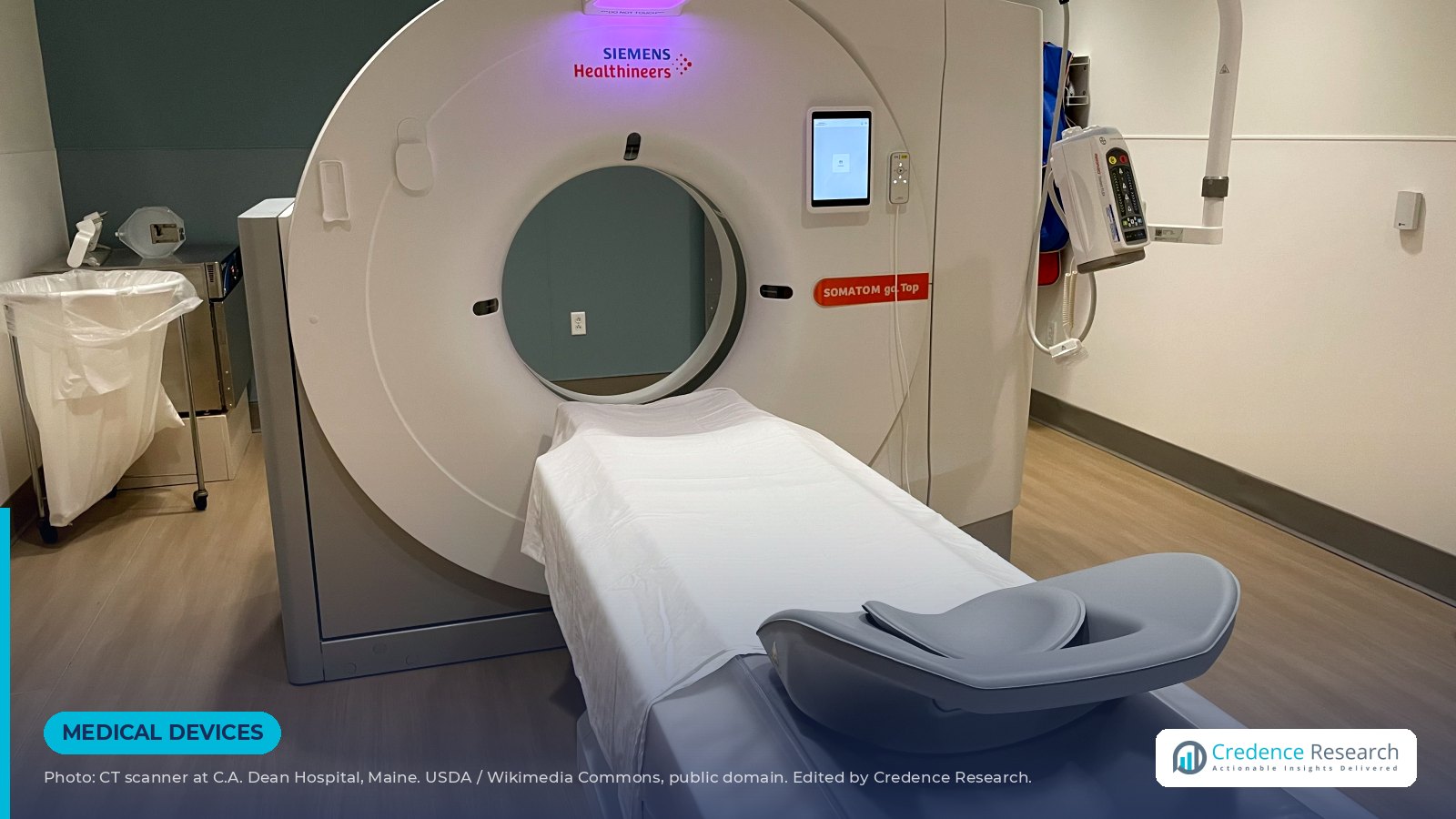
Image: CT scanner at C.A. Dean Hospital in Maine, by the U.S. Department of Agriculture via Wikimedia Commons, public domain. Cropped and edited by Credence Research.

About the Author

Senior News Editor at Credence Research Inc