
DOE Offers Constellation Up to $5 Billion Loan for Nuclear Uprates at Eight Plants
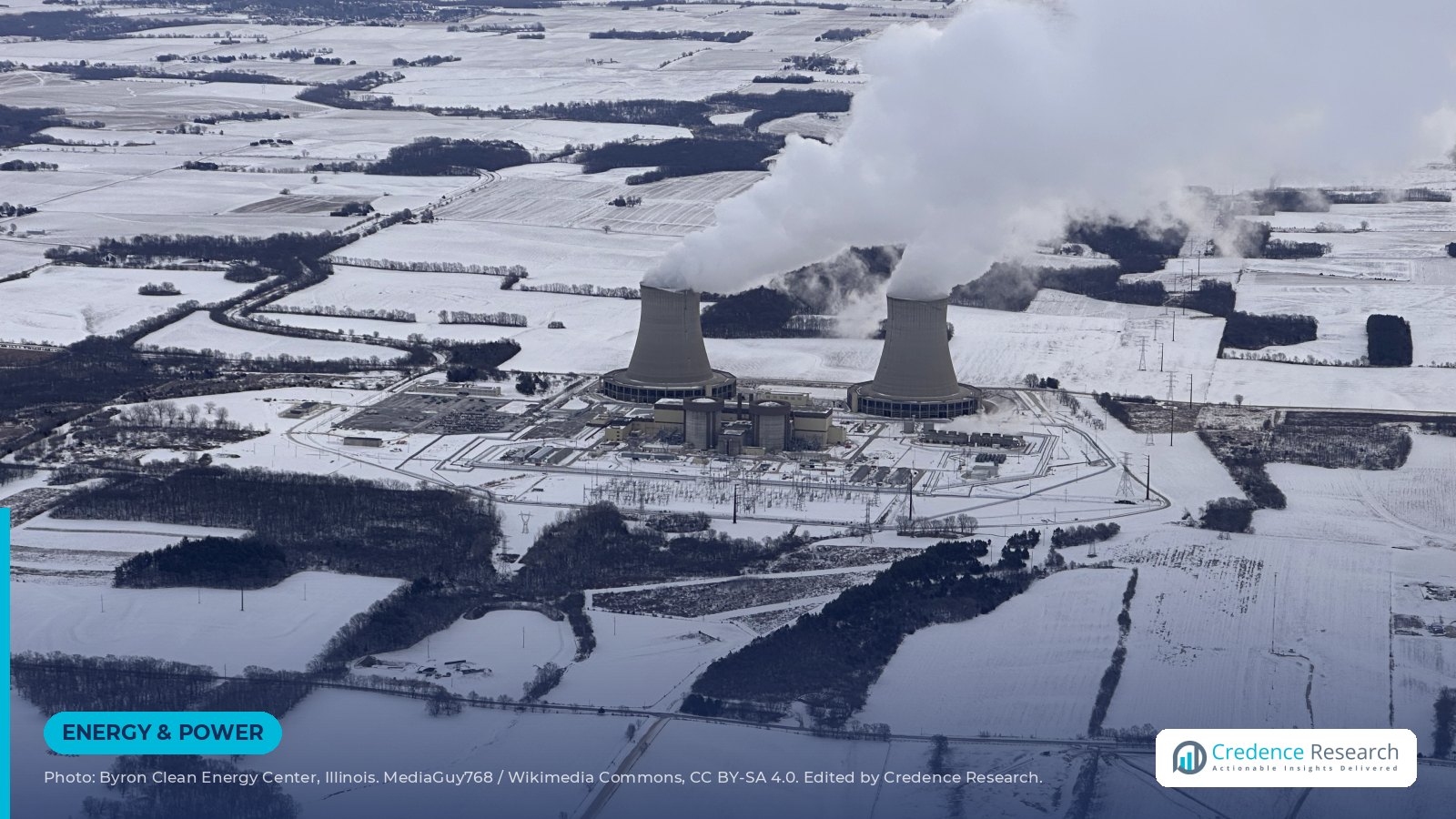
The U.S. Department of Energy has offered Constellation Energy a conditional loan commitment of up to $5 billion to finance power uprates and modernization at eight nuclear plants in Illinois, Maryland and Pennsylvania, a package the agency says could add nearly 1.1 gigawatts of generating capacity to the grid. The commitment, issued by DOE's Office of Energy Dominance Financing, was announced on Oct. 27, 2026, at a press event at Constellation's Byron Clean Energy Center in northern Illinois, and confirmed the same day by the Baltimore-based utility.
Key developments
- DOE's Office of Energy Dominance Financing issued a conditional commitment to lend Constellation up to $5 billion for uprates and modernization across its nuclear fleet.
- The eight sites are Braidwood, Byron, Clinton, Dresden, LaSalle and Quad Cities in Illinois, Calvert Cliffs in Maryland and Limerick in Pennsylvania, serving the PJM and MISO grid regions.
- DOE estimates the projects could add nearly 1.1 GW, enough to power more than 930,000 homes, and support more than 10,000 project-related jobs.
- The commitment includes an option to finance future uprate projects at other Constellation facilities.
- Constellation said the commitment is not a final investment decision on any individual uprate, and funding depends on due diligence, definitive financing documents and other conditions.
How nuclear uprates work
An uprate raises the licensed or practical electrical output of a reactor that is already operating. The changes range from measurement uncertainty recapture, which uses more precise instruments to run a unit closer to its licensed thermal limit, to extended power uprates, which can raise licensed thermal power by up to 20% and usually require new turbines, steam system components and other balance-of-plant work. Constellation describes uprates as one of the fastest and most cost-effective ways to add dependable power because they need no new generating site and no new transmission corridor.
The eight plants named in the commitment host 15 reactors, a mix of pressurized water and boiling water designs, with about 15.5 GW of net capacity attributable to Constellation, according to POWER magazine. The Nuclear Regulatory Commission's list of expected filings shows Constellation planning 12 uprate applications from the fourth quarter of 2026 through 2030, five extended power uprates and seven measurement uncertainty recapture uprates, the publication reported.
The loan sits inside DOE's Utility Power Reactor Incremental Scaling Effort, or UPRISE, launched in March 2026 to squeeze more output from existing reactors. The program supports an executive order titled "Reinvigorating the Nuclear Industrial Base," which directs DOE to help deliver 5 GW of uprates. DOE said 94% of its combined 5 GW uprate and restart goal has now been identified.
Industry implications
The offer is larger than the conditional commitment of up to $4.2 billion that DOE offered Vistra on Oct. 5 for 433 MW of uprates at Beaver Valley, Davis-Besse and Perry, and it is the second uprate-focused loan offer in a month. Together the two offers total up to $9.2 billion, although neither has been finalized. Earlier DOE loans backed reactor restarts rather than uprates, including $1 billion to Constellation for the 835 MW Crane Clean Energy Center in Pennsylvania and $1.5 billion to Holtec for Palisades in Michigan.
For utilities, the federal loan route matters mainly because of the cost of capital. Constellation said the commitment could lower its financing costs and let it pursue uprates at greater scale. Because uprates require long outages, specialized components and NRC license amendments, cheaper debt can widen the set of projects that clear return thresholds.
The deal also shows how corporate power buyers and federal lenders are now working the same projects. Constellation said recent 20-year agreements with Google and Amazon have led it to invest more than $7 billion to add about 1,080 MW of nuclear capacity, including a 190 MW expansion at Calvert Cliffs backed by Amazon and an 890 MW program tied to Google announced on Oct. 6. A Meta agreement supports a 30 MW expansion at Clinton.
Competitive and supply chain implications
Uprates at this scale shift demand toward a narrow group of suppliers: turbine and generator manufacturers, steam dryer and feedwater component makers, digital instrumentation and control vendors, and nuclear-qualified engineering firms. POWER reported that Google-backed capacity at Constellation is expected to come online starting in 2028 and finish by the end of 2032, with the Amazon-backed Calvert Cliffs work scheduled for 2030 to 2032. Those timelines overlap with Southern Co.'s planned extended power uprates at Hatch and Vogtle and Vistra's program, which could stretch supplier capacity and outage crews.
Among merchant generators, the offer strengthens Constellation's position as the largest U.S. nuclear operator. The company reports 55 GW of total capacity and says it supplies about 10% of the nation's clean energy. Lower-cost federal debt for incremental megawatts gives it an advantage when bidding for long-term supply contracts with data center operators, which increasingly seek firm, carbon-free power that can arrive before new reactors are built.
Regional implications
Illinois accounts for six of the eight sites, making the state the main beneficiary of the construction work and any added output into MISO and PJM. Calvert Cliffs and Limerick sit in PJM, the largest U.S. grid operator, where new data center loads are competing for a limited supply of firm generation. Additional output from existing sites can arrive without new transmission lines, a constraint that has delayed many new generation projects in the region.
Constellation has not disclosed per-site megawatt targets, spending or construction schedules under the DOE loan. The company said that, if the loan is finalized, it will work with DOE, customers, regulators and local stakeholders as each project advances.
Credence Research analysis
The commitment confirms that the near-term U.S. nuclear build-out runs through existing fleets rather than new reactors. DOE's 5 GW goal for uprates and restarts is close to fully identified, and the Constellation offer is the clearest sign yet that federal credit will be used to de-risk incremental megawatts at sites with proven licenses, cooling water and grid connections. Uprates carry far lower construction and licensing risk than new units, which helps explain why both the government and hyperscale buyers are funding them first.
The main constraints are execution and regulation, not money. Constellation's NRC pipeline shows five extended power uprates, the most complex category, and supplier lead times for large turbine and generator components remain long. The conditional nature of the offer also matters: no individual project has a final investment decision, so the true size of the program will depend on which reactors clear NRC review and which customer contracts follow.
What comes next
- Constellation must satisfy DOE's technical, legal, environmental and financial conditions before definitive loan documents are signed and funds are disbursed.
- The company plans NRC license amendment filings for uprates from the fourth quarter of 2026 through 2030, according to the NRC's expected-applications list as reported by POWER.
- Google-backed capacity additions are expected to begin in 2028 and conclude by the end of 2032, with Calvert Cliffs work for Amazon scheduled for 2030 to 2032.
- DOE could exercise its option to finance uprates at other Constellation plants not named in the current commitment.
- Energy Secretary Chris Wright is scheduled to visit the Palisades restart project in Michigan on Oct. 29, POWER reported.
Sources
- U.S. Department of Energy: Energy Department Announces $5 Billion Loan to Boost Nuclear Power
- Constellation: Conditional DOE Loan Commitment of up to $5 Billion
- POWER: DOE Offers Constellation Up to $5B Loan for 1.1 GW of Nuclear Uprates
Image: Aerial view of the Byron Clean Energy Center in Ogle County, Illinois, by MediaGuy768 via Wikimedia Commons, CC BY-SA 4.0. Cropped and edited by Credence Research.

About the Author

Senior News Editor at Credence Research Inc