
Mitsui Kinzoku to Build 190 Billion Yen Copper Foil Plant in Malaysia for AI Circuit Boards
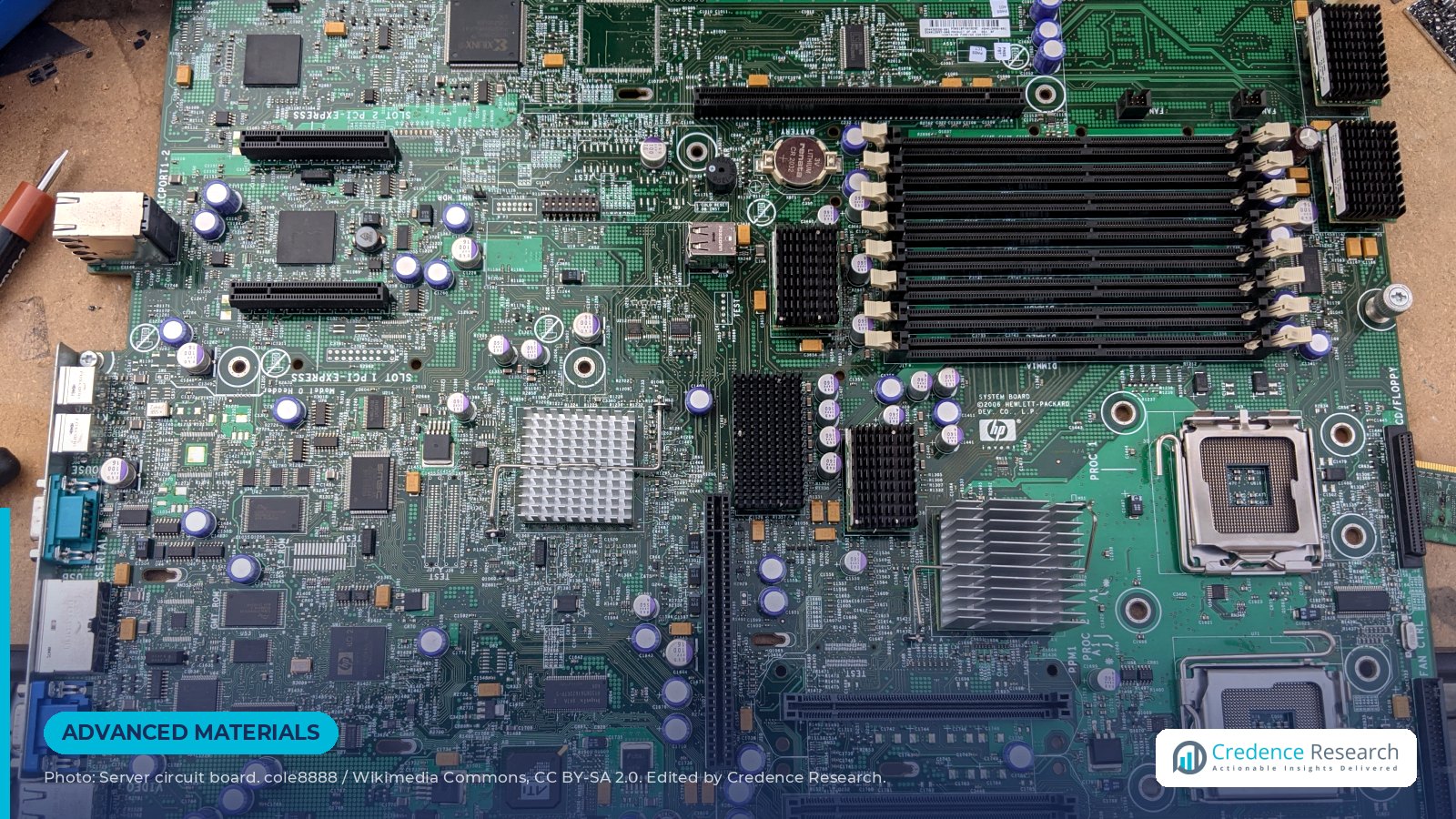
Mitsui Kinzoku Co. will build a new copper foil plant in Malaysia, next to its long-running Mitsui Copper Foil (Malaysia) operation, after its board approved the project on Nov. 10, 2026. The Tokyo-based materials maker said the site will make the ultra-thin and high-frequency foils used in AI server boards, chip package substrates and optical modules, with output starting in phases from April 2031.
Key developments
- Mitsui Kinzoku filed a notice on Nov. 10 titled "Notice Concerning the Construction of a New Copper Foil Plant in Malaysia (Acquisition of Fixed Assets)," alongside its fiscal first-half results.
- Total spending is about 190 billion yen, roughly $1.2 billion, according to the notice as reported by The Sun and Nikkei Asia. The Sun reported a split of about 14 billion yen for land, 32 billion yen for buildings and 144 billion yen for production equipment and other assets, funded from cash on hand and borrowings.
- The plant is designed to add 4 million square meters a month of MicroThin carrier-supported ultra-thin foil and 1,200 metric tons a month of VSP electrodeposited foil for high-frequency circuit boards, phased in over about three years.
- The company said in August that the new base, combined with existing lines, would lift capacity to 2,600 tons a month for VSP and 12 million square meters a month for MicroThin.
How the products work
Copper foil is the conductive layer laminated onto printed circuit boards and chip package substrates. Two of Mitsui Kinzoku's grades have become bottlenecks for AI hardware. VSP is an electrodeposited foil with a very smooth surface that reduces signal loss at high frequencies, which matters in servers, switches and routers that move data at ever higher speeds. The company said in August that its HVLP5 grade, the lowest-profile class used in AI infrastructure, had entered mass production and that demand was rising sharply.
MicroThin is a carrier-backed foil between 1.5 and 5 microns thick. The carrier lets substrate makers handle a sheet that would otherwise be too fragile, and the thin copper supports the fine wiring needed in semiconductor package substrates, optical modules and high-density smartphone boards. Both products sit upstream of the substrates that hold advanced processors and memory, so foil supply sets a ceiling on how many AI boards the chain can build.
The Malaysian plan follows a run of smaller steps. In January 2025 the company began converting general-purpose foil equipment in Malaysia to make VSP at 60 tons a month. In November 2025 it outlined an investment of about 6 billion yen to raise VSP capacity at its Taiwan and Malaysia plants to 1,200 tons a month by September 2028. On Oct. 30, 2026, it pulled forward a MicroThin expansion at its Ageo, Japan, and Malaysia sites, according to Japanese investor news service Media-IR.
Industry implications
The decision shows how far demand for AI data center hardware now reaches into basic materials. Server and switch makers are moving to faster interconnects, and each step up in speed tightens the surface roughness limits on copper foil. Only a handful of suppliers can meet the strictest grades in volume, and qualification with laminate and board makers can take many months. A supplier that commits capacity five years out is signaling that it expects those qualifications, and the customer relationships behind them, to hold through the end of the decade.
The scale is notable for a single materials line. At about 190 billion yen, the Malaysian project is many times larger than the roughly 6 billion yen VSP upgrade the company outlined a year earlier. Equipment accounts for about three quarters of the reported budget, which points to plating and surface treatment lines rather than land or buildings as the main constraint.
Competitive and supply chain implications
Low-profile copper foil is a concentrated field in which Japanese and Taiwanese producers are prominent suppliers to copper clad laminate makers. By building in Malaysia rather than Japan, Mitsui Kinzoku keeps new capacity inside Southeast Asia's growing electronics cluster, close to laminate and printed circuit board producers that have been adding plants in the region. That shortens logistics for customers and gives buyers seeking supply outside China another option.
The timeline also matters. With first output in April 2031, the plant does not ease near-term tightness. Through the late 2020s the company is relying on debottlenecking at existing sites in Japan, Taiwan and Malaysia. Board and substrate makers planning AI server volumes for 2027 to 2030 will still depend on those incremental additions and on rival suppliers.
Regional implications
Mitsui Copper Foil (Malaysia) was established in 1989 and began commercial operations in 1991 in Section 27, Shah Alam, Selangor, according to the subsidiary's website, which listed 852 employees as of June 2025. Malaysian media reported the new plant will be in Shah Alam, although The Sun said the exact site had not been disclosed. The company has not published a jobs figure.
The investment adds an upstream materials layer to Malaysia's electronics base, which has long centered on assembly, test and packaging. Hosting foil production for AI-grade boards strengthens the country's position as manufacturers spread supply across more locations, and it gives Selangor a large, long-dated industrial project.
Credence Research analysis
The most telling detail is the date. Mitsui Kinzoku is committing roughly 190 billion yen to capacity that starts in 2031 and ramps through about 2033. That implies the company sees demand for low-loss and ultra-thin foil as a structural shift tied to faster data center interconnects and advanced packaging, not a short cycle. It also suggests customers have given enough visibility on future board designs for the company to commit capital before current expansions are finished.
The risk sits in that long gap. Interconnect technology could shift toward co-packaged optics or new substrate materials before 2031, changing which foil grades are needed. Competitors may also add capacity in the meantime. The phased structure, plus the company's earlier statement that VSP capacity could eventually reach 5,000 tons a month, gives Mitsui Kinzoku room to adjust the pace. Execution on qualification and yield at the new lines will decide whether the bet pays off.
What comes next
- Site preparation and construction near the existing Malaysian plant, with further detail on location and hiring expected.
- Continued VSP and MicroThin debottlenecking at Ageo, Taiwan and Malaysia through fiscal 2028.
- Customer qualification of foil from the new lines ahead of first output.
- Phased start of operations from April 2031, with the added capacity coming online over about three years.
- Possible further VSP expansion toward 5,000 tons a month if demand supports it.
Sources
- Mitsui Kinzoku: IR news release, Notice Concerning the Construction of a New Copper Foil Plant in Malaysia (Nov. 10, 2026)
- Mitsui Kinzoku: Outlook for copper foil capacity expansion after 2030 (Aug. 17, 2026)
- The Sun: Mitsui Kinzoku to invest RM4.87b in new copper foil plant in Malaysia
- Mitsui Copper Foil (Malaysia): About us
Image: Server circuit board, by cole8888 via Wikimedia Commons, CC BY-SA 2.0. Cropped and edited by Credence Research.

About the Author

Senior News Editor at Credence Research Inc