
Hitachi Energy to build Canada's first transformer pressboard plant in London, Ontario
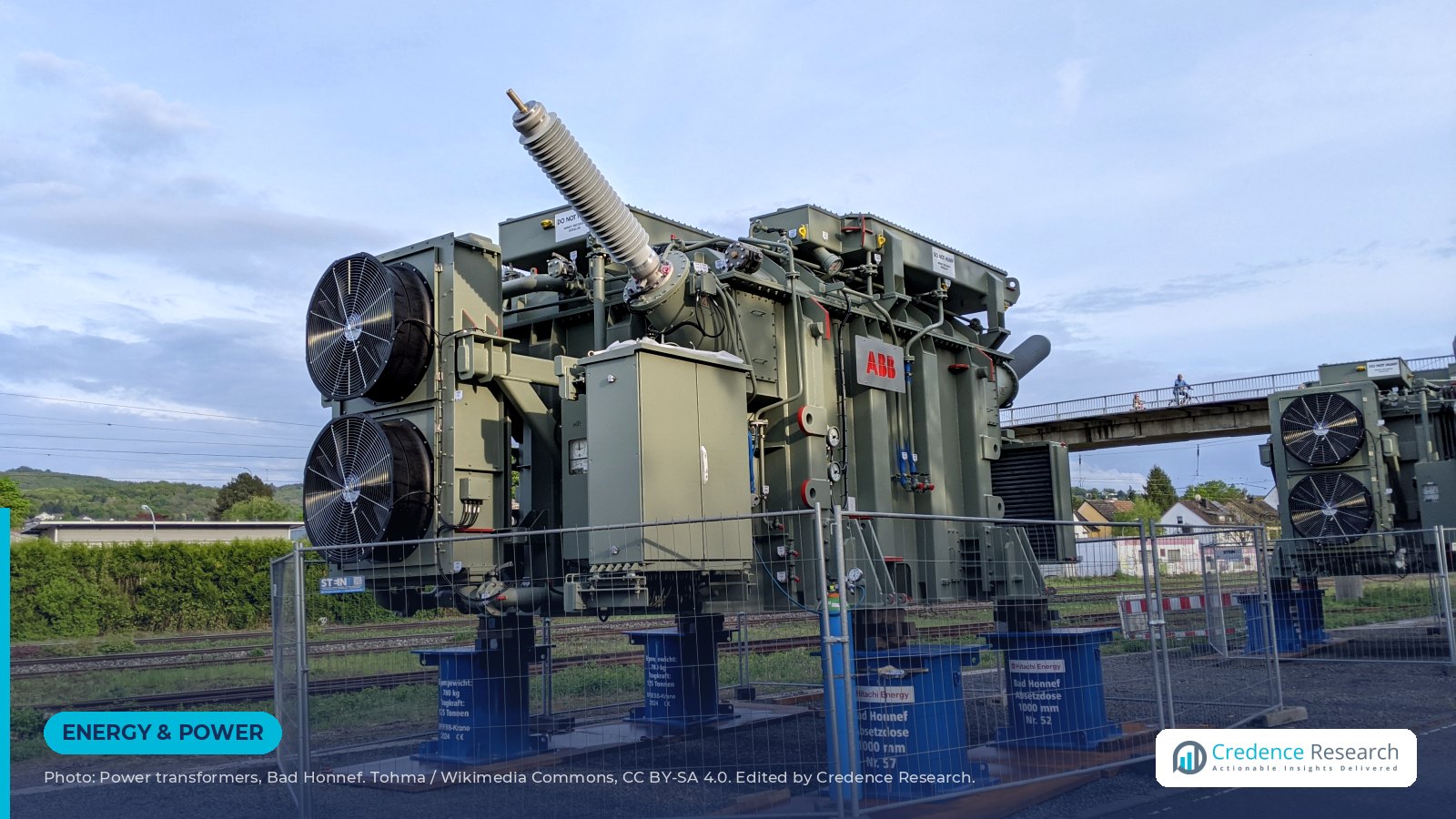
Hitachi Energy will spend 479 million Canadian dollars to build a transformer insulation factory in London, Ontario, giving Canada its first plant for electrical-grade pressboard, a wood-fiber material that sits inside nearly every high-voltage power transformer. The Swiss-based grid equipment maker announced the project on Oct. 16, 2026, alongside federal and Ontario officials who are contributing up to 50 million Canadian dollars in combined support.
Key developments
- Hitachi Energy will invest 479 million Canadian dollars, more than 330 million U.S. dollars, in a 21,000-square-meter Transformer Insulation Factory in London, Ontario, with completion expected in 2028.
- The plant will turn wood fiber into up to 20,000 metric tons a year of electrical-grade pressboard and laminated insulation for high-voltage transformers, according to the Government of Canada.
- It will be Canada's first pressboard manufacturing line and Hitachi Energy's first in the Americas, and it is expected to create more than 100 permanent skilled jobs.
- Ottawa is providing 30 million Canadian dollars: 20 million through the Strategic Response Fund and 10 million through Natural Resources Canada's Investments in Forest Industry Transformation program. Ontario is adding up to 20 million through the Invest Ontario Fund.
- Output will supply Hitachi Energy's large power transformer plant in Varennes, Quebec, as well as other transformer and insulation makers in North America and overseas.
How transformer pressboard works
Pressboard is a dense board made from high-purity cellulose fiber. Inside an oil-filled power transformer it forms the barriers, spacers and wraps that separate windings carrying different voltages, while leaving channels for insulating oil to circulate and carry heat away. Hitachi Energy says the material makes compact, safe and cost-effective transformer designs possible and that the life and performance of a unit depend heavily on the quality and consistency of its insulation.
Because it is a specialty paper product, pressboard production sits at the intersection of the forest products and electrical equipment industries. Hitachi Energy itself noted that transformer manufacturers face global supply constraints, including limited availability of specialized insulation materials. The company already operates pressboard production in Mysuru, India, which it expanded in 2025.
Hitachi Energy, the former ABB Power Grids business and now a wholly owned subsidiary of Hitachi Ltd., employs more than 50,000 people and reports an installed base in more than 140 countries.
Industry implications
Transformers have become one of the tightest links in grid expansion. Utilities, renewable developers and data center operators are all competing for large units, and Hitachi Energy cites industrial projects, artificial intelligence and data centers, population growth and electrification as the forces driving demand. Insulation is a less visible constraint than steel cores or copper windings, but a transformer cannot be completed without it.
Helmut Bockshammer, Hitachi Energy's global product group manager for insulation and components, said the factory will strengthen supply resilience and help address a significant bottleneck in transformer production. By making its own pressboard close to its Quebec transformer line, the company reduces reliance on overseas insulation shipments and gains more control over the quality and timing of a critical input.
For grid operators, the practical question is delivery time. Locally made insulation will not shorten lead times on its own, but it removes one transoceanic dependency from a supply chain that already contends with long waits for other specialized components.
Competitive and supply chain implications
The London plant is part of a broader buildout. Hitachi Energy has committed to invest more than 2 billion U.S. dollars in its North American supply chain through 2027. In Canada, that includes a 270 million Canadian dollar expansion in Varennes, Quebec, announced in September 2025 to nearly triple large power transformer output, and the acquisition of London-based Canduct, which makes transformer insulation kits and components. The new factory gives the company a vertically integrated chain in eastern Canada, from raw insulation board to finished components to completed transformers.
That integration could give Hitachi Energy an edge over rival transformer makers in North America that depend on imported insulation. Hitachi Energy says it will also sell to other transformer and insulation manufacturers, which could make the London site a regional supplier rather than a captive plant. How much capacity reaches third parties will depend on the ramp-up of Varennes and the company's other North American factories.
The forest sector is the other winner. The federal government said the plant will source key inputs locally, creating business for Canadian suppliers including pulp producers. Energy and Natural Resources Minister Tim Hodgson said the project shows there are high-value opportunities for forest products in critical energy infrastructure, a message aimed at an industry facing tariffs on its exports.
Regional implications
For London, the factory adds more than 100 skilled manufacturing and engineering jobs. Federal figures show Hitachi Energy will keep its existing Canadian workforce of about 1,250 people and grow it to 1,765 across its operations. Ontario Economic Development Minister Vic Fedeli said the province wants to be a central hub for advanced manufacturing, and the Invest Ontario Fund support reflects that aim.
Nationally, Ottawa tied the project to its National Electricity Strategy, which seeks to strengthen grid and generating capacity as demand rises. Carla Vicente, who leads Hitachi Energy in Canada, linked the investment to that strategy's goal of doubling grid capacity by 2050. Industry Minister Melanie Joly framed it as part of building a more reliable grid while adding value to Canadian forest products.
The plant also has a cross-border dimension. U.S. utilities and transformer builders face the same insulation constraints, and a Canadian pressboard source within trucking distance of Midwest and Northeast factories could become part of their procurement plans once production starts.
Credence Research analysis
The London investment shows how the grid equipment shortage is moving upstream. Over the past several years, manufacturers have focused on adding final assembly capacity for transformers. Those lines still depend on a small pool of specialized materials, and pressboard is one of the least diversified. By building a dedicated insulation plant, Hitachi Energy is treating a commodity-like input as a strategic asset, a pattern similar to how automakers moved into battery materials once cell supply became a constraint.
The public funding is modest relative to the project cost, at roughly a tenth of the total, but the program mix is telling. Pairing an industrial resilience fund with a forest industry transformation program signals that Ottawa sees grid materials as a new outlet for Canadian pulp, not only as an energy policy. The key risks are execution and timing: the plant is not due until 2028, and demand for transformer capacity is rising now. Buyers should expect insulation supply to remain tight until the London line and similar projects elsewhere reach full output.
What comes next
- Construction in London and installation of automated pressboard production lines ahead of completion.
- Completion of the Transformer Insulation Factory, targeted for 2028.
- Qualification of London-made pressboard for Hitachi Energy's Varennes transformer plant and for outside customers.
- Release of Canada's forest sector strategy, which federal officials said is forthcoming.
- Further spending under Hitachi Energy's North American supply chain commitment through 2027.
Sources
- Hitachi Energy: Hitachi Energy invests $479 million CAD to bring critical transformer manufacturing capability to Canada (Oct. 16, 2026)
- Innovation, Science and Economic Development Canada: Government of Canada announces significant investment to strengthen Canada's electricity and forest products supply chains (Oct. 16, 2026)
- Hitachi Energy: Additional $270 million CAD investment in Varennes, Quebec (September 2025)
Image: Power transformers at Bad Honnef, Germany, by Tohma via Wikimedia Commons, CC BY-SA 4.0. Cropped and edited by Credence Research.

About the Author

Senior News Editor at Credence Research Inc