
Honda to Invest 3.3 Billion Reais in Manaus Motorcycle Plants, Lifting Capacity to 2.3 Million a Year
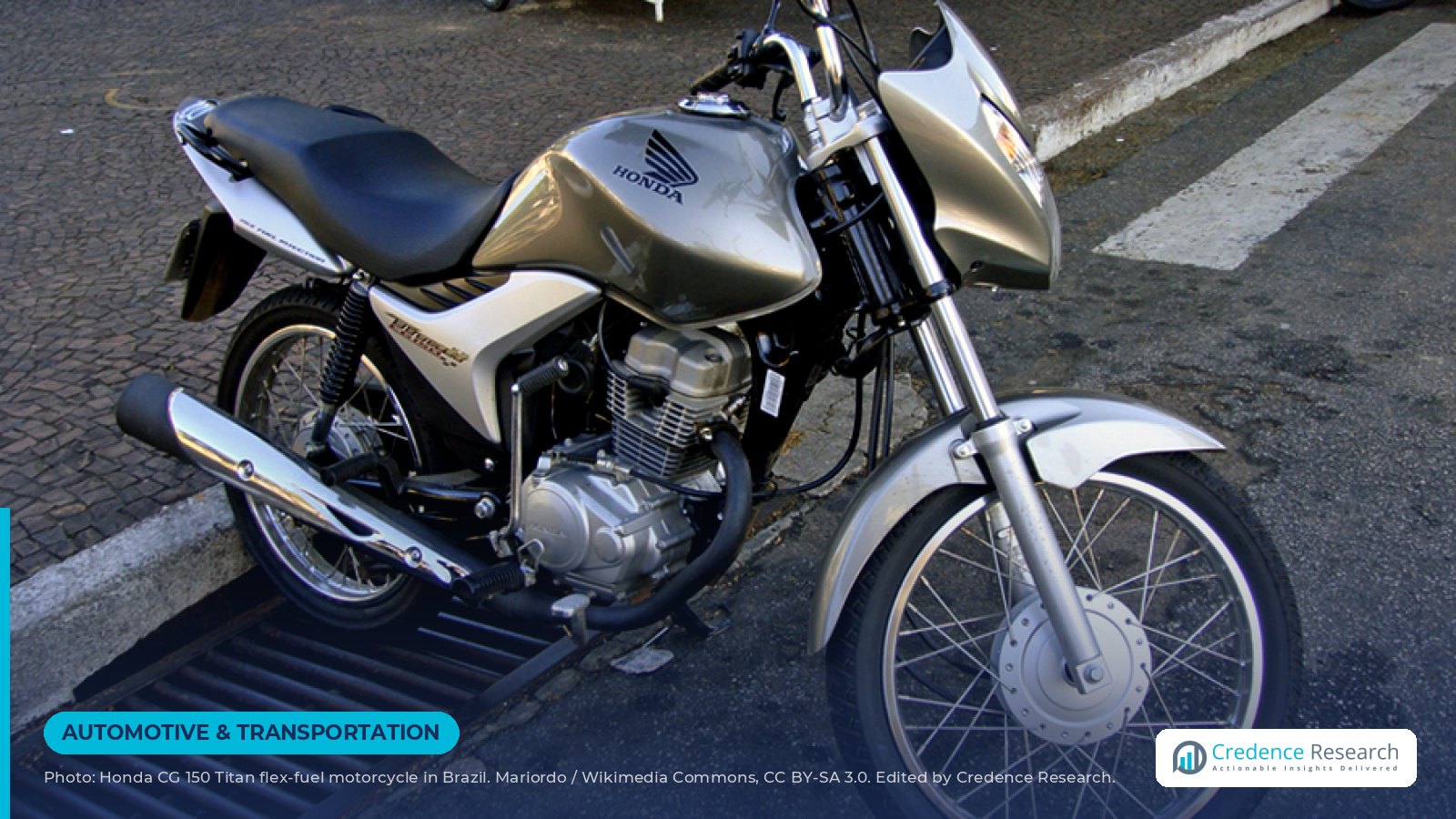
Honda will spend 3.3 billion reais from 2026 through 2030 to expand its motorcycle complex in Manaus, Brazil, building two new plants and raising annual capacity to 2.3 million units by 2029. The company announced the plan at a ceremony in the Amazonas state capital, attended by President and CEO Toshihiro Mibe, marking 50 years of Honda motorcycle production in Brazil. The release carries a Manaus dateline of Nov. 5, 2026, and Honda published it globally on Nov. 6.
Key developments
- Honda will invest 3.3 billion reais between 2026 and 2030, on top of the 1.6 billion reais it announced in October 2025.
- Two new plants will rise inside the existing Manaus complex, each with its own assembly line and supporting processes. The site now runs four assembly lines across two plants.
- Annual production capacity is set to reach 2.3 million motorcycles by 2029.
- The expansion is expected to create 2,000 jobs at a site that directly employs 9,200 people.
- Output at Manaus now stands at about 7,200 motorcycles a day across 20 models, ranging from 110cc to 1,100cc.
A second expansion in just over a year
The new commitment changes the scale of a plan Honda set out only 13 months ago. In October 2025, Moto Honda da Amazonia said it would spend about 1.6 billion reais from 2026 to 2029 on new line equipment, revised line layouts and better internal logistics. That program focused on getting more out of the existing footprint. It put annual capacity at 1.4 million units at the time, with 1.6 million projected for 2026, and it anticipated about 350 new jobs by 2026.
The latest announcement moves from optimization to construction. Compared with the 1.4 million units Honda cited in 2025, a 2.3 million capacity target is an increase of roughly 64%, and the two new plants would double the number of plant buildings at the complex. Taken together, the two announcements total 4.9 billion reais, although Honda has not published a year-by-year spending schedule or a construction timetable for either plant.
Manaus is responsible for all Honda motorcycle production in Brazil. Manufacturing started there in 1976, and cumulative output has passed 33 million motorcycles. Honda describes the site as the most vertically integrated motorcycle plant in its group, with frames, wheels, seats and engines made in-house. The complex sits in the Manaus Free Trade Zone and includes a Development and Technology Center.
Industry implications
The investment arrives during a strong run for Brazilian motorcycle manufacturing. Trade group Abraciclo reported output of 1.65 million units in the first nine months of 2026, up 9.9% from a year earlier and the best result for that period since 2008, according to Estadao reporting republished by Mercado&Consumo. Registrations over the same nine months reached 1.78 million units, a record for the period. Abraciclo president Marcos Bento tied that strength to product launches, buyers seeking cheaper vehicles and the growth of delivery services.
Honda linked its 2025 program to the same forces, citing personal transportation and commercial uses such as delivery. Bento described motorcycles as an agile, economical and accessible mobility option, a demand base tied to everyday use and paid work.
Honda's 2025 list of Manaus products ran from the Pop 110i and Biz 125 commuters through the CG 160 and NXR 160 Bros to larger machines such as the NC750X and CRF1100. Dedicated lines in new plants could give Honda more room to separate high-volume commuter production from lower-volume models, although the company has not said how it will allocate the new capacity.
Competitive and supply chain implications
A capacity addition of this size puts pressure on other manufacturers in the Manaus Industrial Pole, which Mercado&Consumo's report says produces almost all of Brazil's motorcycles. Rivals expanding there would compete for the same regional labor and suppliers. Honda's in-house production of major parts offers some insulation.
Outside suppliers still stand to feel the effect. Honda counts more than 120 direct suppliers and more than 1,200 dealerships in Brazil, and a plan built on two new assembly lines implies larger orders for materials and components that are not made on site. The company has not disclosed any supplier program or local content target tied to the investment.
Logistics may be the most significant constraint. Bento said the industry has prepared for a possible drought in the North that could disrupt cargo movements, and the same report notes that a historic drought three years ago halted factories when low water interrupted parts supply and shipments. More output concentrated at one site raises the stakes of any repeat.
Regional implications
For Amazonas, the announcement reinforces the role of the Free Trade Zone as an industrial employer. Two thousand new positions would lift Honda's direct workforce at the site from 9,200 toward 11,200. Honda has not said when those jobs will be added or what share will be production roles.
The plan also has an export dimension. Manaus ships motorcycles to 19 countries, including the United States, Australia and Mexico, up from the 17 countries Honda listed in 2025. The company has not said whether the added capacity is aimed mainly at domestic buyers or at exports, but Honda's own explanation for the 2025 program centered on Brazilian demand. Keisuke Tsuruzono, president of Honda South America and of Moto Honda da Amazonia, framed the new investment as a sign of confidence in Brazil, the Amazon region and Honda's business there.
Credence Research analysis
The most telling feature of this announcement is its timing. Honda's 2025 plan was a measured debottlenecking effort, and adding two new plants within about a year suggests the company now sees the earlier capacity path as too low for the demand it expects. The move also favors physical capacity over the more flexible, incremental route it described in 2025, and capacity of that kind is harder to unwind if conditions change. Brazil's recent output and registration figures support the decision, though the build-out will run for years beyond the current data.
The evidence points to two questions worth tracking. The first is whether Honda ties the new lines to electrified models or stays focused on combustion and flex-fuel commuters, a point the release does not address. The second is resilience. Vertical integration protects Honda against some supplier bottlenecks, but it does nothing to reduce exposure to river levels. Any disclosure on inventory buffers, alternative freight routes or supplier localization would show how seriously the company is treating that single-site risk as it adds volume in Manaus.
What comes next
- Honda could publish a construction schedule and start dates for the two new plants inside the Manaus complex.
- Capacity is due to reach 2.3 million units a year by 2029, with investment running through 2030.
- Abraciclo's monthly production and registration releases will show whether current demand holds through the build-out.
- Water levels in the Amazon basin during the coming dry seasons will test the logistics planning that Bento described.
- Hiring plans and any new product allocation would clarify how the 2,000 jobs and added lines will be used.
Sources
- Honda: Honda Celebrates 50 Years of Motorcycle Production in Brazil and Announces R$ 3.3 Billion Investment
- Honda: Honda Announces New Investment in Motorcycle Plant in Brazil (October 2025)
- Mercado&Consumo: Abraciclo production and registration data, Oct. 14, 2026
Image: Honda CG 150 Titan flex-fuel motorcycle in Itu, Brazil, by Mario Roberto Duran Ortiz (Mariordo) via Wikimedia Commons, CC BY-SA 3.0. Cropped and edited by Credence Research.

About the Author

Senior News Editor at Credence Research Inc