
Li Auto raises RMB1.625 billion for chip unit, eyes customers beyond cars
Li Auto Inc. has lined up RMB1.625 billion in fresh equity for its in-house chip and domain controller subsidiary, bringing outside investors into the unit for the first time. The Beijing-based electric vehicle maker said on Oct. 16, 2026, that Shanghai Mahe Xin Technology Co., Ltd., known as MHX Technology, signed subscription agreements under which a wholly owned Li Auto subsidiary will put in RMB1.0 billion and a group of external investors will contribute RMB625 million. The company said the new capital is meant to speed up research, development and commercialization, and to help the unit pursue customers beyond the automotive sector.
Key developments
- MHX Technology signed equity subscription agreements totaling RMB1.625 billion, with RMB1.0 billion from a wholly owned Li Auto subsidiary and RMB625 million from external investors.
- The outside investors are Hangzhou Jingtao, Lanchi Ventures, Huaye Tiancheng and MiraclePlus. Hangzhou Jingtao also holds a one-time right to invest up to RMB500 million more at the same unit price, exercisable on or before Dec. 31, 2026.
- MHX Technology will adopt two share incentive plans to attract and retain key employees and contributors.
- Assuming full use of both incentive plans and full exercise of the additional right, Li Auto would hold about 74.01%, the investors about 6.58% and the incentive plan entities about 19.41%. Li Auto will continue to control and consolidate the unit.
- Completion is subject to customary closing conditions. Further details were filed with the Hong Kong Stock Exchange on the same day.
How Li Auto built its chip business
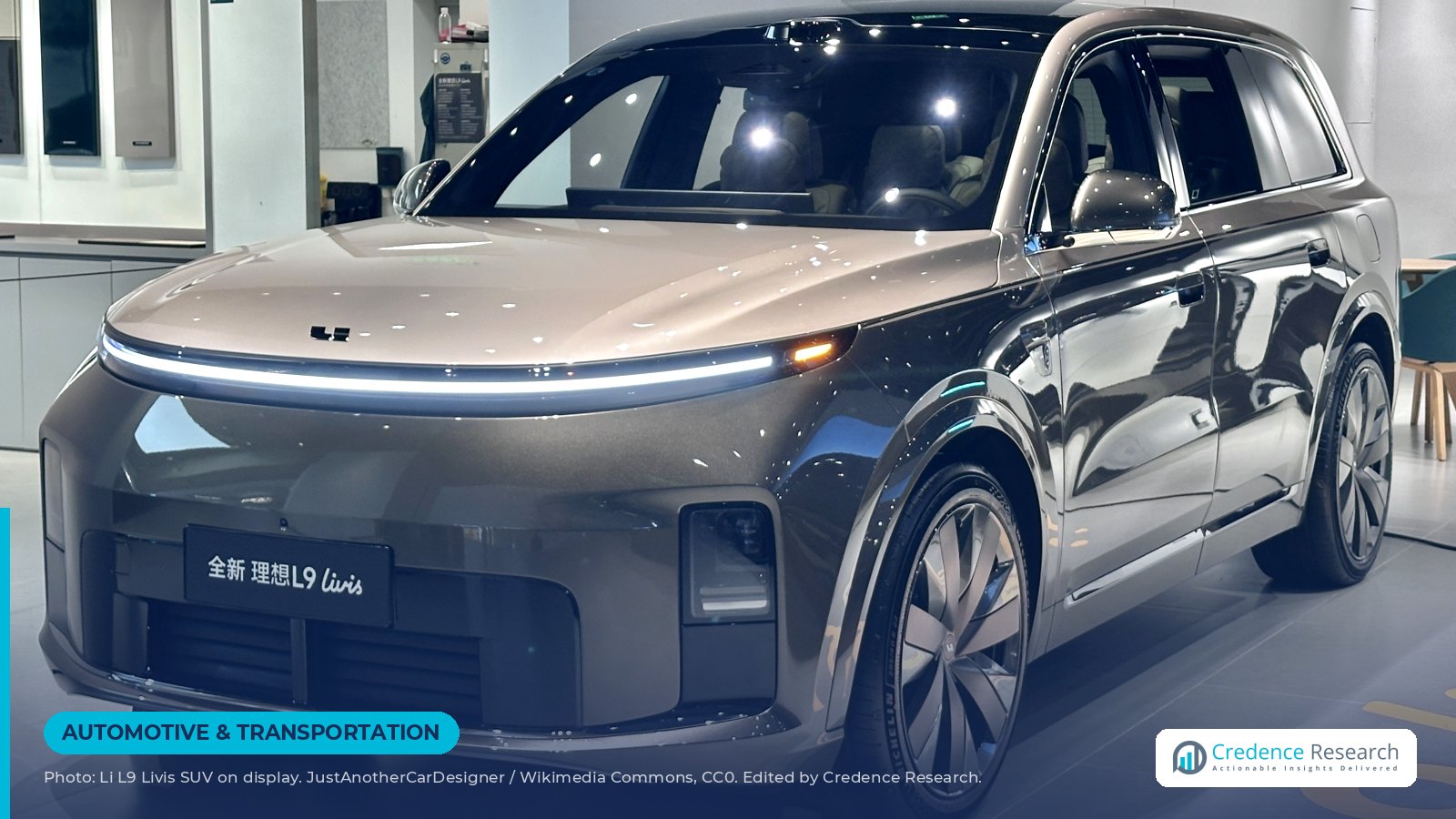
Li Auto, listed on Nasdaq and in Hong Kong, began volume production in November 2019 and is best known for its extended-range electric SUVs. Over the past two years it has pushed deeper into the vehicle's electronic architecture. In May 2026 the company unveiled the Mach M100, a chip for intelligent driving built on a 5-nanometer automotive-grade process. According to CnEVPost, Li Auto rated a single M100 at up to 1,280 TOPS and placed two of the chips in the Li L9 Livis, the first model to carry it. Gasgoo reported that a paper on the chip's dynamic dataflow architecture was accepted by the industry track of ISCA 2026, a leading computer architecture conference.
Chief Executive Li Xiang framed the chip as a way to solve bottlenecks that supplier technology could not overcome, comparing the approach to Apple's practice of developing chips, operating systems and hardware in parallel. Corporate groundwork followed quickly. Business registration records cited by CnEVPost show a chip design company registered in Shanghai in July 2026, followed by related entities in Hong Kong and Shanghai. In September, Li Auto President Ma Donghui said at a media briefing, as reported by Gasgoo, that standardized parts such as the Mach chips and silicon carbide modules could be supplied to other companies to help spread development costs, while battery packs would remain in-house.
The Oct. 16 agreements turn that intention into a funded structure. MHX Technology now has its own capital base, its own employee equity and outside shareholders, while staying inside Li Auto's consolidated results.
Industry implications
Chinese automakers increasingly treat compute as a core competency rather than a purchased component. Advanced driver assistance, cockpit software and large AI models running in the car all depend on the processor underneath, and the companies that control that layer gain more say over cost, feature timing and software updates. Li Auto's move signals that it sees its chip and domain controller work as a business in its own right, not only a cost center that supports vehicle programs.
Opening the unit to outside capital also changes how the business is judged. A captive chip team is measured by how well it serves one carmaker's roadmap. A semi-independent supplier with external shareholders must win design slots, meet customer qualification cycles and support products it does not control.
Competitive and supply chain implications
Li Auto is following a path other Chinese EV makers have already taken. Nio set up its chip unit, Shenji, in June 2025 and completed an external funding round earlier this year, according to CnEVPost. Xiaomi unveiled a 3-nanometer smart driving chip, the Xring D100, in August and has said it plans commercial use in 2027, the same outlet reported. Each of these programs reduces the share of high-end driving compute that Chinese automakers buy from established chip suppliers.
For the supply chain, the shift is less about removing suppliers than reshaping their role. In-house chips still rely on outside foundries, packaging houses, design tools and memory makers. Li Auto has not disclosed where the M100 is manufactured. Domain controllers, which combine the processor with power, interfaces and software, also draw on a broad base of electronics suppliers. If MHX Technology wins external customers, the unit's purchasing scale for these inputs would grow beyond its own vehicle volumes, which could help on cost and supply priority.
Rival automakers face a choice. Buying a chip from a competitor's affiliate raises questions about data, roadmap access and dependence. MHX Technology's push into non-automotive markets may partly reflect that tension, since robotics, industrial automation and edge AI customers do not compete with Li Auto for car buyers.
Regional implications
The deal fits a wider push in China to build domestic capability across the semiconductor stack, from design to packaging. Shanghai, where MHX Technology is registered, already hosts a dense cluster of chip design firms, foundry capacity and engineering talent.
Outside China, the development adds to the evidence that Chinese EV makers are moving up the value chain into areas once led by U.S., European and Japanese suppliers. For global automakers and Tier 1 suppliers, Chinese in-house silicon is becoming a competing source of driving compute, particularly in markets where Chinese brands are expanding and where pricing pressure is intense.
Credence Research analysis
The structure of the deal says as much as its size. Li Auto keeps clear control and consolidates the results, yet it has reserved close to a fifth of the projected equity for incentive plans. That allocation points to talent retention as a central goal. Experienced chip architects and verification engineers are scarce, and an equity stake in a unit with its own growth path is a stronger hiring tool than options in a carmaker whose share price moves with vehicle deliveries and price competition.
The bigger test is commercial. A 5-nanometer driving chip is expensive to design and refresh, and spreading that cost across one company's vehicle volumes is difficult. External customers, whether other automakers or robotics and industrial users, would improve the economics, but they also demand long-term support, documentation and supply guarantees. How quickly MHX Technology names its first outside customer will indicate whether the unit can operate as a true supplier or remains mainly an internal engine for Li Auto's own vehicles.
What comes next
- Closing of the RMB1.625 billion subscription, subject to customary conditions.
- A decision by Hangzhou Jingtao on its option to invest up to RMB500 million more, due by Dec. 31, 2026.
- Rollout of MHX Technology's two employee share incentive plans.
- Any announcement of external customers for Mach chips or domain controllers, including in non-automotive sectors.
- Further deployment of the M100 across Li Auto's new and refreshed models.
Sources
- Li Auto Inc.: Li Auto Inc. Announces Equity Financing for Its Chip Business (Oct. 16, 2026)
- CnEVPost: Li Auto unveils in-house developed M100 chip
- Gasgoo: Li Auto chip subsidiary signs first-round financing agreement
- Gasgoo: Ma Donghui on external supply of Mach chips and SiC modules
Image: Li L9 Livis SUV on display, by JustAnotherCarDesigner via Wikimedia Commons, CC0. Cropped and edited by Credence Research.

About the Author

Senior News Editor at Credence Research Inc