
NRC Approves Construction Permit for Dow and X-energy's Four-Reactor Xe-100 Plant in Texas
The U.S. Nuclear Regulatory Commission has approved a construction permit for four X-energy Xe-100 small modular reactors at Dow's UCC Seadrift Operations chemical site in Seadrift, Texas, the companies said on Nov. 9, 2026. The Long Mott Generating Station, developed by Dow subsidiary Long Mott Energy LLC, is the first advanced nuclear facility approved for a U.S. industrial site and the first high-temperature gas-cooled reactor to receive an NRC construction permit in nearly 60 years.
Key developments
- The NRC approved the construction permit application for four Xe-100 reactors at Seadrift, completing its review on the agency's established 18-month schedule.
- Each Xe-100 is rated at 80 megawatts electric and 200 megawatts thermal and uses TRISO-X coated particle fuel; the plant would supply both electricity and high-temperature steam to Dow's site.
- X-energy says it is the first construction permit for a pebble-bed high-temperature gas-cooled reactor, with an expected emergency planning zone of 400 meters versus 10 miles for conventional light-water plants.
- Dow expects to make a preliminary investment decision in 2027, with full nuclear construction to follow only after a final investment decision. First delivery is targeted for the early 2030s.
- The project is supported by the U.S. Department of Energy's Advanced Reactor Demonstration Program (ARDP).
Project and licensing background
Long Mott Energy submitted its construction permit application on March 31, 2025, and the NRC docketed it on May 12, 2025, according to the agency's project page. The regulator issued an Environmental Assessment with a Finding of No Significant Impact on May 18, 2026, which Dow said came in under one year and ahead of schedule. The NRC staff released its Final Safety Evaluation on Oct. 30, leaving the permit decision as the last step.
The Seadrift complex produces more than 4 billion pounds of materials a year, according to Dow. The four-unit plant, with combined output of 320 megawatts electric or 800 megawatts thermal, is intended to replace aging energy and steam assets at the site and is designed to operate for 60 years. Pre-application engagement with the NRC dates to 2018, when X-energy began the process before Dow took it over.
The Xe-100 is a helium-cooled design that circulates graphite fuel pebbles, each containing thousands of TRISO particles that retain fission products at high temperatures. That characteristic underpins the small emergency planning zone the companies cite, which matters for siting a reactor inside a fenced industrial complex.
Industry implications
The permit moves industrial nuclear heat from concept toward a licensed project. Most advanced reactor announcements in the past two years have centered on electricity for data centers and utilities. Long Mott targets a different load: steam for chemical processing, a use that is hard to decarbonize with wind or solar because plants need continuous, high-temperature heat.
For chemical producers on the Gulf Coast, the decision offers a regulatory template. Dow's Edward Stones said the company will weigh competitiveness, execution readiness and capital affordability before committing to construction. That caveat is significant. A construction permit authorizes building, but it does not commit Dow to spend, and the company has not disclosed a project cost.
The review timeline also matters for the wider sector. NRC Chairman Ho K. Nieh said the agency delivered on its 18-month schedule, and X-energy CEO J. Clay Sell credited the regulator and recent congressional reforms. Developers planning their own applications will read the outcome as evidence that first-of-a-kind non-light-water designs can clear review on a predictable clock.
Competitive and supply chain implications
Long Mott is the second commercial advanced reactor under the ARDP to win a construction permit. The NRC approved TerraPower's 345-megawatt Natrium sodium-cooled fast reactor in Kemmerer, Wyoming, in March 2026, according to the Department of Energy. The two projects use different coolants and fuel forms, so each permit validates a separate technology path rather than a single winning design.
For X-energy, the next constraint is industrial execution. The companies said they will finalize the Xe-100 design, mature the long-lead supply chain and prepare an operating license application. X-energy has previously announced early component work, including steam generator tubing orders with Alleima and Doosan, and a separate project with AEP and Amazon in Indiana. A licensed reference plant gives suppliers of graphite, reactor pressure vessels, helium circulators and TRISO fuel a clearer demand signal.
Fuel remains a gating item across the HTGR segment. Each unit depends on a steady supply of TRISO particles and high-assay low-enriched uranium, and any delay in fuel fabrication capacity would ripple into the construction schedule regardless of licensing progress.
Regional implications
The permit places a commercial-scale advanced reactor project at a site already embedded in the Texas Gulf Coast petrochemical corridor. The plant would sit in Calhoun County, where on-site generation could reduce reliance on natural gas-fired boilers for steam. World Nuclear News has reported that excess power would go to the grid, which in Texas means the ERCOT market.
The approval also gives other Gulf Coast industrial operators a nearby reference case for licensing reactors inside existing plant boundaries. For Rockville, Md.-based X-energy, the permit strengthens its position as it competes for utility and industrial customers in the U.S. and abroad.
Credence Research analysis
The permit is a licensing milestone, not an investment decision, and that distinction should frame expectations. Dow has signaled discipline on capital, and its preliminary decision in 2027 will be the first real test of whether nuclear steam can compete with gas-fired cogeneration on cost at a commodity chemical site. Until a cost estimate and financing structure are public, the project is best viewed as a licensed option that Dow can exercise or defer.
The broader read-through is regulatory. Two first-of-a-kind non-light-water permits in one year, both on or near schedule, reduce one of the main risks that has deterred industrial buyers. The remaining risks are now concentrated in supply chain readiness, fuel availability and first-of-a-kind construction cost, which are the areas investors and customers should watch most closely as Long Mott and Kemmerer advance.
What comes next
- X-energy and Dow finalize the Xe-100 design and advance construction readiness at Seadrift.
- Long-lead procurement for reactor and fuel components moves forward under the ARDP.
- Dow targets a preliminary investment decision in 2027, followed by a final investment decision before nuclear construction.
- Long Mott Energy prepares an Operating License application for NRC review.
- First delivery from the plant is targeted for the early 2030s.
Sources
- X-energy and Dow: Proposed SMR project receives construction permit (GlobeNewswire, Nov. 9, 2026)
- U.S. NRC: Long Mott Energy LLC application project page
- Dow: NRC issues Environmental Assessment with Finding of No Significant Impact (May 18, 2026)
- U.S. Department of Energy: NRC issues construction permit for TerraPower's Natrium reactor
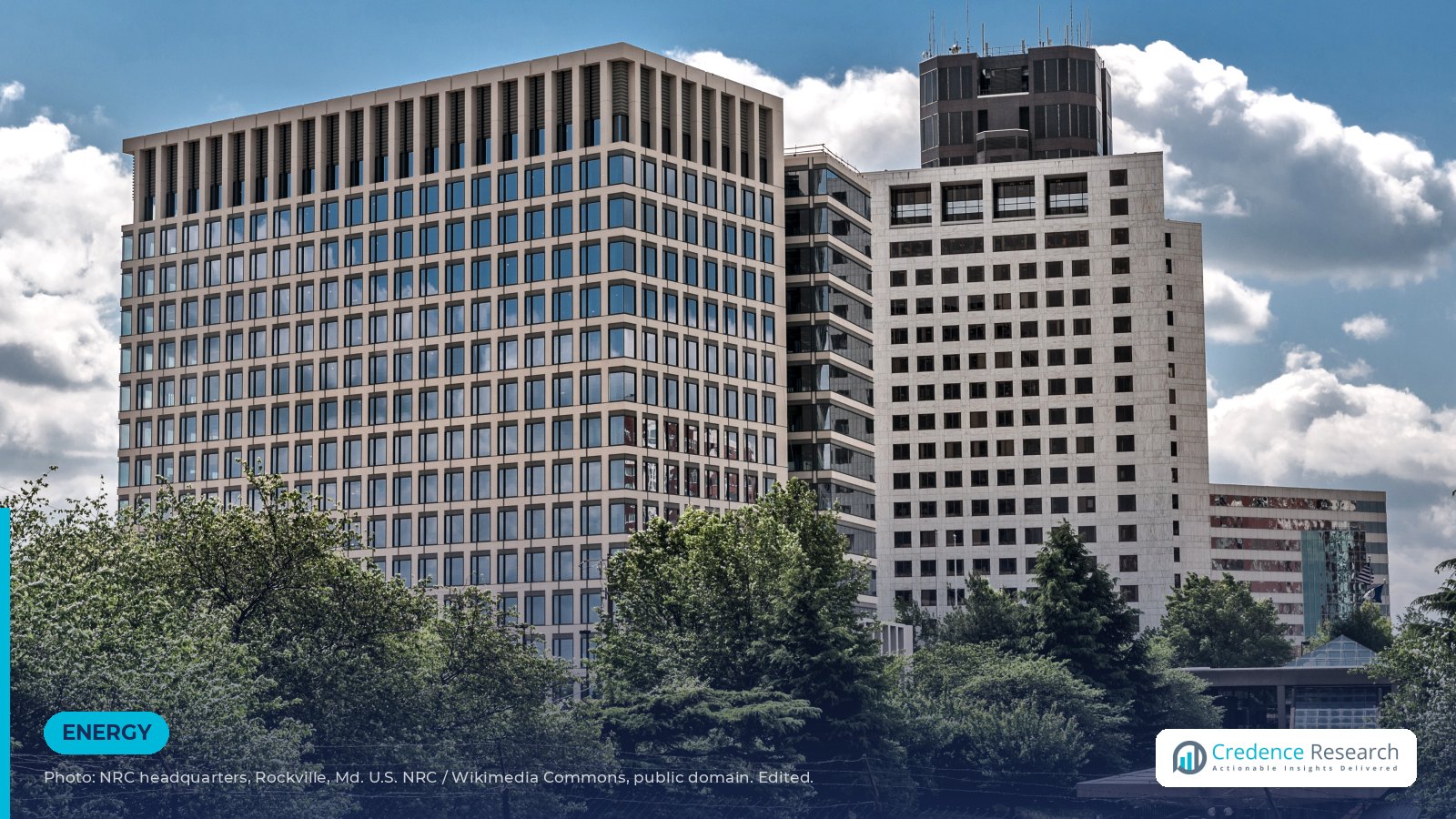
Image: U.S. Nuclear Regulatory Commission headquarters in Rockville, Md., by the U.S. Nuclear Regulatory Commission via Wikimedia Commons, public domain. Cropped and edited by Credence Research.

About the Author

Senior News Editor at Credence Research Inc