
Siemens to Acquire Lauterbach, Adding TRACE32 Debug and Trace Tools to Its Chip Design Portfolio
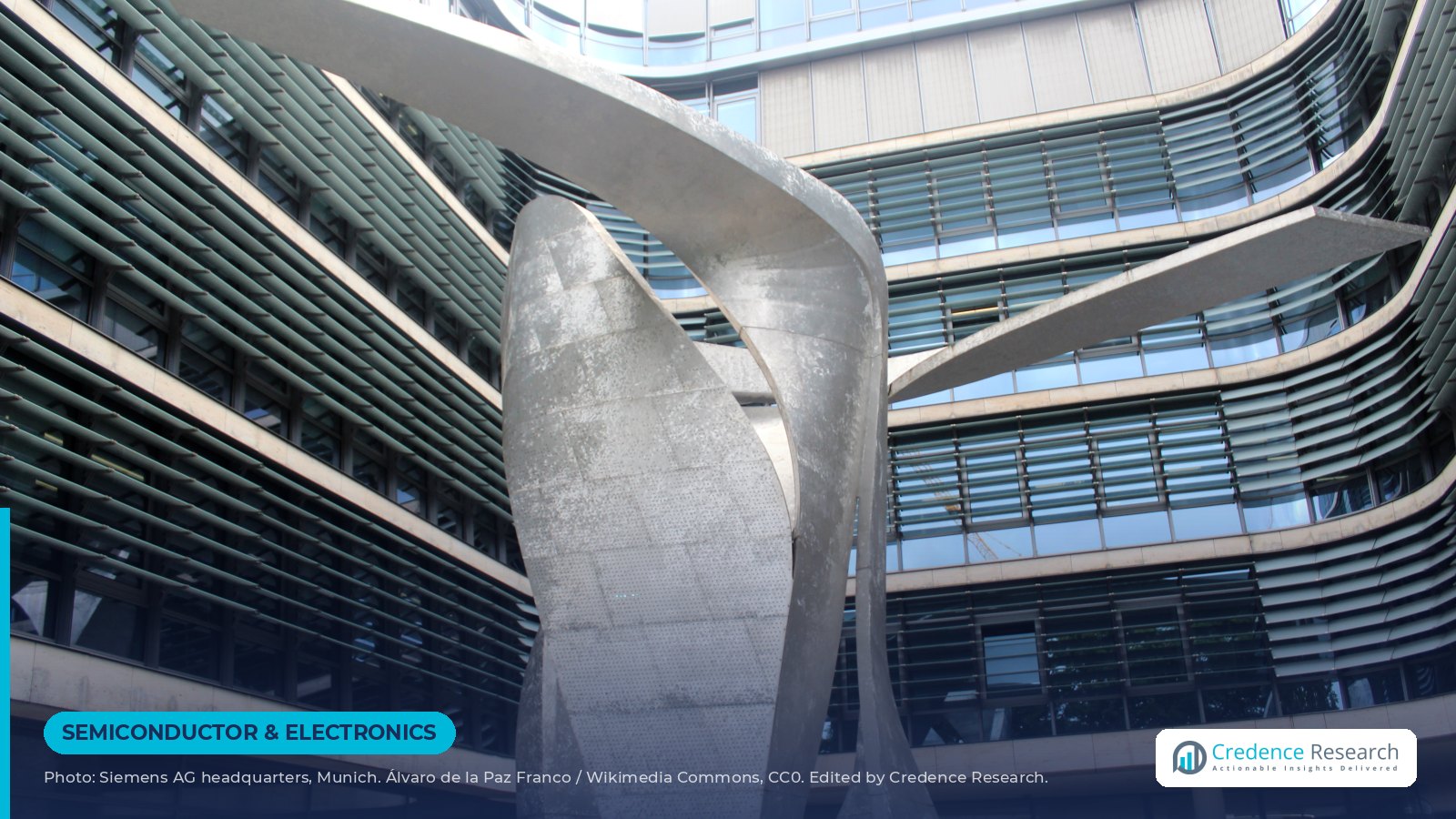
Siemens AG has agreed to buy Lauterbach GmbH, a family-owned German developer of debug and trace tools for embedded software and complex system-on-chip designs, the Munich-based technology group announced on Nov. 10, 2026. The deal brings Lauterbach's TRACE32 product line into Siemens' electronic design automation business, which supplies the software and hardware chipmakers use to design and verify semiconductors. Siemens did not disclose financial terms and expects to close the transaction in the first half of 2027, subject to customary closing conditions and required regulatory approvals.
Key developments
- Siemens signed an agreement to acquire Lauterbach, which makes hardware-assisted debuggers and real-time trace tools for microprocessors and embedded CPU cores under the TRACE32 brand.
- Lauterbach employs around 170 people, serves more than 1,200 customers in the automotive, semiconductor and telecommunications sectors, and generated roughly 60 million euros in revenue in 2025, according to Siemens.
- Siemens plans to combine its hardware-assisted verification portfolio with Lauterbach's embedded software debug and trace technology in a single workflow, so design teams can find hardware and software issues before physical silicon exists.
- Co-founder and Chief Technology Officer Stephan Lauterbach and Thomas Ullmann will continue their work at Siemens after closing.
- Siemens said it expects significant revenue synergies, citing applications in AI, high-performance computing, hyperscale storage, automotive, communications, and aerospace and defense.
How embedded debug and trace fits into chip design
Lauterbach traces its roots to 1979, when brothers Lothar and Stephan Lauterbach began building the company. It is headquartered in Hoehenkirchen, near Munich, and runs branch offices in the United Kingdom, Italy, France, Tunisia, Japan, China and on both coasts of the United States. Its TRACE32 tools connect to a processor's debug interface so engineers can halt code, inspect memory and record execution in real time, which is essential for finding timing faults in embedded software that runs on cars, network equipment and data center chips.
The tools also reach into the pre-silicon phase. Lauterbach's Generic Transactor Library interface links TRACE32 to emulated and simulated platforms, and the company's website lists compatibility with Siemens' Veloce hardware-assisted verification systems, Cadence's Palladium and Protium platforms, and Synopsys' ZeBu and HAPS systems. Siemens' own Veloce vProbe application already names TRACE32 among the third-party debuggers it supports, and Siemens said the two companies share numerous customers.
Siemens built its EDA business through acquisitions. It entered the field when it closed its purchase of Mentor Graphics in 2017, and in March 2025 it completed its acquisition of simulation software maker Altair Engineering at an enterprise value of about $10 billion. Rival Synopsys completed its acquisition of simulation specialist Ansys in July 2025, showing how the largest design software vendors are widening their reach beyond chip layout and verification into system-level engineering.
Industry implications
The deal targets a persistent bottleneck in chip development: software. Modern processors for AI servers and vehicles ship with large amounts of firmware and embedded code, and teams increasingly want to start writing and debugging that code on emulators months before first silicon arrives. Siemens said the combined workflow will help customers identify problems at the hardware and software boundary earlier, a practice the industry calls "shift-left" verification.
Cedrik Neike, a member of the Siemens managing board and head of its Digital Industries business, said the acquisition further extends the company's "industry-leading EDA portfolio for semiconductor design." Stephan Lauterbach said the convergence of hardware and software development is "fundamentally changing the industry," and framed the combination as a way to serve customers working across both domains.
For automakers and their suppliers, the transaction touches a familiar tool. Automotive electronics teams rely on trace and debug equipment to validate safety-relevant software on microcontrollers, and Lauterbach lists automotive among its core customer sectors. Integration with Siemens' broader software portfolio could give those customers a more direct path from chip verification to embedded software validation.
Competitive and supply chain implications
The acquisition gives Siemens a widely used debug brand that sits outside the core design flow controlled by Synopsys and Cadence. Because TRACE32 currently connects to rival emulation platforms, customers will watch whether Siemens keeps that open interoperability after closing. Siemens has not said how it will handle third-party integrations, and any move to favor Veloce could push some users toward alternative debuggers, such as the Arm Development Studio and open-source OpenOCD tools that Siemens' own Veloce documentation also supports.
For chip suppliers, the debug tool chain is part of the enablement package they offer customers. Semiconductor vendors work with debug providers to support new cores and architectures at launch, so ownership by a large EDA vendor could change how quickly support for new processors reaches the market. Siemens' scale could speed that process if it invests in broader architecture coverage, while smaller independent tool makers may see an opening among customers that prefer vendor-neutral suppliers.
The deal is small next to the Altair and Ansys transactions, but it fits a pattern of design software vendors buying specialist tools to fill gaps in end-to-end development flows rather than relying on partnerships.
Regional implications
The transaction keeps a Bavarian engineering company in German hands and strengthens the Munich region's role in semiconductor design tools, alongside Siemens' headquarters and chipmakers such as Infineon Technologies in nearby Neubiberg. European policymakers have sought to build up design capabilities as part of their broader semiconductor strategy, and the deal consolidates a European-owned debug supplier within a European industrial group.
Lauterbach's customer base is global, with offices in the United States, Japan and China serving local chip and automotive developers. Siemens did not specify which regulatory approvals the deal requires. Given trade and technology controls affecting semiconductor tools, the treatment of Lauterbach's business in China and other markets will be an integration point to watch.
Credence Research analysis
Siemens is paying for workflow position rather than scale. With around 170 employees and roughly 60 million euros in annual revenue, Lauterbach adds little to a group that reported 78.9 billion euros in fiscal 2025 revenue. Its value lies in its installed base among embedded developers and its established links to emulation platforms from all three major EDA vendors. Owning that layer gives Siemens a stronger claim on the software side of chip verification, where AI accelerators and software-defined vehicles are lengthening development cycles.
The key test will be neutrality. Lauterbach's appeal rests partly on working across competing hardware and emulation systems. If Siemens keeps TRACE32 open while building deeper Veloce integration, it can deepen its role in engineering workflows without alienating Cadence and Synopsys users. If customers perceive lock-in, the acquisition could instead encourage multi-vendor debugging strategies and benefit independent rivals.
What comes next
- Regulatory reviews and other closing conditions, with completion targeted for the first half of 2027.
- Details on how TRACE32 will be organized within Siemens Digital Industries Software and its EDA unit.
- Siemens statements on continued support for Cadence and Synopsys emulation platforms through the Generic Transactor Library.
- Product announcements combining Veloce hardware-assisted verification with TRACE32 debug and trace.
- Possible further bolt-on acquisitions as Siemens, Synopsys and Cadence compete for system-level design workflows.
Sources
- Siemens: Planned acquisition of Lauterbach (Nov. 10, 2026)
- Lauterbach: Generic Transactor Library API
- Siemens: Completion of Altair acquisition (March 26, 2025)
- Synopsys: Completion of Ansys acquisition (July 17, 2025)
Image: Siemens AG corporate headquarters in Munich, by Álvaro de la Paz Franco via Wikimedia Commons, CC0. Cropped and edited by Credence Research.

About the Author

Senior News Editor at Credence Research Inc