
KPS to Buy 70% of MM Packaging From Mayr-Melnhof at 2.4 Billion Euro Enterprise Value
KPS Capital Partners has agreed to buy a 70% controlling stake in MM Packaging, the consumer packaging arm of Austria's Mayr-Melnhof Karton AG, in a deal that values the business at an enterprise value of 2.4 billion euros. The New York-based private equity firm and Vienna-based MM Group announced the binding agreement late on Nov. 9, 2026. MM Group will keep a 30% stake, and MM Packaging, which runs more than 50 production sites in 19 countries, will become a standalone company under its existing name.
Key developments
- MM Group signed a binding agreement to sell its Packaging business to a new KPS holding company at an enterprise value of 2.4 billion euros, with KPS holding 70% and MM Group retaining 30%.
- MM Group expects proceeds of about 1.8 billion to 1.9 billion euros after netting its roughly 0.4 billion euro investment in the retained stake, and plans a special distribution to shareholders of 0.5 billion to 0.6 billion euros after completion.
- The perimeter covers the Food and Premium Packaging operations, excluding Iran and Tunisia, and Pharma and Healthcare Packaging. MM Packaging employs about 8,500 people.
- A long-term cartonboard supply agreement will link MM Group's remaining Board and Paper division to the divested Packaging business.
- Completion is expected in the first half of 2027, subject to corporate and regulatory approvals, with the French business also subject to worker consultation.
Industry background
MM Group has historically run two divisions side by side: Board and Paper, which makes recycled and virgin-fiber cartonboard at mills in Europe, and Packaging, which converts board into folding cartons, labels and leaflets for brand owners. KPS describes MM Packaging as the world's largest producer of secondary pharmaceutical packaging and a leading European producer of food folding cartons, with key customer relationships that average more than 20 years.
The pharmaceutical position was built largely through acquisition. MM Group completed its purchase of Essentra Packaging in October 2022, adding 21 manufacturing sites in 10 countries across Europe, the mainland United States and Puerto Rico, along with about 3,500 employees in cartons, leaflets and labels for healthcare customers. Secondary pharmaceutical packaging covers the printed cartons and patient information leaflets that surround blister packs, vials and pens, and it carries strict serialization, tamper-evidence and print-accuracy requirements.
KPS is a specialist in controlling stakes in manufacturing businesses, with about $19.1 billion of assets under management as of June 30, 2026. Its packaging record includes Eviosys, the European metal can maker it built and later sold to Sonoco, which closed that purchase in December 2024. At the time, Eviosys operated 44 manufacturing facilities across 17 countries in Europe, the Middle East and Africa.
Industry implications
The deal formally separates a vertically integrated European board and carton group into a mill business and a converting business. MM Group said the separation lets each unit pursue its own strategy, with the parent focusing on Board and Paper while staying involved in Packaging as a minority shareholder. That structure is becoming more common in fiber-based packaging, where mills are capital intensive and cyclical while converters compete on service, print quality and customer qualification.
For pharmaceutical and food brand owners, the immediate operational change should be limited. The business keeps its name, sites and management under the announced terms, and the cartonboard supply agreement is designed to keep material flowing from MM Group's mills. Over time, an independent owner focused only on converting may be more willing to buy board from multiple mills, which could change sourcing patterns across Europe.
The financial engineering also matters. MM Group's retained stake can fall to a minimum of 20% if certain 2027 earnings targets are missed, with no extra consideration either way. That mechanism ties part of the seller's economics to post-closing performance and signals that both sides expect a period of operational change under KPS.
Competitive and supply chain implications
MM Packaging competes with other large folding carton converters serving pharmaceutical and consumer goods customers across Europe. A private equity owner with a mandate to improve competitiveness may pursue plant consolidation, automation investment or bolt-on acquisitions in pharma packaging, where scale and regulatory qualification create high switching costs for customers.
On the supply side, the long-term board agreement protects volume for MM Group's mills during the transition, which is important because Packaging has been a large internal customer. For other cartonboard producers, the question is whether a standalone MM Packaging diversifies its purchases once the agreement's terms allow. KPS said its approach centers on strategic positioning, competitiveness and profitability rather than relying mainly on financial leverage, which points to an operations-driven plan.
Regional implications
Austria remains the corporate home of both companies after the deal, with MM Packaging headquartered in Vienna. The French portion of the business requires consultation with worker representatives before the transaction can close, which is standard under French labor rules and sets one of the main gating items for the 2027 timeline.
The business has a broad European footprint plus North American pharmaceutical sites inherited from Essentra Packaging. Operations in Iran and Tunisia are excluded from the transaction perimeter. Regulators across several jurisdictions will need to clear the deal, although a financial buyer acquiring a carve-out typically raises fewer overlap questions than a combination of two direct competitors.
Credence Research analysis
The transaction reflects a broader shift in European fiber packaging toward separating converting assets from mill assets. MM Group gains cash to reduce debt and return capital while keeping exposure to Packaging through its minority stake and the board supply contract. KPS gains a scaled converter with a leading pharma position, a segment where long customer qualification cycles tend to support steady demand regardless of the consumer cycle.
The key execution risk sits in the earnout-style stake adjustment and the separation itself. Carving out shared functions, IT systems and procurement from an integrated group typically takes longer than the legal closing. The KPS record with Eviosys suggests a playbook of building a standalone platform and later selling it to a strategic buyer, so customers and suppliers should expect MM Packaging to pursue scale and margin improvement over the next several years.
What comes next
- MM Group scheduled an analyst and investor webcast on Nov. 10, 2026, to discuss the transaction.
- Worker consultation in France and merger control filings in relevant jurisdictions will proceed ahead of closing.
- Completion is targeted for the first half of 2027, after which MM Group will account for its stake using the equity method.
- MM Group plans a special distribution of 0.5 billion to 0.6 billion euros after completion, subject to approvals and business conditions.
- 2027 earnings performance will determine whether MM Group's stake stays at 30% or falls toward the 20% floor.
Sources
- KPS Capital Partners: KPS to Acquire MM Packaging from MM Group (Nov. 9, 2026)
- Mayr-Melnhof Karton AG: MM Group to sell majority stake in its Packaging business to KPS Capital Partners (EQS-News, Nov. 9, 2026)
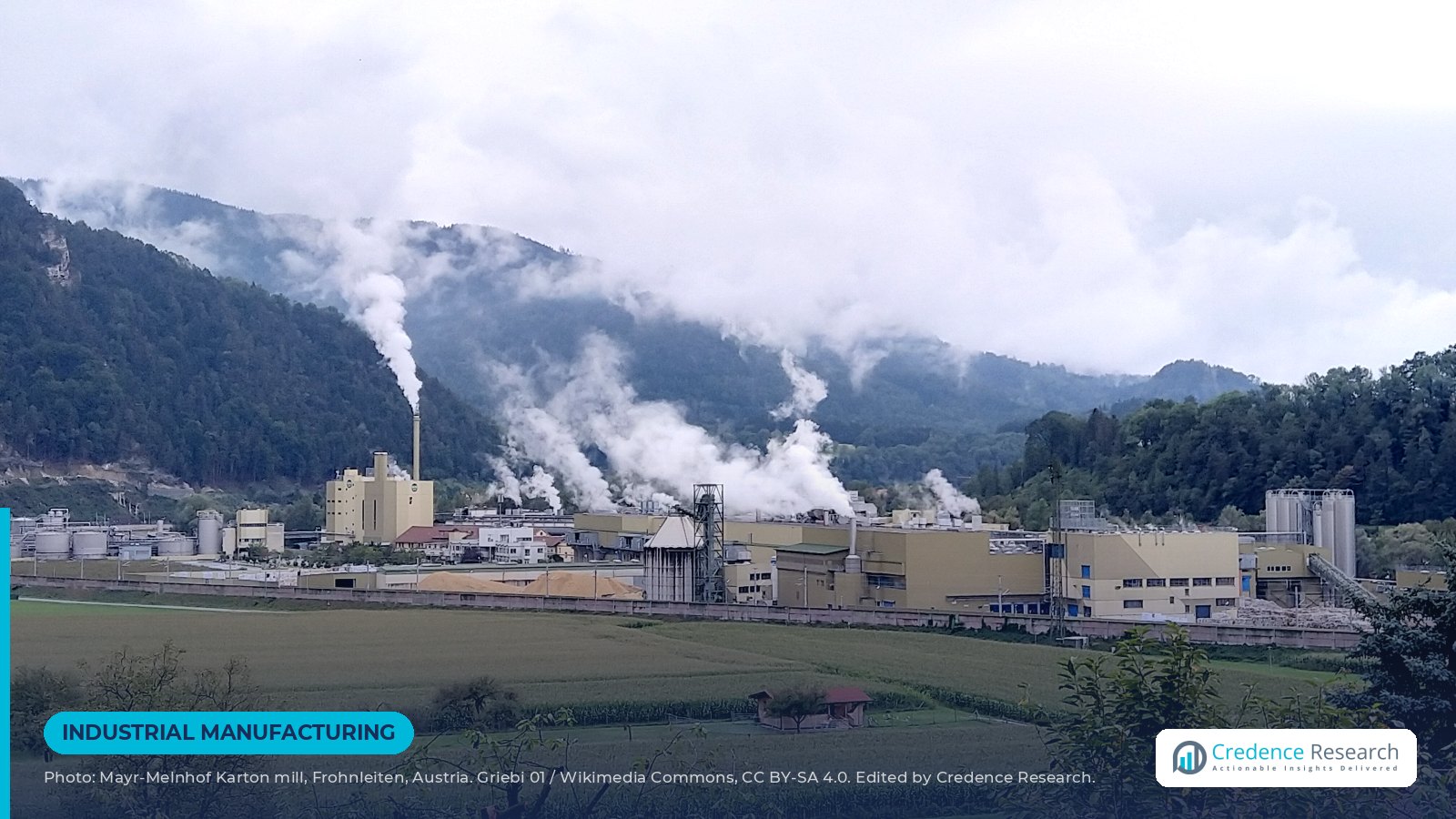
Image: Mayr-Melnhof Karton cartonboard mill in Frohnleiten, Austria, by Griebi 01 via Wikimedia Commons, CC BY-SA 4.0. Cropped and edited by Credence Research.

About the Author

Senior News Editor at Credence Research Inc