
FDA Requires NAION Eye Risk Warning on All GLP-1 Drugs, Including Ozempic, Wegovy and Zepbound
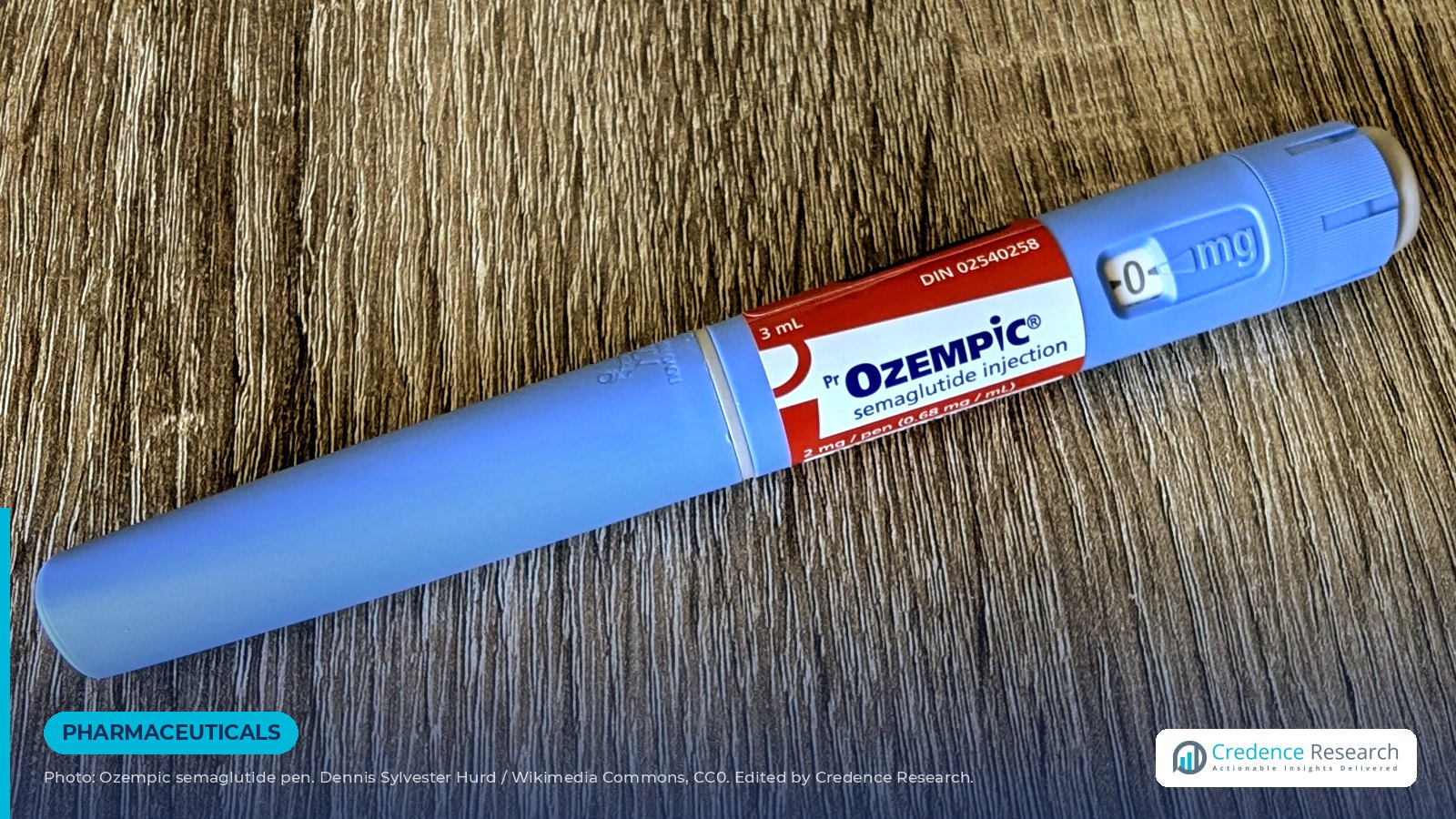
The U.S. Food and Drug Administration on Nov. 9, 2026, ordered the makers of every approved glucagon-like peptide-1 receptor agonist (GLP-1 RA) to add a warning about a potential increased risk of non-arteritic anterior ischemic optic neuropathy, or NAION, a rare eye condition that can cause sudden and permanent vision loss in one eye. The class-wide requirement, issued as a Drug Safety Communication from the agency's headquarters in Silver Spring, Maryland, covers 12 products used for type 2 diabetes and chronic weight management, including Ozempic, Wegovy, Mounjaro, Zepbound and the newly approved oral drug Foundayo.
Key developments
- The FDA is requiring all GLP-1 RA application holders to add information on potential NAION risk to the Warnings and Precautions section of their U.S. labeling.
- The products listed are Byetta, Victoza, Trulicity, Saxenda, Xultophy, Soliqua, Ozempic, Rybelsus, Wegovy, Mounjaro, Zepbound and Foundayo; only generic exenatide is now marketed in place of Byetta.
- An FDA meta-analysis of 126 randomized trials with 134,253 patients found 15 probable NAION events: 10 in GLP-1 RA patients and five on placebo, an incidence of 6.4 versus 3.8 per 100,000 person-years.
- A Sentinel real-world study found a higher risk versus DPP-4 inhibitors (hazard ratio 1.43) but no statistically significant difference versus SGLT-2 inhibitors (hazard ratio 1.19).
- The agency advises clinicians to consider stopping the drug in patients who develop NAION unless the benefits of treatment clearly outweigh the risk.
Safety background
NAION occurs when blood flow to the front of the optic nerve is reduced. Patients typically notice painless vision loss in one eye, often on waking, along with blind spots, color distortion or blurred central vision. The FDA puts incidence in adults over 50 in the general population at 2.3 to 10.2 per 100,000 people a year, and notes that a first event raises the chance of recurrence and of involvement in the other eye. Smoking, diabetes, high blood pressure, sleep apnea, anemia and kidney disease are possible risk factors, which overlaps heavily with the population that takes GLP-1 drugs.
The review traces back to a July 2024 study in JAMA Ophthalmology by Hathaway and colleagues that linked semaglutide to NAION. The FDA said that study had several limitations but warranted a broader assessment. Europe moved first on one molecule: in June 2025 the European Medicines Agency's safety committee, PRAC, concluded that NAION is a very rare side effect of semaglutide, affecting up to 1 in 10,000 users, and recommended adding it to product information for Ozempic, Rybelsus and Wegovy. The new U.S. action is broader in scope because it applies to every approved molecule in the class rather than to semaglutide alone.
The evidence the FDA cites is mixed. Its clinical trial pool covered 288,879 person-years, yet produced only 15 probable cases, which leaves wide uncertainty. Adverse event reports were described as hard to interpret, and animal data did not reveal a biological mechanism. The agency nonetheless concluded that rigorous observational studies in type 2 diabetes consistently showed higher risk than with DPP-4 or SGLT-2 inhibitors, enough to justify a labeling change.
Industry implications
For drugmakers, the action converts a debated signal into standard labeling across the class. Novo Nordisk holds the largest number of affected brands, including Ozempic, Rybelsus, Wegovy, Victoza, Saxenda and Xultophy. Eli Lilly markets Trulicity, Mounjaro, Zepbound and Foundayo, and Sanofi markets Soliqua. Because the requirement is class-wide, no single product gains a labeling advantage, and the commercial impact is likely to depend on how prescribers screen higher-risk patients rather than on brand switching.
The decision also continues a pattern of the FDA revising GLP-1 safety language as large datasets mature. In January 2026 the agency asked sponsors to remove the suicidal behavior and ideation warning from Saxenda, Wegovy and Zepbound after a meta-analysis of 91 trials and a Sentinel study of about 2.2 million patients found no causal link. Taken together, the two actions show the agency adding and removing warnings based on the weight of evidence, a process that sponsors of next-generation incretin drugs will need to plan for in their safety programs.
Competitive and supply chain implications
Companies developing oral and injectable incretin therapies, amylin combinations and other obesity drugs should expect regulators to ask how they will monitor for NAION in late-stage trials and after approval. Ophthalmology screening, baseline eye histories for patients with sleep apnea or uncontrolled hypertension, and structured reporting of visual symptoms may become more common in protocols.
The change has little direct effect on manufacturing or device supply, since it concerns labeling rather than product quality. Pharmacies, telehealth platforms and employer weight-management programs that dispense these drugs at scale will need to update patient materials and counseling scripts. Compounding pharmacies and cash-pay channels may face closer scrutiny on whether patients receive the same safety information as those using branded products.
Regional implications
In the United States, the labeling updates will flow through FDA review of each sponsor's revised prescribing information, and payers may reference the new warning in prior authorization criteria for patients with existing optic nerve disease. The action adds a warning and does not restrict any approved indication.
In Europe, PRAC recommended in 2025 that semaglutide product information list NAION as a very rare side effect, so the main open question is whether regulators extend that wording to tirzepatide, liraglutide, dulaglutide and other molecules. Regulators in Asia, Latin America and the Middle East, where use of these drugs is expanding, often track FDA and EMA safety decisions and may open their own reviews.
Credence Research analysis
The FDA's choice of a class-wide warning, rather than a semaglutide-specific one, reflects the agency's view that the signal is tied to the mechanism of action or to the treated population, not to a single molecule. That framing matters for every incretin program in development. It means NAION will be treated as a known class risk, and sponsors will be expected to characterize it, much as gastrointestinal effects and gallbladder events are today. The absolute risk shown in the FDA data is small, with a difference of about 2.6 cases per 100,000 person-years in trials, so a broad pullback in prescribing appears unlikely on the evidence presented.
The more important near-term effect is on patient selection and monitoring. People with diabetes, sleep apnea and hypertension carry both the highest NAION risk and the greatest need for these drugs, which puts more weight on shared decision-making and on referral pathways to eye specialists. The mixed comparator results, with a clear difference versus DPP-4 inhibitors but not versus SGLT-2 inhibitors, leave room for further studies that could refine or reduce the warning. Sponsors that generate high-quality ophthalmic data in their outcome trials will be best placed to shape that next revision.
What comes next
- GLP-1 RA application holders will submit revised Warnings and Precautions language for FDA review.
- Updated prescribing information and patient materials are expected to reach pharmacies and prescribers after FDA sign-off.
- Results from ongoing observational studies on NAION and GLP-1 RAs may further inform regulators.
- Other regulators may decide whether to extend NAION labeling beyond semaglutide to the rest of the class.
- Sponsors of investigational incretin drugs are likely to add ophthalmic monitoring to late-stage and post-marketing programs.
Sources
- FDA Drug Safety Communication: Safety labeling changes for GLP-1 RAs due to potential increased risk of NAION (Nov. 9, 2026)
- European Medicines Agency: PRAC concludes NAION is a very rare side effect of semaglutide medicines (June 2025)
- FDA Drug Safety Communication: Removal of suicidal behavior and ideation warning from GLP-1 RA medications (Jan. 13, 2026)
Image: Ozempic semaglutide injection pen, by Dennis Sylvester Hurd via Wikimedia Commons, CC0 1.0 public domain dedication. Cropped and edited by Credence Research.

About the Author

Senior News Editor at Credence Research Inc