
| REPORT ATTRIBUTE | DETAILS |
|---|---|
| Historical Period | 2020-2023 |
| Base Year | 2024 |
| Forecast Period | 2025-2032 |
| Leak Detection and Repair Market Size 2024 | USD 20,270 million |
| Leak Detection and Repair Market, CAGR | 5.02% |
| Leak Detection and Repair Market Size 2032 | USD 29,994 million |
Market Overview
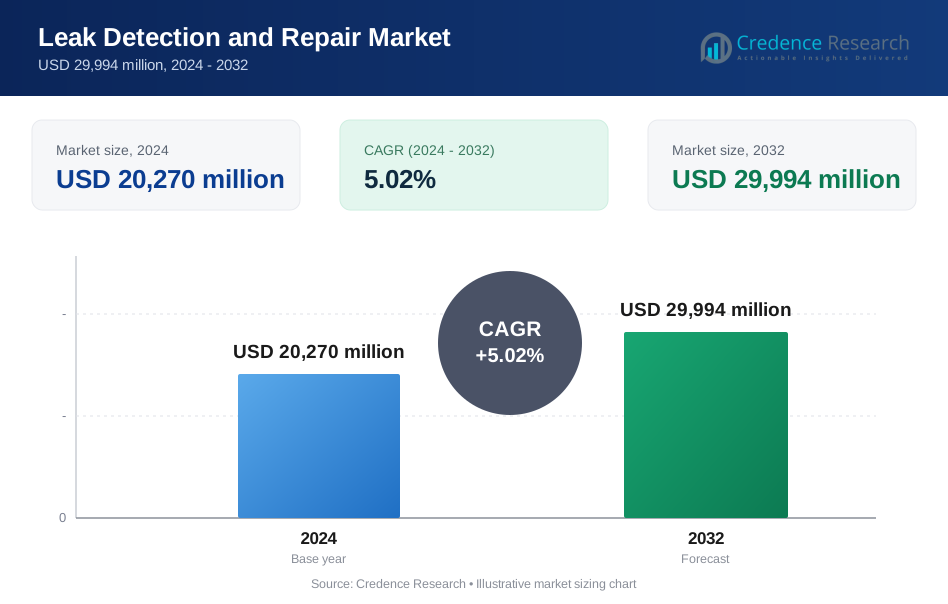
Leak Detection and Repair Market size was valued at USD 20,270 million in 2024 and is anticipated to reach USD 29,994 million by 2032, at a CAGR of 5.02% during the forecast period.
The Leak Detection and Repair market is driven by stringent environmental regulations, increasing industrial safety concerns, and the need to reduce operational losses in sectors such as oil and gas, chemicals, and water utilities. Regulatory bodies worldwide are enforcing compliance with emission standards, prompting companies to invest in advanced leak detection technologies. The market benefits from growing adoption of digital solutions, such as IoT-enabled sensors and real-time monitoring systems, which enhance detection accuracy and response times. Technological advancements, including the integration of artificial intelligence and machine learning for predictive maintenance, are further shaping market growth. Rising investments in infrastructure modernization and the ongoing shift toward sustainability encourage organizations to prioritize proactive maintenance strategies. These trends, coupled with heightened awareness of environmental risks and cost savings from early leak detection, support the steady expansion of the Leak Detection and Repair market globally.
The geographical analysis of the Leak Detection and Repair Market highlights strong growth across North America, Europe, and Asia Pacific, driven by robust industrial activity, strict regulatory compliance, and ongoing infrastructure modernization. North America demonstrates high adoption of advanced leak detection technologies due to stringent environmental standards and a mature energy sector, while Europe leads in sustainability initiatives and integration of digital solutions. Asia Pacific experiences rapid expansion as countries invest in new pipeline networks and emission control measures. Among the leading players, Picarro Inc. stands out for its innovative gas analyzers and global reach, while Bridger Photonics, Inc. is recognized for its cutting-edge aerial methane detection solutions. ABB Ltd. is a prominent international technology provider, offering comprehensive leak detection and monitoring systems for industrial clients worldwide. These companies, alongside others such as Kairos Aerospace and Rebellion Photonics, continue to drive innovation and set benchmarks in the market.
Market Insights
- The Leak Detection and Repair Market was valued at USD 20,270 million in 2024 and is expected to reach USD 29,994 million by 2032, registering a CAGR of 5.02% during the forecast period.
- The market is driven by stringent environmental regulations and the growing need for industrial safety and emission control across key sectors such as oil and gas, chemicals, and utilities.
- Adoption of digital and smart leak detection solutions, including IoT sensors, real-time monitoring, and predictive analytics, continues to transform operational efficiency and accuracy.
- Leading players such as Picarro Inc., Bridger Photonics, Inc., and ABB Ltd. maintain strong positions through continuous innovation and expansion of advanced detection platforms.
- High initial investment, complexity of system integration, and skilled labor shortages restrain market growth, especially in regions with legacy infrastructure or limited budgets.
- North America leads the market in technology adoption and regulatory compliance, while Europe focuses on sustainability and Asia Pacific experiences the fastest growth due to rapid infrastructure expansion.
- The market demonstrates increasing demand for service-based models, remote monitoring capabilities, and partnerships that offer integrated solutions to address both environmental and operational challenges.
Market Drivers
Regulatory Enforcement and Environmental Compliance Initiatives Drive Market Demand
Stringent environmental regulations across developed and emerging economies drive the adoption of leak detection and repair solutions. Government agencies and international organizations enforce emission control standards in critical sectors such as oil and gas, chemicals, and manufacturing. Companies in these industries must comply with strict rules regarding volatile organic compound (VOC) emissions and hazardous leaks. The pressure to meet regulatory standards compels firms to deploy advanced leak detection technologies to avoid legal penalties and reputational damage. Regular audits and compliance checks encourage a culture of proactive maintenance. The Leak Detection and Repair Market benefits from continuous monitoring requirements, ensuring ongoing investment in reliable solutions.
- For instance, the leak detection and repair market is being driven by increasing regulations aimed at reducing emissions and improving safety standards across various industries.
Heightened Focus on Industrial Safety and Risk Mitigation Fuels Technology Adoption
Industrial safety has become a priority for organizations aiming to minimize operational risks and protect personnel. Leak incidents not only threaten the environment but also pose significant health and safety hazards. Companies invest in leak detection and repair systems to identify and address faults before they escalate. These systems enable rapid intervention, reducing the probability of catastrophic failures and downtime. The market experiences growth as industries recognize the importance of safeguarding assets and workforce. It enables firms to demonstrate a strong safety record, which supports operational continuity and stakeholder confidence.
- For instance, LDAR systems are widely used in petroleum and oil and gas companies to make workplaces healthier by reducing the risk of accidents caused by fire outbreaks and explosions.
Rapid Digital Transformation and Integration of Smart Technologies Accelerate Market Growth
The growing adoption of digital tools and smart technologies transforms the approach to leak detection and repair. Organizations integrate IoT-enabled sensors, cloud-based analytics, and real-time monitoring platforms to achieve greater detection accuracy. It enhances decision-making by providing instant alerts and actionable insights. Artificial intelligence and machine learning algorithms enable predictive maintenance, identifying potential issues before they become critical. These advancements improve cost efficiency by minimizing unplanned repairs and optimizing resource allocation. The Leak Detection and Repair Market advances alongside digital innovation, setting new standards for efficiency and reliability.
Increasing Investments in Infrastructure Modernization Support Market Expansion
Aging infrastructure in sectors such as oil and gas, water utilities, and chemical processing creates substantial demand for advanced leak detection and repair solutions. Companies allocate capital to modernize pipelines, storage facilities, and distribution networks, incorporating state-of-the-art monitoring systems. It helps mitigate the risks associated with leaks and equipment failure. Investments in infrastructure upgrades often mandate integration of leak detection technologies to comply with industry best practices. These efforts contribute to sustainability goals and operational excellence. The market capitalizes on the urgency to replace or refurbish outdated assets with high-performance, compliant solutions.
Market Trends
Adoption of Advanced Sensor Technologies Reshapes Leak Detection and Repair Solutions
The Leak Detection and Repair Market is witnessing the rapid integration of cutting-edge sensor technologies to enhance detection precision and reliability. Companies deploy ultrasonic, infrared, and acoustic sensors to detect leaks across complex industrial environments. It supports real-time identification of leaks, even in inaccessible or hazardous locations. These advancements allow organizations to minimize false alarms and improve the speed of intervention. Compact and wireless sensor networks facilitate continuous monitoring and make retrofitting into existing infrastructure easier. This trend underscores a shift toward more intelligent and efficient leak management practices.
- For instance, handheld gas detectors account for over 36% of total revenue in the global leak detection and repair market, highlighting their widespread adoption.
Digitalization and Cloud-Based Analytics Drive Predictive Maintenance Strategies
Digital transformation trends are revolutionizing how organizations approach maintenance in the Leak Detection and Repair Market. Firms increasingly rely on cloud-based platforms and advanced data analytics to centralize information and enable remote access. It empowers maintenance teams to perform predictive analysis, anticipating equipment failures and scheduling timely repairs. Integration with mobile applications ensures field personnel receive instant alerts and work orders. Real-time dashboards and automated reporting streamline compliance with regulatory standards. This trend accelerates the move toward data-driven, proactive maintenance frameworks across industries.
Focus on Sustainability and Emission Reduction Shapes Market Direction
Sustainability goals and emission reduction targets are significantly influencing the Leak Detection and Repair Market. Companies commit to reducing environmental footprints by investing in systems that limit fugitive emissions and optimize energy use. It aligns with global initiatives aimed at combating climate change and promoting resource efficiency. Regulatory incentives and public scrutiny encourage broader adoption of green technologies within leak detection and repair processes. Organizations report emission reductions as part of corporate social responsibility initiatives, enhancing brand value. This trend positions leak management as a critical component of broader environmental strategies.
- For instance, industries are striving to meet sustainability goals and reduce their carbon footprints, further incentivizing investment in leak detection systems.
Expansion of Service-Based Models and Remote Monitoring Capabilities Gains Momentum
The market sees a notable shift toward service-based business models and remote monitoring solutions. Companies increasingly outsource leak detection and repair activities to specialized service providers. It offers advantages such as access to the latest technology, reduced capital investment, and expert support. Remote diagnostics and monitoring services allow for continuous supervision without the need for constant on-site presence. This approach increases operational flexibility and scalability for organizations managing multiple assets. The Leak Detection and Repair Market adapts by offering comprehensive, turnkey solutions tailored to client needs.
Market Challenges Analysis
Complexity of Implementation and High Initial Costs Limit Adoption
The Leak Detection and Repair Market faces significant barriers due to the complexity of integrating advanced technologies into existing infrastructure. Many organizations struggle with the technical challenges of retrofitting older systems and ensuring compatibility with digital monitoring solutions. High upfront costs for state-of-the-art sensors, software, and skilled labor create hesitation among cost-sensitive industries. It can be difficult for smaller companies to justify investments without clear, immediate returns. The market requires ongoing training and maintenance, adding further to operational expenses. These challenges slow down widespread adoption, particularly in regions with limited financial resources.
- For instance, industries with aging infrastructure often struggle to retrofit modern leak detection systems, leading to delays in adoption and increased costs.
Data Management, False Alarms, and Skilled Labor Shortages Impede Efficiency
Managing vast volumes of data generated by leak detection systems presents a critical challenge for end users. The Leak Detection and Repair Market often grapples with issues related to data accuracy, frequent false alarms, and system calibration. It places a burden on organizations to continuously validate data and prioritize critical events. Limited availability of skilled technicians complicates efforts to maintain and troubleshoot sophisticated systems. Unaddressed, these challenges can undermine the effectiveness of leak management initiatives and reduce confidence in automated detection technologies. The industry must address these hurdles to sustain long-term growth and reliability.
Market Opportunities
Expansion in Emerging Economies and Infrastructure Development Creates New Avenues
Rapid industrialization and urbanization in emerging economies present significant opportunities for the Leak Detection and Repair Market. Investments in energy, water, and chemical infrastructure create a strong demand for advanced leak management solutions. It allows companies to target a growing customer base with tailored offerings for both new and aging assets. Government initiatives focused on improving environmental standards encourage the adoption of modern leak detection technologies. Collaborations with local partners and service providers can accelerate market entry and expand distribution networks. These trends unlock untapped potential in regions across Asia Pacific, Latin America, and the Middle East.
Advancements in Technology and Integration with Smart Systems Fuel Growth Prospects
The proliferation of IoT devices, cloud computing, and artificial intelligence opens new growth prospects for the Leak Detection and Repair Market. It enables the development of smart systems that deliver real-time analytics, remote monitoring, and predictive maintenance. Companies can differentiate themselves by offering solutions that integrate seamlessly with broader industrial automation platforms. There is a strong opportunity to address niche applications, such as hazardous materials storage and renewable energy projects. The market benefits from partnerships with technology firms, research institutions, and regulatory agencies. Continuous innovation drives competitive advantage and long-term value creation for industry players.
Market Segmentation Analysis:
By Product:
The Leak Detection and Repair Market consists of four main product segments: handheld gas detection, UAV-based detection, vehicle-based detection, and manned aircraft detection. Handheld gas detection devices account for a significant market share due to their portability, ease of use, and cost-effectiveness in routine inspection scenarios. They serve a wide range of industries that require frequent, on-site monitoring. UAV-based detection is gaining traction for its ability to cover large and hard-to-reach areas efficiently, reducing inspection time and human exposure to hazardous environments. Vehicle-based detection systems appeal to sectors that demand rapid, continuous monitoring over extended pipeline networks or industrial sites. Manned aircraft detection is primarily used in large-scale applications, including cross-country pipelines, where aerial surveys provide a broad overview and quick identification of potential leak points.
By Technology:
The market features a diverse array of technologies, each addressing specific industry requirements. Volatile Organic Compounds (VOC) analyzers remain vital for industries managing hazardous emissions, offering precise measurement capabilities. Optical Gas Imaging (OGI) technology enables visual detection of gas leaks, increasing speed and accuracy during inspections. Laser absorption spectroscopy provides high sensitivity for detecting trace gases, which is crucial in applications with stringent safety standards. Ambient and mobile leak monitoring offers flexibility for both fixed installations and temporary setups, supporting real-time surveillance. Acoustic leak detection stands out for its effectiveness in identifying leaks in pressurized systems, such as water or gas pipelines, by capturing sound signatures. Audio-visual-olfactory inspection methods continue to serve as valuable supplemental approaches in manual and automated processes.
By Component:
The component landscape in the Leak Detection and Repair Market is divided into equipment and services. Equipment forms the backbone of the market, comprising the physical devices, sensors, and systems essential for detection and repair activities. Demand for advanced equipment grows as industries seek to improve accuracy, durability, and automation. Services, including installation, maintenance, and consulting, provide critical support and ensure the optimal performance of deployed systems. It is common for organizations to partner with specialized service providers to manage complex detection projects and regulatory compliance. The market achieves growth by offering a combination of reliable equipment and comprehensive support services, tailored to the evolving needs of global industries.
Segments:
Based on Product:
- Handheld Gas Detection
- UAV-based Detection
- Vehicle-based Detection
- Manned Aircraft Detection
Based on Technology:
- Volatile Organic Compounds (VOC) Analyzer
- Optical Gas Imaging (OGI)
- Laser Absorption Spectroscopy
- Ambient/Mobile Leak Monitoring
- Acoustic Leak Detection
- Audio-Visual-Olfactory Inspection
Based on Component:
- Equipment
- Services
Based on the Geography:
- North America
- U.S.
- Canada
- Mexico
- Europe
- UK
- France
- Germany
- Italy
- Spain
- Russia
- Belgium
- Netherlands
- Austria
- Sweden
- Poland
- Denmark
- Switzerland
- Rest of Europe
- Asia Pacific
- China
- Japan
- South Korea
- India
- Australia
- Thailand
- Indonesia
- Vietnam
- Malaysia
- Philippines
- Taiwan
- Rest of Asia Pacific
- Latin America
- Brazil
- Argentina
- Peru
- Chile
- Colombia
- Rest of Latin America
- Middle East
- UAE
- KSA
- Israel
- Turkey
- Iran
- Rest of Middle East
- Africa
- Egypt
- Nigeria
- Algeria
- Morocco
- Rest of Africa
Regional Analysis
North America
North America holds the largest share of the Leak Detection and Repair Market, accounting for approximately 36% of global revenue. It benefits from a mature industrial base, stringent environmental regulations, and high investments in advanced detection technologies across oil and gas, chemicals, and utilities. The United States leads the regional market due to the presence of established industry players, rigorous EPA standards, and active replacement of aging pipeline infrastructure. Canada contributes with ongoing upgrades in energy transport networks and increasing demand for emission control. It experiences steady adoption of digital solutions such as IoT-enabled sensors, remote monitoring, and cloud analytics. The region’s proactive approach to regulatory compliance and operational efficiency supports ongoing investments in both equipment and service-based detection systems. Growing awareness about environmental and safety risks ensures continued demand for reliable leak management solutions across industrial sectors.
Europe
Europe secures the second-largest share in the Leak Detection and Repair Market, representing about 29% of total revenue. Strict EU directives, such as the Industrial Emissions Directive and regulations targeting volatile organic compound (VOC) emissions, drive the adoption of advanced leak detection solutions across the region. Countries like Germany, the United Kingdom, France, and the Netherlands actively invest in technology upgrades to meet regulatory requirements and enhance sustainability profiles. The market experiences strong demand for optical gas imaging, acoustic sensors, and AI-enabled monitoring systems to support ambitious emission reduction targets. It benefits from a robust ecosystem of manufacturers, service providers, and research institutions focused on innovation. Growing efforts to modernize water distribution and energy infrastructure, coupled with public funding for environmental protection, further strengthen Europe’s position. The regional focus on compliance, sustainability, and smart infrastructure continues to accelerate growth.
Asia Pacific
Asia Pacific holds a 24% market share and stands out for its rapid growth rate in the Leak Detection and Repair Market. The region witnesses significant investments in new infrastructure across energy, water utilities, and chemical sectors, particularly in China, India, Japan, and Australia. It responds to increasing regulatory oversight, urbanization, and industrialization by deploying advanced detection technologies and adopting international best practices. Asia Pacific experiences rising demand for handheld and UAV-based systems that provide cost-effective and scalable solutions in large, diverse geographies. The competitive landscape includes a mix of local and international players offering tailored products and services. Efforts to improve environmental quality, reduce water loss, and limit hazardous emissions further drive the uptake of innovative detection and repair solutions. Government-led initiatives and public-private partnerships facilitate market expansion, positioning Asia Pacific as a pivotal contributor to future global growth.
Latin America
Latin America represents approximately 7% of the global Leak Detection and Repair Market, with primary contributions from Brazil, Mexico, and Argentina. The region prioritizes modernization of oil and gas pipelines, water networks, and industrial plants to improve efficiency and reduce losses. It faces increasing regulatory requirements related to environmental safety and emission control, prompting investment in both traditional and smart leak detection methods. Adoption of vehicle-based and handheld detection systems is prevalent, especially for maintenance and emergency response. Latin America’s market growth benefits from international collaboration, technology transfer, and rising awareness of the economic and ecological impacts of leaks. Service providers play a crucial role by offering integrated maintenance and compliance support, enabling asset owners to address technical and regulatory challenges.
Middle East & Africa
The Middle East & Africa region holds a 4% market share in the global Leak Detection and Repair Market. Oil-rich countries in the Gulf Cooperation Council (GCC) lead demand for advanced detection technologies in upstream and downstream operations. Water scarcity concerns also encourage governments and utilities to invest in solutions that reduce water loss and improve resource management. It faces unique challenges, such as harsh environmental conditions and widespread pipeline networks, that require robust, reliable equipment and services. Adoption of manned aircraft and vehicle-based detection systems supports large-scale monitoring efforts across deserts and remote locations. Regional initiatives to align with international environmental standards stimulate investment in modern leak management infrastructure. Ongoing projects in industrial development, utility modernization, and regulatory reform create opportunities for growth in both equipment and support services throughout the region.
Key Player Analysis
- Picarro Inc.
- Bridger Photonics, Inc.
- Maxion Technologies Inc.
- GHD, Inc.
- PrecisionHawk
- Gas Ops Leak Detectives, LLC (G.O.L.D. LLC)
- ABB Ltd.
- Kairos Aerospace
- Rebellion Photonics
- Aeris Technologies, Inc.
Competitive Analysis
The competitive landscape of the Leak Detection and Repair Market is characterized by innovation, technological advancement, and strategic partnerships among leading players such as Picarro Inc., Bridger Photonics, Inc., Maxion Technologies Inc., GHD, Inc., PrecisionHawk, Gas Ops Leak Detectives, LLC (G.O.L.D. LLC), ABB Ltd., Kairos Aerospace, Rebellion Photonics, and Aeris Technologies, Inc. These companies set industry benchmarks by continuously investing in research and development to deliver advanced leak detection platforms that enhance accuracy, speed, and operational efficiency. Their portfolios span a range of solutions, including UAV-based detection, real-time analytics, and sensor integration, addressing the diverse requirements of oil and gas, chemicals, and utility sectors. The market rewards those that offer comprehensive solutions, including real-time monitoring, UAV and drone-based detection, and data-driven maintenance platforms. Organizations that focus on cost-effective deployment, scalability, and regulatory compliance maintain a strong competitive edge. Service diversification and the ability to customize solutions for complex industrial environments also contribute to market leadership. Firms increasingly pursue partnerships, joint ventures, and acquisitions to expand their portfolios and geographic reach. The evolving focus on sustainability, emission reduction, and operational safety further drives competition, compelling market players to consistently upgrade their technologies and deliver measurable value to clients.
Recent Developments
- In January 2024, CO2Meter, a prominent manufacturer of gas detection solutions, announced the launch of an industrial gas detector developed to monitor gases in industrial environments. The CM-900 series is designed to measure high carbon dioxide or low oxygen to protect staff and employees working around and near hazardous gases from situations such as accidental leaks.
- In September 2023, DOD Technologies, a provider of commercial and industrial gas detection systems, equipment, and services, launched the ChemLogic Revive CL4R Four-Point Toxic Gas Detection System developed to replace and upgrade fixed four-point monitors. This system uses ChemLogic colorimetric technology to identify gas leaks, drawing ambient air samples from up to 500 feet away.
- In January 2023, ChampionX Emissions Technologies, a prominent provider of emissions detection solutions for the oil and gas industry, launched AURA OGI, a highly innovative Optical Gas Imaging (OGI) camera. The AURA OGI MidWave InfraRed intelligent camera takes images with higher resolution compared to other cameras on the market. This advanced technology makes gas leak detection more efficient by using built-in smart navigation and routes.
Market Concentration & Characteristics
The Leak Detection and Repair Market exhibits moderate to high concentration, with a select group of established firms commanding significant market presence through advanced technologies and extensive service portfolios. It features strong barriers to entry due to the technical expertise, regulatory compliance, and capital investment required for product development and deployment. The market values innovation in digital solutions, integration of IoT, and data-driven maintenance as core differentiators. Clients prioritize reliability, accuracy, and real-time capabilities, favoring providers with proven track records in high-risk industries such as oil and gas, chemicals, and utilities. Customization, responsive technical support, and compliance with evolving environmental regulations further define the competitive dynamics. The Leak Detection and Repair Market remains characterized by ongoing R&D investment, the emergence of specialized service providers, and a clear shift toward sustainable, automated, and scalable solutions.
Report Coverage
The research report offers an in-depth analysis based on Product, Technology, Component and Geography. It details leading market players, providing an overview of their business, product offerings, investments, revenue streams, and key applications. Additionally, the report includes insights into the competitive environment, SWOT analysis, current market trends, as well as the primary drivers and constraints. Furthermore, it discusses various factors that have driven market expansion in recent years. The report also explores market dynamics, regulatory scenarios, and technological advancements that are shaping the industry. It assesses the impact of external factors and global economic changes on market growth. Lastly, it provides strategic recommendations for new entrants and established companies to navigate the complexities of the market.
Future Outlook
- Governments will likely introduce stricter emissions targets, compelling industries to upgrade or replace legacy detection systems with newer, compliant technologies.
- Digital twin technology will see increased application in asset monitoring, enabling real-time leak simulation and predictive failure analysis.
- Data security and privacy concerns will grow as cloud-based and connected detection systems become more prevalent in industrial settings.
- Integration with broader asset management platforms will become a market standard, allowing seamless data sharing and streamlined maintenance workflows.
- The market will see heightened demand for customized solutions tailored to specific industrial environments and regulatory contexts.
- Adoption of machine learning algorithms will reduce false alarms and improve detection accuracy in complex operational settings.
- Training and certification services for leak detection professionals will expand to support safe, efficient, and compliant operations.
- Investment in R&D for non-invasive detection methods will rise, minimizing disruption to critical infrastructure during inspections.
- Environmental, Social, and Governance (ESG) considerations will play a larger role in procurement decisions for leak detection and repair solutions.
- Regional partnerships and joint ventures will increase, facilitating technology transfer and expanding market reach in developing economies.
Request a Free Sample
Fill in your details and we'll send you a free sample report.
- Sample data tables & charts
- Research methodology
Need a Custom Version of This Report?
Tailor the scope, geography, or segments to your exact requirements.
- Custom geography or segment scope
- Direct access to our analyst team
Frequently Asked Questions
What is the current size of the Leak Detection and Repair Market?
What factors are driving the growth of the Leak Detection and Repair Market?
What are some challenges faced by the Leak Detection and Repair Market?
Who are the major players in the Leak Detection and Repair Market?
Table of Content
Chapter 1. Report Introduction
- 1.1 Report Description & Purpose
- 1.1.1 Report Title & Market Definition
- 1.1.2 Unique Selling Propositions (USP) & Key Differentiators
- 1.1.3 Value Proposition for Stakeholders
- 1.2 Research Objectives
- 1.2.1 Market Sizing Objectives (Volume & Revenue)
- 1.2.2 Segmentation Objectives
- 1.2.3 Competitive Intelligence Objectives
- 1.2.4 Forecast & Scenario Objectives
- 1.3 Report Scope
- 1.3.1 Leak Detection and Repair Scope – Types & Subtypes Covered
- 1.3.2 Geographic Scope – Regions & Countries Covered
- 1.3.3 Historical Period, Base Year & Forecast Period (2024; forecast to 2032)
- 1.3.4 Inclusions & Exclusions
- 1.4 HS Code & Classification Framework
- 1.5 Currency, Units & Pricing Basis
- 1.6 Target Stakeholders
- 1.7 Limitations & Assumptions
Chapter 2. Executive Summary
- 2.1 Global Leak Detection and Repair Market Snapshot
- 2.1.1 Market Size – Historical (2024) & Forecast (2024-2032) (2024: USD 20,270 million → 2032: USD 29,994 million)
- 2.1.2 Volume & Revenue – Global Totals
- 2.1.3 Key Market Highlights – Top Five Facts
- 2.2 Leak Detection and Repair Market Segmentation Snapshot
- 2.2.1 Market Split by Region – 2024 vs. 2032
- 2.3 Competitive Snapshot
- 2.3.1 Top 10 Players by Revenue Share – 2024
- 2.3.2 Top 10 Players by Volume Share – 2024
- 2.3.3 Recent Strategic Developments (18-Month Summary)
- 2.4 Key Investment Highlights & Strategic Conclusions
Chapter 3. Leak Detection and Repair Market Dynamics & Industry Analysis
- 3.1 Market Overview & Context
- 3.1.1 Leak Detection and Repair Market Position in the Broader Automotive Value Chain
- 3.1.2 OEM vs. Replacement Market Dynamics
- 3.1.3 Market Maturity & Development Stage by Region
- 3.2 Leak Detection and Repair Market Drivers
- 3.3 Leak Detection and Repair Market Restraints & Challenges
- 3.4 Leak Detection and Repair Market Opportunities
- 3.5 Porter's Five Forces Analysis
- 3.5.1 Threat of New Entrants
- 3.5.2 Bargaining Power of Suppliers
- 3.5.3 Bargaining Power of Buyers
- 3.5.4 Threat of Substitutes
- 3.5.5 Competitive Rivalry – Intensity Assessment
- 3.6 Leak Detection and Repair Value Chain Analysis
- 3.6.1 Upstream – Raw Material/Input Suppliers
- 3.6.1.1 Raw Material/Input 1
- 3.6.1.2 Raw Material/Input 2
- 3.6.1.3 Raw Material/Input 3
- 3.6.2 Midstream – Production/Manufacturing/Service Delivery
- 3.6.2.1 Production/Process Overview
- 3.6.2.2 Key Facility Locations & Capacity by Manufacturer
- 3.6.3 Downstream – Distribution & End Consumer
- 3.6.3.1 Primary Channel – B2B/OEM
- 3.6.3.2 Secondary Channels – Dealer, Retail, Online, Direct
- 3.6.4 Value Chain Profitability Analysis
- 3.6.1 Upstream – Raw Material/Input Suppliers
- 3.7 PESTEL Analysis
- 3.7.1 Political Factors
- 3.7.2 Economic Factors
- 3.7.3 Social Factors
- 3.7.4 Technological Factors
- 3.7.5 Environmental Factors
- 3.7.6 Legal Factors
- 3.8 Leak Detection and Repair Supply Chain Analysis
- 3.8.1 Raw Material/Input Supply Risk Assessment
- 3.8.2 Manufacturing Concentration Risk (Geographic Exposure)
- 3.8.3 Trade Disruption Impact Analysis
- 3.9 Regulatory & Policy Landscape
Note: The regulatory and policy landscape section covers regulations based on their applicability to the market, Leak Detection and Repair category, geography, and scope of the study. Only regulatory frameworks with a material impact on operations, compliance, trade, sustainability, or market access are analyzed in detail.
Chapter 4. Key Investment Pockets & Opportunity Analysis
- 4.1 Leak Detection and Repair Market Attractiveness Analysis
- 4.1.1 By Region – Investment Attractiveness Matrix (Volume × CAGR)
- 4.2 Absolute Revenue Growth Opportunity
- 4.2.1 By Region – Absolute USD Growth Through 2032
- 4.3 Incremental Volume Opportunity
- 4.3.1 By Region – Incremental Volume Through 2032
- 4.3.2 Segment – Incremental Volume
- 4.4 Emerging Submarket Opportunity Deep Dive (Subject to Applicability)
- 4.5 Emerging Market Opportunity Scorecards
- 4.5.1 United States
- 4.5.2 Europe
- 4.5.3 Asia
- 4.5.4 Middle East & Africa
Note: Emerging Market Opportunity Scorecards will be included based on relevance and strategic importance. Regions listed are indicative and may vary depending on data availability and market dynamics.
Chapter 5. Leak Detection and Repair Import-Export Analysis & Trade Flows
- 5.1 Global Trade Overview
- 5.1.1 Global Export Value by Country (2024)
- 5.1.2 Global Export Volume by Country (2024)
- 5.1.3 Global Import Value by Country (2024)
- 5.1.4 Global Import Volume by Country (2024)
- 5.1.5 Net Trade Balance by Country (2024)
- 5.2 Export Analysis – Segment
- 5.2.1 Type 1 (HS Code)
- 5.2.2 Type 2 (HS Code)
- 5.2.3 Type 3 (HS Code)
- 5.2.4 Type 4 (HS Code)
- 5.2.5 Type 5 (HS Code)
- 5.3 Import Analysis – Segment
- 5.3.1 Type 1 (HS Code)
- 5.3.2 Type 2 (HS Code)
- 5.3.3 Type 3 (HS Code)
- 5.3.4 Type 4 (HS Code)
- 5.3.5 Type 5 (HS Code)
- 5.4 Average Unit Trade Prices
- 5.4.1 Average Export Price – Segment & Country
- 5.4.2 Average Import Price – Segment & Source Country
- 5.4.3 Price Trends (2024)
- 5.5 Key Trade Route Analysis
- 5.5.1 Trade Route 1
- 5.5.2 Trade Route 2
- 5.5.3 Trade Route 3
- 5.5.4 Trade Route 4
- 5.5.5 Trade Route 5
- 5.6 Trade Policy Impact Assessment
- 5.6.1 US Anti-Dumping & Section 301 Tariffs
- 5.6.2 EU Customs Union Impact
- 5.6.3 Major Free Trade Agreements
- 5.6.4 USMCA Rules of Origin
Note: Trade policy analysis will be included only where relevant to the Leak Detection and Repair market.
Chapter 6. Competitive Landscape & Company Benchmarking
- 6.1 Leak Detection and Repair Market Concentration & Structure
- 6.1.1 Herfindahl-Hirschman Index (HHI) – vs. 2024
- 6.1.2 Tier 1, Tier 2 & Tier 3 Market Structure
- 6.1.3 Global, Regional & Local Player Dynamics
- 6.2 Leak Detection and Repair Market Share Analysis – 2024
- 6.2.1 Global Revenue Share by Company
- 6.2.2 Global Volume Share by Company
- 6.2.3 Regional Revenue Share
- 6.2.4 Market Share Evolution ( vs. 2024)
- 6.2.5 OEM Segment Share by Company
- 6.2.6 Replacement Segment Share by Company
- 6.3 Production/Delivery Capacity & Facility Analysis
- 6.3.1 Global Installed Capacity
- 6.3.2 Capacity Utilization Rates
- 6.3.3 Production/Output Volume
- 6.3.4 Facility Locations & Capacity Map
- 6.3.5 Planned Capacity Additions
- 6.4 Leak Detection and Repair Competitive Benchmarking Matrix
- 6.4.1 Revenue, Volume, CAGR & Profitability Comparison
- 6.4.2 Channel Revenue Mix
- 6.4.3 Geographic Revenue Exposure
- 6.4.4 R&D Intensity
- 6.4.5 Sustainability Maturity
- 6.5 Strategic Developments in Leak Detection and Repair (Last 24 Months)
- 6.5.1 Mergers, Acquisitions & Divestments
- 6.5.2 New Leak Detection and Repair Launches
- 6.5.3 Facility Expansions
- 6.5.4 Strategic Alliances, Joint Ventures & Partnerships
- 6.5.5 Distribution Expansion & Market Entry
- 6.5.6 Sustainability & ESG Initiatives
- 6.6 Competitive Strategy Mapping
- 6.6.1 Leader, Challenger, Follower & Niche Classification
- 6.6.2 Pricing Strategy Comparison
- 6.6.3 Channel Strategy Matrix
Note: Strategic developments are included based on their materiality and the availability of reliable information.
Chapter 7. Global Leak Detection and Repair Market – By Distribution Channel
- 7.1 Segment Overview
- 7.1.1 Volume & Revenue Split by Channel (2024 & 2032)
- 7.1.2 Channel Mix Evolution (2024-2032)
Chapter 8. Regional Market Analysis – Global Overview
- 8.1 Global Regional Overview
- 8.1.1 Regional Volume Share
- 8.1.2 Regional Revenue Share
- 8.1.3 Regional Volume by Region
- 8.1.4 Regional Revenue by Region
- 8.1.5 Regional Forecast Through 2032
- 8.2 Cross-Regional Segment Analysis
- 8.2.1 By Distribution Channel
- 8.2.2 By Brand/Price Tier
Chapter 9. North America Leak Detection and Repair Market
- 9.1 United States
- 9.2 Canada
- 9.3 Mexico
Chapter 10. Europe Leak Detection and Repair Market
- 10.1 Germany
- 10.2 France
- 10.3 Italy
- 10.4 United Kingdom
- 10.5 Spain
- 10.6 Poland
- 10.7 Russia
- 10.8 Netherlands
- 10.9 Belgium
- 10.10 Sweden
- 10.11 Denmark
- 10.12 Norway
- 10.13 Rest of Europe
Chapter 11. Asia Pacific Leak Detection and Repair Market
- 11.1 China
- 11.2 India
- 11.3 Japan
- 11.4 South Korea
- 11.5 Thailand
- 11.6 Indonesia
- 11.7 Vietnam
- 11.8 Malaysia
- 11.9 Australia
- 11.10 Rest of Asia Pacific
Chapter 12. Latin America Leak Detection and Repair Market
- 12.1 Brazil
- 12.2 Argentina
- 12.3 Colombia
- 12.4 Chile
- 12.5 Rest of Latin America
Chapter 13. Middle East Leak Detection and Repair Market
- 13.1 Saudi Arabia
- 13.2 United Arab Emirates
- 13.3 Turkey
- 13.4 Israel
- 13.5 Iran
- 13.6 Rest of the Middle East
Chapter 14. Africa Leak Detection and Repair Market
- 14.1 South Africa
- 14.2 Egypt
- 14.3 Nigeria
- 14.4 Morocco
- 14.5 Rest of Africa
Chapter 15. Leak Detection and Repair Company Profiles
- 15.1 [Company 01]
- 15.1.1 Company Overview
- 15.1.2 Key Management Personnel
- 15.1.3 Products & Services Portfolio
- 15.1.4 Financial Performance
- 15.1.5 Key Market Focus & Geographic Presence
- 15.1.6 Recent Developments & Strategic Initiatives
Note: The company profile list is preliminary and may change based on research findings, market developments, data availability, and client requirements.
Chapter 16. Appendices
- Appendix A – List of Abbreviations & Acronyms
- Appendix B – Industry Classification Code Reference – Full Series
- Appendix C – Production & Capacity Data Tables
- Appendix D – End-Use & Demand Base Tables
- Appendix E – Consumption & Replacement Rate Assumptions
- Appendix F – ASP Reference Tables
- Appendix G – Manufacturing & Facility Database
- Appendix H – Import-Export Data Tables
- Appendix I – Regulatory Summary Tables
- Appendix J – Primary Research Participant List (Anonymized)
- Appendix K – Primary Research Questionnaire Framework
- Appendix L – Data Sources & Bibliography
- Appendix M – Market Size Divergence & Source Comparison
Chapter 17. Research Methodology
- 17.1 Research Framework & Philosophy
- 17.2 Secondary Research – Sources, Hierarchy & Data Extraction
- 17.3 Data Modeling – Bottom-Up & Top-Down Market Sizing
- 17.4 Primary Research – Stakeholder Framework, LOI & Sample Sizes
- 17.5 Forecast Methodology – Regression, Scenario & Sensitivity Analysis
- 17.6 Quality Control – Four-Layer Validation Framework
- 17.7 Limitations & Standard Assumptions
- 17.8 Disclaimer
