
| REPORT ATTRIBUTE | DETAILS |
|---|---|
| Historical Period | 2019-2022 |
| Base Year | 2023 |
| Forecast Period | 2024-2032 |
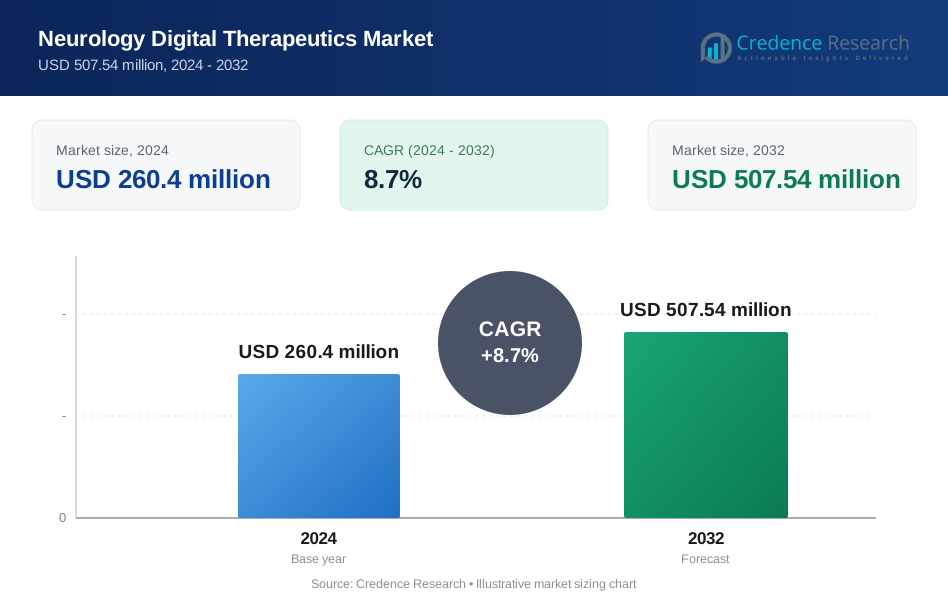
| Neurology Digital Therapeutics Market Size 2024 | USD 260.4 Million |
| Neurology Digital Therapeutics Market, CAGR | 8.7% |
| Neurology Digital Therapeutics Market Size 2032 | USD 507.54 Million |
Market Overview:
The Neurology Digital Therapeutics Market is projected to grow from USD 260.4 million in 2024 to an estimated USD 507.54 million by 2032, with a compound annual growth rate (CAGR) of 8.7% from 2024 to 2032.
Key drivers fueling the growth of the neurology digital therapeutics market include the rapid advancements in digital health technologies, which enable the development of effective, cost-efficient, and non-invasive treatments for neurological disorders such as Alzheimer's disease, Parkinson's disease, epilepsy, and depression. Moreover, the growing demand for remote patient monitoring, particularly in the wake of the COVID-19 pandemic, has accelerated the adoption of digital therapeutics. The ability to offer continuous monitoring, personalized treatment plans, and improved patient engagement has made these digital solutions highly attractive for both patients and healthcare providers. Additionally, increasing healthcare expenditure and the rising emphasis on mental health care contribute to the market’s growth.
From a regional perspective, North America dominates the neurology digital therapeutics market, owing to the high adoption of advanced healthcare technologies, a large patient population, and significant investments in healthcare innovation. Europe follows closely, driven by strong government initiatives aimed at supporting digital health solutions. Meanwhile, the Asia-Pacific region is anticipated to witness the highest growth during the forecast period due to improving healthcare infrastructure, increasing awareness about neurological diseases, and the growing acceptance of digital health solutions in emerging markets.
Market Drivers:
Advancements in Digital Health Technologies:
The continuous advancements in digital health technologies are a major driver for the growth of the neurology digital therapeutics market. Innovations such as mobile applications, wearable devices, and AI-driven platforms allow for the development of effective treatments that are both cost-efficient and minimally invasive. For instance, a study found that seven out of 10 patients using mobile health applications reported improved adherence to treatment plans. These technologies enable real-time monitoring, personalized care plans, and the collection of valuable data, which helps healthcare professionals make informed decisions for better patient outcomes. The integration of AI and machine learning enhances the predictive capabilities of these platforms, improving treatment precision for neurological disorders like Parkinson’s disease, Alzheimer's disease, and epilepsy.
Increasing Prevalence of Neurological Disorders:
The rising global prevalence of neurological disorders is another significant factor propelling market growth. With an aging population and increased awareness of mental health issues, diseases such as dementia, depression, and epilepsy are becoming more widespread. For instance, digital therapeutics like CogniFit present a promising solution to address these conditions by offering personalized, at-home treatment options that reduce the burden on healthcare systems. Digital therapeutics present a promising solution to address these conditions by offering personalized, at-home treatment options that reduce the burden on healthcare systems. As the demand for tailored treatments grows, digital solutions are emerging as a vital part of managing chronic neurological diseases and improving patients' quality of life.
Demand for Remote Patient Monitoring:
The demand for remote patient monitoring has been accelerated by the COVID-19 pandemic, driving growth in the neurology digital therapeutics market. Remote monitoring platforms enable healthcare providers to track patient conditions in real time, ensuring continuous care without the need for frequent in-person visits. This trend has become particularly important for patients with chronic neurological conditions, as it enhances patient engagement, promotes better adherence to treatment regimens, and reduces healthcare costs. For instance, a study revealed that remote patient monitoring can lead to a reduction in emergency room visits by about one in four cases. The convenience of remote monitoring is reshaping how neurological diseases are managed, especially in underserved regions.
Government Support and Healthcare Investment:
Government initiatives and increased investments in healthcare are pivotal drivers of market growth. Various governments are providing financial support for the development and implementation of digital health solutions, including regulatory approvals and reimbursement policies. In addition, private investments in digital health startups have surged, further propelling innovation. These supportive frameworks encourage the development and adoption of neurology-focused digital therapeutics, contributing to the overall expansion of the market. For instance, the U.S. government’s Digital Health Innovation Action Plan aims to streamline the regulatory pathway for digital health technologies.
Market Trends:
Integration of Artificial Intelligence and Machine Learning:
A significant trend in the neurology digital therapeutics market is the increasing integration of Artificial Intelligence (AI) and Machine Learning (ML) technologies. These advanced technologies enable the creation of highly personalized treatment plans and improve diagnostic accuracy by analyzing large sets of patient data. For instance, AI algorithms developed by Google's DeepMind have been able to predict disease progression in Alzheimer's with significant accuracy.AI algorithms can identify patterns and predict disease progression, making digital therapeutics more effective in managing neurological conditions such as Alzheimer's, epilepsy, and multiple sclerosis. As AI continues to evolve, it is expected to further enhance the capabilities of neurology digital therapeutics, leading to more precise and adaptive interventions.
Telehealth and Remote Monitoring Adoption:
Telehealth and remote patient monitoring are rapidly gaining traction within the neurology digital therapeutics market. The COVID-19 pandemic accelerated the adoption of telemedicine, and the trend continues to thrive as patients and healthcare providers embrace the convenience of remote consultations and monitoring. Remote monitoring tools, including wearable devices and mobile apps, allow continuous tracking of neurological symptoms, offering real-time data to clinicians. For instance, devices like FitBit and apps like Neurotrack provide continuous data to help manage conditions. This helps optimize treatment regimens, ensuring better management of chronic neurological conditions and improving patient outcomes while reducing the need for frequent in-person visits.
Collaborations and Partnerships:
Collaborations between digital health companies, healthcare providers, and pharmaceutical companies are becoming a common trend in the neurology digital therapeutics market. These partnerships are fostering the development of integrated solutions that combine digital therapeutics with traditional drug therapies to create more holistic treatment plans. For instance, Akili Interactive Labs has partnered with Pfizer to integrate digital therapeutics with traditional treatments for ADHD. By combining the strengths of both sectors, these collaborations aim to improve the effectiveness of treatments, streamline healthcare delivery, and expand access to digital therapeutic solutions across various regions. Additionally, such partnerships facilitate the rapid development of evidence-based digital solutions.
Regulatory Advancements and Reimbursement Models:
Another notable trend is the increasing support from regulatory bodies and the development of reimbursement models for digital therapeutics. Regulatory authorities, including the FDA, are establishing clearer guidelines for the approval of digital therapeutics, which enhances market confidence. For example, the FDA has recently approved Pear Therapeutics' reSET-O for the treatment of opioid use disorder. Furthermore, as more healthcare systems recognize the value of digital health solutions, reimbursement policies are evolving to include digital therapeutics as part of covered treatment options. This growing regulatory clarity and financial backing are helping accelerate the adoption of neurology-focused digital therapeutics worldwide.
Market Challenges Analysis:
Regulatory and Compliance Barriers:
One of the key challenges facing the neurology digital therapeutics market is the regulatory and compliance hurdles that companies must navigate. While digital therapeutics offer significant potential, obtaining regulatory approval from authorities such as the FDA can be complex and time-consuming. These solutions must meet stringent safety and efficacy standards, which can delay market entry. Additionally, as the digital therapeutics landscape evolves rapidly, regulators must continuously adapt their guidelines to accommodate new technologies, creating uncertainty for developers. The lack of clear and uniform regulatory frameworks across different regions further complicates the process for companies looking to expand globally.
Data Security and Privacy Concerns:
Data security and privacy concerns are another significant challenge for the neurology digital therapeutics market. These solutions often collect sensitive patient data, including health conditions, medication adherence, and lifestyle information, which are critical for providing personalized treatments. As a result, ensuring the protection of this data from breaches and cyberattacks is paramount. Compliance with stringent data privacy regulations, such as the General Data Protection Regulation (GDPR) in Europe or HIPAA in the United States, adds another layer of complexity. Addressing these concerns while maintaining patient trust is essential for the widespread adoption of digital therapeutics.
Limited Reimbursement and Insurance Coverage:
A major challenge for the neurology digital therapeutics market is the limited reimbursement and insurance coverage for these solutions. Although digital health technologies are increasingly recognized as valuable tools in managing neurological conditions, many healthcare systems and insurers have yet to fully incorporate them into reimbursement models. This lack of financial backing makes it more difficult for patients to access digital therapeutics, especially in regions with less robust healthcare infrastructure. Until reimbursement policies evolve to cover these technologies, market growth may remain constrained.
Patient and Healthcare Provider Adoption:
The adoption of neurology digital therapeutics by patients and healthcare providers remains a significant challenge. Many patients may be hesitant to embrace new technologies, particularly older populations who are less familiar with digital health solutions. Similarly, healthcare providers may be reluctant to integrate digital therapeutics into their practices without sufficient clinical evidence supporting their effectiveness. Overcoming these barriers requires strong educational efforts, robust clinical trials, and proven real-world outcomes to build confidence in the efficacy and safety of digital therapeutics.
Market Segmentation Analysis:
By Indication The neurology digital therapeutics market is primarily segmented by indication, with key categories including Alzheimer's disease, Parkinson's disease, epilepsy, depression, and others. Alzheimer's and Parkinson's diseases represent significant shares of the market due to the rising global prevalence of these neurodegenerative conditions. Digital therapeutics solutions tailored for cognitive decline, motor function management, and mood stabilization are driving advancements in these areas. Epilepsy and depression are also major segments, with increasing adoption of mobile apps and wearables that assist in seizure management and mental health care.
By Product Type The market can also be segmented by product type, which includes software-based solutions, device-based solutions, and combination therapies. Software-based solutions such as mobile applications and telemedicine platforms are becoming increasingly popular due to their accessibility and cost-effectiveness. Device-based solutions, including wearable devices for monitoring neurological symptoms, are gaining traction due to their real-time data collection capabilities. Combination therapies, which integrate both software and devices, are expected to see significant growth, providing a more comprehensive approach to managing neurological conditions.
By End User The end-user segment of the neurology digital therapeutics market includes hospitals, clinics, home care settings, and research institutions. Hospitals and clinics are the leading users of these technologies, as they integrate digital therapeutics into patient management strategies. However, home care settings are increasingly adopting these solutions, driven by patient demand for at-home monitoring and management of chronic neurological diseases.
Segmentations:
By Indication
- Alzheimer's Disease
- Parkinson's Disease
- Epilepsy
- Depression
- Multiple Sclerosis
- Migraine
- Stroke
- Others
By Product Type
- Software-based Solutions
-
- Mobile Applications
- Telemedicine Platforms
- Cognitive Training Software
- Device-based Solutions
- Wearable Devices
- Implantable Devices
- Neuromodulation Devices
- Combination Therapies
-
- Software + Wearables
- Software + Neuromodulation Devices
By End User
- Hospitals
-
- Neurology Departments
- Rehabilitation Centers
- Clinics
-
- Neurology Clinics
- Mental Health Clinics
- Home Care Settings
-
- At-home Monitoring Devices
- Telehealth Platforms
- Research Institutions
-
- Academic Research
- Clinical Trials
By Region
- North America
-
- United States
- Canada
- Europe
-
- Germany
- United Kingdom
- France
- Spain
- Italy
- Asia-Pacific
-
- China
- India
- Japan
- Australia
- South Korea
- Latin America
-
- Brazil
- Mexico
- Argentina
- Middle East & Africa
-
- GCC Countries
- South Africa
- Rest of MEA
Regional Analysis:
North America
North America dominates the global neurology digital therapeutics market, holding the largest market share of approximately 40-45%. The region benefits from advanced healthcare infrastructure, a high adoption rate of digital health technologies, and substantial investments in digital therapeutics innovation. The United States is the primary contributor, with a growing demand for personalized treatments for neurological diseases like Alzheimer's and Parkinson's. Additionally, government support, regulatory clarity from the FDA, and favorable reimbursement policies drive the market in this region. The increasing prevalence of neurological disorders and mental health conditions further accelerates the adoption of digital therapeutics in North America.
Europe
Europe holds the second-largest market share, accounting for approximately 25-30% of the global neurology digital therapeutics market. Key markets include Germany, the United Kingdom, and France, where strong healthcare systems and ongoing initiatives to integrate digital health solutions into mainstream healthcare are evident. The European market is driven by regulatory support from agencies such as the European Medicines Agency (EMA), as well as growing investments in digital therapeutics. As Europe faces an aging population and rising neurological disease incidence, demand for innovative and efficient management solutions is escalating, contributing to the market's growth.
Asia-Pacific
The Asia-Pacific region is expected to witness the highest growth rate in the neurology digital therapeutics market. This rapid expansion is driven by increasing healthcare awareness, rising disposable incomes, and significant improvements in healthcare infrastructure in countries such as China, India, Japan, and South Korea. The region is expected to account for 20-23% of the global market share as the demand for digital health solutions, including remote monitoring and personalized treatment options, grows due to the large population suffering from neurological conditions. As regulatory frameworks evolve and the acceptance of digital therapeutics increases, Asia-Pacific is poised to become a key player in the market.
Latin America and Middle East & Africa Latin America and the Middle East & Africa represent smaller, but emerging markets for neurology digital therapeutics, collectively accounting for approximately 10-15% of the global market. In these regions, there is a growing awareness of neurological diseases and the potential of digital therapeutics to address them. However, market penetration is slower due to limited healthcare infrastructure and regulatory challenges. Despite these hurdles, government initiatives and growing healthcare investments in countries such as Brazil, Mexico, and the UAE are fostering growth, making these regions important for future market expansion.
Key Player Analysis:
- Omada Health
- Livongo Health
- Big Health
- Akili Interactive Labs
- Pear Therapeutics
- Proteus Digital Health
- Noom
- Mango Health
- Kaia Health
Competitive Analysis:
The neurology digital therapeutics market is highly competitive, with several key players leading the development and adoption of innovative solutions. Leading companies in the market include Pear Therapeutics, Akili Interactive, and Big Health, which focus on providing clinically validated digital therapeutics for neurological and mental health conditions. These players are actively involved in partnerships, collaborations, and product innovations to expand their market presence. For instance, Pear Therapeutics has partnered with Novartis to develop digital therapeutics for schizophrenia and multiple sclerosis. Additionally, the entry of technology-driven companies, such as Apple and Fitbit, has further intensified competition by integrating wearable devices and software solutions for chronic disease management. To maintain a competitive edge, companies are focusing on personalized treatment solutions, leveraging AI, machine learning, and real-time monitoring to enhance the effectiveness of digital therapeutics. Furthermore, regulatory approvals and reimbursement support play a critical role in determining market positioning. The competitive landscape is expected to evolve as both established and emerging players invest in expanding their portfolios and addressing the growing demand for digital health solutions.
Recent Developments:
- In February 2024, Better Therapeutics received FDA Breakthrough Device Designation for their Cognitive Behavioral Therapy (CBT) platform.
- In 2024, Livongo Health Maintains a significant position as one of the key market leaders capturing part of the 38.7% global market share
- In 2024, Omada Health Continues to operate as one of the dominant players in the neurology digital therapeutics market.
- In 2024, Akili Interactive Labs Continues to develop captivating video game experiences as digital medicines for cognitive impairments.
Market Concentration & Characteristics:
The neurology digital therapeutics market is moderately concentrated, with a mix of established players and emerging startups shaping its growth. Major companies such as Pear Therapeutics, Akili Interactive, and Big Health dominate the market, focusing on developing evidence-based, clinically validated solutions for neurological and mental health conditions. These key players invest heavily in research, clinical trials, and regulatory approvals to ensure the efficacy and safety of their products. However, the market also sees innovation from smaller, agile companies that leverage new technologies like AI and machine learning to provide personalized treatment options. The competitive dynamics are driven by technological advancements, regulatory challenges, and the evolving demand for personalized, non-invasive therapies. As the market continues to expand, it is expected that collaboration between pharmaceutical companies, digital health providers, and healthcare systems will become more common, driving further consolidation and development of integrated solutions.
Report Coverage:
The research report offers an in-depth analysis based on Indication and Product Type. It details leading market players, providing an overview of their business, product offerings, investments, revenue streams, and key applications. Additionally, the report includes insights into the competitive environment, SWOT analysis, current market trends, as well as the primary drivers and constraints. Furthermore, it discusses various factors that have driven market expansion in recent years. The report also explores market dynamics, regulatory scenarios, and technological advancements that are shaping the industry. It assesses the impact of external factors and global economic changes on market growth. Lastly, it provides strategic recommendations for new entrants and established companies to navigate the complexities of the market.
Future Outlook:
- The neurology digital therapeutics market is expected to see continued growth as technological advancements drive innovation in personalized treatment solutions.
- Integration of AI, machine learning, and big data analytics will play a pivotal role in enhancing the precision and effectiveness of digital therapeutics for neurological conditions.
- Regulatory bodies are likely to develop clearer frameworks, accelerating the approval process for digital health solutions and increasing market accessibility.
- Increasing demand for remote patient monitoring will lead to the growth of wearables and mobile applications designed to manage chronic neurological diseases.
- Expansion of reimbursement models and government support will make digital therapeutics more accessible to patients and healthcare providers.
- Collaboration between pharmaceutical companies and digital health startups will increase, resulting in more comprehensive, integrated solutions for neurological disorders.
- The growing prevalence of neurological diseases, particularly in aging populations, will drive the need for scalable, cost-effective treatment options.
- Telehealth and virtual care adoption will continue to grow, providing new opportunities for digital therapeutics to reach underserved populations.
- Market players will increasingly focus on developing evidence-based solutions with robust clinical trial data to establish trust and ensure regulatory compliance.
- As healthcare systems shift towards more patient-centered care, digital therapeutics will become a crucial part of long-term disease management strategies.
Request a Free Sample
Fill in your details and we'll send you a free sample report.
- Sample data tables & charts
- Research methodology
Need a Custom Version of This Report?
Tailor the scope, geography, or segments to your exact requirements.
- Custom geography or segment scope
- Direct access to our analyst team
Frequently Asked Questions
What is the projected growth of the Neurology Digital Therapeutics Market?
What are the key drivers of growth in the Neurology Digital Therapeutics Market?
Which neurological conditions are being targeted by digital therapeutics?
Which region is leading the Neurology Digital Therapeutics Market?
Which region is expected to see the highest growth in the Neurology Digital Therapeutics Market?
Table of Content
Chapter 1. Report Introduction
- 1.1 Report Description & Purpose
- 1.1.1 Report Title & Market Definition
- 1.1.2 Unique Selling Propositions (USP) & Key Differentiators
- 1.1.3 Value Proposition for Stakeholders
- 1.2 Research Objectives
- 1.2.1 Market Sizing Objectives (Volume & Revenue) (Volume Where Applicable)
- 1.2.2 Segmentation Objectives
- 1.2.3 Competitive Intelligence Objectives
- 1.2.4 Forecast & Scenario Objectives
- 1.3 Report Scope
- 1.3.1 Neurology Digital Therapeutics Scope – Segments & Subsegments Covered
- 1.3.2 Geographic Scope – Regions & Countries Covered
- 1.3.3 Historical Period, Base Year & Forecast Period (2024; forecast to 2032)
- 1.3.4 Inclusions & Exclusions
- 1.4 Industry Classification & Applicable Codes
- 1.5 Currency, Measurement Units & Valuation Basis
- 1.6 Target Stakeholders
- 1.7 Limitations & Assumptions
Chapter 2. Executive Summary
- 2.1 Global Neurology Digital Therapeutics Market Snapshot
- 2.1.1 Market Size – Historical (2024) & Forecast (2024-2032) (2024: USD 260.4 million → 2032: USD 507.54 million)
- 2.1.2 Volume & Revenue – Global Totals (Volume Where Applicable)
- 2.1.3 Key Market Highlights – Top Five Facts
- 2.2 Neurology Digital Therapeutics Market Segmentation Snapshot
- 2.2.1 Market Split by Region – 2024 vs. 2032
- 2.3 Competitive Snapshot
- 2.3.1 Top 10 Players by Revenue Share – 2024
- 2.3.2 Top 10 Players by Volume Share – 2024 (Volume Where Applicable)
- 2.3.3 Recent Strategic Developments (18-Month Summary)
- 2.4 Key Investment Highlights & Strategic Conclusions
Chapter 3. Neurology Digital Therapeutics Market Dynamics & Industry Analysis
- 3.1 Market Overview & Context
- 3.1.1 Neurology Digital Therapeutics Market Position in the Broader Industry Value Chain
- 3.1.2 Demand Structure & Purchasing Dynamics
- 3.1.3 Market Maturity & Development Stage by Region
- 3.2 Neurology Digital Therapeutics Market Drivers
- 3.3 Neurology Digital Therapeutics Market Restraints & Challenges
- 3.4 Neurology Digital Therapeutics Market Opportunities
- 3.5 Porter's Five Forces Analysis
- 3.5.1 Threat of New Entrants
- 3.5.2 Bargaining Power of Suppliers
- 3.5.3 Bargaining Power of Buyers
- 3.5.4 Threat of Substitutes
- 3.5.5 Competitive Rivalry – Intensity Assessment
- 3.6 Neurology Digital Therapeutics Value Chain Analysis
- 3.6.1 Upstream – Key Inputs, Resources & Suppliers
- 3.6.1.1 Key Input/Resource 1
- 3.6.1.2 Key Input/Resource 2
- 3.6.1.3 Key Input/Resource 3
- 3.6.2 Midstream – Core Operations & Value Creation
- 3.6.2.1 Operating Model & Process Overview
- 3.6.2.2 Key Operating Locations & Capabilities by Company
- 3.6.3 Downstream – Market Channels & End Users
- 3.6.3.1 Direct Sales & Customer Engagement Channels
- 3.6.3.2 Indirect Sales, Intermediaries & Partner Channels
- 3.6.4 Value Chain Profitability Analysis
- 3.6.1 Upstream – Key Inputs, Resources & Suppliers
- 3.7 PESTEL Analysis
- 3.7.1 Political Factors
- 3.7.2 Economic Factors
- 3.7.3 Social Factors
- 3.7.4 Technological Factors
- 3.7.5 Environmental Factors
- 3.7.6 Legal Factors
- 3.8 Neurology Digital Therapeutics Supply Chain Analysis
- 3.8.1 Critical Input & Resource Availability Risk Assessment
- 3.8.2 Supplier & Operational Concentration Risk (Geographic Exposure)
- 3.8.3 Supply & Service Disruption Impact Analysis
- 3.9 Regulatory & Policy Landscape
Note: The regulatory and policy landscape section covers regulations based on their applicability to the market, Neurology Digital Therapeutics category, geography, and scope of the study. Only regulatory frameworks with a material impact on operations, compliance, trade, sustainability, or market access are analyzed in detail.
Chapter 4. Key Investment Pockets & Opportunity Analysis
- 4.1 Neurology Digital Therapeutics Market Attractiveness Analysis
- 4.1.1 By Region – Investment Attractiveness Matrix (Market Size × CAGR)
- 4.2 Absolute Revenue Growth Opportunity
- 4.2.1 By Region – Absolute Revenue Growth Through 2032
- 4.3 Incremental Demand Opportunity
- 4.3.1 By Region – Incremental Demand Through 2032
- 4.3.2 Segment – Incremental Demand
- 4.4 Emerging Submarket Opportunity Deep Dive (Subject to Applicability)
- 4.5 Priority Market Opportunity Scorecards
- 4.5.1 United States
- 4.5.2 Europe
- 4.5.3 Asia
- 4.5.4 Middle East & Africa
Note: Priority market opportunity scorecards reflect the geographic scope and strategic relevance of the study. Listed markets are indicative and may be adapted to the industry.
Chapter 5. Neurology Digital Therapeutics Cross-Border Trade & Market Access Analysis
- 5.1 International Trade & Cross-Border Activity Overview
- 5.1.1 Global Export Value by Country (2024)
- 5.1.2 Global Export Volume by Country (2024) (Volume Where Applicable)
- 5.1.3 Global Import Value by Country (2024)
- 5.1.4 Global Import Volume by Country (2024) (Volume Where Applicable)
- 5.1.5 Net Trade Balance by Country (2024)
- 5.2 Export Analysis – Segment
- 5.2.1 Category 1 (Applicable Classification Code)
- 5.2.2 Category 2 (Applicable Classification Code)
- 5.2.3 Category 3 (Applicable Classification Code)
- 5.2.4 Category 4 (Applicable Classification Code)
- 5.2.5 Category 5 (Applicable Classification Code)
- 5.3 Import Analysis – Segment
- 5.3.1 Category 1 (Applicable Classification Code)
- 5.3.2 Category 2 (Applicable Classification Code)
- 5.3.3 Category 3 (Applicable Classification Code)
- 5.3.4 Category 4 (Applicable Classification Code)
- 5.3.5 Category 5 (Applicable Classification Code)
- 5.4 Cross-Border Pricing & Transaction Benchmarks
- 5.4.1 Export Pricing – Segment & Country
- 5.4.2 Import Pricing – Segment & Source Country
- 5.4.3 Price Trends (2024)
- 5.5 Key Cross-Border Trade & Delivery Routes
- 5.5.1 Cross-Border Trade/Delivery Route 1
- 5.5.2 Cross-Border Trade/Delivery Route 2
- 5.5.3 Cross-Border Trade/Delivery Route 3
- 5.5.4 Cross-Border Trade/Delivery Route 4
- 5.5.5 Cross-Border Trade/Delivery Route 5
- 5.6 Trade Policy & Market Access Impact Assessment
- 5.6.1 Tariff & Non-Tariff Barriers
- 5.6.2 Regional Trade & Economic Integration Frameworks
- 5.6.3 Bilateral & Multilateral Trade Agreements
- 5.6.4 Cross-Border Operating, Licensing & Localization Requirements
Note: This chapter applies where cross-border trade or delivery is relevant to Neurology Digital Therapeutics. Goods, services, and digital offerings are assessed using applicable classifications and transaction measures. Import-export volumes, trade balances, and route analyses are included only where meaningful to the market.
Chapter 6. Competitive Landscape & Company Benchmarking
- 6.1 Neurology Digital Therapeutics Market Concentration & Structure
- 6.1.1 Herfindahl-Hirschman Index (HHI) – vs. 2024
- 6.1.2 Leading, Mid-Sized & Emerging Player Structure
- 6.1.3 Global, Regional & Local Player Dynamics
- 6.2 Neurology Digital Therapeutics Market Share Analysis – 2024
- 6.2.1 Global Revenue Share by Company
- 6.2.2 Global Volume Share by Company (Volume Where Applicable)
- 6.2.3 Regional Revenue Share
- 6.2.4 Market Share Evolution ( vs. 2024)
- 6.2.5 Company Market Share by Key Segment
- 6.2.6 Company Market Share by Customer Group
- 6.3 Operating Scale, Capacity & Infrastructure Analysis
- 6.3.1 Global Operating Scale & Supply Capacity
- 6.3.2 Resource Utilization & Operating Efficiency
- 6.3.3 Output, Service Delivery & Activity Metrics
- 6.3.4 Operating Footprint & Infrastructure Map
- 6.3.5 Planned Operational & Capacity Expansion
- 6.4 Neurology Digital Therapeutics Competitive Benchmarking Matrix
- 6.4.1 Revenue, Growth, Profitability & Operating Metric Comparison
- 6.4.2 Channel Revenue Mix
- 6.4.3 Geographic Revenue Exposure
- 6.4.4 R&D Intensity
- 6.4.5 Sustainability Maturity
- 6.5 Strategic Developments in Neurology Digital Therapeutics (Last 24 Months)
- 6.5.1 Mergers, Acquisitions & Divestments
- 6.5.2 New Products, Services & Solutions in Neurology Digital Therapeutics
- 6.5.3 Operational & Infrastructure Expansions
- 6.5.4 Strategic Alliances, Joint Ventures & Partnerships
- 6.5.5 Distribution Expansion & Market Entry
- 6.5.6 Sustainability & ESG Initiatives
- 6.6 Competitive Strategy Mapping
- 6.6.1 Leader, Challenger, Follower & Niche Classification
- 6.6.2 Pricing Strategy Comparison
- 6.6.3 Channel Strategy Matrix
Note: Strategic developments are included based on their materiality and the availability of reliable information.
Chapter 7. Global Neurology Digital Therapeutics Market – By Sales & Delivery Channel
- 7.1 Segment Overview
- 7.1.1 Volume & Revenue Split by Channel (2024 & 2032) (Volume Where Applicable)
- 7.1.2 Channel Mix Evolution (2024-2032)
Chapter 8. Regional Market Analysis – Global Overview
- 8.1 Global Regional Overview
- 8.1.1 Regional Volume Share (Volume Where Applicable)
- 8.1.2 Regional Revenue Share
- 8.1.3 Regional Volume by Region (Volume Where Applicable)
- 8.1.4 Regional Revenue by Region
- 8.1.5 Regional Forecast Through 2032
- 8.2 Cross-Regional Segment Analysis
- 8.2.1 By Sales & Delivery Channel
- 8.2.2 By Competitive Positioning & Price Tier
Chapter 9. North America Neurology Digital Therapeutics Market
- 9.1 United States
- 9.2 Canada
- 9.3 Mexico
Chapter 10. Europe Neurology Digital Therapeutics Market
- 10.1 Germany
- 10.2 France
- 10.3 Italy
- 10.4 United Kingdom
- 10.5 Spain
- 10.6 Poland
- 10.7 Russia
- 10.8 Netherlands
- 10.9 Belgium
- 10.10 Sweden
- 10.11 Denmark
- 10.12 Norway
- 10.13 Rest of Europe
Chapter 11. Asia Pacific Neurology Digital Therapeutics Market
- 11.1 China
- 11.2 India
- 11.3 Japan
- 11.4 South Korea
- 11.5 Thailand
- 11.6 Indonesia
- 11.7 Vietnam
- 11.8 Malaysia
- 11.9 Australia
- 11.10 Rest of Asia Pacific
Chapter 12. Latin America Neurology Digital Therapeutics Market
- 12.1 Brazil
- 12.2 Argentina
- 12.3 Colombia
- 12.4 Chile
- 12.5 Rest of Latin America
Chapter 13. Middle East Neurology Digital Therapeutics Market
- 13.1 Saudi Arabia
- 13.2 United Arab Emirates
- 13.3 Turkey
- 13.4 Israel
- 13.5 Iran
- 13.6 Rest of the Middle East
Chapter 14. Africa Neurology Digital Therapeutics Market
- 14.1 South Africa
- 14.2 Egypt
- 14.3 Nigeria
- 14.4 Morocco
- 14.5 Rest of Africa
Chapter 15. Neurology Digital Therapeutics Company Profiles
- 15.1 [Company 01]
- 15.1.1 Company Overview
- 15.1.2 Key Management Personnel
- 15.1.3 Products & Services Portfolio
- 15.1.4 Financial Performance
- 15.1.5 Key Market Focus & Geographic Presence
- 15.1.6 Recent Developments & Strategic Initiatives
Note: The company profile list is preliminary and may change based on research findings, market developments, data availability, and client requirements.
Chapter 16. Appendices
- Appendix A – List of Abbreviations & Acronyms
- Appendix B – Industry Classification Code Reference – Full Series
- Appendix C – Supply, Output & Operating Capacity Data Tables
- Appendix D – End-Use & Demand Base Tables
- Appendix E – Demand, Adoption & Usage Assumptions
- Appendix F – Pricing & Revenue Metric Reference Tables
- Appendix G – Company Operations & Infrastructure Database
- Appendix H – Cross-Border Trade & Activity Data Tables (Where Applicable)
- Appendix I – Regulatory Summary Tables
- Appendix J – Primary Research Participant List (Anonymized)
- Appendix K – Primary Research Questionnaire Framework
- Appendix L – Data Sources & Bibliography
- Appendix M – Market Size Divergence & Source Comparison
Chapter 17. Research Methodology
- 17.1 Research Framework & Philosophy
- 17.2 Secondary Research – Sources, Hierarchy & Data Extraction
- 17.3 Data Modeling – Bottom-Up & Top-Down Market Sizing
- 17.4 Primary Research – Stakeholder Framework, LOI & Sample Sizes
- 17.5 Forecast Methodology – Regression, Scenario & Sensitivity Analysis
- 17.6 Quality Control – Four-Layer Validation Framework
- 17.7 Limitations & Standard Assumptions
- 17.8 Disclaimer
