
| REPORT ATTRIBUTE | DETAILS |
|---|---|
| Historical Period | 2020-2023 |
| Base Year | 2024 |
| Forecast Period | 2025-2032 |
| Neurological Disorder Market Size 2024 | USD 54.39 billion |
| Neurological Disorder Market, CAGR | 6.47% |
| Neurological Disorder Market Size 2032 | USD 93.09 billion |
Market Overview
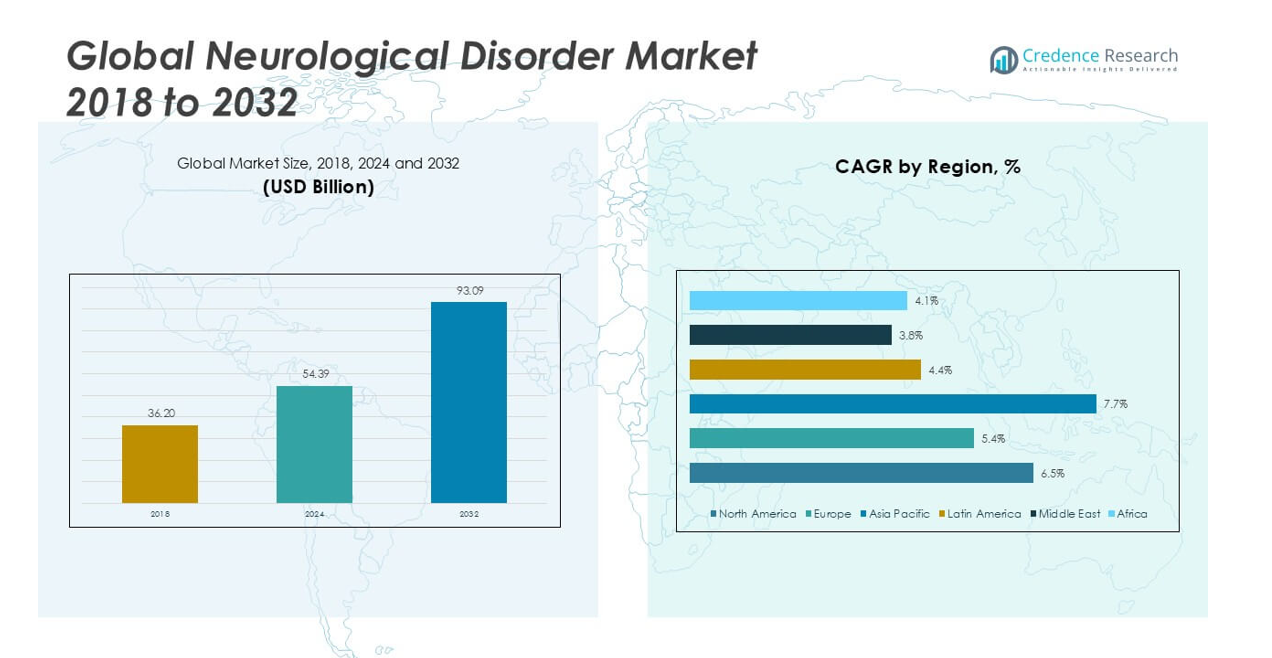
The Neurological Disorder Market size was valued at USD 36.20 billion in 2018, reached USD 54.39 billion in 2024, and is anticipated to reach USD 93.09 billion by 2032, at a CAGR of 6.47% during the forecast period.
The Neurological Disorder Market is experiencing robust growth due to the rising prevalence of neurological conditions such as Alzheimer’s disease, Parkinson’s disease, epilepsy, and multiple sclerosis. Increasing geriatric population, advances in diagnostic technologies, and greater awareness of neurological health are fueling demand for innovative therapies and early intervention solutions. Pharmaceutical companies are investing heavily in research and development to introduce targeted treatments and biologics, while improved access to healthcare is expanding patient reach in emerging economies. Market expansion is further supported by growing government initiatives and funding for neurological research. At the same time, trends such as personalized medicine, the adoption of digital health platforms, and the integration of artificial intelligence in diagnostics are enhancing the precision and efficiency of neurological care. Collectively, these drivers and trends are shaping a dynamic market landscape focused on better patient outcomes and sustained innovation.
The Neurological Disorder Market exhibits strong regional diversity, with North America, Europe, and Asia Pacific leading in terms of technological innovation, research activity, and healthcare infrastructure. North America remains at the forefront due to high disease awareness, established reimbursement systems, and early adoption of advanced therapies. Europe demonstrates steady growth, supported by government-funded research and a growing elderly population. Asia Pacific is emerging rapidly, driven by rising healthcare investment, expanding access to neurological care, and increasing patient populations in countries such as China, Japan, and India. Across all regions, the market benefits from a robust pipeline of new drug developments and digital health solutions. Key players such as AbbVie Inc., Biogen Idec, and F. Hoffmann-La Roche Ltd. play a pivotal role in shaping industry trends and advancing treatment options through significant research and strategic collaborations.
Market Insights
- The Neurological Disorder Market was valued at USD 54.39 billion in 2024 and is projected to reach USD 93.09 billion by 2032, registering a CAGR of 6.47% during the forecast period.
- Rising incidence of neurological conditions such as Alzheimer’s disease, Parkinson’s disease, and epilepsy is fueling demand for innovative therapies and early diagnosis.
- Advances in diagnostic imaging, biomarker research, and personalized medicine are reshaping the treatment landscape and enabling more effective, tailored interventions.
- Market leaders such as AbbVie Inc., Biogen Idec, and F. Hoffmann-La Roche Ltd. are driving competition through research investments, product launches, and strategic collaborations.
- High costs of drug development, stringent regulatory hurdles, and limited access to specialized neurological care in some regions are restraining overall market growth.
- North America leads in market size due to advanced healthcare infrastructure and rapid adoption of new therapies, while Asia Pacific shows the fastest growth supported by increasing healthcare investments and expanding patient access.
- The market continues to evolve through a strong focus on digital health solutions, telemedicine, and wearable technologies, which are enhancing disease management and supporting broader patient engagement worldwide.
Market Drivers
Growing Prevalence of Neurological Disorders Drives Market Demand
The rising incidence of neurological disorders is a primary driver of the Neurological Disorder Market. Neurodegenerative conditions such as Alzheimer’s disease, Parkinson’s disease, epilepsy, and multiple sclerosis affect millions worldwide, with cases projected to climb due to aging populations and lifestyle changes. The increasing burden of chronic neurological diseases has heightened the need for timely diagnosis and effective treatment options. This trend is prompting healthcare providers and governments to invest in awareness campaigns and patient screening initiatives. The market is responding with a surge in demand for advanced therapeutic solutions, improved diagnostics, and long-term care facilities. These developments are fueling growth across both developed and emerging regions. The continuous escalation in disease prevalence underscores the urgency for innovation within the sector.
- For instance, Biogen’s Aduhelm received FDA approval in 2021, marking the first new Alzheimer’s treatment in nearly two decades and signaling a major step forward in disease-modifying therapy.
Advancements in Diagnostic Technologies and Therapeutic Innovation Accelerate Growth
Recent progress in diagnostic imaging, biomarkers, and genomics has significantly enhanced the detection and management of neurological disorders. The Neurological Disorder Market is benefitting from the deployment of high-resolution MRI, PET scans, and next-generation sequencing, which enable earlier and more accurate diagnoses. Pharmaceutical and biotechnology companies are investing in the development of novel drugs and targeted biologics that address unmet clinical needs. It is also seeing increased adoption of disease-modifying therapies and minimally invasive procedures. These technological and therapeutic advancements improve patient outcomes and encourage early intervention. Healthcare systems are integrating these innovations to streamline diagnosis and optimize care delivery. Continuous research and development remain central to maintaining this momentum in market growth.
- For instance, Siemens Healthineers launched the MAGNETOM Free.Max MRI scanner, which offers 80 cm bore size and enables whole-body scans with reduced power consumption and improved diagnostic accuracy.
Increasing Healthcare Expenditure and Access Expand Market Reach
The rise in global healthcare spending supports market expansion by improving access to neurological care and treatments. The Neurological Disorder Market benefits from government policies and insurance coverage that reduce out-of-pocket costs for patients. Broader access to medical facilities and specialized centers ensures more individuals receive timely and appropriate interventions. Emerging markets are prioritizing healthcare infrastructure upgrades, bringing advanced therapies and diagnostics to underserved populations. It is reaching new patient segments as awareness and affordability improve. International collaborations and public-private partnerships further accelerate access to innovative solutions. The trend toward universal healthcare is expected to sustain long-term market growth.
Focus on Research Funding and Collaborative Initiatives Stimulates Innovation
Significant public and private investments in neurological research have catalyzed breakthroughs in disease understanding and treatment. The Neurological Disorder Market is witnessing increased funding from governments, foundations, and industry players aimed at discovering new therapies and diagnostic tools. Collaborative research networks are facilitating data sharing and accelerating clinical trials. It is also seeing a focus on personalized medicine approaches, with advancements in genomics and precision diagnostics supporting tailored interventions. Multidisciplinary partnerships between academic institutions, research organizations, and industry accelerate the translation of laboratory findings to clinical applications. Sustained investment in innovation remains critical for meeting unmet needs and driving future growth.
Market Trends
Emphasis on Personalized Medicine and Precision Therapies Shapes Market Direction
Personalized medicine is emerging as a significant trend in the Neurological Disorder Market. Advances in genomics, molecular diagnostics, and patient profiling allow for tailored therapeutic strategies that address individual variations in disease progression and treatment response. It is seeing a shift toward precision therapies that maximize efficacy while minimizing side effects. Pharmaceutical firms are developing biologics, gene therapies, and targeted drugs designed to meet the specific needs of neurological patients. Clinical guidelines increasingly endorse biomarker-based diagnostics and individualized treatment plans. These developments enhance patient outcomes and support the market’s evolution toward more customized care. Demand for precision medicine is set to accelerate, reinforcing this trend.
- For instance, F. Hoffmann-La Roche’s Ocrevus, a monoclonal antibody, has treated over 250,000 patients with multiple sclerosis globally since its launch, exemplifying success in targeted biologic therapies.
Integration of Digital Health Technologies and Artificial Intelligence in Care Delivery
Digital health technologies are transforming diagnosis, monitoring, and management of neurological disorders. The Neurological Disorder Market is integrating artificial intelligence, telemedicine, and remote monitoring platforms to improve efficiency and patient engagement. It benefits from AI-driven tools that support early detection and risk assessment, reducing diagnostic delays and improving clinical decision-making. Telehealth solutions increase access to specialist care, especially in remote or underserved regions. Wearable devices and mobile apps enable continuous patient monitoring, facilitating timely intervention and better disease management. The adoption of digital tools is redefining standards for neurological care and increasing the value proposition for stakeholders.
- For instance, Medtronic’s Deep Brain Stimulation (DBS) platform uses AI-enabled programming and has been used in over 150,000 implantations worldwide to manage Parkinson’s disease symptoms.
Rising Focus on Early Diagnosis and Preventive Care Enhances Outcomes
Healthcare systems are prioritizing early diagnosis and preventive measures in the management of neurological disorders. The Neurological Disorder Market is seeing the implementation of mass screening programs, risk assessment tools, and community outreach to identify at-risk populations. It emphasizes proactive intervention strategies that can slow disease progression and improve long-term quality of life. Educational campaigns and primary care integration promote awareness and reduce stigma, encouraging more individuals to seek timely evaluation. Early intervention lowers treatment costs and reduces the burden on healthcare infrastructure. This trend supports a shift toward value-based care and improved patient outcomes.
Expansion of Collaborative Research and Strategic Partnerships Drives Innovation
Collaborative research and strategic partnerships play an increasingly vital role in driving market innovation. The Neurological Disorder Market is fostering alliances between academic institutions, industry, and healthcare providers to accelerate clinical research and product development. It supports the creation of multi-disciplinary research networks that share knowledge and resources, expediting the translation of scientific discoveries to practical therapies. Joint ventures and licensing agreements facilitate the commercialization of breakthrough treatments and digital health solutions. This trend promotes knowledge exchange, resource pooling, and collective progress in addressing complex neurological diseases. Expansion of partnerships continues to shape the future trajectory of the market.
Market Challenges Analysis
Complexity of Disease Mechanisms and Limited Treatment Options Restrict Market Growth
The complex nature of neurological disorders presents significant obstacles for effective treatment and drug development. Many conditions involve multifactorial disease mechanisms, making it difficult to identify definitive therapeutic targets. The Neurological Disorder Market faces limited success rates in clinical trials, high attrition rates, and slow progress in bringing new drugs to market. It contends with a lack of robust biomarkers, which hampers early diagnosis and precise patient stratification. High research and development costs place further strain on innovation efforts, while the intricate nature of the central nervous system complicates drug delivery and efficacy. These factors collectively limit the range of available treatment options and restrict market growth.
Regulatory Hurdles and Disparities in Healthcare Access Impede Market Expansion
Stringent regulatory requirements and varying approval timelines across regions create barriers for companies seeking to introduce new neurological therapies. The Neurological Disorder Market must navigate complex clinical protocols and rigorous safety standards to achieve commercialization. It faces challenges related to reimbursement policies, inconsistent insurance coverage, and limited patient affordability, especially in low- and middle-income countries. Disparities in access to specialized care and advanced diagnostic facilities further hinder equitable market growth. Shortages of trained healthcare professionals and insufficient patient education contribute to delays in diagnosis and treatment. These regulatory and access-related challenges impact the timely availability and uptake of innovative solutions.
Market Opportunities
Emergence of Advanced Therapies and Precision Medicine Unlocks Growth Potential
Breakthroughs in gene therapy, stem cell research, and biologics are opening new frontiers in neurological care. The Neurological Disorder Market has opportunities to develop highly targeted treatments that address root causes rather than symptoms. It benefits from advances in personalized medicine, where genetic and biomarker profiling enable tailored therapy selection and improved patient outcomes. Pharmaceutical companies can explore novel drug delivery systems and innovative formulations to enhance efficacy and minimize side effects. The integration of regenerative medicine presents significant potential to restore neural function and slow disease progression. These developments pave the way for transformative solutions and market expansion.
Expansion of Digital Health and Remote Care Solutions Broadens Market Reach
The rapid adoption of telemedicine, wearable devices, and AI-powered diagnostic platforms is revolutionizing neurological care delivery. The Neurological Disorder Market can capitalize on digital health innovations to increase access, especially in underserved or rural areas. It supports the deployment of remote monitoring and virtual consultation tools that streamline patient management and facilitate timely intervention. Collaboration with technology companies enables the creation of robust digital ecosystems that connect patients, providers, and caregivers. Growing acceptance of home-based care and real-time data collection drives improved disease management and adherence. These opportunities create pathways for sustainable growth and broader patient impact.
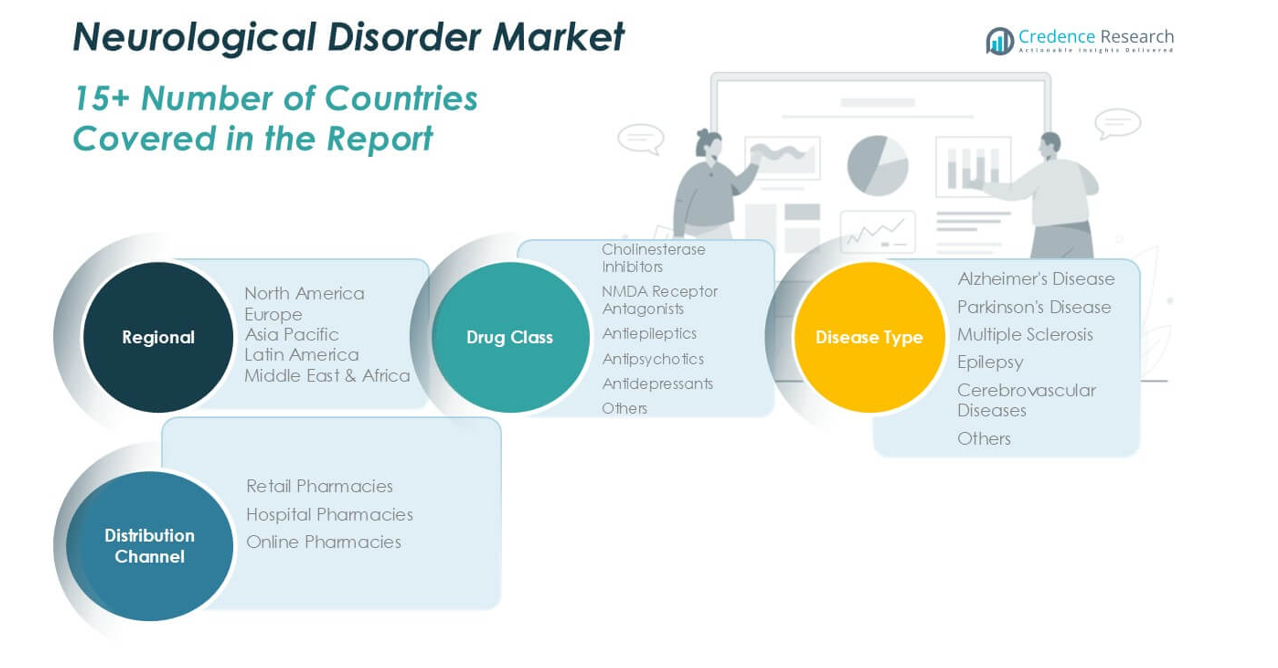
Market Segmentation Analysis:
By Drug Class:
Cholinesterase inhibitors hold a significant share due to their established efficacy in managing symptoms of Alzheimer’s disease and related dementias. NMDA receptor antagonists support cognitive function and memory preservation in neurodegenerative conditions, strengthening their position within the therapeutic mix. Antiepileptics command a robust share driven by the high global prevalence of epilepsy and advances in seizure control. Antipsychotics and antidepressants address neuropsychiatric symptoms across multiple neurological disorders, while the “others” category includes emerging therapies and symptomatic treatments, contributing to the market’s growing diversity.
- For instance, Eisai’s Donepezil (Aricept), a cholinesterase inhibitor, has been prescribed to over 4 million Alzheimer’s patients since its introduction, demonstrating clinical impact on symptom management.
By Disease Type:
Alzheimer’s disease represents the largest segment, driven by the growing elderly population and escalating incidence rates worldwide. Parkinson’s disease continues to expand due to advances in disease-modifying therapies and growing awareness of movement disorders. Multiple sclerosis forms a key focus area for research and treatment innovation, with new drugs offering improved patient outcomes. The epilepsy segment benefits from increasing diagnosis rates and the availability of next-generation antiepileptic drugs. Cerebrovascular diseases, such as stroke, maintain a strong presence owing to rising risk factors like hypertension and diabetes. The “others” category covers a range of less common but clinically significant neurological conditions, highlighting the market’s broad clinical scope.
- For instance, UCB’s Briviact, approved for adjunctive therapy in epilepsy, has reached over 100,000 patients globally, supporting better seizure control.
By Distribution Channel:
Hospital pharmacies remain the dominant outlet, supported by the complexity of neurological drug regimens and the need for specialist oversight. Retail pharmacies provide widespread patient access to maintenance medications and chronic therapies, facilitating continuity of care outside hospital settings. Online pharmacies are gaining traction, offering convenience, privacy, and home delivery options, which are particularly valuable for long-term and repeat prescriptions. It benefits from multi-channel distribution, enabling effective market penetration and improved patient access to advanced treatments across urban and rural regions. This comprehensive segmentation enables stakeholders to identify emerging trends and align strategies with evolving patient needs.
Segments:
Based on Drug Class:
- Cholinesterase Inhibitors
- NMDA Receptor Antagonists
- Antiepileptics
- Antipsychotics
- Antidepressants
- Others
Based on Disease Type:
- Alzheimer’s Disease
- Parkinson’s Disease
- Multiple Sclerosis
- Epilepsy
- Cerebrovascular Diseases
- Others
Based on Distribution Channel:
- Retail Pharmacies
- Hospital Pharmacies
- Online Pharmacies
Based on the Geography:
- North America
- U.S.
- Canada
- Mexico
- Europe
- UK
- France
- Germany
- Italy
- Spain
- Russia
- Belgium
- Netherlands
- Austria
- Sweden
- Poland
- Denmark
- Switzerland
- Rest of Europe
- Asia Pacific
- China
- Japan
- South Korea
- India
- Australia
- Thailand
- Indonesia
- Vietnam
- Malaysia
- Philippines
- Taiwan
- Rest of Asia Pacific
- Latin America
- Brazil
- Argentina
- Peru
- Chile
- Colombia
- Rest of Latin America
- Middle East
- UAE
- KSA
- Israel
- Turkey
- Iran
- Rest of Middle East
- Africa
- Egypt
- Nigeria
- Algeria
- Morocco
- Rest of Africa
Regional Analysis
North America Neurological Disorder Market
North America Neurological Disorder Market grew from USD 15.83 billion in 2018 to USD 23.54 billion in 2024 and is projected to reach USD 40.40 billion by 2032, reflecting a compound annual growth rate (CAGR) of 6.5%. North America is holding a 43% market share. The United States and Canada lead regional growth due to advanced healthcare infrastructure, strong research and development, and robust reimbursement frameworks. High disease awareness and early adoption of innovative therapies drive consistent demand. The presence of leading pharmaceutical companies supports the region’s leadership. Strategic collaborations and ongoing clinical trials reinforce North America’s dominant position in the global market.
Europe Neurological Disorder Market
Europe Neurological Disorder Market grew from USD 7.69 billion in 2018 to USD 10.99 billion in 2024 and is expected to reach USD 17.33 billion by 2032, at a CAGR of 5.4%. Europe accounts for a 19% market share, with Germany, the United Kingdom, and France emerging as primary contributors. Well-established healthcare systems and strong regulatory standards facilitate broad access to advanced therapies. The region benefits from a growing elderly population and government-funded research initiatives. Pharmaceutical innovation and the adoption of personalized medicine support market development. Increasing prevalence of neurodegenerative diseases sustains long-term growth prospects.
Asia Pacific Neurological Disorder Market
Asia Pacific Neurological Disorder Market grew from USD 9.72 billion in 2018 to USD 15.48 billion in 2024 and is projected to reach USD 29.07 billion by 2032, achieving a CAGR of 7.7%. Asia Pacific holds a 31% market share, with China, Japan, and India leading regional expansion. Large patient populations, rising healthcare expenditure, and improved access to neurological care drive rapid growth. Governments are investing in healthcare infrastructure and public health campaigns. It benefits from increasing pharmaceutical investments and strategic partnerships. The adoption of digital health solutions is accelerating market penetration in both urban and rural areas.
Latin America Neurological Disorder Market
Latin America Neurological Disorder Market grew from USD 1.36 billion in 2018 to USD 2.01 billion in 2024 and is forecast to reach USD 2.93 billion by 2032, with a CAGR of 4.4%. Latin America maintains a 3% market share, led by Brazil, Mexico, and Argentina. Expanding healthcare coverage and growing awareness of neurological disorders drive demand for advanced treatments. Economic constraints and disparities in access remain challenges. It is seeing incremental growth supported by gradual infrastructure improvements and cross-border partnerships. Strategic efforts to expand access to diagnostic tools and therapies are underway.
Middle East Neurological Disorder Market
Middle East Neurological Disorder Market grew from USD 0.89 billion in 2018 to USD 1.21 billion in 2024 and is set to reach USD 1.69 billion by 2032, representing a CAGR of 3.8%. The Middle East holds a 2% market share, with Saudi Arabia and the United Arab Emirates emerging as regional hubs. Investment in healthcare infrastructure and adoption of modern treatment protocols support market development. Access to specialized neurological care is increasing, though regional disparities exist. It is benefiting from governmental initiatives to attract private sector healthcare investment. Growth opportunities depend on improving disease awareness and expanding clinical capabilities.
Africa Neurological Disorder Market
Africa Neurological Disorder Market grew from USD 0.72 billion in 2018 to USD 1.17 billion in 2024 and is projected to reach USD 1.67 billion by 2032, at a CAGR of 4.1%. Africa accounts for 2% of the market share, with South Africa, Egypt, and Nigeria representing key country markets. The region faces challenges such as limited healthcare resources, workforce shortages, and low disease awareness. Targeted initiatives by international organizations and gradual improvements in healthcare access are driving slow but steady progress. It has significant unmet need, providing potential for long-term growth as infrastructure and education advance. The focus remains on expanding diagnostic reach and basic neurological care.
Key Player Analysis
- AbbVie Inc.
- Amneal Pharmaceuticals Inc.
- Biogen Idec
- Boehringer Ingelheim International GmbH
- F. Hoffmann-La Roche Ltd
- Johnson & Johnson Services, Inc.
- Alseres Pharmaceuticals, Inc.
- Banyan Biomarkers, Inc.
- Bio-Rad Laboratories, Inc.
- DiaGenic ASA
Competitive Analysis
The Neurological Disorder Market remains highly competitive, shaped by the strategic initiatives of leading players such as AbbVie Inc., Biogen Idec, F. Hoffmann-La Roche Ltd, Johnson & Johnson Services, Inc., and Boehringer Ingelheim International GmbH. These companies leverage robust research and development capabilities to introduce innovative therapies and expand their product portfolios across multiple neurological disease segments. The competitive landscape is characterized by the launch of novel biologics, advanced drug delivery systems, and integration of digital health solutions. Strategic collaborations, mergers, and acquisitions strengthen market presence, while investment in clinical trials accelerates product approvals. Organizations are also expanding their footprints in high-growth regions by leveraging partnerships and regional expertise. Strong emphasis on personalized medicine and biomarker-driven therapies reflects the industry's shift toward precision healthcare. Competitive strategies center on improving patient outcomes, enhancing access, and addressing unmet medical needs, shaping a dynamic and forward-looking market environment.
Recent Developments
- In March 2023, the development of an oral, brain-penetrant, dual inhibitor of TYK2 and JAK1 for treating neurological illnesses was announced by Biohaven Ltd., except for the China region.
- In March 2023, Acadia Pharmaceuticals Inc. announced that the United States FDA had approved DAYBUE (trofinetide) for treating Rett syndrome in adult and pediatric patients two years of age and older.
- In 2023, the U.S. Food and Drug Administration (FDA) cleared Neurophet AQUA, an artificial intelligence (AI) software designed to enhance the evaluation of brain atrophy in MRI scans. This regulatory approval signifies a significant step in utilizing AI for more accurate and efficient assessments in neuroimaging, contributing to improved diagnostic capabilities.
- In 2022, CERENOVUS introduced EMBOGUARD, an innovative balloon guide catheter designed for endovascular procedures, particularly for patients dealing with acute ischemic stroke. The device reflects advancements in neurovascular interventions, emphasizing precision and efficacy in the treatment of cerebrovascular conditions.
Market Concentration & Characteristics
The Neurological Disorder Market exhibits moderate to high market concentration, with a select group of multinational pharmaceutical and biotechnology firms commanding significant revenue share and shaping industry direction. It demonstrates a strong focus on research-driven innovation, supported by a robust pipeline of novel therapeutics and advanced diagnostic technologies. High entry barriers, complex regulatory frameworks, and substantial investment requirements limit new entrants and reinforce the positions of established players. The market is characterized by continuous clinical advancements, a growing emphasis on personalized medicine, and rapid integration of digital health solutions for improved patient management. Collaborative research initiatives and cross-sector partnerships drive ongoing product development and accelerate the translation of scientific breakthroughs into clinical practice. It serves a diverse patient base, addressing both chronic and acute neurological conditions through a comprehensive range of pharmaceuticals, biologics, and supportive care solutions. Strategic expansion into emerging markets and adaptation to evolving healthcare policies further define its dynamic and competitive landscape.
Report Coverage
The research report offers an in-depth analysis based on Drug Class, Disease Type, Distribution Channel and Geography. It details leading market players, providing an overview of their business, product offerings, investments, revenue streams, and key applications. Additionally, the report includes insights into the competitive environment, SWOT analysis, current market trends, as well as the primary drivers and constraints. Furthermore, it discusses various factors that have driven market expansion in recent years. The report also explores market dynamics, regulatory scenarios, and technological advancements that are shaping the industry. It assesses the impact of external factors and global economic changes on market growth. Lastly, it provides strategic recommendations for new entrants and established companies to navigate the complexities of the market.
Future Outlook
- The market will see sustained growth driven by the rising prevalence of neurological disorders worldwide.
- Innovative therapies targeting disease mechanisms will increase treatment options for complex conditions.
- Personalized medicine and biomarker-driven care will shape future drug development and clinical strategies.
- Advanced diagnostic tools and early intervention programs will improve patient outcomes and disease management.
- Adoption of digital health platforms and telemedicine will expand access to neurological care in remote areas.
- Strategic partnerships between pharmaceutical firms and technology companies will accelerate research and innovation.
- Expanding healthcare infrastructure in emerging markets will boost patient access to advanced therapies.
- Regulatory agencies will prioritize fast-track approvals for breakthrough neurological treatments.
- Increased investment in neuroscience research will fuel the discovery of novel drug candidates and biomarkers.
- The focus on patient-centric care models will drive the development of holistic management solutions for neurological disorders.

Request a Free Sample
Fill in your details and we'll send you a free sample report.
- Sample data tables & charts
- Research methodology
Market Dynamics
Growing Prevalence of Neurological Disorders
The increasing incidence of conditions such as Alzheimer’s, Parkinson’s, epilepsy, and multiple sclerosis, driven by aging populations and lifestyle changes, is significantly expanding the patient pool and fueling demand for advanced therapies and diagnostics.
Advancements in Diagnostic Technologies and Therapeutic Innovation
Breakthroughs in imaging, biomarker research, and genomics are enabling earlier and more accurate diagnosis, while pharmaceutical R&D is delivering novel drugs and biologics that address unmet clinical needs and improve patient outcomes.
Increasing Healthcare Expenditure and Access
Rising global healthcare spending, improved insurance coverage, and expanding healthcare infrastructure - especially in emerging markets - are making neurological care and treatments more accessible to broader populations.
Focus on Research Funding and Collaborative Initiatives
Substantial public and private investments in neuroscience research, along with strategic partnerships between academia, industry, and healthcare providers, are accelerating the discovery and commercialization of innovative therapies and digital health solutions.
Integration of Digital Health and Artificial Intelligence
The adoption of telemedicine, wearable devices, and AI-powered diagnostic platforms is transforming disease management, enabling remote monitoring, early intervention, and enhanced patient engagement, thus supporting market growth and improved outcomes.
Need a Custom Version of This Report?
Tailor the scope, geography, or segments to your exact requirements.
- Custom geography or segment scope
- Direct access to our analyst team
Frequently Asked Questions
What is the current size of the Neurological Disorder Market?
What factors are driving the growth of the Neurological Disorder Market?
What are some challenges faced by the Neurological Disorder Market?
Who are the major players in the Neurological Disorder Market?
Table of Content
Chapter 1 Market Segmentation
- 1.1 Segmentation Framework
- 1.1.1 Product and Service Classification
- 1.1.2 Application and End-Use Classification
- 1.1.3 Technology and Solution Classification
- 1.1.4 Customer and Distribution Channel Classification
- 1.1.5 Geographic Segmentation
- 1.1.6 Market Segment Definitions and Boundaries
- 1.2 By Drug Class
- 1.2.1 Cholinesterase Inhibitors
- 1.2.2 NMDA Receptor Antagonists
- 1.2.3 Antiepileptics
- 1.2.4 Antipsychotics
- 1.2.5 Antidepressants
- 1.2.6 Others
- 1.3 By Disease Type
- 1.3.1 Alzheimer’s Disease
- 1.3.2 Parkinson’s Disease
- 1.3.3 Multiple Sclerosis
- 1.3.4 Epilepsy
- 1.3.5 Cerebrovascular Diseases
- 1.3.6 Others
Chapter 2 Introduction
- 2.1 Report Objectives and Scope
- 2.2 Product Definition and Industry Terminology
- 2.3 Market Inclusions and Exclusions
- 2.4 Research Process
- 2.4.1 Primary Research and Expert Interviews
- 2.4.2 Secondary Research and Source Review
- 2.4.3 Top-Down and Bottom-Up Estimation
- 2.4.4 Data Triangulation and Verification
- 2.5 Market Size Measurement Basis
- 2.5.1 2024: USD 54.39 billion → 2032: USD 93.09 billion
- 2.6 Historical and Forecast Reference Periods
- 2.6.1 Base Year: 2024
- 2.6.2 Forecast Period: 2024-2032
- 2.7 Research Assumptions and Limitations
Chapter 3 Executive Summary
- 3.1 Market Snapshot and Key Findings
- 3.2 Base-Year Market Size, 2024
- 3.3 Forecast Market Size, 2032
- 3.4 Revenue and Volume Growth Outlook
- 3.5 Key Demand and Supply Indicators
- 3.6 Leading Market Segments
- 3.7 Fastest-Growing Market Opportunities
- 3.8 Regional Performance Highlights
- 3.9 Technology and Industry Transformation
- 3.10 Competitive Landscape Summary
- 3.11 Analyst View and Strategic Implications
Chapter 4 Global Neurological Disorder Market Trends and Developments
- 4.1 Historical Industry Development
- 4.2 Recent Market Trends and Developments
- 4.3 Demand and Customer Behavior Trends
- 4.4 Technology and Product Innovation
- 4.5 Artificial Intelligence, Automation and Digitalization
- 4.6 Local Manufacturing and Supply Chain Realignment
- 4.7 Industry Partnerships, Mergers and Acquisitions
- 4.8 Sustainability and Circular Economy Developments
- 4.9 Government and Private Sector Investment Trends
- 4.10 Emerging Business Models and Commercialization
- 4.11 Industry Developments and Announcements
Chapter 5 Global Neurological Disorder Market Production, Supply and Demand Analysis
- 5.1 Demand Trend and Consumption Analysis
- 5.2 Demand Forecast, 2024-2032
- 5.3 Production and Output Trend
- 5.4 Production and Output Forecast, 2024-2032
- 5.5 Installed Capacity and Capacity Utilization
- 5.6 Company-Wise Production Plants and Statistics
- 5.6.1 Installed Production Capacity
- 5.6.2 Actual Production
- 5.6.3 Planned Capacity and Expansion Targets
- 5.7 Supply Chain Structure and Procurement Trends
- 5.8 Supply-Demand Gap and Bottlenecks
- 5.9 Import Dependence and Sourcing Structure
- 5.10 Contract Manufacturing and Outsourcing
- 5.11 Regional Supply and Demand Concentration
Chapter 6 Global Neurological Disorder Market Pricing Analysis
- 6.1 Pricing Structure and Measurement
- 6.2 Historical Pricing Trends
- 6.3 Pricing Outlook, 2024-2032
- 6.4 Average Selling Price and Unit Economics
- 6.5 Pricing by Product and Market Segment
- 6.6 Geographic Pricing Differences
- 6.7 Key Input, Energy, Labor and Logistics Costs
- 6.8 Contract Pricing and Purchasing Models
- 6.9 Pricing Sensitivity and Competitive Positioning
- 6.10 Price, Margin and Profitability Implications
Chapter 7 Global Neurological Disorder Market Dynamics
- 7.1 Market Growth Drivers
- 7.1.1 Demand-Side Drivers
- 7.1.2 Technology and Innovation Drivers
- 7.1.3 Infrastructure and Investment Drivers
- 7.1.4 Regulatory and Policy Drivers
- 7.2 Market Restraints
- 7.2.1 Cost and Affordability Constraints
- 7.2.2 Technology and Adoption Barriers
- 7.2.3 Supply Chain and Operational Constraints
- 7.3 Market Challenges
- 7.3.1 Competitive Pressure and Margin Erosion
- 7.3.2 Skills, Infrastructure and Implementation Gaps
- 7.4 Emerging Market Opportunities
- 7.5 Market Dynamics Impact and Time-Horizon Assessment
Chapter 8 Global Neurological Disorder Value Chain Analysis
- 8.1 Industry Value Chain Overview
- 8.2 Upstream Suppliers and Critical Inputs
- 8.3 Technology and Component Providers
- 8.4 Manufacturing or Service Delivery
- 8.5 Distribution, Channel Partners and Integrators
- 8.6 Downstream Applications and End Users
- 8.7 Value Addition and Profit Pools
- 8.8 Vertical Integration and Outsourcing
- 8.9 Supplier Concentration and Risk
- 8.10 Supply Chain Localization and Resilience
Chapter 9 Global Neurological Disorder Market Regulations and Policies
- 9.1 Relevant Laws, Standards and Compliance Frameworks
- 9.2 Product, Service, Safety and Quality Requirements
- 9.3 Government Policies, Incentives and Subsidies
- 9.4 Imports, Exports and Trade Barriers
- 9.5 Public Procurement and Local Content Requirements
- 9.6 Environmental and Sustainability Compliance
- 9.7 Upcoming Policy Changes and Market Implications
Chapter 10 Global Neurological Disorder Market Hotspots and Opportunities
- 10.1 Market Opportunity Mapping and Growth Hotspots
- 10.2 High-Growth Applications and Customer Groups
- 10.3 Underserved Markets and White-Space Opportunities
- 10.4 Emerging Technology and Product Opportunities
- 10.5 New Capacity and Investment Hotspots
- 10.6 Market Entry and Expansion Opportunities
- 10.7 Distribution and Partnership Opportunities
- 10.8 Near-Term and Long-Term Commercial Potential
- 10.9 Opportunity Attractiveness and Execution Risks
Chapter 11 Global Neurological Disorder Market Outlook, 2024-2032
- 11.1 Market Size and Analysis
- 11.1.1 Revenue (Market Measurement: 2024: USD 54.39 billion → 2032: USD 93.09 billion)
- 11.1.2 Market Volume and Quantity Sold
- 11.1.3 Historical Market Size
- 11.1.4 Base-Year Market Size, 2024
- 11.2 Market Forecast, 2024-2032
- 11.2.1 Revenue Forecast to 2032
- 11.2.2 Volume Forecast to 2032
- 11.2.3 CAGR and Year-on-Year Growth
- 11.2.4 Incremental Revenue Opportunity
- 11.3 Forecast Assumptions and Scenario Analysis
- 11.3.1 Base-Case Forecast
- 11.3.2 Optimistic and Conservative Scenarios
- 11.3.3 Technology, Pricing and Policy Sensitivities
- 11.4 Market Attractiveness and Growth Outlook
Chapter 12 Global Neurological Disorder Market Segmentation and Outlook
- 12.1 Segmentation Summary and Market Shares, 2024
- 12.2 Largest and Fastest-Growing Segments
- 12.3 By Drug Class - Market Size and Forecast, 2024-2032
- 12.3.1 Segment Definition and Scope
- 12.3.2 Historical Market Size
- 12.3.3 Revenue Forecast, 2024-2032
- 12.3.4 Volume Forecast, 2024-2032
- 12.3.5 Base-Year Market Share, 2024
- 12.3.6 Segment CAGR and Growth Drivers
- 12.3.7 Subsegment Market Size and Forecast
- 12.3.7.1 Cholinesterase Inhibitors
- 12.3.7.2 NMDA Receptor Antagonists
- 12.3.7.3 Antiepileptics
- 12.3.7.4 Antipsychotics
- 12.3.7.5 Antidepressants
- 12.3.7.6 Others
- 12.3.8 Subsegment Pricing and Adoption Trends
- 12.3.9 Leading Suppliers and Competition
- 12.3.10 Regional Demand and Opportunities
- 12.4 By Disease Type - Market Size and Forecast, 2024-2032
- 12.4.1 Segment Definition and Scope
- 12.4.2 Historical Market Size
- 12.4.3 Revenue Forecast, 2024-2032
- 12.4.4 Volume Forecast, 2024-2032
- 12.4.5 Base-Year Market Share, 2024
- 12.4.6 Segment CAGR and Growth Drivers
- 12.4.7 Subsegment Market Size and Forecast
- 12.4.7.1 Alzheimer’s Disease
- 12.4.7.2 Parkinson’s Disease
- 12.4.7.3 Multiple Sclerosis
- 12.4.7.4 Epilepsy
- 12.4.7.5 Cerebrovascular Diseases
- 12.4.7.6 Others
- 12.4.8 Subsegment Pricing and Adoption Trends
- 12.4.9 Leading Suppliers and Competition
- 12.4.10 Regional Demand and Opportunities
- 12.5 Segment Growth Comparison
- 12.6 Segment Attractiveness and Priority Matrix
Chapter 13 Global Neurological Disorder Geographic Market Outlook, 2024-2032
- 13.1 Regional Market Size and Share, 2024
- 13.2 Regional Market Forecast, 2024-2032
- 13.3 Regional Pricing, Production and Demand Differences
- 13.4 North America
- 13.4.1 United States
- 13.4.2 Canada
- 13.4.3 Mexico
- 13.5 Europe
- 13.5.1 Germany
- 13.5.2 France
- 13.5.3 Italy
- 13.5.4 United Kingdom
- 13.5.5 Spain
- 13.5.6 Poland
- 13.5.7 Russia
- 13.5.8 Netherlands
- 13.5.9 Belgium
- 13.5.10 Sweden
- 13.5.11 Denmark
- 13.5.12 Norway
- 13.5.13 Rest of Europe
- 13.6 Asia Pacific
- 13.6.1 China
- 13.6.2 India
- 13.6.3 Japan
- 13.6.4 South Korea
- 13.6.5 Thailand
- 13.6.6 Indonesia
- 13.6.7 Vietnam
- 13.6.8 Malaysia
- 13.6.9 Australia
- 13.6.10 Rest of Asia Pacific
- 13.7 Latin America
- 13.7.1 Brazil
- 13.7.2 Argentina
- 13.7.3 Colombia
- 13.7.4 Chile
- 13.7.5 Rest of Latin America
- 13.8 Middle East
- 13.8.1 Saudi Arabia
- 13.8.2 United Arab Emirates
- 13.8.3 Turkey
- 13.8.4 Israel
- 13.8.5 Iran
- 13.8.6 Rest of the Middle East
- 13.9 Africa
- 13.9.1 South Africa
- 13.9.2 Egypt
- 13.9.3 Nigeria
- 13.9.4 Morocco
- 13.9.5 Rest of Africa
- 13.10 Regional Investment, Policy and Supply Chain Differences
- 13.11 Regional Competitive Landscape
- 13.12 Geographic Growth Hotspots
Chapter 14 Global Neurological Disorder Technology, Innovation and Sustainability Outlook
- 14.1 Technology Landscape and Maturity
- 14.2 Product, Process and Service Innovation
- 14.3 AI, Automation and Digital Tools in the Industry
- 14.4 Technology Adoption and Performance Benchmarking
- 14.5 Innovation Pipeline and R&D Investment
- 14.6 Patent and Intellectual Property Trends
- 14.7 Energy Efficiency and Resource Management
- 14.8 Sustainability, Recycling and Circularity
- 14.9 Technology Roadmap, 2024-2032
- 14.10 Risks of Obsolescence and Technology Substitution
Chapter 15 Global Neurological Disorder Market Key Strategic Imperatives
- 15.1 Growth and Market Entry Priorities
- 15.2 High-Return Products and Segments
- 15.3 Pricing, Profitability and Cost Optimization
- 15.4 Technology Investment and Product Differentiation
- 15.5 Supply Chain Localization and Resilience
- 15.6 Distribution and Customer Acquisition
- 15.7 Partnership, Acquisition and Capacity Strategy
- 15.8 Regional Expansion Priorities
- 15.9 Short-, Medium- and Long-Term Actions
Chapter 16 Competition Outlook
- 16.1 Industry Competition Characteristics
- 16.2 Market Structure and Concentration
- 16.3 Market Share and Competitive Positioning, 2024
- 16.4 Company-Wise Revenue and Product Benchmarking
- 16.5 Production and Service Capacity Benchmarking
- 16.6 Technology, Pricing and Differentiation
- 16.7 Regional Footprint and Distribution Strength
- 16.8 Mergers, Acquisitions and Strategic Alliances
- 16.9 New Entrants and Competitive Threats
- 16.10 Porter's Five Forces and Industry Attractiveness
- 16.11 Competitive Outlook, 2024-2032
Chapter 17 Company Profiles
- 17.1 Company Coverage and Selection Criteria
- 17.2 AbbVie Inc.
- 17.2.1 Business Description
- 17.2.2 Company Ownership and Geographic Presence
- 17.2.3 Product and Service Portfolio
- 17.2.4 Manufacturing and Operating Footprint
- 17.2.5 Production Capacity and Expansion Plans
- 17.2.6 Financial Performance and Investment
- 17.2.7 Market Share and Competitive Position
- 17.2.8 Technology and Innovation Capabilities
- 17.2.9 Strategic Alliances or Partnerships
- 17.2.10 Recent Developments
- 17.2.11 Growth Strategy and Outlook
- 17.3 Biogen Idec
- 17.4 F. Hoffmann-La Roche Ltd.
- 17.5 Johnson & Johnson Services, Inc.
- 17.6 Boehringer Ingelheim International GmbH
- 17.7 Amneal Pharmaceuticals Inc.
- 17.8 Alseres Pharmaceuticals, Inc.
- 17.9 Banyan Biomarkers, Inc.
- 17.10 Bio-Rad Laboratories, Inc.
- 17.11 DiaGenic ASA
- 17.12 Other Relevant Market Participants
Note: Every listed company is profiled on the structure shown under the first company. The company list is preliminary and may change based on research findings, market developments, data availability and client requirements.
Chapter 18 Disclaimer
- 18.1 Research and Forecast Disclaimer
- 18.2 Data Source and Estimation Limitations
Note: The depth of individual sections depends on data availability for this market. Volume, capacity, trade and other unit-based metrics are included where applicable.

