
Amazon, Tata Motors to Deploy 3,000 Electric Trucks Across Amazon's India Freight Network
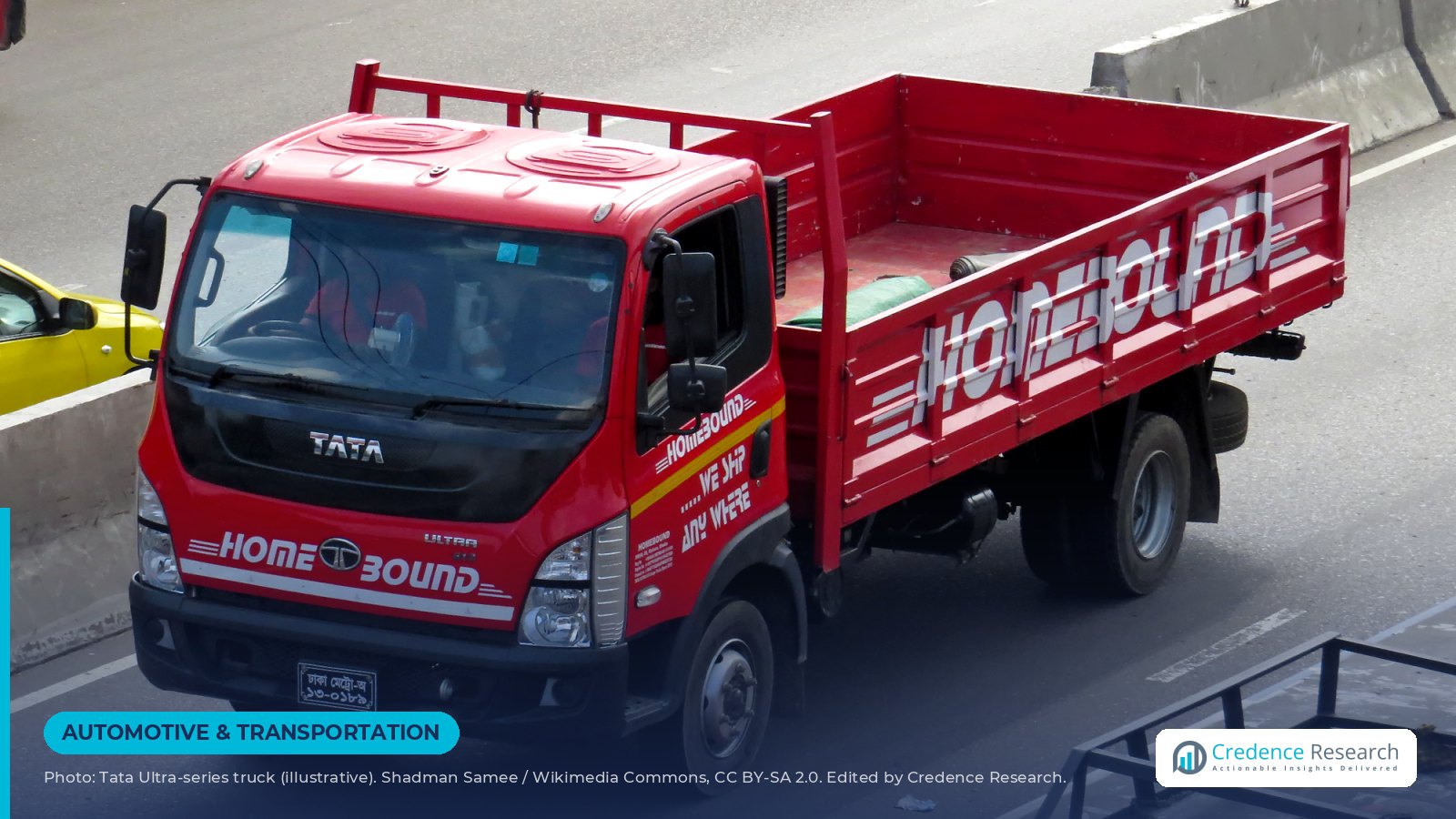
Amazon and Tata Motors will put 3,000 electric trucks into Amazon's transportation network in India, the companies said on Oct. 27, 2026, after the first batch of Tata Ultra E.7 trucks was flagged off in New Delhi. Amazon described the program as the largest electric-truck deployment by an e-commerce company in the country. Tata Motors will supply the vehicles, while Amazon's carrier partners will own and operate them on routes linking warehouses, cities and national freight corridors.
Key developments
- Tata Motors will supply 3,000 electric trucks for Amazon's India network; Amazon's carrier partners will own and run the fleet.
- Phase one starts in Delhi during the festive season, with light- and medium-duty Tata Ultra E.7 trucks serving Amazon's middle-mile routes, beginning with intracity operations.
- Phase two targets the 2,800-km Delhi-Bengaluru-Chennai corridor on National Highway 48, which crosses seven states and connects six major e-commerce regions, according to Amazon.
- Charging hubs along the route will be developed with charging provider Yahhvi, which has already built 10 charging yards with Amazon.
- Union Minister for Heavy Industries and Steel H.D. Kumaraswamy and Delhi Transport Minister Pankaj Kumar Singh attended the flag-off.
Industry background
Amazon's electric fleet in India has so far been built around last-mile delivery, where two-wheelers, three-wheelers and small vans carry parcels from delivery stations to homes. The company said it now runs more than 15,000 electric vehicles across more than 500 Indian cities. The Tata agreement moves electrification one step upstream, into the middle mile, where heavier trucks shuttle goods between fulfillment centers, sort centers and delivery stations on fixed, repeatable routes.
Those routes suit battery-electric trucks. Depot-to-depot runs return to base, which allows overnight or scheduled charging, and predictable daily distances make range planning easier than in open-market trucking. The companies said the Ultra E.7 offers fast charging, regenerative braking and built-in safety features, and positioned it for urban and regional logistics. Rajesh Kaul, vice president and business head for trucks at Tata Motors, said zero-emission trucks are becoming a practical business proposition for fleet operators across segments.
Policy support for electric trucks in India is recent. In July 2025, the Ministry of Heavy Industries extended the PM E-DRIVE scheme to N2 and N3 category electric trucks, with per-vehicle incentives linked to battery capacity and gross vehicle weight, and made support conditional on scrapping an older diesel truck. Delhi's 2026 EV policy adds a local incentive: the first 1,000 privately owned medium-duty electric trucks registered within three months of the policy's launch may enter the city at any hour for 10 years, bypassing the "No Entry" windows that restrict freight traffic.
Industry implications
A 3,000-unit commitment from a single shipper gives Indian electric truck makers something they have lacked: visible, repeat demand at fleet scale. Kumaraswamy said the collaboration demonstrates sustained demand from a nationwide logistics network, a point that matters for manufacturers deciding how much capacity to dedicate to battery-electric commercial vehicles.
The ownership structure is notable. Because Amazon's carrier partners, not Amazon, will own the trucks, the economics have to work for small and midsize transport operators who finance vehicles against freight contracts. That shifts attention to total cost of ownership, financing terms, uptime and service coverage. Tata Motors said it will provide servicing and operational support, which addresses one of the main concerns operators raise about adopting new drivetrain technology.
The program also tests whether the Delhi entry-hour exemption changes fleet behavior. Unrestricted access to city roads can raise daily truck utilization, which improves the return on a higher upfront vehicle price. If operators see measurable gains, other states and cities may consider similar access rules.
Competitive and supply chain implications
For Tata Motors, the deal strengthens its position in a segment where established commercial vehicle makers such as Ashok Leyland and Eicher, along with newer electric truck startups, are competing for early fleet customers. Volume orders from e-commerce and parcel companies tend to set reference designs for the wider market, because smaller fleets often follow the vehicle choices of large shippers.
Upstream, the deployment adds demand for traction batteries, electric axles, power electronics and DC fast-charging equipment. Large logistics fleets typically push suppliers toward localized production to manage cost and lead times, a goal reinforced by India's production-linked incentive schemes for auto components and advanced chemistry cells, which Kumaraswamy cited alongside PM E-DRIVE and PARIVARTAN. The charging buildout with Yahhvi will also shape how depot and highway charging is specified for heavier vehicles.
Competitors in Indian e-commerce and third-party logistics face pressure to match Amazon's move as large brands and marketplaces set emissions targets for their supply chains. Amazon has committed to net-zero carbon emissions by 2040 under The Climate Pledge.
Regional implications
Delhi is a logical starting point. The capital region has persistent air quality problems, and the city's transport minister said decarbonizing logistics is an important next step in cutting transport-related emissions. Freight trucks are a visible source of urban pollution, and replacing diesel middle-mile trucks on fixed city routes is one of the more direct ways to reduce tailpipe emissions.
The NH48 corridor phase carries wider regional weight. The highway runs from Delhi through Haryana, Rajasthan, Gujarat, Maharashtra and Karnataka to Tamil Nadu. Amazon noted a related effort, Laneshift, a program with C40 Cities that piloted electric trucks on the Bengaluru-Chennai corridor. The government's National EV Highway Guidance Framework targets 20 priority highways by 2027 and a national network by 2035, according to Amazon, so the NH48 rollout could serve as an early test of long-distance electric freight operations.
Credence Research analysis
The significance of this announcement lies less in the number of trucks than in where they will run. Indian e-commerce players have electrified last-mile delivery for several years, but middle-mile and intercity freight have stayed largely diesel because of higher vehicle prices, limited charging and uncertain financing. A phased plan that starts with predictable intracity routes and then moves to a single, well-defined corridor reduces each of those risks in sequence. It lets charging partners build where traffic is guaranteed, and it gives Tata Motors operating data across city and highway duty cycles.
The open questions are timing and execution. The companies did not disclose a delivery schedule for all 3,000 trucks, the split between light- and medium-duty units, or the value of the supply agreement. The carrier-owned model means adoption depends on financing availability and on whether PM E-DRIVE support and Delhi's access rules close the cost gap with diesel. Corridor charging along a 2,800-km route is a larger infrastructure task than depot charging in one city. How quickly the second phase moves will be a useful indicator of whether electric freight in India can scale beyond urban pilots.
What comes next
- Continued Ultra E.7 deliveries and deployment on Amazon's Delhi middle-mile routes through the festive season.
- Registration of eligible medium-duty trucks under Delhi's entry-hour exemption window for the first 1,000 vehicles.
- Construction of Yahhvi charging hubs along the Delhi-Bengaluru-Chennai NH48 corridor ahead of phase two.
- Expansion of the fleet to national highways and freight corridors, with no completion date disclosed.
- Possible further claims under PM E-DRIVE truck incentives, which require scrapping an older diesel truck.
Sources
- About Amazon India: Amazon and Tata Motors to deploy 3,000 electric trucks across Amazon's transportation network in India
- EVreporter: Amazon and Tata Motors to Deploy 3,000 Electric Trucks, Starting with Tata Ultra E.7
- EVreporter: PM E-DRIVE Scheme incentive framework announced for electric trucks
Image: Tata Ultra-series truck (illustrative), by Shadman Samee via Wikimedia Commons, CC BY-SA 2.0. Cropped and edited by Credence Research.

About the Author

Senior News Editor at Credence Research Inc