
ANI Pharmaceuticals Offers $560 Million for Egetis, Adding First Approved MCT8 Deficiency Drug
ANI Pharmaceuticals Inc. on Nov. 5 launched a recommended public cash offer for Swedish drugmaker Egetis Therapeutics AB, valuing the rare disease company at about SEK 5.6 billion, or roughly $560 million. The Princeton, New Jersey-based buyer is offering SEK 11.25 per share for Stockholm-based Egetis, whose lead product, Emcitate, won U.S. Food and Drug Administration approval only five weeks earlier as the first treatment cleared for peripheral thyrotoxicosis in patients with MCT8 deficiency.
Key developments
- ANI offered SEK 11.25 cash per Egetis share, a premium of about 12.6% to the Nov. 4 close of SEK 9.99, about 27% to the 60-trading-day volume-weighted average price and about 48% to the 180-day average.
- ANI puts the enterprise value at about $434 million after adjusting for estimated proceeds from Egetis' sale of its FDA priority review voucher, agreed Nov. 4 for $190 million in gross proceeds.
- The Egetis board unanimously recommends the offer, and shareholders holding about 42.2% of the shares have signed irrevocable undertakings to accept.
- The acceptance period is expected to run from about Nov. 20 to about Dec. 18, with settlement expected around Dec. 29.
- ANI will fund the purchase with cash on hand and new debt from JPMorgan Chase Bank, and the offer carries no financing condition.
Disease and product background
MCT8 deficiency, also known as Allan-Herndon-Dudley syndrome, is a rare X-linked disorder caused by mutations in the SLC16A2 gene. It leaves the brain short of thyroid hormone activity while exposing peripheral tissues to excess active T3. ANI says the condition affects about 1 in 70,000 males. Egetis cites failure to thrive, cardiovascular strain and muscle wasting among its features, and a reported median life expectancy of about 35 years.
Emcitate, known generically as tiratricol, is a thyroid hormone receptor agonist. The European Commission approved it on Feb. 12, 2025, and the FDA followed on Sept. 28, 2026. The U.S. label covers adults and pediatric patients, carries a boxed warning against use for obesity or weight loss and lists primary hyperthyroidism as a contraindication. Egetis announced the U.S. launch on Oct. 27, supported by a patient program run with specialty pharmacy PANTHERx Rare.
ANI cites New Chemical Entity exclusivity, orphan drug exclusivity in the U.S. and Europe, and an Orange Book-listed patent running into mid-2045. Egetis is also developing tiratricol for resistance to thyroid hormone beta.
Industry implications
The transaction shows how much value a small rare disease company can gain in the weeks after a first U.S. approval, and how expensive the next step can be. Egetis raised SEK 350 million in April at SEK 5.25 per share. ANI's offer is more than double that price. The Egetis board said the terms reflect the cost and execution risk of building and launching a U.S. commercial operation alone, and it disclosed that the offer came out of a competitive process prompted by an unsolicited proposal in the third quarter.
The voucher sale is a central part of the economics. The FDA granted Egetis a Rare Pediatric Disease Priority Review Voucher alongside the approval, and the company turned it into a $190 million agreement within about five weeks. The buyer was not named, and closing depends on customary conditions including expiry of the Hart-Scott-Rodino waiting period. Former owners of Rare Thyroid Therapeutics International AB are entitled to about half of the net proceeds as an earn-out, so Egetis keeps only part of that sum.
Competitive and supply chain implications
For ANI, the deal extends a pivot away from a generics-led model. Rare disease products brought in $135.8 million of the company's $266 million in second-quarter net revenue, about 51%. Cortrophin Gel accounted for $117.1 million of that total and the eye implant ILUVIEN for $18.7 million. Chief Executive Nikhil Lalwani said the acquisition furthers a transformation in which most revenue should come from higher-margin rare disease products by the end of the decade.
The purchase also adds balance sheet pressure. ANI reported $360.2 million in unrestricted cash and $620.9 million in principal debt at June 30, and the offer announcement did not state the size of the new JPMorgan debt. ANI plans to apply its medical affairs, patient access and reimbursement teams to Emcitate.
Distribution is largely in place. Egetis has contracted a U.S. specialty pharmacy and distributor, and its U.S. expanded access program covered 17 hospitals and about 60 patients as of its second-quarter report. Both companies describe Emcitate as the only approved treatment for this indication, so the near-term challenge is finding and treating patients rather than displacing a rival.
Regional implications
The offer would remove a Nasdaq Stockholm-listed biotech from the Swedish market and move control of a European rare disease asset to a U.S. owner. It must clear the Nasdaq Stockholm takeover rules along with regulatory and foreign investment reviews. ANI says it does not intend to make material changes to operations, locations, management or employment terms, and the board said it had no reason to question that statement.
Europe remains commercially early. Emcitate launched in Germany in May 2025, and pricing talks with statutory insurers there concluded in the second quarter, with terms applying from Aug. 1. Egetis has filed a pricing and reimbursement dossier in Spain and plans stronger submissions for Italy and France using survival data. Distribution partners cover Turkey, Central and Eastern Europe, the Gulf, Australia and New Zealand. Fujimoto Pharmaceuticals is preparing a Japanese filing that Egetis expected in early 2027. Egetis reported second-quarter revenue of SEK 17.4 million, which helps explain why the U.S. launch carries so much of the deal's logic.
Credence Research analysis
The disclosed numbers suggest ANI is buying a de-risked launch and not a clinical bet. Approval and launch are complete, and the voucher sale offsets part of the headline price. The two value figures in circulation appear to reflect different scopes: ANI's SEK 5.6 billion includes outstanding incentive programs, while the board's SEK 5.304 billion is built on about 465 million ordinary shares plus the convertible loan and warrants. The remaining risk sits in commercial execution, since ANI must prove that a tiny, widely dispersed patient population can be identified and kept on therapy.
The structure also deserves attention. A 42.2% lockup gives ANI a strong start toward its 90% threshold, but the undertakings lapse if a rival bid tops the offer by more than 5% and ANI does not match it. The modest premium to the last close leaves some room for that scenario. ANI has said it will not raise its price unless a competing offer emerges, which makes the December acceptance count the first real test of shareholder support.
What comes next
- ANI scheduled a third-quarter earnings release and investor call for Nov. 5, where it may add detail on financing.
- The acceptance period is expected to open around Nov. 20 and close about Dec. 18.
- Settlement is expected around Dec. 29 if holders of more than 90% of shares accept and clearances arrive.
- The voucher sale must close after the Hart-Scott-Rodino waiting period expires, triggering the earn-out payment.
- Egetis' tiratricol plan for resistance to thyroid hormone beta and the Japanese filing would pass to ANI's oversight if the deal completes.
Sources
- ANI Pharmaceuticals: offer announcement, Nov. 5, 2026
- Egetis Therapeutics: board statement on the offer, Nov. 5, 2026
- Egetis Therapeutics: priority review voucher agreement, Nov. 4, 2026
- ANI Pharmaceuticals: second-quarter 2026 results, SEC Form 8-K exhibit
- Egetis Therapeutics: FDA approval release, Sept. 28, 2026, and Q2 2026 interim report
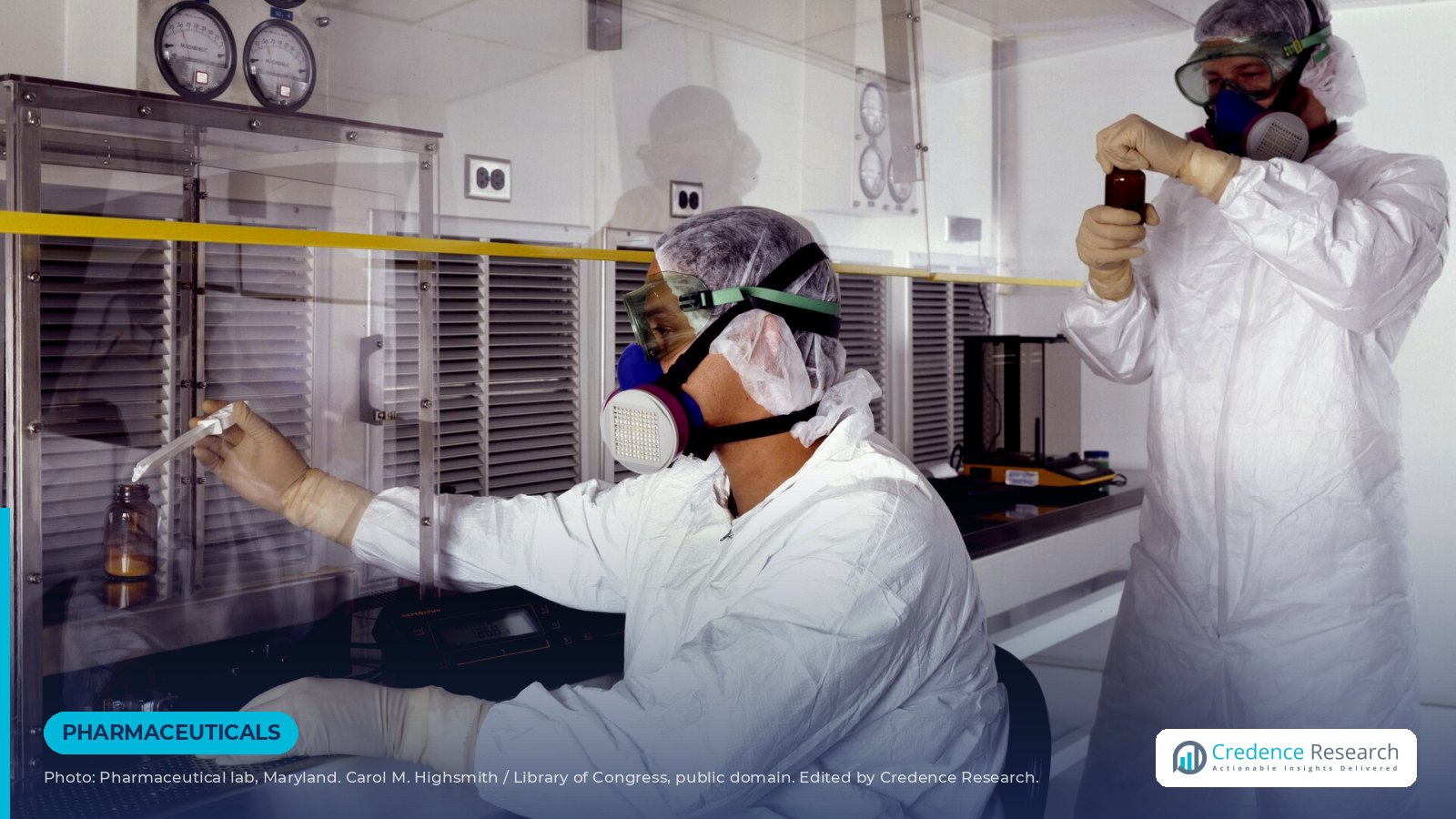
Image: Laboratory technicians at a pharmaceutical lab in Rockville, Maryland (illustrative; not an ANI or Egetis facility), by Carol M. Highsmith via Wikimedia Commons, public domain. Cropped and edited by Credence Research.
About the Author

Senior News Editor at Credence Research Inc