
BMW to Phase Out Some Gen5 EVs Early as Neue Klasse Ramps Up, Cuts 2026 Car Margin Outlook to Near Zero
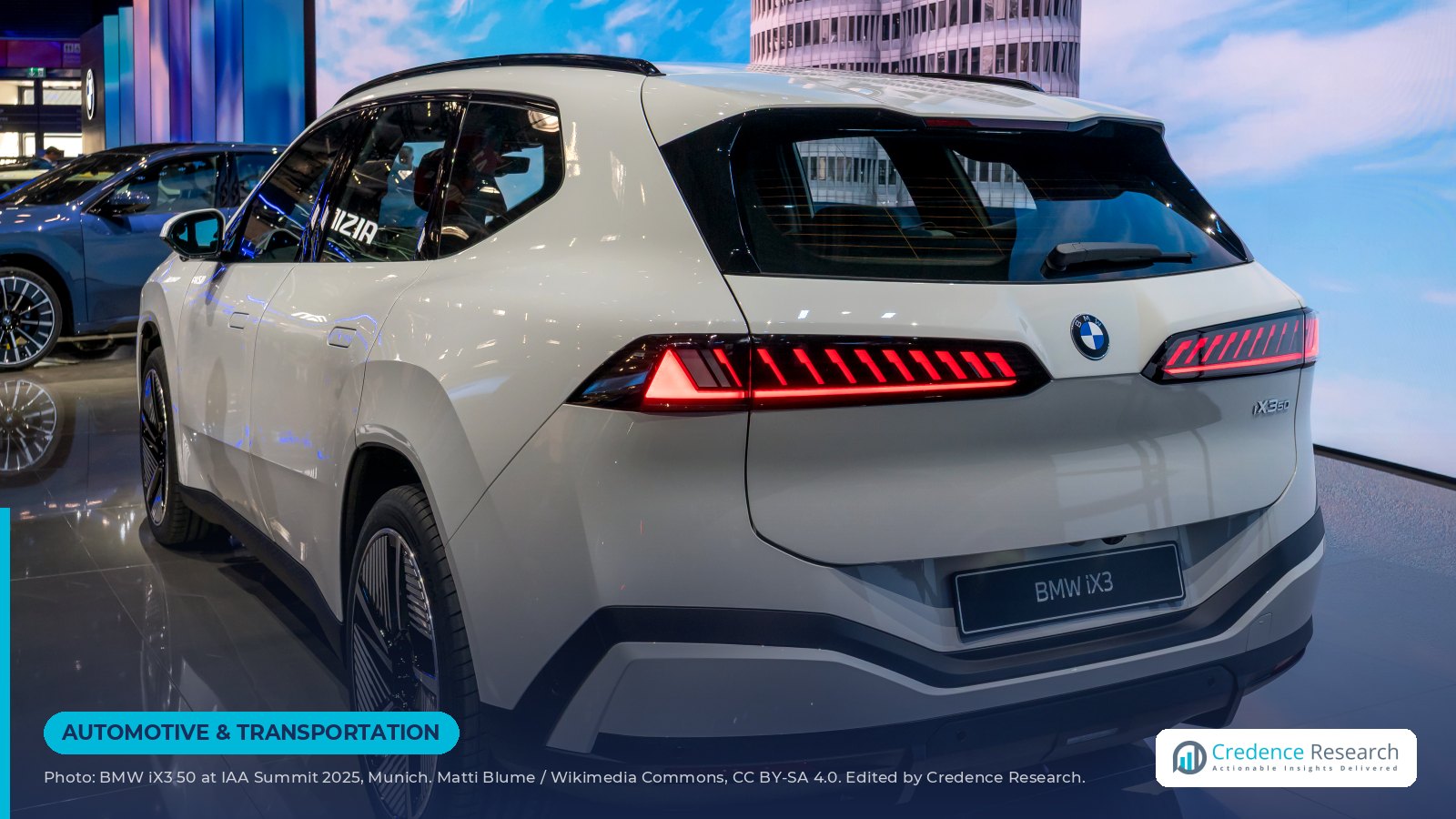
BMW Group will retire some of its older electric models ahead of schedule as production of its Neue Klasse vehicles climbs faster than planned, a shift that helped push the company's 2026 automotive profit margin outlook to roughly zero. The Munich-based automaker disclosed the decision late Nov. 3 in an ad hoc notice after its Board of Management expanded a set of portfolio and structural measures, then detailed the move Nov. 4 alongside third-quarter results.
Key developments
- BMW now expects a 2026 Automotive segment EBIT margin between minus 0.5% and plus 0.5%, down from 1% to 3%. Before portfolio and structural measures, it still expects a margin above 2%.
- The total burden from those measures is about 2.5 percentage points of margin, up from an originally expected 1.25 points, and hits as non-operating effects in the fourth quarter.
- Selected models based on Gen5 battery technology will leave the lineup sooner. BMW's releases do not name them.
- Third-quarter deliveries fell 6.3% to 551,075 vehicles. Fully electric models made up 20% of the total.
- Automotive free cash flow guidance stays above 2.5 billion euros, despite negative 566 million euros in the third quarter.
Background: Two generations competing for the same factories
The Neue Klasse is BMW's new vehicle generation, built around Gen6 battery technology. The company said Neue Klasse technology is now available in the iX3, i3, i7, iX4 and iX5, with a wider rollout planned in the coming months. Chairman Milan Nedeljković said on the quarterly conference call that BMW significantly increased the Gen6 ramp-up this year, which allows it to phase out some Gen5 electric models sooner than planned, with an added impact on 2026 earnings.
Gen5 is the prior battery generation, and BMW has not said which models will go first. The company expects Gen6 to be a major driver of better profitability in coming years, so the charge amounts to paying now to move volume onto a platform it considers more profitable.
This is the second guidance cut in less than five months. On June 16, BMW reduced its Automotive margin outlook to 1% to 3% from 4% to 6%, citing a weak Chinese market, tougher competition in China and Asia-Pacific and high energy costs linked to the Middle East conflict. The November cut has a different stated cause: decisions BMW made itself, rather than a further decline in underlying operations.
Industry implications
BMW's move offers a test of how quickly an established automaker can retire a recent electric generation when a newer one sells well. Older electric platforms carry tooling, supplier commitments and inventory that lose value if volume ends early, and those costs now show up on the income statement. BMW expects the benefit later: it targets an Automotive margin of 3% to 5% in 2028 and a return to 8% to 10% early next decade.
The third-quarter numbers explain why the company wants to move quickly. Automotive EBIT fell 39.7% to 901 million euros, a 3.4% margin, even with a positive effect from a legal settlement over its Integrated Braking System. Higher import tariffs cost about 1.25 percentage points of margin, compared with about 1.75 points a year earlier. Group profit before tax fell 10.6% to 2.08 billion euros on revenue of 30.45 billion euros.
Spending is also being pulled back. Finance chief Walter Mertl said BMW expects research and development and capital spending below prior-year levels in 2026, and targets an R&D ratio of 4% to 5% and a capital expenditure ratio below 5% in 2027.
Competitive and supply chain implications
Other European companies are also resetting electric plans and costs. Stellantis CEO Antonio Filosa said on the company's third-quarter call that many European nameplates will move from NMC to LFP cells from 2027, according to Automotive Logistics. Schaeffler said Nov. 3 it would cut a net 3,460 positions in Europe, citing weak combustion demand and a slower electric ramp-up.
For suppliers, an early Gen5 exit could shorten production runs for parts tied to outgoing models, while Gen6 suppliers face pressure to keep pace with added shifts. BMW has not published volumes or dates for the phase-out, so the effect on individual programs remains unclear. The company is also using an "Industry Best Offer" sourcing approach and agentic AI in offers and procurement planning, which points to continued pressure on purchasing costs.
Inside BMW, cuts are reaching management faster than announced. Nedeljković cited a 20% reduction in senior vice president roles and a voluntary severance program for indirect employees in Germany. BMW said the workforce program gave it momentum to speed up the management changes.
Regional implications
Hungary sits at the center of the ramp-up. Nedeljković said the Debrecen plant has expanded to three shifts to meet demand, and the iX4 will be built alongside the iX3 there. Neue Klasse production is also running in Munich, Dingolfing, Spartanburg and Shenyang. He said series production in Woodruff, South Carolina, will begin before the end of this year, with San Luis Potosí, Mexico, following next year.
China remains the weak point. BMW's third-quarter sales there fell by about a quarter, in line with the wider market decline, and the company said strong competition weighed on Automotive revenue. A long-wheelbase iX3 launches in China this month, with more Neue Klasse models following during 2027.
Europe and the U.S. moved the other way. Third-quarter deliveries rose 2.6% in Europe, where fully electric models reached 34.7% of sales, and 2.5% in the U.S. BMW said Spartanburg is running at full capacity.
Credence Research analysis
The key figure is the gap between the margin above 2% before measures and the roughly zero margin after them. BMW is asking investors to treat that difference as a one-time cost of faster change, and its unchanged free cash flow target supports the argument that the fourth-quarter hit is largely non-operating. That target now carries more risk, however. Nine-month Automotive free cash flow was 724 million euros, so BMW needs more than 1.7 billion euros in the fourth quarter. Mertl pointed to further working capital reduction and tariff refunds to help close that gap.
The decision also suggests that strong demand can create its own costs. BMW is absorbing a charge because a new generation sold well enough to speed the end of an older one. That is a better problem than slack demand, but its payoff depends on Gen6 margins arriving as promised and on volume holding once early orders are filled. Deliveries are now guided moderately below 2025, so the improvement has to come from mix and cost, not volume. China is the main open question, since new models there have yet to prove they can offset the decline in combustion sales.
What comes next
- BMW records the portfolio and structural effects in the fourth quarter, with full-year results to show the final impact.
- Series production in Woodruff, South Carolina, is due to begin before the end of 2026, followed by San Luis Potosí in 2027.
- The long-wheelbase iX3 launches in China in November.
- BMW's third share buyback tranche is expected to finish in November, and a review of its shareholder return framework is underway.
- The company has yet to say publicly which Gen5 models will end early, or when.
Sources
- BMW Group: BMW Group updates guidance for the 2026 financial year
- BMW Group: BMW Group accelerates realignment
- BMW Group: Statement by Milan Nedeljković, third-quarter conference call
- Automotive Logistics: Stellantis to switch many European nameplates to LFP batteries
Image: A BMW iX3 50 at IAA Summit 2025 in Munich, by Matti Blume via Wikimedia Commons, CC BY-SA 4.0. Cropped and edited by Credence Research.

About the Author

Senior News Editor at Credence Research Inc