
Hanwha and WB Start Building Guided Rocket Plant in Poland for Homar-K, With Deliveries Due From 2030
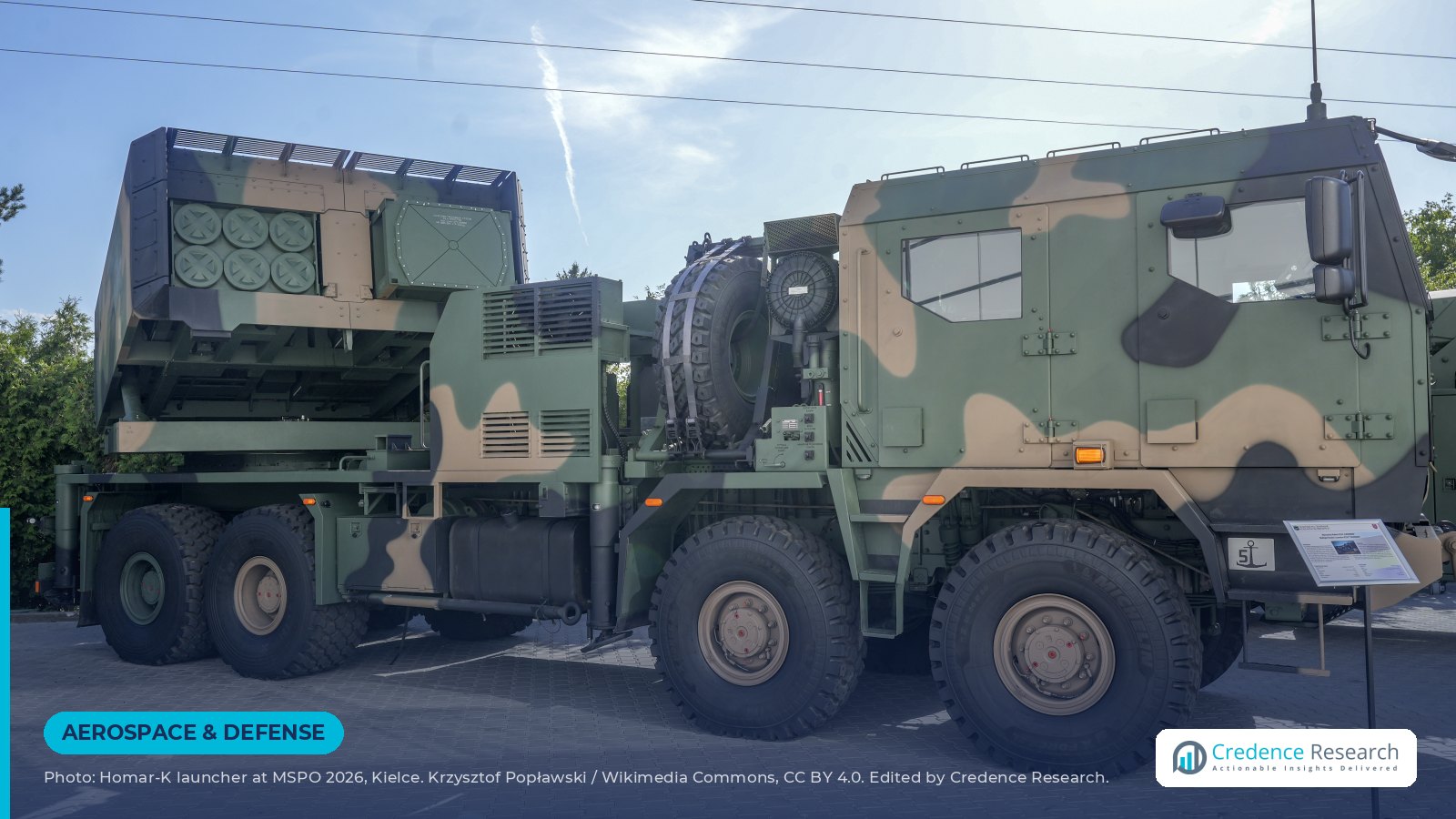
Hanwha WB Advanced System began construction Wednesday, Nov. 4, on a plant in Gorzów Wielkopolski, western Poland, that will build guided rockets for the country's Homar-K launchers, Poland's Ministry of National Defence said. The joint venture of South Korea's Hanwha Aerospace and Poland's WB Electronics will make the 80-kilometer CGR-080 rocket under a contract worth about 14 billion zlotys, bringing production of a core Polish artillery round onto Polish soil.
Key developments
- Deputy Defence Minister Magdalena Sobkowiak-Czarnecka attended the start of construction on behalf of Deputy Prime Minister and Defence Minister Władysław Kosiniak-Kamysz. The ministry said the plant will produce rockets for Homar-K launchers, among other products.
- Poland's Armament Agency signed the supply contract on Dec. 29, 2025, with a consortium led by the joint venture. Hanwha valued it at about 14 billion zlotys, or roughly $4 billion, with deliveries scheduled to begin in 2030.
- The Korea Times reported that the plant should be finished in 2028, with initial production in late 2029 and full-scale output in 2030.
- Hanwha Aerospace owns 51% of the venture and WB Electronics owns 49%, according to Korean press reports.
- Reported employment ranges from more than 200 jobs, per The Korea Times, to more than 250, per the Polish Press Agency. Both outlets put the site at about 116 hectares.
Program background
Homar-K is the Polish configuration of South Korea's K239 Chunmoo multiple rocket launcher, mounted on a Jelcz truck chassis. Hanwha's European unit says Poland's first executive contract, signed in November 2022, covered 218 launcher modules plus rockets, logistics and training. A second, signed in April 2024, added 72 modules. Each launcher carries two pods, and each pod holds either six 239 mm guided rockets or one 607 mm tactical missile with a range of up to 290 kilometers.
The CGR-080 is the shorter-range round. Hanwha lists it as a 239 mm GPS/INS-guided rocket with an 80-kilometer range and 15-meter circular error probable. The localization path has run for about two years. WB Electronics and Hanwha signed a technology transfer, production line and license agreement in October 2024, when the ministry said the planned factory would target several thousand rockets a year. The partners formed the joint venture in September 2025, and site preparation in Gorzów began in July 2026.
The Dec. 29 contract was the third executive agreement under the Homar-K framework. Hanwha described the volume only as thousands of rockets. The Polish Press Agency reported more than 10,000, with the plant's own cost put at about 1.5 billion zlotys by the newspaper Rzeczpospolita. WB Group said in September 2025 that the cost would exceed 1 billion zlotys. The official statements reviewed for this article give no final figure.
Industry implications
The groundbreaking turns a procurement commitment into physical capacity. European governments have spent the past several years reordering artillery and rocket stocks, and many have found that signing contracts moves faster than building production lines. Poland's approach ties a large purchase to a domestic plant, a license and a transfer of engineering knowledge, so that future stock replenishment does not depend solely on shipments from South Korea.
Sobkowiak-Czarnecka framed the project in those terms at the ceremony, according to the Polish defense outlet Defence24, saying foreign suppliers that sell to Poland must also invest there. That position matters for other prime contractors negotiating with Warsaw. A rocket line also differs from a vehicle assembly site, since it requires energetic materials handling, guidance integration, quality systems and long-term ammunition surveillance. Defence Industry Europe reported that the project covers technology and engineering transfer, maintenance, repair and overhaul capabilities and a local supply chain.
Workforce may prove the nearer constraint. The joint venture signed a letter of intent with a vocational education center in Gorzów covering internships, apprenticeships, workshops and curriculum development. The Polish defense publication MILMAG reported that hiring will start in the second half of 2027.
Competitive and supply chain implications
For Hanwha, The Korea Herald reported that Gorzów will be the company's first guided weapons production facility in Europe. The company has already announced a K9 howitzer production site in Romania, and it has signed a Chunmoo contract with Norway. A guided rocket plant inside the European Union gives it a local answer to buyers who prefer European content, and it sharpens competition with Lockheed Martin's HIMARS and GMLRS family, the main Western alternative in this class.
The supply chain details remain thin. MILMAG reported that WB Electronics will supply military components worth about 987.3 million zlotys net, but that the split of work between Polish and Korean suppliers and the domestic content share have not been disclosed. WB Group president Piotr Wojciechowski described the facility as Poland's first of its kind for advanced artillery missiles. Propellant, warheads and guidance units are the items to watch, since those subsystems usually determine how independent a licensed production line really is.
Regional implications
Gorzów Wielkopolski sits in Lubusz province near the German border. The land was previously held by the Kostrzyn-Słubice Special Economic Zone, which received the building permit in spring 2026 from the city. Mayor Jacek Wójcicki estimated annual city budget revenue at a few million to more than 10 million zlotys once production starts, the Polish Press Agency reported.
The wider regional question is exports. Sobkowiak-Czarnecka said Norway, Estonia and Croatia would probably buy from the plant and that she expected more European interest, according to Defence24, which did not report a signed purchase. Hanwha Aerospace chief executive Billy Boo-hwan Lee and the venture's chief executive, Jin Cheol Jeon, spoke at the ceremony about building a lasting production base in Poland, and the partners see it as a foundation for other European markets, Defence Industry Europe reported.
Credence Research analysis
The significance of Gorzów lies less in the ceremony than in the sequencing. Poland placed the order first, gave the venture a multi-year delivery schedule and then broke ground, which gives the plant a contracted anchor customer before its first building rises. That reduces demand risk for the partners. It also leaves little schedule margin: a 2028 completion and a 2030 delivery start allow about two years for equipment qualification, staffing and rocket acceptance, and qualification is often where such programs slip.
The disclosure gaps deserve attention. Differences in reported jobs and cost suggest the project scope is still being described loosely, and MILMAG reported that the domestic content share has not been disclosed. Defence24 reported in April that the first stage is rocket assembly, with production and servicing to follow. Until more numbers appear, Gorzów is better read as an assembly-led site that should deepen over time than as a fully sovereign rocket supply chain. The 290-kilometer CTM-290 and a 160-kilometer class round would be the real test, since MILMAG reported that producing other types would require new orders and permits.
What comes next
- Main construction at the Gorzów site, with completion reported for 2028.
- Recruitment, which MILMAG reported will begin in the second half of 2027.
- Initial rocket production, reported for late 2029.
- Start of contracted deliveries to the Polish armed forces in 2030.
- Any export decision by other Chunmoo operators, and any new Polish order covering additional rocket types.
Sources
- Polish Ministry of National Defence: Start of construction in Gorzów Wielkopolski
- Hanwha: Chunmoo rocket production contract with Poland
- The Korea Times: Hanwha Aerospace breaks ground in Poland
- Defence Industry Europe: Hanwha WB Advanced System breaks ground
Image: Homar-K multiple rocket launcher on a Jelcz chassis at MSPO 2026 in Kielce, by Krzysztof Popławski via Wikimedia Commons, CC BY 4.0. Cropped and edited by Credence Research.

About the Author

Senior News Editor at Credence Research Inc