
Google to Invest $15 Billion in Malaysia, Adding Campuses in Selangor and Negeri Sembilan
Google said Wednesday it will invest $15 billion in Malaysia across 2027 and 2028, funding new data center campuses in Selangor and Negeri Sembilan along with clean energy, water and workforce programs. Google announced the plan on Nov. 4 in Kuala Lumpur in the presence of Prime Minister Anwar Ibrahim, with Ruth Porat, president and chief investment officer of Alphabet and Google, presenting the commitment.
Key developments
- Google plans to invest $15 billion in Malaysia over 2027 and 2028, 7.5 times the $2 billion commitment it announced in 2024.
- New campuses are planned in Selangor and Negeri Sembilan, alongside the now-operational Elmina Business Park campus in Selangor. Selangor computing capacity will support an upcoming Google Cloud region.
- Google projects more than 37,000 local jobs per year during 2027-2028 construction, about 6,000 of them in construction trades, and more than 9,000 local jobs per year once the campuses operate.
- The company plans more than 1 gigawatt of new clean capacity on Malaysia's National Grid, anchored by work with Tenaga Nasional Berhad, and says it will pay for 100% of its campuses' power and direct grid connection costs.
- A separate $160 million commitment funds a reservoir and water treatment plant in Negeri Sembilan designed to deliver 65 million liters of potable water per day.
Industry background
Google opened its first Malaysian office in 2011. In May 2024, it announced a $2 billion investment that included its first data center in the country and a Google Cloud region, then broke ground at Elmina Business Park that October. The new release describes Elmina as operational and says Google already has a full on-site team there while it recruits for other campuses.
The company confirmed one new site in an earlier release: a planned campus in Springhill Industrial Park, Port Dickson, in Negeri Sembilan. EdgeProp, citing Malaysian media, reported the two other new locations as Eco Business Park in Puncak Alam and UMW High Value Manufacturing Park in Serendah, both in Selangor. Google has not disclosed megawatt capacity for the campuses in the releases reviewed, and EdgeProp reported that opening dates and the split of spending across sites have not been announced.
Google said it will use water cooling at these campuses after assessments, carried out with scientists and hydrologists, found supplies in Selangor and Negeri Sembilan were not at high risk. It reports power usage effectiveness of 1.12 to 1.14 for tropical climates such as Malaysia's, against an industry average it puts at 1.54, and says it will publish quarterly figures for each site once operational.
Industry implications
The structure of the announcement says as much as its size. Hyperscale operators now face direct questions about who pays for power and water when large campuses arrive, and Google has answered both in its opening offer: full payment for campus electricity and grid connections, new clean capacity on the national grid, and shared water assets. In Negeri Sembilan, ownership of the reservoir and treatment plant will pass to a statutory body under the state government, Menteri Besar Negeri Sembilan (Incorporated), once they are complete.
That approach is becoming a condition of entry. Malay Mail reported that Anwar, asked whether Google had done enough on environmental concerns, said the conditions had been imposed and accepted. Other operators seeking Malaysian sites should expect similar demands.
Workforce is the third pressure point. Google aims to upskill about 800,000 Malaysians by 2031 through four programs, including Data Center Institutes at selected polytechnics starting in 2027, with a 10-week curriculum and a physical data center simulator. The other three target educators, microentrepreneurs and local council officers. Technician supply tends to limit how quickly campuses can be built and staffed, so the polytechnic track is the element most directly tied to delivery.
Competitive and supply chain implications
Amazon Web Services and Microsoft already run cloud regions in Malaysia, so a Google region backed by its own campuses would sharpen competition for local enterprise and public sector workloads. Google named AirAsia, Hong Leong Bank, Bank Muamalat, Maxis and AEON360 among its Malaysian partners and customers, a list weighted toward regulated and data-heavy sectors where local hosting can matter.
On the supply side, Google says it is working with more than 80 Malaysian entities. Gamuda Berhad will build the Negeri Sembilan reservoir and treatment plant, coordinating with the state government and water operator Syarikat Air Negeri Sembilan. EdgeProp reported that EcoWorld is the developer of the Puncak Alam park. Google has not named its main campus contractors in the releases reviewed.
Power procurement is the other supply line to watch. Google's clean energy effort is anchored by Tenaga Nasional under the Corporate Renewable Energy Supply Scheme and adds to existing agreements with consortiums led by Shizen Energy-Solarvest and TotalEnergies. Solarvest's portion includes a 29.99-megawatt (AC) solar farm in Gurun, Kedah. Google also said it is exploring round-the-clock clean energy projects.
Regional implications
For Malaysia, the plan extends data center activity along the Selangor and Negeri Sembilan corridor west of Kuala Lumpur, beyond Johor in the south, which has drawn much of the country's recent attention as a hub. Digital Minister Gobind Singh Deo tied the investment to the Malaysia Digital 2030 Action Plan in Google's release.
Local effects will be concentrated in water and land use. The Linggi River reservoir is designed to capture excess flow and rainfall in high-yield seasons, which Google says reduces flood risk, and to supply the plant in low-yield periods. The treated water will serve the Port Dickson campus and expand public supply, though the releases do not give a completion date. Google also listed stewardship work in the Sungai Buloh and Sungai Selangor basins and water resilience centers at four Selangor schools.
Credence Research analysis
The clearest signal in this announcement is that Google is packaging infrastructure with public goods from the first day, rather than adding them after local opposition emerges. Handing a reservoir to a state body and paying for grid connections costs little relative to $15 billion, but it lowers the political risk on a project that will draw heavily on two regulated resources. We expect this template to spread across Southeast Asia as governments grow more specific about what they want in return for land and power.
The open questions are physical. Google has given a spending window and job estimates but, in the material reviewed, no campus capacity, opening dates or site-by-site allocation. Its job figures are company projections, and the 37,000 total includes roles well beyond construction sites. The more useful measures over the next two years will be signed Tenaga Nasional supply agreements, published site-level efficiency figures and the delivery date for the Linggi River water works. Those will show whether the commitments keep pace with the construction schedule.
What comes next
- Investment and campus construction are scheduled across 2027 and 2028.
- The launch of Google's Cloud region in Malaysia, supported by its Selangor capacity, has no date in the release.
- Data Center Institutes at polytechnics in Selangor and Negeri Sembilan are due to begin in 2027.
- Google plans 2027 community programs on grid resilience and bill reductions.
- Quarterly power usage effectiveness data for each site will follow once campuses are operational.
Sources
- Google: US$15 billion Malaysia investment release
- Google: US$160 million shared water infrastructure in Negeri Sembilan
- Malay Mail: Anwar remarks on Google investment
- EdgeProp: reported data center sites
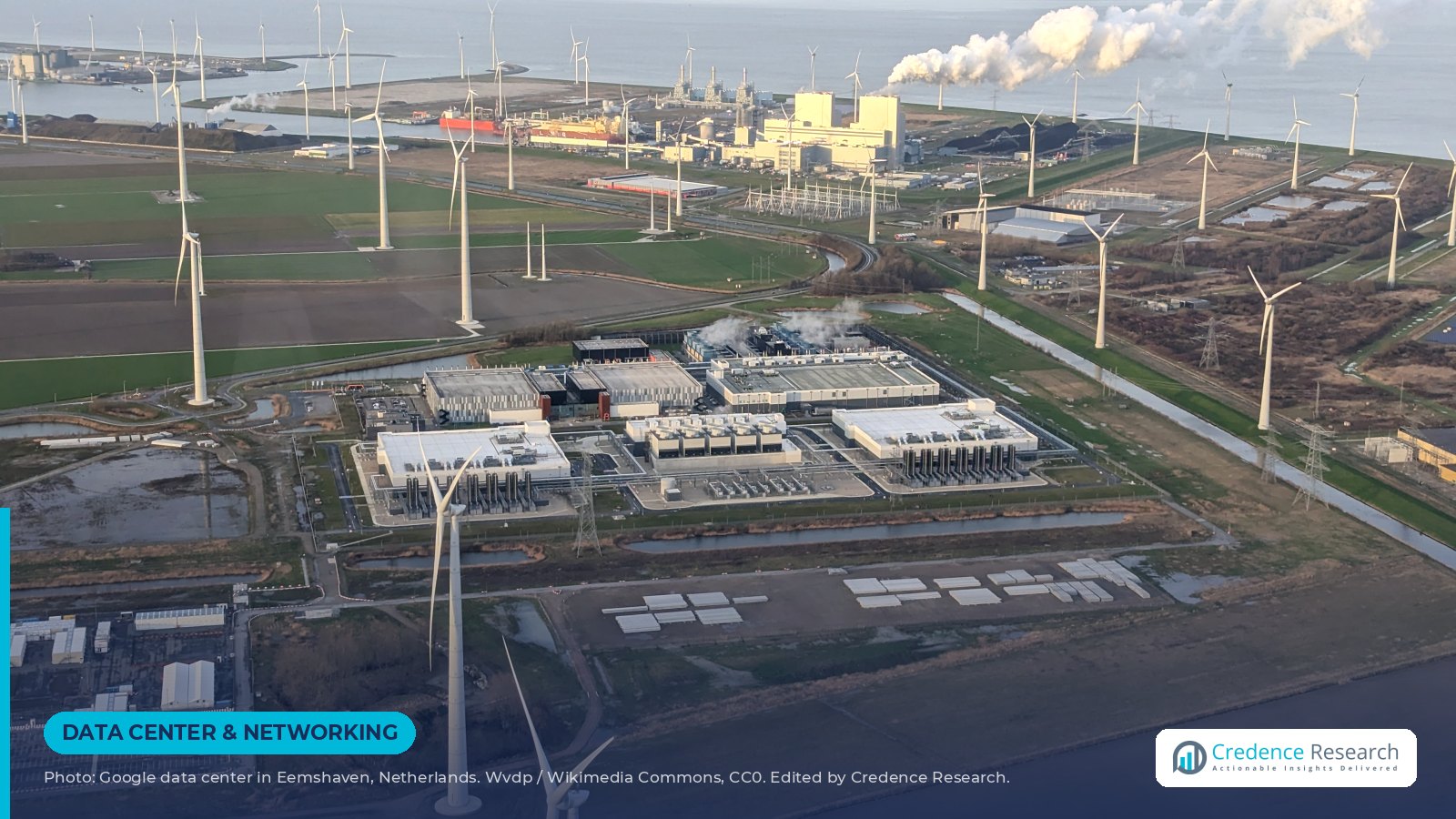
Image: Google data center and wind turbines in Eemshaven, Netherlands, by Wvdp via Wikimedia Commons, CC0. Cropped and edited by Credence Research.

About the Author

Senior News Editor at Credence Research Inc