
BASF to Build Electronic Materials Site in Nanjing, Targets End-2028 Start-Up for China Chip Supply
BASF signed an investment agreement with Nanjing Jiangbei New Area on Nov. 3, 2026, to establish a new electronic materials production site in the district's Materials High-Tech Park in Nanjing, China. The German chemical group expects the site to start up by the end of 2028 and is aiming it at China's semiconductor industry. BASF did not disclose the size of the investment, the planned capacity or the product list.
Key developments
- BASF and Nanjing Jiangbei New Area signed the investment agreement on Nov. 3, 2026, for a production site in the Materials High-Tech Park.
- Start-up is expected by the end of 2028.
- The project is intended to serve semiconductor customers in China with local production, technical support and supply.
- BASF describes the investment as another milestone in its "local-for-local" strategy.
- The release gives no investment amount, capacity, product list or job figure.
Why process chemicals sit close to the fab
BASF's Electronic Materials business supplies high-purity process chemicals and formulated solutions for semiconductor production, functional materials and process chemicals for displays, and specialized metal systems for industrial and consumer electronics applications. In chipmaking, process chemicals are consumed repeatedly through the production flow. BASF has described electronic-grade sulfuric acid, for example, as a material used in the many wafer cleaning cycles required for advanced chips.
Those materials are difficult to treat as ordinary freight. Purity has to hold from the production line through packaging, transport and delivery, and fabs typically qualify a supplier's material against a specific source before using it in volume. That qualification burden favors suppliers with plants, laboratories and application engineers near the customer, because a new source can take considerable time to approve and a supply interruption can affect a running fab.
The Nanjing agreement follows a path BASF has been building in China for several years. The company started electronic-grade sulfuric acid production at Zhapu in Jiaxing, Zhejiang province, in 2018, and in July 2021 said a third plant there, developed with Zhejiang Jiahua Energy Chemical Industry and its subsidiary, would more than double its sulfuric acid capacity in China. BASF has also run a specialty chemicals site in Nanjing's Jiangbei New Material Technology Park since 2007 and said in November 2025 that it had commissioned a new dispersant line there.
Industry implications
The announcement shows a major Western chemical supplier committing fresh production to Chinese chip customers at a time when technology trade between China and the United States and its allies remains under tight restriction. U.S. export controls have centered on advanced chips and chipmaking equipment. A chemical supplier's decision to build inside China points to how these companies are treating the region's demand: as something to be served from local assets rather than from export plants.
The timing also matters for buyers. An end-2028 start-up leaves roughly two years for construction, commissioning and the customer qualification work that normally comes with a new source of high-purity material. Chipmakers planning capacity for the end of the decade can treat the site as a possible supply option, though they will need the product list before they can judge how much of their bill of materials it could cover.
BASF framed the project around more than output. Jens Liebermann, senior vice president and head of the Global Electronic Materials business, said the investment strengthens the company's local manufacturing footprint. BASF also said the site is meant to serve as a platform for closer work with customers and partners across the semiconductor value chain, which suggests technical support is part of the commercial case.
Competitive and supply chain implications
Foreign electronic materials suppliers have taken a similar route. Merck KGaA of Germany said in 2022 it would invest 550 million yuan, or about $82.1 million at the time, in an Advanced Semiconductor Integration Site at Zhangjiagang, also in Jiangsu province, combining materials production, warehousing and operations. A BASF site in Nanjing would add another multinational production base in the province.
The pressure on these suppliers runs in two directions. Chinese fabs want dependable local supply, and a locally produced product can shorten logistics chains and reduce exposure to cross-border disruption. At the same time, a local plant has to be justified by demand that holds up across chip cycles, and it places a supplier's assets closer to any future shift in trade policy.
The project will also test how BASF allocates capital during a busy period for the group. Chemical Processing reported that Evonik's board said Oct. 30 it would not enter formal negotiations over BASF's expressed interest in a voluntary public takeover offer, while remaining open to a confidential exchange of information. BASF's Nanjing release does not mention that matter, and the two should be read as separate decisions.
Regional implications
For Nanjing Jiangbei New Area, the agreement adds a semiconductor materials project from a global chemical group to its Materials High-Tech Park. BASF's Gops Pillay, president of the Global Operating Division, said the plan builds on the company's existing strong presence in Nanjing and will strengthen manufacturing, supply chain and technical support in the region.
The location places the project in Jiangsu, within the Yangtze River Delta, an area that also includes BASF's electronic-grade sulfuric acid operations at Jiaxing in neighboring Zhejiang. BASF did not say how the Nanjing site will relate to its Jiaxing plants or whether it will share infrastructure with its existing Jiangbei specialty chemicals operation. It also gave no employment figure, so the local jobs effect cannot yet be measured.
Credence Research analysis
The most useful reading of this agreement is as a positioning move rather than a capacity event. With no disclosed spending, volume or product mix, the concrete facts are the location, the customer base and the date. Together they indicate that BASF wants another China anchor for electronic materials, alongside its sulfuric acid base at Jiaxing, and that it wants it in place before the end of the decade. The disclosure gap does not by itself signal a small investment or a large one.
The test will be what BASF chooses to make in Nanjing. A site centered on formulated solutions and technical service would imply a push deeper into customer process steps, where qualification creates lasting relationships. A site centered on commodity-like high-purity chemicals would compete more directly on cost and logistics against local producers. The local-for-local label covers either path. Readers should watch the permits, the product list and any named customer or partner disclosures, since those will reveal how much of the semiconductor value chain BASF intends to serve from Nanjing.
What comes next
- BASF disclosure of the investment amount, capacity and products for the site, none of which appear in the Nov. 3 release.
- Permitting, environmental review and the start of construction in the Materials High-Tech Park.
- Any detail on how the site will connect with BASF's Jiaxing and existing Nanjing operations.
- Customer qualification work ahead of the planned start-up.
- Start-up, which BASF expects by the end of 2028.
Sources
- BASF: Investment agreement with Nanjing Jiangbei New Area (Nov. 3, 2026)
- BASF: Third electronic-grade sulfuric acid plant in Jiaxing (July 2021)
- BASF: New dispersant line at the Nanjing site (Nov. 2025)
- China Daily: Merck's Zhangjiagang electronics investment (June 2022)
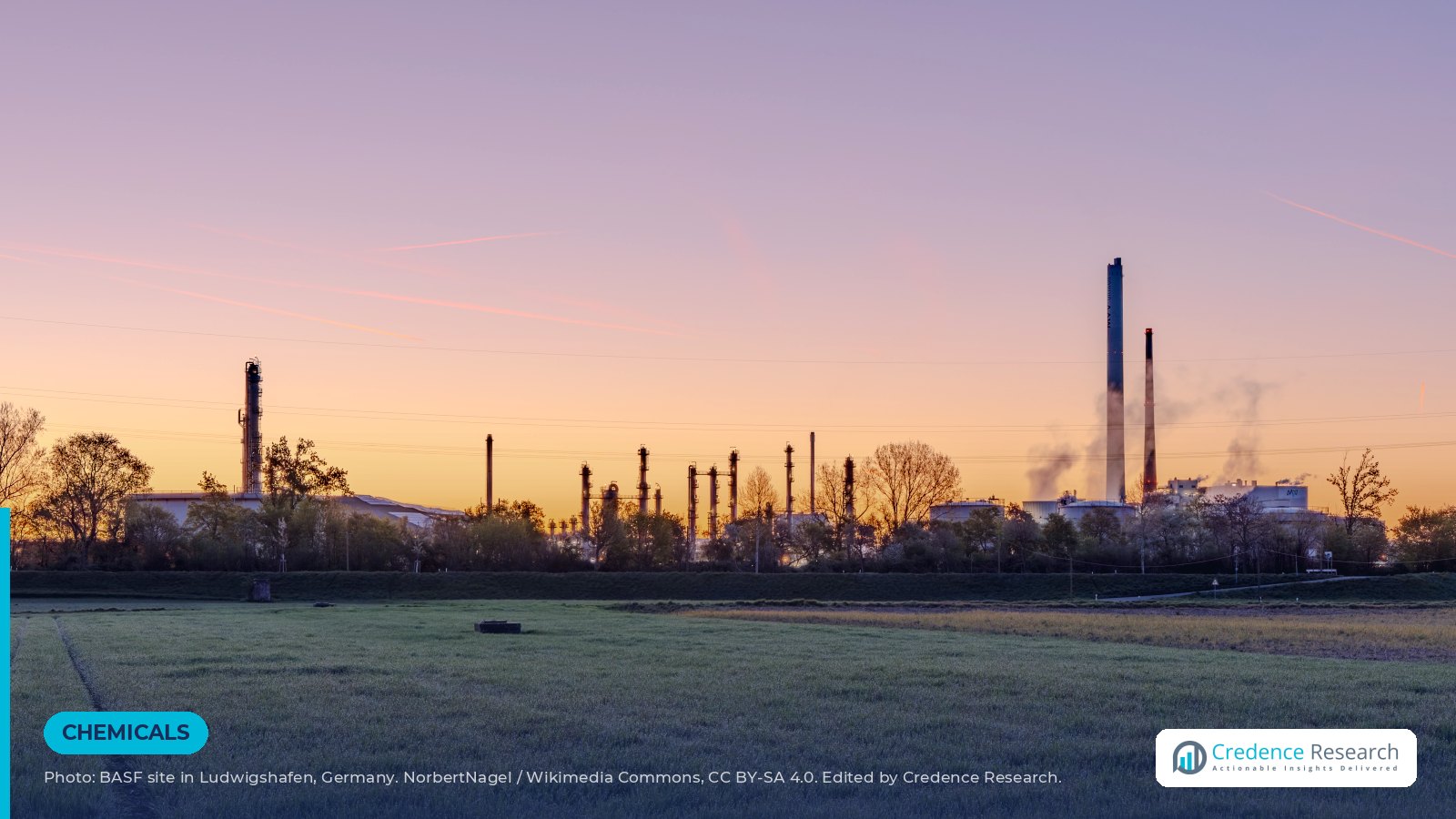
Image: BASF site on Friesenheimer Insel in Ludwigshafen, Germany, at sunrise, by NorbertNagel via Wikimedia Commons, CC BY-SA 4.0. Cropped and edited by Credence Research.

About the Author

Senior News Editor at Credence Research Inc