
Onsemi to Buy Ferric for Up to $775 Million to Bring Power Regulation Closer to AI Processors
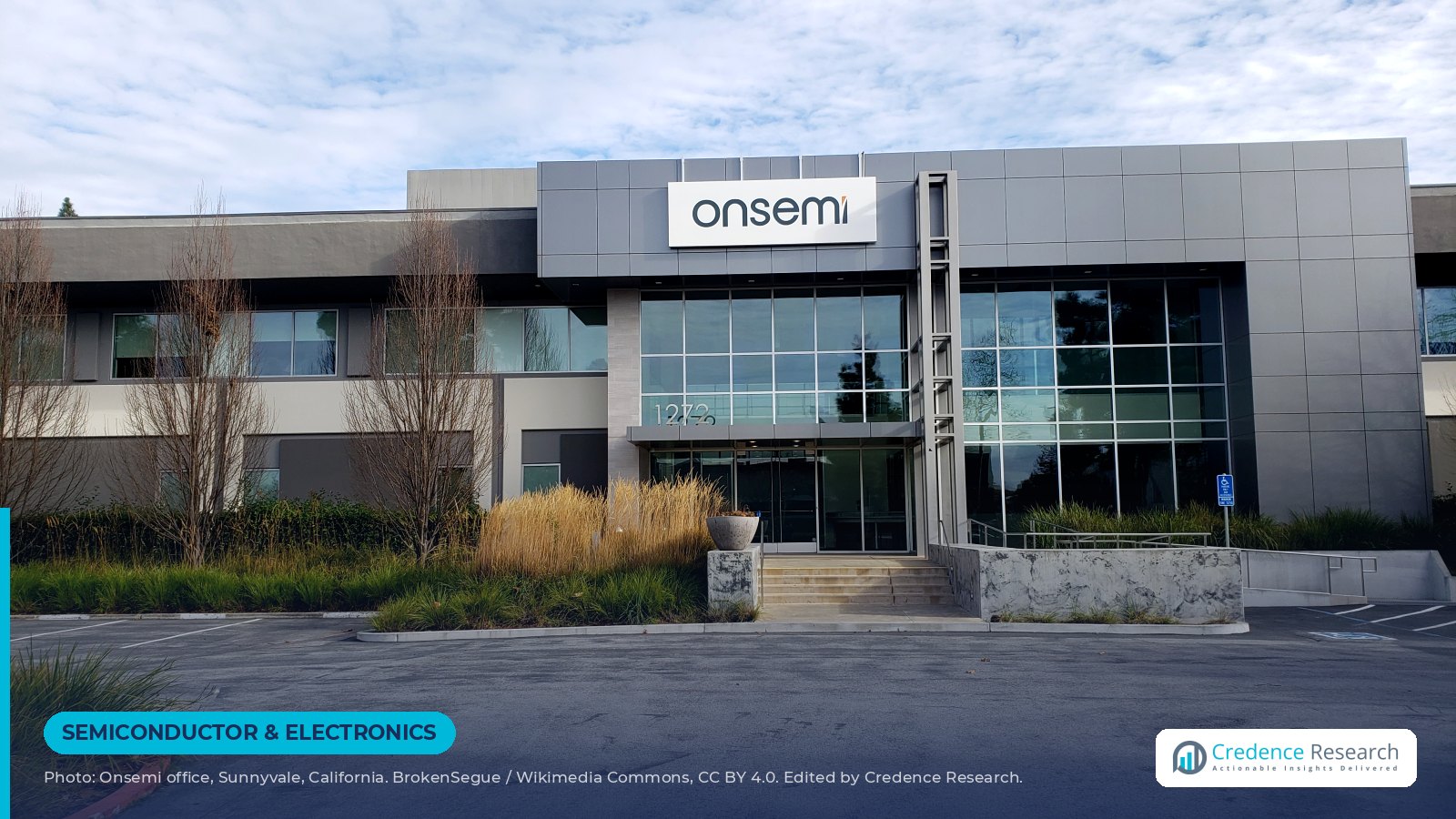
Power chipmaker onsemi agreed on Nov. 2 to acquire Ferric Inc., a developer of integrated voltage regulators for AI and high-performance processors, for $600 million in cash at closing and up to $175 million more tied to revenue milestones. Onsemi, based in Scottsdale, Arizona, disclosed the agreement alongside its third-quarter results and expects to complete the purchase by the end of 2026.
Key developments
- Onsemi will pay $600 million in cash at closing, subject to customary adjustments, plus contingent cash of up to $175 million, for a maximum of $775 million. The company said it will fund the deal with cash on hand.
- Ferric will become a wholly owned subsidiary through a merger. Closing requires customary conditions, including the end of the Hart-Scott-Rodino antitrust waiting period, according to onsemi's Form 8-K.
- About 50 Ferric employees, mainly in New York and Silicon Valley, are expected to join onsemi. Ferric holds more than 40 patents.
- Onsemi said Ferric's architecture cuts board area by 50% to 70% compared with conventional discrete voltage regulators. That figure is the company's own claim.
- Onsemi expects no meaningful near-term financial effect and raised its long-term AI data center revenue target in connection with the deal.
How the technology works
Most processors today receive power laterally. Regulators and inductors sit on the board around the chip, and current crosses the board to reach it. That layout grows harder to sustain as processors draw more power at low voltage. EE Journal illustrated the problem in a February article: a 1,000-watt processor running at 1 volt needs about 1,000 amps, and pushing that current across a board creates losses, noise and heat.
Integrated voltage regulators shorten that path. They sit under, beside or inside the processor package, where they convert an intermediate supply rail to the sub-1-volt level the processor core needs. Because the final conversion happens at the chip, less current has to travel across the board.
Ferric spun out of Columbia University in New York, EE Journal reported. Its Fe1766 device, launched in August 2025, packs the controller, power transistors, inductors and capacitors into an 8-by-4.4-millimeter chiplet rated for 160 amps. The company says up to 64 devices can be combined to serve processors above 10 kilowatts.
Industry implications
The deal shows how far the AI power problem has moved toward the chip itself. Much of the industry's recent attention has gone to grid connections, on-site generation and higher-voltage distribution inside data centers. Those steps do not solve the last few millimeters, where current is highest and where fast swings in AI workloads test voltage stability.
Onsemi framed the purchase in those terms. The company described its portfolio as covering power from grid to core, and CEO Hassane El-Khoury said AI is "reshaping the requirements for power delivery." On the third-quarter earnings call, according to a transcript published by Investing.com, he said Ferric places the full regulator close to the GPU and strengthens onsemi in the Vcore stage, the final step that feeds the processor core.
El-Khoury also described Ferric as a multiyear opportunity extending well beyond 2030. He declined to give revenue guidance for the acquisition or for 2027, which suggests investors should not expect the technology to reshape onsemi's sales mix quickly. Integrated regulators must be designed into a processor package early, so adoption tends to follow new platform cycles rather than simple component swaps.
Competitive and supply chain implications
El-Khoury said on the call that Ferric has worked with all of the hyperscalers on design and platform architecture and has relationships with compute platform vendors. He named no customers. He pitched the product on three grounds: transient response under dynamic processor loads, a low profile compared with what he described as a peer height of about 2.5 millimeters, and efficiency that eases thermal management. Those are management claims, and no independent test results accompanied the announcement.
The move also raises a question about Ferric's existing partnerships. SDxCentral has reported that Ferric teamed with Marvell Technology to integrate its regulators into Marvell's custom silicon platforms. Marvell, which announced an all-stock agreement to buy optical supplier Lumentum on the same day as the Ferric deal, has also promoted its own package-integrated regulator offering. Ferric's move under a power chip supplier could change how such partners weigh a shared component, though the Ferric announcement did not address that question.
For Ferric, the appeal is industrial reach. Founder and CEO Noah Sturcken said joining onsemi gives the company "the scale, manufacturing capabilities and customer reach" to speed adoption. A roughly 50-person company selling into processor packages faces a high bar on qualification and volume assurance, and hyperscale buyers usually want a supplier that can guarantee both.
The purchase also sits beside a much larger transaction. Onsemi revised its planned acquisition of Synaptics to about $5.7 billion in cash, compared with $7 billion in stock under the earlier agreement. Onsemi reported $4.37 billion in cash and short-term investments as of Oct. 2.
Regional implications
In the United States, the deal keeps a Columbia University spinout under domestic ownership and adds New York and Silicon Valley engineers to an Arizona-based company. Onsemi also operates a fab in East Fishkill, New York, which came up on the earnings call in connection with other products. Executives did not address where Ferric devices will be built, and the release names no plant, foundry or manufacturing location.
Asia remains relevant even without a local element in the announcement. Much of the advanced packaging and substrate capacity for AI processors sits in Taiwan, South Korea and Japan, so a regulator built into or under the package would need to fit those assembly flows. Onsemi has not said which packaging partners will handle Ferric's products. The 8-K identifies the U.S. antitrust review as a closing condition, and the disclosures reviewed for this article do not list a separate foreign approval.
Credence Research analysis
The structure of the deal says as much as the headline value. Onsemi is paying for roughly 50 engineers, a patent portfolio and early design engagements, with 22.6% of the maximum price held back until revenue arrives. That split indicates both parties see real demand ahead but cannot yet point to named production programs in public. The milestones are the clearest test of whether design activity turns into volume.
The strategic risk lies in timing and focus. Onsemi is absorbing a small technology company while pursuing a far larger Synaptics transaction that has already been restructured once. Integrated regulation also competes with other approaches to the same problem, including processor vendors' in-house designs and rival suppliers' package-level modules. The evidence to watch is a named processor platform that ships with Ferric silicon. Until then, the acquisition is a credible option on where power delivery is heading, not yet proof of adoption.
What comes next
- Expiration or early termination of the Hart-Scott-Rodino waiting period, followed by closing, which onsemi expects in the fourth quarter of 2026.
- Any disclosure of a named processor or hyperscale program using Ferric regulators.
- Details on where Ferric devices will be made and packaged under onsemi ownership.
- Progress on the revised Synaptics transaction, which will shape how much integration capacity onsemi has in 2027.
- Signals from Marvell and other processor partners on whether they will continue to design in Ferric parts.
Sources
- onsemi: onsemi to Acquire Ferric
- onsemi third-quarter 2026 results, SEC Form 8-K exhibit
- EE Journal: Powering kilowatt-plus processors
- Investing.com: onsemi Q3 2026 earnings call transcript
Image: Onsemi office in Sunnyvale, California, by BrokenSegue via Wikimedia Commons, CC BY 4.0. Cropped and edited by Credence Research.

About the Author

Senior News Editor at Credence Research Inc