
Marvell to Acquire Lumentum in $115 Billion All-Stock Deal to Build AI Connectivity Supplier
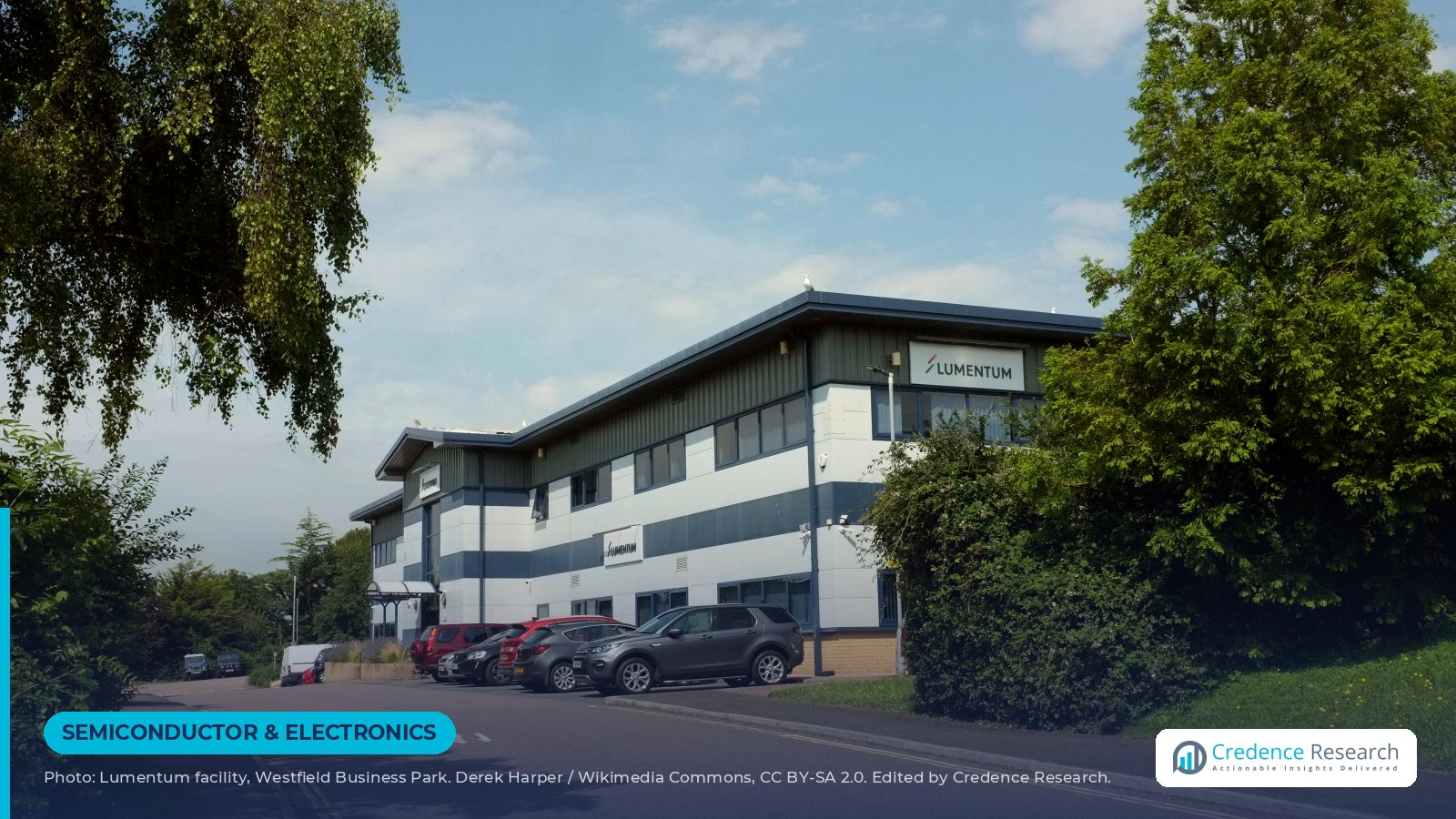
Marvell Technology agreed to buy Lumentum in an all-stock transaction that values the laser and optical component maker at an implied enterprise value of $115 billion, the two Silicon Valley companies said Monday, Nov. 2, from Santa Clara and San Jose, California. The deal would place custom AI silicon, data center switching, high-power lasers and optical circuit switches under a single company at a time when moving data between processors has become a central constraint on AI system design.
Key developments
- Each Lumentum share will convert into 4.500 Marvell shares, a fixed exchange ratio that implies about $1,132 per Lumentum share, a premium of about 23.9% to the unaffected closing price on Oct. 28.
- Marvell stockholders would own about 67% of the combined company and Lumentum stockholders about 33% on a fully diluted basis.
- Matt Murphy will remain chairman and CEO. Lumentum CEO Michael Hurlston and two other Lumentum directors will join Marvell's seven-member board.
- The companies expect more than $1 billion in annual run-rate cost synergies and expect the deal to add to Marvell's non-GAAP earnings per share in the first year after closing.
- Both boards approved the agreement unanimously. Closing is expected in the first half of calendar 2028, subject to stockholder and regulatory approvals.
How the two businesses fit together
Marvell designs electrical and optical interconnect chips, data center switching silicon and custom processors for large cloud operators. Its optical position grew substantially through the 2021 purchase of Inphi, which brought high-speed signal processing chips used inside optical modules.
Lumentum sits one layer closer to the light itself. It makes lasers, optical transceivers and optical circuit switches, and it operates compound semiconductor manufacturing, including indium phosphide, the material used for many high-speed lasers. The company built that position through deals including Oclaro in 2018, NeoPhotonics in 2022 and Cloud Light in 2023.
The companies framed the combination around four connectivity domains: scale-across links between distributed data centers, scale-out networks across a cluster, scale-up links within a rack or pod, and scale-in connections inside advanced semiconductor packages. They said joint design of chips and lasers would allow pre-validated optical products and shorten customers' time to deployment. Murphy described the shift in AI infrastructure as "an opportunity that comes along once in a generation."
Marvell also used the announcement to update investors, saying preliminary revenue for its fiscal third quarter of 2027 is consistent with earlier guidance. It kept the midpoint and narrowed the range to plus or minus 2% from plus or minus 5%.
Industry implications
The deal reflects a change in how AI clusters are engineered. Copper remains useful over short distances, but rising data rates and larger clusters are pushing optical links closer to the processor. That makes the laser, the signal processing chip and the switch far more interdependent than they were when each was bought as a separate component.
A supplier that controls more of that chain can tune parts against one another before a customer receives them. For cloud operators, the appeal is less integration work and potentially faster qualification. The risk is greater dependence on one vendor for parts that many buyers have traditionally sourced from several companies, so large customers are likely to press for assurances about interoperability and second sources.
Optical circuit switching adds a further dimension. These systems redirect light without converting it to electrical signals, and Lumentum's position in them gives Marvell a product alongside its conventional electrical switching silicon.
Competitive and supply chain implications
The combination would create a broader rival to Broadcom, which also sells custom AI silicon, Ethernet switching and optical components, and to Coherent, a major laser and transceiver maker. It would also change relationships with module makers that buy Marvell signal processing chips and Lumentum lasers while competing with Lumentum's own transceivers. Those customers will want to know how supply and pricing are handled once both components sit inside one company.
Nvidia holds a financial stake in both companies. It announced a $2 billion investment in Lumentum on March 2, alongside a nonexclusive, multibillion-dollar purchase commitment for advanced laser components and future capacity access rights. On March 31, it said it had invested $2 billion in Marvell through a partnership that connects Marvell to its NVLink Fusion platform and includes work on optical interconnects and silicon photonics. Nvidia also announced a parallel optics partnership with Coherent in March, which leaves it with supply relationships on more than one side of this consolidation.
Indium phosphide capacity is the supply question to watch. Nvidia's capacity access rights show that large buyers are already moving to secure future laser supply. Ownership of that capacity may matter as much as the chip roadmaps in the months ahead.
Regional implications
Both companies are based in California, and the transaction concentrates more of the AI optical supply chain in U.S. corporate hands. Nvidia's March announcement said Lumentum is expanding U.S. manufacturing through a new fabrication facility, which aligns with a wider U.S. effort to bring compound semiconductor production onshore.
The international picture is more complicated. Much optical module assembly and advanced packaging takes place in Asia, and many customers and suppliers on both sides operate across the region. The announcement refers to regulatory approvals without naming jurisdictions, but large semiconductor deals with global sales commonly need clearance from multiple authorities. Recent transactions in the sector have required review by China's State Administration for Market Regulation, which could influence timing here. The long closing window suggests the companies anticipate an extended process.
Credence Research analysis
The structure of this deal says as much as its size. A fixed all-stock exchange ratio spares Marvell from taking on acquisition debt at this scale and leaves Lumentum holders with about one-third of the combined company, which makes this closer to a merger of two major franchises than a conventional takeover. It also means both sets of stockholders carry the risk of share price moves during a waiting period that could last up to 20 months, a long time in a sector where product generations turn quickly.
The strategic bet is that AI connectivity will be bought increasingly as an engineered system rather than a collection of parts. That thesis is credible given the technical direction of scale-up optics, but it depends on customers accepting tighter vendor integration. The most important evidence will come from outside the companies: whether regulators seek remedies around component supply, whether module makers shift orders to other laser sources, and how Nvidia and major cloud operators structure their purchasing during the review period. The stated synergy target is small against the deal value, which signals that the case rests chiefly on product co-design and capacity rather than on cost savings.
What comes next
- Marvell's Form S-4 registration statement, including a joint proxy statement, to be filed with the U.S. Securities and Exchange Commission.
- Stockholder votes at both Marvell and Lumentum, with dates yet to be announced.
- Antitrust and other regulatory reviews, with closing targeted for the first half of calendar 2028.
- Marvell's final fiscal third-quarter results, following the narrowed preliminary revenue range.
- Details on integration plans, including laser capacity and the U.S. fabrication expansion.
Sources
- Marvell: Marvell and Lumentum to Combine, Creating a Category Leader in AI Connectivity
- Nvidia: Strategic Partnership With Lumentum to Develop Optics Technology
- Nvidia: AI Ecosystem Expands as Marvell Joins Forces Through NVLink Fusion
Image: Lumentum facility at Westfield Business Park, by Derek Harper via Wikimedia Commons, CC BY-SA 2.0. Cropped and edited by Credence Research.

About the Author

Senior News Editor at Credence Research Inc