
U.S. Steel Breaks Ground on $1.9 Billion Direct Reduced Iron Plant in Osceola, Arkansas
U.S. Steel broke ground Oct. 30 on a $1.9 billion direct reduced iron plant at its Big River Steel Works campus in Osceola, Arkansas, a project that will tie the Nippon Steel subsidiary's Minnesota iron ore mines to its electric arc furnaces there. The company said preliminary site preparation is underway and construction should begin in the latter part of 2026.
Key developments
- U.S. Steel held the groundbreaking in Osceola on Oct. 30, six months after announcing the $1.9 billion investment on April 29.
- The plant will sit next to Big River 2, allowing hot direct reduced iron, or DRI, to be fed straight into that mill's electric arc furnaces.
- The company expects about 200 full-time jobs and an estimated 2,000 construction jobs at peak.
- DRI from the site can also be formed into hot briquetted iron, a transportable product for use at Big River or other destinations.
- Local broadcaster KAIT reported that the company expects a first production run in early 2029. The company's release does not give a completion date.
How the technology works
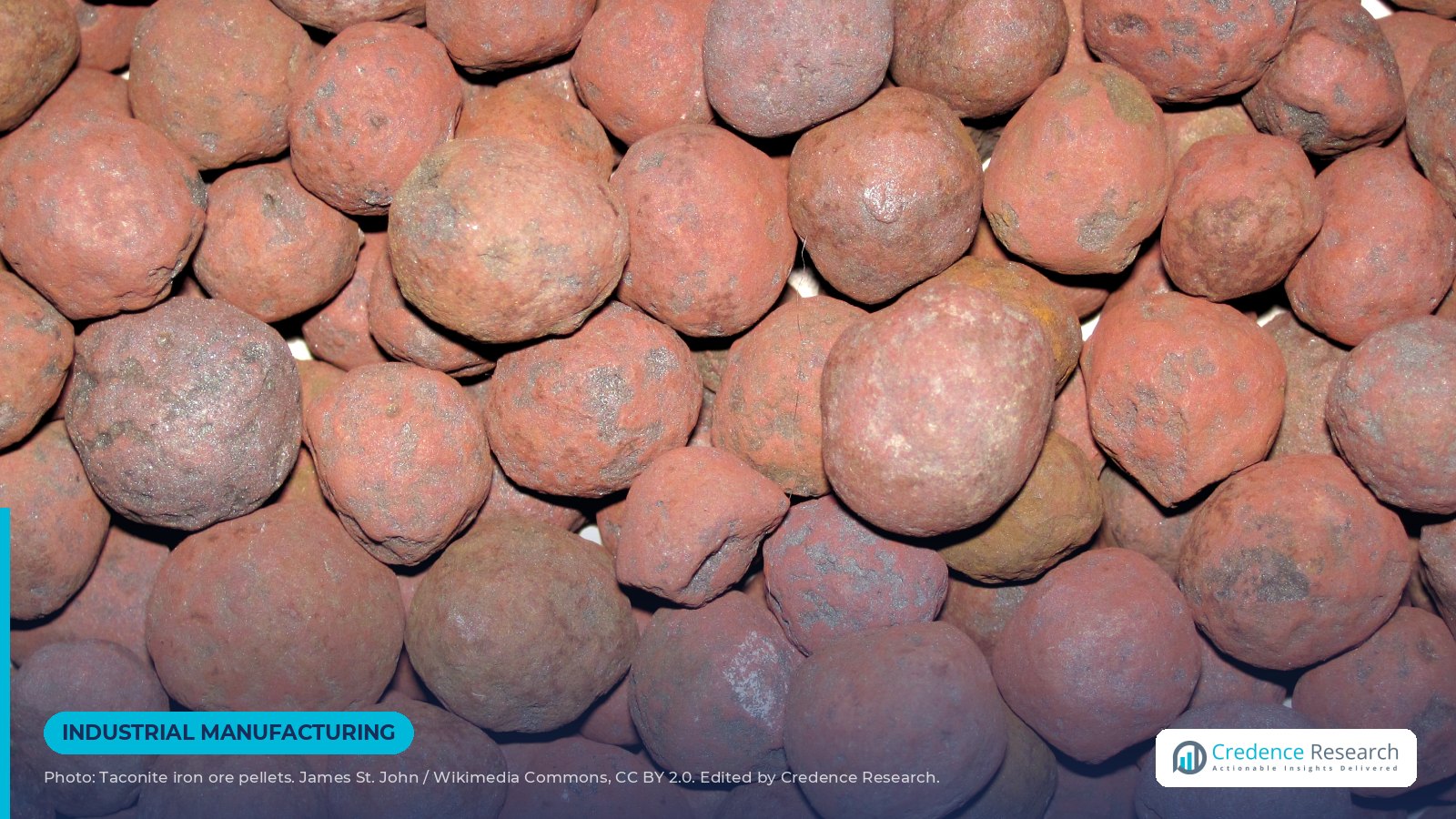
Direct reduction strips oxygen from iron ore pellets while the material remains solid, rather than melting it in a blast furnace. The product is a high-iron feedstock that electric arc furnace operators can charge alongside or in place of scrap. U.S. Steel described its DRI as a higher-quality replacement for prime scrap, the clean, low-residual grade that makers of exposed automotive and appliance sheet tend to need. The company's releases do not identify a process licensee, a reductant or a rated annual capacity.
Charging DRI while it is still hot is the distinguishing design choice in Osceola. Hot material carries heat into the furnace that would otherwise have to come from electricity, and it avoids the handling and shipping that cold product requires. U.S. Steel calls the plant first of its kind in the United States, a claim its releases do not define in detail. Other U.S. producers already run direct reduction plants, so the description appears to rest on the link between the company's own mine, its pellets and an adjacent melt shop.
The upstream piece is already in place. In 2022, U.S. Steel committed $150 million to direct reduced-grade pellet capability at its Keetac plant in Keewatin, Minnesota, saying the pellets could feed a possible future DRI or hot briquetted iron facility or be sold to third parties.
Industry implications
The project reflects a shift in how electric arc furnace steelmakers think about raw materials. Flat-rolled mills that rely on scrap carry exposure to prices and to tramp elements such as copper, which limit the grades they can produce. Owning a captive iron unit gives a mill a more consistent chemistry and a hedge against scrap swings, though it also brings capital intensity and ore logistics.
U.S. Steel is aiming the output at reduced-emission steel for automotive, appliance and solar customers. Daniel Brown, executive vice president of advanced technology steelmaking and chief operating officer of Big River Steel Works, said the plant gives the company greater control over a critical raw material, with better supply reliability and more flexibility for advanced steels.
The company has not published an emissions figure for the Osceola plant, and the climate result will depend on the reducing gas and the power supply.
Competitive and supply chain implications
U.S. Steel will not be alone in pursuing domestic iron units. Cleveland-Cliffs operates a direct reduction plant in Toledo, Ohio, that makes hot briquetted iron, and Nucor runs a DRI plant in St. James Parish, Louisiana. Hyundai Steel plans a $5.8 billion electric arc furnace mill in Donaldsonville, Louisiana, which state officials say will import about 3.6 million tons of iron ore a year.
The hot briquetted iron option adds a merchant dimension. U.S. Steel's language leaves room for product to leave Osceola for other destinations, which could include other company sites or outside buyers, though it has announced no sales plan. For scrap dealers in the Mid-South, a large iron source next to Big River 2 could soften demand for prime grades over time. The release named no contractors.
The project also lands a week after U.S. Steel's board approved a new hot strip mill of nearly $3 billion at Mon Valley Works in Pennsylvania. Taken together, the two decisions show Nippon Steel's ownership steering capital toward both ends of the production chain. CEO David Burritt said in April that the partnership moved the DRI investment forward years sooner than would otherwise have been possible.
Regional implications
Mississippi County has become one of the country's more concentrated steelmaking districts, with the Big River campus in Osceola and Nucor's Hickman sheet mill in nearby Blytheville. U.S. Steel acquired Big River Steel in 2021, and the $3 billion Big River 2 expansion began producing steel in 2024. The campus now has four electric arc furnaces and makes more than 6 million tons of steel a year, the company said. KAIT reported that Big River employs 1,800 people.
Arkansas Gov. Sarah Huckabee Sanders welcomed the project, saying the country's next building boom needs steel and that she wants Arkansas workers making it. The company's fiscal 2024 impact analysis credits it with supporting more than 4,700 jobs in the state and contributing $45 million in state and local tax revenue.
The benefits also reach northern Minnesota, where an Arkansas outlet for direct reduced-grade pellets would give Keetac an internal customer.
Credence Research analysis
The most useful way to read Osceola is as a raw-material decision rather than a capacity decision. The plant adds no new melting capability, and the company has not said how many tons of iron it will make. What it changes is the input mix and the control over quality at a mill already built for demanding sheet grades. If hot charging performs as intended, Big River 2 could reduce its dependence on prime scrap and compete for more exposed and advanced high-strength applications.
Execution and disclosure are the open questions. The two timing signals available do not fully align: KAIT reported a buildout of about 32 months and a first run in early 2029, while the company has committed publicly only to starting construction in late 2026. Investors and customers should watch for three disclosures that would turn the announcement into a measurable project: rated tonnage, the reductant plan, and the division of output between hot charging and briquettes.
What comes next
- U.S. Steel expects to move from preliminary site work to construction in the latter part of 2026.
- Engineering and equipment delivery come first. KAIT reported that Brown projects a 32-month buildout.
- Technology, contractor and capacity details remain undisclosed and would be the next meaningful release from the company.
- First production is expected in early 2029, according to KAIT.
Sources
- U.S. Steel: Breaks Ground on $1.9 Billion Arkansas Direct Reduced Iron Production Plant (Business Wire, Oct. 30, 2026)
- U.S. Steel: Announces First-of-Its-Kind DRI Facility at Big River Steel Works (April 29, 2026)
- U.S. Steel: DR-Grade Pellet Capability at Keetac (2022)
- KAIT: U.S. Steel breaks ground on $1.9 billion building (Oct. 31, 2026)
Image: Taconite iron ore pellets, by James St. John via Wikimedia Commons, CC BY 2.0. Cropped and edited by Credence Research.

About the Author

Senior News Editor at Credence Research Inc