
Valero to Buy LyondellBasell's Idled Houston Refinery, Restart 165,000 b/d by End-2027
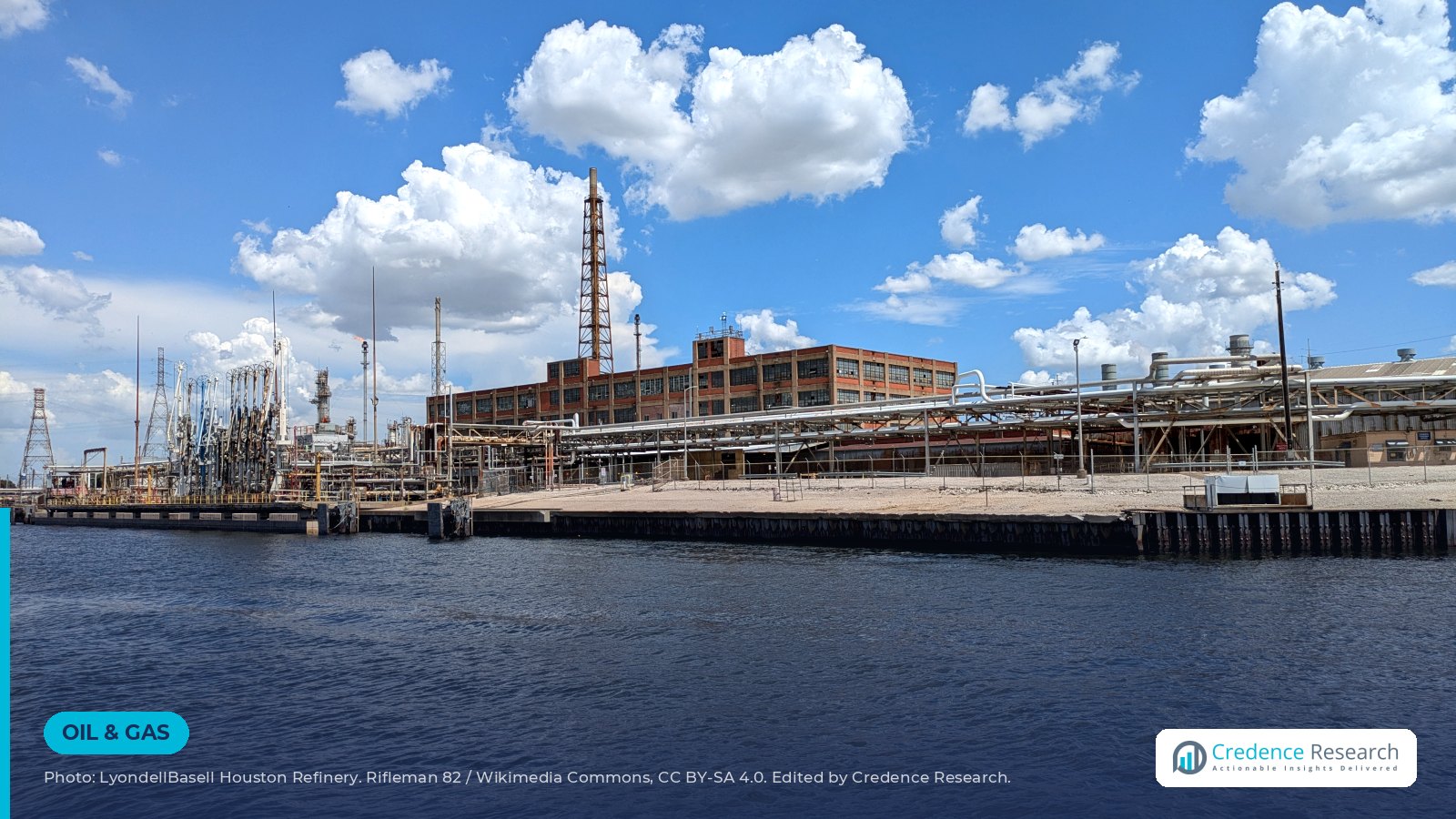
Valero Energy Corp. agreed on Oct. 30, 2026, to buy LyondellBasell Industries' shuttered Houston refinery for $320.5 million and plans to bring 165,000 barrels per day of crude processing capacity back online by the end of 2027. The roughly 700-acre site sits on the Houston Ship Channel directly next to Valero's existing Houston refinery, giving the San Antonio-based refiner a rare chance to add Gulf Coast capacity by restarting idled equipment rather than building new units.
Key developments
- Valero Refining-Texas, L.P., a wholly owned Valero subsidiary, will acquire all outstanding equity of LYB Houston Hub Holdings LLC for $320.5 million, subject to closing adjustments, according to Valero's Form 8-K.
- Valero said it initially expects to restart 165,000 barrels per day of light sweet crude processing capacity by year-end 2027, with an option to invest later in high-complexity heavy sour crude processing.
- Closing requires expiration or termination of the Hart-Scott-Rodino antitrust waiting period and other customary conditions. Valero expects to close by the end of 2026; LyondellBasell said it expects closing in the fourth quarter.
- LyondellBasell said Valero will take on ongoing site operations, environmental liabilities, pension costs and related employee obligations, and that the agreement keeps the site's workforce employed.
- LyondellBasell shut down refining operations at the site in February 2025, according to its own 8-K filing.
Refinery background
The Houston refinery was LyondellBasell's only crude oil refinery and an outlier in a portfolio built around olefins, polyolefins and chemical intermediates. The company announced in April 2022 that it would exit refining and cease operating the plant, which Oil & Gas Journal described at the time as a 268,000-barrel-per-day facility. The exit was delayed more than once before the crude units finally stopped in early 2025.
After the shutdown, LyondellBasell studied other uses for the site, including hydrogen production, OGJ reported. Chief Executive Peter Vanacker said the sale provides an opportunity to realize value from a non-core asset, and the company described it as part of its broader portfolio transformation.
For Valero, the site comes with more than process units. Argus Media reported that it includes 13.5 million barrels of storage plus marine docks, rail loading facilities and truck racks. Valero's adjacent Houston refinery processes about 205,000 barrels per day, according to Argus, so the combined complex would sit on a single stretch of one of the busiest petrochemical waterways in the United States.
Industry implications
Restarts of closed U.S. refineries are uncommon. Once crude units are idled, owners typically dismantle them, convert them to renewable fuels or sell the land for terminals. Valero's plan reverses that pattern and signals that at least one large refiner sees enough margin in Gulf Coast crude processing to justify recommissioning equipment that has been idle since early 2025.
Valero has not disclosed how much it will spend on the restart. Chairman, CEO and President Lane Riggs called the deal "a unique opportunity to strategically expand Valero's U.S. Gulf Coast footprint," and Argus reported that he framed the purchase as coming at a fraction of replacement value. The company said it expects a return consistent with its capital allocation framework.
The deal also contrasts with Valero's approach on the West Coast. Argus reported that the company said the previous week it does not plan to restart its idled 145,000-barrel-per-day Benicia refinery in California, citing a difficult operating environment. Capital is moving toward Texas, where regulation, crude access and export logistics are more favorable to refiners.
Competitive and supply chain implications
Valero's transaction presentation, as summarized by OGJ, ties the purchase to intermediate feedstock shortages across its Gulf Coast system. Output from the restarted site would add feed for fluid catalytic cracking and hydrocracking units and reduce the company's reliance on third-party purchases. Spare hydrotreating capacity at the site could also upgrade intermediates produced at other Valero Gulf Coast plants.
That makes the Houston site as much an integration play as a capacity play. Refiners that buy vacuum gas oil and other intermediates on the open market are exposed to price swings and supply gaps; producing more of those streams in-house can lift utilization of downstream conversion units that are already built and paid for.
Competitors along the Houston Ship Channel and in the broader Texas Gulf Coast will watch the restart closely. Additional light sweet runs in Houston would increase local demand for domestic shale crudes moving by pipeline to the coast, while added product volumes would compete for pipeline space, export dock slots and inland markets. The heavy sour option, if exercised later, would place Valero in more direct competition for imported Canadian, Latin American and Middle Eastern heavy grades.
Regional implications
For Houston, the agreement keeps an industrial site in operation instead of letting it sit idle or face redevelopment. LyondellBasell said the deal preserves the existing site workforce, though neither company disclosed a headcount or a hiring figure for the restart. Recommissioning crude and conversion units typically requires extensive contractor work on inspection, repair and safety systems, which could support local construction and maintenance employment during 2027.
The transaction also lands during a broader federal push to support domestic refining. Argus reported that the administration is planning ways to help expand refining capacity and potentially reopen recently closed facilities. Valero did not say whether it expects any government support for the Houston restart.
Environmental oversight will remain a local issue. By assuming the site's environmental liabilities, Valero takes responsibility for legacy conditions at a long-operating Ship Channel refinery, and a restart will require air permits and agency reviews in Texas before crude runs resume.
Credence Research analysis
The deal shows how differently two large U.S. companies now value the same asset. LyondellBasell treated refining as a distraction from its chemicals strategy and spent several years trying to exit; Valero sees a fully permitted waterfront site with tankage, docks and rail next to its own plant, available for a purchase price far below what new construction would cost. The assumption of environmental, pension and employee obligations is a meaningful part of the consideration and helps explain the modest headline price.
The key risk is execution. Idled equipment degrades, and Valero has not published a restart budget. The end-2027 target leaves about a year after closing for inspection, repairs and commissioning. Investors and competitors should focus on disclosed capital spending, permitting milestones and whether Valero commits to the heavy sour expansion, which would turn a restart into a much larger reconfiguration of its Gulf Coast system.
What comes next
- Hart-Scott-Rodino antitrust review and closing, targeted for the end of 2026.
- Disclosure of restart capital spending, likely alongside Valero's 2027 capital budget.
- Air permitting and regulatory reviews in Texas ahead of recommissioning.
- Restart of 165,000 barrels per day of light sweet crude processing, targeted by year-end 2027.
- A later decision on investment in high-complexity heavy sour crude processing at the site.
Sources
- Valero Energy Corp. Form 8-K, Oct. 30, 2026
- LyondellBasell Industries N.V. Form 8-K, Oct. 30, 2026
- Oil & Gas Journal: Valero to acquire former LyondellBasell Houston oil refinery
- Argus Media: Valero to buy, restart idled Houston oil refinery
Image: LyondellBasell Houston Refinery on the Houston Ship Channel, by Rifleman 82 via Wikimedia Commons, CC BY-SA 4.0. Cropped and edited by Credence Research.

About the Author

Senior News Editor at Credence Research Inc