Market Overview:
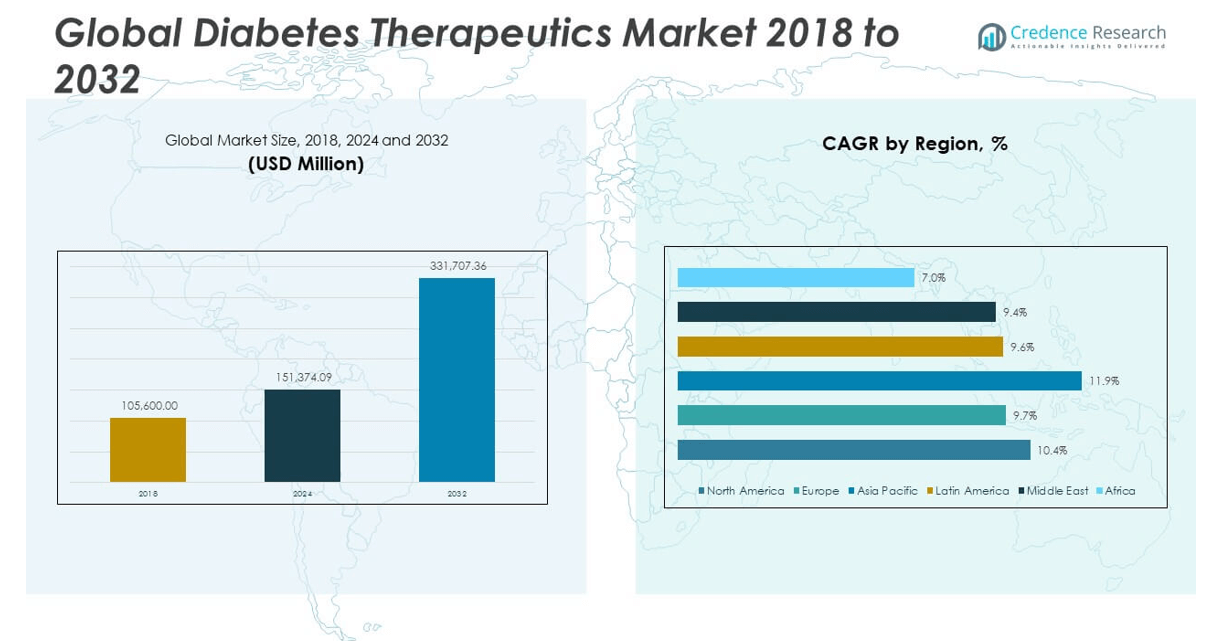
The Diabetes Therapeutics Market size was valued at USD 1,05,600.00 million in 2018, increased to USD 1,51,374.09 million in 2024, and is anticipated to reach USD 3,31,707.36 million by 2032, at a CAGR of 10.37% during the forecast period.
| REPORT ATTRIBUTE | DETAILS |
|---|---|
| Historical Period | 2020-2023 |
| Base Year | 2024 |
| Forecast Period | 2025-2032 |
| Diabetes Therapeutics Market Size 2024 | USD 1,51,374.09 million |
| Diabetes Therapeutics Market, CAGR | 10.37% |
| Diabetes Therapeutics Market Size 2032 | USD 3,31,707.36 million |
The market is being driven by a surge in diabetes prevalence globally, rising awareness of early diagnosis and management, and strong demand for advanced therapeutics such as GLP-1 receptor agonists and SGLT2 inhibitors. Pharmaceutical companies are investing in the development of novel drug delivery systems and combination therapies to enhance efficacy and adherence. Government initiatives supporting diabetes care, increasing healthcare expenditures, and growing geriatric populations are further accelerating market growth across both developed and emerging regions.
North America dominates the Diabetes Therapeutics Market, led by the U.S. due to its high disease burden, robust healthcare infrastructure, and early adoption of new therapies. Europe follows with significant uptake of innovative treatments supported by reimbursement policies. Meanwhile, Asia Pacific is emerging as a high-growth region, driven by lifestyle shifts, expanding urbanization, and increasing healthcare access in populous countries like India and China. The market is also gaining momentum in Latin America and the Middle East due to improved screening programs and rising awareness.
Market Insights:
- The Diabetes Therapeutics Market was valued at USD 1,51,374.09 million in 2024 and is projected to reach USD 3,31,707.36 million by 2032, growing at a CAGR of 10.37%.
- Rising prevalence of Type 2 diabetes and sedentary lifestyles is increasing the demand for advanced therapeutic solutions.
- Adoption of innovative drug classes such as GLP-1 receptor agonists and SGLT2 inhibitors is driving treatment effectiveness and compliance.
- High treatment costs and limited access in low-income regions continue to hinder uniform market penetration.
- North America holds the largest share due to strong healthcare infrastructure, reimbursement policies, and high disease burden.
- Asia Pacific is the fastest-growing region, driven by urbanization, growing diabetic population, and expanding healthcare access.
- Regional disparities in drug pricing, regulatory frameworks, and awareness levels influence adoption rates across countries.
Market Drivers:
Rising Global Diabetes Prevalence Prompting Demand for Therapeutic Solutions
The rising global burden of diabetes is a critical driver in the Diabetes Therapeutics Market. Increasing incidence of both Type 1 and Type 2 diabetes, linked to sedentary lifestyles and unhealthy dietary habits, is intensifying the demand for effective treatment options. It is further accelerated by rising obesity rates and aging populations, particularly in urban regions. Healthcare systems are investing more in preventive care and chronic disease management to address long-term complications. The increase in early diagnosis through awareness campaigns is pushing demand for prescription therapeutics. It is creating opportunities for pharmaceutical companies to innovate and diversify their product portfolios. Rapid urbanization and changing lifestyles in emerging economies are widening the patient base.
- For example, Novo Nordisk’s 2023 Annual Report, which revealed that the global number of people living with diabetes surpassed 537 million in 2023, up from 463 million in 2019.
Favorable Government Policies and Healthcare Infrastructure Development Supporting Market Growth
Government-backed healthcare policies are playing a significant role in driving the Diabetes Therapeutics Market. Financial support for diabetic care under national insurance schemes and public-private partnerships is expanding treatment access. Investments in healthcare infrastructure, particularly in developing regions, are improving diagnostic reach and medication delivery. It is enabling broader penetration of diabetes management solutions in rural areas. Subsidized pricing models and reimbursement plans are supporting patient adherence to long-term therapies. Regulatory bodies are fast-tracking approvals for innovative diabetes drugs, encouraging pipeline expansion. Health ministries are promoting lifestyle intervention programs along with pharmacological therapies. It is creating demand for combination treatments and long-acting formulations. Countries are also increasing investment in supply chains and cold chain logistics to ensure drug availability.
Advancements in Drug Development and Delivery Mechanisms Boosting Therapeutic Efficacy
Innovations in pharmaceutical R&D are propelling the Diabetes Therapeutics Market forward. New drug classes such as GLP-1 receptor agonists and SGLT2 inhibitors are gaining popularity for their glycemic control and cardiovascular benefits. Long-acting insulins and fixed-dose combination drugs are improving convenience and treatment compliance. It is prompting greater patient acceptance and sustained use. Research in smart drug delivery systems, such as wearable injectors and implantable pumps, is advancing clinical outcomes. Biologics and biosimilars are expanding treatment options while improving cost efficiency. Digital therapeutics and telemedicine are integrating with drug therapies, enhancing patient monitoring and follow-up. It is also helping physicians in optimizing individual treatment plans. These innovations are being fast-tracked through collaborations and licensing deals among major players.
- For example, Medtronic reported in its 2024 Investor Update that its MiniMed™ 780G insulin pump system approved for people as young as 7 years old by the FDA in April 2023 reduced Time Above Range (TAR) for glucose by an average of 2.3 hours per day compared to baseline standard care, according to a real-world study of 10,000 users.
Growing Awareness and Preventive Measures Encouraging Early-Stage Treatment Uptake
Public awareness about diabetes management is significantly improving the early adoption of therapeutics. Campaigns by health agencies and non-profit organizations are educating populations on risks and symptoms of diabetes. It is encouraging regular screenings and early intervention. Pharmaceutical companies are supporting education programs to build market confidence in new therapies. Schools and workplaces are integrating health check-ups, leading to earlier detection in younger demographics. Lifestyle and diet apps are also contributing to self-awareness, prompting users to seek clinical care. Wellness programs are pairing pharmacologic treatments with behavior change support. It is helping reduce disease progression and associated costs. This behavioral shift is supporting market expansion in both high-income and middle-income countries.
Market Trends:
Integration of Digital Therapeutics and Mobile Health Platforms in Diabetes Care
The Diabetes Therapeutics Market is seeing a surge in digital tools that complement pharmacologic treatments. Mobile health apps, remote monitoring devices, and AI-powered insulin dose calculators are reshaping patient engagement. It is enabling real-time glucose tracking and physician communication. Telehealth consultations are supporting rural and remote patients with personalized treatment guidance. Digital solutions are enhancing adherence through reminders and behavioral nudges. Pharmaceutical companies are integrating platforms for patient education, side effect reporting, and outcome tracking. These solutions are appealing to tech-savvy younger demographics. Integration with wearables is driving precision care. It is fostering a data-rich ecosystem that informs product development and clinical decision-making.
- For example, Roche’s mySugr app, integrated with Accu-Chek® Instant meters, surpassed 5 million registered global users by 2023. Real-world analysis presented at the Diabetes UK Professional Conference in April 2023 showed that, for users with type 2 diabetes connecting their blood glucose meter to the app, there was a statistically significant reduction of 0.44% in estimated HbA1c after four months.
Personalized Medicine and Precision Therapeutics Gaining Ground
Customization of treatment regimens is becoming a dominant trend in the Diabetes Therapeutics Market. Genetic profiling, biomarker analysis, and patient-specific data are guiding therapy selection. It is allowing for better glycemic control and reduced adverse events. Healthcare providers are leveraging EHRs and diagnostic platforms to segment patient populations more effectively. Precision therapies are minimizing trial-and-error approaches in dosage titration. It is streamlining treatment timelines and improving outcomes. Biopharma companies are investing in targeted therapy research and companion diagnostics. The trend is also facilitating stratified clinical trials. It is paving the way for the launch of high-value niche therapeutics across diverse population groups.
- For instance, Welldoc and Eli Lilly launched the Lilly Health™ Personalized Health & Medicine Platform in June 2025, designed to support individuals prescribed incretin therapies such as Zepbound® and Mounjaro®
Surging Focus on Combination Therapies to Improve Compliance and Outcomes
Combination drug therapies are gaining traction for their ability to address multiple diabetic complications simultaneously. The Diabetes Therapeutics Market is seeing robust demand for fixed-dose combinations and co-formulations that reduce pill burden. It is simplifying regimens and boosting patient adherence. Physicians are favoring therapies that combine glucose control with cardiovascular or renal benefits. Multi-action drugs are improving clinical results in patients with comorbidities. Drug developers are prioritizing dual- and triple-action molecules in their pipelines. The demand for convenient treatment formats like once-weekly injections is increasing. It is also reducing the need for intensive monitoring and hospitalization. These trends are reinforcing a shift toward holistic disease management.
Growing Emphasis on Sustainability and Eco-Friendly Drug Manufacturing Practices
Environmental sustainability is becoming a key consideration in the Diabetes Therapeutics Market. Drug manufacturers are optimizing water usage, reducing emissions, and improving waste management in production facilities. It is aligning with global sustainability goals and attracting ESG-focused investors. Companies are also shifting toward biodegradable packaging and energy-efficient transport systems. Green chemistry principles are being applied in formulation processes. It is lowering operational costs and minimizing regulatory risks. Sustainable practices are becoming essential in public procurement tenders. These measures are strengthening corporate reputation and stakeholder trust. The trend is shaping R&D and commercial strategies across the pharmaceutical value chain.
Market Challenges Analysis:
High Treatment Costs and Uneven Access Limiting Market Penetration Across Regions
Affordability remains a major barrier in the Diabetes Therapeutics Market, especially in low- and middle-income countries. Many advanced therapeutics are priced beyond the reach of average patients in underserved areas. Limited reimbursement coverage and out-of-pocket costs reduce treatment adherence. It creates disparities in disease outcomes between populations. Public health systems in emerging regions often lack infrastructure for regular monitoring and drug delivery. Rural areas face a shortage of endocrinologists and diagnostic centers. Unregulated markets may experience counterfeit drug circulation, affecting patient safety. Variability in pricing regulations across countries complicates product launch strategies. The high cost of biologics and patented drugs remains a significant challenge for healthcare payers and providers.
Adverse Effects, Clinical Complexity, and Regulatory Delays Slowing Product Uptake
Side effects associated with certain therapies present challenges in the Diabetes Therapeutics Market. Gastrointestinal issues, weight gain, or hypoglycemia risk can deter patients from sustained treatment. Healthcare providers often need to personalize doses and monitor interactions with other drugs. It increases the clinical burden and consultation time. Regulatory frameworks vary by region, slowing approval timelines and limiting global launch synchrony. Complex trial requirements for new molecule approvals delay market entry. Safety monitoring and post-market surveillance demand additional investments. Strict labeling and advertising guidelines constrain promotional efforts. These hurdles affect drug lifecycle management and return on R&D investments.
Market Opportunities:
Rising Healthcare Investments and Insurance Penetration Enabling Market Expansion
Growing healthcare budgets and insurance adoption are opening new avenues in the Diabetes Therapeutics Market. Governments are allocating higher funds for chronic disease management and treatment subsidies. It is creating favorable environments for product adoption in underserved regions. Insurance coverage is expanding for diabetes medication and monitoring devices. Private players are entering markets with innovative financing solutions. Payers and providers are partnering to improve affordability and delivery.
Innovation in Oral Therapies and Non-Invasive Monitoring to Drive Future Growth
The shift toward non-invasive, patient-friendly therapies is creating strong innovation opportunities. Oral GLP-1 drugs and once-weekly injections are entering late-stage development. It is attracting both patients and clinicians seeking convenience. Advancements in wearable monitoring devices and closed-loop insulin delivery systems are gaining momentum. The growing preference for home-based diabetes management supports these innovations. It encourages long-term adherence and improves quality of life.
Market Segmentation Analysis:
By Type:
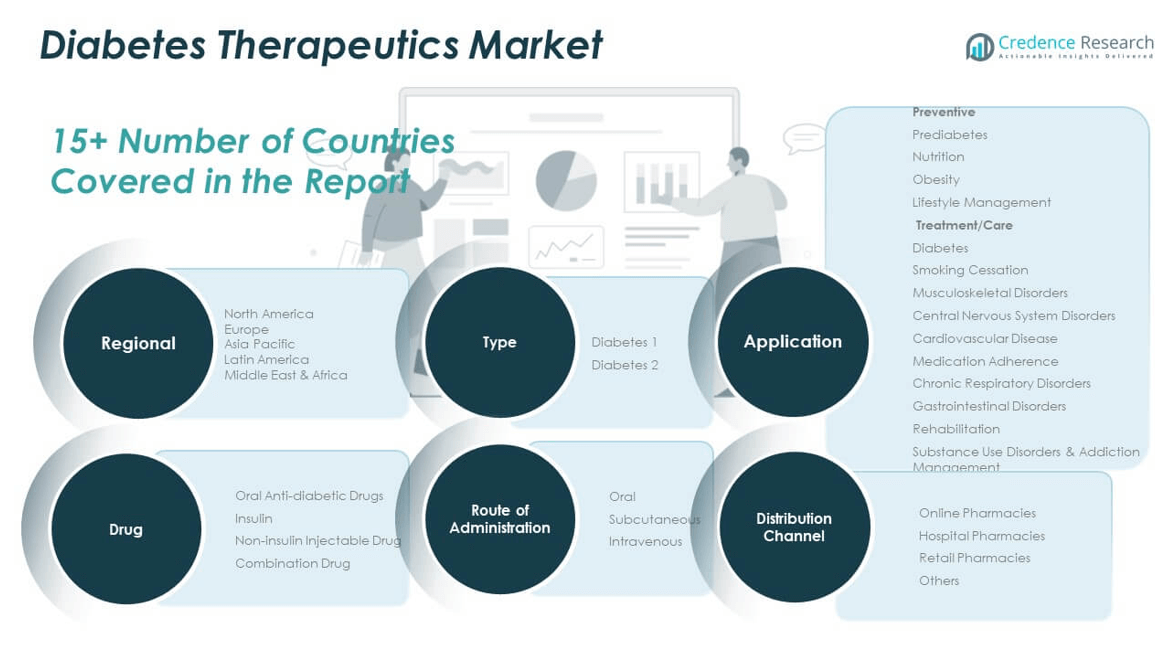
The Diabetes Therapeutics Market is segmented into Type 1 and Type 2 diabetes. Type 2 diabetes accounts for the majority of market revenue due to its widespread prevalence and strong correlation with aging, obesity, and sedentary lifestyles. Type 1 diabetes, though less prevalent, represents a significant therapeutic focus given the lifelong dependency on insulin therapy. It drives the adoption of advanced insulin analogs, continuous glucose monitoring (CGM), and automated insulin delivery systems. Both segments present opportunities for personalized care and long-term disease management strategies.
By Application:
The application segment is bifurcated into preventive and treatment/care categories. Preventive applications-such as prediabetes, nutrition, obesity, and lifestyle management-are growing steadily as global health systems prioritize early intervention. The treatment/care segment holds a larger share due to the need for long-term pharmacological therapy and comorbidity management. It includes therapeutic focus areas like cardiovascular disease, central nervous system disorders, smoking cessation, and gastrointestinal issues. It supports a multidisciplinary approach to managing diabetes-related complications.
By Drug Type:
Drug type segmentation includes oral anti-diabetic drugs, insulin, non-insulin injectable drugs, and combination drugs. Oral anti-diabetic drugs dominate the market due to patient preference, ease of use, and affordability. Insulin and non-insulin injectable drugs are essential in moderate to severe cases, particularly for Type 1 diabetes. Combination drugs are gaining adoption for their convenience and ability to enhance treatment adherence. It reflects a shift toward integrated therapies addressing both glycemic control and comorbid conditions.
- For example, Eli Lilly’s Mounjaro™ (tirzepatide) achieved over $5 billion in global sales in 2023, its first full calendar year on the market, marking one of the most successful product launches in diabetes care. The drug demonstrated rapid uptake due to its dual GIP/GLP-1 receptor agonist mechanism, which offered both glycemic control and weight loss benefits.
By Route of Administration:
The Diabetes Therapeutics Market by route of administration includes oral, subcutaneous, and intravenous segments. Oral drugs lead due to their non-invasive nature and wide patient acceptance. Subcutaneous administration is critical for insulin and GLP-1 therapies, offering controlled release and improved efficacy. Intravenous therapies are limited to acute hospital settings and used primarily for rapid glucose correction or emergency care. It demonstrates the evolving balance between patient convenience and clinical precision.
- For example, in 2024, Novo Nordisk reported that Rybelsus® (oral semaglutide) exceeded $2.3 billion in global sales thanks to its non-invasive administration and rapid uptake
By Distribution Channel:
Distribution channel segmentation comprises online pharmacies, hospital pharmacies, retail pharmacies, and others. Retail pharmacies currently lead, supported by wide accessibility and strong consumer trust. Hospital pharmacies cater to injectable therapies and patients undergoing intensive care or treatment initiation. Online pharmacies are rapidly expanding, driven by increasing digital adoption and demand for doorstep delivery of chronic care medication. It indicates a shift in patient purchasing behavior and reflects the growing influence of e-commerce in healthcare.
Segmentation:
By Type:
- Diabetes Type 1
- Diabetes Type 2
By Application:
- Preventive
- Prediabetes
- Nutrition
- Obesity
- Lifestyle Management
- Treatment/Care
- Diabetes
- Smoking Cessation
- Musculoskeletal Disorders
- Central Nervous System Disorders
- Cardiovascular Disease
- Medication Adherence
- Chronic Respiratory Disorders
- Gastrointestinal Disorders
- Rehabilitation
- Substance Use Disorders & Addiction Management
By Drug Type:
- Oral Anti-diabetic Drugs
- Insulin
- Non-insulin Injectable Drugs
- Combination Drugs
By Route of Administration:
- Oral
- Subcutaneous
- Intravenous
By Distribution Channel:
- Online Pharmacies
- Hospital Pharmacies
- Retail Pharmacies
- Others
By Region:
- North America
- U.S.
- Canada
- Mexico
- Europe
- Germany
- France
- U.K.
- Italy
- Spain
- Rest of Europe
- Asia Pacific
- China
- Japan
- India
- South Korea
- South-east Asia
- Rest of Asia Pacific
- Latin America
- Brazil
- Argentina
- Rest of Latin America
- Middle East & Africa
- GCC Countries
- South Africa
- Rest of the Middle East and Africa
Regional Analysis:
North America
The North America Diabetes Therapeutics Market size was valued at USD 37,804.80 million in 2018, grew to USD 53,524.97 million in 2024, and is anticipated to reach USD 1,17,126.47 million by 2032, at a CAGR of 10.4% during the forecast period. It accounts for a 35.36% share of the global market in 2024. North America leads the global market due to the high prevalence of diabetes, advanced healthcare infrastructure, and widespread use of modern therapeutic solutions. The U.S. is the primary contributor, driven by early adoption of GLP-1 receptor agonists and SGLT2 inhibitors. Strong reimbursement models and government-backed preventive care programs support treatment adherence. Pharmaceutical companies in the region invest heavily in clinical trials and new drug delivery systems. Increasing awareness among patients and healthcare professionals promotes consistent therapeutic uptake. Remote patient monitoring tools and AI-driven decision platforms are further enhancing care outcomes. Strategic partnerships and acquisitions continue to shape the competitive landscape.
Europe
The Europe Diabetes Therapeutics Market size was valued at USD 30,064.32 million in 2018, rose to USD 41,548.05 million in 2024, and is expected to reach USD 86,394.06 million by 2032, at a CAGR of 9.7% during the forecast period. It represents a 27.45% share of the global market in 2024. Europe remains a prominent region due to strong public healthcare systems, structured diabetes care models, and broad access to reimbursement. Countries such as Germany, France, and the UK lead in adoption of innovative drug therapies. European health agencies promote early screening and coordinated treatment plans. Regulatory bodies encourage rapid approval of novel molecules and biosimilars. Investment in digital health and patient education strengthens disease management. Aging population and rising obesity rates continue to fuel demand. Regional pharmaceutical firms contribute actively to R&D and drug innovation. Integration of e-prescriptions and telehealth services is improving treatment reach.
Asia Pacific
The Asia Pacific Diabetes Therapeutics Market size was valued at USD 22,492.80 million in 2018, grew to USD 33,884.45 million in 2024, and is projected to reach USD 83,026.62 million by 2032, at a CAGR of 11.9% during the forecast period. It contributes 22.38% of the global market share in 2024. Asia Pacific is the fastest-growing regional market due to increasing urbanization, lifestyle shifts, and rising diabetes incidence. China and India drive regional growth with their large diabetic populations and expanding healthcare access. Governments are prioritizing chronic disease programs and infrastructure upgrades. Growing middle-class income supports out-of-pocket spending on advanced therapies. Pharmaceutical companies are entering through local manufacturing and distribution partnerships. Adoption of mobile health solutions and digital platforms is rising. Clinical research activity and regulatory reforms are accelerating new drug availability. Awareness initiatives by NGOs and healthcare providers are improving early diagnosis.
Latin America
The Latin America Diabetes Therapeutics Market size was valued at USD 8,331.84 million in 2018, increased to USD 11,851.08 million in 2024, and is forecasted to reach USD 24,470.05 million by 2032, at a CAGR of 9.6% during the forecast period. It accounts for 7.83% of the global market in 2024. Latin America is gaining importance due to growing healthcare investments and government-led diabetes control strategies. Brazil and Mexico are key markets with substantial urban populations and increasing therapeutic demand. Public-private partnerships support the expansion of diagnostic and treatment infrastructure. Multinational companies are enhancing their presence through regional collaborations. Local pharmaceutical production is supporting cost-effective access to essential drugs. Health campaigns are promoting early intervention and disease awareness. The region is also experiencing a rise in telemedicine and mobile care services. Barriers related to affordability and supply chain access persist but are being addressed.
Middle East
The Middle East Diabetes Therapeutics Market size was valued at USD 5,385.60 million in 2018, expanded to USD 7,355.80 million in 2024, and is anticipated to reach USD 14,961.83 million by 2032, at a CAGR of 9.4% during the forecast period. It represents 4.86% of the global market share in 2024. The market is driven by high diabetes prevalence linked to sedentary lifestyles and dietary habits. Gulf countries, particularly Saudi Arabia and the UAE, lead in healthcare modernization and digital integration. Government initiatives are strengthening screening programs and chronic disease clinics. Investment in private healthcare infrastructure is growing steadily. Insurer-led coverage for diabetic care is expanding. Companies are launching specialized clinics focused on diabetes and metabolic disorders. Mobile app adoption and smart monitoring devices are gaining traction. Regulatory reforms are improving approval timelines and product access.
Africa
The Africa Diabetes Therapeutics Market size was valued at USD 1,520.64 million in 2018, grew to USD 3,209.74 million in 2024, and is expected to reach USD 5,728.34 million by 2032, at a CAGR of 7.0% during the forecast period. It contributes 2.12% of the global market in 2024. Africa is an emerging market with significant unmet needs in diabetes care. Access to diagnosis and treatment remains limited in many parts of the continent. Urbanization and changes in lifestyle are driving an increase in diabetes cases. South Africa and Nigeria are leading markets due to stronger healthcare frameworks. International aid and NGO initiatives are improving awareness and access. Pilot programs are introducing low-cost diabetes management tools in underserved communities. Expansion of mobile clinics and community health workers is enhancing treatment outreach. Regulatory systems are evolving to support entry of generic and affordable therapeutic products.
Key Player Analysis:
- Boehringer Ingelheim
- Sun Pharmaceutical (India)
- Cipla (India)
- Reddy's Laboratories (India)
- Torrent Pharmaceuticals (India)
- Zydus Lifesciences (India)
- GlaxoSmithKline (GSK)
- Novartis
- Novo Nordisk
- Sanofi
- Takeda Pharmaceutical
- Johnson & Johnson
Competitive Analysis:
The Diabetes Therapeutics Market features strong competition among global pharmaceutical companies focusing on innovation, market expansion, and strategic alliances. Key players include Novo Nordisk, Sanofi, Eli Lilly, AstraZeneca, Merck & Co., and Boehringer Ingelheim. These companies lead in developing novel drug classes, such as GLP-1 receptor agonists and SGLT2 inhibitors. It is seeing rising investment in biologics, fixed-dose combinations, and extended-release formulations. Players are leveraging AI and digital platforms to enhance drug delivery and patient adherence. Collaborations with biotech firms and regional manufacturers are expanding market presence. Regulatory approvals and fast-track designations are enabling faster product launches. Competitive advantage often depends on clinical efficacy, safety profile, and pricing strategy. Mergers and acquisitions are common to strengthen pipeline capabilities and regional reach.
Recent Developments:
- In July 2025, Boehringer Ingelheim initiated a Phase II clinical trial for BI 1815368, an oral treatment targeted at diabetic macular edema. This therapy stands out as a potential first-in-class oral intervention for this diabetes-related eye complication.
- In July 2025, Dr. Reddy's Laboratories revealed its global strategy to launch a generic version of Novo Nordisk's semaglutide-based weight loss/diabetes drug (Wegovy/Ozempic). The company targets affordable access in 87 countries, including the United States, with expected launches starting next year
- In June 2025, Sun Pharmaceutical announced plans to invest $100 million to commercialize new products in its specialty segment, and notably, it started a clinical trial for GL0034, a novel molecule intended as a first indication for type 2 diabetes mellitus. This marks Sun Pharma’s entrance into the innovative diabetes therapeutics pipeline.
- In December 2024, Cipla received regulatory approval from India's Central Drugs Standard Control Organisation (CDSCO) to market Afrezza-an inhaled, rapid-acting insulin powder for diabetes management. This novel, non-injectable insulin now offers a needle-free approach for type 1 and type 2 diabetes patients in India.
Market Concentration & Characteristics:
The Diabetes Therapeutics Market demonstrates moderate-to-high concentration, with a few multinational corporations holding significant market share across segments. It is characterized by strong R&D intensity, robust regulatory oversight, and increasing demand for personalized treatment. The market structure includes a mix of branded innovators, biosimilar developers, and generic manufacturers. High entry barriers arise from complex clinical trial requirements and long development cycles. Innovation in drug delivery and real-world outcome tracking is shaping competitive dynamics. Global players often engage in strategic partnerships to navigate regional pricing pressures and enhance distribution. The market is evolving toward value-based care models and integrated digital-therapeutic ecosystems.
Report Coverage:
The research report offers an in-depth analysis based on Type, Application, Drug Type, Route of Administration and Distribution Channel. It details leading market players, providing an overview of their business, product offerings, investments, revenue streams, and key applications. Additionally, the report includes insights into the competitive environment, SWOT analysis, current market trends, as well as the primary drivers and constraints. Furthermore, it discusses various factors that have driven market expansion in recent years. The report also explores market dynamics, regulatory scenarios, and technological advancements that are shaping the industry. It assesses the impact of external factors and global economic changes on market growth. Lastly, it provides strategic recommendations for new entrants and established companies to navigate the complexities of the market.
Future Outlook:
- Continued innovation in oral and injectable therapies will diversify treatment options and improve patient adherence.
- Wider adoption of digital health tools will integrate monitoring, diagnostics, and therapeutics into comprehensive care models.
- Expansion of healthcare access in emerging economies will increase demand for affordable and scalable diabetes solutions.
- Advancements in personalized medicine will enhance treatment outcomes through patient-specific drug regimens.
- Collaborations between pharmaceutical and technology firms will accelerate development of AI-supported therapeutic platforms.
- Growing focus on preventive care and early-stage interventions will shift market emphasis toward long-term disease management.
- Regulatory support for biosimilars and generics will intensify competition and reduce treatment costs.
- Environmental and sustainability targets will influence manufacturing practices and packaging of diabetes medications.
- Value-based reimbursement models will prioritize outcomes and patient satisfaction in therapeutic adoption.
- Market players will expand strategic presence through acquisitions and localization in high-growth regional markets.

Request a Free Sample
Fill in your details and we'll send you a free sample report.
- Sample data tables & charts
- Research methodology
Market Dynamics
Rising Global Diabetes Prevalence
The increasing incidence of both Type 1 and Type 2 diabetes, driven by sedentary lifestyles, unhealthy diets, and aging populations, is expanding the patient pool and fueling demand for advanced therapeutics worldwide.
Government Policies and Healthcare Infrastructure Development
Supportive government initiatives, including national insurance schemes, public-private partnerships, and investments in healthcare infrastructure, are improving access to diabetes diagnosis and treatment, especially in emerging markets.
Advancements in Drug Development and Delivery
Innovations such as GLP-1 receptor agonists, SGLT2 inhibitors, long-acting insulins, and smart drug delivery systems are enhancing treatment efficacy, convenience, and patient adherence, driving market growth.
Integration of Digital Health and Preventive Care
The adoption of digital therapeutics, mobile health platforms, and early screening programs is increasing awareness, enabling earlier intervention, and supporting long-term disease management, which boosts therapeutic uptake.
Expansion of Insurance Coverage and Affordability Initiatives
Growing insurance penetration and the introduction of affordable generics and biosimilars are making diabetes therapeutics more accessible, particularly in low- and middle-income regions, thus broadening the market.
Need a Custom Version of This Report?
Tailor the scope, geography, or segments to your exact requirements.
- Custom geography or segment scope
- Direct access to our analyst team
Frequently Asked Questions
What is the current size of the Diabetes Therapeutics Market?
What are the key segments within the Diabetes Therapeutics Market?
What are some challenges faced by the Diabetes Therapeutics Market?
Who are the major players in the Diabetes Therapeutics Market?
Table of Content
Chapter 1 Market Segmentation
- 1.1 Segmentation Framework
- 1.1.1 Product and Service Classification
- 1.1.2 Application and End-Use Classification
- 1.1.3 Technology and Solution Classification
- 1.1.4 Customer and Distribution Channel Classification
- 1.1.5 Geographic Segmentation
- 1.1.6 Market Segment Definitions and Boundaries
- 1.2 By Type
- 1.2.1 Diabetes Type 1
- 1.2.2 Diabetes Type 2
- 1.3 By Drug Type
- 1.3.1 Oral Anti-diabetic Drugs
- 1.3.2 Insulin
- 1.3.3 Non-insulin Injectable Drugs
- 1.3.4 Combination Drugs
- 1.4 By Route of Administration
- 1.4.1 Oral
- 1.4.2 Subcutaneous
- 1.4.3 Intravenous
Chapter 2 Introduction
- 2.1 Report Objectives and Scope
- 2.2 Product Definition and Industry Terminology
- 2.3 Market Inclusions and Exclusions
- 2.4 Research Process
- 2.4.1 Primary Research and Expert Interviews
- 2.4.2 Secondary Research and Source Review
- 2.4.3 Top-Down and Bottom-Up Estimation
- 2.4.4 Data Triangulation and Verification
- 2.5 Market Size Measurement Basis
- 2.5.1 2024: USD 1,51,374.09 million → 2032: USD 3,31,707.36 million
- 2.6 Historical and Forecast Reference Periods
- 2.6.1 Base Year: 2024
- 2.6.2 Forecast Period: 2024-2032
- 2.7 Research Assumptions and Limitations
Chapter 3 Executive Summary
- 3.1 Market Snapshot and Key Findings
- 3.2 Base-Year Market Size, 2024
- 3.3 Forecast Market Size, 2032
- 3.4 Revenue and Volume Growth Outlook
- 3.5 Key Demand and Supply Indicators
- 3.6 Leading Market Segments
- 3.7 Fastest-Growing Market Opportunities
- 3.8 Regional Performance Highlights
- 3.9 Technology and Industry Transformation
- 3.10 Competitive Landscape Summary
- 3.11 Analyst View and Strategic Implications
Chapter 4 Global Diabetes Therapeutics Market Trends and Developments
- 4.1 Historical Industry Development
- 4.2 Recent Market Trends and Developments
- 4.3 Demand and Customer Behavior Trends
- 4.4 Technology and Product Innovation
- 4.5 Artificial Intelligence, Automation and Digitalization
- 4.6 Local Manufacturing and Supply Chain Realignment
- 4.7 Industry Partnerships, Mergers and Acquisitions
- 4.8 Sustainability and Circular Economy Developments
- 4.9 Government and Private Sector Investment Trends
- 4.10 Emerging Business Models and Commercialization
- 4.11 Industry Developments and Announcements
Chapter 5 Global Diabetes Therapeutics Market Production, Supply and Demand Analysis
- 5.1 Demand Trend and Consumption Analysis
- 5.2 Demand Forecast, 2024-2032
- 5.3 Production and Output Trend
- 5.4 Production and Output Forecast, 2024-2032
- 5.5 Installed Capacity and Capacity Utilization
- 5.6 Company-Wise Production Plants and Statistics
- 5.6.1 Installed Production Capacity
- 5.6.2 Actual Production
- 5.6.3 Planned Capacity and Expansion Targets
- 5.7 Supply Chain Structure and Procurement Trends
- 5.8 Supply-Demand Gap and Bottlenecks
- 5.9 Import Dependence and Sourcing Structure
- 5.10 Contract Manufacturing and Outsourcing
- 5.11 Regional Supply and Demand Concentration
Chapter 6 Global Diabetes Therapeutics Market Pricing Analysis
- 6.1 Pricing Structure and Measurement
- 6.2 Historical Pricing Trends
- 6.3 Pricing Outlook, 2024-2032
- 6.4 Average Selling Price and Unit Economics
- 6.5 Pricing by Product and Market Segment
- 6.6 Geographic Pricing Differences
- 6.7 Key Input, Energy, Labor and Logistics Costs
- 6.8 Contract Pricing and Purchasing Models
- 6.9 Pricing Sensitivity and Competitive Positioning
- 6.10 Price, Margin and Profitability Implications
Chapter 7 Global Diabetes Therapeutics Market Dynamics
- 7.1 Market Growth Drivers
- 7.1.1 Demand-Side Drivers
- 7.1.2 Technology and Innovation Drivers
- 7.1.3 Infrastructure and Investment Drivers
- 7.1.4 Regulatory and Policy Drivers
- 7.2 Market Restraints
- 7.2.1 Cost and Affordability Constraints
- 7.2.2 Technology and Adoption Barriers
- 7.2.3 Supply Chain and Operational Constraints
- 7.3 Market Challenges
- 7.3.1 Competitive Pressure and Margin Erosion
- 7.3.2 Skills, Infrastructure and Implementation Gaps
- 7.4 Emerging Market Opportunities
- 7.5 Market Dynamics Impact and Time-Horizon Assessment
Chapter 8 Global Diabetes Therapeutics Value Chain Analysis
- 8.1 Industry Value Chain Overview
- 8.2 Upstream Suppliers and Critical Inputs
- 8.3 Technology and Component Providers
- 8.4 Manufacturing or Service Delivery
- 8.5 Distribution, Channel Partners and Integrators
- 8.6 Downstream Applications and End Users
- 8.7 Value Addition and Profit Pools
- 8.8 Vertical Integration and Outsourcing
- 8.9 Supplier Concentration and Risk
- 8.10 Supply Chain Localization and Resilience
Chapter 9 Global Diabetes Therapeutics Market Regulations and Policies
- 9.1 Relevant Laws, Standards and Compliance Frameworks
- 9.2 Product, Service, Safety and Quality Requirements
- 9.3 Government Policies, Incentives and Subsidies
- 9.4 Imports, Exports and Trade Barriers
- 9.5 Public Procurement and Local Content Requirements
- 9.6 Environmental and Sustainability Compliance
- 9.7 Upcoming Policy Changes and Market Implications
Chapter 10 Global Diabetes Therapeutics Market Hotspots and Opportunities
- 10.1 Market Opportunity Mapping and Growth Hotspots
- 10.2 High-Growth Applications and Customer Groups
- 10.3 Underserved Markets and White-Space Opportunities
- 10.4 Emerging Technology and Product Opportunities
- 10.5 New Capacity and Investment Hotspots
- 10.6 Market Entry and Expansion Opportunities
- 10.7 Distribution and Partnership Opportunities
- 10.8 Near-Term and Long-Term Commercial Potential
- 10.9 Opportunity Attractiveness and Execution Risks
Chapter 11 Global Diabetes Therapeutics Market Outlook, 2024-2032
- 11.1 Market Size and Analysis
- 11.1.1 Revenue (Market Measurement: 2024: USD 1,51,374.09 million → 2032: USD 3,31,707.36 million)
- 11.1.2 Market Volume and Quantity Sold
- 11.1.3 Historical Market Size
- 11.1.4 Base-Year Market Size, 2024
- 11.2 Market Forecast, 2024-2032
- 11.2.1 Revenue Forecast to 2032
- 11.2.2 Volume Forecast to 2032
- 11.2.3 CAGR and Year-on-Year Growth
- 11.2.4 Incremental Revenue Opportunity
- 11.3 Forecast Assumptions and Scenario Analysis
- 11.3.1 Base-Case Forecast
- 11.3.2 Optimistic and Conservative Scenarios
- 11.3.3 Technology, Pricing and Policy Sensitivities
- 11.4 Market Attractiveness and Growth Outlook
Chapter 12 Global Diabetes Therapeutics Market Segmentation and Outlook
- 12.1 Segmentation Summary and Market Shares, 2024
- 12.2 Largest and Fastest-Growing Segments
- 12.3 By Type - Market Size and Forecast, 2024-2032
- 12.3.1 Segment Definition and Scope
- 12.3.2 Historical Market Size
- 12.3.3 Revenue Forecast, 2024-2032
- 12.3.4 Volume Forecast, 2024-2032
- 12.3.5 Base-Year Market Share, 2024
- 12.3.6 Segment CAGR and Growth Drivers
- 12.3.7 Subsegment Market Size and Forecast
- 12.3.7.1 Diabetes Type 1
- 12.3.7.2 Diabetes Type 2
- 12.3.8 Subsegment Pricing and Adoption Trends
- 12.3.9 Leading Suppliers and Competition
- 12.3.10 Regional Demand and Opportunities
- 12.4 By Drug Type - Market Size and Forecast, 2024-2032
- 12.4.1 Segment Definition and Scope
- 12.4.2 Historical Market Size
- 12.4.3 Revenue Forecast, 2024-2032
- 12.4.4 Volume Forecast, 2024-2032
- 12.4.5 Base-Year Market Share, 2024
- 12.4.6 Segment CAGR and Growth Drivers
- 12.4.7 Subsegment Market Size and Forecast
- 12.4.7.1 Oral Anti-diabetic Drugs
- 12.4.7.2 Insulin
- 12.4.7.3 Non-insulin Injectable Drugs
- 12.4.7.4 Combination Drugs
- 12.4.8 Subsegment Pricing and Adoption Trends
- 12.4.9 Leading Suppliers and Competition
- 12.4.10 Regional Demand and Opportunities
- 12.5 By Route of Administration - Market Size and Forecast, 2024-2032
- 12.5.1 Segment Definition and Scope
- 12.5.2 Historical Market Size
- 12.5.3 Revenue Forecast, 2024-2032
- 12.5.4 Volume Forecast, 2024-2032
- 12.5.5 Base-Year Market Share, 2024
- 12.5.6 Segment CAGR and Growth Drivers
- 12.5.7 Subsegment Market Size and Forecast
- 12.5.7.1 Oral
- 12.5.7.2 Subcutaneous
- 12.5.7.3 Intravenous
- 12.5.8 Subsegment Pricing and Adoption Trends
- 12.5.9 Leading Suppliers and Competition
- 12.5.10 Regional Demand and Opportunities
- 12.6 Segment Growth Comparison
- 12.7 Segment Attractiveness and Priority Matrix
Chapter 13 Global Diabetes Therapeutics Geographic Market Outlook, 2024-2032
- 13.1 Regional Market Size and Share, 2024
- 13.2 Regional Market Forecast, 2024-2032
- 13.3 Regional Pricing, Production and Demand Differences
- 13.4 North America
- 13.4.1 United States
- 13.4.2 Canada
- 13.4.3 Mexico
- 13.5 Europe
- 13.5.1 Germany
- 13.5.2 France
- 13.5.3 Italy
- 13.5.4 United Kingdom
- 13.5.5 Spain
- 13.5.6 Poland
- 13.5.7 Russia
- 13.5.8 Netherlands
- 13.5.9 Belgium
- 13.5.10 Sweden
- 13.5.11 Denmark
- 13.5.12 Norway
- 13.5.13 Rest of Europe
- 13.6 Asia Pacific
- 13.6.1 China
- 13.6.2 India
- 13.6.3 Japan
- 13.6.4 South Korea
- 13.6.5 Thailand
- 13.6.6 Indonesia
- 13.6.7 Vietnam
- 13.6.8 Malaysia
- 13.6.9 Australia
- 13.6.10 Rest of Asia Pacific
- 13.7 Latin America
- 13.7.1 Brazil
- 13.7.2 Argentina
- 13.7.3 Colombia
- 13.7.4 Chile
- 13.7.5 Rest of Latin America
- 13.8 Middle East
- 13.8.1 Saudi Arabia
- 13.8.2 United Arab Emirates
- 13.8.3 Turkey
- 13.8.4 Israel
- 13.8.5 Iran
- 13.8.6 Rest of the Middle East
- 13.9 Africa
- 13.9.1 South Africa
- 13.9.2 Egypt
- 13.9.3 Nigeria
- 13.9.4 Morocco
- 13.9.5 Rest of Africa
- 13.10 Regional Investment, Policy and Supply Chain Differences
- 13.11 Regional Competitive Landscape
- 13.12 Geographic Growth Hotspots
Chapter 14 Global Diabetes Therapeutics Technology, Innovation and Sustainability Outlook
- 14.1 Technology Landscape and Maturity
- 14.2 Product, Process and Service Innovation
- 14.3 AI, Automation and Digital Tools in the Industry
- 14.4 Technology Adoption and Performance Benchmarking
- 14.5 Innovation Pipeline and R&D Investment
- 14.6 Patent and Intellectual Property Trends
- 14.7 Energy Efficiency and Resource Management
- 14.8 Sustainability, Recycling and Circularity
- 14.9 Technology Roadmap, 2024-2032
- 14.10 Risks of Obsolescence and Technology Substitution
Chapter 15 Global Diabetes Therapeutics Market Key Strategic Imperatives
- 15.1 Growth and Market Entry Priorities
- 15.2 High-Return Products and Segments
- 15.3 Pricing, Profitability and Cost Optimization
- 15.4 Technology Investment and Product Differentiation
- 15.5 Supply Chain Localization and Resilience
- 15.6 Distribution and Customer Acquisition
- 15.7 Partnership, Acquisition and Capacity Strategy
- 15.8 Regional Expansion Priorities
- 15.9 Short-, Medium- and Long-Term Actions
Chapter 16 Competition Outlook
- 16.1 Industry Competition Characteristics
- 16.2 Market Structure and Concentration
- 16.3 Market Share and Competitive Positioning, 2024
- 16.4 Company-Wise Revenue and Product Benchmarking
- 16.5 Production and Service Capacity Benchmarking
- 16.6 Technology, Pricing and Differentiation
- 16.7 Regional Footprint and Distribution Strength
- 16.8 Mergers, Acquisitions and Strategic Alliances
- 16.9 New Entrants and Competitive Threats
- 16.10 Porter's Five Forces and Industry Attractiveness
- 16.11 Competitive Outlook, 2024-2032
Chapter 17 Company Profiles
- 17.1 Company Coverage and Selection Criteria
- 17.2 Novo Nordisk
- 17.2.1 Business Description
- 17.2.2 Company Ownership and Geographic Presence
- 17.2.3 Product and Service Portfolio
- 17.2.4 Manufacturing and Operating Footprint
- 17.2.5 Production Capacity and Expansion Plans
- 17.2.6 Financial Performance and Investment
- 17.2.7 Market Share and Competitive Position
- 17.2.8 Technology and Innovation Capabilities
- 17.2.9 Strategic Alliances or Partnerships
- 17.2.10 Recent Developments
- 17.2.11 Growth Strategy and Outlook
- 17.3 Sanofi
- 17.4 Eli Lilly
- 17.5 AstraZeneca
- 17.6 Merck & Co.
- 17.7 Boehringer Ingelheim
- 17.8 Sun Pharmaceutical
- 17.9 Cipla
- 17.10 Dr. Reddy's Laboratories
- 17.11 GlaxoSmithKline (GSK)
- 17.12 Other Relevant Market Participants
Note: Every listed company is profiled on the structure shown under the first company. The company list is preliminary and may change based on research findings, market developments, data availability and client requirements.
Chapter 18 Disclaimer
- 18.1 Research and Forecast Disclaimer
- 18.2 Data Source and Estimation Limitations
Note: The depth of individual sections depends on data availability for this market. Volume, capacity, trade and other unit-based metrics are included where applicable.