
| REPORT ATTRIBUTE | DETAILS |
|---|---|
| Historical Period | 2020-2023 |
| Base Year | 2024 |
| Forecast Period | 2025-2032 |
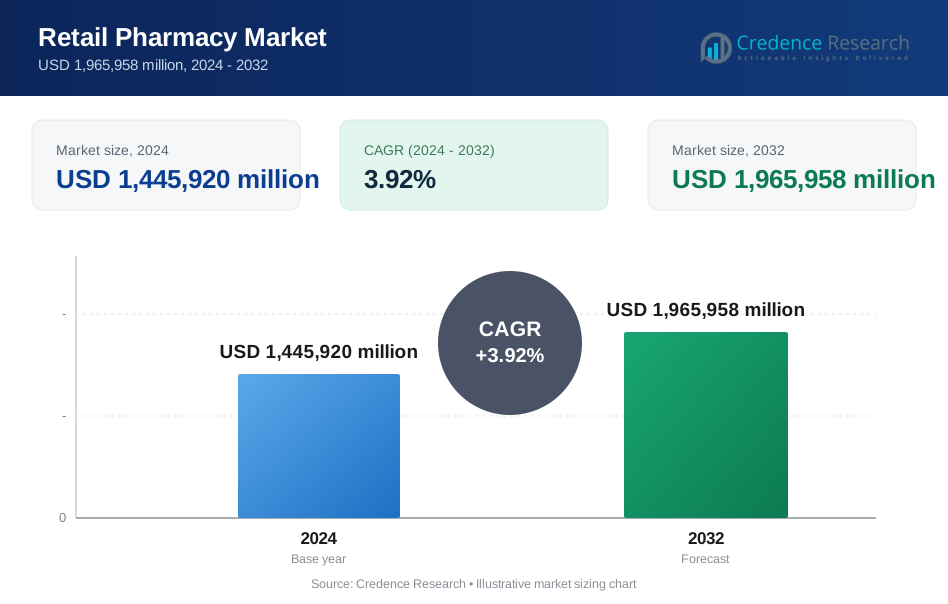
| Retail Pharmacy MarketSize 2024 | USD 1,445,920 million |
| Retail Pharmacy Market, CAGR | 3.92% |
| Retail Pharmacy Market Size 2032 | USD 1,965,958 million |
Market Overview
The global retail pharmacy market is projected to grow from USD 1,445,920 million in 2024 to an estimated USD 1,965,958 million by 2032, reflecting a compound annual growth rate (CAGR) of 3.92% from 2025 to 2032. This growth is driven by factors such as the increasing prevalence of chronic diseases, the aging population, and the rising demand for accessible healthcare services.
Key drivers of the retail pharmacy market include the growing incidence of chronic conditions like diabetes and hypertension, which necessitate ongoing medication management. Additionally, advancements in digital health technologies and the expansion of e-pharmacy platforms are enhancing the accessibility and convenience of pharmaceutical services. Consumers increasingly prefer retail pharmacies that offer personalized care, wellness programs, and integrated health services, leading to a shift towards more comprehensive healthcare delivery models.
Geographically, North America holds a significant share of the retail pharmacy market, attributed to the presence of major pharmacy chains and a well-established healthcare infrastructure. In Europe and Asia-Pacific, the market is witnessing growth due to the expansion of retail pharmacy networks and the adoption of digital health solutions. Key players in the global retail pharmacy market include CVS Health, Walgreens Boots Alliance, Walmart, Rite Aid, and McKesson Corporation, among others. These companies are focusing on strategic initiatives such as mergers, acquisitions, and technological innovations to strengthen their market position.
Market Insights
- The global retail pharmacy market is projected to grow from USD 1,445,920 million in 2024 to USD 1,965,958 million by 2032, reflecting a CAGR of 3.92% from 2025 to 2032.
- Key drivers of market growth include the increasing prevalence of chronic diseases like diabetes and hypertension, as well as the aging population requiring ongoing medication management.
- Technological advancements, particularly the rise of e-pharmacies and digital health solutions, are enhancing accessibility, convenience, and personalization in pharmacy services.
- Retail pharmacies are expanding their services to include wellness programs, health screenings, vaccinations, and chronic disease management to cater to changing consumer healthcare needs.
- Market restraints include regulatory challenges, pricing pressures from healthcare providers, and the competitive nature of the market, especially with the rise of online pharmacies.
- North America holds the largest market share, driven by well-established pharmacy chains and a robust healthcare infrastructure.
- Europe and Asia-Pacific are seeing significant growth, with increased adoption of digital health services and expansion of retail pharmacy networks in these regions.
Report Scope
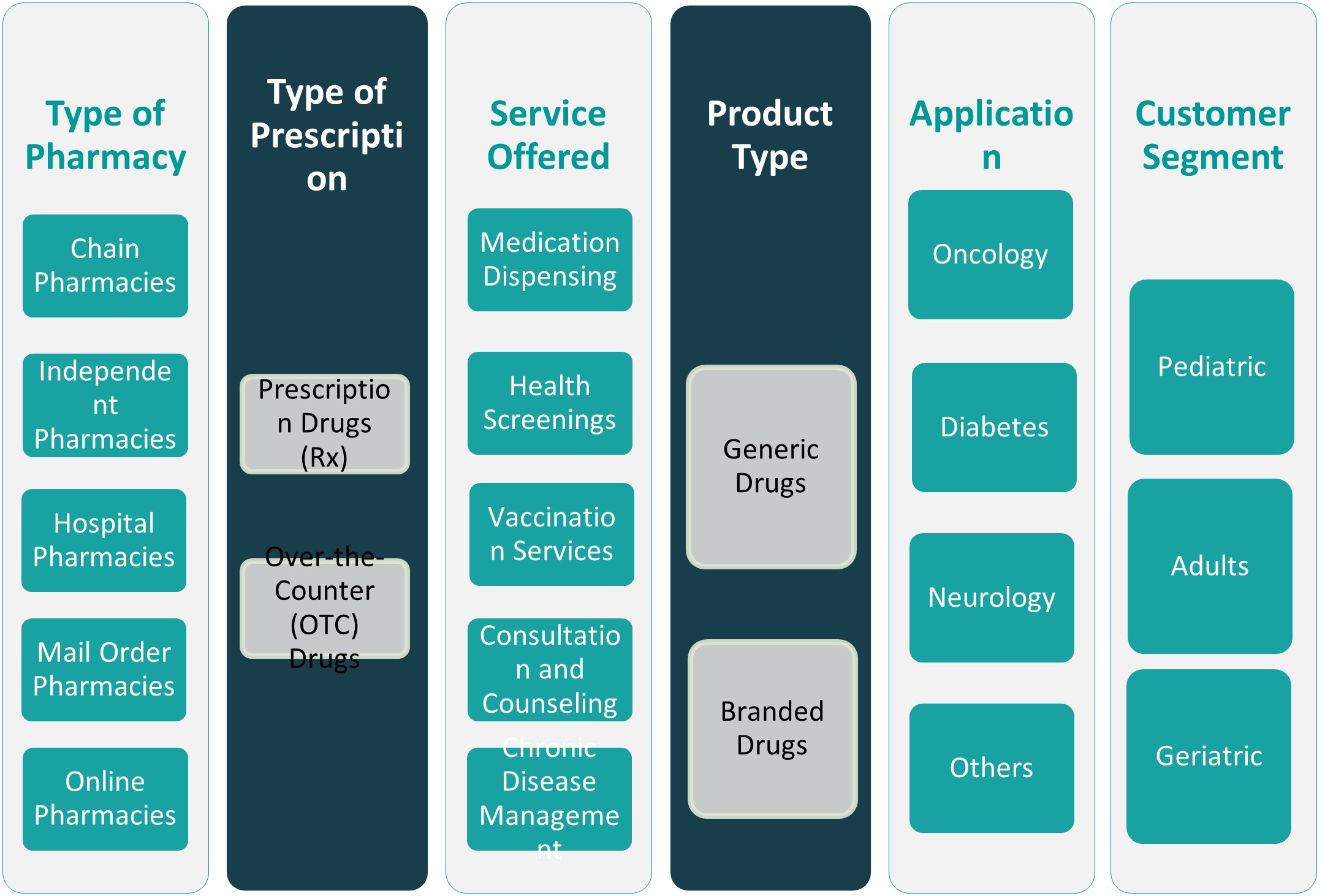
This report segments the Global Retail Pharmacy Market as follows:
Market Drivers
Aging Population and Increasing Health Awareness
The global aging population is another critical factor driving the growth of the retail pharmacy market. As people age, they often experience a greater need for prescription medications to manage age-related conditions such as arthritis, osteoporosis, diabetes, and cognitive disorders like dementia. Older adults typically rely on retail pharmacies for medication management, making pharmacies essential healthcare service providers in an aging society.
The increasing life expectancy, combined with a growing elderly population, directly contributes to a higher demand for pharmaceuticals, healthcare services, and health-related products. Moreover, the aging population is becoming more health-conscious and proactive about their wellness, increasing the demand for preventive care products, supplements, and over-the-counter medications. This heightened awareness about health and wellness is leading older consumers to seek retail pharmacies for more than just medications—they are also turning to pharmacies for health advice, wellness programs, and consultations. The rise of senior care services and home healthcare models further underscores the role of retail pharmacies in managing the healthcare needs of the aging demographic.
Expansion of Services and Product Offerings
Retail pharmacies are evolving from traditional medication dispensaries to comprehensive health and wellness hubs. They are increasingly offering services that go beyond filling prescriptions, including health screenings, immunizations, health consultations, and chronic disease management programs. This shift in service offerings has enhanced the role of retail pharmacies in the healthcare ecosystem, positioning them as first-line healthcare providers. Retail pharmacies are also expanding their product ranges to include health supplements, wellness products, personal care items, and even health insurance services in some markets.
This diversification allows retail pharmacies to capture a broader customer base and increase foot traffic. Additionally, retail pharmacies are collaborating with healthcare providers and insurers to offer integrated healthcare services, further reinforcing their position in the healthcare supply chain. This broader array of products and services is driving customer loyalty and increasing the frequency of consumer visits to pharmacies. As a result, retail pharmacies are becoming a one-stop shop for consumers’ health-related needs, encouraging growth in both revenue and market penetration.
Growth of E-Pharmacies and Digital Health Services
The rise of e-pharmacies is revolutionizing the global retail pharmacy market, driven by the increasing demand for convenience and accessibility. Consumers are now opting for online pharmacies to purchase medications, supplements, and personal care products from the comfort of their homes. E-pharmacies provide greater convenience with home delivery options, 24/7 access, and the ability to consult with pharmacists remotely. For instance, Amazon Pharmacy introduced same-day delivery for prescription medications in select U.S. cities in March 2024, significantly reducing delivery times from the industry standard of up to two weeks to mere hours.
Additionally, e-pharmacies are offering a wide range of over-the-counter (OTC) products, wellness items, and health consultations. As technology continues to evolve, further innovations such as telepharmacy, where patients can interact with pharmacists via video calls, are gaining traction. With the ongoing digitization of healthcare, the e-pharmacy trend is expected to continue to expand globally, particularly in regions with large urban populations and increasing demand for accessible healthcare services.
Pharmacies Offering Health and Wellness Services
Traditional retail pharmacies are evolving into health and wellness centers, providing a wide range of services beyond medication dispensing. Many pharmacies are now offering health screenings, immunizations, and chronic disease management programs. For instance, in Canada, more than 75% of practicing pharmacists worked in community pharmacies in 2021, where they provided direct care services such as vaccinations, chronic disease management support, and home medication reviews. This trend is fueled by the increasing focus on preventive healthcare and wellness. Consumers are increasingly seeking holistic healthcare solutions, and pharmacies are capitalizing on this shift by offering services like blood pressure checks, diabetes screenings, and flu shots.
Additionally, pharmacies are integrating more personalized health services such as nutritional counseling, weight management programs, and fitness-related products. As consumers become more health-conscious and proactive in managing their health, pharmacies are becoming trusted destinations for preventive care. This diversification in service offerings is not only enhancing the customer experience but also improving customer loyalty and increasing foot traffic to physical stores. Pharmacies are further strengthening their role in the healthcare ecosystem by partnering with healthcare providers and insurance companies to offer more integrated health services.
Market Trends
Increasing Prevalence of Chronic Diseases
The rising incidence of chronic diseases, such as diabetes, hypertension, cardiovascular conditions, and respiratory disorders, is one of the most significant drivers of the global retail pharmacy market. Chronic diseases require ongoing medication management, which is typically provided through retail pharmacies. For instance, approximately 41 million people globally die each year due to chronic diseases, accounting for 71% of all deaths worldwide. As the global population continues to age, the demand for healthcare services, including prescriptions and over-the-counter (OTC) medications, has surged. In addition, as people live longer, they are more likely to develop long-term conditions that require continuous care.
This shift toward managing chronic conditions, often requiring medication refills and regular checkups, enhances the demand for retail pharmacy services. With the healthcare burden of chronic diseases increasing across the globe, pharmacies are now seen as essential service providers, offering greater accessibility to medications and health management resources. Retail pharmacies are expanding their portfolios to include services such as home delivery and consultation to accommodate the growing patient base and improve adherence to treatment regimens
Technological Advancements and E-Pharmacy Growth
The digital transformation in healthcare, specifically through the rise of e-pharmacies, is significantly reshaping the retail pharmacy market. The increasing adoption of online pharmaceutical platforms has streamlined the process of purchasing medications, improving access and convenience for consumers. For example, telepharmacy services have seen a 35% increase in adoption rates globally, driven by the need for remote healthcare solutions. E-pharmacies enable customers to order prescription and OTC drugs from the comfort of their homes, thus reducing the need for physical visits to traditional pharmacies.
This trend is particularly popular in regions with busy urban populations or where access to physical pharmacies may be limited. E-pharmacies are also benefiting from advancements in digital health technologies, such as telepharmacy and digital health consultations, which enhance the service offerings of these platforms. The ability for consumers to consult with pharmacists online and receive medications without leaving their homes is a significant advantage, especially in light of the ongoing global health challenges. As the world becomes increasingly digital, the e-pharmacy model is expected to grow further, influencing both consumer behavior and the competitive landscape of the retail pharmacy market.
Expansion of Retail Pharmacy Chains in Emerging Markets
Retail pharmacy chains are expanding rapidly in emerging markets, especially in Asia-Pacific, Latin America, and the Middle East. These regions are witnessing significant growth in the retail pharmacy market due to factors such as increasing healthcare awareness, rising disposable incomes, and expanding urban populations. The growing demand for prescription drugs, OTC products, and health-related services in these regions has led global pharmacy chains to increase their presence.
Companies like Walgreens Boots Alliance, CVS Health, and Walmart are establishing more stores in developing countries, bringing their well-established business models and technologies to new markets. Additionally, local pharmacy chains are also growing in size and scale to compete with international players. This expansion is not only improving access to essential medications but is also fostering the development of a more organized retail pharmacy industry in these regions. As healthcare infrastructure improves in these emerging markets, the retail pharmacy market is expected to continue to experience rapid growth, contributing to a larger share of the global market.
Integration of Artificial Intelligence and Automation
Retail pharmacies are increasingly adopting artificial intelligence (AI) and automation technologies to streamline operations and enhance customer service. AI is being used to personalize customer experiences by offering targeted product recommendations and health advice based on individual needs. Machine learning algorithms can analyze patient data to predict medication needs and improve inventory management, ensuring pharmacies have the right products in stock at the right time. Automation is also improving efficiency in dispensing medications, reducing the risk of human error, and speeding up the prescription filling process.
In addition, AI-driven chatbots and virtual assistants are being deployed to assist customers with medication inquiries, refill requests, and other pharmacy-related services. By integrating AI and automation, pharmacies are not only improving operational efficiency but are also enhancing customer satisfaction by providing faster, more accurate, and personalized services. This technological integration is expected to become more prevalent as pharmacy chains seek to differentiate themselves in a competitive market while offering superior customer experiences.
Market Challenges
Regulatory Compliance and Increasing Healthcare Regulations
The global retail pharmacy market faces significant challenges related to regulatory compliance. Retail pharmacies operate in a highly regulated environment, with varying standards and regulations across different regions and countries. These regulations govern the sale of medications, health services, and the handling of sensitive customer data, making compliance a complex and resource-intensive task. For instance, stringent regulations on the sale of prescription drugs, particularly controlled substances, require pharmacies to maintain detailed records, implement secure dispensing practices, and adhere to regular audits. Additionally, the increasing implementation of digital health solutions, such as e-pharmacies and telepharmacy services, has raised concerns around the protection of patient data and the enforcement of privacy laws.
The global nature of the market adds complexity, as pharmacies need to navigate varying national healthcare regulations, including pricing controls, reimbursement policies, and pharmaceutical safety standards. Retail pharmacies that operate across multiple regions must ensure that they remain compliant with each country’s specific regulations, which can often change rapidly, leading to operational and financial strain. Moreover, the expansion of e-pharmacies is also driving the need for regulatory frameworks that govern online sales, customer data protection, and cross-border transactions. As such, navigating the regulatory landscape remains a significant challenge for the global retail pharmacy market, requiring ongoing investment in compliance processes, staff training, and technology to ensure operations remain legally sound and secure.
Intense Competition and Pricing Pressures
The retail pharmacy market is highly competitive, with both large chains and smaller independent pharmacies vying for market share. Major pharmacy chains, such as CVS Health, Walgreens Boots Alliance, and Walmart, dominate the market, leveraging their scale, extensive networks, and advanced technology to maintain a competitive edge. These large players often engage in aggressive pricing strategies, offering discounts and loyalty programs that attract a large customer base. As a result, smaller independent pharmacies struggle to compete on price, often facing challenges in securing competitive pricing for medications from wholesalers. Additionally, pricing pressures from insurance providers and government policies, particularly in countries with nationalized healthcare systems, exacerbate these challenges.
Retail pharmacies must balance cost control while ensuring they maintain profitability, which can be difficult with slim margins on prescription drugs. Moreover, the growing prevalence of e-pharmacies and online platforms adds further competition, as these digital platforms can offer lower prices, faster delivery, and convenience, enticing consumers away from brick-and-mortar stores. This intensifying competition is forcing traditional pharmacies to rethink their business models, adopt more advanced technologies, and diversify their service offerings, such as adding health consultations and wellness programs. However, the continuous pressure on pricing, coupled with the need for technological investment, creates financial strain and operational complexity, particularly for smaller players who lack the resources to compete effectively. This environment underscores the importance of efficiency, innovation, and customer loyalty for retail pharmacies looking to thrive in an increasingly competitive market.
Market Opportunities
Expansion of Digital Health and E-Pharmacies
The growing adoption of digital health solutions and e-pharmacies presents a significant opportunity for growth in the global retail pharmacy market. As consumers increasingly prioritize convenience and accessibility, the demand for online pharmaceutical services continues to rise. E-pharmacies enable consumers to order prescription medications, OTC products, and wellness items online, with the added benefit of home delivery and teleconsultation services. The digital transformation in healthcare has been accelerated by the COVID-19 pandemic, and as a result, consumers are more inclined to seek out pharmacies that offer online services.
This shift in consumer behavior creates an opportunity for established pharmacy chains and new entrants to develop or expand their e-commerce platforms. In addition, the rise of telemedicine and remote healthcare consultations provides an avenue for pharmacies to integrate with healthcare providers, offering telepharmacy services and enhancing customer experiences. By embracing digital technologies, pharmacies can reach a broader audience, particularly in regions with limited access to physical stores, and improve operational efficiency by streamlining processes such as inventory management and prescription fulfillment.
Health and Wellness Services Diversification
Retail pharmacies are increasingly diversifying their service offerings beyond medication dispensing to include health and wellness services, which provides a substantial market opportunity. Consumers are becoming more health-conscious, leading to a growing demand for preventive healthcare services, health screenings, immunizations, and personalized wellness programs. Pharmacies can leverage this trend by expanding their role in the healthcare ecosystem, offering services such as blood pressure monitoring, diabetes management programs, and nutritional counseling.
Furthermore, pharmacies can enhance customer loyalty by providing wellness products, vitamins, and supplements tailored to individual health needs. By integrating these services, retail pharmacies can attract a larger customer base, improve foot traffic, and drive repeat business. This diversification not only helps pharmacies stay competitive but also strengthens their position as trusted healthcare providers in their communities.
Market Segmentation Analysis
By Type of Pharmacy
The global retail pharmacy market can be segmented by the type of pharmacy, with the major categories being chain pharmacies, independent pharmacies, hospital pharmacies, mail-order pharmacies, and online pharmacies. Chain pharmacies dominate the market due to their extensive networks, economies of scale, and strong brand presence. These pharmacies offer a wide range of medications, wellness products, and health services, providing a one-stop solution for customers. Independent pharmacies, although smaller in scale, are seeing growth due to their personalized customer service and local presence, allowing them to cater to community-specific needs.
Hospital pharmacies are critical players, primarily serving patients within healthcare institutions and offering medications related to inpatient care. Mail-order pharmacies are gaining traction due to their convenience, especially in regions with limited access to physical pharmacies, while online pharmacies have witnessed significant growth, particularly during the COVID-19 pandemic, offering coumers the ability to purchase medications and health products remotely with home delivery services.
By Type of Prescription
The global retail pharmacy market is also segmented by the type of prescription, with two primary categories: prescription drugs (Rx) and over-the-counter (OTC) drugs. Prescription drugs account for the largest market share due to their essential role in treating chronic conditions and more complex health issues. These drugs often require professional healthcare advice and supervision. OTC drugs are becoming increasingly popular due to their accessibility and convenience, with consumers using them for self-medication of common ailments such as headaches, colds, and digestive issues. The rise in health awareness and self-care trends is driving the growth of the OTC segment, as more consumers seek out solutions for minor health concerns without a prescription.
Segments
Based on Type of Pharmacy
- Chain Pharmacies
- Independent Pharmacies
- Hospital Pharmacies
- Mail Order Pharmacies
- Online Pharmacies
Based on Type of prescription
- Prescription Drugs (Rx)
- Over-the-Counter (OTC) Drugs
Based on Service offered
- Medication Dispensing
- Health Screenings
- Vaccination Services
- Consultation and Counseling
- Chronic Disease Management
Based on Product Type
- Generic Drugs
- Branded Drugs
Based on Application
- Oncology
- Diabetes
- Neurology
- Others
Based on Customer
- Paediatric
- Adults
- Geriatric
Based on Region
- North America
- U.S.
- Canada
- Mexico
- Europe
- UK
- France
- Germany
- Italy
- Spain
- Russia
- Belgium
- Netherlands
- Austria
- Sweden
- Poland
- Denmark
- Switzerland
- Rest of Europe
- Asia Pacific
- China
- Japan
- South Korea
- India
- Australia
- Thailand
- Indonesia
- Vietnam
- Malaysia
- Philippines
- Taiwan
- Rest of Asia Pacific
- Latin America
- Brazil
- Argentina
- Peru
- Chile
- Colombia
- Rest of Latin America
- Middle East
- UAE
- KSA
- Israel
- Turkey
- Iran
- Rest of Middle East
- Africa
- Egypt
- Nigeria
- Algeria
- Morocco
- Rest of Africa
Regional Analysis
North America (40%)
North America holds the largest share of the global retail pharmacy market, accounting for approximately 40% of the market share. The region's dominance is primarily driven by the presence of established pharmacy chains such as CVS Health, Walgreens Boots Alliance, and Walmart, which have extensive networks across the U.S. and Canada. The market in this region benefits from a well-developed healthcare infrastructure, high healthcare spending, and the growing demand for both prescription and over-the-counter (OTC) drugs. Furthermore, the increasing prevalence of chronic diseases, such as diabetes and hypertension, has led to a consistent demand for medication and pharmacy services. Additionally, the rise of e-pharmacies and digital health services has significantly contributed to market growth, especially during the COVID-19 pandemic. The North American market is expected to maintain its leadership due to continued healthcare innovation, a focus on preventive care, and an aging population
Europe (30%)
Europe is the second-largest market, contributing approximately 30% to the global retail pharmacy market share. The market in Europe is characterized by a strong healthcare system, high healthcare expenditure, and an aging population, particularly in Western Europe. Countries like Germany, the UK, and France are significant contributors to the market, with widespread pharmacy networks that offer both prescription and OTC drugs, along with wellness services such as vaccinations and health screenings. The demand for pharmacy services is also being influenced by increasing consumer awareness of healthcare and wellness, along with the growing adoption of e-pharmacy platforms. Moreover, healthcare reforms in several European countries have opened up opportunities for retail pharmacies to provide more services, including chronic disease management and telepharmacy services.
Key players
- Walgreens Boots Alliance Inc.
- CVS Health Corporation
- Rite Aid Corporation
- Walmart Inc. (operates Walmart Pharmacy)
- McKesson Corporation
Competitive Analysis
The global retail pharmacy market is highly competitive, with major players such as Walgreens Boots Alliance, CVS Health, Rite Aid, Walmart, and McKesson Corporation leading the sector. These companies dominate due to their vast networks, strong brand presence, and extensive product portfolios, including prescription medications, OTC drugs, and health-related services. Walgreens Boots Alliance and CVS Health are particularly strong in North America, with their broad reach and integrated health services like immunizations, health screenings, and chronic disease management. Walmart has expanded its presence by integrating pharmacy services into its vast retail footprint, offering affordable healthcare options. McKesson Corporation plays a critical role in pharmaceutical distribution, ensuring a reliable supply chain for retail pharmacies. Despite the strength of these players, e-pharmacies and digital health services are becoming a key competitive factor, with all major companies investing in technology to enhance customer accessibility and service offerings.
Recent Developments
- In December 2025, dm-drogerie markt launched dm-med, a German mail-order pharmacy offering non-prescription, pharmacy-only medicines, pharmacy-exclusive supplements, vitamins, and dermocosmetics through dm’s online shop and app.
- In January 2026, Uniphar acquired TouchStore, an Irish dispensing and retail-management software provider, strengthening Uniphar’s technology offering for community pharmacy teams in Ireland.
- In February 2026, RedSail Technologies acquired PrimeRx as an affiliate, expanding its pharmacy-management technology network across independent and community pharmacies in the United States.
- In March 2026, CVS Pharmacy opened its first pharmacy-only, apothecary-style location in Chicago and said it planned to open nearly 20 smaller-format pharmacy-only locations during the year.
- In April 2026, Redcare Pharmacy became the first pharmacy to use a new digital TI access technology for Germany’s e-prescription infrastructure, replacing the physical institutional card with a digital pharmacy identity to speed up e-prescription processing.
Market Concentration and Characteristics
The global retail pharmacy market exhibits a moderate to high level of market concentration, with a few large players holding significant market share. Key players such as Walgreens Boots Alliance, CVS Health, Rite Aid, Walmart, and McKesson Corporation dominate the market, leveraging their extensive networks, strong brand recognition, and diversified service offerings. These companies typically operate both physical stores and digital platforms, offering prescription medications, over-the-counter drugs, health screenings, vaccinations, and wellness services. The market is characterized by intense competition, particularly with the rise of e-pharmacies and online platforms, which are reshaping the traditional retail pharmacy landscape. While large chains dominate in terms of revenue and market presence, smaller independent pharmacies also contribute to the market by offering personalized services and catering to local communities. The increasing demand for convenience, digital health services, and health-related products continues to drive market dynamics, pushing both traditional and online players to innovate and expand their service offerings.
Report Coverage
The research report offers an in-depth analysis based on Type of Pharmacy, Type of prescription, Service offered, Product Type, Application, Customer and Region. It details leading market players, providing an overview of their business, product offerings, investments, revenue streams, and key applications. Additionally, the report includes insights into the competitive environment, SWOT analysis, current market trends, as well as the primary drivers and constraints. Furthermore, it discusses various factors that have driven market expansion in recent years. The report also explores market dynamics, regulatory scenarios, and technological advancements that are shaping the industry. It assesses the impact of external factors and global economic changes on market growth. Lastly, it provides strategic recommendations for new entrants and established companies to navigate the complexities of the market.
Future Outlook
- E-pharmacies will continue to grow as consumers seek more convenience in purchasing medications and healthcare products online. With advancements in digital health services, e-pharmacies will expand their market share globally.
- As consumers become more health-conscious, retail pharmacies will increase their focus on wellness products, health screenings, and preventive services. This shift will drive pharmacies to diversify their offerings to cater to a more proactive healthcare approach.
- Retail pharmacies will adopt more digital tools like telepharmacy, mobile apps, and AI-powered services to enhance customer experiences. These technologies will help improve accessibility and offer personalized healthcare solutions.
- Pharmacies will play a central role in managing chronic diseases by offering specialized services such as diabetes care, hypertension monitoring, and personalized medication management. This will drive patient loyalty and increase foot traffic.
- Pharmacies will increasingly offer services beyond medication dispensing, such as vaccinations, health consultations, and diagnostic services. This will strengthen their position as primary healthcare service providers.
- The retail pharmacy market will see increased consolidation, with large players merging or acquiring smaller independent pharmacies to expand their geographical reach. This will create more extensive pharmacy networks globally.
- Global regulatory landscapes will continue to evolve, with governments implementing more stringent rules around drug pricing, distribution, and data protection. Pharmacies will need to adapt to ensure compliance and maintain operations.
- Sustainability trends will influence the retail pharmacy market, with pharmacies adopting more eco-friendly practices. This could include the use of biodegradable packaging, energy-efficient store designs, and reducing the carbon footprint of delivery services.
- Personalized medicine and genomics will shape the retail pharmacy market as pharmacies begin offering tailored medication regimens based on genetic profiles. This will lead to more effective treatment and increased demand for pharmacy services.
- The retail pharmacy market will experience rapid growth in emerging regions like Asia-Pacific, Latin America, and the Middle East, driven by improved healthcare access, rising disposable incomes, and expanding urbanization. These regions present untapped opportunities for both traditional and digital pharmacies.
Request a Free Sample
Fill in your details and we'll send you a free sample report.
- Sample data tables & charts
- Research methodology
Need a Custom Version of This Report?
Tailor the scope, geography, or segments to your exact requirements.
- Custom geography or segment scope
- Direct access to our analyst team
Frequently Asked Questions
What is the market size of the global retail pharmacy market in 2023, 2032, and the CAGR?
What are the key drivers of growth in the global retail pharmacy market?
Who are the key players in the global retail pharmacy market?
How are e-pharmacies influencing the retail pharmacy market?
Table of Content
Chapter 1. Report Introduction
- 1.1 Report Description & Purpose
- 1.1.1 Report Title & Market Definition
- 1.1.2 Unique Selling Propositions (USP) & Key Differentiators
- 1.1.3 Value Proposition for Stakeholders
- 1.2 Research Objectives
- 1.2.1 Market Sizing Objectives (Volume & Revenue)
- 1.2.2 Segmentation Objectives
- 1.2.3 Competitive Intelligence Objectives
- 1.2.4 Forecast & Scenario Objectives
- 1.3 Report Scope
- 1.3.1 Retail Pharmacy Scope – Types & Subtypes Covered
- 1.3.2 Geographic Scope – Regions & Countries Covered
- 1.3.3 Historical Period, Base Year & Forecast Period (2024; forecast to 2032)
- 1.3.4 Inclusions & Exclusions
- 1.4 HS Code & Classification Framework
- 1.5 Currency, Units & Pricing Basis
- 1.6 Target Stakeholders
- 1.7 Limitations & Assumptions
Chapter 2. Executive Summary
- 2.1 Global Retail Pharmacy Market Snapshot
- 2.1.1 Market Size – Historical (2024) & Forecast (2024-2032) (2024: USD 1,445,920 million → 2032: USD 1,965,958 million)
- 2.1.2 Volume & Revenue – Global Totals
- 2.1.3 Key Market Highlights – Top Five Facts
- 2.2 Retail Pharmacy Market Segmentation Snapshot
- 2.2.1 Market Split by Region – 2024 vs. 2032
- 2.3 Competitive Snapshot
- 2.3.1 Top 10 Players by Revenue Share – 2024
- 2.3.2 Top 10 Players by Volume Share – 2024
- 2.3.3 Recent Strategic Developments (18-Month Summary)
- 2.4 Key Investment Highlights & Strategic Conclusions
Chapter 3. Retail Pharmacy Market Dynamics & Industry Analysis
- 3.1 Market Overview & Context
- 3.1.1 Retail Pharmacy Market Position in the Broader Automotive Value Chain
- 3.1.2 OEM vs. Replacement Market Dynamics
- 3.1.3 Market Maturity & Development Stage by Region
- 3.2 Retail Pharmacy Market Drivers
- 3.3 Retail Pharmacy Market Restraints & Challenges
- 3.4 Retail Pharmacy Market Opportunities
- 3.5 Porter's Five Forces Analysis
- 3.5.1 Threat of New Entrants
- 3.5.2 Bargaining Power of Suppliers
- 3.5.3 Bargaining Power of Buyers
- 3.5.4 Threat of Substitutes
- 3.5.5 Competitive Rivalry – Intensity Assessment
- 3.6 Retail Pharmacy Value Chain Analysis
- 3.6.1 Upstream – Raw Material/Input Suppliers
- 3.6.1.1 Raw Material/Input 1
- 3.6.1.2 Raw Material/Input 2
- 3.6.1.3 Raw Material/Input 3
- 3.6.2 Midstream – Production/Manufacturing/Service Delivery
- 3.6.2.1 Production/Process Overview
- 3.6.2.2 Key Facility Locations & Capacity by Manufacturer
- 3.6.3 Downstream – Distribution & End Consumer
- 3.6.3.1 Primary Channel – B2B/OEM
- 3.6.3.2 Secondary Channels – Dealer, Retail, Online, Direct
- 3.6.4 Value Chain Profitability Analysis
- 3.6.1 Upstream – Raw Material/Input Suppliers
- 3.7 PESTEL Analysis
- 3.7.1 Political Factors
- 3.7.2 Economic Factors
- 3.7.3 Social Factors
- 3.7.4 Technological Factors
- 3.7.5 Environmental Factors
- 3.7.6 Legal Factors
- 3.8 Retail Pharmacy Supply Chain Analysis
- 3.8.1 Raw Material/Input Supply Risk Assessment
- 3.8.2 Manufacturing Concentration Risk (Geographic Exposure)
- 3.8.3 Trade Disruption Impact Analysis
- 3.9 Regulatory & Policy Landscape
Note: The regulatory and policy landscape section covers regulations based on their applicability to the market, Retail Pharmacy category, geography, and scope of the study. Only regulatory frameworks with a material impact on operations, compliance, trade, sustainability, or market access are analyzed in detail.
Chapter 4. Key Investment Pockets & Opportunity Analysis
- 4.1 Retail Pharmacy Market Attractiveness Analysis
- 4.1.1 By Region – Investment Attractiveness Matrix (Volume × CAGR)
- 4.2 Absolute Revenue Growth Opportunity
- 4.2.1 By Region – Absolute USD Growth Through 2032
- 4.3 Incremental Volume Opportunity
- 4.3.1 By Region – Incremental Volume Through 2032
- 4.3.2 Segment – Incremental Volume
- 4.4 Emerging Submarket Opportunity Deep Dive (Subject to Applicability)
- 4.5 Emerging Market Opportunity Scorecards
- 4.5.1 United States
- 4.5.2 Europe
- 4.5.3 Asia
- 4.5.4 Middle East & Africa
Note: Emerging Market Opportunity Scorecards will be included based on relevance and strategic importance. Regions listed are indicative and may vary depending on data availability and market dynamics.
Chapter 5. Retail Pharmacy Import-Export Analysis & Trade Flows
- 5.1 Global Trade Overview
- 5.1.1 Global Export Value by Country (2024)
- 5.1.2 Global Export Volume by Country (2024)
- 5.1.3 Global Import Value by Country (2024)
- 5.1.4 Global Import Volume by Country (2024)
- 5.1.5 Net Trade Balance by Country (2024)
- 5.2 Export Analysis – Segment
- 5.2.1 Type 1 (HS Code)
- 5.2.2 Type 2 (HS Code)
- 5.2.3 Type 3 (HS Code)
- 5.2.4 Type 4 (HS Code)
- 5.2.5 Type 5 (HS Code)
- 5.3 Import Analysis – Segment
- 5.3.1 Type 1 (HS Code)
- 5.3.2 Type 2 (HS Code)
- 5.3.3 Type 3 (HS Code)
- 5.3.4 Type 4 (HS Code)
- 5.3.5 Type 5 (HS Code)
- 5.4 Average Unit Trade Prices
- 5.4.1 Average Export Price – Segment & Country
- 5.4.2 Average Import Price – Segment & Source Country
- 5.4.3 Price Trends (2024)
- 5.5 Key Trade Route Analysis
- 5.5.1 Trade Route 1
- 5.5.2 Trade Route 2
- 5.5.3 Trade Route 3
- 5.5.4 Trade Route 4
- 5.5.5 Trade Route 5
- 5.6 Trade Policy Impact Assessment
- 5.6.1 US Anti-Dumping & Section 301 Tariffs
- 5.6.2 EU Customs Union Impact
- 5.6.3 Major Free Trade Agreements
- 5.6.4 USMCA Rules of Origin
Note: Trade policy analysis will be included only where relevant to the Retail Pharmacy market.
Chapter 6. Competitive Landscape & Company Benchmarking
- 6.1 Retail Pharmacy Market Concentration & Structure
- 6.1.1 Herfindahl-Hirschman Index (HHI) – vs. 2024
- 6.1.2 Tier 1, Tier 2 & Tier 3 Market Structure
- 6.1.3 Global, Regional & Local Player Dynamics
- 6.2 Retail Pharmacy Market Share Analysis – 2024
- 6.2.1 Global Revenue Share by Company
- 6.2.2 Global Volume Share by Company
- 6.2.3 Regional Revenue Share
- 6.2.4 Market Share Evolution ( vs. 2024)
- 6.2.5 OEM Segment Share by Company
- 6.2.6 Replacement Segment Share by Company
- 6.3 Production/Delivery Capacity & Facility Analysis
- 6.3.1 Global Installed Capacity
- 6.3.2 Capacity Utilization Rates
- 6.3.3 Production/Output Volume
- 6.3.4 Facility Locations & Capacity Map
- 6.3.5 Planned Capacity Additions
- 6.4 Retail Pharmacy Competitive Benchmarking Matrix
- 6.4.1 Revenue, Volume, CAGR & Profitability Comparison
- 6.4.2 Channel Revenue Mix
- 6.4.3 Geographic Revenue Exposure
- 6.4.4 R&D Intensity
- 6.4.5 Sustainability Maturity
- 6.5 Strategic Developments in Retail Pharmacy (Last 24 Months)
- 6.5.1 Mergers, Acquisitions & Divestments
- 6.5.2 New Retail Pharmacy Launches
- 6.5.3 Facility Expansions
- 6.5.4 Strategic Alliances, Joint Ventures & Partnerships
- 6.5.5 Distribution Expansion & Market Entry
- 6.5.6 Sustainability & ESG Initiatives
- 6.6 Competitive Strategy Mapping
- 6.6.1 Leader, Challenger, Follower & Niche Classification
- 6.6.2 Pricing Strategy Comparison
- 6.6.3 Channel Strategy Matrix
Note: Strategic developments are included based on their materiality and the availability of reliable information.
Chapter 7. Global Retail Pharmacy Market – By Distribution Channel
- 7.1 Segment Overview
- 7.1.1 Volume & Revenue Split by Channel (2024 & 2032)
- 7.1.2 Channel Mix Evolution (2024-2032)
Chapter 8. Regional Market Analysis – Global Overview
- 8.1 Global Regional Overview
- 8.1.1 Regional Volume Share
- 8.1.2 Regional Revenue Share
- 8.1.3 Regional Volume by Region
- 8.1.4 Regional Revenue by Region
- 8.1.5 Regional Forecast Through 2032
- 8.2 Cross-Regional Segment Analysis
- 8.2.1 By Distribution Channel
- 8.2.2 By Brand/Price Tier
Chapter 9. North America Retail Pharmacy Market
- 9.1 United States
- 9.2 Canada
- 9.3 Mexico
Chapter 10. Europe Retail Pharmacy Market
- 10.1 Germany
- 10.2 France
- 10.3 Italy
- 10.4 United Kingdom
- 10.5 Spain
- 10.6 Poland
- 10.7 Russia
- 10.8 Netherlands
- 10.9 Belgium
- 10.10 Sweden
- 10.11 Denmark
- 10.12 Norway
- 10.13 Rest of Europe
Chapter 11. Asia Pacific Retail Pharmacy Market
- 11.1 China
- 11.2 India
- 11.3 Japan
- 11.4 South Korea
- 11.5 Thailand
- 11.6 Indonesia
- 11.7 Vietnam
- 11.8 Malaysia
- 11.9 Australia
- 11.10 Rest of Asia Pacific
Chapter 12. Latin America Retail Pharmacy Market
- 12.1 Brazil
- 12.2 Argentina
- 12.3 Colombia
- 12.4 Chile
- 12.5 Rest of Latin America
Chapter 13. Middle East Retail Pharmacy Market
- 13.1 Saudi Arabia
- 13.2 United Arab Emirates
- 13.3 Turkey
- 13.4 Israel
- 13.5 Iran
- 13.6 Rest of the Middle East
Chapter 14. Africa Retail Pharmacy Market
- 14.1 South Africa
- 14.2 Egypt
- 14.3 Nigeria
- 14.4 Morocco
- 14.5 Rest of Africa
Chapter 15. Retail Pharmacy Company Profiles
- 15.1 [Company 01]
- 15.1.1 Company Overview
- 15.1.2 Key Management Personnel
- 15.1.3 Products & Services Portfolio
- 15.1.4 Financial Performance
- 15.1.5 Key Market Focus & Geographic Presence
- 15.1.6 Recent Developments & Strategic Initiatives
Note: The company profile list is preliminary and may change based on research findings, market developments, data availability, and client requirements.
Chapter 16. Appendices
- Appendix A – List of Abbreviations & Acronyms
- Appendix B – Industry Classification Code Reference – Full Series
- Appendix C – Production & Capacity Data Tables
- Appendix D – End-Use & Demand Base Tables
- Appendix E – Consumption & Replacement Rate Assumptions
- Appendix F – ASP Reference Tables
- Appendix G – Manufacturing & Facility Database
- Appendix H – Import-Export Data Tables
- Appendix I – Regulatory Summary Tables
- Appendix J – Primary Research Participant List (Anonymized)
- Appendix K – Primary Research Questionnaire Framework
- Appendix L – Data Sources & Bibliography
- Appendix M – Market Size Divergence & Source Comparison
Chapter 17. Research Methodology
- 17.1 Research Framework & Philosophy
- 17.2 Secondary Research – Sources, Hierarchy & Data Extraction
- 17.3 Data Modeling – Bottom-Up & Top-Down Market Sizing
- 17.4 Primary Research – Stakeholder Framework, LOI & Sample Sizes
- 17.5 Forecast Methodology – Regression, Scenario & Sensitivity Analysis
- 17.6 Quality Control – Four-Layer Validation Framework
- 17.7 Limitations & Standard Assumptions
- 17.8 Disclaimer
