
| REPORT ATTRIBUTE | DETAILS |
|---|---|
| Historical Period | 2019-2022 |
| Base Year | 2023 |
| Forecast Period | 2024-2032 |
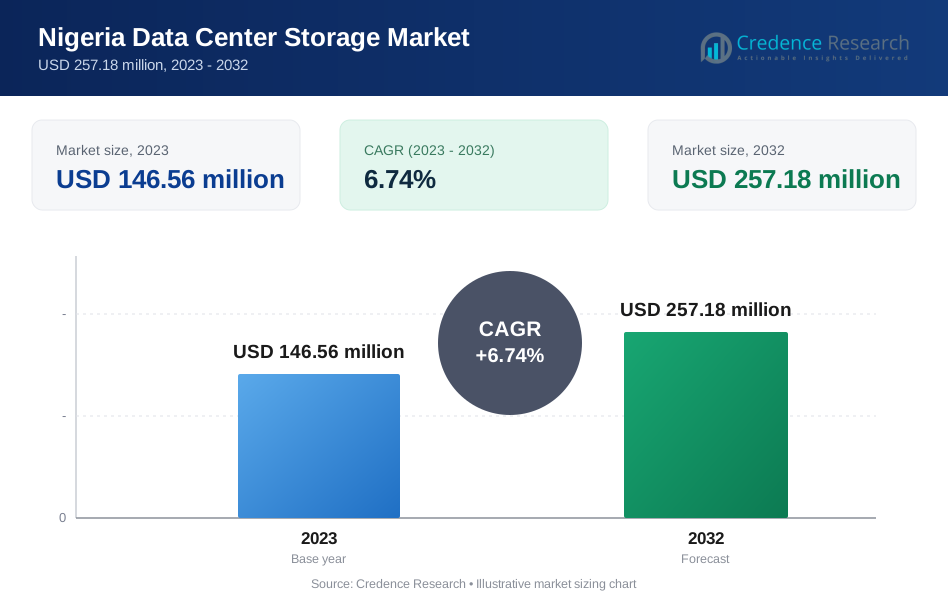
| Nigeria Data Center Storage Market Size 2023 | USD 146.56 million |
| Nigeria Data Center Storage Market, CAGR | 6.74% |
| Nigeria Data Center Storage Market Size 2032 | USD 257.18 million |
Market Overview
The Nigeria Data Center Storage Market is projected to grow from USD 146.56 million in 2023 to USD 257.18 million by 2032, with a compound annual growth rate (CAGR) of 6.74%.
The Nigeria Data Center Storage Market is driven by the surge in digital transformation and cloud adoption, spurred by rising internet penetration and e-commerce growth. The increasing reliance on data analytics and the expansion of the IT and telecommunications sectors are also significant contributors. Key trends include the shift towards hybrid and all-flash storage solutions to meet growing data demands, as well as investments in edge computing to enhance real-time processing capabilities. Additionally, government initiatives and a focus on data security and compliance are reinforcing the need for advanced storage infrastructure in the region.
The Nigeria Data Center Storage Market is primarily driven by key regions such as Lagos and Abuja. Lagos, holding the largest market share, benefits from its status as the commercial hub, attracting significant investment in data center infrastructure. Abuja, the capital city, also shows strong growth due to governmental and large-scale IT projects. Major players like Hewlett Packard Enterprise, Dell Inc., and Lenovo Group Limited are expanding their presence, leveraging regional demand for advanced storage solutions. This expansion is supported by strategic investments in data centers to cater to the increasing data needs across various sectors in Nigeria.
Market Drivers
Rapid Digitalization
The rapid growth in internet users across Nigeria is significantly boosting the demand for data storage and processing capabilities. As more individuals and businesses go online, the volume of data generated necessitates expanded storage solutions to handle this influx. Additionally, E-commerce Boom is contributing to the surge in data requirements. For instance, Nigeria’s e-commerce market is projected to reach significant growth, driven by the increasing number of smartphone users and internet penetration. The rise of e-commerce platforms and online business activities is creating large volumes of data that need to be stored, analyzed, and managed efficiently. Furthermore, Digital Government Initiatives are also playing a crucial role. The Nigerian government's efforts to digitize public services and enhance operational efficiency are driving the need for robust and scalable data infrastructure to support these digital transformations.
Cloud Computing Adoption
Cloud computing is revolutionizing the data storage landscape in Nigeria by offering businesses the ability to scale storage capacity dynamically. This flexibility allows companies to adjust their storage needs as required, thereby reducing the need for substantial upfront investments and improving operational agility. For instance, a study revealed that cloud adoption in Nigeria could yield significant economic benefits, with projections indicating substantial contributions to the regional GDP by 2033. Alongside, Data Security is a key advantage of cloud services, as providers implement advanced security measures to safeguard sensitive information. The move to Cost-Effectiveness is another driving factor, with cloud-based storage solutions often proving more economical compared to traditional on-premises systems, particularly benefiting small and medium-sized enterprises.
Rising Demand for Data Analytics
The need for data analytics is growing as businesses seek to leverage data for strategic decision-making and competitive advantage. The explosion of Big Data, driven by sources like IoT devices and social media, requires advanced storage and processing solutions to manage and analyze this vast amount of information effectively. The emphasis on data-driven insights is fueling the demand for sophisticated storage systems that can handle large volumes and provide real-time analytics.
Government Regulations and Policies
Nigerian government regulations mandating the local storage of data are significantly influencing the market. These regulations are driving the development of new data centers and increasing the demand for local storage solutions. Additionally, the enforcement of Cybersecurity Standards is encouraging businesses to invest in secure data storage infrastructure to comply with stringent data protection requirements, further shaping the market landscape.
Market Trends
Data Center Colocation
Data center colocation is becoming an attractive option for businesses in Nigeria, providing a cost-effective solution for leasing space in shared data centers. This arrangement allows organizations to benefit from increased availability and operational efficiency, as colocation facilities typically offer higher levels of redundancy and security compared to on-premises data centers. For instance, a leading data center operator in Nigeria offers a Tier III Constructed Facility Certified data center, providing customers with a technically superior and physically more secure environment. By sharing infrastructure with other tenants, businesses can lower their upfront capital expenditures and gain access to advanced data center resources without the burden of managing these facilities independently. This model supports the growing demand for reliable and scalable data storage solutions, aligning with broader trends in data center optimization and resource management.
Focus on Sustainability
As environmental concerns grow, data center operators in Nigeria are prioritizing energy-efficient solutions to mitigate their environmental impact and reduce operating costs. The push towards Renewable Energy is a key component of this sustainability focus, with data centers increasingly incorporating sources such as solar and wind power to meet their energy requirements. This commitment to sustainability reflects a broader trend towards minimizing the ecological footprint of data center operations while ensuring that energy needs are met through cleaner, more sustainable methods. By adopting these practices, data center operators not only contribute to environmental conservation but also enhance their operational efficiency and appeal to environmentally conscious clients.
Market Challenges Analysis
Infrastructure Constraints
One of the major challenges facing the data center market in Nigeria is the unreliable power supply. Frequent outages and power fluctuations disrupt data center operations, leading to potential downtime and operational inefficiencies. For instance, the National Bureau of Statistics reported that in 2020, Nigeria generated around 35.7 thousand gigawatt hours of electricity, which was significantly lower than the demand. This issue is compounded by the limited broadband infrastructure available in some regions. High latency and inadequate connectivity can significantly hinder the performance of data-intensive applications, impacting overall service quality and user experience. The lack of robust infrastructure necessitates substantial investments in backup power solutions and improved connectivity to ensure seamless data center operations. Navigating Nigeria's complex regulatory landscape poses a significant challenge for data center operators. The intricate web of data localization requirements and stringent cybersecurity standards can be both time-consuming and costly to comply with. Additionally, slow bureaucratic processes often delay the approval of permits and licenses, impeding the timely development and expansion of new data centers. These regulatory and administrative barriers create obstacles that can deter investment and complicate operational planning, requiring operators to invest additional resources to manage compliance and secure necessary approvals.
Talent Shortage and Cost Pressures
The Nigerian data center sector is experiencing a shortage of skilled professionals in critical areas such as data center management and cybersecurity. This skills gap hampers the growth and efficiency of data centers, as there are insufficient qualified personnel to manage complex operations and safeguard against cyber threats. Moreover, high attrition rates among IT professionals exacerbate this issue, making it challenging for data center operators to retain talent and maintain operational stability. Investing in training and development programs is crucial to addressing these workforce challenges and building a more capable and stable talent pool. Operating a data center in Nigeria entails substantial costs, driven by factors such as power consumption, cooling requirements, and security measures. These high operating costs place significant financial pressure on data center operators, especially in a competitive market where pricing pressure from both domestic and international players is intense. The need to balance operational expenses while remaining competitive in pricing can strain profitability. Additionally, the growing emphasis on sustainability adds another layer of complexity, as operators must invest in energy-efficient technologies and practices to meet environmental expectations while managing their cost structures effectively.
Market Segmentation Analysis:
By Storage Type:
The Nigerian Data Center Storage Market is segmented into Traditional, All-Flash, and Hybrid Storage types, each catering to distinct needs. Traditional Storage, with its disk-based systems, continues to be favored for its cost-effectiveness and reliability, serving as the backbone for many data centers. However, All-Flash Storage is gaining traction due to its superior performance, offering faster data access and lower latency, which is crucial for high-performance computing and real-time analytics. This segment is expanding rapidly as organizations seek to enhance their data processing capabilities. Hybrid Storage, which combines elements of both traditional and all-flash systems, provides a balanced solution, blending high performance with cost-efficiency. This versatility makes it increasingly popular among businesses looking to optimize their storage infrastructure while managing costs effectively.
By Application:
The application-based segmentation of the Nigerian Data Center Storage Market includes IT and Telecommunications, BFSI, Government, Healthcare, and Other sectors. The IT and Telecommunications sector leads in storage demand due to the growing expansion of digital infrastructure and cloud services. BFSI (Banking, Financial Services, and Insurance) requires robust and secure storage solutions to manage extensive financial transactions and sensitive data. Government agencies are investing heavily in data center storage to support digital transformation initiatives and enhance public service efficiency. The Healthcare sector is rapidly adopting data storage solutions for managing electronic health records (EHRs) and telemedicine data securely. Additionally, the "Others" category, encompassing sectors like retail and education, contributes to market growth as these industries increasingly rely on digital technologies and require reliable storage solutions to support their operations.
Segments:
Based on Storage Type:
- Traditional Storage
- All-Flash Storage
- Hybrid Storage
Based on Application:
- IT and Telecommunications
- BFSI
- Government
- Healthcare
- Others
Based on Deployment:
- Storage Area Network (SAN) System
- Network-attached storage (NAS) System
- Direct-Attached Storage (DAS) System
- Others
Based on the Geography:
- Lagos
- Abuja
- Port Harcourt
- Kano
- Ibadan
- Kaduna
- Benin City
- Enugu
- Jos
- Aba
Regional Analysis
Lagos
Lagos dominates the Nigeria Data Center Storage Market, holding approximately 40% of the market share. As the largest city and economic hub of Nigeria, Lagos is a key driver of data center growth due to its vibrant commercial activities and substantial digital infrastructure investments. The city’s rapid urbanization and economic expansion have spurred significant demand for data storage solutions, particularly in sectors like IT, telecommunications, and finance. The presence of numerous multinational corporations and technology companies further intensifies the need for advanced data center facilities. Additionally, Lagos benefits from improved connectivity and infrastructure developments, including enhancements in power supply and broadband networks, which support the efficient operation of data centers. The city's strategic location and business ecosystem make it a central focus for data center investments, with companies actively establishing and expanding their facilities to cater to the growing digital demands of the region.
Abuja
Abuja, the capital city of Nigeria, commands a notable share of approximately 25% in the Data Center Storage Market. The city's position as the administrative center of Nigeria drives demand for data storage solutions due to government initiatives and digital transformation efforts. Abuja’s market growth is fueled by its focus on improving public services and supporting national infrastructure projects. The government's emphasis on digitizing records and enhancing data security has led to increased investments in data center facilities. Moreover, Abuja's relatively stable power supply and ongoing improvements in connectivity contribute to its attractiveness as a data center location. The city's strategic role in government and public sector operations, combined with growing investments in digital infrastructure, solidifies Abuja’s significant position in the market, attracting data center operators and technology providers aiming to support the capital's expanding digital needs.
Key Player Analysis
- Hewlett Packard Enterprise
- Dell Inc.
- Lenovo Group Limited
- Oracle Corporation
- Huawei Technologies Co. Ltd
- SMART Modular Technologies Inc.
- QSAN Technology Inc.
- ADATA Technology Co. Ltd
Competitive Analysis
In the Nigeria Data Center Storage Market, leading players such as Hewlett Packard Enterprise, Dell Inc., Lenovo Group Limited, Oracle Corporation, and Huawei Technologies Co. Ltd. are driving significant advancements. These companies are actively investing in advanced storage technologies and expanding their regional footprints to cater to the growing demand for data storage solutions. They focus on enhancing product offerings with high-performance and hybrid storage solutions to address diverse customer requirements. Additionally, there is a strong emphasis on building local data center infrastructure and improving operational efficiency to support various sectors including IT, telecommunications, and finance. The competitive environment is characterized by continuous innovation and strategic investments aimed at meeting the increasing data needs of businesses and government initiatives across the country.
Recent Developments
- In May 2024, Dell Technologies expanded its Dell AI Factory with NVIDIA to include new server, edge, workstation, solutions, and services advancements that speed AI adoption and innovation.
- In March 2024, HPE debuted an end-to-end AI-native portfolio for Generative AI, including two solutions that encompass all the compute, storage, software, networking, and consulting services needed to accelerate AI projects.
Market Concentration & Characteristics
The Nigeria Data Center Storage Market exhibits a moderate level of market concentration, with a blend of global technology leaders and regional players driving the competitive landscape. The market is characterized by a focus on advanced storage solutions, including traditional, all-flash, and hybrid systems, catering to the diverse needs of businesses and government sectors. Key characteristics include a growing emphasis on scalability and performance due to increasing data volumes and digital transformation efforts. Innovations such as edge computing and software-defined storage are becoming prevalent, reflecting the market’s adaptation to modern technological demands. Investment in infrastructure is significant, with a strong push towards improving energy efficiency and sustainability. This dynamic environment fosters continuous development and adaptation, ensuring that storage solutions align with evolving industry requirements and regional challenges.
Report Coverage
The research report offers an in-depth analysis based on Storage Type, Application, Deployment and Geography. It details leading market players, providing an overview of their business, product offerings, investments, revenue streams, and key applications. Additionally, the report includes insights into the competitive environment, SWOT analysis, current market trends, as well as the primary drivers and constraints. Furthermore, it discusses various factors that have driven market expansion in recent years. The report also explores market dynamics, regulatory scenarios, and technological advancements that are shaping the industry. It assesses the impact of external factors and global economic changes on market growth. Lastly, it provides strategic recommendations for new entrants and established companies to navigate the complexities of the market.
Future Outlook
- The Nigeria Data Center Storage Market will continue to expand as digital transformation accelerates across various industries.
- Cloud storage adoption will increase, driven by the need for scalable and cost-effective storage solutions.
- Demand for all-flash and hybrid storage systems will grow due to their superior performance and efficiency.
- Edge computing will see significant growth, necessitating distributed storage solutions closer to data sources.
- Investments in energy-efficient technologies will rise to address environmental concerns and reduce operational costs.
- Data security and privacy will remain a top priority, leading to enhanced protection measures and regulatory compliance.
- Hybrid cloud and multi-cloud strategies will gain traction, offering greater flexibility and integration across platforms.
- Technological advancements, including AI and machine learning, will improve data management and analytics capabilities.
- The market will benefit from increased government support for digital infrastructure and smart city initiatives.
- Competition will drive innovation, resulting in more affordable and efficient storage solutions for businesses.
Request a Free Sample
Fill in your details and we'll send you a free sample report.
- Sample data tables & charts
- Research methodology
Need a Custom Version of This Report?
Tailor the scope, geography, or segments to your exact requirements.
- Custom geography or segment scope
- Direct access to our analyst team
Frequently Asked Questions
What is the current size of the Nigeria Data Center Storage Market?
What factors are driving the growth of the Nigeria Data Center Storage Market?
What are some challenges faced by the Nigeria Data Center Storage Market?
Who are the major players in the Nigeria Data Center Storage Market?
Table of Content
Chapter 1. Report Introduction
- 1.1 Report Description & Purpose
- 1.1.1 Report Title & Market Definition
- 1.1.2 Unique Selling Propositions (USP) & Key Differentiators
- 1.1.3 Value Proposition for Stakeholders
- 1.2 Research Objectives
- 1.2.1 Market Sizing Objectives (Volume & Revenue)
- 1.2.2 Segmentation Objectives
- 1.2.3 Competitive Intelligence Objectives
- 1.2.4 Forecast & Scenario Objectives
- 1.3 Report Scope
- 1.3.1 Nigeria Data Center Storage Scope – Types & Subtypes Covered
- 1.3.2 Geographic Scope – Regions & Countries Covered
- 1.3.3 Historical Period, Base Year & Forecast Period (2023; forecast to 2032)
- 1.3.4 Inclusions & Exclusions
- 1.4 HS Code & Classification Framework
- 1.5 Currency, Units & Pricing Basis
- 1.6 Target Stakeholders
- 1.7 Limitations & Assumptions
Chapter 2. Executive Summary
- 2.1 Global Nigeria Data Center Storage Market Snapshot
- 2.1.1 Market Size – Historical (2023) & Forecast (2023-2032) (2023: USD 146.56 million → 2032: USD 257.18 million)
- 2.1.2 Volume & Revenue – Global Totals
- 2.1.3 Key Market Highlights – Top Five Facts
- 2.2 Nigeria Data Center Storage Market Segmentation Snapshot
- 2.2.1 Market Split by Region – 2023 vs. 2032
- 2.3 Competitive Snapshot
- 2.3.1 Top 10 Players by Revenue Share – 2023
- 2.3.2 Top 10 Players by Volume Share – 2023
- 2.3.3 Recent Strategic Developments (18-Month Summary)
- 2.4 Key Investment Highlights & Strategic Conclusions
Chapter 3. Nigeria Data Center Storage Market Dynamics & Industry Analysis
- 3.1 Market Overview & Context
- 3.1.1 Nigeria Data Center Storage Market Position in the Broader Automotive Value Chain
- 3.1.2 OEM vs. Replacement Market Dynamics
- 3.1.3 Market Maturity & Development Stage by Region
- 3.2 Nigeria Data Center Storage Market Drivers
- 3.3 Nigeria Data Center Storage Market Restraints & Challenges
- 3.4 Nigeria Data Center Storage Market Opportunities
- 3.5 Porter's Five Forces Analysis
- 3.5.1 Threat of New Entrants
- 3.5.2 Bargaining Power of Suppliers
- 3.5.3 Bargaining Power of Buyers
- 3.5.4 Threat of Substitutes
- 3.5.5 Competitive Rivalry – Intensity Assessment
- 3.6 Nigeria Data Center Storage Value Chain Analysis
- 3.6.1 Upstream – Raw Material/Input Suppliers
- 3.6.1.1 Raw Material/Input 1
- 3.6.1.2 Raw Material/Input 2
- 3.6.1.3 Raw Material/Input 3
- 3.6.2 Midstream – Production/Manufacturing/Service Delivery
- 3.6.2.1 Production/Process Overview
- 3.6.2.2 Key Facility Locations & Capacity by Manufacturer
- 3.6.3 Downstream – Distribution & End Consumer
- 3.6.3.1 Primary Channel – B2B/OEM
- 3.6.3.2 Secondary Channels – Dealer, Retail, Online, Direct
- 3.6.4 Value Chain Profitability Analysis
- 3.6.1 Upstream – Raw Material/Input Suppliers
- 3.7 PESTEL Analysis
- 3.7.1 Political Factors
- 3.7.2 Economic Factors
- 3.7.3 Social Factors
- 3.7.4 Technological Factors
- 3.7.5 Environmental Factors
- 3.7.6 Legal Factors
- 3.8 Nigeria Data Center Storage Supply Chain Analysis
- 3.8.1 Raw Material/Input Supply Risk Assessment
- 3.8.2 Manufacturing Concentration Risk (Geographic Exposure)
- 3.8.3 Trade Disruption Impact Analysis
- 3.9 Regulatory & Policy Landscape
Note: The regulatory and policy landscape section covers regulations based on their applicability to the market, Nigeria Data Center Storage category, geography, and scope of the study. Only regulatory frameworks with a material impact on operations, compliance, trade, sustainability, or market access are analyzed in detail.
Chapter 4. Key Investment Pockets & Opportunity Analysis
- 4.1 Nigeria Data Center Storage Market Attractiveness Analysis
- 4.1.1 By Region – Investment Attractiveness Matrix (Volume × CAGR)
- 4.2 Absolute Revenue Growth Opportunity
- 4.2.1 By Region – Absolute USD Growth Through 2032
- 4.3 Incremental Volume Opportunity
- 4.3.1 By Region – Incremental Volume Through 2032
- 4.3.2 Segment – Incremental Volume
- 4.4 Emerging Submarket Opportunity Deep Dive (Subject to Applicability)
- 4.5 Emerging Market Opportunity Scorecards
- 4.5.1 United States
- 4.5.2 Europe
- 4.5.3 Asia
- 4.5.4 Middle East & Africa
Note: Emerging Market Opportunity Scorecards will be included based on relevance and strategic importance. Regions listed are indicative and may vary depending on data availability and market dynamics.
Chapter 5. Nigeria Data Center Storage Import-Export Analysis & Trade Flows
- 5.1 Global Trade Overview
- 5.1.1 Global Export Value by Country (2023)
- 5.1.2 Global Export Volume by Country (2023)
- 5.1.3 Global Import Value by Country (2023)
- 5.1.4 Global Import Volume by Country (2023)
- 5.1.5 Net Trade Balance by Country (2023)
- 5.2 Export Analysis – Segment
- 5.2.1 Type 1 (HS Code)
- 5.2.2 Type 2 (HS Code)
- 5.2.3 Type 3 (HS Code)
- 5.2.4 Type 4 (HS Code)
- 5.2.5 Type 5 (HS Code)
- 5.3 Import Analysis – Segment
- 5.3.1 Type 1 (HS Code)
- 5.3.2 Type 2 (HS Code)
- 5.3.3 Type 3 (HS Code)
- 5.3.4 Type 4 (HS Code)
- 5.3.5 Type 5 (HS Code)
- 5.4 Average Unit Trade Prices
- 5.4.1 Average Export Price – Segment & Country
- 5.4.2 Average Import Price – Segment & Source Country
- 5.4.3 Price Trends (2023)
- 5.5 Key Trade Route Analysis
- 5.5.1 Trade Route 1
- 5.5.2 Trade Route 2
- 5.5.3 Trade Route 3
- 5.5.4 Trade Route 4
- 5.5.5 Trade Route 5
- 5.6 Trade Policy Impact Assessment
- 5.6.1 US Anti-Dumping & Section 301 Tariffs
- 5.6.2 EU Customs Union Impact
- 5.6.3 Major Free Trade Agreements
- 5.6.4 USMCA Rules of Origin
Note: Trade policy analysis will be included only where relevant to the Nigeria Data Center Storage market.
Chapter 6. Competitive Landscape & Company Benchmarking
- 6.1 Nigeria Data Center Storage Market Concentration & Structure
- 6.1.1 Herfindahl-Hirschman Index (HHI) – vs. 2023
- 6.1.2 Tier 1, Tier 2 & Tier 3 Market Structure
- 6.1.3 Global, Regional & Local Player Dynamics
- 6.2 Nigeria Data Center Storage Market Share Analysis – 2023
- 6.2.1 Global Revenue Share by Company
- 6.2.2 Global Volume Share by Company
- 6.2.3 Regional Revenue Share
- 6.2.4 Market Share Evolution ( vs. 2023)
- 6.2.5 OEM Segment Share by Company
- 6.2.6 Replacement Segment Share by Company
- 6.3 Production/Delivery Capacity & Facility Analysis
- 6.3.1 Global Installed Capacity
- 6.3.2 Capacity Utilization Rates
- 6.3.3 Production/Output Volume
- 6.3.4 Facility Locations & Capacity Map
- 6.3.5 Planned Capacity Additions
- 6.4 Nigeria Data Center Storage Competitive Benchmarking Matrix
- 6.4.1 Revenue, Volume, CAGR & Profitability Comparison
- 6.4.2 Channel Revenue Mix
- 6.4.3 Geographic Revenue Exposure
- 6.4.4 R&D Intensity
- 6.4.5 Sustainability Maturity
- 6.5 Strategic Developments in Nigeria Data Center Storage (Last 24 Months)
- 6.5.1 Mergers, Acquisitions & Divestments
- 6.5.2 New Nigeria Data Center Storage Launches
- 6.5.3 Facility Expansions
- 6.5.4 Strategic Alliances, Joint Ventures & Partnerships
- 6.5.5 Distribution Expansion & Market Entry
- 6.5.6 Sustainability & ESG Initiatives
- 6.6 Competitive Strategy Mapping
- 6.6.1 Leader, Challenger, Follower & Niche Classification
- 6.6.2 Pricing Strategy Comparison
- 6.6.3 Channel Strategy Matrix
Note: Strategic developments are included based on their materiality and the availability of reliable information.
Chapter 7. Global Nigeria Data Center Storage Market – By Distribution Channel
- 7.1 Segment Overview
- 7.1.1 Volume & Revenue Split by Channel (2023 & 2032)
- 7.1.2 Channel Mix Evolution (2023-2032)
Chapter 8. Regional Market Analysis – Global Overview
- 8.1 Global Regional Overview
- 8.1.1 Regional Volume Share
- 8.1.2 Regional Revenue Share
- 8.1.3 Regional Volume by Region
- 8.1.4 Regional Revenue by Region
- 8.1.5 Regional Forecast Through 2032
- 8.2 Cross-Regional Segment Analysis
- 8.2.1 By Distribution Channel
- 8.2.2 By Brand/Price Tier
Chapter 9. North America Nigeria Data Center Storage Market
- 9.1 United States
- 9.2 Canada
- 9.3 Mexico
Chapter 10. Europe Nigeria Data Center Storage Market
- 10.1 Germany
- 10.2 France
- 10.3 Italy
- 10.4 United Kingdom
- 10.5 Spain
- 10.6 Poland
- 10.7 Russia
- 10.8 Netherlands
- 10.9 Belgium
- 10.10 Sweden
- 10.11 Denmark
- 10.12 Norway
- 10.13 Rest of Europe
Chapter 11. Asia Pacific Nigeria Data Center Storage Market
- 11.1 China
- 11.2 India
- 11.3 Japan
- 11.4 South Korea
- 11.5 Thailand
- 11.6 Indonesia
- 11.7 Vietnam
- 11.8 Malaysia
- 11.9 Australia
- 11.10 Rest of Asia Pacific
Chapter 12. Latin America Nigeria Data Center Storage Market
- 12.1 Brazil
- 12.2 Argentina
- 12.3 Colombia
- 12.4 Chile
- 12.5 Rest of Latin America
Chapter 13. Middle East Nigeria Data Center Storage Market
- 13.1 Saudi Arabia
- 13.2 United Arab Emirates
- 13.3 Turkey
- 13.4 Israel
- 13.5 Iran
- 13.6 Rest of the Middle East
Chapter 14. Africa Nigeria Data Center Storage Market
- 14.1 South Africa
- 14.2 Egypt
- 14.3 Nigeria
- 14.4 Morocco
- 14.5 Rest of Africa
Chapter 15. Nigeria Data Center Storage Company Profiles
- 15.1 [Company 01]
- 15.1.1 Company Overview
- 15.1.2 Key Management Personnel
- 15.1.3 Products & Services Portfolio
- 15.1.4 Financial Performance
- 15.1.5 Key Market Focus & Geographic Presence
- 15.1.6 Recent Developments & Strategic Initiatives
Note: The company profile list is preliminary and may change based on research findings, market developments, data availability, and client requirements.
Chapter 16. Appendices
- Appendix A – List of Abbreviations & Acronyms
- Appendix B – Industry Classification Code Reference – Full Series
- Appendix C – Production & Capacity Data Tables
- Appendix D – End-Use & Demand Base Tables
- Appendix E – Consumption & Replacement Rate Assumptions
- Appendix F – ASP Reference Tables
- Appendix G – Manufacturing & Facility Database
- Appendix H – Import-Export Data Tables
- Appendix I – Regulatory Summary Tables
- Appendix J – Primary Research Participant List (Anonymized)
- Appendix K – Primary Research Questionnaire Framework
- Appendix L – Data Sources & Bibliography
- Appendix M – Market Size Divergence & Source Comparison
Chapter 17. Research Methodology
- 17.1 Research Framework & Philosophy
- 17.2 Secondary Research – Sources, Hierarchy & Data Extraction
- 17.3 Data Modeling – Bottom-Up & Top-Down Market Sizing
- 17.4 Primary Research – Stakeholder Framework, LOI & Sample Sizes
- 17.5 Forecast Methodology – Regression, Scenario & Sensitivity Analysis
- 17.6 Quality Control – Four-Layer Validation Framework
- 17.7 Limitations & Standard Assumptions
- 17.8 Disclaimer
