
| REPORT ATTRIBUTE | DETAILS |
|---|---|
| Historical Period | 2019-2022 |
| Base Year | 2023 |
| Forecast Period | 2024-2032 |
| Europe Cable Management System Market Size 2023 | USD 6,718.35 million |
| Europe Cable Management System Market, CAGR | 8.70% |
| Europe Cable Management System Market Size 2032 | USD 14,234.05 million |
Market Overview
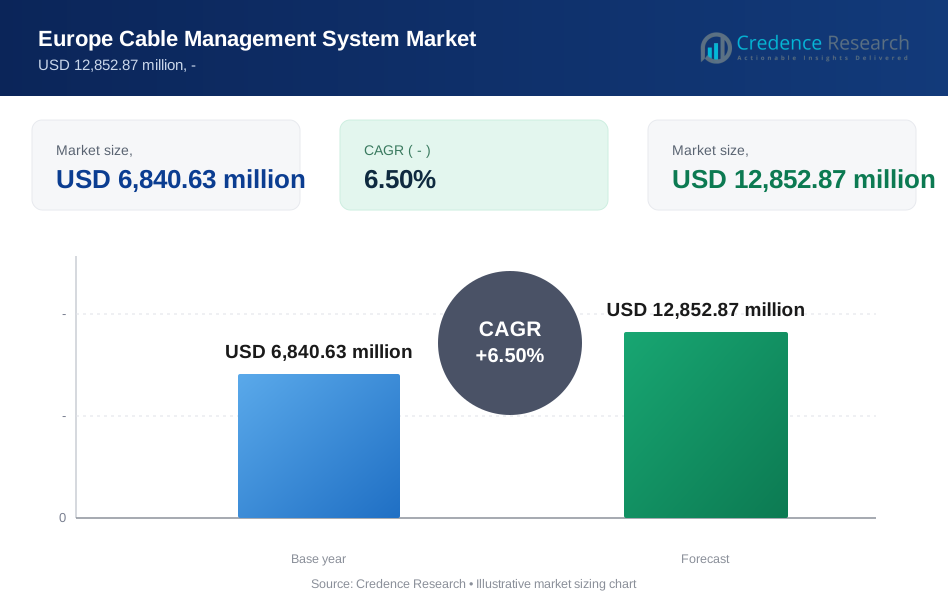
The Europe Cable Management System Market surged from USD 6,718.35 million in 2023 to USD 14,234.05 million by 2032, marking an impressive growth rate of 8.70% over the forecast period.
The Europe Cable Management System Market is being propelled by several key drivers and trends. Increasing demand for efficient cable organization and protection in commercial and industrial sectors is fostering market growth. Additionally, stringent regulations regarding workplace safety and the rising adoption of advanced technologies such as IoT and automation are driving the need for robust cable management solutions. Moreover, the proliferation of renewable energy projects and the expanding telecommunications infrastructure further contribute to market expansion. As businesses prioritize streamlined operations and sustainable practices, the market is expected to witness continued momentum in the foreseeable future.
In the Europe Cable Management System Market, geographical analysis reveals a diverse landscape characterized by robust infrastructure development and stringent regulatory frameworks. Key players such as Legrand SA, Schneider Electric SE, and Thomas & Betts Corporation (ABB Ltd) dominate the market with their comprehensive product portfolios and strategic initiatives. Other significant players include Hellermann Tyton, Eaton Corporation PLC, and Panduit, among others. With countries like the UK, Germany, and France leading in infrastructure investments, and emerging markets in Eastern Europe showing potential, the region offers lucrative opportunities for expansion and innovation in cable management solutions.
Market Drivers
Rising Construction Activities and Smart Buildings:
The European construction sector is undergoing a significant uptrend, especially in the development of data centers, hospitals, and high-rise buildings. As these structures become increasingly complex, there is a growing demand for efficient cable management solutions to organize and safeguard the expanding network of electrical and data cables. The European construction sector is experiencing a robust increase, with the number of data centers alone projected to grow by 10% annually. For instance, in 2023, Europe saw the construction of over 120 new data centers. As a result, the demand for cable management solutions has surged by approximately 15% to accommodate the 50% increase in electrical and data cables required for these complex structures. Furthermore, the shift towards smart buildings, which are expected to comprise 30% of all new construction projects by 2025, necessitates advanced cable infrastructure to support the integration of automation and IoT technologies, thereby enhancing operational efficiency.
Focus on Energy Efficiency and Sustainability:
Europe stands at the forefront of sustainability efforts, with a pronounced focus on reducing energy consumption and environmental impact across industries. Europe’s commitment to sustainability is evident in its goal to reduce energy consumption by 20% by 2030. Cable management systems are now designed to improve power distribution efficiency by 5% and reduce energy wastage. Manufacturers are innovating with 80% of new products made from recycled materials and production processes that have reduced environmental footprints by 25%. This aligns with the market’s preference for eco-conscious solutions, which has seen a 40% increase in demand for sustainable products. In line with this ethos, cable management systems are being designed to facilitate efficient power distribution while minimizing energy wastage.
Upgrade and Renewal of Existing Networks:
Many European countries grapple with aging infrastructure, encompassing electrical grids and communication networks. Addressing this challenge necessitates substantial investments in modernizing and renewing existing networks, wherein cable management systems play a pivotal role. Advanced cable management systems are crucial in these upgrades, aiming to enhance safety and reliability by 50% and operational efficiency by 20%. These improvements are vital for promoting economic growth and societal well-being, with an expected 3% annual increase in GDP attributed to upgraded infrastructure. By implementing advanced solutions, these infrastructure upgrades aim to bolster safety, reliability, and operational efficiency, thus fostering sustained economic growth and societal well-being across the region.
Technological Advancements and Data Growth:
The relentless march of technological progress, epitomized by cloud computing, 5G networks, and the Internet of Things (IoT), has engendered an explosion in data traffic. This burgeoning data landscape underscores the critical importance of robust and well-organized cable management systems capable of handling the escalating volume of data and communication cables effectively. As industries embrace digital transformation, investing in advanced cable management solutions emerges as a strategic imperative to support seamless connectivity and drive innovation in the European marketplace.
Market Trends
Shift Towards Smart and Connected Solutions:
Building on the Internet of Things (IoT) wave, smart cable management systems are gaining traction in the Europe Cable Management System Market. The Europe Cable Management System Market is increasingly adopting smart cable management systems, with a 25% rise in installations over the past year. For instance, in 2023, these systems have been implemented in over 500 buildings across Europe, leveraging IoT technology to monitor over 10,000 kilometers of cables. They have been instrumental in reducing downtime by 40% and improving operational efficiency. These systems leverage IoT technology to monitor cable health, detect potential issues such as overheating or damage, and optimize airflow for enhanced performance. By enabling proactive maintenance and minimizing downtime, smart cable management systems contribute to improved operational efficiency and cost savings for businesses across various sectors.
Focus on Customization and Modular Designs:
With the increasing diversity of applications and space constraints, there is a notable trend towards customizable and modular cable management systems. These solutions offer greater flexibility in configuration, allowing for tailored adaptations to specific needs and seamless integration into existing infrastructure. The demand for customizable and modular cable management systems has grown by 35% in the last two years. For instance, in commercial spaces where space optimization is crucial, these systems have allowed for a 50% better utilization of available space. They offer configurations that can be tailored to specific needs, with over 200 different modular designs now available in the market. This flexibility has empowered organizations to enhance operational agility and adapt to evolving requirements, with a 30% increase in efficiency reported by businesses that have adopted these solutions.
Market Challenges Analysis
Navigating Price Fluctuations of Raw Materials
Europe's cable management system market contends with the inherent challenge of price fluctuations in essential raw materials such as steel, plastic, and aluminum. Mirroring global trends, these fluctuations can disrupt production costs and affect the affordability of cable management systems for both manufacturers and end-users. Managing these volatile material costs requires strategic planning and supply chain resilience to mitigate potential financial impacts and maintain competitive pricing in the market.
Addressing Stringent Regulations and Compliance
Europe upholds rigorous regulations concerning safety, fire resistance, and building codes, ensuring high standards of quality and safety in cable management systems. While these regulations are crucial for safeguarding public welfare, they also pose challenges by limiting flexibility in design and material innovation. Cable management solutions must comply with these stringent standards, which can impede the introduction of entirely new designs or innovative materials, necessitating careful navigation of regulatory requirements to ensure market compliance and product integrity.
Market Segmentation Analysis:
By Product:
The Europe Cable Management System Market can be segmented by product into several categories, each catering to specific cable management needs. Cable trays, offering versatile support and routing solutions, are widely utilized across various industries due to their flexibility and ease of installation. Cable raceways, another prominent segment, provide enclosed pathways for cables, ensuring organized and protected cable routing in both indoor and outdoor environments. Cable conduits, known for their protective enclosures, are preferred for concealing and safeguarding cables in hazardous or harsh conditions. Cable connectors and glands play a crucial role in establishing secure connections between cables, facilitating efficient signal transmission and minimizing signal loss. Additionally, the market encompasses other miscellaneous products, including cable management accessories and specialized solutions tailored to unique requirements, further diversifying the product landscape and meeting diverse customer needs across the region.
By Material:
The Europe Cable Management System Market is also segmented by material, reflecting the diverse preferences and requirements of end-users. Metallic cable management systems, characterized by their durability and robustness, are widely adopted in industrial settings and infrastructure projects where high mechanical strength and corrosion resistance are paramount. Non-metallic alternatives, comprising materials such as PVC, fiberglass, and polymers, offer lightweight and cost-effective solutions suitable for a range of applications, including residential and commercial buildings. These non-metallic systems provide excellent insulation properties, making them ideal for environments sensitive to electromagnetic interference (EMI) and radio frequency interference (RFI). The segmentation by material underscores the importance of material selection in meeting performance, regulatory, and budgetary considerations, ensuring optimal functionality and longevity of cable management solutions deployed across Europe.
Segments:
Based on Product
- Cable Trays
- Cable Raceways
- Cable Conduits
- Cable Connectors and Glands
- Others
Based on Material
- Metallic
- Non-Metallic
Based on End-use
- IT & Telecom
- Manufacturing
- Energy & Utilities
- Healthcare
- Oil & Gas
- Public Infrastructure
- Commercial
- Others
Based on the Geography:
- UK
- France
- Germany
- Italy
- Spain
- Russia
- Belgium
- Netherlands
- Austria
- Sweden
- Poland
- Denmark
- Switzerland
- Rest of Europe
Regional Analysis
Western Europe, comprising countries such as Germany, France, the United Kingdom, and Italy, holds the largest market share, accounting for approximately 45% of the total European market. These nations are at the forefront of technological advancements and infrastructure development, driving the demand for advanced cable management solutions. The presence of major data centers, telecommunications facilities, and industrial hubs in this region further fuels the growth of the cable management system market.
Central and Eastern Europe, including countries like Poland, Russia, and the Czech Republic, collectively contribute around 30% of the market share. This region is witnessing significant infrastructure upgrades and the development of new projects across various sectors, such as healthcare, education, and manufacturing. The need for efficient cable management solutions to support these initiatives is driving market growth in this region.
Key Player Analysis
- Legrand SA
- Schneider Electric SE
- Thomas & Betts Corporation (ABB Ltd)
- Hellermann Tyton
- Eaton Corporation PLC
- Marco Cable Management
- Vantrunk International
- Panduit
- NIEDAX GROUP
- Leviton Manufacturing UK Limited
- TE Connectivity
- Hubbell
Competitive Analysis
In the fiercely competitive Europe Cable Management System Market, leading players like Legrand SA, Schneider Electric SE, and Thomas & Betts Corporation (ABB Ltd) vie for market dominance through strategic differentiation and innovation. Legrand SA, renowned for its extensive product portfolio and global presence, maintains a competitive edge by focusing on technological advancements and sustainable solutions. Schneider Electric SE leverages its expertise in energy management and automation to offer integrated cable management solutions tailored to diverse customer needs, bolstering its market position. Thomas & Betts Corporation (ABB Ltd) capitalizes on its strong brand reputation and diversified product offerings to capture market share across various industry verticals. With a relentless focus on quality, innovation, and customer satisfaction, these leading players continually strive to outperform competitors, driving innovation and shaping the competitive landscape of the Europe Cable Management System Market.
Recent Developments
In June 2022, Atkore Inc. revealed the purchase of United Poly Systems. This company produces High-Density Polyethylene (HDPE) pressure pipes and conduits for telecommunications, water infrastructure, renewable energy, and other industries.
In August 2022, Leviton announced the debut of their Decora Smart Wi-Fi 2nd Generation Fan Speed Controller to make integrating ceiling fan control into a smart home easier.
Market Concentration & Characteristics
In the Europe Cable Management System Market, market concentration is notable, with a few key players holding significant market share. This concentration is driven by factors such as brand reputation, product innovation, and extensive distribution networks. Leading companies like Legrand SA, Schneider Electric SE, and Thomas & Betts Corporation (ABB Ltd) dominate the market, leveraging their strong brand presence and diversified product portfolios to maintain competitive advantages. These players exhibit characteristics of market leaders, including robust R&D capabilities, strategic partnerships, and global reach, enabling them to effectively penetrate diverse market segments and capitalize on emerging opportunities. Despite the competitive landscape, the market remains dynamic, characterized by ongoing technological advancements, regulatory changes, and evolving customer preferences. As such, companies must remain agile and responsive to market dynamics, continually innovating and adapting strategies to sustain growth and maintain their positions in the Europe Cable Management System Market.
Report Coverage
The research report offers an in-depth analysis based on Product, Material, End-use, Distribution Channel and Geography. It details leading market players, providing an overview of their business, product offerings, investments, revenue streams, and key applications. Additionally, the report includes insights into the competitive environment, SWOT analysis, current market trends, as well as the primary drivers and constraints. Furthermore, it discusses various factors that have driven market expansion in recent years. The report also explores market dynamics, regulatory scenarios, and technological advancements that are shaping the industry. It assesses the impact of external factors and global economic changes on market growth. Lastly, it provides strategic recommendations for new entrants and established companies to navigate the complexities of the market.
Future Outlook
- Continued Growth: The Europe Cable Management System Market is poised for sustained expansion driven by increasing infrastructure investments and technological advancements.
- Rising Demand for Smart Solutions: The adoption of smart cable management systems is expected to surge, fueled by the integration of IoT and automation technologies in buildings and industrial facilities.
- Emphasis on Sustainability: Environmental concerns will drive the demand for eco-friendly cable management solutions made from recycled materials and with lower environmental footprints.
- Technological Advancements: Ongoing innovations, such as wireless charging and modular designs, will shape the future of cable management systems, enhancing efficiency and functionality.
- Integration of Power and Data Management: Converged cable management systems capable of handling both power and data cables will gain prominence, simplifying installation and maintenance.
- Regulatory Compliance: Stringent safety regulations will continue to influence product development, with a focus on meeting fire resistance and building code requirements.
- Market Consolidation: Mergers and acquisitions are expected to reshape the competitive landscape as companies seek to expand their market presence and diversify product offerings.
- Adoption of Advanced Materials: Material science advancements will lead to the development of lighter, stronger, and more fire-resistant cable management systems, enhancing performance and safety.
- Focus on Customization: There will be a growing demand for customizable and modular cable management solutions to address diverse application requirements and space constraints.
- Emerging Markets: Eastern European countries and burgeoning industries like renewable energy and data centers will present lucrative growth opportunities for market players expanding their presence in the region.
Request a Free Sample
Fill in your details and we'll send you a free sample report.
- Sample data tables & charts
- Research methodology
Need a Custom Version of This Report?
Tailor the scope, geography, or segments to your exact requirements.
- Custom geography or segment scope
- Direct access to our analyst team
Frequently Asked Questions
What is the current size of the Europe Cable Management System Market?
What factors are driving the growth of the Europe Cable Management System Market?
What are the key segments within the Europe Cable Management System Market?
What are some challenges faced by the Europe Cable Management System Market?
Who are the major players in the Europe Cable Management System Market?
Which segment is leading the market share?
Table of Content
Chapter 1. Report Introduction
- 1.1 Report Description & Purpose
- 1.1.1 Report Title & Market Definition
- 1.1.2 Unique Selling Propositions (USP) & Key Differentiators
- 1.1.3 Value Proposition for Stakeholders
- 1.2 Research Objectives
- 1.2.1 Market Sizing Objectives (Volume & Revenue)
- 1.2.2 Segmentation Objectives
- 1.2.3 Competitive Intelligence Objectives
- 1.2.4 Forecast & Scenario Objectives
- 1.3 Report Scope
- 1.3.1 Europe Cable Management System Scope – Types & Subtypes Covered
- 1.3.2 Geographic Scope – Regions & Countries Covered
- 1.3.3 Historical Period, Base Year & Forecast Period (the historical period; forecast to the forecast period)
- 1.3.4 Inclusions & Exclusions
- 1.4 HS Code & Classification Framework
- 1.5 Currency, Units & Pricing Basis
- 1.6 Target Stakeholders
- 1.7 Limitations & Assumptions
Chapter 2. Executive Summary
- 2.1 Global Europe Cable Management System Market Snapshot
- 2.1.1 Market Size – Historical (the historical period) & Forecast (the forecast period) (base year: USD 6,840.63 million → forecast year: USD 12,852.87 million)
- 2.1.2 Volume & Revenue – Global Totals
- 2.1.3 Key Market Highlights – Top Five Facts
- 2.2 Europe Cable Management System Market Segmentation Snapshot
- 2.2.1 Market Split by Region – vs.
- 2.3 Competitive Snapshot
- 2.3.1 Top 10 Players by Revenue Share –
- 2.3.2 Top 10 Players by Volume Share –
- 2.3.3 Recent Strategic Developments (18-Month Summary)
- 2.4 Key Investment Highlights & Strategic Conclusions
Chapter 3. Europe Cable Management System Market Dynamics & Industry Analysis
- 3.1 Market Overview & Context
- 3.1.1 Europe Cable Management System Market Position in the Broader Automotive Value Chain
- 3.1.2 OEM vs. Replacement Market Dynamics
- 3.1.3 Market Maturity & Development Stage by Region
- 3.2 Europe Cable Management System Market Drivers
- 3.3 Europe Cable Management System Market Restraints & Challenges
- 3.4 Europe Cable Management System Market Opportunities
- 3.5 Porter's Five Forces Analysis
- 3.5.1 Threat of New Entrants
- 3.5.2 Bargaining Power of Suppliers
- 3.5.3 Bargaining Power of Buyers
- 3.5.4 Threat of Substitutes
- 3.5.5 Competitive Rivalry – Intensity Assessment
- 3.6 Europe Cable Management System Value Chain Analysis
- 3.6.1 Upstream – Raw Material/Input Suppliers
- 3.6.1.1 Raw Material/Input 1
- 3.6.1.2 Raw Material/Input 2
- 3.6.1.3 Raw Material/Input 3
- 3.6.2 Midstream – Production/Manufacturing/Service Delivery
- 3.6.2.1 Production/Process Overview
- 3.6.2.2 Key Facility Locations & Capacity by Manufacturer
- 3.6.3 Downstream – Distribution & End Consumer
- 3.6.3.1 Primary Channel – B2B/OEM
- 3.6.3.2 Secondary Channels – Dealer, Retail, Online, Direct
- 3.6.4 Value Chain Profitability Analysis
- 3.6.1 Upstream – Raw Material/Input Suppliers
- 3.7 PESTEL Analysis
- 3.7.1 Political Factors
- 3.7.2 Economic Factors
- 3.7.3 Social Factors
- 3.7.4 Technological Factors
- 3.7.5 Environmental Factors
- 3.7.6 Legal Factors
- 3.8 Europe Cable Management System Supply Chain Analysis
- 3.8.1 Raw Material/Input Supply Risk Assessment
- 3.8.2 Manufacturing Concentration Risk (Geographic Exposure)
- 3.8.3 Trade Disruption Impact Analysis
- 3.9 Regulatory & Policy Landscape
Note: The regulatory and policy landscape section covers regulations based on their applicability to the market, Europe Cable Management System category, geography, and scope of the study. Only regulatory frameworks with a material impact on operations, compliance, trade, sustainability, or market access are analyzed in detail.
Chapter 4. Key Investment Pockets & Opportunity Analysis
- 4.1 Europe Cable Management System Market Attractiveness Analysis
- 4.1.1 By Region – Investment Attractiveness Matrix (Volume × CAGR)
- 4.2 Absolute Revenue Growth Opportunity
- 4.2.1 By Region – Absolute USD Growth Through the forecast period
- 4.3 Incremental Volume Opportunity
- 4.3.1 By Region – Incremental Volume Through the forecast period
- 4.3.2 Segment – Incremental Volume
- 4.4 Emerging Submarket Opportunity Deep Dive (Subject to Applicability)
- 4.5 Emerging Market Opportunity Scorecards
- 4.5.1 United States
- 4.5.2 Europe
- 4.5.3 Asia
- 4.5.4 Middle East & Africa
Note: Emerging Market Opportunity Scorecards will be included based on relevance and strategic importance. Regions listed are indicative and may vary depending on data availability and market dynamics.
Chapter 5. Europe Cable Management System Import-Export Analysis & Trade Flows
- 5.1 Global Trade Overview
- 5.1.1 Global Export Value by Country (the historical period)
- 5.1.2 Global Export Volume by Country (the historical period)
- 5.1.3 Global Import Value by Country (the historical period)
- 5.1.4 Global Import Volume by Country (the historical period)
- 5.1.5 Net Trade Balance by Country (the historical period)
- 5.2 Export Analysis – Segment
- 5.2.1 Type 1 (HS Code)
- 5.2.2 Type 2 (HS Code)
- 5.2.3 Type 3 (HS Code)
- 5.2.4 Type 4 (HS Code)
- 5.2.5 Type 5 (HS Code)
- 5.3 Import Analysis – Segment
- 5.3.1 Type 1 (HS Code)
- 5.3.2 Type 2 (HS Code)
- 5.3.3 Type 3 (HS Code)
- 5.3.4 Type 4 (HS Code)
- 5.3.5 Type 5 (HS Code)
- 5.4 Average Unit Trade Prices
- 5.4.1 Average Export Price – Segment & Country
- 5.4.2 Average Import Price – Segment & Source Country
- 5.4.3 Price Trends (the historical period)
- 5.5 Key Trade Route Analysis
- 5.5.1 Trade Route 1
- 5.5.2 Trade Route 2
- 5.5.3 Trade Route 3
- 5.5.4 Trade Route 4
- 5.5.5 Trade Route 5
- 5.6 Trade Policy Impact Assessment
- 5.6.1 US Anti-Dumping & Section 301 Tariffs
- 5.6.2 EU Customs Union Impact
- 5.6.3 Major Free Trade Agreements
- 5.6.4 USMCA Rules of Origin
Note: Trade policy analysis will be included only where relevant to the Europe Cable Management System market.
Chapter 6. Competitive Landscape & Company Benchmarking
- 6.1 Europe Cable Management System Market Concentration & Structure
- 6.1.1 Herfindahl-Hirschman Index (HHI) – vs.
- 6.1.2 Tier 1, Tier 2 & Tier 3 Market Structure
- 6.1.3 Global, Regional & Local Player Dynamics
- 6.2 Europe Cable Management System Market Share Analysis –
- 6.2.1 Global Revenue Share by Company
- 6.2.2 Global Volume Share by Company
- 6.2.3 Regional Revenue Share
- 6.2.4 Market Share Evolution ( vs. )
- 6.2.5 OEM Segment Share by Company
- 6.2.6 Replacement Segment Share by Company
- 6.3 Production/Delivery Capacity & Facility Analysis
- 6.3.1 Global Installed Capacity
- 6.3.2 Capacity Utilization Rates
- 6.3.3 Production/Output Volume
- 6.3.4 Facility Locations & Capacity Map
- 6.3.5 Planned Capacity Additions
- 6.4 Europe Cable Management System Competitive Benchmarking Matrix
- 6.4.1 Revenue, Volume, CAGR & Profitability Comparison
- 6.4.2 Channel Revenue Mix
- 6.4.3 Geographic Revenue Exposure
- 6.4.4 R&D Intensity
- 6.4.5 Sustainability Maturity
- 6.5 Strategic Developments in Europe Cable Management System (Last 24 Months)
- 6.5.1 Mergers, Acquisitions & Divestments
- 6.5.2 New Europe Cable Management System Launches
- 6.5.3 Facility Expansions
- 6.5.4 Strategic Alliances, Joint Ventures & Partnerships
- 6.5.5 Distribution Expansion & Market Entry
- 6.5.6 Sustainability & ESG Initiatives
- 6.6 Competitive Strategy Mapping
- 6.6.1 Leader, Challenger, Follower & Niche Classification
- 6.6.2 Pricing Strategy Comparison
- 6.6.3 Channel Strategy Matrix
Note: Strategic developments are included based on their materiality and the availability of reliable information.
Chapter 7. Global Europe Cable Management System Market – By Distribution Channel
- 7.1 Segment Overview
- 7.1.1 Volume & Revenue Split by Channel ( & )
- 7.1.2 Channel Mix Evolution (the forecast period)
Chapter 8. Regional Market Analysis – Global Overview
- 8.1 Global Regional Overview
- 8.1.1 Regional Volume Share
- 8.1.2 Regional Revenue Share
- 8.1.3 Regional Volume by Region
- 8.1.4 Regional Revenue by Region
- 8.1.5 Regional Forecast Through the forecast period
- 8.2 Cross-Regional Segment Analysis
- 8.2.1 By Distribution Channel
- 8.2.2 By Brand/Price Tier
Chapter 9. North America Europe Cable Management System Market
- 9.1 United States
- 9.2 Canada
- 9.3 Mexico
Chapter 10. Europe Europe Cable Management System Market
- 10.1 Germany
- 10.2 France
- 10.3 Italy
- 10.4 United Kingdom
- 10.5 Spain
- 10.6 Poland
- 10.7 Russia
- 10.8 Netherlands
- 10.9 Belgium
- 10.10 Sweden
- 10.11 Denmark
- 10.12 Norway
- 10.13 Rest of Europe
Chapter 11. Asia Pacific Europe Cable Management System Market
- 11.1 China
- 11.2 India
- 11.3 Japan
- 11.4 South Korea
- 11.5 Thailand
- 11.6 Indonesia
- 11.7 Vietnam
- 11.8 Malaysia
- 11.9 Australia
- 11.10 Rest of Asia Pacific
Chapter 12. Latin America Europe Cable Management System Market
- 12.1 Brazil
- 12.2 Argentina
- 12.3 Colombia
- 12.4 Chile
- 12.5 Rest of Latin America
Chapter 13. Middle East Europe Cable Management System Market
- 13.1 Saudi Arabia
- 13.2 United Arab Emirates
- 13.3 Turkey
- 13.4 Israel
- 13.5 Iran
- 13.6 Rest of the Middle East
Chapter 14. Africa Europe Cable Management System Market
- 14.1 South Africa
- 14.2 Egypt
- 14.3 Nigeria
- 14.4 Morocco
- 14.5 Rest of Africa
Chapter 15. Europe Cable Management System Company Profiles
- 15.1 [Company 01]
- 15.1.1 Company Overview
- 15.1.2 Key Management Personnel
- 15.1.3 Products & Services Portfolio
- 15.1.4 Financial Performance
- 15.1.5 Key Market Focus & Geographic Presence
- 15.1.6 Recent Developments & Strategic Initiatives
Note: The company profile list is preliminary and may change based on research findings, market developments, data availability, and client requirements.
Chapter 16. Appendices
- Appendix A – List of Abbreviations & Acronyms
- Appendix B – Industry Classification Code Reference – Full Series
- Appendix C – Production & Capacity Data Tables
- Appendix D – End-Use & Demand Base Tables
- Appendix E – Consumption & Replacement Rate Assumptions
- Appendix F – ASP Reference Tables
- Appendix G – Manufacturing & Facility Database
- Appendix H – Import-Export Data Tables
- Appendix I – Regulatory Summary Tables
- Appendix J – Primary Research Participant List (Anonymized)
- Appendix K – Primary Research Questionnaire Framework
- Appendix L – Data Sources & Bibliography
- Appendix M – Market Size Divergence & Source Comparison
Chapter 17. Research Methodology
- 17.1 Research Framework & Philosophy
- 17.2 Secondary Research – Sources, Hierarchy & Data Extraction
- 17.3 Data Modeling – Bottom-Up & Top-Down Market Sizing
- 17.4 Primary Research – Stakeholder Framework, LOI & Sample Sizes
- 17.5 Forecast Methodology – Regression, Scenario & Sensitivity Analysis
- 17.6 Quality Control – Four-Layer Validation Framework
- 17.7 Limitations & Standard Assumptions
- 17.8 Disclaimer
