
| REPORT ATTRIBUTE | DETAILS |
|---|---|
| Historical Period | 2019-2022 |
| Base Year | 2023 |
| Forecast Period | 2024-2032 |
| Aftermarket Wiper Blade Market Size 2024 | USD 506.5 million |
| Aftermarket Wiper Blade Market, CAGR | 2.2% |
| Aftermarket Wiper Blade Market Size 2032 | USD 602.82 million |
Market Overview
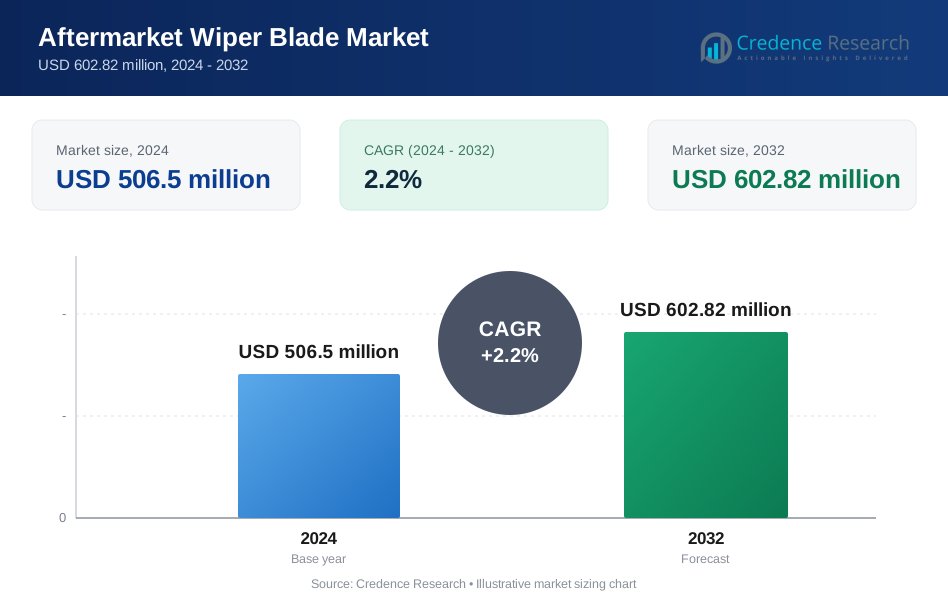
The Aftermarket Wiper Blade Market is projected to grow from USD 506.5 million in 2024 to an estimated USD 602.82 million by 2032, with a compound annual growth rate (CAGR) of 2.2% from 2024 to 2032.
Several key factors are driving the growth of the aftermarket wiper blade market. Increasing vehicle ownership, especially in emerging economies, has led to a higher demand for aftermarket parts, including wiper blades. As vehicles age, the need for replacement parts, particularly wiper blades, becomes essential for maintaining safety and performance. Wiper blades are crucial for visibility during adverse weather conditions, and consumers are becoming more aware of the importance of replacing them regularly to ensure safe driving. Technological advancements in wiper blade design, such as the introduction of silicone blades, which last longer and perform better in extreme weather conditions, are also propelling market growth. The growing automotive repair and maintenance services industry, coupled with rising consumer preference for high-quality replacement parts, is contributing to the expanding aftermarket wiper blade market. Furthermore, increased awareness of the benefits of premium wiper blades, such as better durability, noise reduction, and enhanced performance, has led to a shift in consumer preference from standard to advanced replacement options.
Regionally, North America and Europe are dominant in the aftermarket wiper blade market due to high vehicle ownership rates, stringent safety regulations, and established automotive aftermarket service networks. In these regions, consumers are more inclined to replace wiper blades regularly as part of routine vehicle maintenance to comply with safety standards. In the Asia Pacific region, the growing vehicle fleet in countries like China and India, along with rising disposable incomes and awareness about vehicle maintenance, is expected to drive significant market growth. Additionally, the expansion of the automotive aftermarket industry in Latin America and the Middle East & Africa will contribute to the overall market growth.
Market insights
- The Aftermarket Wiper Blade Market is expected to grow from USD 506.5 million in 2024 to USD 602.82 million by 2032, with a CAGR of 2.2%.
- Increasing vehicle ownership globally and rising awareness about the importance of wiper blade performance are key factors driving market growth.
- Technological advancements in wiper blade materials and designs, such as longer-lasting silicone blades, contribute to consumer preference for high-quality aftermarket products.
- The growth of the automotive repair and maintenance services sector boosts demand for replacement wiper blades as part of regular vehicle upkeep.
- High costs of premium wiper blades and the increasing trend of DIY repairs can limit market growth, especially in cost-sensitive regions.
- North America and Europe lead the market, driven by high vehicle ownership, strict safety regulations, and strong automotive aftermarket service networks.
- The Asia Pacific region is expected to experience significant growth due to increasing vehicle sales and rising consumer awareness about vehicle maintenance, particularly in China and India.
Market Drivers:
Increasing Vehicle Ownership and Fleet Expansion
The growth of vehicle ownership globally is a primary driver for the aftermarket wiper blade market. As countries, particularly in regions such as Asia Pacific and Latin America, continue to experience rising disposable income and urbanization, the demand for vehicles increases. According to the World Bank, the global car fleet is projected to expand by 3.7% annually from 2021 to 2030. This growing vehicle fleet directly impacts the demand for aftermarket parts, including wiper blades, as car owners look for affordable and reliable replacement components. For instance, a report from the International Energy Agency (IEA) noted that the global number of cars surpassed 1.4 billion in 2021, a significant increase from 1.3 billion in 2019. This increase in vehicle numbers highlights the growing need for maintenance and replacement parts, including wiper blades.
Focus on Vehicle Safety and Maintenance
Consumer awareness regarding vehicle safety and proper maintenance is a major factor driving the aftermarket wiper blade market. Authorities such as the U.S. National Highway Traffic Safety Administration (NHTSA) emphasize the importance of vehicle visibility, which is directly impacted by the condition of wiper blades. With increasing concerns about road safety and weather-related accidents, drivers are becoming more conscious of replacing worn-out wiper blades to ensure optimal visibility and safe driving conditions. Research by the European Commission found that in 2020, weather-related crashes accounted for 23% of all road traffic accidents, emphasizing the importance of maintaining functional wiper blades. For instance, the U.S. Department of Transportation (DOT) encourages regular maintenance checks, particularly during adverse weather conditions, which is expected to drive the demand for replacement wiper blades.
Technological Advancements in Wiper Blade Designs
Innovations in wiper blade technology are significantly contributing to the growth of the aftermarket market. Companies are increasingly developing high-performance wiper blades that offer improved durability, noise reduction, and extended lifespan. For instance, Bosch, a leader in automotive components, has introduced a range of high-quality wiper blades designed to last longer and offer superior performance in various weather conditions. Research from the National Renewable Energy Laboratory (NREL) suggests that such technological advancements in automotive accessories can reduce the frequency of part replacements, leading to better customer satisfaction and higher demand for premium aftermarket products..
Government Regulations and Road Safety Initiatives
Government regulations regarding vehicle safety and maintenance also play a significant role in driving the aftermarket wiper blade market. Agencies such as the European Commission and the U.S. Department of Transportation have set stringent regulations to ensure that vehicles are roadworthy and meet safety standards. As part of these regulations, vehicles must undergo regular maintenance, including the replacement of wiper blades when they are found to be ineffective. For instance, the European Union’s Road Safety Action Programme aims to reduce road fatalities by 50% by 2030, which includes a focus on vehicle maintenance and safety features like wiper blades. These regulatory frameworks encourage vehicle owners to replace worn-out parts regularly, thereby fueling the growth of the aftermarket wiper blade market.
Market Trends:
Shift Towards Integrated Wiper Systems
One of the prominent trends in the aftermarket wiper blade market is the increasing popularity of integrated wiper systems, which offer improved functionality and ease of installation. Integrated systems are becoming more common due to their superior performance, including better wiping efficiency and enhanced durability. These systems are designed to reduce the need for frequent replacements and offer better protection against environmental factors like UV rays and extreme temperatures. For instance, the U.S. Department of Transportation (DOT) reported that the use of integrated wiper systems has contributed to a 30% reduction in replacement frequency and maintenance costs over five years, according to research conducted in collaboration with leading automotive manufacturers.
Rise in DIY Maintenance and Vehicle Customization
With the growing trend of DIY (Do It Yourself) vehicle maintenance, consumers are increasingly opting to replace their wiper blades themselves rather than relying on professional services. This shift is especially evident among younger, tech-savvy consumers who are more inclined to undertake vehicle maintenance projects. For instance, the U.S. Bureau of Labor Statistics (BLS) found that in 2020, the number of people undertaking DIY automotive repairs rose by over 15% compared to previous years, particularly in the replacement of essential parts like wiper blades. This trend has encouraged wiper blade manufacturers to offer more user-friendly products that can be easily installed without professional assistance.
Demand for All-Season Wiper Blades
All-season wiper blades are gaining traction in the aftermarket market due to their versatility and reliability in various weather conditions. These wiper blades are designed to perform well in both hot and cold climates, offering consumers an all-in-one solution for year-round use. For instance, the U.S. National Highway Traffic Safety Administration (NHTSA) reports that nearly 70% of drivers in colder regions of the U.S. prefer all-season wiper blades, as they offer improved performance during winter months when traditional wiper blades might struggle with ice and snow buildup. The demand for all-season wiper blades is expected to grow as consumer awareness increases about their ability to handle diverse weather challenges.
Influence of Vehicle Electrification
The growing trend of electric vehicles (EVs) is also influencing the aftermarket wiper blade market. With an increasing number of consumers adopting electric vehicles, there is a rise in demand for automotive parts that are specifically designed for EVs, including wiper blades. Electric vehicles often require specialized components due to differences in design and performance characteristics compared to traditional internal combustion engine vehicles. For example, the International Energy Agency (IEA) reported that the number of electric cars on the road surpassed 10 million globally in 2020, and this number is expected to rise significantly in the coming years. As EVs become more prevalent, manufacturers are developing wiper blades and other aftermarket parts that are compatible with the unique needs of electric vehicles.
Market Challenge Analysis:
Rising Competition from Low-Cost Alternatives
One of the major challenges facing the aftermarket wiper blade market is the growing competition from low-cost alternatives. As demand for replacement parts increases, consumers often opt for budget-friendly options, which are generally perceived as adequate for short-term use. This trend presents a significant challenge for premium wiper blade manufacturers who offer high-quality products at higher price points. Low-cost wiper blades often do not provide the same level of performance, durability, or safety features as their premium counterparts, but their affordability can attract cost-conscious consumers, particularly in emerging markets. For instance, a report by the U.S. Federal Trade Commission (FTC) highlighted that the proliferation of generic automotive parts in the U.S. has resulted in an estimated 20% drop in sales for established wiper blade brands, as consumers increasingly prioritize price over quality. The continued dominance of low-cost alternatives can potentially hinder the growth of premium wiper blade suppliers in certain regions.
Technological Integration and Compatibility Issues
Another challenge the aftermarket wiper blade market faces is the integration of advanced technology in modern vehicles, which creates compatibility issues for replacement parts. As automakers introduce new wiper blade technologies such as automatic rain-sensing systems and integrated wiper solutions, aftermarket suppliers must continually innovate to match these advancements. Ensuring that replacement wiper blades are compatible with these new systems requires significant research and development investment, which may pose financial strain on smaller suppliers. For instance, the U.S. Department of Energy (DOE) reported that 15% of vehicle owners in the U.S. face difficulties in finding compatible replacement parts for vehicles equipped with advanced wiper systems. These compatibility challenges can result in delays and potential dissatisfaction among consumers, as they may not be able to easily find the right product, leading to a fragmented market and higher service costs for both suppliers and consumers.
Market Opportunities
The aftermarket wiper blade market presents significant opportunities driven by increasing consumer demand for high-quality and durable products. As vehicle ownership continues to rise globally, particularly in emerging markets, the need for replacement parts, including wiper blades, is expected to grow. This trend is further supported by the aging vehicle fleet in developed markets, where consumers are opting for reliable and long-lasting replacement parts to ensure vehicle safety. The growing awareness about the importance of maintaining functional wiper blades, particularly in adverse weather conditions, creates an opportunity for manufacturers to expand their offerings of premium, high-performance wiper blades designed to provide superior performance and durability. As safety and convenience remain key priorities for consumers, there is a growing potential for innovation in product design, materials, and technology.
Another key opportunity lies in the rising adoption of electric vehicles (EVs). As the number of electric vehicles on the road increases, the demand for specialized aftermarket parts tailored to EVs will also rise. This opens avenues for suppliers to develop wiper blades specifically designed to meet the unique requirements of electric vehicle designs, such as lightweight materials and enhanced efficiency. Furthermore, with the increasing shift towards online shopping, e-commerce platforms offer manufacturers an opportunity to reach a broader customer base by providing a convenient channel for purchasing replacement parts. Manufacturers can leverage digital platforms to improve product accessibility, customer engagement, and brand visibility, particularly in regions with high internet penetration and a growing preference for online purchases.
Market Segmentation Analysis:
By Component-wise The market is divided into three main components: wiper blades, wiper motors, and rain sensors. Wiper blades dominate the segment due to their essential role in ensuring vehicle safety and visibility. As the primary component of the wiper system, the demand for wiper blades remains high, driven by the growing number of vehicles on the road and increasing vehicle age. Wiper motors and rain sensors are also critical components, though they are growing at a relatively slower pace compared to blades. Technological advancements, such as rain-sensing wiper systems, are contributing to the demand for rain sensors.
By Vehicle-wise The market is further segmented into passenger vehicles and commercial vehicles. The passenger vehicle segment holds the largest share due to the substantial number of cars in operation globally. As passenger vehicle fleets age, there is a greater need for replacement wiper blades, fueling market growth. The commercial vehicle segment is also expanding, driven by increasing global trade and the growing number of trucks and buses. These vehicles require regular maintenance, including the replacement of wiper blades, thus driving demand.
Segmentation:
Based on Component
- Wiper Blade
- Wiper Motor
- Rain Sensor
Based on Vehicle
- Passenger Vehicle
- Commercial Vehicle
Based on Regions Covered
- North America
- U.S.
- Canada
- Mexico
- Europe
- Germany
- France
- U.K.
- Italy
- Spain
- Rest of Europe
- Asia Pacific
- China
- Japan
- India
- South Korea
- South-east Asia
- Rest of Asia Pacific
- Latin America
- Brazil
- Argentina
- Rest of Latin America
- Middle East & Africa
- GCC Countries
- South Africa
- Rest of the Middle East and Africa
Regional Analysis:
North America and Europe
The North American and European markets are mature and highly regulated, contributing significantly to the global aftermarket wiper blade market. Together, these regions account for a substantial market share, with North America holding 35% and Europe around 30%. Stringent vehicle safety regulations and increasing vehicle maintenance awareness have propelled the demand for high-quality aftermarket wiper blades. In these regions, consumers prioritize premium and durable wiper blades, contributing to the growth of the high-end segment. Additionally, the growing focus on road safety, especially in adverse weather conditions, drives regular replacement of wiper blades. According to the U.S. National Highway Traffic Safety Administration (NHTSA), weather-related accidents make up 23% of all road crashes, underscoring the importance of maintaining wiper blades in optimal condition. For instance, the European Union’s Road Safety Action Programme, which aims to reduce road fatalities by 50% by 2030, has further increased the emphasis on regular vehicle maintenance, including wiper blade replacements. With high consumer awareness, a focus on vehicle safety, and a strong regulatory environment, these regions are expected to maintain a dominant position in the market.
Asia Pacific
The Asia Pacific region is witnessing rapid growth in the aftermarket wiper blade market, driven by increasing vehicle ownership, urbanization, and economic development. This region is expected to account for around 25% of the global market share by 2032. Rising disposable income, especially in countries like China, India, and Japan, is leading to a higher demand for vehicles and, consequently, aftermarket automotive parts. Additionally, the increase in the number of older vehicles in operation is driving the demand for replacement wiper blades. For instance, in India, the number of vehicles on the road has risen significantly, with over 250 million registered vehicles by 2021, contributing to the demand for replacement parts like wiper blades. Furthermore, the growth of e-commerce platforms and online retailing in countries like China and Japan has made it easier for consumers to access a wide range of wiper blades, boosting the market in the region. As more consumers prioritize vehicle safety and maintenance, especially in regions experiencing extreme weather conditions, Asia Pacific is expected to witness a continued rise in demand for aftermarket wiper blades. The growing middle class, along with increasing awareness about vehicle maintenance, positions this region as a key growth area for the market
Key Player Analysis:
- AM Equipment
- B. Hepworth and Company Limited
- Denso Corporation
- DOGA S.A.
- Federal-Mogul Motorparts LLC
- HELLA GmbH & Co. KGaA
- ITW Global Brands
- Magneti Marelli S.p.A.
- Mitsuba Corp.
- Nippon Wiper Blade Co., Ltd.
- Pilot Automotive
- Robert Bosch AG
- TEX Automotive Ltd.
- TRICO
- Valeo
Competitive Analysis:
The aftermarket wiper blade market is highly competitive, with a mix of established global players and local manufacturers striving to capture market share. Key industry leaders, such as Bosch, Valeo, and Denso, dominate the market by offering a wide range of high-performance wiper blades that cater to diverse customer needs. These companies invest heavily in research and development to innovate and enhance the quality, durability, and efficiency of their products. However, they face increasing pressure from lower-cost alternatives offered by smaller, regional players who focus on price competitiveness rather than premium features. This price competition poses a challenge to high-end brands, particularly in emerging markets where cost-sensitive consumers are more prevalent. Additionally, the rapid growth of e-commerce platforms has further intensified the competition, providing consumers with a wider selection of brands and products. As a result, companies must continuously adapt to market trends, technological advancements, and consumer prefereces to maintain their competitive edge.
Recent Developments:
- In January 2024, Mister-Auto added Valeo Canopy wiper blades to its catalog, featuring an outstanding eco-friendly design. Mister-Auto offers 51 Valeo Canopy wiper blade references, covering 95% of the European car fleet.
- In January 2023, Continental launched the AQUACTRL2 series of windshield wipers, featuring advanced technology, a redesigned structure, and enhanced performance. The series provides pre-assembled solutions tailored to specific vehicles (DirectFit) as well as individual wipers with adapters for versatile installation across various vehicle models (MultiClip).
- In January 2024, Valeo, a global leader in advanced driving assistance systems (ADAS), presented its Move-Up Strategy at the Global Investors Meet Tamil Nadu 2024 (GIM 2024). The strategy is centered around four key pillars: Electrification Acceleration, ADAS Acceleration, Lighting Everywhere, and Interior Experience Reinvention. As part of this, Valeo Service, an aftermarket specialist, showcased a diverse range of products designed for the aftermarket sector
Market Concentration & Characteristics:
The aftermarket wiper blade market is moderately concentrated, with a few major players dominating the industry, alongside numerous smaller, regional manufacturers. Leading companies like Bosch, Valeo, and Denso hold significant market shares due to their strong brand reputation, wide product offerings, and advanced technological capabilities. These companies focus on innovation, producing high-performance wiper blades that offer durability, noise reduction, and enhanced safety features. Despite the dominance of these large players, the market remains fragmented with many regional manufacturers that provide more affordable alternatives to cater to price-sensitive consumers. The growing trend of online retailing has further diversified the competitive landscape, enabling both established brands and smaller companies to reach a broader audience. The market is characterized by continuous technological advancements in materials and design, as well as a rising demand for premium, eco-friendly products. Companies are increasingly focusing on improving product efficiency and meeting the diverse needs of global consumers.
Report Coverage:
The research report offers an in-depth analysis based on By component, By vehicle , By Region. It details leading market players, providing an overview of their business, product offerings, investments, revenue streams, and key applications. Additionally, the report includes insights into the competitive environment, SWOT analysis, current market trends, as well as the primary drivers and constraints. Furthermore, it discusses various factors that have driven market expansion in recent years. The report also explores market dynamics, regulatory scenarios, and technological advancements that are shaping the industry. It assesses the impact of external factors and global economic changes on market growth. Lastly, it provides strategic recommendations for new entrants and established companies to navigate the complexities of the market.
Future Outlook:
- Vehicle ownership will continue to rise globally, driving increased demand for aftermarket wiper blades.
- The growing adoption of electric vehicles (EVs) will create new opportunities for specialized wiper blades designed for EVs.
- The trend toward premium, high-performance wiper blades will continue, as consumers seek improved durability and reliability.
- Online sales platforms will play an increasingly important role in the distribution of wiper blades, offering convenience and competitive pricing.
- Innovations in wiper blade materials, such as silicone and composite materials, will enhance product lifespan and performance, meeting consumer expectations for quality.
- Environmental concerns will drive demand for eco-friendly wiper blades, prompting manufacturers to adopt sustainable materials and production processes.
- Technological advancements, such as automatic rain-sensing wipers, will require aftermarket manufacturers to develop compatible replacement blades.
- The growing focus on vehicle safety and maintenance will encourage regular replacement of wiper blades, especially in regions with extreme weather conditions.
- Regional markets, particularly in Asia Pacific and Latin America, will experience significant growth in aftermarket wiper blade demand due to increased vehicle ownership.
- Competition from low-cost alternatives will challenge premium brands, pushing them to focus on innovation, value, and customer satisfaction.
Request a Free Sample
Fill in your details and we'll send you a free sample report.
- Sample data tables & charts
- Research methodology
Need a Custom Version of This Report?
Tailor the scope, geography, or segments to your exact requirements.
- Custom geography or segment scope
- Direct access to our analyst team
Frequently Asked Questions
What is the current size of the Aftermarket Wiper Blade Market?
What factors are driving the Aftermarket Wiper Blade Market?
What are some challenges faced by the Aftermarket Wiper Blade Market?
Which segment is leading the market share?
Table of Content
Chapter 1. Report Introduction
- 1.1 Report Description & Purpose
- 1.1.1 Report Title & Market Definition
- 1.1.2 Unique Selling Propositions (USP) & Key Differentiators
- 1.1.3 Value Proposition for Stakeholders
- 1.2 Research Objectives
- 1.2.1 Market Sizing Objectives (Volume & Revenue)
- 1.2.2 Segmentation Objectives
- 1.2.3 Competitive Intelligence Objectives
- 1.2.4 Forecast & Scenario Objectives
- 1.3 Report Scope
- 1.3.1 Aftermarket Wiper Blade Scope – Types & Subtypes Covered
- 1.3.2 Geographic Scope – Regions & Countries Covered
- 1.3.3 Historical Period, Base Year & Forecast Period (2024; forecast to 2032)
- 1.3.4 Inclusions & Exclusions
- 1.4 HS Code & Classification Framework
- 1.5 Currency, Units & Pricing Basis
- 1.6 Target Stakeholders
- 1.7 Limitations & Assumptions
Chapter 2. Executive Summary
- 2.1 Global Aftermarket Wiper Blade Market Snapshot
- 2.1.1 Market Size – Historical (2024) & Forecast (2024-2032) (2024: USD 506.5 million → 2032: USD 602.82 million)
- 2.1.2 Volume & Revenue – Global Totals
- 2.1.3 Key Market Highlights – Top Five Facts
- 2.2 Aftermarket Wiper Blade Market Segmentation Snapshot
- 2.2.1 Market Split by Region – 2024 vs. 2032
- 2.3 Competitive Snapshot
- 2.3.1 Top 10 Players by Revenue Share – 2024
- 2.3.2 Top 10 Players by Volume Share – 2024
- 2.3.3 Recent Strategic Developments (18-Month Summary)
- 2.4 Key Investment Highlights & Strategic Conclusions
Chapter 3. Aftermarket Wiper Blade Market Dynamics & Industry Analysis
- 3.1 Market Overview & Context
- 3.1.1 Aftermarket Wiper Blade Market Position in the Broader Automotive Value Chain
- 3.1.2 OEM vs. Replacement Market Dynamics
- 3.1.3 Market Maturity & Development Stage by Region
- 3.2 Aftermarket Wiper Blade Market Drivers
- 3.3 Aftermarket Wiper Blade Market Restraints & Challenges
- 3.4 Aftermarket Wiper Blade Market Opportunities
- 3.5 Porter's Five Forces Analysis
- 3.5.1 Threat of New Entrants
- 3.5.2 Bargaining Power of Suppliers
- 3.5.3 Bargaining Power of Buyers
- 3.5.4 Threat of Substitutes
- 3.5.5 Competitive Rivalry – Intensity Assessment
- 3.6 Aftermarket Wiper Blade Value Chain Analysis
- 3.6.1 Upstream – Raw Material/Input Suppliers
- 3.6.1.1 Raw Material/Input 1
- 3.6.1.2 Raw Material/Input 2
- 3.6.1.3 Raw Material/Input 3
- 3.6.2 Midstream – Production/Manufacturing/Service Delivery
- 3.6.2.1 Production/Process Overview
- 3.6.2.2 Key Facility Locations & Capacity by Manufacturer
- 3.6.3 Downstream – Distribution & End Consumer
- 3.6.3.1 Primary Channel – B2B/OEM
- 3.6.3.2 Secondary Channels – Dealer, Retail, Online, Direct
- 3.6.4 Value Chain Profitability Analysis
- 3.6.1 Upstream – Raw Material/Input Suppliers
- 3.7 PESTEL Analysis
- 3.7.1 Political Factors
- 3.7.2 Economic Factors
- 3.7.3 Social Factors
- 3.7.4 Technological Factors
- 3.7.5 Environmental Factors
- 3.7.6 Legal Factors
- 3.8 Aftermarket Wiper Blade Supply Chain Analysis
- 3.8.1 Raw Material/Input Supply Risk Assessment
- 3.8.2 Manufacturing Concentration Risk (Geographic Exposure)
- 3.8.3 Trade Disruption Impact Analysis
- 3.9 Regulatory & Policy Landscape
Note: The regulatory and policy landscape section covers regulations based on their applicability to the market, Aftermarket Wiper Blade category, geography, and scope of the study. Only regulatory frameworks with a material impact on operations, compliance, trade, sustainability, or market access are analyzed in detail.
Chapter 4. Key Investment Pockets & Opportunity Analysis
- 4.1 Aftermarket Wiper Blade Market Attractiveness Analysis
- 4.1.1 By Region – Investment Attractiveness Matrix (Volume × CAGR)
- 4.2 Absolute Revenue Growth Opportunity
- 4.2.1 By Region – Absolute USD Growth Through 2032
- 4.3 Incremental Volume Opportunity
- 4.3.1 By Region – Incremental Volume Through 2032
- 4.3.2 Segment – Incremental Volume
- 4.4 Emerging Submarket Opportunity Deep Dive (Subject to Applicability)
- 4.5 Emerging Market Opportunity Scorecards
- 4.5.1 United States
- 4.5.2 Europe
- 4.5.3 Asia
- 4.5.4 Middle East & Africa
Note: Emerging Market Opportunity Scorecards will be included based on relevance and strategic importance. Regions listed are indicative and may vary depending on data availability and market dynamics.
Chapter 5. Aftermarket Wiper Blade Import-Export Analysis & Trade Flows
- 5.1 Global Trade Overview
- 5.1.1 Global Export Value by Country (2024)
- 5.1.2 Global Export Volume by Country (2024)
- 5.1.3 Global Import Value by Country (2024)
- 5.1.4 Global Import Volume by Country (2024)
- 5.1.5 Net Trade Balance by Country (2024)
- 5.2 Export Analysis – Segment
- 5.2.1 Type 1 (HS Code)
- 5.2.2 Type 2 (HS Code)
- 5.2.3 Type 3 (HS Code)
- 5.2.4 Type 4 (HS Code)
- 5.2.5 Type 5 (HS Code)
- 5.3 Import Analysis – Segment
- 5.3.1 Type 1 (HS Code)
- 5.3.2 Type 2 (HS Code)
- 5.3.3 Type 3 (HS Code)
- 5.3.4 Type 4 (HS Code)
- 5.3.5 Type 5 (HS Code)
- 5.4 Average Unit Trade Prices
- 5.4.1 Average Export Price – Segment & Country
- 5.4.2 Average Import Price – Segment & Source Country
- 5.4.3 Price Trends (2024)
- 5.5 Key Trade Route Analysis
- 5.5.1 Trade Route 1
- 5.5.2 Trade Route 2
- 5.5.3 Trade Route 3
- 5.5.4 Trade Route 4
- 5.5.5 Trade Route 5
- 5.6 Trade Policy Impact Assessment
- 5.6.1 US Anti-Dumping & Section 301 Tariffs
- 5.6.2 EU Customs Union Impact
- 5.6.3 Major Free Trade Agreements
- 5.6.4 USMCA Rules of Origin
Note: Trade policy analysis will be included only where relevant to the Aftermarket Wiper Blade market.
Chapter 6. Competitive Landscape & Company Benchmarking
- 6.1 Aftermarket Wiper Blade Market Concentration & Structure
- 6.1.1 Herfindahl-Hirschman Index (HHI) – vs. 2024
- 6.1.2 Tier 1, Tier 2 & Tier 3 Market Structure
- 6.1.3 Global, Regional & Local Player Dynamics
- 6.2 Aftermarket Wiper Blade Market Share Analysis – 2024
- 6.2.1 Global Revenue Share by Company
- 6.2.2 Global Volume Share by Company
- 6.2.3 Regional Revenue Share
- 6.2.4 Market Share Evolution ( vs. 2024)
- 6.2.5 OEM Segment Share by Company
- 6.2.6 Replacement Segment Share by Company
- 6.3 Production/Delivery Capacity & Facility Analysis
- 6.3.1 Global Installed Capacity
- 6.3.2 Capacity Utilization Rates
- 6.3.3 Production/Output Volume
- 6.3.4 Facility Locations & Capacity Map
- 6.3.5 Planned Capacity Additions
- 6.4 Aftermarket Wiper Blade Competitive Benchmarking Matrix
- 6.4.1 Revenue, Volume, CAGR & Profitability Comparison
- 6.4.2 Channel Revenue Mix
- 6.4.3 Geographic Revenue Exposure
- 6.4.4 R&D Intensity
- 6.4.5 Sustainability Maturity
- 6.5 Strategic Developments in Aftermarket Wiper Blade (Last 24 Months)
- 6.5.1 Mergers, Acquisitions & Divestments
- 6.5.2 New Aftermarket Wiper Blade Launches
- 6.5.3 Facility Expansions
- 6.5.4 Strategic Alliances, Joint Ventures & Partnerships
- 6.5.5 Distribution Expansion & Market Entry
- 6.5.6 Sustainability & ESG Initiatives
- 6.6 Competitive Strategy Mapping
- 6.6.1 Leader, Challenger, Follower & Niche Classification
- 6.6.2 Pricing Strategy Comparison
- 6.6.3 Channel Strategy Matrix
Note: Strategic developments are included based on their materiality and the availability of reliable information.
Chapter 7. Global Aftermarket Wiper Blade Market – By Distribution Channel
- 7.1 Segment Overview
- 7.1.1 Volume & Revenue Split by Channel (2024 & 2032)
- 7.1.2 Channel Mix Evolution (2024-2032)
Chapter 8. Regional Market Analysis – Global Overview
- 8.1 Global Regional Overview
- 8.1.1 Regional Volume Share
- 8.1.2 Regional Revenue Share
- 8.1.3 Regional Volume by Region
- 8.1.4 Regional Revenue by Region
- 8.1.5 Regional Forecast Through 2032
- 8.2 Cross-Regional Segment Analysis
- 8.2.1 By Distribution Channel
- 8.2.2 By Brand/Price Tier
Chapter 9. North America Aftermarket Wiper Blade Market
- 9.1 United States
- 9.2 Canada
- 9.3 Mexico
Chapter 10. Europe Aftermarket Wiper Blade Market
- 10.1 Germany
- 10.2 France
- 10.3 Italy
- 10.4 United Kingdom
- 10.5 Spain
- 10.6 Poland
- 10.7 Russia
- 10.8 Netherlands
- 10.9 Belgium
- 10.10 Sweden
- 10.11 Denmark
- 10.12 Norway
- 10.13 Rest of Europe
Chapter 11. Asia Pacific Aftermarket Wiper Blade Market
- 11.1 China
- 11.2 India
- 11.3 Japan
- 11.4 South Korea
- 11.5 Thailand
- 11.6 Indonesia
- 11.7 Vietnam
- 11.8 Malaysia
- 11.9 Australia
- 11.10 Rest of Asia Pacific
Chapter 12. Latin America Aftermarket Wiper Blade Market
- 12.1 Brazil
- 12.2 Argentina
- 12.3 Colombia
- 12.4 Chile
- 12.5 Rest of Latin America
Chapter 13. Middle East Aftermarket Wiper Blade Market
- 13.1 Saudi Arabia
- 13.2 United Arab Emirates
- 13.3 Turkey
- 13.4 Israel
- 13.5 Iran
- 13.6 Rest of the Middle East
Chapter 14. Africa Aftermarket Wiper Blade Market
- 14.1 South Africa
- 14.2 Egypt
- 14.3 Nigeria
- 14.4 Morocco
- 14.5 Rest of Africa
Chapter 15. Aftermarket Wiper Blade Company Profiles
- 15.1 [Company 01]
- 15.1.1 Company Overview
- 15.1.2 Key Management Personnel
- 15.1.3 Products & Services Portfolio
- 15.1.4 Financial Performance
- 15.1.5 Key Market Focus & Geographic Presence
- 15.1.6 Recent Developments & Strategic Initiatives
Note: The company profile list is preliminary and may change based on research findings, market developments, data availability, and client requirements.
Chapter 16. Appendices
- Appendix A – List of Abbreviations & Acronyms
- Appendix B – Industry Classification Code Reference – Full Series
- Appendix C – Production & Capacity Data Tables
- Appendix D – End-Use & Demand Base Tables
- Appendix E – Consumption & Replacement Rate Assumptions
- Appendix F – ASP Reference Tables
- Appendix G – Manufacturing & Facility Database
- Appendix H – Import-Export Data Tables
- Appendix I – Regulatory Summary Tables
- Appendix J – Primary Research Participant List (Anonymized)
- Appendix K – Primary Research Questionnaire Framework
- Appendix L – Data Sources & Bibliography
- Appendix M – Market Size Divergence & Source Comparison
Chapter 17. Research Methodology
- 17.1 Research Framework & Philosophy
- 17.2 Secondary Research – Sources, Hierarchy & Data Extraction
- 17.3 Data Modeling – Bottom-Up & Top-Down Market Sizing
- 17.4 Primary Research – Stakeholder Framework, LOI & Sample Sizes
- 17.5 Forecast Methodology – Regression, Scenario & Sensitivity Analysis
- 17.6 Quality Control – Four-Layer Validation Framework
- 17.7 Limitations & Standard Assumptions
- 17.8 Disclaimer
