
Cardiotonic Agents Market Size and Outlook
How big is the Cardiotonic Agents market?
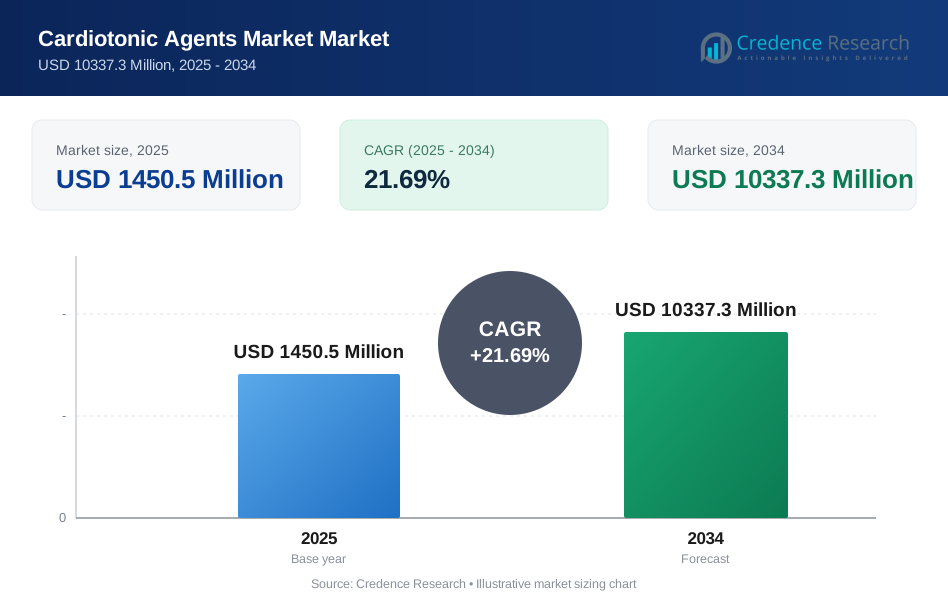
The Cardiotonic Agents market was valued at USD 1450.5 million in 2025 and is projected to reach USD 10337.3 million by 2034, expanding at a CAGR of 21.69%. North America holds the leading regional share, driven by advanced healthcare infrastructure and high prevalence of cardiovascular diseases.
The market has experienced significant expansion from its historical base, propelled by the rising prevalence of cardiovascular diseases and heart failure. The central structural growth driver is the increasing demand for acute cardiac care, particularly as populations age and chronic cardiac conditions become more common globally.
Technological advancements in drug formulation and delivery, coupled with evolving patient and provider preferences, are reshaping procurement and usage patterns. The shift toward parenteral and advanced oral formulations is influencing purchasing decisions, with hospitals and specialty pharmacies playing a larger role in distribution and patient management.
Geographically, North America leads due to robust healthcare systems and high disease burden, while Europe and Asia Pacific are emerging as significant contributors. Competitive intensity is rising, with established pharmaceutical companies and new entrants investing in product innovation and market expansion strategies.
What this report answers. This report provides actionable insights for market entry, portfolio planning, pricing strategies, geographic expansion, and competitive assessment, supporting informed decision-making for stakeholders across the value chain.
Report Attributes
| Attribute | Detail |
|---|---|
| Historical period | 2018 |
| Base year | 2025 |
| Forecast period | 2025-2034 |
| Base-year market size | USD 1450.5 Million |
| Forecast-year market size | USD 10337.3 Million |
| Revenue CAGR | 21.69% |
| Segments covered | Drug Type, Application, Route of Administration, Dosage Form, Distribution Channel, Geography |
| Geographic scope | North America, Europe, Asia Pacific, Middle East and Africa, South and Central America |
Eight Findings That Shape the Forecast
- Market revenue is set to grow from USD 1450.5 million in 2025 to USD 10337.3 million by 2034.
- North America leads with the largest regional share, reflecting advanced healthcare infrastructure.
- Europe holds the second-largest share, supported by strong cardiac care systems.
- Asia Pacific demand is rising due to increasing cardiovascular disease prevalence and healthcare investments.
- Cardioprotectants and digitalis glycosides are key product segments driving adoption.
- Shift toward parenteral and advanced oral formulations is changing procurement and usage patterns.
- Hospitals and specialty pharmacies are the primary buyers and distribution channels.
- Emerging markets present new opportunities as access to advanced therapies improves.
Market Size and Growth Outlook From 2025 to 2034
What is the Cardiotonic Agents market forecast for 2034? The market is projected to reach USD 10337.3 million by 2034, up from USD 1450.5 million in 2025, reflecting a CAGR of 21.69%.
| Metric | Base year | Forecast year | CAGR |
|---|---|---|---|
| Revenue | USD 1450.5 Million | USD 10337.3 Million | 21.69% |
Growth is supported by increasing adoption in acute and chronic cardiac care, recurring demand for established therapies, and expanding access in emerging markets. Product mix and pricing strategies will further influence revenue trajectories.
What the Cardiotonic Agents Market Covers
What counts within the Cardiotonic Agents market? The market includes pharmaceutical agents designed to improve cardiac contractility and function, targeting conditions such as heart failure, atrial fibrillation, pulmonary hypertension, and perioperative cardiac support. Adjacent markets such as general cardiovascular drugs or non-cardiotonic therapies are excluded. Customers include hospitals, specialty clinics, retail and online pharmacies, and healthcare providers involved in cardiac care.
Cardioprotectants
Cardioprotectants are used to shield cardiac tissue from ischemic damage and oxidative stress, particularly during surgical procedures or acute cardiac events. Revenue is generated through hospital procurement and specialty pharmacy channels, with demand driven by procedural volume and clinical guidelines.
Digitalis Glycosides
Digitalis glycosides, such as digoxin, are prescribed for chronic heart failure and atrial fibrillation management. Their established efficacy and inclusion in treatment protocols ensure steady demand, with revenue derived from both acute care and long-term outpatient management.
Phosphodiesterase Inhibitors
Phosphodiesterase inhibitors are used for acute decompensated heart failure and pulmonary hypertension. Their rapid onset and parenteral administration make them essential in critical care settings, with revenue linked to hospital-based usage and reimbursement policies.
Sympathomimetic Agents
Sympathomimetic agents provide short-term inotropic support in acute cardiac care, particularly in intensive care units. Their use is closely tied to hospitalization rates and the availability of advanced cardiac care infrastructure.
Distribution Channels
Distribution occurs through hospital pharmacies, retail pharmacies, and online platforms. Hospitals remain the dominant channel due to the acute nature of many indications, while online pharmacies are gaining traction for chronic therapy refills and patient convenience.
Cardiotonic Agents Market Segmentation
How is the Cardiotonic Agents market segmented? The market is segmented by drug type, application, route of administration, dosage form, distribution channel, and geography. Each dimension reflects distinct clinical needs, procurement patterns, and commercial opportunities.
Drug Type
Cardioprotectants, digitalis glycosides, phosphodiesterase inhibitors, sympathomimetic agents, and other agents form the core product categories. Cardioprotectants and digitalis glycosides are widely used for chronic and acute cardiac conditions, while phosphodiesterase inhibitors and sympathomimetic agents are critical in acute care and surgical settings. Product selection is influenced by clinical guidelines, patient comorbidities, and hospital formularies.
| Segment | Revenue model | Growth profile |
|---|---|---|
| Cardioprotectants | Hospital and specialty pharmacy procurement | Steady growth with procedural volume |
| Digitalis Glycosides | Chronic outpatient and acute care | Stable demand, established protocols |
| Phosphodiesterase Inhibitors | Acute care, hospital-based | High growth in critical care |
| Sympathomimetic Agents | ICU and emergency use | Linked to hospitalization rates |
| Others | Specialty and adjunct therapies | Niche adoption |
Application
Applications include pulmonary hypertension, cardiac surgical procedures, atrial fibrillation, heart failure, and other cardiac conditions. Heart failure and atrial fibrillation represent the largest clinical segments, driving recurring demand for both acute and chronic therapies. Pulmonary hypertension and surgical support are growing as awareness and procedural volumes increase.
Route of Administration
Oral and parenteral routes dominate, with parenteral formulations preferred in acute and hospital-based care, while oral agents are used for chronic outpatient management. The choice of route impacts procurement, patient adherence, and reimbursement.
Dosage Form
Solutions and tablets are the primary dosage forms, reflecting the need for both rapid onset in acute care and convenience in chronic therapy. Solutions are favored in hospitals, while tablets are common in outpatient settings.
Distribution Channel
Retail pharmacies, hospital pharmacies, and online pharmacies serve as key distribution channels. Hospital pharmacies lead due to the acute nature of many indications, but online channels are expanding as patient self-management and telemedicine adoption rise.
Geography
North America, Europe, Asia-Pacific, Middle East and Africa, and South and Central America each present unique demand drivers and adoption barriers. North America leads in revenue, while Asia-Pacific is experiencing the fastest growth due to rising disease prevalence and healthcare investments.
Detailed Segmentation Coverage
- Drug Type: Cardioprotectants, Digitalis Glycosides, Phosphodiesterase Inhibitors, Sympathomimetic Agents, Others
- Application: Pulmonary Hypertension, Cardiac Surgical Procedures, Atrial Fibrillation, Heart Failure, Others
- Route of Administration: Oral, Parenteral
- Dosage Form: Solutions, Tablet, Others
- Distribution Channel: Retail Pharmacies, Hospital Pharmacies, Online Pharmacies
- Geography: North America, Europe, Asia-Pacific, Middle East and Africa, South and Central America
Request a Free Sample
Fill in your details and we'll send you a free sample report.
- Sample data tables & charts
- Research methodology
Market Dynamics
Technology and Commercial Trends to 2034
What are the main trends in the Cardiotonic Agents market? The market is witnessing a shift toward advanced formulations, digital health integration, expanded distribution channels, and increased focus on patient-centric care. These trends are reshaping competition, procurement, and patient outcomes.
Shift Toward Advanced Formulations
Pharmaceutical companies are investing in the development of more stable, bioavailable, and patient-friendly Cardiotonic Agents. Extended-release oral formulations and ready-to-use parenteral solutions are gaining traction, reducing dosing frequency and administration errors. This trend is driving differentiation and supporting premium pricing, while also improving patient adherence and clinical outcomes. Companies that innovate in formulation technology are better positioned to capture market share as clinical protocols evolve.
Integration of Digital Health and Remote Monitoring
Digital health tools, including remote monitoring and telemedicine platforms, are increasingly being used to manage patients on Cardiotonic Agents. These technologies enable real-time tracking of patient adherence, side effects, and therapeutic response, supporting personalized care and early intervention. The integration of digital health is expanding the role of outpatient management and enabling new service models, such as home-based cardiac care. This trend is also influencing payer and provider procurement strategies.
Expansion of Distribution Channels
Distribution is shifting beyond traditional hospital and retail pharmacy channels to include online pharmacies and direct-to-patient models. The rise of e-commerce and telehealth is making it easier for patients to access chronic therapies, particularly in regions with limited healthcare infrastructure. This expansion is increasing market reach and supporting recurring revenue streams, but also intensifying competition and requiring new logistics and regulatory compliance capabilities.
Focus on Patient-Centric Care and Outcomes
Healthcare systems and payers are placing greater emphasis on patient-centric care, with outcomes-based reimbursement models gaining traction. Cardiotonic Agents that demonstrate superior clinical outcomes, reduced hospitalizations, and improved quality of life are favored in procurement and formulary decisions. This trend is driving investment in real-world evidence generation and post-marketing surveillance, as companies seek to differentiate their products and secure market access.
Where the Unserved Demand Sits
Where are the biggest opportunities in the Cardiotonic Agents market? The largest opportunities lie in expanding access to advanced therapies in emerging markets, developing patient-friendly formulations, addressing unmet needs in pediatric and rare cardiac conditions, and leveraging digital health for improved adherence and outcomes.
Expanding Access in Emerging Markets
Emerging economies in Asia Pacific, Latin America, and Africa have significant unmet demand for Cardiotonic Agents due to rising cardiovascular disease prevalence and limited access to advanced therapies. Addressing this opportunity requires affordable pricing, local manufacturing, and partnerships with governments and NGOs. The principal execution risk is navigating complex regulatory environments and ensuring consistent product quality.
Development of Patient-Friendly Formulations
There is a growing need for formulations that improve patient adherence, such as extended-release tablets and ready-to-use injectables. These products must balance efficacy, safety, and convenience to gain acceptance among both providers and patients. Success depends on robust clinical evidence and alignment with payer reimbursement criteria. Manufacturing complexity and cost may pose barriers to widespread adoption.
Addressing Pediatric and Rare Cardiac Conditions
Pediatric patients and those with rare cardiac disorders are often underserved by existing Cardiotonic Agents. Developing age-appropriate formulations and securing regulatory approvals for these indications can unlock new revenue streams. The main challenge is the high cost and lengthy timelines associated with clinical trials in small patient populations, as well as the need for specialized distribution and monitoring.
Leveraging Digital Health for Adherence and Outcomes
Digital health platforms offer opportunities to improve medication adherence, monitor side effects, and personalize therapy for patients on Cardiotonic Agents. Companies that integrate digital tools with their products can differentiate themselves and support value-based care models. The key risk is ensuring data privacy, interoperability, and provider engagement, as well as demonstrating measurable improvements in outcomes to justify investment.
Cardiotonic Agents Market Adoption and Commercial Barriers
What are the main barriers to adoption in the Cardiotonic Agents market? Key challenges include high development and regulatory costs, reimbursement and pricing pressures, supply chain complexity, and the need for robust clinical evidence to support adoption and market access.
High Development and Regulatory Costs
Developing new Cardiotonic Agents requires substantial investment in research, clinical trials, and regulatory compliance. These costs are particularly high for agents targeting rare or complex cardiac conditions, where patient recruitment and trial design are challenging. Smaller companies may struggle to compete, limiting innovation and market entry. The lengthy approval process also delays time to market and increases financial risk.
Reimbursement and Pricing Pressures
Payers and healthcare systems are increasingly scrutinizing the cost-effectiveness of Cardiotonic Agents, especially as budgets tighten and alternative therapies become available. Securing favorable reimbursement is essential for commercial success, but requires robust clinical and real-world evidence. Price negotiations and formulary restrictions can limit market access, particularly for premium-priced or novel agents. This dynamic affects both established and emerging players.
Supply Chain and Distribution Complexity
The distribution of Cardiotonic Agents involves stringent storage, handling, and transportation requirements, especially for parenteral and temperature-sensitive formulations. Ensuring consistent product quality and availability across diverse geographies adds operational complexity and cost. Disruptions in the supply chain, such as shortages of active pharmaceutical ingredients or logistical bottlenecks, can impact revenue and patient care. Smaller distributors may face barriers to entry due to these requirements.
Need for Robust Clinical Evidence
Healthcare providers and payers demand strong clinical evidence to support the safety, efficacy, and cost-effectiveness of Cardiotonic Agents. Without large-scale, high-quality studies, new products may struggle to gain acceptance or secure reimbursement. Generating this evidence requires significant investment and time, and negative or inconclusive results can derail commercialization efforts. This barrier persists as regulatory and payer expectations continue to rise.
Global Trade Context
Global Cardiotonic Agents Trade Segment Summary and Context for 2025
Global trade in Cardiotonic Agents is characterized by a concentration of manufacturing in North America and Europe, with significant cross-border flows to Asia Pacific and Latin America. Regulatory harmonization and quality standards drive sourcing decisions, while local production in emerging markets is increasing to reduce import dependency and improve access.
What Is Driving Cardiotonic Agents Demand
What is driving growth in the Cardiotonic Agents market? The primary drivers are the rising prevalence of cardiovascular diseases and heart failure, a growing geriatric population with age-related cardiac disorders, increasing hospitalization and demand for acute cardiac care, and ongoing advancements in drug formulation and delivery.
Rising Prevalence of Cardiovascular Diseases and Heart Failure
The global burden of cardiovascular diseases continues to climb, with heart failure representing a leading cause of morbidity and mortality. This trend is fueling demand for Cardiotonic Agents, as healthcare providers seek effective therapies for both acute and chronic cardiac conditions. Hospitals and specialty clinics are expanding their use of these agents to manage complex patient populations. However, adoption may be limited by cost constraints and reimbursement challenges in some regions.
Evidence. The World Health Organization reports that cardiovascular diseases are the leading cause of death globally, accounting for an estimated 17.9 million deaths each year (WHO, Cardiovascular Diseases Fact Sheet).
Growing Geriatric Population and Age-Related Cardiac Disorders
Population aging is accelerating worldwide, resulting in a higher incidence of age-related cardiac disorders such as heart failure and atrial fibrillation. Older adults are more likely to require Cardiotonic Agents for both acute interventions and long-term management. This demographic shift is expanding the addressable market, particularly in developed economies with aging populations. The effect is moderated by comorbidity management and polypharmacy concerns.
Increasing Hospitalization and Demand for Acute Cardiac Care
Rising rates of hospitalization for acute cardiac events, including heart failure exacerbations and perioperative cardiac complications, are driving demand for rapid-acting Cardiotonic Agents. Hospitals and intensive care units are key buyers, prioritizing agents with proven efficacy and safety profiles. The need for immediate intervention supports premium pricing and recurring procurement. However, budgetary pressures and formulary restrictions can limit adoption in resource-constrained settings.
Evidence. According to the American Heart Association, hospitalizations for heart failure have increased in recent years, reflecting both higher disease prevalence and improved survival rates (AHA, Heart Disease and Stroke Statistics).
Advancements in Drug Formulation and Delivery
Ongoing innovation in drug formulation, including the development of more stable, bioavailable, and patient-friendly Cardiotonic Agents, is enhancing clinical outcomes and patient adherence. New delivery mechanisms, such as extended-release oral formulations and ready-to-use parenteral solutions, are improving convenience and reducing administration errors. These advances are expanding the market by addressing unmet clinical needs and supporting broader adoption. Regulatory approval timelines and manufacturing complexity may temper the pace of innovation.
Driver Impact Summary
| Driver | Expected Market Effect | Geographic Relevance | Impact Timeline |
|---|---|---|---|
| Rising Prevalence of Cardiovascular Diseases and Heart Failure | Faster replacement and recurring usage, expanded patient base | Global, especially North America, Europe, Asia Pacific | Long term |
| Growing Geriatric Population and Age-Related Cardiac Disorders | Expanded customer access, higher chronic therapy demand | Developed economies, aging societies | Long term |
| Increasing Hospitalization and Demand for Acute Cardiac Care | Greater recurring usage, premium pricing in acute care | North America, Europe, urban Asia Pacific | Medium term |
| Advancements in Drug Formulation and Delivery | Lower adoption costs, improved adherence, new product launches | Global, with early adoption in developed markets | Medium term |
Cardiotonic Agents Technology and Solution Benchmark
Turnaround time is a critical purchasing metric for Cardiotonic Agents, especially in acute care settings where rapid onset of action can be life-saving. Commercially, faster-acting agents are favored by hospitals and emergency departments, influencing procurement and formulary decisions.
| Approach | Function or Use Case | Typical Value or Range | Measurement Basis |
|---|---|---|---|
| Parenteral Digitalis Glycosides | Acute heart failure intervention | Onset in 5-30 minutes | Time to therapeutic effect after IV administration |
| Oral Digitalis Glycosides | Chronic heart failure management | Onset in 1-2 hours | Time to therapeutic effect after oral dose |
| Phosphodiesterase Inhibitors (IV) | Acute decompensated heart failure | Onset in 2-15 minutes | Time to hemodynamic improvement |
| Sympathomimetic Agents (IV) | Cardiogenic shock, ICU support | Immediate to 5 minutes | Time to inotropic effect |
| Extended-release Oral Formulations | Chronic outpatient therapy | Onset in 1-4 hours | Time to steady-state plasma concentration |
| Ready-to-use Parenteral Solutions | Emergency cardiac care | Onset in under 10 minutes | Time to clinical response |
What the Benchmark Implies Commercially
Procurement decisions are typically made by hospital pharmacy directors and critical care teams, who prioritize agents with rapid onset and proven efficacy for acute interventions. Budget ownership often resides with hospital administrators or group purchasing organizations.
Implementation and adoption are influenced by clinical protocols, staff training, and the availability of compatible administration equipment. Hospitals with advanced cardiac care units are more likely to adopt newer, faster-acting formulations.
Pricing power is higher for agents that deliver rapid, reliable results in critical care settings, supporting premium pricing and recurring demand. Replacement demand is strong for agents with shorter shelf lives or those subject to evolving clinical guidelines, while complementary demand arises from combination therapy protocols.
Regional Market Structure and Growth Outlook
Which region leads the Cardiotonic Agents market? North America leads with a 38.8% share, followed by Europe at 27.3% and Asia Pacific at 24.0%. Each region presents distinct demand drivers, adoption barriers, and competitive dynamics.
North America
North America holds the largest share of the Cardiotonic Agents market, driven by advanced healthcare infrastructure, high prevalence of cardiovascular diseases, and strong reimbursement systems. The United States is the primary contributor, with Canada also playing a significant role. Hospitals and specialty clinics are the main buyers, and procurement is influenced by clinical guidelines and payer policies. Competition is intense, with established pharmaceutical companies leveraging broad portfolios and distribution networks. Regulatory requirements are stringent, but market access is facilitated by robust clinical evidence and established pathways. Strategic implication: Companies must prioritize evidence generation and payer engagement to maintain or grow share.
Europe
Europe accounts for 27.3% of the market, supported by comprehensive cardiac care systems and a growing elderly population. Major contributors include Germany, France, the United Kingdom, and Italy. Procurement is centralized in many countries, with public health systems and group purchasing organizations playing key roles. Pricing pressures and reimbursement negotiations are common, but demand remains strong for both acute and chronic therapies. Local and international competitors coexist, with innovation and real-world outcomes influencing market access. Strategic implication: Success depends on navigating diverse regulatory environments and demonstrating cost-effectiveness.
Asia Pacific
Asia Pacific represents 24.0% of the market, with rapid growth fueled by rising cardiovascular disease prevalence, expanding healthcare infrastructure, and increasing healthcare spending. China, Japan, India, and Australia are major markets. Access to advanced therapies is improving, but affordability and reimbursement remain challenges in some countries. Local manufacturing is increasing to reduce import dependency. Competition is intensifying as multinational and domestic companies expand their presence. Strategic implication: Companies must tailor pricing and distribution strategies to local market conditions and invest in education to drive adoption.
Middle East and Africa
The Middle East and Africa are emerging markets for Cardiotonic Agents, with demand driven by rising incidence of cardiac diseases and investments in healthcare infrastructure. Access to advanced therapies is limited in some areas due to affordability and regulatory barriers. Procurement is often centralized through government tenders or public health systems. International companies partner with local distributors to expand reach. Strategic implication: Market entry requires navigating regulatory complexity and building relationships with public sector buyers.
South and Central America
South and Central America present growth opportunities as cardiovascular disease rates rise and healthcare systems modernize. Brazil, Mexico, and Argentina are key markets. Access to Cardiotonic Agents is improving, but reimbursement and pricing remain challenges. Local production and partnerships with regional distributors are increasing. Strategic implication: Companies must address affordability and regulatory requirements to capture growth in this region.
Policy and Market Access
Certification and regulatory approval processes for Cardiotonic Agents vary by region, with North America and Europe imposing the most stringent requirements. Compliance with Good Manufacturing Practice (GMP) standards and pharmacovigilance obligations is essential for market entry and ongoing access.
Tariffs and import duties can affect pricing and competitiveness, particularly in emerging markets. Some countries offer subsidies or reimbursement incentives for essential cardiac therapies, while others impose price controls or require local manufacturing as a condition for market access.
Reimbursement policies are increasingly linked to clinical outcomes and cost-effectiveness, requiring companies to invest in real-world evidence and health economics studies. Delays in reimbursement approval can impact launch timing and revenue realization, especially for novel or premium-priced agents.
Recent Developments and Strategic Implications
- In December 2024, Hikma launched Furosemide Injection, USP in the US in 20mg/2mL, 40mg/4mL, 100mg/10mL, 500mg/50mL and 1,000mg/100mL presentations, including the first FDA-approved 50mL and 100mL presentations, which expands hospital choice in heart-failure edema and acute pulmonary-edema care and likely strengthens Hikma’s position in adjacent acute cardiac injectable contracting.
- In August 2025, Merck reported that the Phase 3 VICTOR trial of VERQUVO in adults with stable chronic heart failure with reduced ejection fraction did not meet its primary endpoint, although a pre-specified pooled analysis of VICTOR and VICTORIA showed reduced risk of cardiovascular death or heart failure hospitalization across a broader range of disease severity, which materially affects product positioning in heart failure and signals to competitors and investors that evidence-backed niche expansion remains more defensible than broad label-extension assumptions.
- In February 2026, Pfizer said updated NDC presentations of Dopamine Hydrochloride in 5% Dextrose Injection, USP, in 400 mg/250 mL and 800 mg/250 mL flexible containers were now available at wholesalers, distributors and by direct order with no change to indication, which matters directly to the cardiotonic agents market because dopamine remains a core vasoactive hospital therapy and the transition supports supply continuity while reinforcing Pfizer’s place in critical-care procurement channels.
- In April 2026, Pfizer announced that it had entered into settlement agreements with Dexcel Pharma, Hikma Pharmaceuticals and Cipla regarding VYNDAMAX patent litigation, extending the effective U.S. patent expiry date to June 1, 2031, subject to the outcome of other litigation, which preserves a longer branded revenue window in ATTR-CM and gives investors better visibility while pushing potential generic competition, including from Hikma, further out.
- In May 2026, Pfizer said updated NDC presentations of Dobutamine in 5% Dextrose Injection, USP, in 250 mg/250 mL, 500 mg/250 mL and 1,000 mg/250 mL flexible containers were now available at wholesalers and distributors with no change to unit-of-sale sizes or indications, which matters directly because dobutamine is a frontline short-term inotrope for cardiac decompensation and the commercial refresh supports uninterrupted hospital ordering while raising expectations for supply reliability among competing injectables vendors.
Need a Custom Version of This Report?
Tailor the scope, geography, or segments to your exact requirements.
- Custom geography or segment scope
- Direct access to our analyst team
Competitive Landscape
Who are the leading companies in the Cardiotonic Agents market? Key players include Sanofi, Fresenius Kabi, Midas Pharma GmbH, Aurobindo Pharma Limited, SimSon Pharma Limited, Novartis, Merck & Co. Inc., Amneal Pharmaceuticals LLC, Pfizer Inc., and Hikma Pharmaceuticals PLC.
The Cardiotonic Agents market is characterized by a mix of established multinational pharmaceutical companies and specialized manufacturers. Market structure is moderately concentrated, with leading firms leveraging extensive R&D capabilities, global distribution networks, and broad product portfolios to maintain competitive advantage. Differentiation is achieved through innovation in drug formulation, clinical evidence generation, and strategic partnerships with healthcare providers and distributors.
Pricing is influenced by product differentiation, regulatory approval status, and payer negotiations. Switching costs can be significant for hospitals and clinics due to formulary restrictions and clinical protocol alignment. Established players benefit from installed-base advantages and long-term supply agreements, while emerging entrants focus on niche indications or regional expansion. Recent years have seen increased collaboration, licensing, and acquisition activity as companies seek to broaden their offerings and geographic reach.
Key Companies
- Sanofi
- Fresenius Kabi
- Midas Pharma GmbH
- Aurobindo Pharma Limited
- SimSon Pharma Limited
- Novartis
- Merck & Co. Inc.
- Amneal Pharmaceuticals LLC
- Pfizer Inc.
- Hikma Pharmaceuticals PLC
Frequently Asked Questions
What is the Cardiotonic Agents market size in 2025?
What is its forecast value by 2034?
What is the expected CAGR?
Which product or service segment leads the market?
Which region leads the market?
What drives demand in this market?
Who are the major companies in this market?
What are the main challenges and opportunities in this market?
Table of Content
Chapter 1. Report Introduction
- 1.1 Report Description & Purpose
- 1.1.1 Report Title & Market Definition
- 1.1.2 Unique Selling Propositions (USP) & Key Differentiators
- 1.1.3 Value Proposition for Stakeholders
- 1.2 Research Objectives
- 1.2.1 Market Sizing Objectives (Volume & Revenue)
- 1.2.2 Segmentation Objectives
- 1.2.3 Competitive Intelligence Objectives
- 1.2.4 Forecast & Scenario Objectives
- 1.3 Report Scope
- 1.3.1 Cardiotonic Agents Market Scope – Types & Subtypes Covered
- 1.3.2 Geographic Scope – Regions & Countries Covered
- 1.3.3 Historical Period, Base Year & Forecast Period (2018-2025; forecast to 2034)
- 1.3.4 Inclusions & Exclusions
- 1.4 HS Code & Classification Framework
- 1.5 Currency, Units & Pricing Basis
- 1.6 Target Stakeholders
- 1.7 Limitations & Assumptions
Chapter 2. Executive Summary
- 2.1 Global Cardiotonic Agents Market Market Snapshot
- 2.1.1 Market Size – Historical (2018-2025) & Forecast (2025-2034) (2025: USD 1450.5 Million → 2034: USD 10337.3 Million)
- 2.1.2 Volume & Revenue – Global Totals
- 2.1.3 Key Market Highlights – Top Five Facts
- 2.2 Cardiotonic Agents Market Market Segmentation Snapshot
- 2.2.1 Market Split – Drug Type – 2025 vs. 2034 (Volume & Revenue)
- 2.2.2 Market Split – Application – 2025 vs. 2034 (Volume & Revenue)
- 2.2.3 Market Split – Route of Administration – 2025 vs. 2034 (Volume & Revenue)
- 2.2.4 Market Split – Dosage Form – 2025 vs. 2034 (Volume & Revenue)
- 2.2.5 Market Split – Geography – 2025 vs. 2034 (Volume & Revenue)
- 2.2.6 Market Split by Region – 2025 vs. 2034
- 2.3 Competitive Snapshot
- 2.3.1 Top 10 Players by Revenue Share – 2025
- 2.3.2 Top 10 Players by Volume Share – 2025
- 2.3.3 Recent Strategic Developments (18-Month Summary)
- 2.4 Key Investment Highlights & Strategic Conclusions
Chapter 3. Cardiotonic Agents Market Market Dynamics & Industry Analysis
- 3.1 Market Overview & Context
- 3.1.1 Cardiotonic Agents Market Market Position in the Broader Automotive Value Chain
- 3.1.2 OEM vs. Replacement Market Dynamics
- 3.1.3 Market Maturity & Development Stage by Region
- 3.2 Cardiotonic Agents Market Market Drivers
- 3.3 Cardiotonic Agents Market Market Restraints & Challenges
- 3.4 Cardiotonic Agents Market Market Opportunities
- 3.5 Porter's Five Forces Analysis
- 3.5.1 Threat of New Entrants
- 3.5.2 Bargaining Power of Suppliers
- 3.5.3 Bargaining Power of Buyers
- 3.5.4 Threat of Substitutes
- 3.5.5 Competitive Rivalry – Intensity Assessment
- 3.6 Cardiotonic Agents Market Value Chain Analysis
- 3.6.1 Upstream – Raw Material/Input Suppliers
- 3.6.1.1 Raw Material/Input 1
- 3.6.1.2 Raw Material/Input 2
- 3.6.1.3 Raw Material/Input 3
- 3.6.2 Midstream – Production/Manufacturing/Service Delivery
- 3.6.2.1 Production/Process Overview
- 3.6.2.2 Key Facility Locations & Capacity by Manufacturer
- 3.6.3 Downstream – Distribution & End Consumer
- 3.6.3.1 Primary Channel – B2B/OEM
- 3.6.3.2 Secondary Channels – Dealer, Retail, Online, Direct
- 3.6.4 Value Chain Profitability Analysis
- 3.6.1 Upstream – Raw Material/Input Suppliers
- 3.7 PESTEL Analysis
- 3.7.1 Political Factors
- 3.7.2 Economic Factors
- 3.7.3 Social Factors
- 3.7.4 Technological Factors
- 3.7.5 Environmental Factors
- 3.7.6 Legal Factors
- 3.8 Cardiotonic Agents Market Supply Chain Analysis
- 3.8.1 Raw Material/Input Supply Risk Assessment
- 3.8.2 Manufacturing Concentration Risk (Geographic Exposure)
- 3.8.3 Trade Disruption Impact Analysis
- 3.9 Regulatory & Policy Landscape
Note: The regulatory and policy landscape section covers regulations based on their applicability to the market, Cardiotonic Agents Market category, geography, and scope of the study. Only regulatory frameworks with a material impact on operations, compliance, trade, sustainability, or market access are analyzed in detail.
Chapter 4. Key Investment Pockets & Opportunity Analysis
- 4.1 Cardiotonic Agents Market Market Attractiveness Analysis
- 4.1.1 By Region – Investment Attractiveness Matrix (Volume × CAGR)
- 4.1.2 Drug Type – Investment Attractiveness Matrix
- 4.1.3 Application – Investment Attractiveness Matrix
- 4.1.4 Route of Administration – Investment Attractiveness Matrix
- 4.1.5 Dosage Form – Investment Attractiveness Matrix
- 4.1.6 Geography – Investment Attractiveness Matrix
- 4.2 Absolute Revenue Growth Opportunity
- 4.2.1 By Region – Absolute USD Growth Through 2034
- 4.2.2 Drug Type – Absolute USD Growth
- 4.2.3 Application – Absolute USD Growth
- 4.2.4 Route of Administration – Absolute USD Growth
- 4.2.5 Dosage Form – Absolute USD Growth
- 4.2.6 Geography – Absolute USD Growth
- 4.3 Incremental Volume Opportunity
- 4.3.1 By Region – Incremental Volume Through 2034
- 4.3.2 Drug Type – Incremental Volume
- 4.4 Emerging Submarket Opportunity Deep Dive (Subject to Applicability)
- 4.5 Emerging Market Opportunity Scorecards
- 4.5.1 United States
- 4.5.2 Europe
- 4.5.3 Asia
- 4.5.4 Middle East & Africa
Note: Emerging Market Opportunity Scorecards will be included based on relevance and strategic importance. Regions listed are indicative and may vary depending on data availability and market dynamics.
Chapter 5. Cardiotonic Agents Market Import-Export Analysis & Trade Flows
- 5.1 Global Trade Overview
- 5.1.1 Global Export Value by Country (2018-2025)
- 5.1.2 Global Export Volume by Country (2018-2025)
- 5.1.3 Global Import Value by Country (2018-2025)
- 5.1.4 Global Import Volume by Country (2018-2025)
- 5.1.5 Net Trade Balance by Country (2018-2025)
- 5.2 Export Analysis – Drug Type
- 5.2.1 Type 1 (HS Code)
- 5.2.2 Type 2 (HS Code)
- 5.2.3 Type 3 (HS Code)
- 5.2.4 Type 4 (HS Code)
- 5.2.5 Type 5 (HS Code)
- 5.3 Import Analysis – Drug Type
- 5.3.1 Type 1 (HS Code)
- 5.3.2 Type 2 (HS Code)
- 5.3.3 Type 3 (HS Code)
- 5.3.4 Type 4 (HS Code)
- 5.3.5 Type 5 (HS Code)
- 5.4 Average Unit Trade Prices
- 5.4.1 Average Export Price – Drug Type & Country
- 5.4.2 Average Import Price – Drug Type & Source Country
- 5.4.3 Price Trends (2018-2025)
- 5.5 Key Trade Route Analysis
- 5.5.1 Trade Route 1
- 5.5.2 Trade Route 2
- 5.5.3 Trade Route 3
- 5.5.4 Trade Route 4
- 5.5.5 Trade Route 5
- 5.6 Trade Policy Impact Assessment
- 5.6.1 US Anti-Dumping & Section 301 Tariffs
- 5.6.2 EU Customs Union Impact
- 5.6.3 Major Free Trade Agreements
- 5.6.4 USMCA Rules of Origin
Note: Trade policy analysis will be included only where relevant to the Cardiotonic Agents Market market.
Chapter 6. Competitive Landscape & Company Benchmarking
- 6.1 Cardiotonic Agents Market Market Concentration & Structure
- 6.1.1 Herfindahl-Hirschman Index (HHI) – 2018 vs. 2025
- 6.1.2 Tier 1, Tier 2 & Tier 3 Market Structure
- 6.1.3 Global, Regional & Local Player Dynamics
- 6.2 Cardiotonic Agents Market Market Share Analysis – 2025
- 6.2.1 Global Revenue Share by Company
- 6.2.2 Global Volume Share by Company
- 6.2.3 Regional Revenue Share
- 6.2.4 Market Share Evolution (2018 vs. 2025)
- 6.2.5 OEM Segment Share by Company
- 6.2.6 Replacement Segment Share by Company
- 6.3 Production/Delivery Capacity & Facility Analysis
- 6.3.1 Global Installed Capacity
- 6.3.2 Capacity Utilization Rates
- 6.3.3 Production/Output Volume
- 6.3.4 Facility Locations & Capacity Map
- 6.3.5 Planned Capacity Additions
- 6.4 Cardiotonic Agents Market Competitive Benchmarking Matrix
- 6.4.1 Revenue, Volume, CAGR & Profitability Comparison
- 6.4.2 Channel Revenue Mix
- 6.4.3 Geographic Revenue Exposure
- 6.4.4 R&D Intensity
- 6.4.5 Sustainability Maturity
- 6.5 Strategic Developments in Cardiotonic Agents Market (Last 24 Months)
- 6.5.1 Mergers, Acquisitions & Divestments
- 6.5.2 New Cardiotonic Agents Market Launches
- 6.5.3 Facility Expansions
- 6.5.4 Strategic Alliances, Joint Ventures & Partnerships
- 6.5.5 Distribution Expansion & Market Entry
- 6.5.6 Sustainability & ESG Initiatives
- 6.6 Competitive Strategy Mapping
- 6.6.1 Leader, Challenger, Follower & Niche Classification
- 6.6.2 Pricing Strategy Comparison
- 6.6.3 Channel Strategy Matrix
Note: Strategic developments are included based on their materiality and the availability of reliable information.
Chapter 7. Global Cardiotonic Agents Market Market – Drug Type
- 7.1 Segment Overview
- 7.1.1 Market Volume Share (2018, 2025 & 2026)
- 7.1.2 Market Revenue Share (2018, 2025 & 2026)
- 7.1.3 Market Forecast Through 2034
- 7.1.4 Key Growth Drivers & Restraints
- 7.1.5 Leading Brands
- 7.2 Types Covered – Drug Type
- Cardioprotectants
- Digitalis Glycosides
- Phosphodiesterase Inhibitors
- Sympathomimetic Agents
- Others
Chapter 8. Global Cardiotonic Agents Market Market – Application
- 8.1 Segment Overview
- 8.1.1 Market Volume Share (2018, 2025 & 2026)
- 8.1.2 Market Revenue Share (2018, 2025 & 2026)
- 8.1.3 Market Forecast Through 2034
- 8.1.4 Key Growth Drivers & Restraints
- 8.1.5 Leading Brands
- 8.2 Types Covered – Application
- Pulmonary Hypertension
- Cardiac Surgical Procedures
- Atrial Fibrillation
- Heart Failure
- Others
Chapter 9. Global Cardiotonic Agents Market Market – Route of Administration
- 9.1 Segment Overview
- 9.1.1 Market Volume Share (2018, 2025 & 2026)
- 9.1.2 Market Revenue Share (2018, 2025 & 2026)
- 9.1.3 Market Forecast Through 2034
- 9.1.4 Key Growth Drivers & Restraints
- 9.1.5 Leading Brands
- 9.2 Types Covered – Route of Administration
- Oral
- Parenteral
Chapter 10. Global Cardiotonic Agents Market Market – Dosage Form
- 10.1 Segment Overview
- 10.1.1 Market Volume Share (2018, 2025 & 2026)
- 10.1.2 Market Revenue Share (2018, 2025 & 2026)
- 10.1.3 Market Forecast Through 2034
- 10.1.4 Key Growth Drivers & Restraints
- 10.1.5 Leading Brands
- 10.2 Types Covered – Dosage Form
- Solutions
- Tablet
- Others
Chapter 11. Global Cardiotonic Agents Market Market – Geography
- 11.1 Segment Overview
- 11.1.1 Market Volume Share (2018, 2025 & 2026)
- 11.1.2 Market Revenue Share (2018, 2025 & 2026)
- 11.1.3 Market Forecast Through 2034
- 11.1.4 Key Growth Drivers & Restraints
- 11.1.5 Leading Brands
- 11.2 Types Covered – Geography
- North America
- Europe
- Asia-Pacific
- Middle East and Africa
- South and Central America
Chapter 12. Global Cardiotonic Agents Market Market – By Distribution Channel
- 12.1 Segment Overview
- 12.1.1 Volume & Revenue Split by Channel (2025 & 2034)
- 12.1.2 Channel Mix Evolution (2018-2034)
Chapter 13. Regional Market Analysis – Global Overview
- 13.1 Global Regional Overview
- 13.1.1 Regional Volume Share
- 13.1.2 Regional Revenue Share
- 13.1.3 Regional Volume by Region
- 13.1.4 Regional Revenue by Region
- 13.1.5 Regional Forecast Through 2034
- 13.2 Cross-Regional Segment Analysis
- 13.2.1 Drug Type
- 13.2.2 Application
- 13.2.3 Route of Administration
- 13.2.4 Dosage Form
- 13.2.5 Geography
- 13.2.6 By Distribution Channel
- 13.2.7 By Brand/Price Tier
Chapter 14. North America Cardiotonic Agents Market Market
- 14.1 United States
- 14.2 Canada
- 14.3 Mexico
Chapter 15. Europe Cardiotonic Agents Market Market
- 15.1 Germany
- 15.2 France
- 15.3 Italy
- 15.4 United Kingdom
- 15.5 Spain
- 15.6 Poland
- 15.7 Russia
- 15.8 Netherlands
- 15.9 Belgium
- 15.10 Sweden
- 15.11 Denmark
- 15.12 Norway
- 15.13 Rest of Europe
Chapter 16. Asia Pacific Cardiotonic Agents Market Market
- 16.1 China
- 16.2 India
- 16.3 Japan
- 16.4 South Korea
- 16.5 Thailand
- 16.6 Indonesia
- 16.7 Vietnam
- 16.8 Malaysia
- 16.9 Australia
- 16.10 Rest of Asia Pacific
Chapter 17. Latin America Cardiotonic Agents Market Market
- 17.1 Brazil
- 17.2 Argentina
- 17.3 Colombia
- 17.4 Chile
- 17.5 Rest of Latin America
Chapter 18. Middle East Cardiotonic Agents Market Market
- 18.1 Saudi Arabia
- 18.2 United Arab Emirates
- 18.3 Turkey
- 18.4 Israel
- 18.5 Iran
- 18.6 Rest of the Middle East
Chapter 19. Africa Cardiotonic Agents Market Market
- 19.1 South Africa
- 19.2 Egypt
- 19.3 Nigeria
- 19.4 Morocco
- 19.5 Rest of Africa
Chapter 20. Cardiotonic Agents Market Company Profiles
- 20.1 "Sanofi
- 20.1.1 Company Overview
- 20.1.2 Key Management Personnel
- 20.1.3 Products & Services Portfolio
- 20.1.4 Financial Performance
- 20.1.5 Key Market Focus & Geographic Presence
- 20.1.6 Recent Developments & Strategic Initiatives
- 20.2 Fresenius Kabi
- 20.3 Midas Pharma GmbH
- 20.4 Aurobindo Pharma Limited
- 20.5 SimSon Pharma Limited
- 20.6 Novartis
- 20.7 Merck & Co. Inc.
- 20.8 Amneal Pharmaceuticals LLC
- 20.9 Pfizer Inc.
- 20.10 Hikma Pharmaceuticals PLC"
Note: The company profile list is preliminary and may change based on research findings, market developments, data availability, and client requirements.
Chapter 21. Appendices
- Appendix A – List of Abbreviations & Acronyms
- Appendix B – Industry Classification Code Reference – Full Series
- Appendix C – Production & Capacity Data Tables
- Appendix D – End-Use & Demand Base Tables
- Appendix E – Consumption & Replacement Rate Assumptions
- Appendix F – ASP Reference Tables
- Appendix G – Manufacturing & Facility Database
- Appendix H – Import-Export Data Tables
- Appendix I – Regulatory Summary Tables
- Appendix J – Primary Research Participant List (Anonymized)
- Appendix K – Primary Research Questionnaire Framework
- Appendix L – Data Sources & Bibliography
- Appendix M – Market Size Divergence & Source Comparison
Chapter 22. Research Methodology
- 22.1 Research Framework & Philosophy
- 22.2 Secondary Research – Sources, Hierarchy & Data Extraction
- 22.3 Data Modeling – Bottom-Up & Top-Down Market Sizing
- 22.4 Primary Research – Stakeholder Framework, LOI & Sample Sizes
- 22.5 Forecast Methodology – Regression, Scenario & Sensitivity Analysis
- 22.6 Quality Control – Four-Layer Validation Framework
- 22.7 Limitations & Standard Assumptions
- 22.8 Disclaimer
