
| REPORT ATTRIBUTE | DETAILS |
|---|---|
| Historical Period | 2020-2023 |
| Base Year | 2024 |
| Forecast Period | 2025-2032 |
| Luxury Car Market Size 2024 | USD 1289950 million |
| Luxury Car Market, CAGR | 10.4% |
| Luxury Car Market Size 2032 | USD 2846593.57 million |
Market Overview:
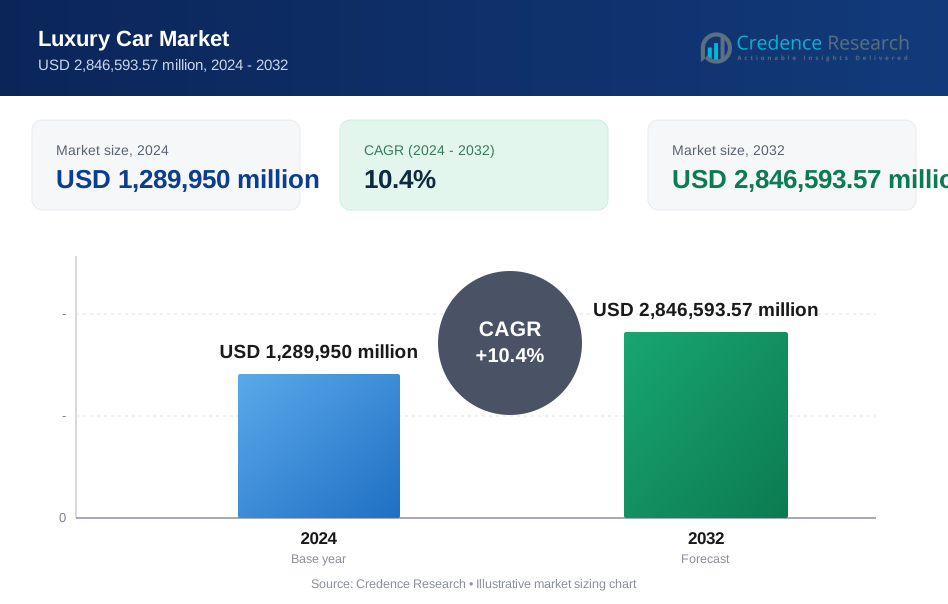
The Luxury car market is projected to grow from USD 1289950 million in 2024 to an estimated USD 2846593.57 million by 2032, with a compound annual growth rate (CAGR) of 10.4% from 2024 to 2032.
Several key drivers are propelling the luxury car market forward. Foremost is the rising affluence among consumers, which has led to an increased appetite for vehicles that offer not only transportation but also status and comfort. Technological advancements play a pivotal role, with luxury car manufacturers integrating cutting-edge features such as autonomous driving capabilities, advanced infotainment systems, and enhanced safety mechanisms. The transition towards electric vehicles (EVs) is particularly noteworthy, as environmental concerns and stringent emission regulations push manufacturers to innovate. For instance, brands like Xpeng are introducing AI-powered luxury EVs, aiming to redefine the driving experience through smart cockpits and conversational voice assistants. Additionally, the growing popularity of subscription-based ownership models offers consumers flexible access to luxury vehicles, further stimulating market growth.
Regionally, Europe holds a significant share of the luxury car market, accounting for 40% in 2024, with expectations of continued growth driven by strong consumer demand and a robust automotive manufacturing base. Asia-Pacific emerges as the fastest-growing region, propelled by rapid urbanization, economic development, and an expanding middle class in countries like China and India. In China, domestic brands such as BYD and Xpeng are gaining traction by offering technologically advanced luxury EVs at competitive prices, challenging traditional European manufacturers. Conversely, in North America, the luxury car market is experiencing a dynamic shift, with increasing adoption of EVs and a growing preference for SUVs, reflecting changing consumer preferences and environmental considerations
Market Insights:
- The luxury car market is projected to grow from USD 1,289,950 million in 2024 to USD 2,846,593.57 million by 2032, at a CAGR of 10.4%.
- Rising global affluence and a growing number of high-net-worth individuals are increasing demand for premium vehicles that offer comfort, status, and exclusivity.
- Automakers are integrating technologies like autonomous driving, AI-powered infotainment, and advanced safety systems to meet evolving consumer expectations.
- The shift toward electric vehicles is reshaping the market, with luxury brands investing in performance-focused, eco-conscious EV models.
- Subscription services and flexible ownership models are attracting younger, urban consumers who prioritize access and convenience over ownership.
- Economic instability, inflation, and regulatory costs challenge automakers to maintain profitability while preserving brand value and exclusivity.
- Europe holds 40% of the market share, while Asia-Pacific is the fastest-growing region, led by expanding demand in China and India.
Market Drivers:
Growing Disposable Incomes and Expanding High-Net-Worth Population Support Premium Vehicle Demand
The increase in global disposable incomes continues to elevate consumer interest in premium vehicles. Rising affluence, particularly among emerging economies, has encouraged aspirational buying behavior, where individuals associate luxury cars with social status and lifestyle. The number of ultra-high-net-worth individuals is expanding across Asia, the Middle East, and North America, directly contributing to stronger sales across luxury segments. Luxury car manufacturers are responding with tailored models, personalized features, and exclusive ownership benefits that appeal to this affluent demographic. The luxury car market benefits from this upward financial mobility, which sustains demand even during periods of broader economic uncertainty. It is becoming increasingly important for brands to understand shifting income trends to effectively tap into new customer bases.
Rapid Technological Advancements Redefine Consumer Expectations in Premium Automotive Experience
Technology plays a central role in shaping modern luxury vehicle preferences. Consumers now expect seamless integration of smart systems, AI-powered interfaces, and advanced safety features that were once optional but have become standard in the luxury segment. The luxury car market is responding by embedding features like autonomous driving capabilities, adaptive cruise control, and intelligent voice assistants into new models. In-vehicle connectivity and infotainment systems are evolving rapidly, with buyers seeking a driving experience that mirrors their digital lifestyles. It is also evident that younger luxury buyers value innovation and tech-led convenience more than legacy brand heritage. The competitive edge now lies in delivering vehicles that combine performance with cutting-edge technology.
- For example, Tesla integrates Full Self-Driving Capability, Tesla Theater and Arcade infotainment, and over-the-air software updates as standard features in its vehicles.
Shift Toward Electric Vehicles Accelerates Luxury Market Transformation
The global push toward sustainability is reshaping the core of the luxury automotive industry. Stricter emissions regulations and changing environmental attitudes are forcing legacy automakers to prioritize electric vehicle (EV) development. The luxury car market is seeing a surge in EV offerings, with models that combine performance with eco-conscious design and operation. It is clear that luxury EVs now serve both regulatory requirements and consumer expectations around green mobility. Companies such as Tesla, Porsche, and BMW are setting benchmarks for performance-driven electric vehicles. This shift is no longer a trend but a structural transformation within the industry.
- For instance, Porsche’s Taycan achieves 0-60 mph in 2.4 seconds, uses recycled materials, and is produced with energy-efficient methods, while BMW’s i7 offers a 300-mile range with a sustainable interior and efficient battery technology.
Evolving Ownership Models and Experience-Driven Consumption Attract New Customer Segments
Consumer attitudes toward car ownership are evolving, especially among urban and younger demographics. Subscription-based services, leasing programs, and fractional ownership options are gaining popularity by offering flexible access without long-term commitments. The luxury car market benefits from this trend by broadening its appeal to new audiences who seek experiences over assets. It is evident that exclusivity and convenience now go hand in hand in influencing purchase decisions. Brands that offer concierge services, customization packages, and immersive brand experiences stand out. These evolving expectations redefine how manufacturers engage with consumers beyond the showroom.
Market Trends:
Electrification Gains Momentum as Leading Brands Expand EV Portfolios
Electric vehicles are quickly becoming a central focus for luxury automakers. Major players such as Mercedes-Benz, BMW, Audi, and Porsche are aggressively scaling their electric portfolios to meet growing consumer demand and align with global emission mandates. It is evident that consumers now view EVs as high-performance alternatives rather than compromises. The luxury car market is evolving as electrification becomes synonymous with innovation, exclusivity, and environmental responsibility. Battery technology improvements and charging infrastructure investments are also removing key adoption barriers. Automakers are differentiating themselves through battery range, design aesthetics, and digital integration.
Digital Integration and Smart Features Shape Premium In-Car Experience
Connectivity and digital technology are redefining the modern driving experience in the luxury segment. Advanced infotainment systems, AI-based voice controls, and over-the-air updates are standard expectations among premium car buyers. It is no longer enough to offer luxury through physical comfort alone-digital features must enhance convenience, safety, and entertainment. The luxury car market continues to lead in deploying smart cockpits, augmented reality navigation, and predictive maintenance alerts. These features increase customer engagement and brand loyalty by aligning with digital-first lifestyles. Automakers are investing heavily in proprietary operating systems and partnerships with tech firms to stay competitive.
Consumer Demand for Customization and Personalization Enhances Brand Loyalty
Buyers in the premium segment expect more than standard options-they want unique configurations that reflect their individual tastes. Personalized interiors, bespoke design elements, and curated ownership packages are becoming strong differentiators. The luxury car market sees growing emphasis on craftsmanship, materials, and detail as consumers seek tailored experiences. It offers broad customization choices that extend beyond paint and trim to include interior finishes, digital displays, and driving modes. This trend strengthens emotional connections between buyers and brands. It also helps manufacturers command higher margins by offering premium add-ons that elevate exclusivity.
- For instance, Rolls-Royce’s Bespoke and invitation-only Coachbuild programs offer ultra-exclusive customizations, with Coachbuild vehicles costing up to $25 million each.
SUV Dominance Reflects Practicality Without Sacrificing Prestige
The shift toward SUVs has become one of the most significant trends in the premium automotive space. Consumers increasingly prefer luxury SUVs for their elevated driving position, interior space, and versatility. It has led to a surge in SUV launches across all major luxury brands, with models now representing a large share of total sales. The luxury car market reflects this preference, with SUVs accounting for a majority of new deliveries in recent years. Performance-focused and electric SUV variants further support this trend. The segment shows no sign of slowing, as it aligns with both functional and aspirational consumer needs.
- For example, North America remains Porsche’s largest market, with 20,698 deliveries in Q1 2025 a 37% year-over-year increase driven largely by demand for luxury SUVs like the Macan, which now features an all-electric variant.
Market Challenges Analysis:
High Price Sensitivity and Economic Volatility Limit Market Expansion
Luxury vehicles carry a premium price tag, making them highly sensitive to economic fluctuations. During periods of economic slowdown, high inflation, or interest rate hikes, discretionary spending often declines, directly affecting new vehicle purchases. It places pressure on automakers to maintain volume without diluting brand exclusivity through aggressive discounting. The luxury car market faces challenges in striking the right balance between affordability and brand value. It must navigate shifting consumer confidence and rising operational costs while preserving its image. Market performance often mirrors broader macroeconomic conditions, making resilience a key strategic focus for leading players.
Regulatory Compliance and Supply Chain Disruptions Constrain Production Efficiency
Stringent emissions regulations across Europe, North America, and Asia require continuous investment in clean energy technologies and compliance systems. Automakers must allocate significant resources to meet evolving standards while maintaining luxury performance and aesthetics. The luxury car market also contends with global supply chain issues, including semiconductor shortages and material costs. It disrupts production schedules, extends delivery timelines, and impacts profitability. Managing these operational risks while pursuing innovation and sustainability goals presents a major challenge. Companies must optimize sourcing, invest in flexible manufacturing, and strengthen logistics networks to remain competitive.
- For example, Mercedes-Benz unveiled a solar paint technology in December 2024 that can generate up to 12,000 km of additional driving range annually under optimal conditions, demonstrating a direct response to regulatory and sustainability pressures.
Market Opportunities:
Expanding wealth in emerging economies presents a significant growth avenue for premium automakers. Rapid urbanization, rising disposable incomes, and shifting lifestyle aspirations are increasing demand for high-end vehicles. The luxury car market stands to benefit from growing interest in status-driven purchases across regions like Southeast Asia, the Middle East, and Latin America. It can leverage localized production, tailored marketing strategies, and region-specific models to deepen market penetration. Strong dealership networks and premium after-sales services will further enhance customer loyalty. Automakers that move early into underserved markets can secure a long-term competitive edge.
Technological advancements in electric drivetrains, autonomous features, and connected services create new opportunities for luxury brands to redefine value. Consumers are actively seeking vehicles that merge performance with sustainability and digital integration. The luxury car market can differentiate itself by leading innovation in these areas and aligning with environmental values. It can introduce subscription services, smart in-car ecosystems, and AI-powered driving assistance to attract tech-savvy buyers. Offering immersive brand experiences through mobile apps and digital retail platforms also expands reach. Brands that deliver on both innovation and exclusivity will gain stronger traction in a competitive landscape.
Market Segmentation Analysis:
By vehicle type includes sedan, SUV, coupe, convertible, hatchback, and sports car segments. SUVs hold the dominant share due to their versatility, elevated driving position, and strong consumer appeal in both mature and emerging markets. Sedans continue to attract traditional luxury buyers, while coupes and convertibles appeal to design-focused and performance-driven consumers. Hatchbacks and sports cars cater to niche audiences seeking compact luxury or high-performance experiences.
By propulsion, the market is divided into internal combustion engine (ICE) vehicles, electric vehicles (EVs), hybrid electric vehicles (HEVs), and plug-in hybrid electric vehicles (PHEVs). ICE vehicles currently lead global sales, but EVs and hybrids are gaining market share due to emission regulations and shifting consumer priorities. It is responding to this transition with increased investment in electric platforms and alternative powertrains to meet sustainability targets and evolving demand.
By price range comprises entry-level luxury, mid-level luxury, and high-end/ultra-luxury segments. Mid-level luxury dominates due to wider affordability and accessibility among upper-middle-class buyers. Entry-level models often serve as entry points for aspirational consumers. High-end/ultra-luxury vehicles offer exclusive features, customization, and brand prestige, catering to a smaller but highly profitable customer segment.
By component, the market includes drivetrain, interior, body, electronics, and chassis. Electronics and drivetrain systems are gaining prominence due to advancements in connectivity, safety, and vehicle performance. Interiors are a key focus area for brand differentiation, emphasizing comfort, materials, and digital interfaces. It prioritizes body design and chassis technology to enhance driving dynamics and aesthetics.
Segmentation:
By Vehicle Type
- Sedan
- SUV
- Coupe
- Convertible
- Hatchback
- Sports Car
By Propulsion
- Internal Combustion Engine (ICE)
- Electric Vehicle (EV)
- Hybrid Electric Vehicle (HEV)
- Plug-in Hybrid Electric Vehicle (PHEV)
By Price Range
- Entry-Level Luxury
- Mid-Level Luxury
- High-End/Ultra-Luxury
By Component
- Drivetrain
- Interior
- Body
- Electronics
- Chassis
By Region
- North America
- U.S.
- Canada
- Mexico
- Europe
- UK
- France
- Germany
- Italy
- Spain
- Russia
- Belgium
- Netherlands
- Austria
- Sweden
- Poland
- Denmark
- Switzerland
- Rest of Europe
- Asia Pacific
- China
- Japan
- South Korea
- India
- Australia
- Thailand
- Indonesia
- Vietnam
- Malaysia
- Philippines
- Taiwan
- Rest of Asia Pacific
- Latin America
- Brazil
- Argentina
- Peru
- Chile
- Colombia
- Rest of Latin America
- Middle East
- UAE
- KSA
- Israel
- Turkey
- Iran
- Rest of Middle East
- Africa
- Egypt
- Nigeria
- Algeria
- Morocco
- Rest of Africa
Regional Analysis:
Europe Maintains Leadership with Strong Automotive Legacy and High Consumer Loyalty
Europe holds the largest share of the luxury car market, accounting for approximately 40% of global revenue in 2024. The region benefits from a strong manufacturing base, heritage brands, and high consumer preference for premium vehicles. Countries like Germany, the UK, and France serve as key production and consumption hubs. European consumers consistently prioritize performance, design, and engineering excellence, which aligns with offerings from Mercedes-Benz, BMW, Audi, and Porsche. It continues to lead innovation in electric and hybrid luxury vehicles, driven by strict emissions standards and government incentives. Strong infrastructure and brand loyalty further support the region’s dominance.
Asia-Pacific Emerges as Fastest-Growing Market Driven by Wealth Expansion and Urbanization
Asia-Pacific represents the fastest-growing region in the luxury car market, contributing approximately 28% of global sales in 2024. Rising affluence, urban development, and a rapidly expanding middle class are boosting premium vehicle demand, especially in China and India. China stands out as the largest single-country market, with growing interest in both international and domestic luxury brands. It is witnessing increasing adoption of electric luxury vehicles, supported by local incentives and consumer demand for innovation. Japanese and South Korean automakers are also entering the segment with new models tailored to regional preferences. Regional expansion strategies by European brands aim to capture this upward trend in demand.
North America Sees Steady Demand with a Shift Toward Electric and Utility Models
North America holds a 24% share of the luxury car market, with consistent demand supported by a stable economy and a strong base of high-net-worth individuals. The U.S. dominates the region, driven by preferences for full-size sedans, luxury SUVs, and performance vehicles. It is experiencing a notable shift toward electric and hybrid luxury models, with Tesla, Lucid Motors, and Rivian gaining traction in premium segments. Traditional brands are also expanding their electric offerings to meet evolving expectations. Consumer focus on advanced features, safety, and digital connectivity continues to influence purchasing decisions. The region’s mature market environment allows for higher margins and premium service offerings.
Key Player Analysis:
- Aston Martin
- Audi
- BMW Group
- Cadillac
- Genesis
- Jaguar Land Rover
- Lexus
- Maserati
- Mercedes-Benz
- Porsche
- Tesla
- TOYOTA MOTOR CORPORATION
- Volkswagen
- Volvo
Competitive Analysis:
The luxury car market is highly competitive, with established players such as Mercedes-Benz, BMW, Audi, Lexus, and Porsche dominating global sales. These brands compete on performance, innovation, craftsmanship, and customer experience. It drives continuous investment in research and development to introduce advanced features, electric drivetrains, and connected technologies. Emerging companies like Tesla and Lucid Motors are disrupting traditional market dynamics through innovation in electric mobility and direct-to-consumer sales models. Chinese brands such as BYD and Xpeng are gaining traction in select markets by offering high-tech, competitively priced alternatives. Strategic partnerships, product launches, and expansion into new markets remain key focus areas for growth. The competitive landscape is evolving rapidly, placing pressure on legacy manufacturers to adapt their portfolios and business models. Brand perception, dealer networks, and digital engagement now play a crucial role in maintaining market leadership and securing long-term customer loyalty.
Recent Developments:
- In April 2025, Aston Martin introduced the DBX S, a new flagship SUV boasting a 727PS engine and 900Nm of torque, with lightweight options and design enhancements that elevate its dynamic appeal. This model continues the brand’s tradition of high-performance ‘S’ variants, offering a distinctive identity and advanced features for luxury SUV buyers.
- BMW Group unveiled a series of model updates for spring 2025, including increased range for the all-electric i5, expanded standard equipment across the 5 Series, and new variants for the 2 Series Gran Coupé and X3. Additionally, BMW is set to fully integrate Alpina, the renowned luxury tuner, into its operations by the end of 2025, following a formal acquisition. BMW also strengthened its collaboration with Toyota, jointly developing a third-generation fuel cell system to advance hydrogen vehicle technology.
- In the partnership announced on June 26, 2023, between Aston Martin and Lucid Motors, Lucid will provide advanced electric powertrain technology for Aston Martin’s upcoming line of fully electric vehicles. The collaboration signifies a major step in Aston Martin’s electrification strategy, aiming to combine luxury with high-performance EV innovation. The first electric vehicle under this agreement is scheduled to debut in 2025, featuring Lucid’s state-of-the-art propulsion systems.
- In the launch announced on September 5, 2024, the Mercedes-Maybach EQS SUV officially entered the Indian market, as confirmed by multiple automotive news sources. Positioned as Mercedes-Benz’s flagship electric SUV, it represents the brand’s commitment to combining luxury with advanced electric mobility in the premium segment.
Market Concentration & Characteristics:
The luxury car market exhibits a moderately concentrated structure, with a few dominant global players holding significant market share. Brands such as Mercedes-Benz, BMW, Audi, and Lexus lead the segment, backed by strong brand equity, global distribution networks, and continuous innovation. It is characterized by high entry barriers due to capital-intensive manufacturing, strict regulatory standards, and the need for advanced technology integration. Consumer expectations focus on performance, comfort, safety, and personalized features, pushing manufacturers to offer differentiated and premium experiences. The market also reflects high brand loyalty and slower purchase cycles compared to mass-market segments. Demand remains resilient in developed economies while expanding rapidly in emerging regions, driven by growing affluence and aspirational buying behavior.
Report Coverage:
The research report offers an in-depth analysis based on Vehicle Type, Propulsion, Price Range and Component. It details leading market players, providing an overview of their business, product offerings, investments, revenue streams, and key applications. Additionally, the report includes insights into the competitive environment, SWOT analysis, current market trends, as well as the primary drivers and constraints. Furthermore, it discusses various factors that have driven market expansion in recent years. The report also explores market dynamics, regulatory scenarios, and technological advancements that are shaping the industry. It assesses the impact of external factors and global economic changes on market growth. Lastly, it provides strategic recommendations for new entrants and established companies to navigate the complexities of the market.
Future Outlook:
- The global luxury car market is projected to witness steady growth driven by rising disposable incomes and increasing demand from emerging economies.
- Electric vehicles will dominate future product strategies, with manufacturers expanding luxury EV portfolios to meet sustainability goals.
- AI and connected technologies will enhance in-car experiences, with growing emphasis on autonomous features and smart cockpit systems.
- Premium SUV models will continue to lead sales, supported by consumer preference for comfort, space, and versatility.
- Manufacturers will focus on digital retail platforms to engage tech-savvy buyers and streamline the purchasing journey.
- Subscription-based ownership models will gain popularity, offering flexible access to luxury vehicles without traditional ownership constraints.
- Customization and personalization services will become central to brand differentiation and customer loyalty.
- Supply chain optimization and local manufacturing will be critical to meet regional demand and navigate regulatory challenges.
- Collaborations with tech firms will increase, accelerating innovation across design, software, and sustainability.
- Asia-Pacific will emerge as a key growth hub, with China and India leading demand for luxury mobility solutions.
Request a Free Sample
Fill in your details and we'll send you a free sample report.
- Sample data tables & charts
- Research methodology
Need a Custom Version of This Report?
Tailor the scope, geography, or segments to your exact requirements.
- Custom geography or segment scope
- Direct access to our analyst team
Frequently Asked Questions
What is the current size of the Luxury car market?
What factors are driving the growth of the Luxury car market?
What are the key segments within the Luxury car market?
Who are the major players in the Luxury car market?
Table of Content
Chapter 1. Report Introduction
- 1.1 Report Description & Purpose
- 1.1.1 Report Title & Market Definition
- 1.1.2 Unique Selling Propositions (USP) & Key Differentiators
- 1.1.3 Value Proposition for Stakeholders
- 1.2 Research Objectives
- 1.2.1 Market Sizing Objectives (Volume & Revenue)
- 1.2.2 Segmentation Objectives
- 1.2.3 Competitive Intelligence Objectives
- 1.2.4 Forecast & Scenario Objectives
- 1.3 Report Scope
- 1.3.1 Luxury Car Scope – Types & Subtypes Covered
- 1.3.2 Geographic Scope – Regions & Countries Covered
- 1.3.3 Historical Period, Base Year & Forecast Period (2024; forecast to 2032)
- 1.3.4 Inclusions & Exclusions
- 1.4 HS Code & Classification Framework
- 1.5 Currency, Units & Pricing Basis
- 1.6 Target Stakeholders
- 1.7 Limitations & Assumptions
Chapter 2. Executive Summary
- 2.1 Global Luxury Car Market Snapshot
- 2.1.1 Market Size – Historical (2024) & Forecast (2024-2032) (2024: USD 1,289,950 million → 2032: USD 2,846,593.57 million)
- 2.1.2 Volume & Revenue – Global Totals
- 2.1.3 Key Market Highlights – Top Five Facts
- 2.2 Luxury Car Market Segmentation Snapshot
- 2.2.1 Market Split by Region – 2024 vs. 2032
- 2.3 Competitive Snapshot
- 2.3.1 Top 10 Players by Revenue Share – 2024
- 2.3.2 Top 10 Players by Volume Share – 2024
- 2.3.3 Recent Strategic Developments (18-Month Summary)
- 2.4 Key Investment Highlights & Strategic Conclusions
Chapter 3. Luxury Car Market Dynamics & Industry Analysis
- 3.1 Market Overview & Context
- 3.1.1 Luxury Car Market Position in the Broader Automotive Value Chain
- 3.1.2 OEM vs. Replacement Market Dynamics
- 3.1.3 Market Maturity & Development Stage by Region
- 3.2 Luxury Car Market Drivers
- 3.3 Luxury Car Market Restraints & Challenges
- 3.4 Luxury Car Market Opportunities
- 3.5 Porter's Five Forces Analysis
- 3.5.1 Threat of New Entrants
- 3.5.2 Bargaining Power of Suppliers
- 3.5.3 Bargaining Power of Buyers
- 3.5.4 Threat of Substitutes
- 3.5.5 Competitive Rivalry – Intensity Assessment
- 3.6 Luxury Car Value Chain Analysis
- 3.6.1 Upstream – Raw Material/Input Suppliers
- 3.6.1.1 Raw Material/Input 1
- 3.6.1.2 Raw Material/Input 2
- 3.6.1.3 Raw Material/Input 3
- 3.6.2 Midstream – Production/Manufacturing/Service Delivery
- 3.6.2.1 Production/Process Overview
- 3.6.2.2 Key Facility Locations & Capacity by Manufacturer
- 3.6.3 Downstream – Distribution & End Consumer
- 3.6.3.1 Primary Channel – B2B/OEM
- 3.6.3.2 Secondary Channels – Dealer, Retail, Online, Direct
- 3.6.4 Value Chain Profitability Analysis
- 3.6.1 Upstream – Raw Material/Input Suppliers
- 3.7 PESTEL Analysis
- 3.7.1 Political Factors
- 3.7.2 Economic Factors
- 3.7.3 Social Factors
- 3.7.4 Technological Factors
- 3.7.5 Environmental Factors
- 3.7.6 Legal Factors
- 3.8 Luxury Car Supply Chain Analysis
- 3.8.1 Raw Material/Input Supply Risk Assessment
- 3.8.2 Manufacturing Concentration Risk (Geographic Exposure)
- 3.8.3 Trade Disruption Impact Analysis
- 3.9 Regulatory & Policy Landscape
Note: The regulatory and policy landscape section covers regulations based on their applicability to the market, Luxury Car category, geography, and scope of the study. Only regulatory frameworks with a material impact on operations, compliance, trade, sustainability, or market access are analyzed in detail.
Chapter 4. Key Investment Pockets & Opportunity Analysis
- 4.1 Luxury Car Market Attractiveness Analysis
- 4.1.1 By Region – Investment Attractiveness Matrix (Volume × CAGR)
- 4.2 Absolute Revenue Growth Opportunity
- 4.2.1 By Region – Absolute USD Growth Through 2032
- 4.3 Incremental Volume Opportunity
- 4.3.1 By Region – Incremental Volume Through 2032
- 4.3.2 Segment – Incremental Volume
- 4.4 Emerging Submarket Opportunity Deep Dive (Subject to Applicability)
- 4.5 Emerging Market Opportunity Scorecards
- 4.5.1 United States
- 4.5.2 Europe
- 4.5.3 Asia
- 4.5.4 Middle East & Africa
Note: Emerging Market Opportunity Scorecards will be included based on relevance and strategic importance. Regions listed are indicative and may vary depending on data availability and market dynamics.
Chapter 5. Luxury Car Import-Export Analysis & Trade Flows
- 5.1 Global Trade Overview
- 5.1.1 Global Export Value by Country (2024)
- 5.1.2 Global Export Volume by Country (2024)
- 5.1.3 Global Import Value by Country (2024)
- 5.1.4 Global Import Volume by Country (2024)
- 5.1.5 Net Trade Balance by Country (2024)
- 5.2 Export Analysis – Segment
- 5.2.1 Type 1 (HS Code)
- 5.2.2 Type 2 (HS Code)
- 5.2.3 Type 3 (HS Code)
- 5.2.4 Type 4 (HS Code)
- 5.2.5 Type 5 (HS Code)
- 5.3 Import Analysis – Segment
- 5.3.1 Type 1 (HS Code)
- 5.3.2 Type 2 (HS Code)
- 5.3.3 Type 3 (HS Code)
- 5.3.4 Type 4 (HS Code)
- 5.3.5 Type 5 (HS Code)
- 5.4 Average Unit Trade Prices
- 5.4.1 Average Export Price – Segment & Country
- 5.4.2 Average Import Price – Segment & Source Country
- 5.4.3 Price Trends (2024)
- 5.5 Key Trade Route Analysis
- 5.5.1 Trade Route 1
- 5.5.2 Trade Route 2
- 5.5.3 Trade Route 3
- 5.5.4 Trade Route 4
- 5.5.5 Trade Route 5
- 5.6 Trade Policy Impact Assessment
- 5.6.1 US Anti-Dumping & Section 301 Tariffs
- 5.6.2 EU Customs Union Impact
- 5.6.3 Major Free Trade Agreements
- 5.6.4 USMCA Rules of Origin
Note: Trade policy analysis will be included only where relevant to the Luxury Car market.
Chapter 6. Competitive Landscape & Company Benchmarking
- 6.1 Luxury Car Market Concentration & Structure
- 6.1.1 Herfindahl-Hirschman Index (HHI) – vs. 2024
- 6.1.2 Tier 1, Tier 2 & Tier 3 Market Structure
- 6.1.3 Global, Regional & Local Player Dynamics
- 6.2 Luxury Car Market Share Analysis – 2024
- 6.2.1 Global Revenue Share by Company
- 6.2.2 Global Volume Share by Company
- 6.2.3 Regional Revenue Share
- 6.2.4 Market Share Evolution ( vs. 2024)
- 6.2.5 OEM Segment Share by Company
- 6.2.6 Replacement Segment Share by Company
- 6.3 Production/Delivery Capacity & Facility Analysis
- 6.3.1 Global Installed Capacity
- 6.3.2 Capacity Utilization Rates
- 6.3.3 Production/Output Volume
- 6.3.4 Facility Locations & Capacity Map
- 6.3.5 Planned Capacity Additions
- 6.4 Luxury Car Competitive Benchmarking Matrix
- 6.4.1 Revenue, Volume, CAGR & Profitability Comparison
- 6.4.2 Channel Revenue Mix
- 6.4.3 Geographic Revenue Exposure
- 6.4.4 R&D Intensity
- 6.4.5 Sustainability Maturity
- 6.5 Strategic Developments in Luxury Car (Last 24 Months)
- 6.5.1 Mergers, Acquisitions & Divestments
- 6.5.2 New Luxury Car Launches
- 6.5.3 Facility Expansions
- 6.5.4 Strategic Alliances, Joint Ventures & Partnerships
- 6.5.5 Distribution Expansion & Market Entry
- 6.5.6 Sustainability & ESG Initiatives
- 6.6 Competitive Strategy Mapping
- 6.6.1 Leader, Challenger, Follower & Niche Classification
- 6.6.2 Pricing Strategy Comparison
- 6.6.3 Channel Strategy Matrix
Note: Strategic developments are included based on their materiality and the availability of reliable information.
Chapter 7. Global Luxury Car Market – By Distribution Channel
- 7.1 Segment Overview
- 7.1.1 Volume & Revenue Split by Channel (2024 & 2032)
- 7.1.2 Channel Mix Evolution (2024-2032)
Chapter 8. Regional Market Analysis – Global Overview
- 8.1 Global Regional Overview
- 8.1.1 Regional Volume Share
- 8.1.2 Regional Revenue Share
- 8.1.3 Regional Volume by Region
- 8.1.4 Regional Revenue by Region
- 8.1.5 Regional Forecast Through 2032
- 8.2 Cross-Regional Segment Analysis
- 8.2.1 By Distribution Channel
- 8.2.2 By Brand/Price Tier
Chapter 9. North America Luxury Car Market
- 9.1 United States
- 9.2 Canada
- 9.3 Mexico
Chapter 10. Europe Luxury Car Market
- 10.1 Germany
- 10.2 France
- 10.3 Italy
- 10.4 United Kingdom
- 10.5 Spain
- 10.6 Poland
- 10.7 Russia
- 10.8 Netherlands
- 10.9 Belgium
- 10.10 Sweden
- 10.11 Denmark
- 10.12 Norway
- 10.13 Rest of Europe
Chapter 11. Asia Pacific Luxury Car Market
- 11.1 China
- 11.2 India
- 11.3 Japan
- 11.4 South Korea
- 11.5 Thailand
- 11.6 Indonesia
- 11.7 Vietnam
- 11.8 Malaysia
- 11.9 Australia
- 11.10 Rest of Asia Pacific
Chapter 12. Latin America Luxury Car Market
- 12.1 Brazil
- 12.2 Argentina
- 12.3 Colombia
- 12.4 Chile
- 12.5 Rest of Latin America
Chapter 13. Middle East Luxury Car Market
- 13.1 Saudi Arabia
- 13.2 United Arab Emirates
- 13.3 Turkey
- 13.4 Israel
- 13.5 Iran
- 13.6 Rest of the Middle East
Chapter 14. Africa Luxury Car Market
- 14.1 South Africa
- 14.2 Egypt
- 14.3 Nigeria
- 14.4 Morocco
- 14.5 Rest of Africa
Chapter 15. Luxury Car Company Profiles
- 15.1 [Company 01]
- 15.1.1 Company Overview
- 15.1.2 Key Management Personnel
- 15.1.3 Products & Services Portfolio
- 15.1.4 Financial Performance
- 15.1.5 Key Market Focus & Geographic Presence
- 15.1.6 Recent Developments & Strategic Initiatives
Note: The company profile list is preliminary and may change based on research findings, market developments, data availability, and client requirements.
Chapter 16. Appendices
- Appendix A – List of Abbreviations & Acronyms
- Appendix B – Industry Classification Code Reference – Full Series
- Appendix C – Production & Capacity Data Tables
- Appendix D – End-Use & Demand Base Tables
- Appendix E – Consumption & Replacement Rate Assumptions
- Appendix F – ASP Reference Tables
- Appendix G – Manufacturing & Facility Database
- Appendix H – Import-Export Data Tables
- Appendix I – Regulatory Summary Tables
- Appendix J – Primary Research Participant List (Anonymized)
- Appendix K – Primary Research Questionnaire Framework
- Appendix L – Data Sources & Bibliography
- Appendix M – Market Size Divergence & Source Comparison
Chapter 17. Research Methodology
- 17.1 Research Framework & Philosophy
- 17.2 Secondary Research – Sources, Hierarchy & Data Extraction
- 17.3 Data Modeling – Bottom-Up & Top-Down Market Sizing
- 17.4 Primary Research – Stakeholder Framework, LOI & Sample Sizes
- 17.5 Forecast Methodology – Regression, Scenario & Sensitivity Analysis
- 17.6 Quality Control – Four-Layer Validation Framework
- 17.7 Limitations & Standard Assumptions
- 17.8 Disclaimer
