| REPORT ATTRIBUTE | DETAILS |
|---|---|
| Historical Period | 2020-2023 |
| Base Year | 2024 |
| Forecast Period | 2025-2032 |
| Tetrabenazine Market Size 2024 | USD 320 million |
| Tetrabenazine Market, CAGR | 4.5% |
| Tetrabenazine Market Size 2032 | USD 455 million |
Market Overview:
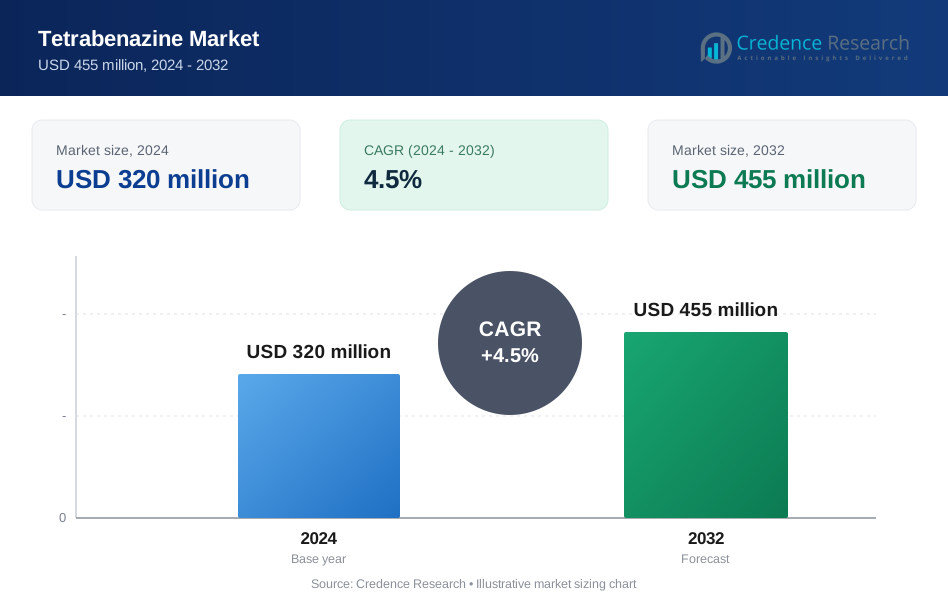
Tetrabenazine Market size was valued at USD 320 million in 2024 and is anticipated to reach USD 455 million by 2032, at a CAGR of 4.5% during the forecast period (2024-2032).
Key drivers of the Tetrabenazine Market include the rising prevalence of neurological disorders, particularly Huntington's disease and tardive dyskinesia, which require effective symptomatic treatments. As the global population continues to age, these conditions are becoming more prevalent, contributing to the increased demand for Tetrabenazine. The expanding geriatric population, who are more prone to such movement disorders, is another factor contributing to the market growth. Additionally, the awareness regarding the benefits of Tetrabenazine in managing these symptoms is growing among healthcare professionals, further fueling its adoption. Furthermore, the approval and availability of generic versions of Tetrabenazine have enhanced accessibility, driving increased adoption. The economic benefits of generic drugs are helping to overcome treatment cost barriers for many patients. Moreover, the ongoing development of new treatment protocols and expanding clinical research are helping boost the market, as more medical professionals turn to Tetrabenazine for symptom management in these debilitating conditions.
Geographically, North America holds the largest market share, driven by the high prevalence of movement disorders, a well-established healthcare infrastructure, and strong healthcare spending in the region. In addition, robust reimbursement policies and government support for pharmaceutical innovations are accelerating market growth. Europe follows closely, with increasing awareness of Tetrabenazine’s efficacy and growing demand in countries with aging populations. The focus on specialized care in countries like Germany and the UK is expanding Tetrabenazine’s reach in the region. The Asia Pacific region is expected to experience the highest growth, driven by expanding healthcare access, rising healthcare awareness, and improving diagnostic capabilities in countries such as Japan and China. Governments in the region are also focusing on improving healthcare facilities and affordability, which will further support the Tetrabenazine market’s expansion.
Market Insights:
- The Tetrabenazine Market was valued at USD 320 million in 2024 and is expected to reach USD 455 million by 2032, growing at a CAGR of 4.5%. This growth is driven by rising neurological disorder prevalence and increased adoption of Tetrabenazine.
- The growing prevalence of neurological disorders like Huntington's disease and tardive dyskinesia boosts the demand for Tetrabenazine. As the population ages, the number of patients needing effective treatments increases, driving market growth.
- The expanding geriatric population is a significant driver for the Tetrabenazine Market. Older individuals are more prone to movement disorders, which increases the demand for Tetrabenazine in managing these conditions.
- The approval and availability of generic versions of Tetrabenazine have enhanced accessibility. Generic versions make it more affordable, overcoming cost-related barriers in both developed and emerging markets.
- Ongoing clinical research and new treatment protocols are contributing to market growth. Clinical trials and combination therapies are improving treatment outcomes, expanding Tetrabenazine's application in movement disorder management.
- North America holds the largest market share at 40%, due to high prevalence rates and strong healthcare infrastructure. Europe follows at 30%, with aging populations driving demand, and Asia-Pacific is expected to account for 25% by 2032.
- Despite benefits, the Tetrabenazine Market faces challenges such as high branded product costs. Side effects, such as drowsiness and depression, also limit its use in patients with existing psychiatric conditions.
Market Drivers:
Rising Prevalence of Neurological Disorders
The Tetrabenazine Market is witnessing growth due to the increasing prevalence of neurological disorders such as Huntington’s disease and tardive dyskinesia. These conditions often lead to significant movement disorders, which require effective symptom management. As the global population ages, the number of patients diagnosed with such disorders continues to rise, driving the demand for treatments like Tetrabenazine. Early intervention with Tetrabenazine has shown significant improvements in managing symptoms, making it a preferred treatment option. The growing awareness of neurological disorders and their symptoms has encouraged healthcare professionals to recommend Tetrabenazine as part of treatment protocols. This trend is further bolstered by the continuous research into better understanding and treating these debilitating conditions.
Expanding Geriatric Population
The aging population is a significant driver of the Tetrabenazine Market. Older individuals are more susceptible to conditions like Huntington’s disease and tardive dyskinesia, which commonly present with movement disorders. As life expectancy increases worldwide, the number of geriatric patients requiring treatment for these conditions rises. Tetrabenazine’s efficacy in managing involuntary movements in patients with neurodegenerative diseases contributes to its growing adoption. The demand for treatments in this demographic is anticipated to remain strong, providing long-term growth potential for the market. Healthcare systems are focusing more on managing chronic diseases, further supporting the demand for Tetrabenazine.
- For instance, the National Institute on Aging reports that over 54 million people in the United States are aged 65 or older, representing a substantial patient base for therapies targeting age-related neurodegenerative conditions.
Approval and Availability of Generic Versions
The approval and widespread availability of generic versions of Tetrabenazine have significantly boosted its adoption in recent years. Generic versions have made it more accessible and affordable for patients, addressing cost-related barriers that previously hindered treatment accessibility. As healthcare systems prioritize cost-effective treatments, the generic versions of Tetrabenazine become a preferred choice for many patients. The availability of these alternatives has increased the overall market penetration, making it more widely available across both developed and emerging markets. This price advantage is accelerating the growth of the Tetrabenazine Market.
- For instance, the U.S. Food and Drug Administration (FDA) approved generic tetrabenazine tablets for distribution in 2015, making the medication available in thousands of pharmacies nationwide and expanding patient access to this essential therapy.
Advances in Clinical Research and Treatment Protocols
Ongoing clinical research and the development of new treatment protocols continue to drive the Tetrabenazine Market forward. As more healthcare providers turn to Tetrabenazine for managing movement disorders, its clinical applications expand. Research into its use in combination with other therapies is also growing, improving treatment efficacy. The results from various clinical trials are helping refine protocols, ensuring that Tetrabenazine is used optimally. These advances in clinical research are expected to further cement Tetrabenazine’s position as a leading treatment option, contributing to the overall growth of the market.
Market Trends:
Growing Focus on Personalized Treatment Approaches
The Tetrabenazine Market is experiencing a shift towards more personalized treatment regimens. With the increasing recognition of the heterogeneity of movement disorders such as Huntington’s disease and tardive dyskinesia, healthcare providers are focusing on tailoring treatments to meet the specific needs of individual patients. Personalized medicine aims to optimize drug efficacy while minimizing side effects. Tetrabenazine plays a critical role in this shift, offering precise symptom management for patients suffering from involuntary movements. As pharmacogenomics and patient-specific factors become more integral in treatment plans, the adoption of Tetrabenazine as a personalized therapy is gaining momentum. This trend reflects a broader healthcare industry shift toward patient-centered care, encouraging further integration of Tetrabenazine in treatment protocols.
- For instance, in a long-term study conducted at the Parkinson’s Disease Center and Movement Disorders Clinic, 103 out of 137 patients achieved a “marked or very good” response to tetrabenazine at optimal dosage, demonstrating the effectiveness of individualized treatment approaches.
Technological Advancements in Drug Delivery Systems
Another notable trend influencing the Tetrabenazine Market is the growing emphasis on improving drug delivery systems. Advances in drug formulation technologies, such as extended-release formulations and novel delivery methods, are enhancing the effectiveness of Tetrabenazine in treating movement disorders. These innovations aim to provide more consistent therapeutic effects with reduced side effects. The development of new drug delivery platforms enables better patient adherence to prescribed regimens, improving the overall outcome of treatment. As these technologies advance, they further solidify Tetrabenazine’s position in managing long-term movement disorders. The shift toward more efficient and patient-friendly delivery systems is expected to drive the Tetrabenazine Market’s growth, providing patients with better treatment experiences.
- For instance, a retrospective analysis of U.S. healthcare claims found that 82 out of 141 patients with Huntington’s disease chorea remained persistent with tetrabenazine therapy throughout the follow-up period, highlighting the positive impact of improved dosing strategies and delivery systems on real-world adherence.
Market Challenges Analysis:
High Cost and Accessibility Issues
One of the key challenges facing the Tetrabenazine Market is the high cost of treatment, particularly for patients without adequate insurance coverage. Although generic versions of Tetrabenazine have improved accessibility, the cost of branded products remains a significant barrier for many individuals, especially in developing regions. This issue limits the adoption of Tetrabenazine, as it remains financially inaccessible for a large segment of the population that could benefit from its therapeutic effects. Many healthcare systems face difficulties in balancing cost-effective care with the need for advanced treatments like Tetrabenazine, slowing down its widespread use.
- For instance, a retrospective analysis using the Market Scan Commercial and Medicare Supplemental database in the United States reported that the average daily dose of tetrabenazine for Huntington’s disease patients was 45 mg, indicating that real-world dosing is accessible for many patients through insurance and support programs.
Side Effects and Safety Concerns
Another challenge impacting the Tetrabenazine Market is the potential for side effects, which can limit its use in certain patient populations. Common side effects such as drowsiness, depression, and akathisia may deter healthcare providers from prescribing it to patients with existing psychiatric conditions. The risk of adverse events can also lead to treatment discontinuation, affecting the overall effectiveness of Tetrabenazine. Despite its proven benefits for movement disorders, ongoing concerns regarding patient safety and the need for careful monitoring during treatment hinder its broader application across various patient demographics.
Market Opportunities:
Expansion in Emerging Markets
The Tetrabenazine Market holds significant opportunities for growth in emerging markets where healthcare infrastructure is rapidly improving. Countries in regions like Asia-Pacific and Latin America are increasingly adopting advanced medical treatments as their healthcare systems expand. The rising prevalence of neurological disorders in these regions, coupled with improving access to healthcare, presents an opportunity for Tetrabenazine to reach a broader patient base. As awareness of movement disorders grows and healthcare systems become more equipped to handle chronic conditions, demand for effective treatments like Tetrabenazine is expected to rise. Expanding into these markets offers considerable potential for manufacturers to tap into a new customer base.
Development of New Indications and Combinations
The Tetrabenazine Market also has opportunities for growth through the development of new indications and combination therapies. Research into Tetrabenazine’s potential applications for other neurological disorders or in combination with other medications could expand its therapeutic portfolio. As clinical studies continue to investigate its efficacy in different settings, Tetrabenazine could become a vital part of broader treatment regimens. These innovations could open new market segments, providing additional revenue streams for manufacturers. By exploring new indications, Tetrabenazine could play an even more significant role in the management of various movement and neurological disorders.
Market Segmentation Analysis:
By Product Type The Tetrabenazine Market is segmented into oral tablets and injectable forms, with oral tablets dominating the market. Oral tablets are preferred due to their ease of administration, patient compliance, and cost-effectiveness. Injectable forms, though less common, are used in specific clinical settings where immediate effect or direct delivery is required. The demand for oral tablets is expected to maintain dominance in the market, as it offers convenience and ease of use for long-term treatment of movement disorders.
- For instance, the official prescribing information from Drugs.com lists tetrabenazine tablets as available in 12.5 mg and 25 mg strengths for oral administration and details individualized titration protocols, reflecting the established use and preference for oral tablet forms in clinical practice.
By Application The Tetrabenazine Market is primarily segmented based on its application in treating Huntington’s disease, tardive dyskinesia, and other movement disorders. Huntington’s disease holds the largest market share due to its high prevalence and the effectiveness of Tetrabenazine in controlling involuntary movements. Tardive dyskinesia is the second major application segment, with increasing awareness and diagnoses leading to higher demand for effective treatments. As more research is conducted on additional neurological disorders, new applications for Tetrabenazine may further expand its market reach.
- For instance, the same TETRA-HD trial demonstrated a 5-unit reduction in Total Maximal Chorea scores on the Unified Huntington’s Disease Rating Scale for patients receiving Xenazine, compared to a 1.5-unit reduction in the placebo group.
By Distribution Channel The distribution channels for the Tetrabenazine Market include hospitals, pharmacies, and online platforms. Hospitals and clinics are the primary distribution points, given the need for specialized care and prescription. Pharmacies, both physical and online, have become increasingly significant in distributing Tetrabenazine as more patients seek accessible, cost-effective treatments. The rise of online pharmaceutical sales platforms has made Tetrabenazine more widely available, further boosting its adoption across global markets.
Segmentations:
- By Product Type:
- Oral Tablets
- Injectable Forms
- By Application:
- Huntington’s Disease
- Tardive Dyskinesia
- Other Movement Disorders
- By Distribution Channel:
- Hospitals
- Pharmacies
- Online Platforms
- By Region:
- North America
- S.
- Canada
- Mexico
- Europe
- UK
- France
- Germany
- Italy
- Spain
- Russia
- Rest of Europe
- Asia Pacific
- China
- Japan
- South Korea
- India
- Australia
- Southeast Asia
- Rest of Asia Pacific
- Latin America
- Brazil
- Argentina
- Rest of Latin America
- Middle East
- GCC Countries
- Israel
- Turkey
- Rest of Middle East
- Africa
- South Africa
- Egypt
- Rest of Africa
- North America
Regional Analysis:
North America Holds the Largest Market Share in Tetrabenazine Market
North America holds the largest share of the Tetrabenazine Market, capturing 40% of the global demand. The high prevalence of movement disorders, along with strong healthcare infrastructure and substantial healthcare spending, contributes to this dominance. The United States, in particular, is home to a significant portion of the global patient population suffering from Huntington's disease and tardive dyskinesia. The well-established healthcare system, along with widespread insurance coverage, allows greater access to advanced treatments like Tetrabenazine. The region also benefits from high levels of awareness regarding neurological disorders, leading to increased diagnosis rates and treatment adoption. Research funding and the presence of key pharmaceutical companies further solidify North America's position as the leading market for Tetrabenazine.
Europe Contributes Significantly to the Tetrabenazine Market
Europe holds a significant share of the Tetrabenazine Market, contributing to 30% of the global demand. The increasing demand for effective treatments in countries with aging populations, such as Germany, the UK, and France, supports market expansion. The aging demographic is more susceptible to neurodegenerative disorders, leading to higher rates of conditions like Huntington’s disease. European healthcare systems, though varied across nations, generally provide robust coverage for chronic disease treatments, improving patient access to Tetrabenazine. Rising awareness and healthcare initiatives focused on movement disorders also drive growth in the region, further boosting the market's potential.
Asia-Pacific Set for Rapid Growth in Tetrabenazine Market
The Asia-Pacific region is expected to account for 25% of the Tetrabenazine Market by 2032, driven by expanding healthcare access, rising healthcare awareness, and improving diagnostic capabilities. Countries like Japan and China are experiencing significant growth in the diagnosis of movement disorders, coupled with a growing focus on improving neurological healthcare services. Increasing disposable incomes and advancements in healthcare infrastructure also contribute to the adoption of modern treatments such as Tetrabenazine. As these markets continue to evolve and gain access to new therapies, Tetrabenazine’s presence is expected to increase, providing a substantial opportunity for market expansion in the region.
Key Player Analysis:
- H. Lundbeck A/S
- Wockhardt Ltd.
- Zydus Cadila
- Teva Pharmaceutical Industries Ltd.
- Sun Pharmaceutical Industries Ltd.
- Lupin Limited
- Torrent Pharmaceuticals Ltd.
- Glenmark Pharmaceuticals Ltd.
- Mylan N.V.
- Cipla Inc.
- Dr. Reddy's Laboratories Ltd.
- Intas Pharmaceuticals Ltd.
- Apotex Inc.
- Amneal Pharmaceuticals LLC
- Aurobindo Pharma Ltd.
Competitive Analysis:
The Tetrabenazine Market is competitive, with several key players contributing to its growth. Major pharmaceutical companies focus on developing and marketing Tetrabenazine to address neurological movement disorders. The market is characterized by a few dominant players that control the majority of market share, driven by strong research and development (R&D) capabilities, strategic partnerships, and established distribution channels. The approval of generic versions has also intensified competition, making Tetrabenazine more affordable and accessible. Key companies in the market continually strive to enhance their product offerings, with a focus on improving treatment efficacy and reducing side effects. They are leveraging advancements in drug delivery systems and exploring new applications for Tetrabenazine to capture a larger market share. The increasing demand for cost-effective treatments and better patient outcomes is encouraging more companies to enter the market, driving further competition in the segment.
Recent Developments:
- In February 2025, Lundbeck announced that its investigational drug amlenetug for Multiple System Atrophy (MSA) received Fast Track Designation from the US FDA.
- In January 2025, Teva and Samsung Bioepis announced a license, development, and commercialization agreement for EPYSQLI® (eculizumab-aagh), a biosimilar to Soliris®, for the US market.
- In June 2025, Teva announced the pricing and early acceptance results of its debt tender offer, part of its ongoing financial strategy.
Market Concentration & Characteristics:
The Tetrabenazine Market exhibits moderate concentration, with a few key players dominating the market share. Large pharmaceutical companies with strong research and development capabilities lead the market, ensuring a steady supply of high-quality products. The market also benefits from the availability of generic versions, which have increased accessibility and affordability, contributing to a more competitive landscape. The market characteristics include a focus on innovation, particularly in improving drug formulations and delivery systems. The demand for Tetrabenazine is driven by the need for effective treatments for movement disorders such as Huntington’s disease and tardive dyskinesia. With an expanding patient base, especially in aging populations, the market is expected to continue evolving, attracting both established players and new entrants aiming to capitalize on the growing demand for affordable and effective therapies.
Report Coverage:
The research report offers an in-depth analysis based on Product Type, Application, Distribution Channel and Region. It details leading market players, providing an overview of their business, product offerings, investments, revenue streams, and key applications. Additionally, the report includes insights into the competitive environment, SWOT analysis, current market trends, as well as the primary drivers and constraints. Furthermore, it discusses various factors that have driven market expansion in recent years. The report also explores market dynamics, regulatory scenarios, and technological advancements that are shaping the industry. It assesses the impact of external factors and global economic changes on market growth. Lastly, it provides strategic recommendations for new entrants and established companies to navigate the complexities of the market.
Future Outlook:
- The Tetrabenazine Market is expected to witness continued growth driven by the increasing prevalence of neurological disorders.
- Rising awareness about movement disorders and their treatment options will support greater adoption of Tetrabenazine in clinical settings.
- The expanding geriatric population, more prone to conditions like Huntington’s disease, will continue to drive demand for effective therapies.
- The approval of more generic versions of Tetrabenazine will further increase its accessibility and affordability, expanding its reach.
- Advancements in drug delivery systems will enhance the efficacy and patient compliance of Tetrabenazine, improving its market potential.
- New applications for Tetrabenazine in managing other movement disorders are likely to emerge, broadening its therapeutic use.
- Increased research and clinical trials will further refine treatment protocols, optimizing Tetrabenazine’s use for various patient demographics.
- The market is poised for significant growth in emerging regions like Asia-Pacific, as healthcare access improves and awareness increases.
- Competitive pressure from both branded and generic drug manufacturers will lead to better pricing strategies and improved patient access.
- Strategic partnerships, collaborations, and acquisitions in the pharmaceutical sector will continue to shape the future of the Tetrabenazine Market.
Request a Free Sample
Fill in your details and we'll send you a free sample report.
- Sample data tables & charts
- Research methodology
Market Dynamics
Rising Prevalence of Neurological Disorders
The increasing incidence of neurological conditions such as Huntington’s disease and tardive dyskinesia is driving demand for Tetrabenazine, as these disorders require effective symptomatic management.
Expanding Geriatric Population
Aging populations are more susceptible to movement disorders, leading to a larger patient base that requires Tetrabenazine for symptom control, especially in developed regions with higher life expectancy.
Approval and Availability of Generic Versions
The introduction and approval of generic Tetrabenazine have improved affordability and accessibility, enabling broader adoption across both developed and emerging markets by overcoming cost barriers.
Advances in Clinical Research and Treatment Protocols
Ongoing clinical trials and the development of new treatment protocols are expanding the clinical applications of Tetrabenazine, improving outcomes and encouraging its use in combination therapies.
Improved Healthcare Infrastructure and Awareness in Emerging Markets
Expanding healthcare access, rising awareness of movement disorders, and improving diagnostic capabilities in regions like Asia Pacific are opening new growth opportunities for Tetrabenazine.
Need a Custom Version of This Report?
Tailor the scope, geography, or segments to your exact requirements.
- Custom geography or segment scope
- Direct access to our analyst team
Frequently Asked Questions
What is the expected market growth of Tetrabenazine from 2024 to 2032?
What are the key drivers of the Tetrabenazine Market?
Which region holds the largest market share for Tetrabenazine?
Which region is expected to experience the highest growth in the Tetrabenazine Market?
Table of Content
Chapter 1 Market Segmentation
- 1.1 Segmentation Framework
- 1.1.1 Product and Service Classification
- 1.1.2 Application and End-Use Classification
- 1.1.3 Technology and Solution Classification
- 1.1.4 Customer and Distribution Channel Classification
- 1.1.5 Geographic Segmentation
- 1.1.6 Market Segment Definitions and Boundaries
- 1.2 By Application
- 1.2.1 Huntington’s Disease
- 1.2.2 Tardive Dyskinesia
- 1.2.3 Other Movement Disorders
- 1.3 By Product Type
- 1.3.1 Oral Tablets
- 1.3.2 Injectable Forms
Chapter 2 Introduction
- 2.1 Report Objectives and Scope
- 2.2 Product Definition and Industry Terminology
- 2.3 Market Inclusions and Exclusions
- 2.4 Research Process
- 2.4.1 Primary Research and Expert Interviews
- 2.4.2 Secondary Research and Source Review
- 2.4.3 Top-Down and Bottom-Up Estimation
- 2.4.4 Data Triangulation and Verification
- 2.5 Market Size Measurement Basis
- 2.5.1 2024: USD 320 million → 2032: USD 455 million
- 2.6 Historical and Forecast Reference Periods
- 2.6.1 Base Year: 2024
- 2.6.2 Forecast Period: 2024-2032
- 2.7 Research Assumptions and Limitations
Chapter 3 Executive Summary
- 3.1 Market Snapshot and Key Findings
- 3.2 Base-Year Market Size, 2024
- 3.3 Forecast Market Size, 2032
- 3.4 Revenue and Volume Growth Outlook
- 3.5 Key Demand and Supply Indicators
- 3.6 Leading Market Segments
- 3.7 Fastest-Growing Market Opportunities
- 3.8 Regional Performance Highlights
- 3.9 Technology and Industry Transformation
- 3.10 Competitive Landscape Summary
- 3.11 Analyst View and Strategic Implications
Chapter 4 Global Tetrabenazine Market Trends and Developments
- 4.1 Historical Industry Development
- 4.2 Recent Market Trends and Developments
- 4.3 Demand and Customer Behavior Trends
- 4.4 Technology and Product Innovation
- 4.5 Artificial Intelligence, Automation and Digitalization
- 4.6 Local Manufacturing and Supply Chain Realignment
- 4.7 Industry Partnerships, Mergers and Acquisitions
- 4.8 Sustainability and Circular Economy Developments
- 4.9 Government and Private Sector Investment Trends
- 4.10 Emerging Business Models and Commercialization
- 4.11 Industry Developments and Announcements
Chapter 5 Global Tetrabenazine Market Production, Supply and Demand Analysis
- 5.1 Demand Trend and Consumption Analysis
- 5.2 Demand Forecast, 2024-2032
- 5.3 Production and Output Trend
- 5.4 Production and Output Forecast, 2024-2032
- 5.5 Installed Capacity and Capacity Utilization
- 5.6 Company-Wise Production Plants and Statistics
- 5.6.1 Installed Production Capacity
- 5.6.2 Actual Production
- 5.6.3 Planned Capacity and Expansion Targets
- 5.7 Supply Chain Structure and Procurement Trends
- 5.8 Supply-Demand Gap and Bottlenecks
- 5.9 Import Dependence and Sourcing Structure
- 5.10 Contract Manufacturing and Outsourcing
- 5.11 Regional Supply and Demand Concentration
Chapter 6 Global Tetrabenazine Market Pricing Analysis
- 6.1 Pricing Structure and Measurement
- 6.2 Historical Pricing Trends
- 6.3 Pricing Outlook, 2024-2032
- 6.4 Average Selling Price and Unit Economics
- 6.5 Pricing by Product and Market Segment
- 6.6 Geographic Pricing Differences
- 6.7 Key Input, Energy, Labor and Logistics Costs
- 6.8 Contract Pricing and Purchasing Models
- 6.9 Pricing Sensitivity and Competitive Positioning
- 6.10 Price, Margin and Profitability Implications
Chapter 7 Global Tetrabenazine Market Dynamics
- 7.1 Market Growth Drivers
- 7.1.1 Demand-Side Drivers
- 7.1.2 Technology and Innovation Drivers
- 7.1.3 Infrastructure and Investment Drivers
- 7.1.4 Regulatory and Policy Drivers
- 7.2 Market Restraints
- 7.2.1 Cost and Affordability Constraints
- 7.2.2 Technology and Adoption Barriers
- 7.2.3 Supply Chain and Operational Constraints
- 7.3 Market Challenges
- 7.3.1 Competitive Pressure and Margin Erosion
- 7.3.2 Skills, Infrastructure and Implementation Gaps
- 7.4 Emerging Market Opportunities
- 7.5 Market Dynamics Impact and Time-Horizon Assessment
Chapter 8 Global Tetrabenazine Value Chain Analysis
- 8.1 Industry Value Chain Overview
- 8.2 Upstream Suppliers and Critical Inputs
- 8.3 Technology and Component Providers
- 8.4 Manufacturing or Service Delivery
- 8.5 Distribution, Channel Partners and Integrators
- 8.6 Downstream Applications and End Users
- 8.7 Value Addition and Profit Pools
- 8.8 Vertical Integration and Outsourcing
- 8.9 Supplier Concentration and Risk
- 8.10 Supply Chain Localization and Resilience
Chapter 9 Global Tetrabenazine Market Regulations and Policies
- 9.1 Relevant Laws, Standards and Compliance Frameworks
- 9.2 Product, Service, Safety and Quality Requirements
- 9.3 Government Policies, Incentives and Subsidies
- 9.4 Imports, Exports and Trade Barriers
- 9.5 Public Procurement and Local Content Requirements
- 9.6 Environmental and Sustainability Compliance
- 9.7 Upcoming Policy Changes and Market Implications
Chapter 10 Global Tetrabenazine Market Hotspots and Opportunities
- 10.1 Market Opportunity Mapping and Growth Hotspots
- 10.2 High-Growth Applications and Customer Groups
- 10.3 Underserved Markets and White-Space Opportunities
- 10.4 Emerging Technology and Product Opportunities
- 10.5 New Capacity and Investment Hotspots
- 10.6 Market Entry and Expansion Opportunities
- 10.7 Distribution and Partnership Opportunities
- 10.8 Near-Term and Long-Term Commercial Potential
- 10.9 Opportunity Attractiveness and Execution Risks
Chapter 11 Global Tetrabenazine Market Outlook, 2024-2032
- 11.1 Market Size and Analysis
- 11.1.1 Revenue (Market Measurement: 2024: USD 320 million → 2032: USD 455 million)
- 11.1.2 Market Volume and Quantity Sold
- 11.1.3 Historical Market Size
- 11.1.4 Base-Year Market Size, 2024
- 11.2 Market Forecast, 2024-2032
- 11.2.1 Revenue Forecast to 2032
- 11.2.2 Volume Forecast to 2032
- 11.2.3 CAGR and Year-on-Year Growth
- 11.2.4 Incremental Revenue Opportunity
- 11.3 Forecast Assumptions and Scenario Analysis
- 11.3.1 Base-Case Forecast
- 11.3.2 Optimistic and Conservative Scenarios
- 11.3.3 Technology, Pricing and Policy Sensitivities
- 11.4 Market Attractiveness and Growth Outlook
Chapter 12 Global Tetrabenazine Market Segmentation and Outlook
- 12.1 Segmentation Summary and Market Shares, 2024
- 12.2 Largest and Fastest-Growing Segments
- 12.3 By Application - Market Size and Forecast, 2024-2032
- 12.3.1 Segment Definition and Scope
- 12.3.2 Historical Market Size
- 12.3.3 Revenue Forecast, 2024-2032
- 12.3.4 Volume Forecast, 2024-2032
- 12.3.5 Base-Year Market Share, 2024
- 12.3.6 Segment CAGR and Growth Drivers
- 12.3.7 Subsegment Market Size and Forecast
- 12.3.7.1 Huntington’s Disease
- 12.3.7.2 Tardive Dyskinesia
- 12.3.7.3 Other Movement Disorders
- 12.3.8 Subsegment Pricing and Adoption Trends
- 12.3.9 Leading Suppliers and Competition
- 12.3.10 Regional Demand and Opportunities
- 12.4 By Product Type - Market Size and Forecast, 2024-2032
- 12.4.1 Segment Definition and Scope
- 12.4.2 Historical Market Size
- 12.4.3 Revenue Forecast, 2024-2032
- 12.4.4 Volume Forecast, 2024-2032
- 12.4.5 Base-Year Market Share, 2024
- 12.4.6 Segment CAGR and Growth Drivers
- 12.4.7 Subsegment Market Size and Forecast
- 12.4.7.1 Oral Tablets
- 12.4.7.2 Injectable Forms
- 12.4.8 Subsegment Pricing and Adoption Trends
- 12.4.9 Leading Suppliers and Competition
- 12.4.10 Regional Demand and Opportunities
- 12.5 Segment Growth Comparison
- 12.6 Segment Attractiveness and Priority Matrix
Chapter 13 Global Tetrabenazine End-Use and Application Market Outlook
- 13.1 End-Use Industry and Customer Demand Structure
- 13.2 Leading Applications and Customer Groups
- 13.3 End-Use Market Size, Share and Forecast
- 13.4 Major End-Use Industry Deep Dives
- 13.4.1 Customer Requirements and Use Cases
- 13.4.2 Demand and Replacement Cycles
- 13.4.3 Technical and Regulatory Considerations
- 13.4.4 Purchasing and Procurement Models
- 13.4.5 Leading Vendors and Distribution Channels
- 13.4.6 Forecast and Commercial Opportunities
- 13.5 Emerging Applications and Cross-Segment Demand
- 13.6 End-Use Industry Investment Priorities
Chapter 14 Global Tetrabenazine Geographic Market Outlook, 2024-2032
- 14.1 Regional Market Size and Share, 2024
- 14.2 Regional Market Forecast, 2024-2032
- 14.3 Regional Pricing, Production and Demand Differences
- 14.4 North America
- 14.4.1 United States
- 14.4.2 Canada
- 14.4.3 Mexico
- 14.5 Europe
- 14.5.1 Germany
- 14.5.2 France
- 14.5.3 Italy
- 14.5.4 United Kingdom
- 14.5.5 Spain
- 14.5.6 Poland
- 14.5.7 Russia
- 14.5.8 Netherlands
- 14.5.9 Belgium
- 14.5.10 Sweden
- 14.5.11 Denmark
- 14.5.12 Norway
- 14.5.13 Rest of Europe
- 14.6 Asia Pacific
- 14.6.1 China
- 14.6.2 India
- 14.6.3 Japan
- 14.6.4 South Korea
- 14.6.5 Thailand
- 14.6.6 Indonesia
- 14.6.7 Vietnam
- 14.6.8 Malaysia
- 14.6.9 Australia
- 14.6.10 Rest of Asia Pacific
- 14.7 Latin America
- 14.7.1 Brazil
- 14.7.2 Argentina
- 14.7.3 Colombia
- 14.7.4 Chile
- 14.7.5 Rest of Latin America
- 14.8 Middle East
- 14.8.1 Saudi Arabia
- 14.8.2 United Arab Emirates
- 14.8.3 Turkey
- 14.8.4 Israel
- 14.8.5 Iran
- 14.8.6 Rest of the Middle East
- 14.9 Africa
- 14.9.1 South Africa
- 14.9.2 Egypt
- 14.9.3 Nigeria
- 14.9.4 Morocco
- 14.9.5 Rest of Africa
- 14.10 Regional Investment, Policy and Supply Chain Differences
- 14.11 Regional Competitive Landscape
- 14.12 Geographic Growth Hotspots
Chapter 15 Global Tetrabenazine Technology, Innovation and Sustainability Outlook
- 15.1 Technology Landscape and Maturity
- 15.2 Product, Process and Service Innovation
- 15.3 AI, Automation and Digital Tools in the Industry
- 15.4 Technology Adoption and Performance Benchmarking
- 15.5 Innovation Pipeline and R&D Investment
- 15.6 Patent and Intellectual Property Trends
- 15.7 Energy Efficiency and Resource Management
- 15.8 Sustainability, Recycling and Circularity
- 15.9 Technology Roadmap, 2024-2032
- 15.10 Risks of Obsolescence and Technology Substitution
Chapter 16 Global Tetrabenazine Market Key Strategic Imperatives
- 16.1 Growth and Market Entry Priorities
- 16.2 High-Return Products and Segments
- 16.3 Pricing, Profitability and Cost Optimization
- 16.4 Technology Investment and Product Differentiation
- 16.5 Supply Chain Localization and Resilience
- 16.6 Distribution and Customer Acquisition
- 16.7 Partnership, Acquisition and Capacity Strategy
- 16.8 Regional Expansion Priorities
- 16.9 Short-, Medium- and Long-Term Actions
Chapter 17 Competition Outlook
- 17.1 Industry Competition Characteristics
- 17.2 Market Structure and Concentration
- 17.3 Market Share and Competitive Positioning, 2024
- 17.4 Company-Wise Revenue and Product Benchmarking
- 17.5 Production and Service Capacity Benchmarking
- 17.6 Technology, Pricing and Differentiation
- 17.7 Regional Footprint and Distribution Strength
- 17.8 Mergers, Acquisitions and Strategic Alliances
- 17.9 New Entrants and Competitive Threats
- 17.10 Porter's Five Forces and Industry Attractiveness
- 17.11 Competitive Outlook, 2024-2032
Chapter 18 Company Profiles
- 18.1 Company Coverage and Selection Criteria
- 18.2 H. Lundbeck A/S
- 18.2.1 Business Description
- 18.2.2 Company Ownership and Geographic Presence
- 18.2.3 Product and Service Portfolio
- 18.2.4 Manufacturing and Operating Footprint
- 18.2.5 Production Capacity and Expansion Plans
- 18.2.6 Financial Performance and Investment
- 18.2.7 Market Share and Competitive Position
- 18.2.8 Technology and Innovation Capabilities
- 18.2.9 Strategic Alliances or Partnerships
- 18.2.10 Recent Developments
- 18.2.11 Growth Strategy and Outlook
- 18.3 Teva Pharmaceutical Industries Ltd.
- 18.4 Sun Pharmaceutical Industries Ltd.
- 18.5 Wockhardt Ltd.
- 18.6 Zydus Cadila
- 18.7 Lupin Limited
- 18.8 Torrent Pharmaceuticals Ltd.
- 18.9 Glenmark Pharmaceuticals Ltd.
- 18.10 Mylan N.V.
- 18.11 Dr. Reddy's Laboratories Ltd.
- 18.12 Other Relevant Market Participants
Note: Every listed company is profiled on the structure shown under the first company. The company list is preliminary and may change based on research findings, market developments, data availability and client requirements.
Chapter 19 Disclaimer
- 19.1 Research and Forecast Disclaimer
- 19.2 Data Source and Estimation Limitations
Note: The depth of individual sections depends on data availability for this market. Volume, capacity, trade and other unit-based metrics are included where applicable.