
Dysphagia Supplements Market to Reach USD 1,596.71 Million Driven by Aging Population and Standardized Dysphagia Care
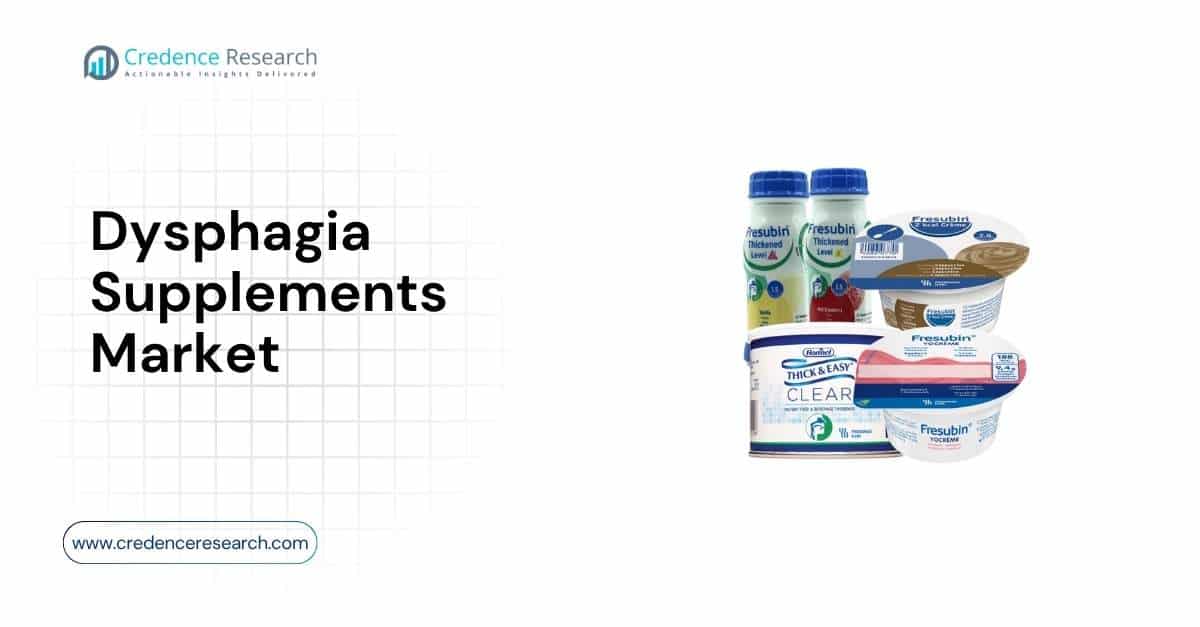
Credence Research has published a new research report titled “Dysphagia Supplements Market Size, Share, Growth, Opportunities, and Competitive Analysis, 2025–2032” According to the study, the Dysphagia Supplements Market was valued at USD 1,097 million in 2024 and is projected to reach USD 1,596.71 million by 2032, expanding at a CAGR of 4.8% during the forecast period. Market growth is driven by the rising geriatric population, increasing prevalence of stroke and neurological disorders, and stronger emphasis on preventing malnutrition, dehydration, and aspiration risks through structured dysphagia management in hospitals, nursing homes, and long-term care facilities.
The Dysphagia Supplements Market is gaining steady momentum as healthcare providers focus on improving nutrition support for patients with swallowing difficulties. Dysphagia is commonly associated with aging, stroke, Parkinson’s disease, dementia, head and neck cancers, and other neurological conditions. Patients with swallowing impairment often require texture-modified foods, thickened liquids, oral nutritional supplements, and ready-to-use formulations to maintain safe intake and adequate nutrition. Growing adoption of IDDSI-compliant products, improved palatability, and better viscosity stability are strengthening institutional and retail demand.
Rising Geriatric Population and Swallowing Disorders
The growing elderly population is one of the strongest drivers of the Dysphagia Supplements Market. Older adults are more vulnerable to swallowing difficulties due to age-related muscle weakness, neurological decline, stroke, dementia, and chronic disease complications. Dysphagia can increase the risk of malnutrition, dehydration, choking, and aspiration pneumonia, making nutritional support essential in hospitals, nursing homes, and home care settings. As long-term care facilities manage a larger elderly patient base, demand for safe, texture-modified nutrition products continues to rise.
Increasing Prevalence of Stroke and Neurological Disorders
Stroke, Parkinson’s disease, dementia, multiple sclerosis, and other neurological conditions are major contributors to dysphagia cases. Patients recovering from stroke often require thickened liquids and specialized nutritional support to reduce aspiration risk and improve safe swallowing. Healthcare providers increasingly use dysphagia supplements as part of clinical nutrition protocols to maintain hydration and nutrient intake. This is supporting demand for powder thickeners, ready-to-drink thickened beverages, instant foods, and oral nutritional supplements across acute and rehabilitation care settings.
Rising Need for Texture-Safe Nutrition That Prevents Both Aspiration and Malnutrition
The Dysphagia Supplements Market is being driven by the growing clinical need for supplements that do more than provide calories or protein—they must also match safe swallowing textures. Patients with dysphagia often reduce food and fluid intake because of choking fear, aspiration risk, fatigue while eating, or poor tolerance of modified diets. This creates a dual clinical burden: preventing aspiration while also avoiding dehydration, weight loss, and malnutrition. Guidance on dysphagia nutrition highlights the use of texture-modified foods, thickened fluids, and appropriate oral nutritional supplements for patients at malnutrition risk.
Improved Palatability and Texture Stability
Manufacturers are investing in better-tasting dysphagia supplements with improved mouthfeel, flavor variety, and texture consistency. Palatability is important because poor taste or unpleasant texture can reduce patient compliance and nutrition intake. Products with stable viscosity across temperature changes and preparation conditions are gaining preference among caregivers and clinical dietitians.
Rising Demand for Powder Thickeners
Powder thickeners remain the leading product category, holding an estimated 38–42% market share. Their dominance is supported by flexibility, cost efficiency, ease of storage, and ability to adjust liquid thickness based on patient needs. Hospitals, nursing homes, and caregivers continue to rely on powder thickeners for water, beverages, soups, and liquid foods.
Patient Compliance and Taste Acceptance
Patient compliance remains a challenge due to taste, texture, appearance, and mouthfeel concerns. Some dysphagia patients may reduce fluid or food intake if products are not appealing, increasing the risk of dehydration and malnutrition. Manufacturers must continue improving sensory quality while maintaining clinical performance and viscosity stability.
Cost and Access Barriers in Emerging Markets
Specialized dysphagia supplements may be less accessible in low- and middle-income markets due to cost constraints, limited clinical awareness, and weaker distribution networks. Hospitals and nursing homes in emerging regions may still rely on basic homemade texture modification methods. Wider education, affordable products, and retail expansion will be needed to improve market penetration.
Dysphagia Supplements Market Regional Analysis
North America leads the Dysphagia Supplements Market with around 38–40% share, supported by advanced clinical nutrition practices, strong long-term care infrastructure, and high awareness of dysphagia-related complications. The United States remains the key contributor due to high stroke prevalence, aging demographics, institutional procurement, and broad availability of dysphagia nutrition products through hospitals, nursing homes, pharmacies, and online channels.
Europe accounts for approximately 28–30% market share, driven by structured elderly care systems, hospital nutrition programs, and adoption of standardized dysphagia management practices. Countries such as Germany, the U.K., France, Italy, Spain, and the Nordic markets show steady demand from hospitals, care homes, and retail pharmacies. Clinical dietitian involvement and growing use of IDDSI standards support regional market growth.
Competitive Landscape
The Dysphagia Supplements Market is moderately consolidated, with key players including Nestlé Health Science, Danone S.A., Fresenius Kabi, Hormel Health Labs, Kent Precision Foods Group, Inc., Medtrition Inc., Saraya Co. Ltd., SimplyThick, and Flavor Creations. These companies compete through clinical validation, institutional contracts, product portfolio expansion, IDDSI-compliant formulations, ready-to-drink beverages, powder thickeners, and nutrient-dense supplements. Competitive differentiation increasingly depends on product consistency, taste quality, viscosity stability, ease of preparation, and long-term care penetration.
Download Free Sample Report - https://www.credenceresearch.com/report/dysphagia-supplement-market
ATTRIBUTE DETAILS
| ATTRIBUTE | DETAILS |
|---|---|
| Research Period | 2020–2032 |
| Base Year | 2024 |
| Forecast Period | 2025–2032 |
| Historical Year | 2020–2023 |
| Unit | USD Million |
| By Product (2020–2032; USD Million) | Powder Thickener; Ready-to-Drink Thickened Beverages; Instant Food; Oral Nutritional Supplements |
| By End User (2020–2032; USD Million) | Hospital Pharmacies; Nursing Homes; Retail Pharmacies; Drug Stores; Supermarket |
| By Geography (2020–2032; USD Million) | North America; Europe; Asia Pacific; Latin America; Middle East & Africa |
About the Author

Healthcare & Biotech Analyst