
| REPORT ATTRIBUTE | DETAILS |
|---|---|
| Historical Period | 2020-2023 |
| Base Year | 2024 |
| Forecast Period | 2025-2032 |
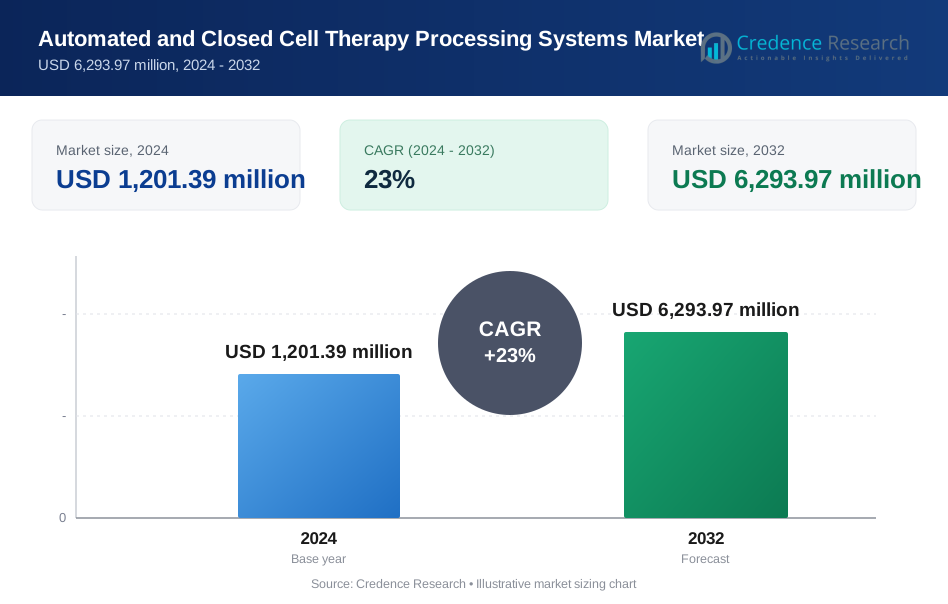
| Automated And Closed Cell Therapy Processing Systems Market Size 2024 | USD 1,201.39 Million |
| Automated And Closed Cell Therapy Processing Systems Market, CAGR | 23% |
| Automated And Closed Cell Therapy Processing Systems Market Size 2032 | USD 6,293.97 Million |
Market Overview
The Automated And Closed Cell Therapy Processing Systems Market is projected to grow from USD 1,201.39 million in 2024 to an estimated USD 6,293.97 million by 2032, with a compound annual growth rate (CAGR) of 23% from 2024 to 2032.
Key drivers of the automated and closed cell therapy processing systems market include advancements in cell-based therapies, rising demand for personalized medicine, and the increasing adoption of automation in manufacturing processes. The growing number of clinical trials and the increasing prevalence of chronic diseases are fueling the need for efficient and scalable manufacturing solutions for cell therapies. Furthermore, the shift towards closed systems ensures higher levels of safety and minimizes the risk of contamination, which is crucial for the production of these sensitive biological products.
Regionally, North America is leading the market due to the presence of advanced healthcare infrastructure, a strong focus on research and development, and significant investments in biotechnology and pharmaceutical industries. Europe follows closely, with increasing government support and funding for biotechnology and cell therapy innovations. In Asia Pacific, countries like China, Japan, and India are expected to see substantial market growth due to rising healthcare expenditures, expanding healthcare infrastructure, and growing biopharmaceutical sectors. The Latin America and Middle East & Africa regions are gradually embracing automated and closed cell therapy processing systems as the demand for biopharmaceutical products and advanced healthcare technologies continues to rise.
Market Insights:
- The Automated and Closed Cell Therapy Processing Systems Market is projected to grow from USD 1,201.39 million in 2024 to an estimated USD 6,293 million by 2032, with a CAGR of 23%.
- Rising demand for personalized medicine and cell-based therapies is driving the adoption of automated and closed processing systems.
- Automation in production processes and the use of closed systems are enhancing safety and reducing the risk of contamination in cell therapy manufacturing.
- Stringent regulatory requirements and the high cost of advanced processing systems may limit market growth in some regions.
- North America is the dominant region due to strong healthcare infrastructure, extensive R&D investments, and a focus on biotechnology innovation.
- The Asia-Pacific region is witnessing rapid growth, fueled by increased healthcare spending, expanding biopharmaceutical sectors, and government support.
- Latin America, the Middle East, and Africa are gradually adopting automated and closed cell therapy processing systems as part of their long-term healthcare development strategies.
Market Drivers:
Rising Demand for Personalized Medicine:
The increasing demand for personalized medicine has been a critical driver in the adoption of automated and closed cell therapy processing systems. Personalized treatments, designed to target specific genetic and molecular profiles, require efficient, scalable, and safe production systems. For instance, as of 2022, more than 100,000 clinical trials were ongoing worldwide, targeting personalized treatments for diseases like cancer, diabetes, and genetic disorders. The U.S. National Institutes of Health (NIH) allocated over $100 million in 2023 to support the development of advanced manufacturing technologies for cell therapies. This funding encourages the creation of automated systems to ensure high-quality, scalable production to meet the demand for personalized treatments.
Technological Advancements in Cell Therapy Manufacturing:
Technological innovations are essential for driving the adoption of automated and closed cell therapy processing systems. Automation ensures efficiency, safety, and scalability in manufacturing, which are crucial for meeting the rising demand for cell therapies. For instance, in 2021, Thermo Fisher Scientific launched an automated platform for the large-scale production of cell and gene therapies, a move that was supported by a $300 million investment in R&D, specifically targeting advancements in gene therapy manufacturing. According to the U.S. Department of Energy, over $300 million has been allocated to research and development in advanced cell manufacturing technologies, with a focus on automation to streamline production. These investments reflect a growing recognition of the need for automation to enhance the efficiency, scalability, and safety of cell-based therapies.
Government Initiatives and Regulatory Support:
Government support is a major driver for the growth of automated and closed cell therapy processing systems. Regulatory frameworks and financial incentives play a key role in advancing the development and manufacturing of cell therapies. For instance, the European Union's Horizon 2020 program, which funded more than €8 billion in health-related research between 2014 and 2020, supported numerous projects focused on advanced cell therapy production systems. The U.S. Food and Drug Administration (FDA) has also been actively involved in the regulation and approval of cell therapies, issuing over 25 approvals for cell-based treatments in the past five years. These initiatives ensure that companies receive the regulatory clarity and financial support necessary to scale up cell therapy manufacturing, accelerating the growth of the automated processing systems market.
Increase in Chronic Diseases and Aging Populations:
The global increase in chronic diseases and aging populations has fueled the demand for cell-based therapies, driving the need for more advanced manufacturing systems. The World Bank forecasts that by 2050, the global population aged 65 and older will double to 1.5 billion, which will lead to a higher incidence of age-related diseases such as Alzheimer's, cardiovascular conditions, and osteoarthritis. In response, governments and healthcare organizations are investing in novel treatments, including cell therapies. For instance, the National Institutes of Health (NIH) has committed over $100 billion in research funding over the next decade to combat chronic diseases. As the patient population grows, the need for efficient, automated systems to scale production of cell therapies becomes even more critical. Companies like Novartis and Gilead Sciences are expanding their research and investment into automated platforms to meet the increasing demand for gene therapies and cell-based immunotherapies, particularly in the treatment of chronic and age-related diseases.
Market Trends:
Shift Toward Automation and Digitization:
One of the prominent trends in the automated and closed cell therapy processing systems market is the increasing shift toward automation and digitization. Biopharmaceutical companies are increasingly adopting automated solutions to improve the efficiency and reproducibility of cell therapy production. Automation helps to reduce human error, ensures higher throughput, and minimizes contamination risks. For instance, the U.S. National Institutes of Health (NIH) has awarded over $50 million in grants since 2022 to research projects focused on the integration of automation into cell manufacturing systems. This trend toward automation is supported by innovations such as robotic arms, digital control systems, and AI-based solutions that enable more precise control over manufacturing processes. Automation is expected to play a key role in reducing production costs while meeting the growing demand for cell-based therapies.
Increase in Regulatory Focus and Standardization:
Another key trend is the growing emphasis on regulatory standards and the push for standardized processes in cell therapy manufacturing. As the number of cell therapies in clinical trials and on the market grows, regulatory bodies such as the U.S. Food and Drug Administration (FDA) and the European Medicines Agency (EMA) are tightening their regulations to ensure the safety and quality of these therapies. For instance, the FDA has been actively working on a set of guidelines for regenerative medicine since 2019, which has significantly influenced how companies approach the production of cell therapies. In 2022, the FDA released new guidance on cell therapy manufacturing that requires the use of closed systems to reduce contamination risks. These regulatory efforts are encouraging companies to adopt advanced automated systems that comply with stringent safety and quality standards.
Focus on Scalable and Cost-Effective Solutions:
As the demand for cell therapies increases, there is a growing focus on scalable and cost-effective production solutions. The manufacturing of cell-based therapies often involves complex, labor-intensive processes that can be expensive. To address these challenges, companies and research organizations are developing automated systems that can scale production without significantly increasing costs. For instance, The U.S. Department of Energy (DOE) has dedicated over $200 million in funding since 2021 to support projects focused on reducing the costs associated with cell therapy production and improving scalability. This includes investments in technology that can streamline processes, reduce labor requirements, and lower the overall cost of manufacturing cell therapies. Companies like Lonza Group have been at the forefront of these innovations, focusing on developing scalable systems that meet market demands.
Collaborations Between Industry and Academia:
Collaborations between industry leaders and academic institutions are becoming more common in the automated and closed cell therapy processing systems market. These partnerships are focused on accelerating the development and commercialization of advanced manufacturing technologies. For instance, the European Union’s Horizon 2020 program has funded numerous research initiatives aimed at developing innovative manufacturing systems for cell therapies. The program allocated over €1 billion to biopharmaceutical research in 2020 alone, with a significant portion directed toward projects involving automation in cell therapy production. Companies like Thermo Fisher Scientific and Roche are also collaborating with academic institutions to explore new approaches to scaling up and automating the production of cell therapies, ensuring that these systems are both cutting-edge and compliant with global regulatory standards. These trends reflect the evolving landscape of automated and closed cell therapy processing systems, highlighting the increasing emphasis on efficiency, safety, and scalability in the industry. The collaboration between governments, regulatory bodies, and industry leaders will continue to shape the future of this market.
Market Challenges Analysis:
High Costs and Complex Manufacturing Requirements:
One of the significant challenges facing the automated and closed-cell therapy processing systems market is the high costs associated with manufacturing these advanced systems. Developing and scaling up cell therapies requires specialized equipment, expertise, and high-quality materials, all of which contribute to the overall production costs. Automated systems that ensure safety, scalability, and efficiency come with substantial capital investments, which can be a barrier for smaller companies or startups attempting to enter the market. Moreover, as the production of cell therapies is highly specialized, the manufacturing process itself is complex, requiring ongoing investments in research and development to enhance system performance and compliance with evolving regulatory requirements. For instance, companies that manufacture closed cell therapy processing systems, such as Lonza Group, often face challenges in balancing cost control with the need for innovation. These systems require significant investment in technology, software, and infrastructure to support scalable production. While large companies can absorb these costs, smaller players in the market may struggle to remain competitive due to the substantial initial and ongoing investments required. As the cell therapy market grows, the pressure to lower production costs will continue to increase, pushing manufacturers to seek cost-effective solutions while maintaining high standards of quality and compliance. In response to this challenge, research organizations and governments are investing in funding programs to support cost-effective innovations in cell therapy manufacturing, but this remains an ongoing challenge.
Regulatory and Compliance Hurdles:
Another key challenge is the complex and evolving regulatory landscape surrounding cell therapy manufacturing, which can delay market entry and increase the overall cost of production. Regulatory bodies such as the U.S. Food and Drug Administration (FDA), the European Medicines Agency (EMA), and other regional health authorities have stringent requirements for the approval of new therapies. These regulations ensure that cell therapies are safe and effective, but they also impose significant challenges on manufacturers, particularly in the context of new and emerging technologies. The adoption of automated and closed systems for manufacturing is subject to continuous scrutiny from these agencies, requiring constant adjustments to meet safety standards and obtain the necessary certifications for clinical and commercial production. For instance, the FDA has been actively involved in issuing new guidelines for regenerative medicine, including cell therapies. In 2022, the FDA updated its guidelines for gene and cell therapy products, which highlighted the need for manufacturers to adopt closed-system technology to minimize contamination risks. While these regulatory updates ensure the safety and effectiveness of therapies, they also impose additional costs and time delays for companies trying to comply with these ever-changing standards. The need to adapt to different regulatory environments while maintaining consistency and quality in manufacturing systems is a persistent challenge for the industry, impacting the speed of innovation and the accessibility of advanced cell therapies.
Market Opportunities:
The growing demand for regenerative medicine presents a significant opportunity for automated and closed cell therapy processing systems. As chronic diseases, age-related conditions, and genetic disorders become more prevalent, there is an increasing need for advanced therapies that can repair, replace, or regenerate damaged tissues and organs. Cell-based therapies, particularly those involving stem cells and gene therapies, are at the forefront of this medical revolution. The ability to produce these therapies at scale, while maintaining high quality and safety, relies heavily on the use of automated systems that can manage complex, high-volume production processes. As governments and healthcare providers invest more in regenerative medicine, companies specializing in cell therapy processing systems stand to benefit from the growing demand for reliable, scalable, and cost-effective manufacturing solutions. For instance, the U.S. National Institutes of Health (NIH) has allocated substantial funding toward advancing regenerative medicine, which directly supports the adoption of automated manufacturing systems for cell-based treatments.
Emerging markets offer significant growth opportunities for automated and closed cell therapy processing systems, driven by increasing healthcare investments and supportive government policies. As populations in regions like Asia-Pacific, Latin America, and the Middle East grow, healthcare infrastructures are evolving to address the rising burden of chronic diseases and an aging population. Governments in these regions are increasingly recognizing the potential of cell therapies and are investing in the development of advanced biomanufacturing technologies. For example, the World Bank has been supporting healthcare advancements in low and middle-income countries by providing financial resources for the development of cutting-edge technologies, including automated systems for cell therapy production. These initiatives create a fertile environment for market expansion, as local manufacturers look to integrate advanced, scalable solutions to meet the needs of their growing patient populations.
Market Segmentation Analysis:
By Type
In terms of type, the market is primarily divided into two categories: automated and closed cell therapy processing systems. Automated systems are designed to streamline and optimize the production process by reducing manual intervention, thus enhancing efficiency, scalability, and reproducibility. These systems are particularly suited for large-scale production, where speed and consistency are crucial. Closed cell therapy systems, on the other hand, are designed to minimize the risk of contamination during production by providing a sealed, controlled environment for cell processing. Closed systems are becoming increasingly popular due to their ability to maintain sterility and reduce contamination risks, ensuring the safety of the final product.
By Technology
The market is also segmented by technology, including automation technology, gene-editing technology, and stem-cell processing technology. Automation technology is a significant driver, with advancements in robotics, AI, and machine learning allowing for improved control, higher throughput, and reduced human error in cell therapy production. Gene-editing technologies, such as CRISPR, enable precise modifications to cells for therapeutic purposes, and they require specialized systems to maintain optimal conditions for gene editing and cell cultivation. Stem-cell processing technology is another critical area, with systems designed to isolate, expand, and differentiate stem cells for use in regenerative medicine.
By End-User
The end-user segmentation includes hospitals, research institutions, biotechnology companies, and pharmaceutical companies. Hospitals are increasingly adopting cell therapies to treat a wide range of conditions, from cancers to autoimmune disorders, leading to a growing demand for efficient processing systems. Research institutions play a significant role in developing new cell therapies and are major users of automated and closed systems for clinical trials and basic research. Biotechnology companies are involved in the development and production of cell-based therapies, making them significant consumers of processing systems to scale production. Pharmaceutical companies, which are heavily involved in the commercialization of cell therapies, rely on these systems to meet the production demands of large-scale therapy distribution.
Segmentations:
Based on Product Type:
- Automated Cell Therapy Processing Systems
- Closed Cell Therapy Processing Systems
Based on Technology:
- Automation Technology
- Gene-Editing Technology
- Stem-Cell Processing Technology
Based on End-User:
- Hospitals
- Research Institutions
- Biotechnology Companies
- Pharmaceutical Companies
Based on Region:
- North America
- U.S.
- Canada
- Mexico
- Europe
- Germany
- France
- U.K.
- Italy
- Spain
- Rest of Europe
- Asia Pacific
- China
- Japan
- India
- South Korea
- South-east Asia
- Rest of Asia Pacific
- Latin America
- Brazil
- Argentina
- Rest of Latin America
- Middle East & Africa
- GCC Countries
- South Africa
- Rest of the Middle East and Africa
Regional Analysis:
North America
North America is the leading region in the automated and closed cell therapy processing systems market, accounting for a substantial market share. The United States is the dominant player in this region, contributing to over 60% of the market share. This growth is driven by the country’s advanced healthcare infrastructure, substantial research and development (R&D) investments, and regulatory support. The U.S. Food and Drug Administration (FDA) plays a pivotal role in shaping the market by providing clear regulatory guidelines for cell therapy production, which has bolstered the adoption of automated and closed cell processing systems. Moreover, the presence of leading companies, such as Thermo Fisher Scientific, Lonza Group, and Gilead Sciences, further strengthens the market in North America. The U.S. also leads in the number of clinical trials and approvals for cell-based therapies.
Europe
Europe holds a significant share of the automated and closed cell therapy processing systems market, contributing around 25% to the global market. Key players in the region include Germany, the United Kingdom, and France, with Germany being the largest market in Europe. The region benefits from strong government initiatives, such as the European Medicines Agency’s (EMA) efforts to regulate and promote cell therapy production through its “Advanced Therapy Medicinal Products (ATMPs)” framework. The growing demand for personalized medicine in Europe is another factor driving the adoption of automated systems. The European Union's focus on creating a unified regulatory framework has made it easier for companies to scale their operations across member countries, promoting market growth.
Asia-Pacific
The Asia-Pacific region is emerging as one of the fastest-growing markets for automated and closed cell therapy processing systems, contributing to around 10-12% of the global market share. The rapid expansion of healthcare infrastructure, increasing prevalence of chronic diseases, and growing investments in biotechnology and healthcare R&D are major factors driving this growth. Countries such as China, Japan, and India are leading the charge, with China having a particularly strong position due to its booming biopharmaceutical industry and government-backed initiatives aimed at advancing medical technologies.
Key Player Analysis:
- Miltenyi Biotec
- Lonza
- Fresenius Kabi AG
- Danaher Corporation
- BioSpherix, LLC
- Terumo Corporation
- Sartorius AG
- ThermoGenesis Holdings, Inc.
- CELLARS
- Thermo Fisher Scientific Inc.
Competitive Analysis:
The competitive landscape of the Automated and Closed Cell Therapy Processing Systems market is characterized by a mix of established players and emerging companies, all vying for market share through innovation, technological advancements, and strategic partnerships. Leading global players such as Thermo Fisher Scientific, Lonza Group, and Merck are at the forefront, offering comprehensive solutions that span automated and closed cell processing systems. These companies leverage their robust R&D capabilities, extensive distribution networks, and established relationships with biopharmaceutical and biotechnology firms to maintain dominance in the market. Moreover, the increasing demand for scalable, high-quality manufacturing systems has led to collaborations between industry leaders and academic institutions, fostering the development of next-generation technologies. Smaller players and startups are also emerging, focusing on niche applications and providing specialized solutions that cater to specific aspects of cell therapy production, such as gene-editing or stem-cell processing. The market is highly competitive due to the constant need for innovation, cost reduction, and adherence to stringent regulatory standards, especially regarding safety and contamination control. Furthermore, government support and funding, particularly in North America, Europe, and Asia-Pacific, are fueling the growth of biopharmaceutical industries, creating additional competitive pressure. As the market continues to grow, players are focusing on enhancing their product portfolios, expanding into emerging markets, and adopting advanced technologies like AI and automation to meet the evolving needs of cell therapy manufacturing. Competitive differentiation is largely driven by technological capabilities, regulatory compliance, and the ability to scale production efficiently.
Recent Developments:
- In September 2024, Vertex Pharmaceuticals Incorporated signed a long-term commercial supply agreement with Lonza to produce Casgevy, a CRISPR/Cas9 gene-edited cell therapy for treating sickle cell disease and β-thalassemia.
- In December 2023, Miltenyi Biotec and Replay entered into a licensing and manufacturing agreement to develop GMP-compliant T-cell receptor (TCR) natural killer (NK) cell therapies targeting PRAME, a tumor-associated neoantigen.
Market Concentration & Characteristics:
The automated and closed cell therapy processing systems market exhibits moderate to high concentration, dominated by a few large players with established capabilities in biotechnology, biopharmaceuticals, and cell therapy manufacturing. Key industry leaders such as Thermo Fisher Scientific, Lonza Group, and Merck hold significant market share due to their advanced technological offerings, global presence, and extensive customer bases. These companies benefit from strong R&D capabilities, strategic partnerships with hospitals, research institutions, and pharmaceutical companies, and a deep understanding of regulatory requirements. However, the market also features several smaller, specialized firms focusing on niche areas like gene editing, stem-cell processing, or specific automated solutions, contributing to its dynamic and evolving nature. The characteristics of this market are shaped by innovation, with companies continually enhancing their product portfolios to improve scalability, safety, and efficiency in cell therapy production. High regulatory barriers and the need for compliance with stringent health and safety standards influence market dynamics, requiring firms to invest heavily in research, quality assurance, and regulatory approvals. The market is also witnessing an increased focus on automation to drive down production costs and improve throughput, as well as the shift toward closed systems to ensure sterility and reduce contamination risks.
Report Coverage:
The research report offers an in-depth analysis based on product type, technology and end user. It details leading market players, providing an overview of their business, product offerings, investments, revenue streams, and key applications. Additionally, the report includes insights into the competitive environment, SWOT analysis, current market trends, as well as the primary drivers and constraints. Furthermore, it discusses various factors that have driven market expansion in recent years. The report also explores market dynamics, regulatory scenarios, and technological advancements that are shaping the industry. It assesses the impact of external factors and global economic changes on market growth. Lastly, it provides strategic recommendations for new entrants and established companies to navigate the complexities of the market.
Future Outlook:
- The automated and closed-cell therapy processing systems market is expected to continue its rapid expansion, driven by the growing demand for cell-based therapies and personalized medicine.
- Advancements in biomanufacturing technologies, such as automation and closed systems, will further enhance the efficiency and safety of cell therapy production.
- As the need for scalable, cost-effective manufacturing solutions increases, the market will likely see significant innovation in automated systems, improving production yields and reducing operational costs.
- Regulatory frameworks will continue to evolve, presenting both challenges and opportunities for companies to develop compliant, high-quality processing systems.
- With rising healthcare expenditures, particularly in emerging markets, there will be a growing demand for advanced biomanufacturing solutions to meet the needs of local populations.
- Research and development in cell therapies, especially for chronic diseases and cancer, will drive the adoption of more sophisticated processing systems.
- Partnerships between biotechnology companies and technology providers will become more prevalent as businesses look for integrated solutions to enhance efficiency.
- North America and Europe will remain key markets, but the Asia-Pacific region will witness accelerated growth due to expanding biopharmaceutical industries and government support.
- The continued trend toward personalized medicine will require flexible, adaptable systems to cater to diverse patient needs and treatment protocols.
- The increasing focus on minimizing contamination risks will solidify the role of closed system technologies in the global cell therapy market.
Request a Free Sample
Fill in your details and we'll send you a free sample report.
- Sample data tables & charts
- Research methodology
Need a Custom Version of This Report?
Tailor the scope, geography, or segments to your exact requirements.
- Custom geography or segment scope
- Direct access to our analyst team
Frequently Asked Questions
What is the projected growth of the Automated and Closed Cell Therapy Processing Systems Market?
What are the key drivers of growth in the market?
Why is the shift toward closed systems important in cell therapy production?
Which region is leading the market for automated and closed cell therapy processing systems?
What is the market outlook for Asia Pacific?
Who are the major players in the global automated and closed cell therapy processing systems market?
Table of Content
Chapter 1. Report Introduction
- 1.1 Report Description & Purpose
- 1.1.1 Report Title & Market Definition
- 1.1.2 Unique Selling Propositions (USP) & Key Differentiators
- 1.1.3 Value Proposition for Stakeholders
- 1.2 Research Objectives
- 1.2.1 Market Sizing Objectives (Volume & Revenue)
- 1.2.2 Segmentation Objectives
- 1.2.3 Competitive Intelligence Objectives
- 1.2.4 Forecast & Scenario Objectives
- 1.3 Report Scope
- 1.3.1 Automated and Closed Cell Therapy Processing Systems Scope – Types & Subtypes Covered
- 1.3.2 Geographic Scope – Regions & Countries Covered
- 1.3.3 Historical Period, Base Year & Forecast Period (2024; forecast to 2032)
- 1.3.4 Inclusions & Exclusions
- 1.4 HS Code & Classification Framework
- 1.5 Currency, Units & Pricing Basis
- 1.6 Target Stakeholders
- 1.7 Limitations & Assumptions
Chapter 2. Executive Summary
- 2.1 Global Automated and Closed Cell Therapy Processing Systems Market Snapshot
- 2.1.1 Market Size – Historical (2024) & Forecast (2024-2032) (2024: USD 1,201.39 million → 2032: USD 6,293.97 million)
- 2.1.2 Volume & Revenue – Global Totals
- 2.1.3 Key Market Highlights – Top Five Facts
- 2.2 Automated and Closed Cell Therapy Processing Systems Market Segmentation Snapshot
- 2.2.1 Market Split by Region – 2024 vs. 2032
- 2.3 Competitive Snapshot
- 2.3.1 Top 10 Players by Revenue Share – 2024
- 2.3.2 Top 10 Players by Volume Share – 2024
- 2.3.3 Recent Strategic Developments (18-Month Summary)
- 2.4 Key Investment Highlights & Strategic Conclusions
Chapter 3. Automated and Closed Cell Therapy Processing Systems Market Dynamics & Industry Analysis
- 3.1 Market Overview & Context
- 3.1.1 Automated and Closed Cell Therapy Processing Systems Market Position in the Broader Automotive Value Chain
- 3.1.2 OEM vs. Replacement Market Dynamics
- 3.1.3 Market Maturity & Development Stage by Region
- 3.2 Automated and Closed Cell Therapy Processing Systems Market Drivers
- 3.3 Automated and Closed Cell Therapy Processing Systems Market Restraints & Challenges
- 3.4 Automated and Closed Cell Therapy Processing Systems Market Opportunities
- 3.5 Porter's Five Forces Analysis
- 3.5.1 Threat of New Entrants
- 3.5.2 Bargaining Power of Suppliers
- 3.5.3 Bargaining Power of Buyers
- 3.5.4 Threat of Substitutes
- 3.5.5 Competitive Rivalry – Intensity Assessment
- 3.6 Automated and Closed Cell Therapy Processing Systems Value Chain Analysis
- 3.6.1 Upstream – Raw Material/Input Suppliers
- 3.6.1.1 Raw Material/Input 1
- 3.6.1.2 Raw Material/Input 2
- 3.6.1.3 Raw Material/Input 3
- 3.6.2 Midstream – Production/Manufacturing/Service Delivery
- 3.6.2.1 Production/Process Overview
- 3.6.2.2 Key Facility Locations & Capacity by Manufacturer
- 3.6.3 Downstream – Distribution & End Consumer
- 3.6.3.1 Primary Channel – B2B/OEM
- 3.6.3.2 Secondary Channels – Dealer, Retail, Online, Direct
- 3.6.4 Value Chain Profitability Analysis
- 3.6.1 Upstream – Raw Material/Input Suppliers
- 3.7 PESTEL Analysis
- 3.7.1 Political Factors
- 3.7.2 Economic Factors
- 3.7.3 Social Factors
- 3.7.4 Technological Factors
- 3.7.5 Environmental Factors
- 3.7.6 Legal Factors
- 3.8 Automated and Closed Cell Therapy Processing Systems Supply Chain Analysis
- 3.8.1 Raw Material/Input Supply Risk Assessment
- 3.8.2 Manufacturing Concentration Risk (Geographic Exposure)
- 3.8.3 Trade Disruption Impact Analysis
- 3.9 Regulatory & Policy Landscape
Note: The regulatory and policy landscape section covers regulations based on their applicability to the market, Automated and Closed Cell Therapy Processing Systems category, geography, and scope of the study. Only regulatory frameworks with a material impact on operations, compliance, trade, sustainability, or market access are analyzed in detail.
Chapter 4. Key Investment Pockets & Opportunity Analysis
- 4.1 Automated and Closed Cell Therapy Processing Systems Market Attractiveness Analysis
- 4.1.1 By Region – Investment Attractiveness Matrix (Volume × CAGR)
- 4.2 Absolute Revenue Growth Opportunity
- 4.2.1 By Region – Absolute USD Growth Through 2032
- 4.3 Incremental Volume Opportunity
- 4.3.1 By Region – Incremental Volume Through 2032
- 4.3.2 Segment – Incremental Volume
- 4.4 Emerging Submarket Opportunity Deep Dive (Subject to Applicability)
- 4.5 Emerging Market Opportunity Scorecards
- 4.5.1 United States
- 4.5.2 Europe
- 4.5.3 Asia
- 4.5.4 Middle East & Africa
Note: Emerging Market Opportunity Scorecards will be included based on relevance and strategic importance. Regions listed are indicative and may vary depending on data availability and market dynamics.
Chapter 5. Automated and Closed Cell Therapy Processing Systems Import-Export Analysis & Trade Flows
- 5.1 Global Trade Overview
- 5.1.1 Global Export Value by Country (2024)
- 5.1.2 Global Export Volume by Country (2024)
- 5.1.3 Global Import Value by Country (2024)
- 5.1.4 Global Import Volume by Country (2024)
- 5.1.5 Net Trade Balance by Country (2024)
- 5.2 Export Analysis – Segment
- 5.2.1 Type 1 (HS Code)
- 5.2.2 Type 2 (HS Code)
- 5.2.3 Type 3 (HS Code)
- 5.2.4 Type 4 (HS Code)
- 5.2.5 Type 5 (HS Code)
- 5.3 Import Analysis – Segment
- 5.3.1 Type 1 (HS Code)
- 5.3.2 Type 2 (HS Code)
- 5.3.3 Type 3 (HS Code)
- 5.3.4 Type 4 (HS Code)
- 5.3.5 Type 5 (HS Code)
- 5.4 Average Unit Trade Prices
- 5.4.1 Average Export Price – Segment & Country
- 5.4.2 Average Import Price – Segment & Source Country
- 5.4.3 Price Trends (2024)
- 5.5 Key Trade Route Analysis
- 5.5.1 Trade Route 1
- 5.5.2 Trade Route 2
- 5.5.3 Trade Route 3
- 5.5.4 Trade Route 4
- 5.5.5 Trade Route 5
- 5.6 Trade Policy Impact Assessment
- 5.6.1 US Anti-Dumping & Section 301 Tariffs
- 5.6.2 EU Customs Union Impact
- 5.6.3 Major Free Trade Agreements
- 5.6.4 USMCA Rules of Origin
Note: Trade policy analysis will be included only where relevant to the Automated and Closed Cell Therapy Processing Systems market.
Chapter 6. Competitive Landscape & Company Benchmarking
- 6.1 Automated and Closed Cell Therapy Processing Systems Market Concentration & Structure
- 6.1.1 Herfindahl-Hirschman Index (HHI) – vs. 2024
- 6.1.2 Tier 1, Tier 2 & Tier 3 Market Structure
- 6.1.3 Global, Regional & Local Player Dynamics
- 6.2 Automated and Closed Cell Therapy Processing Systems Market Share Analysis – 2024
- 6.2.1 Global Revenue Share by Company
- 6.2.2 Global Volume Share by Company
- 6.2.3 Regional Revenue Share
- 6.2.4 Market Share Evolution ( vs. 2024)
- 6.2.5 OEM Segment Share by Company
- 6.2.6 Replacement Segment Share by Company
- 6.3 Production/Delivery Capacity & Facility Analysis
- 6.3.1 Global Installed Capacity
- 6.3.2 Capacity Utilization Rates
- 6.3.3 Production/Output Volume
- 6.3.4 Facility Locations & Capacity Map
- 6.3.5 Planned Capacity Additions
- 6.4 Automated and Closed Cell Therapy Processing Systems Competitive Benchmarking Matrix
- 6.4.1 Revenue, Volume, CAGR & Profitability Comparison
- 6.4.2 Channel Revenue Mix
- 6.4.3 Geographic Revenue Exposure
- 6.4.4 R&D Intensity
- 6.4.5 Sustainability Maturity
- 6.5 Strategic Developments in Automated and Closed Cell Therapy Processing Systems (Last 24 Months)
- 6.5.1 Mergers, Acquisitions & Divestments
- 6.5.2 New Automated and Closed Cell Therapy Processing Systems Launches
- 6.5.3 Facility Expansions
- 6.5.4 Strategic Alliances, Joint Ventures & Partnerships
- 6.5.5 Distribution Expansion & Market Entry
- 6.5.6 Sustainability & ESG Initiatives
- 6.6 Competitive Strategy Mapping
- 6.6.1 Leader, Challenger, Follower & Niche Classification
- 6.6.2 Pricing Strategy Comparison
- 6.6.3 Channel Strategy Matrix
Note: Strategic developments are included based on their materiality and the availability of reliable information.
Chapter 7. Global Automated and Closed Cell Therapy Processing Systems Market – By Distribution Channel
- 7.1 Segment Overview
- 7.1.1 Volume & Revenue Split by Channel (2024 & 2032)
- 7.1.2 Channel Mix Evolution (2024-2032)
Chapter 8. Regional Market Analysis – Global Overview
- 8.1 Global Regional Overview
- 8.1.1 Regional Volume Share
- 8.1.2 Regional Revenue Share
- 8.1.3 Regional Volume by Region
- 8.1.4 Regional Revenue by Region
- 8.1.5 Regional Forecast Through 2032
- 8.2 Cross-Regional Segment Analysis
- 8.2.1 By Distribution Channel
- 8.2.2 By Brand/Price Tier
Chapter 9. North America Automated and Closed Cell Therapy Processing Systems Market
- 9.1 United States
- 9.2 Canada
- 9.3 Mexico
Chapter 10. Europe Automated and Closed Cell Therapy Processing Systems Market
- 10.1 Germany
- 10.2 France
- 10.3 Italy
- 10.4 United Kingdom
- 10.5 Spain
- 10.6 Poland
- 10.7 Russia
- 10.8 Netherlands
- 10.9 Belgium
- 10.10 Sweden
- 10.11 Denmark
- 10.12 Norway
- 10.13 Rest of Europe
Chapter 11. Asia Pacific Automated and Closed Cell Therapy Processing Systems Market
- 11.1 China
- 11.2 India
- 11.3 Japan
- 11.4 South Korea
- 11.5 Thailand
- 11.6 Indonesia
- 11.7 Vietnam
- 11.8 Malaysia
- 11.9 Australia
- 11.10 Rest of Asia Pacific
Chapter 12. Latin America Automated and Closed Cell Therapy Processing Systems Market
- 12.1 Brazil
- 12.2 Argentina
- 12.3 Colombia
- 12.4 Chile
- 12.5 Rest of Latin America
Chapter 13. Middle East Automated and Closed Cell Therapy Processing Systems Market
- 13.1 Saudi Arabia
- 13.2 United Arab Emirates
- 13.3 Turkey
- 13.4 Israel
- 13.5 Iran
- 13.6 Rest of the Middle East
Chapter 14. Africa Automated and Closed Cell Therapy Processing Systems Market
- 14.1 South Africa
- 14.2 Egypt
- 14.3 Nigeria
- 14.4 Morocco
- 14.5 Rest of Africa
Chapter 15. Automated and Closed Cell Therapy Processing Systems Company Profiles
- 15.1 [Company 01]
- 15.1.1 Company Overview
- 15.1.2 Key Management Personnel
- 15.1.3 Products & Services Portfolio
- 15.1.4 Financial Performance
- 15.1.5 Key Market Focus & Geographic Presence
- 15.1.6 Recent Developments & Strategic Initiatives
Note: The company profile list is preliminary and may change based on research findings, market developments, data availability, and client requirements.
Chapter 16. Appendices
- Appendix A – List of Abbreviations & Acronyms
- Appendix B – Industry Classification Code Reference – Full Series
- Appendix C – Production & Capacity Data Tables
- Appendix D – End-Use & Demand Base Tables
- Appendix E – Consumption & Replacement Rate Assumptions
- Appendix F – ASP Reference Tables
- Appendix G – Manufacturing & Facility Database
- Appendix H – Import-Export Data Tables
- Appendix I – Regulatory Summary Tables
- Appendix J – Primary Research Participant List (Anonymized)
- Appendix K – Primary Research Questionnaire Framework
- Appendix L – Data Sources & Bibliography
- Appendix M – Market Size Divergence & Source Comparison
Chapter 17. Research Methodology
- 17.1 Research Framework & Philosophy
- 17.2 Secondary Research – Sources, Hierarchy & Data Extraction
- 17.3 Data Modeling – Bottom-Up & Top-Down Market Sizing
- 17.4 Primary Research – Stakeholder Framework, LOI & Sample Sizes
- 17.5 Forecast Methodology – Regression, Scenario & Sensitivity Analysis
- 17.6 Quality Control – Four-Layer Validation Framework
- 17.7 Limitations & Standard Assumptions
- 17.8 Disclaimer
