
| REPORT ATTRIBUTE | DETAILS |
|---|---|
| Historical Period | 2020-2023 |
| Base Year | 2024 |
| Forecast Period | 2025-2032 |
| Beach Hotels Market Size 2024 | USD 143890 million |
| Beach Hotels Market, CAGR | 4.15% |
| Beach Hotels Market Size 2032 | USD 199207 million |
Market Overview:
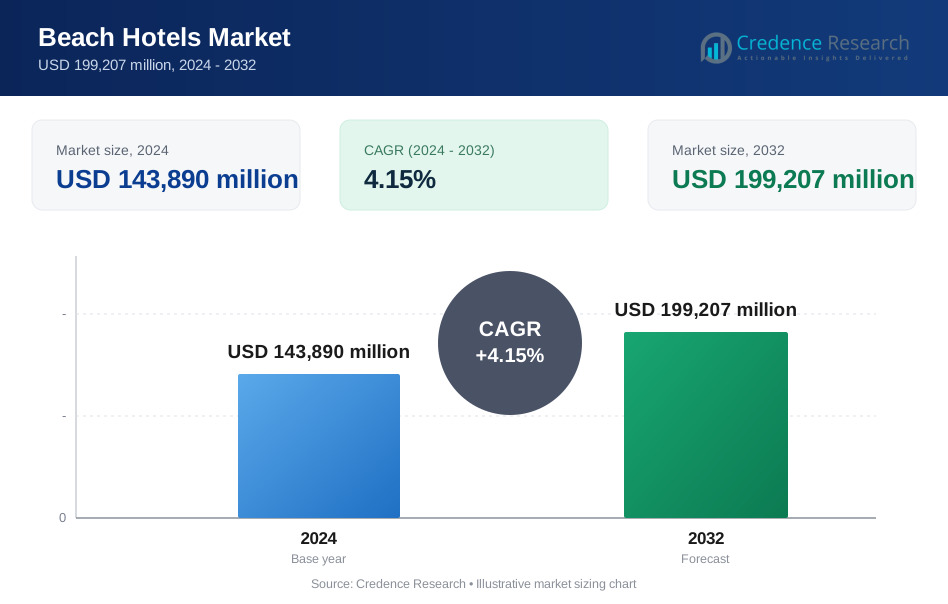
Beach Hotels Market size was valued at USD 143890 million in 2024 and is anticipated to reach USD 199207 million by 2032, at a CAGR of 4.15% during the forecast period (2024-2032).
Key factors propelling the market include the resurgence of global travel post-pandemic and an increasing preference for experiential and wellness tourism. Travelers are prioritizing beachfront destinations that offer immersive experiences such as water sports, spa services, and local cultural interactions. Additionally, the availability of customized travel packages, improvements in transportation infrastructure, and growing awareness of sustainable and eco-friendly accommodations are influencing traveler preferences. Luxury resorts and boutique hotels are also expanding their presence in emerging coastal regions, leveraging exclusive services and personalized hospitality to attract affluent tourists. The integration of digital booking platforms and contactless services has further streamlined customer engagement, enhancing convenience and boosting occupancy rates. Furthermore, collaborations between hotel chains and travel influencers are amplifying brand visibility and customer acquisition.
Regionally, North America holds a significant share of the global market, led by popular coastal destinations in the U.S., Mexico, and the Caribbean. Europe follows closely, with countries such as Spain, Greece, and Italy witnessing high tourist inflows to their beachside resorts. The Asia Pacific region is anticipated to register the fastest growth rate due to rising middle-class incomes, expanding domestic tourism, and the growing popularity of destinations like Thailand, Indonesia, and the Maldives. Investment in infrastructure and promotional campaigns by tourism boards is further supporting regional market growth. In addition, government initiatives to boost coastal tourism are facilitating new hotel developments and enhancing destination appeal.
Market Insights:
- The Beach Hotels Market was valued at USD 143,890 million in 2024 and is projected to reach USD 199,207 million by 2032, driven by growing leisure and wellness tourism.
- Rising global demand for immersive travel experiences, including water sports, spa treatments, and cultural activities, is boosting beach hotel bookings worldwide.
- Digital transformation through mobile apps, online travel agencies, and contactless services is streamlining booking processes and enhancing guest satisfaction.
- Sustainability is becoming a competitive differentiator, with travelers increasingly choosing eco-certified beach resorts that prioritize green operations.
- High operating costs and seasonal fluctuations continue to challenge profitability, especially for independent operators in less frequented coastal regions.
- North America leads the market with a 37% share, followed by Europe at 29%, driven by strong infrastructure and high tourist traffic to popular destinations.
- Asia Pacific is expected to witness the fastest growth, supported by rising middle-class incomes, domestic travel expansion, and growing popularity of destinations like Thailand and the Maldives.
Market Drivers:
Rising Demand for Leisure Travel and Lifestyle Shifts Fueling Market Expansion
The Beach Hotels Market benefits from a significant rise in leisure travel driven by growing disposable incomes, changing consumer preferences, and evolving lifestyles. Consumers are increasingly seeking relaxation-focused vacations that offer comfort and scenic value. Families, couples, and solo travelers are choosing beachfront destinations for short and long getaways. Urban stress and digital burnout are pushing travelers toward more tranquil and rejuvenating environments. The market aligns well with these trends by offering easy access to natural attractions and personalized experiences. It continues to grow as travel becomes more affordable and accessible globally.
Preference for Experiential and Wellness Tourism Enhancing Hotel Offerings
Experiential travel plays a crucial role in shaping demand across the Beach Hotels Market. Tourists are prioritizing immersive experiences, including cultural interactions, local cuisine, and adventure sports. Wellness-focused amenities like spa treatments, yoga sessions, and detox packages strengthen the value proposition of beachfront properties. It enables travelers to combine leisure with self-care and physical well-being. Hoteliers are actively redesigning their services to meet expectations for holistic and meaningful vacations. The trend supports long-stay bookings and strengthens customer loyalty.
- For instance, Tripadvisor’s 2024 Experience of Travel Study surveyed 5,618 travelers from countries including the U.S., UK, and India, and found that memorable trips are defined by lodging, dining, and activities, with travelers consistently seeking experiences that integrate these elements.
Digital Platforms and Contactless Services Streamlining Customer Experience
The Beach Hotels Market is undergoing rapid digital transformation through the adoption of online booking platforms, mobile apps, and automated guest services. Customers expect seamless reservation systems, virtual room tours, and instant confirmations. It reduces friction in the planning process and increases convenience for travelers. Contactless check-in, smart room access, and integrated payment options are becoming standard features. These tools enhance operational efficiency for hotels while improving guest satisfaction. The shift supports market growth through better engagement and retention.
Sustainable Tourism and Eco-Conscious Consumer Choices Supporting Market Growth
Growing environmental awareness is reshaping traveler behavior across the Beach Hotels Market. Consumers are showing strong preferences for eco-friendly hotels that implement water conservation, renewable energy use, and zero-plastic policies. It encourages resorts to adopt green certifications and sustainable construction practices. Travelers now consider environmental impact when choosing accommodations. Sustainability initiatives also appeal to international tourists who follow ethical travel practices. The market responds by investing in responsible operations and community-focused development.
- For instance, Pikaia Lodge in the Galapagos employs an advanced water conservation system that saves approximately 2 million gallons of water annually, demonstrating a tangible commitment to environmental stewardship while offering luxury accommodations.
Market Trends:
Integration of Technology and Personalization Enhancing Guest Engagement
Technology adoption is redefining service standards across the Beach Hotels Market. Hotels are investing in AI-driven concierge systems, smart room automation, and personalized guest recommendations to improve user satisfaction. It enables real-time responses to customer preferences and supports tailored experiences. Many properties use data analytics to refine offerings, optimize pricing, and predict guest behavior. Voice-enabled services and mobile room controls are becoming common in upscale beachfront resorts. Personalization extends beyond amenities to curated excursions, customized menus, and wellness packages, creating a differentiated competitive edge. The trend aligns with shifting consumer expectations for convenience and meaningful interaction.
- For instance, Marriott’s Renaissance Hotels launched the RENAI AI-powered virtual concierge, which provides guests with personalized local recommendations and experiences at three U.S. properties, with plans to expand to over 20 hotels globally by March 2024.
Expansion of Luxury and Boutique Segments in Emerging Coastal Destinations
The Beach Hotels Market is witnessing strong growth in luxury and boutique segments, particularly in emerging coastal regions. Travelers are seeking unique, high-end experiences over standardized offerings. It has led to a surge in premium resorts that emphasize exclusivity, design, and experiential value. Boutique hotels focus on local architecture, artisanal décor, and region-specific experiences to attract culturally inclined tourists. Investment in remote yet accessible beachfront locations is increasing, supported by better infrastructure and regional tourism initiatives. The focus on privacy, sustainability, and authenticity sets these hotels apart in a competitive market. This shift caters to a growing demographic of affluent and discerning travelers.
- For instance, Aman Group secured a $900 million investment from the Public Investment Fund and Cain International to accelerate its global expansion of ultra-luxury hotels and branded residences.
Market Challenges Analysis:
High Operational Costs and Seasonal Dependency Impacting Profit Margins
The Beach Hotels Market faces significant challenges related to high operational costs and seasonal revenue fluctuations. Maintaining beachfront properties requires ongoing investments in infrastructure, maintenance, and staffing. It places financial pressure on hotel operators, especially during off-peak seasons. Many coastal regions experience sharp variations in tourist inflow, leading to inconsistent occupancy rates. Hotels must balance staffing levels and resource allocation to avoid excess costs during low demand. This seasonal dependency limits long-term financial planning and deters new entrants from smaller investment backgrounds.
Environmental Risks and Regulatory Constraints Limiting Expansion
The Beach Hotels Market must navigate increasing environmental threats and tightening regulations. Coastal erosion, rising sea levels, and extreme weather events pose physical risks to hotel infrastructure. It forces operators to adopt protective measures that add to capital expenditure. Regulatory bodies in many regions enforce strict construction and sustainability codes, slowing down expansion projects. Hotels located in ecologically sensitive zones face restrictions on land use and operations. Compliance with environmental standards can delay openings and increase operational complexity for both new and existing properties.
- For instance, in Miami, the U.S. Army Corps of Engineers initiated a beach renourishment project with a contract of USD 40.4 million to restore four severely eroded shoreline sections, aiming to reduce environmental and infrastructural damage and support continued tourism activity.
Market Opportunities:
Expansion into Underserved Coastal Regions Unlocking Growth Potential
The Beach Hotels Market holds strong potential in underserved and emerging coastal destinations. Many regions in Africa, Southeast Asia, and Latin America remain underdeveloped despite offering scenic coastlines and cultural appeal. It presents opportunities for hotel chains and independent operators to establish a first-mover advantage. Government incentives and public-private partnerships in tourism development are supporting infrastructure and accessibility. Early investment in these areas can capture rising demand from domestic and international travelers. New developments can integrate sustainability from the start, appealing to eco-conscious tourists.
Rising Demand for Thematic and Wellness-Focused Experiences Driving Innovation
The Beach Hotels Market can leverage rising interest in wellness, retreat-style tourism, and thematic travel. Consumers are seeking stays that incorporate yoga retreats, mindfulness programs, culinary tourism, and eco-adventure packages. It creates scope for differentiated offerings that go beyond traditional resort models. Hotels that curate unique lifestyle experiences can capture niche segments and extend average stay durations. Collaborations with local wellness experts, chefs, and cultural curators help enhance authenticity. This trend opens new revenue streams and strengthens customer loyalty in competitive markets.
Market Segmentation Analysis:
By Age
By age, the Beach Hotels Market serves a wide range of travelers, with the 25–44 age group generating the highest demand. This segment includes young professionals, couples, and young families who seek memorable experiences and modern amenities. The 45–64 age group prefers premium accommodations, wellness services, and peaceful environments. Seniors aged 65 and above contribute through extended leisure travel and organized group tours. It addresses age-specific needs through varied offerings, from vibrant beachfront resorts to serene wellness retreats. Each age group shapes service design and destination preferences.
By Demographic
By demographic, couples and families account for the majority of bookings in the Beach Hotels Market. Hotels provide family-friendly features, romantic packages, and tailored excursions to meet their expectations. Solo travelers look for safety, affordability, and local interaction, prompting hotels to offer curated experiences and flexible bookings. Group travelers, including friends and corporate teams, prefer beachfront properties for shared leisure and social bonding. It enables hotels to diversify offerings and maintain steady occupancy across travel purposes.
- For instance, the Hilton Sandestin Golf Resort & Spa in Florida hosted 52 group bookings in a single month, demonstrating the appeal of beach hotels for group travel experiences.
By Nationality
By nationality, international tourists dominate demand in top-tier destinations across North America, Europe, and Southeast Asia. These travelers influence service standards, language support, and cultural sensitivity. Domestic tourists are gaining significance in supporting occupancy during off-peak seasons and regional holidays. It helps stabilize demand and drives investment in local infrastructure. National travel campaigns and improved accessibility continue to support growth in both segments.
- For instance, Thailand launched more than 50 marketing campaigns targeting Indian travelers over the past decade, contributing to Bangkok overtaking Dubai as the top city destination for Indian tourists in 2024.
Segmentations:
By Age
- 18–24 Years
- 25–34 Years
- 35–44 Years
- 45–54 Years
- 55–64 Years
- 65+ Years
By Demographic
- Couples
- Families
- Solo Travelers
- Group Travelers
- Business Travelers
By Nationality
- Domestic Tourists
- International Tourists
By Booking Channel
- Online Travel Agencies (OTAs)
- Direct Hotel Websites
- Travel Agents
- Corporate Booking Platforms
- Mobile Applications
By Region
- North America
- U.S.
- Canada
- Mexico
- Europe
- Germany
- France
- U.K.
- Italy
- Spain
- Rest of Europe
- Asia Pacific
- China
- Japan
- India
- South Korea
- South-east Asia
- Rest of Asia Pacific
- Latin America
- Brazil
- Argentina
- Rest of Latin America
- Middle East & Africa
- GCC Countries
- South Africa
- Rest of the Middle East and Africa
Regional Analysis:
North America Maintains Market Leadership with Established Coastal Infrastructure
North America held 37% of the global Beach Hotels Market in 2024, making it the leading regional segment. The United States, Mexico, and the Caribbean collectively dominate bookings due to strong infrastructure and consistent tourist inflow. The region benefits from high consumer spending on leisure, supported by stable economic conditions and robust airline connectivity. It attracts both domestic and international tourists, particularly to destinations like Florida, California, and Cancun. Resorts emphasize entertainment, luxury amenities, and family packages, maintaining strong brand loyalty. The presence of major global hotel chains and resort groups supports high service standards and continued investment.
Europe Remains a Key Market with Strong Demand for Cultural and Coastal Blends
Europe accounted for 29% of the Beach Hotels Market in 2024, securing the second-largest regional position. Spain, Greece, Italy, and Portugal continue to attract consistent tourist volumes to their well-established coastal destinations. It thrives on a blend of beach tourism and rich cultural experiences, with many resorts offering localized cuisine, heritage tours, and wellness programs. High regional mobility and short-haul travel within EU countries support steady year-round demand. Boutique hotels and eco-friendly resorts are growing in popularity, appealing to both luxury and budget travelers. Seasonal festivals and culinary events help drive repeat visitation and enhance regional competitiveness.
Asia Pacific Registers Fastest Growth with Expanding Middle-Class Tourism
Asia Pacific captured 22% of the global Beach Hotels Market in 2024 and is projected to gain a larger share through the forecast period. Thailand, Indonesia, Vietnam, and the Maldives are key contributors to this growth, fueled by increasing disposable incomes and improved access to air travel. It benefits from growing domestic tourism alongside a surge in international interest in tropical and experiential travel. Regional governments are actively investing in tourism promotion, safety, and coastal infrastructure. Hotels in the region are adopting wellness, eco-tourism, and cultural integration strategies to attract diverse visitor segments. Expanding online travel platforms also support regional visibility and accessibility.
Key Player Analysis:
- Dorchester Collection
- InterContinental Hotels Group PLC
- IHG (InterContinental Hotels Group)
- Wyndham Hotels Resorts
- Hyatt Hotels Corporation
- Rocco Forte Hotels
- Belmond Ltd.
- Best Western Hotels Resorts
- Accor SA
- Four Seasons Hotels and Resorts
- Kempinski Hotels
- Hilton Worldwide Holdings Inc.
Competitive Analysis:
The Beach Hotels Market features intense competition among global hotel chains, regional resort operators, and independent boutique properties. Major players such as Marriott International, Hilton Worldwide, Hyatt Hotels, and InterContinental Hotels Group lead through brand recognition, scale, and loyalty programs. It sees strong participation from regional brands that leverage location-specific experiences and cultural integration. Independent hotels compete by offering personalized services, unique designs, and flexible pricing. Operators invest in digital platforms, sustainability initiatives, and wellness-focused amenities to differentiate their offerings. The rise of online travel agencies has increased visibility for smaller players, creating a more level competitive field. Price sensitivity, guest experience, and brand reputation remain key competitive factors across segments. Strategic partnerships with airlines, tourism boards, and booking platforms further strengthen market positioning. The competition continues to intensify as travelers demand authentic, immersive, and convenient beachfront experiences.
Recent Developments:
- In October 2024, Wyndham announced a 10-year development partnership with Reside, expanding its upscale extended stay offerings in the U.S. and debuting the Wyndham Residences tier domestically.
- In June 2025, Wyndham launched a new global ad campaign, "Where There's a Wyndham, There's a Way," uniting all 25 brands and its rewards program under a single tagline
- In April 2025, The Dorchester (London) announced an exclusive partnership with French lifestyle brand Atelier Choux, launching a curated family experience and retail collection on April 14, 2025.
Market Concentration & Characteristics:
The Beach Hotels Market shows moderate concentration, with a mix of global hotel chains and a large number of regional and independent operators. It is highly fragmented in developing regions, where local hotels dominate coastal areas with competitive pricing and localized services. In mature markets, international brands hold a significant share due to their global reach, brand loyalty, and standardization of quality. It features low entry barriers in some regions, encouraging new entrants and boutique developments. Seasonal demand, destination popularity, and tourism policies influence market dynamics. The market is service-driven, experience-focused, and sensitive to customer satisfaction, making reputation and guest reviews critical to long-term success.
Report Coverage:
The research report offers an in-depth analysis based on Age, Demographic, Nationality, Booking Channel and Region. It details leading market players, providing an overview of their business, product offerings, investments, revenue streams, and key applications. Additionally, the report includes insights into the competitive environment, SWOT analysis, current market trends, as well as the primary drivers and constraints. Furthermore, it discusses various factors that have driven market expansion in recent years. The report also explores market dynamics, regulatory scenarios, and technological advancements that are shaping the industry. It assesses the impact of external factors and global economic changes on market growth. Lastly, it provides strategic recommendations for new entrants and established companies to navigate the complexities of the market.
Future Outlook:
- The Beach Hotels Market will accelerate investment in digital experiences, including mobile check-in, AI-based recommendations, and virtual concierge services.
- It will expand wellness and holistic offerings such as yoga resorts, meditation retreats, detox programs, and therapeutic spa packages.
- The market will embrace sustainable construction, renewable energy integration, and waste-reduction initiatives to meet eco-conscious traveler expectations.
- It will explore opportunities in emerging coastal regions, targeting untapped destinations with growing tourism infrastructure.
- The market will capitalize on hybrid travel trends by combining beachfront stays with work-from-hotel options, targeting remote professionals.
- It will deepen partnerships with airlines, cruise lines, and tour operators, creating seamless package experiences and boost cross-promotional campaigns.
- The market will innovate themed stays, including adventure travel, culinary tours, cultural immersion, and family-oriented experiences.
- It will leverage data analytics to personalize pricing, anticipate guest behavior, and optimize operational efficiency.
- The market will strengthen direct-to-consumer strategies, including loyalty programs and exclusive rates via hotel websites and mobile apps.
- It will increasingly prioritize resilience planning by incorporating climate risk mitigation, flood defenses, and emergency response protocols.
Request a Free Sample
Fill in your details and we'll send you a free sample report.
- Sample data tables & charts
- Research methodology
Need a Custom Version of This Report?
Tailor the scope, geography, or segments to your exact requirements.
- Custom geography or segment scope
- Direct access to our analyst team
Frequently Asked Questions
What is the current size of the Beach Hotels Market?
What are the key segments within the Beach Hotels Market?
What are some challenges faced by the Beach Hotels Market?
Which regions are leading the Beach Hotels Market?
Table of Content
Chapter 1. Report Introduction
- 1.1 Report Description & Purpose
- 1.1.1 Report Title & Market Definition
- 1.1.2 Unique Selling Propositions (USP) & Key Differentiators
- 1.1.3 Value Proposition for Stakeholders
- 1.2 Research Objectives
- 1.2.1 Market Sizing Objectives (Volume & Revenue)
- 1.2.2 Segmentation Objectives
- 1.2.3 Competitive Intelligence Objectives
- 1.2.4 Forecast & Scenario Objectives
- 1.3 Report Scope
- 1.3.1 Beach Hotels Scope – Types & Subtypes Covered
- 1.3.2 Geographic Scope – Regions & Countries Covered
- 1.3.3 Historical Period, Base Year & Forecast Period (2024; forecast to 2032)
- 1.3.4 Inclusions & Exclusions
- 1.4 HS Code & Classification Framework
- 1.5 Currency, Units & Pricing Basis
- 1.6 Target Stakeholders
- 1.7 Limitations & Assumptions
Chapter 2. Executive Summary
- 2.1 Global Beach Hotels Market Snapshot
- 2.1.1 Market Size – Historical (2024) & Forecast (2024-2032) (2024: USD 143,890 million → 2032: USD 199,207 million)
- 2.1.2 Volume & Revenue – Global Totals
- 2.1.3 Key Market Highlights – Top Five Facts
- 2.2 Beach Hotels Market Segmentation Snapshot
- 2.2.1 Market Split by Region – 2024 vs. 2032
- 2.3 Competitive Snapshot
- 2.3.1 Top 10 Players by Revenue Share – 2024
- 2.3.2 Top 10 Players by Volume Share – 2024
- 2.3.3 Recent Strategic Developments (18-Month Summary)
- 2.4 Key Investment Highlights & Strategic Conclusions
Chapter 3. Beach Hotels Market Dynamics & Industry Analysis
- 3.1 Market Overview & Context
- 3.1.1 Beach Hotels Market Position in the Broader Automotive Value Chain
- 3.1.2 OEM vs. Replacement Market Dynamics
- 3.1.3 Market Maturity & Development Stage by Region
- 3.2 Beach Hotels Market Drivers
- 3.3 Beach Hotels Market Restraints & Challenges
- 3.4 Beach Hotels Market Opportunities
- 3.5 Porter's Five Forces Analysis
- 3.5.1 Threat of New Entrants
- 3.5.2 Bargaining Power of Suppliers
- 3.5.3 Bargaining Power of Buyers
- 3.5.4 Threat of Substitutes
- 3.5.5 Competitive Rivalry – Intensity Assessment
- 3.6 Beach Hotels Value Chain Analysis
- 3.6.1 Upstream – Raw Material/Input Suppliers
- 3.6.1.1 Raw Material/Input 1
- 3.6.1.2 Raw Material/Input 2
- 3.6.1.3 Raw Material/Input 3
- 3.6.2 Midstream – Production/Manufacturing/Service Delivery
- 3.6.2.1 Production/Process Overview
- 3.6.2.2 Key Facility Locations & Capacity by Manufacturer
- 3.6.3 Downstream – Distribution & End Consumer
- 3.6.3.1 Primary Channel – B2B/OEM
- 3.6.3.2 Secondary Channels – Dealer, Retail, Online, Direct
- 3.6.4 Value Chain Profitability Analysis
- 3.6.1 Upstream – Raw Material/Input Suppliers
- 3.7 PESTEL Analysis
- 3.7.1 Political Factors
- 3.7.2 Economic Factors
- 3.7.3 Social Factors
- 3.7.4 Technological Factors
- 3.7.5 Environmental Factors
- 3.7.6 Legal Factors
- 3.8 Beach Hotels Supply Chain Analysis
- 3.8.1 Raw Material/Input Supply Risk Assessment
- 3.8.2 Manufacturing Concentration Risk (Geographic Exposure)
- 3.8.3 Trade Disruption Impact Analysis
- 3.9 Regulatory & Policy Landscape
Note: The regulatory and policy landscape section covers regulations based on their applicability to the market, Beach Hotels category, geography, and scope of the study. Only regulatory frameworks with a material impact on operations, compliance, trade, sustainability, or market access are analyzed in detail.
Chapter 4. Key Investment Pockets & Opportunity Analysis
- 4.1 Beach Hotels Market Attractiveness Analysis
- 4.1.1 By Region – Investment Attractiveness Matrix (Volume × CAGR)
- 4.2 Absolute Revenue Growth Opportunity
- 4.2.1 By Region – Absolute USD Growth Through 2032
- 4.3 Incremental Volume Opportunity
- 4.3.1 By Region – Incremental Volume Through 2032
- 4.3.2 Segment – Incremental Volume
- 4.4 Emerging Submarket Opportunity Deep Dive (Subject to Applicability)
- 4.5 Emerging Market Opportunity Scorecards
- 4.5.1 United States
- 4.5.2 Europe
- 4.5.3 Asia
- 4.5.4 Middle East & Africa
Note: Emerging Market Opportunity Scorecards will be included based on relevance and strategic importance. Regions listed are indicative and may vary depending on data availability and market dynamics.
Chapter 5. Beach Hotels Import-Export Analysis & Trade Flows
- 5.1 Global Trade Overview
- 5.1.1 Global Export Value by Country (2024)
- 5.1.2 Global Export Volume by Country (2024)
- 5.1.3 Global Import Value by Country (2024)
- 5.1.4 Global Import Volume by Country (2024)
- 5.1.5 Net Trade Balance by Country (2024)
- 5.2 Export Analysis – Segment
- 5.2.1 Type 1 (HS Code)
- 5.2.2 Type 2 (HS Code)
- 5.2.3 Type 3 (HS Code)
- 5.2.4 Type 4 (HS Code)
- 5.2.5 Type 5 (HS Code)
- 5.3 Import Analysis – Segment
- 5.3.1 Type 1 (HS Code)
- 5.3.2 Type 2 (HS Code)
- 5.3.3 Type 3 (HS Code)
- 5.3.4 Type 4 (HS Code)
- 5.3.5 Type 5 (HS Code)
- 5.4 Average Unit Trade Prices
- 5.4.1 Average Export Price – Segment & Country
- 5.4.2 Average Import Price – Segment & Source Country
- 5.4.3 Price Trends (2024)
- 5.5 Key Trade Route Analysis
- 5.5.1 Trade Route 1
- 5.5.2 Trade Route 2
- 5.5.3 Trade Route 3
- 5.5.4 Trade Route 4
- 5.5.5 Trade Route 5
- 5.6 Trade Policy Impact Assessment
- 5.6.1 US Anti-Dumping & Section 301 Tariffs
- 5.6.2 EU Customs Union Impact
- 5.6.3 Major Free Trade Agreements
- 5.6.4 USMCA Rules of Origin
Note: Trade policy analysis will be included only where relevant to the Beach Hotels market.
Chapter 6. Competitive Landscape & Company Benchmarking
- 6.1 Beach Hotels Market Concentration & Structure
- 6.1.1 Herfindahl-Hirschman Index (HHI) – vs. 2024
- 6.1.2 Tier 1, Tier 2 & Tier 3 Market Structure
- 6.1.3 Global, Regional & Local Player Dynamics
- 6.2 Beach Hotels Market Share Analysis – 2024
- 6.2.1 Global Revenue Share by Company
- 6.2.2 Global Volume Share by Company
- 6.2.3 Regional Revenue Share
- 6.2.4 Market Share Evolution ( vs. 2024)
- 6.2.5 OEM Segment Share by Company
- 6.2.6 Replacement Segment Share by Company
- 6.3 Production/Delivery Capacity & Facility Analysis
- 6.3.1 Global Installed Capacity
- 6.3.2 Capacity Utilization Rates
- 6.3.3 Production/Output Volume
- 6.3.4 Facility Locations & Capacity Map
- 6.3.5 Planned Capacity Additions
- 6.4 Beach Hotels Competitive Benchmarking Matrix
- 6.4.1 Revenue, Volume, CAGR & Profitability Comparison
- 6.4.2 Channel Revenue Mix
- 6.4.3 Geographic Revenue Exposure
- 6.4.4 R&D Intensity
- 6.4.5 Sustainability Maturity
- 6.5 Strategic Developments in Beach Hotels (Last 24 Months)
- 6.5.1 Mergers, Acquisitions & Divestments
- 6.5.2 New Beach Hotels Launches
- 6.5.3 Facility Expansions
- 6.5.4 Strategic Alliances, Joint Ventures & Partnerships
- 6.5.5 Distribution Expansion & Market Entry
- 6.5.6 Sustainability & ESG Initiatives
- 6.6 Competitive Strategy Mapping
- 6.6.1 Leader, Challenger, Follower & Niche Classification
- 6.6.2 Pricing Strategy Comparison
- 6.6.3 Channel Strategy Matrix
Note: Strategic developments are included based on their materiality and the availability of reliable information.
Chapter 7. Global Beach Hotels Market – By Distribution Channel
- 7.1 Segment Overview
- 7.1.1 Volume & Revenue Split by Channel (2024 & 2032)
- 7.1.2 Channel Mix Evolution (2024-2032)
Chapter 8. Regional Market Analysis – Global Overview
- 8.1 Global Regional Overview
- 8.1.1 Regional Volume Share
- 8.1.2 Regional Revenue Share
- 8.1.3 Regional Volume by Region
- 8.1.4 Regional Revenue by Region
- 8.1.5 Regional Forecast Through 2032
- 8.2 Cross-Regional Segment Analysis
- 8.2.1 By Distribution Channel
- 8.2.2 By Brand/Price Tier
Chapter 9. North America Beach Hotels Market
- 9.1 United States
- 9.2 Canada
- 9.3 Mexico
Chapter 10. Europe Beach Hotels Market
- 10.1 Germany
- 10.2 France
- 10.3 Italy
- 10.4 United Kingdom
- 10.5 Spain
- 10.6 Poland
- 10.7 Russia
- 10.8 Netherlands
- 10.9 Belgium
- 10.10 Sweden
- 10.11 Denmark
- 10.12 Norway
- 10.13 Rest of Europe
Chapter 11. Asia Pacific Beach Hotels Market
- 11.1 China
- 11.2 India
- 11.3 Japan
- 11.4 South Korea
- 11.5 Thailand
- 11.6 Indonesia
- 11.7 Vietnam
- 11.8 Malaysia
- 11.9 Australia
- 11.10 Rest of Asia Pacific
Chapter 12. Latin America Beach Hotels Market
- 12.1 Brazil
- 12.2 Argentina
- 12.3 Colombia
- 12.4 Chile
- 12.5 Rest of Latin America
Chapter 13. Middle East Beach Hotels Market
- 13.1 Saudi Arabia
- 13.2 United Arab Emirates
- 13.3 Turkey
- 13.4 Israel
- 13.5 Iran
- 13.6 Rest of the Middle East
Chapter 14. Africa Beach Hotels Market
- 14.1 South Africa
- 14.2 Egypt
- 14.3 Nigeria
- 14.4 Morocco
- 14.5 Rest of Africa
Chapter 15. Beach Hotels Company Profiles
- 15.1 [Company 01]
- 15.1.1 Company Overview
- 15.1.2 Key Management Personnel
- 15.1.3 Products & Services Portfolio
- 15.1.4 Financial Performance
- 15.1.5 Key Market Focus & Geographic Presence
- 15.1.6 Recent Developments & Strategic Initiatives
Note: The company profile list is preliminary and may change based on research findings, market developments, data availability, and client requirements.
Chapter 16. Appendices
- Appendix A – List of Abbreviations & Acronyms
- Appendix B – Industry Classification Code Reference – Full Series
- Appendix C – Production & Capacity Data Tables
- Appendix D – End-Use & Demand Base Tables
- Appendix E – Consumption & Replacement Rate Assumptions
- Appendix F – ASP Reference Tables
- Appendix G – Manufacturing & Facility Database
- Appendix H – Import-Export Data Tables
- Appendix I – Regulatory Summary Tables
- Appendix J – Primary Research Participant List (Anonymized)
- Appendix K – Primary Research Questionnaire Framework
- Appendix L – Data Sources & Bibliography
- Appendix M – Market Size Divergence & Source Comparison
Chapter 17. Research Methodology
- 17.1 Research Framework & Philosophy
- 17.2 Secondary Research – Sources, Hierarchy & Data Extraction
- 17.3 Data Modeling – Bottom-Up & Top-Down Market Sizing
- 17.4 Primary Research – Stakeholder Framework, LOI & Sample Sizes
- 17.5 Forecast Methodology – Regression, Scenario & Sensitivity Analysis
- 17.6 Quality Control – Four-Layer Validation Framework
- 17.7 Limitations & Standard Assumptions
- 17.8 Disclaimer
