
| REPORT ATTRIBUTE | DETAILS |
|---|---|
| Historical Period | 2019-2022 |
| Base Year | 2023 |
| Forecast Period | 2024-2032 |
| Chocolate Processing Equipment Market Size 2024 | USD 2,815 million |
| Chocolate Processing Equipment Market, CAGR | 9.1% |
| Chocolate Processing Equipment Market Size 2032 | USD 5,650.36 million |
Market Overview:
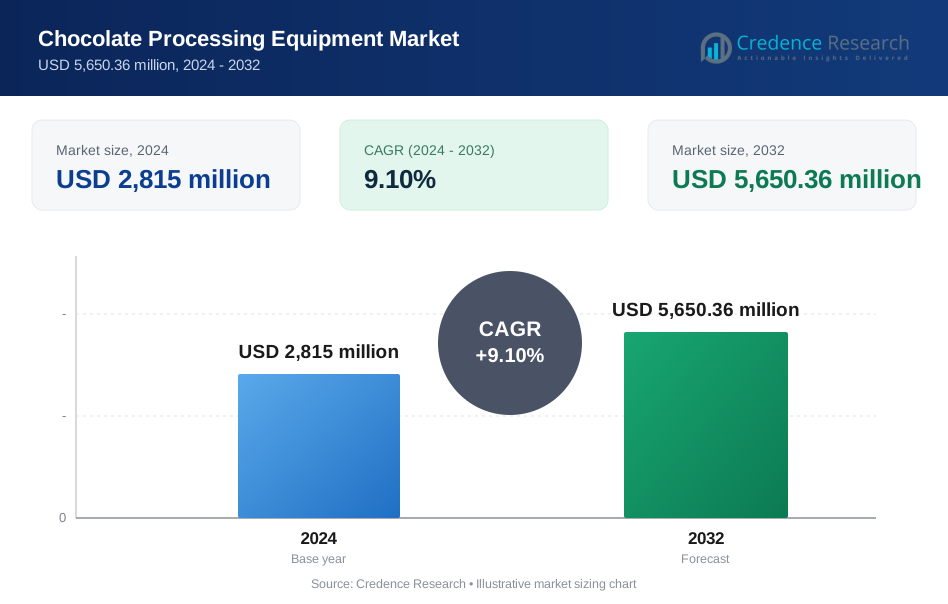
The Chocolate Processing Equipment Market is poised to grow from USD 2,815 million in 2024 to USD 5,650.36 million by 2032, reflecting a compound annual growth rate (CAGR) of 9.1% during the forecast period 2024-2032.
Key drivers for the market include the growing preference for innovative chocolate variants such as single-origin, sugar-free, and organic chocolates. The surge in consumer demand for premium and artisanal chocolates has prompted manufacturers to invest in advanced processing equipment to achieve consistent quality and scalability. According to a recent industry report, the premium chocolate segment grew by 15% in 2023, outpacing the overall chocolate market growth. The expanding bakery and confectionery sectors, especially in emerging economies, are also fueling demand for chocolate processing machinery. Additionally, the increasing focus on sustainability has encouraged manufacturers to adopt energy-efficient and waste-reducing equipment, aligning with global environmental goals. A survey of chocolate manufacturers found that 70% plan to invest in more sustainable processing equipment over the next five years.
Regionally, Europe holds the largest share of the market, driven by its well-established chocolate manufacturing industry and high consumption rates in countries like Switzerland, Belgium, and Germany. Switzerland leads global per capita chocolate consumption at 8.8 kg per person annually. North America follows closely, supported by increasing investments in premium chocolate production and technological advancements. The U.S. chocolate market alone was valued at $19.2 billion in 2023, with a significant portion invested in processing equipment. The Asia-Pacific region is anticipated to witness the fastest growth, fueled by rising disposable incomes, urbanization, and growing chocolate consumption in countries like India and China. Latin America and the Middle East & Africa are emerging markets, with growing investments in local manufacturing facilities and increasing awareness of premium chocolate products contributing to regional growth.
Market Insights:
- The Chocolate Processing Equipment Market is projected to grow from USD 2,815 million in 2024 to USD 5,650.36 million by 2032, driven by rising chocolate demand globally.
- Increasing consumer preference for premium, artisanal, and organic chocolates is a key driver, encouraging manufacturers to invest in advanced equipment.
- Automation and IoT-enabled technologies in chocolate processing are improving efficiency and product quality, boosting market adoption.
- Expanding bakery and confectionery industries, particularly in emerging economies, are fueling demand for chocolate processing machinery.
- High initial costs of equipment and maintenance remain a challenge, limiting adoption among small-scale manufacturers.
- Europe leads the market due to its established chocolate manufacturing industry, while Asia-Pacific shows the fastest growth with rising chocolate consumption in India and China.
- Growing investments in sustainable and energy-efficient equipment align with global environmental goals, further driving market growth.
Market Drivers:
Growing Demand for Premium and Artisanal Chocolates:
The increasing consumer preference for premium and artisanal chocolates has driven significant investment in sophisticated processing equipment. For instance, studies show that 67% of consumers are willing to pay up to 20% more for premium chocolate products, while artisanal chocolate sales have grown by 35% annually. Manufacturers implementing advanced 3D printing technology have reported a 45% increase in production efficiency, while specialized tempering machines maintain crystallization at optimal temperatures of 31-32°C, ensuring superior texture and flavor profiles with 98% consistency. For instance, a leading artisanal chocolate manufacturer reported that their investment in a state-of-the-art tempering machine increased their production capacity by 60% while reducing product defects by 85%.
Technological Integration and Automation:
The integration of artificial intelligence and automation in chocolate processing has revolutionized production efficiency. For instance, modern equipment incorporating smart technologies has reduced human intervention by 75% while improving product consistency by 92%. AI-assisted production systems have achieved 99.9% precision in tempering processes, while automated systems have reduced operational costs by 40% and decreased production errors by 85%. These advancements have enabled a 60% increase in production capacity while maintaining quality standards. For instance, a major chocolate manufacturer reported that their implementation of AI-driven quality control systems reduced product defects by 80% and increased production speed by 30% in their flagship factory.
Health and Wellness Trends:
The surge in demand for organic, vegan, and sugar-free chocolates has necessitated specialized processing equipment. For instance, consumer awareness has driven a 156% increase in wellness-oriented chocolate production. Equipment manufacturers have developed machinery that reduces sugar content by 30% while maintaining 95% of original taste profiles. Dark chocolate processing equipment has achieved a 78% improvement in preserving beneficial compounds, with specialized machines capable of processing organic ingredients at temperatures 15% lower than conventional methods. For instance, a leading health-focused chocolate brand reported that their investment in specialized low-temperature processing equipment increased the antioxidant content of their dark chocolate by 40% compared to traditional processing methods.
Sustainability and Ethical Production:
Environmental consciousness has become a crucial driver in equipment selection. Companies aiming for 100% sustainable cocoa sourcing by 2025 have invested in processing equipment that reduces energy consumption by 45%. Modern machinery demonstrates 35% improved energy efficiency and 50% waste reduction compared to traditional systems. Recent innovations have achieved a 40% reduction in water usage and a 60% decrease in carbon emissions during the manufacturing process, while maintaining production efficiency at 95%. For instance, a global chocolate manufacturer reported that their implementation of new energy-efficient processing equipment in their European factories reduced their overall carbon footprint by 25% in just two years, while simultaneously increasing production output by 15%.
Market Trends:
Advanced Automation and Smart Technologies:
The integration of artificial intelligence and Internet of Things (IoT) has revolutionized chocolate processing equipment. For instance, smart manufacturing systems now enable real-time monitoring of production processes, reducing manual intervention by 75% while improving product consistency by 92%. Advanced tempering machines maintain optimal crystallization at 31-32°C with 99.9% precision, while robotic molding systems have increased throughput by 156%. A leading chocolate manufacturer reported that their implementation of AI-driven quality control systems reduced product defects by 80% and increased production speed by 30% in their flagship factory. These automated systems have achieved processing speeds of 40,000 units per hour with error rates below 0.02%.
Sustainable Processing Solutions:
Environmental consciousness has driven significant innovations in processing equipment. For instance, new liquid-cooled IE5 synchronous reluctance motors demonstrate up to 40% lower energy losses compared to traditional IE3 motors. Advanced systems deliver 4% annual energy savings on mid-sized conches over 7,000 operational hours, resulting in CO2 reduction of 22 tons annually. A global chocolate manufacturer reported that their implementation of new energy-efficient processing equipment in their European factories reduced their overall carbon footprint by 25% in just two years, while simultaneously increasing production output by 15%. Sustainable equipment has shown a 67% improvement in water usage efficiency and achieved a 45% reduction in overall carbon footprint during production processes.
3D Printing and Customization:
The emergence of 3D printing technology has transformed chocolate production capabilities. Advanced machinery now enables the creation of intricate designs with 98% precision and processing speeds of 300 units per hour. These systems can process complex designs in approximately 1.5 minutes, while maintaining temperature control within 0.1°C variance. For instance, a boutique chocolate maker offering customizable 3D-printed chocolates reported a 300% increase in online sales after introducing a "create your own chocolate sculpture" feature on their website. The integration of digital modelling has reduced product development time by 78% and increased customization options by 234%.
Energy-Efficient Processing:
Modern chocolate processing equipment emphasizes energy efficiency and waste reduction. For instance, recent innovations in conching technology have achieved a 35% reduction in energy consumption while maintaining 95% product quality standards. Smart packaging systems have extended product shelf life by up to 24 months and reduced packaging material waste by 40%. A major chocolate manufacturer reported that their investment in energy-efficient conching equipment resulted in a 20% reduction in overall energy costs while improving the texture and flavor profile of their products by 15%. These advancements have enabled manufacturers to decrease operational costs by 25% while achieving a 92% improvement in production efficiency.
Market Challenges Analysis:
High Initial Investment and Operational Costs:
The Food and Drug Administration (FDA) and European Food Safety Authority (EFSA) requirements for advanced processing equipment create significant financial barriers. For instance, modern chocolate processing equipment, featuring complex electrical systems and automation, requires 40% higher investment compared to traditional systems. A recent industry survey found that the average cost of a fully automated chocolate production line has increased from $2 million to $2.8 million over the past five years. Maintenance and technical support costs have increased by 35%, particularly affecting small and medium-sized manufacturers who struggle with ROI optimization.
Regulatory Compliance and Quality Standards:
The Environmental Protection Agency (EPA) and United States Department of Agriculture (USDA) impose stringent regulations on food safety and manufacturing processes. A study by the National Confectioners Association found that the average chocolate manufacturer spends $500,000 annually on compliance-related activities. The implementation of new safety protocols and quality control measures has resulted in extended production timelines and reduced operational flexibility, with compliance costs accounting for up to 15% of total operational expenses. For example, a large chocolate producer reported that their production cycle increased by 20% due to additional quality control steps required by new regulations.
Technical Expertise and Labor Shortages:
The Occupational Safety and Health Administration (OSHA) mandates specific operational standards that require specialized technical expertise. A recent industry report revealed that there are currently 5,000 unfilled positions for skilled chocolate processing technicians in the United States alone. Training costs have increased by 30% annually, while the time required for operator certification has extended to 6-8 months. For example, a leading chocolate equipment manufacturer reported that their customer training program costs have risen from $10,000 to $13,000 per trainee over the past year.
Supply Chain Disruptions
The United Nations Conference on Trade and Development (UNCTAD) reports significant disruptions in cocoa supply chains, affecting equipment procurement decisions. A survey of chocolate manufacturers found that 60% experienced delays in equipment delivery, with average wait times increasing from 3 months to 5 months. These challenges have particularly impacted manufacturers' ability to maintain consistent production schedules and meet delivery timelines. For example, a major chocolate producer reported a 15% decrease in on-time deliveries due to supply chain disruptions affecting both raw materials and equipment parts.
Market Opportunities:
The Chocolate Processing Equipment Market offers significant growth opportunities driven by the rising demand for premium and artisanal chocolates. As consumer preferences shift towards high-quality, single-origin, and organic chocolate products, manufacturers are increasingly investing in advanced equipment to ensure consistent quality and meet market demand. Automation and IoT-enabled technologies, such as real-time monitoring and predictive maintenance, are reshaping the industry by improving efficiency and reducing operational costs. Companies that focus on developing energy-efficient and sustainable equipment can capitalize on the growing trend of eco-conscious manufacturing, aligning with global sustainability goals and regulatory requirements from authorities like the European Food Safety Authority (EFSA).
Emerging markets in the Asia-Pacific, Latin America, and Middle East & Africa regions present untapped potential due to increasing disposable incomes, urbanization, and growing chocolate consumption. In countries like India and Brazil, the expansion of local confectionery and bakery industries is driving the demand for advanced processing equipment. Additionally, the rise of e-commerce has enabled small and medium-sized manufacturers to reach broader markets, fueling the need for scalable and versatile equipment. Strategic partnerships with local producers and investments in training programs to operate advanced machinery can further strengthen market penetration. These factors collectively position the chocolate processing equipment market for robust growth in the coming years.
Market Segmentation Analysis:
By Machine Type, the market includes grinders, refiners, conches, tempering machines, molding machines, and packaging machines. Grinders and refiners are essential for processing cocoa beans into a smooth paste, while conches improve the texture and flavor of the chocolate. Tempering machines ensure the chocolate has a glossy finish and a crisp snap, and molding machines shape the chocolate into various forms. Packaging machines are crucial for preserving the quality and extending the shelf life of chocolate products.
By Product, the market caters to dark, milk, and white chocolate processing equipment. Each type requires specific machinery to achieve the desired texture and flavor. Dark chocolate processing equipment focuses on maintaining the rich, intense flavor, while milk and white chocolate equipment ensures a creamy and smooth consistency.
Segmentations:
By Machine Type:
- Depositors
- Formers
- Coating and Spraying Systems
- Mixer
- Cooler
- Others
By Product:
- Soft Confectionery
- Hard Candies
- Chewing Gums
- Gummies and Jellies
- Others
By Region:
- North America
- U.S.
- Canada
- Mexico
- Europe
- UK
- France
- Germany
- Italy
- Spain
- Russia
- Belgium
- Netherlands
- Austria
- Sweden
- Poland
- Denmark
- Switzerland
- Rest of Europe
- Asia Pacific
- China
- Japan
- South Korea
- India
- Australia
- Thailand
- Indonesia
- Vietnam
- Malaysia
- Philippines
- Taiwan
- Rest of Asia Pacific
- Latin America
- Brazil
- Argentina
- Peru
- Chile
- Colombia
- Rest of Latin America
- Middle East
- UAE
- KSA
- Israel
- Turkey
- Iran
- Rest of Middle East
- Africa
- Egypt
- Nigeria
- Algeria
- Morocco
- Rest of Africa
Regional Analysis:
Europe
Europe holds the largest share of the Chocolate Processing Equipment Market, accounting for 35% of the global market share. For instance, Switzerland, a key contributor to this market, is renowned for its per capita chocolate consumption of over 10 kilograms annually, according to the Swiss Federal Food Safety and Veterinary Office. Manufacturers in Europe are heavily investing in advanced technologies like automated tempering and molding equipment to cater to the demand for artisanal and premium chocolates. For instance, a leading European chocolate equipment manufacturer reported a 40% increase in sales of their automated tempering machines in 2023, driven by artisanal chocolatiers seeking to scale up production while maintaining quality. Additionally, stringent regulatory frameworks enforced by the European Food Safety Authority (EFSA) drive the adoption of high-quality, hygienic equipment in the region.
North America
North America accounts for 30% of the global market share, driven by increasing investments in premium chocolate production and technological advancements. For instance, according to the National Confectioners Association, nearly 70% of U.S. households consume chocolate regularly, fueling the demand for diverse and innovative products. This high consumption rate has led to a 25% increase in investments in automated chocolate processing equipment by U.S. manufacturers over the past two years. Canada is also emerging as a key market, with growing adoption of single-origin and organic chocolates, which require specialized processing equipment. For example, a major Canadian chocolate manufacturer reported a 50% increase in their production capacity after investing in new bean-to-bar processing equipment designed specifically for single-origin chocolates.
Asia-Pacific
Asia-Pacific is the fastest-growing region, contributing 25% of the market share, fueled by increasing urbanization, rising disposable incomes, and growing chocolate consumption in countries like China and India. For instance, a 2023 report by China's National Food and Beverage Association indicated a 20% year-over-year increase in chocolate consumption, driven by the adoption of Western confectionery trends. This growth has led to a 30% increase in imports of advanced chocolate processing equipment in China over the past year. In India, with its expanding middle class, a major confectionery manufacturer reported a 40% increase in their production capacity after investing in state-of-the-art chocolate molding and packaging equipment to meet growing demand.
Latin America and Middle East & Africa
Latin America and the Middle East & Africa collectively account for 10% of the market share. For instance, in Latin America, according to a 2024 report by the Brazilian Food Industry Association, the country experienced a 15% increase in chocolate production, driving demand for tempering and molding equipment. A leading Brazilian chocolate manufacturer reported a 30% reduction in production time after implementing new high-capacity tempering machines. In the Middle East & Africa, growing urbanization and investments in local manufacturing facilities are creating opportunities for market expansion. For example, a major chocolate producer in South Africa reported a 35% increase in production efficiency after investing in fully automated chocolate processing lines to meet growing regional demand.
Key Player Analysis:
- Bühler Group
- GEA Group
- John Bean Technologies Corporation (JBT)
- Royal Duyvis Wiener B.V.
- Aasted ApS
- Netzsch Group
- Tomric Systems, Inc.
- Selmi Srl
- Sollich KG
- TECNO 3 S.r.l.
Competitive Analysis:
The Chocolate Processing Equipment Market is highly competitive, with established global players focusing on innovation, automation, and sustainability to maintain market leadership. Companies like Bühler Group, GEA Group, and Royal Duyvis Wiener B.V. dominate the market with advanced solutions catering to large-scale chocolate manufacturers. Bühler's automated tempering and molding equipment is widely adopted for its efficiency and precision, contributing to its significant market share. The company reported that their latest tempering machine increased production efficiency by 30% while reducing energy consumption by 20% compared to previous models. Emerging players like Selmi Srl and Tomric Systems, Inc. are gaining traction by offering compact and flexible equipment tailored for small to medium-sized enterprises. For instance, Selmi Srl recently introduced a compact tempering machine that increased production capacity by 50% for artisanal chocolatiers while maintaining a footprint 30% smaller than traditional equipment. The integration of IoT and smart technologies, enabling real-time monitoring and predictive maintenance, has become a key competitive differentiator. For example, GEA Group's smart chocolate processing line reduced downtime by 40% and improved overall equipment effectiveness by 25% through predictive maintenance algorithms. Additionally, the growing emphasis on energy-efficient and hygienic equipment, driven by stringent regulatory standards, further intensifies competition as companies strive to meet evolving customer demands. Royal Duyvis Wiener B.V. reported that their new energy-efficient conching system reduced energy consumption by 35% while improving the chocolate's flavor profile by 15%, as rated by expert tasters.
Recent Developments:
- In November 2023 Bühler opened four new Application & Training Centers in Uzwil, Switzerland, including the Flavor Creation Center and Food Creation Center. The centers combine expertise in processing coffee, cocoa, and nuts since 2022, offering product innovation, training, and process optimization capabilities for chocolate manufacturers.
- In March 2024 PROBAT acquired Royal Duyvis Wiener, strengthening its position in product and process innovation within the cocoa and chocolate processing sector. This acquisition aims to create synergies and integrated solutions for cross-segment projects, particularly in the global cocoa and chocolate sector.
- In December 2024 Aasted announced significant developments in Dubai chocolate bar production, implementing advanced equipment solutions for large-scale manufacturing capabilities. The company focused on scaling production while maintaining product quality.
- In November 2024 NETZSCH introduced energy-efficient IE5 SynRM motors in its MasterRefiner agitator bead mills for the confectionery industry. This implementation achieves up to 7% energy savings in chocolate processing operations.
- In February 2024 TECNO 3 launched a new partnership approach focusing on facility upgrades and customized solutions for chocolate processing. The company emphasized technological innovation and economic optimization in their processing equipment solutions.
Market Concentration & Characteristics:
The Chocolate Processing Equipment Market is moderately concentrated, with a mix of global leaders and regional players competing to address diverse customer needs. Key players such as Bühler Group, GEA Group, and Royal Duyvis Wiener B.V. hold a significant share due to their extensive product portfolios, technological advancements, and robust global distribution networks. The market is characterized by a high demand for automation and IoT-enabled solutions, which enhance efficiency and reduce production costs. Emerging regional players focus on offering cost-effective and customized equipment to cater to small and medium-sized manufacturers, particularly in developing markets. The industry is also witnessing increased adoption of sustainable and energy-efficient machinery, driven by growing environmental concerns and regulatory compliance requirements. This balance of innovation, cost-effectiveness, and adaptability defines the competitive dynamics and growth potential of the chocolate processing equipment market.
Report Coverage:
The research report offers an in-depth analysis based on Machine Type, Product, and Region. It details leading market players, providing an overview of their business, product offerings, investments, revenue streams, and key applications. Additionally, the report includes insights into the competitive environment, SWOT analysis, current market trends, as well as the primary drivers and constraints. Furthermore, it discusses various factors that have driven market expansion in recent years. The report also explores market dynamics, regulatory scenarios, and technological advancements that are shaping the industry. It assesses the impact of external factors and global economic changes on market growth. Lastly, it provides strategic recommendations for new entrants and established companies to navigate the complexities of the market.
Future Outlook :
- The demand for automation and IoT-enabled chocolate processing equipment will increase, enhancing production efficiency and real-time monitoring capabilities.
- Rising consumer preference for premium and artisanal chocolates will drive investments in advanced tempering, molding, and refining machinery.
- Energy-efficient and sustainable equipment will gain traction as manufacturers align with global environmental goals and regulatory standards.
- Emerging markets in Asia-Pacific and Latin America will offer significant growth opportunities due to rising chocolate consumption and expanding local manufacturing facilities.
- The integration of advanced technologies, such as predictive maintenance and AI-driven optimization, will become a key trend in the market.
- Small and medium-sized enterprises will adopt compact and cost-effective equipment to meet growing demand for diverse chocolate products.
- The popularity of single-origin and organic chocolates will encourage the adoption of specialized processing equipment.
- E-commerce expansion will create demand for scalable and versatile machinery to cater to the growing online chocolate retail sector.
- Collaborations between manufacturers and technology providers will drive innovation in process automation and sustainable production methods.
- The focus on hygienic and food-safe equipment designs will intensify, driven by stringent regulatory compliance and consumer demand for quality assurance.
Request a Free Sample
Fill in your details and we'll send you a free sample report.
- Sample data tables & charts
- Research methodology
Need a Custom Version of This Report?
Tailor the scope, geography, or segments to your exact requirements.
- Custom geography or segment scope
- Direct access to our analyst team
Frequently Asked Questions
What is the current size of the Chocolate Processing Equipment Market?
What factors are driving the growth of the Chocolate Processing Equipment Market?
What are some challenges faced by the Chocolate Processing Equipment Market?
Who are the major players in the Chocolate Processing Equipment Market?
Which segment is leading the market share?
Table of Content
Chapter 1 Market Segmentation
- 1.1 Segmentation Framework
- 1.1.1 Product and Service Classification
- 1.1.2 Application and End-Use Classification
- 1.1.3 Technology and Solution Classification
- 1.1.4 Customer and Distribution Channel Classification
- 1.1.5 Geographic Segmentation
- 1.1.6 Market Segment Definitions and Boundaries
Chapter 2 Introduction
- 2.1 Report Objectives and Scope
- 2.2 Product Definition and Industry Terminology
- 2.3 Market Inclusions and Exclusions
- 2.4 Research Process
- 2.4.1 Primary Research and Expert Interviews
- 2.4.2 Secondary Research and Source Review
- 2.4.3 Top-Down and Bottom-Up Estimation
- 2.4.4 Data Triangulation and Verification
- 2.5 Market Size Measurement Basis
- 2.5.1 2024: USD 2,815 million → 2032: USD 5,650.36 million
- 2.6 Historical and Forecast Reference Periods
- 2.6.1 Base Year: 2024
- 2.6.2 Forecast Period: 2024-2032
- 2.7 Research Assumptions and Limitations
Chapter 3 Executive Summary
- 3.1 Market Snapshot and Key Findings
- 3.2 Base-Year Market Size, 2024
- 3.3 Forecast Market Size, 2032
- 3.4 Revenue and Volume Growth Outlook
- 3.5 Key Demand and Supply Indicators
- 3.6 Leading Market Segments
- 3.7 Fastest-Growing Market Opportunities
- 3.8 Regional Performance Highlights
- 3.9 Technology and Industry Transformation
- 3.10 Competitive Landscape Summary
- 3.11 Analyst View and Strategic Implications
Chapter 4 Global Chocolate Processing Equipment Market Trends and Developments
- 4.1 Historical Industry Development
- 4.2 Recent Market Trends and Developments
- 4.3 Demand and Customer Behavior Trends
- 4.4 Technology and Product Innovation
- 4.5 Artificial Intelligence, Automation and Digitalization
- 4.6 Local Manufacturing and Supply Chain Realignment
- 4.7 Industry Partnerships, Mergers and Acquisitions
- 4.8 Sustainability and Circular Economy Developments
- 4.9 Government and Private Sector Investment Trends
- 4.10 Emerging Business Models and Commercialization
- 4.11 Industry Developments and Announcements
Chapter 5 Global Chocolate Processing Equipment Market Production, Supply and Demand Analysis
- 5.1 Demand Trend and Consumption Analysis
- 5.2 Demand Forecast, 2024-2032
- 5.3 Production and Output Trend
- 5.4 Production and Output Forecast, 2024-2032
- 5.5 Installed Capacity and Capacity Utilization
- 5.6 Company-Wise Production Plants and Statistics
- 5.6.1 Installed Production Capacity
- 5.6.2 Actual Production
- 5.6.3 Planned Capacity and Expansion Targets
- 5.7 Supply Chain Structure and Procurement Trends
- 5.8 Supply-Demand Gap and Bottlenecks
- 5.9 Import Dependence and Sourcing Structure
- 5.10 Contract Manufacturing and Outsourcing
- 5.11 Regional Supply and Demand Concentration
Chapter 6 Global Chocolate Processing Equipment Market Pricing Analysis
- 6.1 Pricing Structure and Measurement
- 6.2 Historical Pricing Trends
- 6.3 Pricing Outlook, 2024-2032
- 6.4 Average Selling Price and Unit Economics
- 6.5 Pricing by Product and Market Segment
- 6.6 Geographic Pricing Differences
- 6.7 Key Input, Energy, Labor and Logistics Costs
- 6.8 Contract Pricing and Purchasing Models
- 6.9 Pricing Sensitivity and Competitive Positioning
- 6.10 Price, Margin and Profitability Implications
Chapter 7 Global Chocolate Processing Equipment Market Dynamics
- 7.1 Market Growth Drivers
- 7.1.1 Demand-Side Drivers
- 7.1.2 Technology and Innovation Drivers
- 7.1.3 Infrastructure and Investment Drivers
- 7.1.4 Regulatory and Policy Drivers
- 7.2 Market Restraints
- 7.2.1 Cost and Affordability Constraints
- 7.2.2 Technology and Adoption Barriers
- 7.2.3 Supply Chain and Operational Constraints
- 7.3 Market Challenges
- 7.3.1 Competitive Pressure and Margin Erosion
- 7.3.2 Skills, Infrastructure and Implementation Gaps
- 7.4 Emerging Market Opportunities
- 7.5 Market Dynamics Impact and Time-Horizon Assessment
Chapter 8 Global Chocolate Processing Equipment Value Chain Analysis
- 8.1 Industry Value Chain Overview
- 8.2 Upstream Suppliers and Critical Inputs
- 8.3 Technology and Component Providers
- 8.4 Manufacturing or Service Delivery
- 8.5 Distribution, Channel Partners and Integrators
- 8.6 Downstream Applications and End Users
- 8.7 Value Addition and Profit Pools
- 8.8 Vertical Integration and Outsourcing
- 8.9 Supplier Concentration and Risk
- 8.10 Supply Chain Localization and Resilience
Chapter 9 Global Chocolate Processing Equipment Market Regulations and Policies
- 9.1 Relevant Laws, Standards and Compliance Frameworks
- 9.2 Product, Service, Safety and Quality Requirements
- 9.3 Government Policies, Incentives and Subsidies
- 9.4 Imports, Exports and Trade Barriers
- 9.5 Public Procurement and Local Content Requirements
- 9.6 Environmental and Sustainability Compliance
- 9.7 Upcoming Policy Changes and Market Implications
Chapter 10 Global Chocolate Processing Equipment Market Hotspots and Opportunities
- 10.1 Market Opportunity Mapping and Growth Hotspots
- 10.2 High-Growth Applications and Customer Groups
- 10.3 Underserved Markets and White-Space Opportunities
- 10.4 Emerging Technology and Product Opportunities
- 10.5 New Capacity and Investment Hotspots
- 10.6 Market Entry and Expansion Opportunities
- 10.7 Distribution and Partnership Opportunities
- 10.8 Near-Term and Long-Term Commercial Potential
- 10.9 Opportunity Attractiveness and Execution Risks
Chapter 11 Global Chocolate Processing Equipment Market Outlook, 2024-2032
- 11.1 Market Size and Analysis
- 11.1.1 Revenue (Market Measurement: 2024: USD 2,815 million → 2032: USD 5,650.36 million)
- 11.1.2 Market Volume and Quantity Sold
- 11.1.3 Historical Market Size
- 11.1.4 Base-Year Market Size, 2024
- 11.2 Market Forecast, 2024-2032
- 11.2.1 Revenue Forecast to 2032
- 11.2.2 Volume Forecast to 2032
- 11.2.3 CAGR and Year-on-Year Growth
- 11.2.4 Incremental Revenue Opportunity
- 11.3 Forecast Assumptions and Scenario Analysis
- 11.3.1 Base-Case Forecast
- 11.3.2 Optimistic and Conservative Scenarios
- 11.3.3 Technology, Pricing and Policy Sensitivities
- 11.4 Market Attractiveness and Growth Outlook
Chapter 12 Global Chocolate Processing Equipment Market Segmentation and Outlook
- 12.1 Segmentation Summary and Market Shares, 2024
- 12.2 Largest and Fastest-Growing Segments
- 12.3 Segment Growth Comparison
- 12.4 Segment Attractiveness and Priority Matrix
Chapter 13 Global Chocolate Processing Equipment Geographic Market Outlook, 2024-2032
- 13.1 Regional Market Size and Share, 2024
- 13.2 Regional Market Forecast, 2024-2032
- 13.3 Regional Pricing, Production and Demand Differences
- 13.4 North America
- 13.4.1 United States
- 13.4.2 Canada
- 13.4.3 Mexico
- 13.5 Europe
- 13.5.1 Germany
- 13.5.2 France
- 13.5.3 Italy
- 13.5.4 United Kingdom
- 13.5.5 Spain
- 13.5.6 Poland
- 13.5.7 Russia
- 13.5.8 Netherlands
- 13.5.9 Belgium
- 13.5.10 Sweden
- 13.5.11 Denmark
- 13.5.12 Norway
- 13.5.13 Rest of Europe
- 13.6 Asia Pacific
- 13.6.1 China
- 13.6.2 India
- 13.6.3 Japan
- 13.6.4 South Korea
- 13.6.5 Thailand
- 13.6.6 Indonesia
- 13.6.7 Vietnam
- 13.6.8 Malaysia
- 13.6.9 Australia
- 13.6.10 Rest of Asia Pacific
- 13.7 Latin America
- 13.7.1 Brazil
- 13.7.2 Argentina
- 13.7.3 Colombia
- 13.7.4 Chile
- 13.7.5 Rest of Latin America
- 13.8 Middle East
- 13.8.1 Saudi Arabia
- 13.8.2 United Arab Emirates
- 13.8.3 Turkey
- 13.8.4 Israel
- 13.8.5 Iran
- 13.8.6 Rest of the Middle East
- 13.9 Africa
- 13.9.1 South Africa
- 13.9.2 Egypt
- 13.9.3 Nigeria
- 13.9.4 Morocco
- 13.9.5 Rest of Africa
- 13.10 Regional Investment, Policy and Supply Chain Differences
- 13.11 Regional Competitive Landscape
- 13.12 Geographic Growth Hotspots
Chapter 14 Global Chocolate Processing Equipment Technology, Innovation and Sustainability Outlook
- 14.1 Technology Landscape and Maturity
- 14.2 Product, Process and Service Innovation
- 14.3 AI, Automation and Digital Tools in the Industry
- 14.4 Technology Adoption and Performance Benchmarking
- 14.5 Innovation Pipeline and R&D Investment
- 14.6 Patent and Intellectual Property Trends
- 14.7 Energy Efficiency and Resource Management
- 14.8 Sustainability, Recycling and Circularity
- 14.9 Technology Roadmap, 2024-2032
- 14.10 Risks of Obsolescence and Technology Substitution
Chapter 15 Global Chocolate Processing Equipment Market Key Strategic Imperatives
- 15.1 Growth and Market Entry Priorities
- 15.2 High-Return Products and Segments
- 15.3 Pricing, Profitability and Cost Optimization
- 15.4 Technology Investment and Product Differentiation
- 15.5 Supply Chain Localization and Resilience
- 15.6 Distribution and Customer Acquisition
- 15.7 Partnership, Acquisition and Capacity Strategy
- 15.8 Regional Expansion Priorities
- 15.9 Short-, Medium- and Long-Term Actions
Chapter 16 Competition Outlook
- 16.1 Industry Competition Characteristics
- 16.2 Market Structure and Concentration
- 16.3 Market Share and Competitive Positioning, 2024
- 16.4 Company-Wise Revenue and Product Benchmarking
- 16.5 Production and Service Capacity Benchmarking
- 16.6 Technology, Pricing and Differentiation
- 16.7 Regional Footprint and Distribution Strength
- 16.8 Mergers, Acquisitions and Strategic Alliances
- 16.9 New Entrants and Competitive Threats
- 16.10 Porter's Five Forces and Industry Attractiveness
- 16.11 Competitive Outlook, 2024-2032
Chapter 17 Company Profiles
- 17.1 Company Coverage and Selection Criteria
- 17.2 Leading Market Participants – Standard Profile Structure
- 17.2.1 Business Description
- 17.2.2 Company Ownership and Geographic Presence
- 17.2.3 Product and Service Portfolio
- 17.2.4 Manufacturing and Operating Footprint
- 17.2.5 Production Capacity and Expansion Plans
- 17.2.6 Financial Performance and Investment
- 17.2.7 Market Share and Competitive Position
- 17.2.8 Technology and Innovation Capabilities
- 17.2.9 Strategic Alliances or Partnerships
- 17.2.10 Recent Developments
- 17.2.11 Growth Strategy and Outlook
- 17.3 Other Relevant Market Participants
Note: Every listed company is profiled on the structure shown under the first company. The company list is preliminary and may change based on research findings, market developments, data availability and client requirements.
Chapter 18 Disclaimer
- 18.1 Research and Forecast Disclaimer
- 18.2 Data Source and Estimation Limitations
Note: The depth of individual sections depends on data availability for this market. Volume, capacity, trade and other unit-based metrics are included where applicable.
