
| REPORT ATTRIBUTE | DETAILS |
|---|---|
| Historical Period | 2020-2023 |
| Base Year | 2024 |
| Forecast Period | 2025-2032 |
| Closet Organizers Market Size 2024 | USD 7642 million |
| Closet Organizers Market, CAGR | 8.4% |
| Closet Organizers Market Size 2032 | USD 14569 million |
Market Overview:
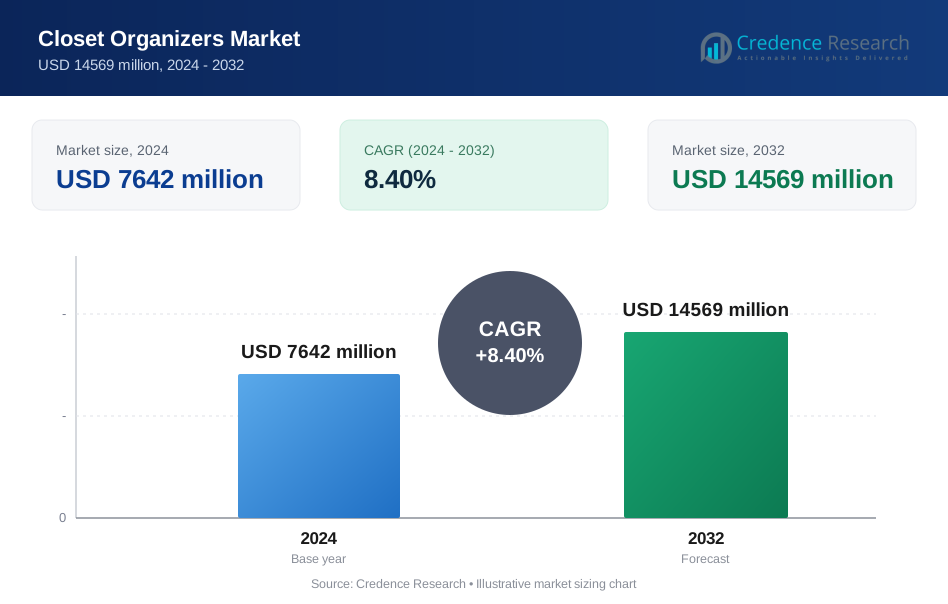
The Closet organizers market is projected to grow from USD 7642 million in 2024 to an estimated USD 14569 million by 2032, with a compound annual growth rate (CAGR) of 8.4% from 2024 to 2032.
Several key factors are propelling the demand for closet organizers. Urbanization and shrinking living spaces have heightened the need for efficient storage solutions that maximize available space. Consumers are increasingly seeking products that offer functionality without compromising on style. The rise of modular and customizable closet systems allows individuals to tailor their storage to specific needs, accommodating various items such as clothing, accessories, and footwear. Additionally, the growing trend of home renovation and remodeling projects has led to increased investments in closet organization, further fueling market growth. The rising awareness about the benefits of organized living and the increasing number of online platforms offering closet organizing products have also made these solutions more accessible to a broader consumer base.
Regionally, the Asia-Pacific region holds the largest share of the closet organizer market, attributed to rapid urbanization, rising disposable incomes, and a burgeoning middle-class population. Countries like China and India are witnessing significant demand for space-saving solutions as urban dwellers seek to optimize limited living areas. In contrast, Europe is anticipated to be the fastest-growing region during the forecast period. The European market is characterized by a preference for high-quality materials and sustainable products, with consumers gravitating towards eco-friendly and durable closet organizing solutions. North America, particularly the United States, remains a significant market player, driven by a strong home improvement culture and a preference for premium, customizable storage systems. The market in North America is also supported by growing consumer interest in sustainable products and the increasing integration of technology, such as smart closet organizers.
Market Insights:
- The Closet organizers market is projected to grow from USD 7642 million in 2024 to an estimated USD 14569 million by 2032, driven by urbanization and shrinking living spaces.
- Rising disposable incomes and a growing middle class in emerging markets will boost demand for premium and customizable closet organizers.
- The trend toward modular and customizable storage systems is gaining popularity, as consumers seek tailored solutions for efficient use of space.
- Increasing home renovation and remodeling projects are contributing to the demand for closet organizers, as consumers aim to optimize existing spaces.
- E-commerce is making closet organizers more accessible to a wider audience, expanding the market's reach globally.
- The Asia-Pacific region holds the largest market share, driven by rapid urbanization and a rising demand for space-saving solutions in countries like China and India.
- North America and Europe continue to be key markets, with a focus on high-quality materials, sustainability, and premium storage systems.
Market Drivers:
Urbanization and Limited Living Spaces
The rapid growth of urban populations has led to smaller living spaces, driving the demand for closet organizers. Cities worldwide are seeing increasing population densities, particularly in Asia-Pacific, North America, and Europe. In urban areas where square footage is at a premium, maximizing available storage has become a priority. Closet organizers offer a practical solution to the challenge of managing space efficiently. Homeowners and renters alike are turning to these products to optimize closets and living spaces. It is now essential for individuals to create organized, clutter-free environments within their homes. The increasing trend toward compact apartments and high-rise living makes closet organizers indispensable in modern urban homes.
Shift Toward Customized and Modular Storage Solutions
Consumers are increasingly seeking customizable and modular storage systems to suit their specific needs. Closet organizers provide flexible solutions that can be adapted to different spaces, functions, and preferences. Modular designs allow for easy installation and reconfiguration, giving consumers the freedom to adjust their storage as their needs evolve. This demand for tailored storage solutions is growing, particularly among those who value personalization and practicality in home products. The ability to design and organize closets based on individual lifestyles whether for clothing, accessories, or shoes makes these products more appealing. The growing preference for DIY solutions has contributed to an uptick in the demand for modular closet organizers.
- For instance, The Container Store has expanded its modular storage offerings, notably with new lines like Decor+ and Garage+ by Elfa, targeting customization and urban needs.
Rising Home Renovation and Improvement Trends
Home renovation and interior design trends are significant drivers for the closet organizers market. Many consumers are investing in home improvements to enhance both functionality and aesthetics. Renovation projects often include reorganizing closets, leading to increased demand for new organizing products. People are becoming more aware of the advantages of having a well-organized home, which improves overall living conditions. With more homeowners opting for remodeling, particularly in developed regions like North America and Europe, closet organizers have become a core component of home renovations. These products offer a cost-effective way to enhance the functionality of existing closet spaces.
- For instance, California Closets offers advanced 3D digital design tools and virtual consultations, and industry sources confirm the integration of AI-driven design automation and virtual assistants for personalized closet layouts.
E-commerce and Growing Accessibility of Products
The rise of e-commerce has made closet organizers more accessible to a broader consumer base. Online shopping platforms provide consumers with easy access to a wide range of organizing solutions at different price points. With detailed product descriptions, reviews, and ratings, it has become easier for consumers to make informed purchasing decisions. The availability of customized, modular, and space-saving closet organizers on these platforms has contributed to market growth. As consumers increasingly prefer shopping from the comfort of their homes, e-commerce continues to fuel the demand for closet organizers. This growing trend toward online retail has expanded the market reach, making these products available to consumers in both urban and rural areas.
Market Trends:
Increasing Demand for Eco-Friendly Closet Organizers
Sustainability is a growing trend within the closet organizers market. Consumers are increasingly prioritizing eco-friendly products that are made from renewable materials, such as bamboo, recycled plastics, and non-toxic paints. These environmentally conscious choices reflect the broader shift toward sustainable living practices. Companies are responding to this demand by offering products that align with consumers' desire to reduce their environmental footprint. The use of sustainable materials in closet organizers not only appeals to eco-conscious buyers but also contributes to reducing waste and pollution. As more consumers look for green alternatives, manufacturers are investing in eco-friendly production processes, further supporting the trend.
Integration of Technology in Closet Organizer Solutions
The integration of technology into closet organizing products is another notable trend in the market. Smart closet systems equipped with features like automated shelving, lighting, and temperature control are becoming increasingly popular. These innovations allow users to manage their closet spaces more efficiently, offering an enhanced experience. The development of smart closet organizers responds to growing consumer expectations for convenience and connectivity in home products. Through smartphone apps or voice assistants, users can remotely control their closet environment, making it more functional and user-friendly. These advancements are gaining traction in regions with higher disposable incomes, where consumers are more willing to invest in high-tech home solutions.
- For instance, IKEA’s PAX wardrobes now come equipped with motion-sensor LED lighting, reflecting the trend toward smart features that improve usability and energy efficiency.
Rise of Multi-Functional and Space-Saving Closet Organizers
Closet organizers that offer multiple functions and space-saving features are increasingly in demand. Consumers are looking for products that not only help organize their belongings but also serve other purposes, such as additional seating, built-in lighting, or convertible shelving. Multi-functional closet organizers optimize space by combining storage with other valuable features, making them ideal for smaller living spaces. This trend is particularly relevant in urban areas where apartments and homes tend to be compact. Manufacturers are designing products that adapt to various needs, from hanging clothes to storing shoes, accessories, and other personal items. The market is witnessing a surge in such versatile organizers, responding to consumer demand for products that combine practicality with aesthetic appeal.
- For instance, ClosetMaid produces wire shelving systems that are easy to install and marketed for a wide range of uses, including for renters. Their wire shelving kits emphasize ease of installation and flexibility.
Growth in Customization and Personalized Closet Organizer Solutions
Customization has become a prominent trend in the closet organizers market, with consumers seeking products that cater to their specific needs and preferences. Personalized closet solutions allow individuals to create storage systems tailored to their wardrobe, lifestyle, and available space. This trend includes adjustable shelving, modular components, and the option to choose specific materials and finishes. Companies are increasingly offering design services, allowing consumers to work directly with experts to create personalized closet spaces. The demand for such tailored solutions reflects a broader consumer desire for individualized and functional home products. Custom closet organizers are now being integrated into home renovation projects, further driving the trend toward personalized living spaces.
Market Challenges Analysis:
High Initial Cost and Price Sensitivity
One of the significant challenges in the closet organizers market is the high initial cost associated with premium, customizable products. While these organizers offer superior functionality and aesthetics, their prices may be prohibitive for some consumers, particularly in price-sensitive markets. The cost of materials, design, and installation can add to the overall expense, limiting accessibility to higher-end closet solutions. While demand for premium products is strong in regions with higher disposable incomes, many consumers in emerging markets or smaller households may opt for lower-cost, less durable alternatives. This price sensitivity poses a challenge for companies attempting to penetrate a broader demographic and cater to various income levels.
Difficulty in Meeting Diverse Consumer Needs
Closet organizers must cater to a wide range of consumer preferences, which presents a challenge in developing products that appeal to diverse markets. Consumers vary in their storage needs, tastes, and the space available for closet systems. Some may prioritize aesthetic appeal, while others focus on functionality or eco-friendliness. The complexity of satisfying these differing demands can complicate product development and marketing strategies. Furthermore, adapting products to different cultural preferences or design sensibilities adds another layer of difficulty. The need for constant innovation to meet these evolving demands can strain resources, making it challenging for manufacturers to stay competitive in the closet organizers market.
Market Opportunities:
Expansion in Emerging Markets
The closet organizers market presents significant opportunities for expansion in emerging markets. Rapid urbanization and a growing middle class in regions such as Asia-Pacific, Latin America, and parts of Africa have led to increased demand for space-saving solutions. As these regions see a rise in smaller living spaces and disposable incomes, the need for efficient storage solutions will grow. Manufacturers can tap into this demand by offering affordable, functional, and customizable closet organizing products. Providing region-specific designs and materials can further enhance market penetration in these rapidly developing areas.
Technological Advancements in Closet Organizing Solutions
Advancements in technology offer substantial opportunities for innovation within the closet organizers market. The integration of smart technologies, such as app-controlled shelving, automated lighting, and climate control systems, provides new avenues for growth. Consumers are increasingly looking for smart storage solutions that enhance convenience and organization. By incorporating features like voice control or inventory management, companies can create more sophisticated and attractive closet systems. These innovations cater to tech-savvy consumers in developed markets and present opportunities for differentiation in a competitive landscape.
Market Segmentation Analysis:
The Closet Organizers Market is segmented by product type, material, closet type, application channel, end user, and price segment.
By Product Type, the market includes shelving units, hanging bags, valet rods, shoe organizers, plastic bins, drawer organizers, closet rods, hooks and accessories, and custom/configurable closet systems. These products cater to varying storage needs, with a growing demand for customizable and space-efficient solutions.
- For instance, The Container Store’s Elfa line includes hanging garment bags and hanging shelves designed to maximize vertical space.
By Material, wood, metal, medium-density fiberboard (MDF), plywood, and plastic are the most commonly used materials. Wood and metal are preferred for premium options, while MDF and plastic cater to mid-range and budget segments.
By Closet Type, walk-in closets, reach-in closets, and kids' closets are the primary categories. Walk-in closets drive demand for larger, more customizable systems, while reach-in and kids' closets focus on maximizing smaller spaces.
By Application Channel, the offline channel remains dominant, with in-store purchases driving a significant portion of sales. However, online channels have shown substantial growth, particularly with the rise of e-commerce platforms.
By End User, residential customers lead the market, driven by home improvement trends. Commercial applications in hotels, offices, and retail spaces are also growing.
By Price Segment, the market is divided into luxury, mid-range, and budget categories. Luxury products dominate the high-end segment, while mid-range and budget products cater to the larger mass market seeking functional yet affordable storage solutions.
- For example, California Closets and high-end lines from The Container Store offer luxury closet systems with premium materials, integrated lighting, and bespoke finishes.
Segmentation:
By Product Type
- Shelving Units
- Hanging Bags
- Valet Rods
- Shoe Organizers
- Plastic Bins
- Drawer Organizers
- Closet Rods
- Hooks and Accessories
- Custom/Configurable Closet Systems
By Material
- Wood
- Metal
- Medium Density Fiberboard (MDF)
- Plywood
- Plastic
By Closet Type
- Walk-In Closets
- Reach-In Closets
- Kids’ Closets
By Application Channel
- Offline Channel
- Online Channel
By End User
- Residential
- Commercial
By Price Segment
- Luxury
- Mid-Range
- Budget
By Region
- North America
- U.S.
- Canada
- Mexico
- Europe
- Germany
- France
- U.K.
- Italy
- Spain
- Rest of Europe
- Asia Pacific
- China
- Japan
- India
- South Korea
- South-east Asia
- Rest of Asia Pacific
- Latin America
- Brazil
- Argentina
- Rest of Latin America
- Middle East & Africa
- GCC Countries
- South Africa
- Rest of the Middle East and Africa
Regional Analysis:
North America: Market Leader with High Demand for Premium Products
North America dominates the closet organizers market, holding a substantial market share of approximately 35% in 2023. The demand for high-quality, customizable closet organizers is particularly strong in the United States and Canada, driven by a strong home improvement culture and higher disposable incomes. Consumers in this region seek premium, aesthetically pleasing products that combine functionality and design. The trend toward smart closet systems, which integrate technology for enhanced convenience, further fuels market growth. As home renovation projects remain popular, particularly among middle and upper-income households, North America is expected to continue leading the market throughout the forecast period. The region's significant demand for innovative and high-end closet solutions ensures its dominance in the closet organizers market.
Europe: Growing Preference for Sustainable and Functional Solutions
Europe is the second-largest market for closet organizers, accounting for approximately 30% of the global share in 2023. The demand for closet organizers in this region is driven by a growing preference for sustainable, eco-friendly products, particularly in countries like Germany, France, and the United Kingdom. Consumers are increasingly seeking modular and customizable closet systems that maximize space efficiency while minimizing environmental impact. The European market also favors premium quality and innovation, with many consumers prioritizing functional design and long-term durability. The rise of urbanization and smaller living spaces in major European cities further fuels the demand for space-saving and versatile storage solutions. As sustainability continues to gain momentum, eco-friendly closet organizers are expected to see a surge in popularity, creating further growth opportunities in the region.
Asia-Pacific: Rapid Urbanization Driving Market Growth
The Asia-Pacific region is experiencing the fastest growth in the closet organizers market. This region holds a market share of approximately 25% in 2023. Rapid urbanization, increasing disposable incomes, and a growing middle-class population are key factors contributing to the rising demand for efficient storage solutions. Countries like China, India, and Japan are seeing significant growth in demand for closet organizers, driven by the trend toward smaller living spaces and the desire for organized, clutter-free homes. Consumers in these markets are increasingly investing in affordable and functional closet systems that maximize limited space. The availability of modular and customizable storage solutions, which cater to diverse needs, is fueling the expansion of the closet organizers market in Asia-Pacific. As urban centers continue to grow, the region is expected to present substantial opportunities for market players.
Key Player Analysis:
- The Container Store
- ClosetMaid (Griffon Corporation)
- IKEA
- Rubbermaid (Newell Brands)
- California Closets
- Closet Factory
- Elfa
- Modular Closets
- Organized Living
- Home Depot
- Lowe’s
- Target Corporation
- Wayfair
- Sauder Woodworking Company
- Honey Can Do
- OXO
- InterDesign
Competitive Analysis:
The closet organizers market is highly competitive, with several key players driving innovation and catering to diverse consumer preferences. Leading companies include The Container Store, California Closets, IKEA, and ClosetMaid, each offering a range of products designed to maximize storage efficiency and appeal to various market segments. These companies focus on providing customizable, modular, and space-saving solutions that cater to both functionality and aesthetics. Many competitors are also integrating sustainable materials and smart technologies into their products to meet growing consumer demand for eco-friendly and technologically advanced solutions. Competitive strategies in the market include product innovation, expanding distribution channels, and forming strategic partnerships. The increasing popularity of e-commerce has led to greater online availability of closet organizers, further intensifying competition. As consumer expectations continue to evolve, companies must adapt to provide versatile, high-quality, and sustainable products to maintain a strong market presence.
Recent Developments:
- In October 2024, The Container Store expanded its Custom Spaces offerings with the launch of a premium wood closet system in a box, designed for easy do-it-yourself installation. This new product line complements their existing Elfa metal modular solutions and is available in a super-matte white finish, offering versatile options for closets of various sizes.
- In November 2024, The Container Store announced a global licensing partnership with Vacane Household Commodities. Beginning January 2025, this partnership will expand the Everything Organizer™ collection internationally, introducing new SKUs for kitchen, closet, and bath categories under the brand The Container Store x Vacane.
Market Concentration & Characteristics:
The closet organizers market exhibits moderate concentration, with several key players dominating the industry, including The Container Store, California Closets, and IKEA. These companies account for a significant share of the market, offering a wide range of customizable and modular products. However, the market also includes numerous smaller players and regional brands that cater to niche segments, driving diversity in product offerings. The market is characterized by strong competition focused on product innovation, sustainability, and quality. Companies prioritize versatility and functionality in their products, offering solutions that cater to both urban and suburban dwellers. The increasing preference for eco-friendly materials and smart storage systems adds a layer of complexity, as firms strive to meet evolving consumer demands. Overall, the closet organizers market is dynamic, with both established and emerging players contributing to its growth.
Report Coverage:
The research report offers an in-depth analysis based on product type, material, closet type, application channel, end user, and price segment. It details leading market players, providing an overview of their business, product offerings, investments, revenue streams, and key applications. Additionally, the report includes insights into the competitive environment, SWOT analysis, current market trends, as well as the primary drivers and constraints. Furthermore, it discusses various factors that have driven market expansion in recent years. The report also explores market dynamics, regulatory scenarios, and technological advancements that are shaping the industry. It assesses the impact of external factors and global economic changes on market growth. Lastly, it provides strategic recommendations for new entrants and established companies to navigate the complexities of the market.
Future Outlook:
- The closet organizers market will experience continued growth, driven by increasing urbanization and smaller living spaces.
- Rising disposable incomes in emerging markets will boost demand for premium and customizable products.
- Eco-friendly materials will gain popularity as sustainability becomes a significant consumer priority.
- Technological integration, such as smart storage solutions, will appeal to tech-savvy consumers seeking enhanced convenience.
- The rise of e-commerce will provide consumers with greater access to a variety of closet organizing products.
- Modular and space-saving products will dominate, meeting the demand for efficient storage solutions.
- Home renovation trends will contribute to an increase in demand for closet organizers as consumers focus on home organization.
- The growing interest in DIY projects will drive demand for easy-to-install, customizable closet systems.
- The Asia-Pacific region will experience accelerated growth, particularly in urbanized countries like China and India.
- Competitive pressures will encourage continuous innovation and differentiation among market players.
Request a Free Sample
Fill in your details and we'll send you a free sample report.
- Sample data tables & charts
- Research methodology
Need a Custom Version of This Report?
Tailor the scope, geography, or segments to your exact requirements.
- Custom geography or segment scope
- Direct access to our analyst team
Frequently Asked Questions
What is the current size of the Closet organizers market?
What factors are driving the growth of the Closet organizers market?
What are some challenges faced by the Closet organizers market?
Who are the major players in the Closet organizers market?
Table of Content
Chapter 1. Report Introduction
- 1.1 Report Description & Purpose
- 1.1.1 Report Title & Market Definition
- 1.1.2 Unique Selling Propositions (USP) & Key Differentiators
- 1.1.3 Value Proposition for Stakeholders
- 1.2 Research Objectives
- 1.2.1 Market Sizing Objectives (Volume & Revenue)
- 1.2.2 Segmentation Objectives
- 1.2.3 Competitive Intelligence Objectives
- 1.2.4 Forecast & Scenario Objectives
- 1.3 Report Scope
- 1.3.1 Closet Organizers Scope – Types & Subtypes Covered
- 1.3.2 Geographic Scope – Regions & Countries Covered
- 1.3.3 Historical Period, Base Year & Forecast Period (2024; forecast to 2032)
- 1.3.4 Inclusions & Exclusions
- 1.4 HS Code & Classification Framework
- 1.5 Currency, Units & Pricing Basis
- 1.6 Target Stakeholders
- 1.7 Limitations & Assumptions
Chapter 2. Executive Summary
- 2.1 Global Closet Organizers Market Snapshot
- 2.1.1 Market Size – Historical (2024) & Forecast (2024-2032) (2024: USD 7642 million → 2032: USD 14569 million)
- 2.1.2 Volume & Revenue – Global Totals
- 2.1.3 Key Market Highlights – Top Five Facts
- 2.2 Closet Organizers Market Segmentation Snapshot
- 2.2.1 Market Split by Region – 2024 vs. 2032
- 2.3 Competitive Snapshot
- 2.3.1 Top 10 Players by Revenue Share – 2024
- 2.3.2 Top 10 Players by Volume Share – 2024
- 2.3.3 Recent Strategic Developments (18-Month Summary)
- 2.4 Key Investment Highlights & Strategic Conclusions
Chapter 3. Closet Organizers Market Dynamics & Industry Analysis
- 3.1 Market Overview & Context
- 3.1.1 Closet Organizers Market Position in the Broader Automotive Value Chain
- 3.1.2 OEM vs. Replacement Market Dynamics
- 3.1.3 Market Maturity & Development Stage by Region
- 3.2 Closet Organizers Market Drivers
- 3.3 Closet Organizers Market Restraints & Challenges
- 3.4 Closet Organizers Market Opportunities
- 3.5 Porter's Five Forces Analysis
- 3.5.1 Threat of New Entrants
- 3.5.2 Bargaining Power of Suppliers
- 3.5.3 Bargaining Power of Buyers
- 3.5.4 Threat of Substitutes
- 3.5.5 Competitive Rivalry – Intensity Assessment
- 3.6 Closet Organizers Value Chain Analysis
- 3.6.1 Upstream – Raw Material/Input Suppliers
- 3.6.1.1 Raw Material/Input 1
- 3.6.1.2 Raw Material/Input 2
- 3.6.1.3 Raw Material/Input 3
- 3.6.2 Midstream – Production/Manufacturing/Service Delivery
- 3.6.2.1 Production/Process Overview
- 3.6.2.2 Key Facility Locations & Capacity by Manufacturer
- 3.6.3 Downstream – Distribution & End Consumer
- 3.6.3.1 Primary Channel – B2B/OEM
- 3.6.3.2 Secondary Channels – Dealer, Retail, Online, Direct
- 3.6.4 Value Chain Profitability Analysis
- 3.6.1 Upstream – Raw Material/Input Suppliers
- 3.7 PESTEL Analysis
- 3.7.1 Political Factors
- 3.7.2 Economic Factors
- 3.7.3 Social Factors
- 3.7.4 Technological Factors
- 3.7.5 Environmental Factors
- 3.7.6 Legal Factors
- 3.8 Closet Organizers Supply Chain Analysis
- 3.8.1 Raw Material/Input Supply Risk Assessment
- 3.8.2 Manufacturing Concentration Risk (Geographic Exposure)
- 3.8.3 Trade Disruption Impact Analysis
- 3.9 Regulatory & Policy Landscape
Note: The regulatory and policy landscape section covers regulations based on their applicability to the market, Closet Organizers category, geography, and scope of the study. Only regulatory frameworks with a material impact on operations, compliance, trade, sustainability, or market access are analyzed in detail.
Chapter 4. Key Investment Pockets & Opportunity Analysis
- 4.1 Closet Organizers Market Attractiveness Analysis
- 4.1.1 By Region – Investment Attractiveness Matrix (Volume × CAGR)
- 4.2 Absolute Revenue Growth Opportunity
- 4.2.1 By Region – Absolute USD Growth Through 2032
- 4.3 Incremental Volume Opportunity
- 4.3.1 By Region – Incremental Volume Through 2032
- 4.3.2 Segment – Incremental Volume
- 4.4 Emerging Submarket Opportunity Deep Dive (Subject to Applicability)
- 4.5 Emerging Market Opportunity Scorecards
- 4.5.1 United States
- 4.5.2 Europe
- 4.5.3 Asia
- 4.5.4 Middle East & Africa
Note: Emerging Market Opportunity Scorecards will be included based on relevance and strategic importance. Regions listed are indicative and may vary depending on data availability and market dynamics.
Chapter 5. Closet Organizers Import-Export Analysis & Trade Flows
- 5.1 Global Trade Overview
- 5.1.1 Global Export Value by Country (2024)
- 5.1.2 Global Export Volume by Country (2024)
- 5.1.3 Global Import Value by Country (2024)
- 5.1.4 Global Import Volume by Country (2024)
- 5.1.5 Net Trade Balance by Country (2024)
- 5.2 Export Analysis – Segment
- 5.2.1 Type 1 (HS Code)
- 5.2.2 Type 2 (HS Code)
- 5.2.3 Type 3 (HS Code)
- 5.2.4 Type 4 (HS Code)
- 5.2.5 Type 5 (HS Code)
- 5.3 Import Analysis – Segment
- 5.3.1 Type 1 (HS Code)
- 5.3.2 Type 2 (HS Code)
- 5.3.3 Type 3 (HS Code)
- 5.3.4 Type 4 (HS Code)
- 5.3.5 Type 5 (HS Code)
- 5.4 Average Unit Trade Prices
- 5.4.1 Average Export Price – Segment & Country
- 5.4.2 Average Import Price – Segment & Source Country
- 5.4.3 Price Trends (2024)
- 5.5 Key Trade Route Analysis
- 5.5.1 Trade Route 1
- 5.5.2 Trade Route 2
- 5.5.3 Trade Route 3
- 5.5.4 Trade Route 4
- 5.5.5 Trade Route 5
- 5.6 Trade Policy Impact Assessment
- 5.6.1 US Anti-Dumping & Section 301 Tariffs
- 5.6.2 EU Customs Union Impact
- 5.6.3 Major Free Trade Agreements
- 5.6.4 USMCA Rules of Origin
Note: Trade policy analysis will be included only where relevant to the Closet Organizers market.
Chapter 6. Competitive Landscape & Company Benchmarking
- 6.1 Closet Organizers Market Concentration & Structure
- 6.1.1 Herfindahl-Hirschman Index (HHI) – vs. 2024
- 6.1.2 Tier 1, Tier 2 & Tier 3 Market Structure
- 6.1.3 Global, Regional & Local Player Dynamics
- 6.2 Closet Organizers Market Share Analysis – 2024
- 6.2.1 Global Revenue Share by Company
- 6.2.2 Global Volume Share by Company
- 6.2.3 Regional Revenue Share
- 6.2.4 Market Share Evolution ( vs. 2024)
- 6.2.5 OEM Segment Share by Company
- 6.2.6 Replacement Segment Share by Company
- 6.3 Production/Delivery Capacity & Facility Analysis
- 6.3.1 Global Installed Capacity
- 6.3.2 Capacity Utilization Rates
- 6.3.3 Production/Output Volume
- 6.3.4 Facility Locations & Capacity Map
- 6.3.5 Planned Capacity Additions
- 6.4 Closet Organizers Competitive Benchmarking Matrix
- 6.4.1 Revenue, Volume, CAGR & Profitability Comparison
- 6.4.2 Channel Revenue Mix
- 6.4.3 Geographic Revenue Exposure
- 6.4.4 R&D Intensity
- 6.4.5 Sustainability Maturity
- 6.5 Strategic Developments in Closet Organizers (Last 24 Months)
- 6.5.1 Mergers, Acquisitions & Divestments
- 6.5.2 New Closet Organizers Launches
- 6.5.3 Facility Expansions
- 6.5.4 Strategic Alliances, Joint Ventures & Partnerships
- 6.5.5 Distribution Expansion & Market Entry
- 6.5.6 Sustainability & ESG Initiatives
- 6.6 Competitive Strategy Mapping
- 6.6.1 Leader, Challenger, Follower & Niche Classification
- 6.6.2 Pricing Strategy Comparison
- 6.6.3 Channel Strategy Matrix
Note: Strategic developments are included based on their materiality and the availability of reliable information.
Chapter 7. Global Closet Organizers Market – By Distribution Channel
- 7.1 Segment Overview
- 7.1.1 Volume & Revenue Split by Channel (2024 & 2032)
- 7.1.2 Channel Mix Evolution (2024-2032)
Chapter 8. Regional Market Analysis – Global Overview
- 8.1 Global Regional Overview
- 8.1.1 Regional Volume Share
- 8.1.2 Regional Revenue Share
- 8.1.3 Regional Volume by Region
- 8.1.4 Regional Revenue by Region
- 8.1.5 Regional Forecast Through 2032
- 8.2 Cross-Regional Segment Analysis
- 8.2.1 By Distribution Channel
- 8.2.2 By Brand/Price Tier
Chapter 9. North America Closet Organizers Market
- 9.1 United States
- 9.2 Canada
- 9.3 Mexico
Chapter 10. Europe Closet Organizers Market
- 10.1 Germany
- 10.2 France
- 10.3 Italy
- 10.4 United Kingdom
- 10.5 Spain
- 10.6 Poland
- 10.7 Russia
- 10.8 Netherlands
- 10.9 Belgium
- 10.10 Sweden
- 10.11 Denmark
- 10.12 Norway
- 10.13 Rest of Europe
Chapter 11. Asia Pacific Closet Organizers Market
- 11.1 China
- 11.2 India
- 11.3 Japan
- 11.4 South Korea
- 11.5 Thailand
- 11.6 Indonesia
- 11.7 Vietnam
- 11.8 Malaysia
- 11.9 Australia
- 11.10 Rest of Asia Pacific
Chapter 12. Latin America Closet Organizers Market
- 12.1 Brazil
- 12.2 Argentina
- 12.3 Colombia
- 12.4 Chile
- 12.5 Rest of Latin America
Chapter 13. Middle East Closet Organizers Market
- 13.1 Saudi Arabia
- 13.2 United Arab Emirates
- 13.3 Turkey
- 13.4 Israel
- 13.5 Iran
- 13.6 Rest of the Middle East
Chapter 14. Africa Closet Organizers Market
- 14.1 South Africa
- 14.2 Egypt
- 14.3 Nigeria
- 14.4 Morocco
- 14.5 Rest of Africa
Chapter 15. Closet Organizers Company Profiles
- 15.1 [Company 01]
- 15.1.1 Company Overview
- 15.1.2 Key Management Personnel
- 15.1.3 Products & Services Portfolio
- 15.1.4 Financial Performance
- 15.1.5 Key Market Focus & Geographic Presence
- 15.1.6 Recent Developments & Strategic Initiatives
Note: The company profile list is preliminary and may change based on research findings, market developments, data availability, and client requirements.
Chapter 16. Appendices
- Appendix A – List of Abbreviations & Acronyms
- Appendix B – Industry Classification Code Reference – Full Series
- Appendix C – Production & Capacity Data Tables
- Appendix D – End-Use & Demand Base Tables
- Appendix E – Consumption & Replacement Rate Assumptions
- Appendix F – ASP Reference Tables
- Appendix G – Manufacturing & Facility Database
- Appendix H – Import-Export Data Tables
- Appendix I – Regulatory Summary Tables
- Appendix J – Primary Research Participant List (Anonymized)
- Appendix K – Primary Research Questionnaire Framework
- Appendix L – Data Sources & Bibliography
- Appendix M – Market Size Divergence & Source Comparison
Chapter 17. Research Methodology
- 17.1 Research Framework & Philosophy
- 17.2 Secondary Research – Sources, Hierarchy & Data Extraction
- 17.3 Data Modeling – Bottom-Up & Top-Down Market Sizing
- 17.4 Primary Research – Stakeholder Framework, LOI & Sample Sizes
- 17.5 Forecast Methodology – Regression, Scenario & Sensitivity Analysis
- 17.6 Quality Control – Four-Layer Validation Framework
- 17.7 Limitations & Standard Assumptions
- 17.8 Disclaimer
