
| REPORT ATTRIBUTE | DETAILS |
|---|---|
| Historical Period | 2020-2023 |
| Base Year | 2024 |
| Forecast Period | 2025-2032 |
| Electric Air Freshener Market Size 2024 | USD 14890 Million |
| Electric Air Freshener Market, CAGR | 5.28% |
| Electric Air Freshener Market Size 2032 | USD 22473 Million |
Market Overview:
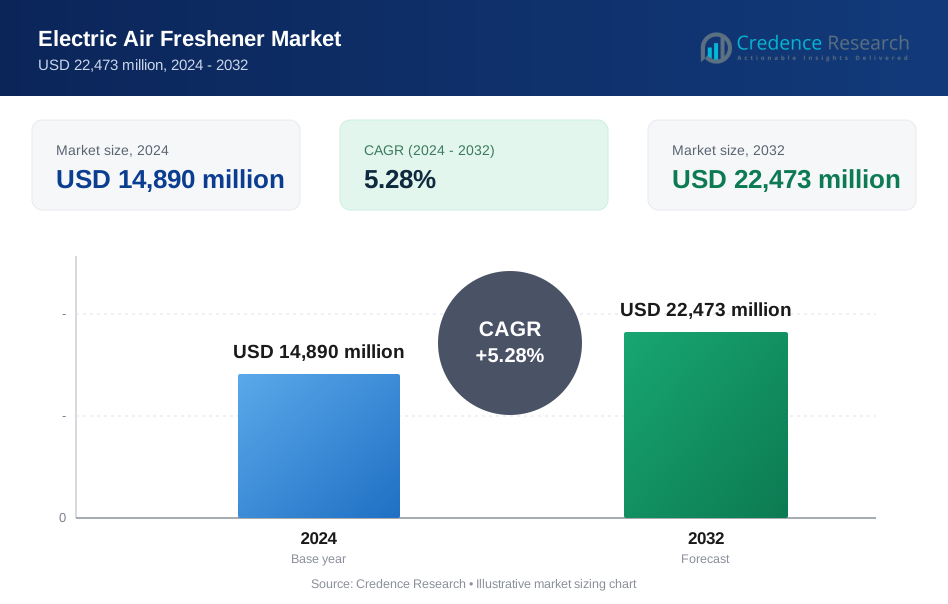
The Electric Air Freshener Market is projected to grow from USD 14890 million in 2024 to an estimated USD 22473 million by 2032, with a compound annual growth rate (CAGR) of 5.28% from 2024 to 2032.
Several key factors are propelling the growth of this market. The increasing emphasis on indoor air quality and wellness, combined with a heightened awareness of allergens and pollutants, is pushing consumers to adopt electric air fresheners that offer both pleasant aromas and air purification functions. These devices are often preferred over traditional aerosol sprays due to their consistent scent diffusion and perceived safety. Technological developments, including IoT-enabled features like automatic timers, scent intensity controls, and app-based customization, are enhancing the appeal of these products. Furthermore, as consumers move toward sustainable living, there is growing demand for eco-friendly designs that incorporate refillable cartridges, biodegradable materials, and essential oil-based scents. Commercial spaces-such as offices, hotels, and retail outlets-are also investing in electric air fresheners to enhance ambiance and customer experience, broadening the market's end-user base.
Regionally, North America leads the electric air freshener market, driven by high consumer spending power, strong smart-home adoption, and growing awareness of indoor air health. The United States, in particular, continues to dominate due to its mature market for premium home care products and a strong presence of key brands. Europe closely follows, accounting for over 35% of global revenue, supported by environmental regulations and consumer preferences for natural and certified products. The Asia-Pacific region, however, is expected to witness the fastest growth, with countries like China and India emerging as lucrative markets due to rapid urbanization, rising disposable incomes, and increasing demand for modern home care solutions. Latin America, the Middle East, and Africa are also showing promising growth trends, albeit from smaller base levels, fueled by increasing penetration of modern retail channels and the expansion of commercial and hospitality sectors that prioritize fragrance and hygiene.
Market Insights:
- The electric air freshener market is projected to grow from USD 14,890 million in 2024 to USD 22,473 million by 2032, registering a CAGR of 5.28% due to rising consumer interest in air quality, home ambiance, and fragrance innovation.
- Consumers increasingly prioritize indoor air health, driving preference for electric air fresheners that offer consistent scent diffusion, odor control, and allergen reduction over traditional aerosol options.
- Smart home integration and technology upgrades such as programmable settings, app-based controls, and voice assistant compatibility are transforming air fresheners into personalized, connected devices.
- Eco-conscious buyers are shifting demand toward refillable, biodegradable, and plant-based electric air fresheners, creating opportunities for brands that focus on sustainability and safety.
- Offices, hotels, retail stores, and other commercial spaces are adopting electric air fresheners to improve customer experience and enhance brand perception, expanding the market beyond residential use.
- Regulatory scrutiny over fragrance ingredients and emissions presents challenges, requiring brands to balance compliance and performance without compromising consumer trust or product appeal.
- North America leads in market share due to smart home adoption and high spending capacity, while Asia-Pacific is the fastest-growing region, fueled by urbanization, rising income, and growing home care awareness.
Market Drivers:
Growing Demand for Indoor Air Quality Solutions Fuels Product Adoption:
Consumers are increasingly aware of the importance of indoor air quality, particularly in urban settings where pollution and allergens are prevalent. This awareness is driving demand for solutions that not only mask odors but also contribute to a cleaner and healthier living environment. The electric air freshener market benefits from this shift, as products are now designed with features such as air purification and allergen reduction. Consumers are seeking alternatives to traditional sprays, favoring devices that offer consistent fragrance delivery and minimal exposure to harmful chemicals. Natural ingredients and essential oil-based formulations are gaining traction among health-conscious buyers. The demand for wellness-oriented home care products reinforces the relevance of electric air fresheners in modern households.
- For instance, Procter & Gamble’s Febreze Plug electric air freshener features a dual-scent alternating technology that automatically switches between two complementary scents every 45 minutes, preventing fragrance fatigue and delivering up to 50 days of continuous freshness per refill on the low setting
Rapid Smart Home Integration and Technological Advancements Support Growth:
The increasing penetration of smart home ecosystems creates a favorable environment for the adoption of intelligent fragrance solutions. Electric air fresheners now come equipped with features such as programmable timers, Bluetooth connectivity, mobile app control, and automatic scent release. These innovations align with consumer preferences for customization, convenience, and efficiency. It strengthens the market position by transforming fragrance delivery into an integrated part of the connected home. Brands that incorporate voice control compatibility with systems like Alexa or Google Assistant meet the expectations of tech-savvy users. As these smart devices gain popularity, electric air fresheners continue to evolve into advanced tools rather than simple household accessories.
- For instance, Reckitt’s Air Wick Essential Mist Smart Diffuser is equipped with Bluetooth connectivity and a companion mobile app, allowing users to schedule fragrance bursts, adjust intensity, and monitor refill levels remotely.
Sustainability and Eco-Conscious Preferences Reshape Consumer Expectations:
Environmentally responsible consumption is influencing purchase decisions across household categories. The electric air freshener market is adapting to this trend through the use of recyclable materials, refillable cartridges, and plant-based ingredients. Brands are emphasizing sustainable packaging and low-emission scent delivery systems to reduce their environmental footprint. This approach appeals to consumers who prioritize eco-friendliness and product safety in their lifestyle choices. It contributes to long-term brand loyalty and encourages repeat purchases. Companies that innovate in sustainability are positioning themselves competitively in a market increasingly shaped by ethical consumption values.
Commercial Sector Expansion Broadens Market Applications:
Demand from commercial environments-including hotels, retail stores, offices, and wellness centers-continues to increase. Businesses view ambient scenting as a tool to enhance customer experience and reinforce brand identity. The electric air freshener market serves this segment by offering reliable, discreet, and effective scent diffusion solutions suited for larger spaces. It delivers consistent performance while allowing for scent customization and intensity control, critical in high-traffic settings. Commercial buyers also prioritize cost efficiency and maintenance ease, both of which are met by modern electric units. This growing demand across professional environments contributes to the overall expansion and diversification of the market.
Market Trends:
Premiumization and Custom Fragrance Offerings Are Reshaping Product Positioning:
Consumers are showing greater willingness to pay for premium scenting experiences that align with personal taste and home aesthetics. Brands are responding with high-end electric air fresheners that feature designer collaborations, luxury scents, and customizable fragrance cartridges. The electric air freshener market is experiencing a shift in perception-from a functional product to a lifestyle accessory. It now competes with candles and diffusers in the premium home fragrance segment. Product design also reflects this trend, with sleek, minimalistic units intended to blend with modern interiors. The growing association between scent and mood enhancement supports the demand for personalized, elevated scenting solutions.
- For instance, The Luxe Collection’s fragrances are developed in collaboration with master perfumers and utilize essential oils for a premium olfactory experience.
Limited-Edition and Seasonal Launches Drive Consumer Engagement:
Brands are adopting limited-time offerings and seasonal scent collections to maintain consumer interest and stimulate repeat purchases. These exclusive product releases create urgency and promote engagement through emotional connections with holidays, seasons, or cultural moments. The electric air freshener market sees strong sales spikes during occasions like autumn, winter holidays, and spring cleaning seasons. It benefits from consumer nostalgia, with scents like cinnamon, pine, or citrus tied to specific experiences. Companies are using these seasonal lines to test new fragrances and packaging formats before wider rollouts. Limited-edition launches also help differentiate brands in a crowded market with relatively low switching costs.
- For instance, in August 2024, Air Wick released its limited-edition Pumpkin Spice Plug-In Scented Oil, available in 0.67 fl oz refill packs, timed for the autumn season. This fragrance was developed using sustainably sourced essential oils and is part of Air Wick’s annual seasonal collection.
Subscription Models and Direct-to-Consumer Sales Gain Traction:
Recurring revenue strategies are becoming more common as brands look to secure long-term customer relationships. Subscription-based models allow users to receive refills automatically, ensuring uninterrupted fragrance while offering convenience and cost savings. The electric air freshener market is leveraging direct-to-consumer platforms to bypass traditional retail and build direct engagement with customers. It enables brands to gather insights, tailor promotions, and foster loyalty through membership perks. Subscription options also align with lifestyle trends that prioritize automation and routine management. This business model supports higher retention rates and predictable revenue flows for manufacturers.
Multi-Sensory and Wellness-Linked Innovations Enhance Product Experience:
Products that engage multiple senses are gaining attention, especially in wellness-focused households. Some electric air fresheners now incorporate ambient lighting, sound features, or essential oil diffusion to create immersive environments. The electric air freshener market is responding to growing consumer interest in stress relief and mood management through scent. It expands beyond odor control to offer aromatherapeutic benefits that enhance daily routines. Brands are developing fragrance blends formulated for specific effects-calming, energizing, or focusing-to appeal to health-conscious users. This convergence of scent and wellness presents new opportunities for differentiation and brand storytelling.
Market Challenges Analysis:
Regulatory Scrutiny and Health Concerns Restrain Product Perception:
The growing focus on indoor air quality and chemical exposure has led to increased scrutiny from regulatory bodies and health-conscious consumers. Questions surrounding the safety of synthetic fragrance ingredients and potential allergens have raised concerns about long-term usage. The electric air freshener market faces the challenge of navigating evolving regulations on volatile organic compounds (VOCs), emissions, and labeling transparency. It must ensure compliance while preserving fragrance intensity and product performance. Brands that fail to address these health and environmental issues risk losing consumer trust and facing legal limitations. This constraint pressures manufacturers to reformulate products and invest in safer, certified alternatives.
Product Saturation and Pricing Pressure Limit Competitive Differentiation:
The market has become highly competitive, with multiple players offering similar features and scent profiles across price points. Consumers often view electric air fresheners as interchangeable, making it difficult for brands to command loyalty without consistent innovation or exclusive partnerships. The electric air freshener market contends with downward pricing pressure, especially in mass retail segments where private labels and budget options dominate. It reduces margins and complicates investment in research, sustainability, and smart technology. Differentiating through branding, functionality, or fragrance quality becomes critical but costly. Companies must balance affordability with innovation to retain market share in an environment shaped by value-driven buying behavior.
Market Opportunities:
Rising Demand for Natural and Wellness-Oriented Fragrance Solutions:
The growing consumer shift toward wellness and clean living opens strong opportunities for products made with natural, plant-based ingredients. Electric air fresheners that use essential oils, avoid synthetic chemicals, and offer aromatherapeutic benefits appeal to health-conscious buyers. The electric air freshener market can expand its reach by aligning products with wellness trends, such as stress relief, sleep improvement, and mood enhancement. It supports long-term value creation by addressing both functional and emotional needs. Products that meet third-party certifications for safety and sustainability stand to gain a competitive edge. Emerging demand for fragrance transparency also allows brands to educate and engage consumers directly.
Smart Home Ecosystem Integration Unlocks Premium Growth Potential:
Expanding smart home adoption creates an ideal environment for connected fragrance solutions. Consumers seek devices that can sync with their routines, respond to voice commands, or adjust based on room occupancy. The electric air freshener market can tap into this demand by offering Wi-Fi or Bluetooth-enabled units with mobile app control and data-driven personalization. It benefits from collaboration with home automation platforms and smart home retailers. As homes become more tech-enabled, demand will shift toward premium scenting devices that offer both utility and status. This evolution supports growth in both developed and emerging tech-savvy markets.
Market Segmentation Analysis:
By Product Type
Electric air fresheners-including plug-in, battery-operated, and smart/app-controlled variants-lead the segment due to their convenience, technology integration, and consistent performance. Aerosol air fresheners remain widely used for their affordability and instant action, though concerns about chemicals persist. Gel formats appeal in compact or automotive spaces. Candle air fresheners attract premium users seeking ambiance. Others, such as natural diffusers and solid formats, gain momentum among eco-conscious consumers.
- For instance, Godrej Consumer Products’ aer matic automatic air freshener kit is a battery-operated device that dispenses fragrance at 10, 20, or 40-minute intervals, with each refill providing up to 2,200 sprays and lasting up to 60 days.
By Application
The electric air freshener market is primarily driven by residential demand, where consumers prioritize home wellness and fragrance. The automotive segment is expanding as vehicle owners seek compact, long-lasting options. Corporate and commercial spaces-offices, malls, hotels, hospitals-adopt electric solutions to enhance guest experience and maintain hygiene standards.
- For instance, In commercial spaces, Air-Scent International’s Aroma Styler HVAC system integrates directly with ventilation systems and is capable of scenting areas up to 63,000 cubic feet, supporting applications in hotels, malls, and office buildings.
By Distribution Channel
Hypermarkets and supermarkets dominate sales volume due to product accessibility and variety. Specialty stores cater to premium and niche buyers. Convenience stores serve regular, low-involvement purchases. Pharmacies stock medically approved or hypoallergenic options. Online retail is rapidly expanding with smart-device availability, subscription models, and promotional reach.
By Diffuser Type
Active diffusers, powered by electricity or automation, lead in usage for their efficient, programmable features. Passive diffusers appeal in low-maintenance environments and cost-sensitive segments.
By Price Segment
The medium segment holds the largest share, balancing value and performance. Premium products grow faster through innovation and aesthetics. Low-cost offerings remain essential in budget and emerging markets.
Segmentation:
By Product Type
- Electric Air Fresheners (plug-in, battery-operated, smart/app-controlled)
- Aerosol Air Fresheners
- Gel Air Fresheners
- Candle Air Fresheners
- Others (including natural diffusers, solid, etc.)
By Application
- Residential (homes, apartments)
- Automotive (cars, personal vehicles)
- Corporate/Commercial (offices, malls, hotels, public bathrooms, hospitals, government buildings, theaters)
By Distribution Channel
- Hypermarkets/Supermarkets
- Specialty Stores
- Convenience/Independent Stores
- Pharmacies
- Online Retail Stores
By Diffuser Type
- Active (powered, automated)
- Passive (non-powered)
By Price Segment
- Low
- Medium
- Premium
By Region
- North America
- U.S.
- Canada
- Mexico
- Europe
- UK
- France
- Germany
- Italy
- Spain
- Russia
- Belgium
- Netherlands
- Austria
- Sweden
- Poland
- Denmark
- Switzerland
- Rest of Europe
- Asia Pacific
- China
- Japan
- South Korea
- India
- Australia
- Thailand
- Indonesia
- Vietnam
- Malaysia
- Philippines
- Taiwan
- Rest of Asia Pacific
- Latin America
- Brazil
- Argentina
- Peru
- Chile
- Colombia
- Rest of Latin America
- Middle East
- UAE
- KSA
- Israel
- Turkey
- Iran
- Rest of Middle East
- Africa
- Egypt
- Nigeria
- Algeria
- Morocco
- Rest of Africa
Regional Analysis:
North America and Europe Maintain Market Leadership through Innovation and Consumer Affluence
North America holds the largest share in the electric air freshener market, accounting for approximately 36% of global revenue. High consumer awareness of indoor air quality, widespread adoption of smart home technologies, and strong brand presence contribute to market strength in the United States and Canada. It benefits from a well-established retail infrastructure and a growing preference for wellness and automation-based home care solutions. Europe follows with around 31% of market share, supported by environmentally conscious consumers and regulatory emphasis on product safety and VOC limitations. Countries such as Germany, the UK, and France are leading contributors, driven by demand for sustainable, certified, and fragrance-free variants. Premiumization, seasonal offerings, and eco-packaging drive differentiation in these mature markets.
Asia-Pacific Emerges as the Fastest Growing Region with Rising Urban Middle Class
Asia-Pacific is the fastest growing region, with a projected compound annual growth rate exceeding 6.5% and current market share near 20%. Expanding urbanization, rising disposable incomes, and increasing awareness of air quality in countries like China, India, Japan, and South Korea are fueling product adoption. The electric air freshener market in this region benefits from strong growth in e-commerce, rising consumer interest in smart devices, and expanding middle-class demand for convenience-driven lifestyle products. Multinational and regional brands are tailoring products with local scent preferences and affordable SKUs. Market penetration remains uneven, with urban centers driving most of the sales volume. Continued investment in brand education and retail expansion supports long-term opportunity.
Latin America and Middle East & Africa Show Steady Expansion Potential
Latin America accounts for around 7% of the global market, led by countries such as Brazil, Mexico, and Argentina. Growth is driven by expanding retail networks, demand for affordable air care products, and gradual uptake of electric solutions in urban households and offices. The Middle East & Africa region holds a 6% share, with opportunities concentrated in the GCC countries and South Africa. It is gradually expanding through investments in hospitality, retail, and public infrastructure where scenting enhances customer experience. Both regions are price-sensitive and tend to favor mid- to low-range products, although premium offerings see traction in select metropolitan areas. Slower digital transformation and limited awareness may temper short-term growth, but the long-term outlook remains positive with continued urban development.
Key Player Analysis:
- Procter & Gamble (Febreze)
- Reckitt Benckiser Group PLC (Air Wick)
- C. Johnson & Son, Inc. (Glade)
- Henkel AG & Co. KGaA
- Godrej Consumer Products
- Air-Scent International
- Renegade Products USA
Competitive Analysis:
The electric air freshener market is dominated by a few global players that command significant brand loyalty and distribution reach. Procter & Gamble (Febreze), Reckitt Benckiser (Air Wick), and S. C. Johnson & Son (Glade) lead the market with strong retail presence, diverse product portfolios, and continuous innovation. It sees steady competition from Henkel, Godrej Consumer Products, and niche brands like Air-Scent International and Renegade Products USA, which target specific consumer segments or commercial clients. Companies compete on features such as scent longevity, refill options, smart-home compatibility, and natural ingredients. Marketing strategies focus on seasonal launches, subscription models, and product customization to retain consumer attention. Price positioning and sustainability claims are also emerging as key differentiators in brand communication. Established players continue to invest in R&D, while regional firms leverage local insights and cost advantages to gain share. Competitive intensity remains high across mass, mid-range, and premium categories.
Recent Developments:
- In April 2025, Procter & Gamble’s Febreze brand unveiled its 2025 Scent of the Year, Vanilla Suede, developed using advanced molecular fragrance research at P&G’s Molecular Discovery Suite. This new scent, blending brushed mahogany, golden amber, and smoked vanilla, was designed to meet evolving consumer preferences for comfort and indulgence in home environments, and is available across Febreze’s electric air freshener product line.
- In May 2025, Henkel AG & Co. KGaA elevated its long-term collaboration with Nordmeccanica into a formal strategic partnership. While primarily focused on sustainable packaging solutions, this partnership strengthens Henkel’s Consumer Brands business unit, which includes air care products, and supports innovation and digitalization across its home care portfolio.
- In May 2025, Air-Scent International continued to expand its professional air care catalog, offering a diverse range of commercial scent diffusers-including the Aroma Beam, which provides non-HVAC coverage for up to 50,000 cubic feet. Air-Scent’s product innovations are designed for linear diffusion and consistent scent character, supporting both small and large-scale commercial applications.
Market Concentration & Characteristics:
The electric air freshener market exhibits moderate to high market concentration, with a few multinational corporations holding a dominant share. Procter & Gamble, Reckitt Benckiser, and S. C. Johnson collectively control a significant portion of global sales through established brands and widespread retail distribution. It features characteristics of a mature consumer goods sector, including high brand loyalty, price sensitivity in certain segments, and regular product innovation. The market favors companies with strong R&D capabilities, robust supply chains, and marketing strength. Entry barriers remain moderate due to regulatory compliance and the need for consistent product performance. While premiumization and smart-home integration drive differentiation, price competition persists in the mass market.
Report Coverage:
The research report offers an in-depth analysis based on By Product Type, By Application, By Distribution Channel, By Diffuser Type, By Price Segment and By Region. It details leading market players, providing an overview of their business, product offerings, investments, revenue streams, and key applications. Additionally, the report includes insights into the competitive environment, SWOT analysis, current market trends, as well as the primary drivers and constraints. Furthermore, it discusses various factors that have driven market expansion in recent years. The report also explores market dynamics, regulatory scenarios, and technological advancements that are shaping the industry. It assesses the impact of external factors and global economic changes on market growth. Lastly, it provides strategic recommendations for new entrants and established companies to navigate the complexities of the market.
Future Outlook:
- Rising consumer awareness of indoor air quality will continue to drive demand for electric air fresheners in both residential and commercial settings.
- Smart-enabled air fresheners with app control and automated features will gain wider adoption across connected households.
- Growth in e-commerce and subscription-based sales models will strengthen direct-to-consumer channels for leading brands.
- Demand for essential oil-based, non-toxic, and eco-certified formulations will reshape product development strategies.
- Expansion in emerging markets, particularly Asia-Pacific, will offer high-volume growth opportunities for global and regional players.
- Integration of multifunctional features, such as air purification and humidity control, will create new product categories.
- The corporate sector will increase investments in ambient scenting to improve customer experience and brand perception.
- Brands will compete through limited-edition fragrances, seasonal collections, and premium packaging to maintain consumer engagement.
- Regulatory pressure around emissions and labeling will push companies to reformulate and certify products more transparently.
- Innovation in refill technologies and recyclable components will become central to sustainability and cost efficiency goals.
Request a Free Sample
Fill in your details and we'll send you a free sample report.
- Sample data tables & charts
- Research methodology
Need a Custom Version of This Report?
Tailor the scope, geography, or segments to your exact requirements.
- Custom geography or segment scope
- Direct access to our analyst team
Frequently Asked Questions
What is the current size of the Electric Air Freshener Market?
What factors are driving the growth of the Electric Air Freshener Market?
What are the key segments within the Electric Air Freshener Market?
What are some challenges faced by the Electric Air Freshener Market?
Who are the major players in the Electric Air Freshener Market?
Table of Content
Chapter 1. Report Introduction
- 1.1 Report Description & Purpose
- 1.1.1 Report Title & Market Definition
- 1.1.2 Unique Selling Propositions (USP) & Key Differentiators
- 1.1.3 Value Proposition for Stakeholders
- 1.2 Research Objectives
- 1.2.1 Market Sizing Objectives (Volume & Revenue) (Volume Where Applicable)
- 1.2.2 Segmentation Objectives
- 1.2.3 Competitive Intelligence Objectives
- 1.2.4 Forecast & Scenario Objectives
- 1.3 Report Scope
- 1.3.1 Electric Air Freshener Scope – Segments & Subsegments Covered
- 1.3.2 Geographic Scope – Regions & Countries Covered
- 1.3.3 Historical Period, Base Year & Forecast Period (2024; forecast to 2032)
- 1.3.4 Inclusions & Exclusions
- 1.4 Industry Classification & Applicable Codes
- 1.5 Currency, Measurement Units & Valuation Basis
- 1.6 Target Stakeholders
- 1.7 Limitations & Assumptions
Chapter 2. Executive Summary
- 2.1 Global Electric Air Freshener Market Snapshot
- 2.1.1 Market Size – Historical (2024) & Forecast (2024-2032) (2024: USD 14,890 million → 2032: USD 22,473 million)
- 2.1.2 Volume & Revenue – Global Totals (Volume Where Applicable)
- 2.1.3 Key Market Highlights – Top Five Facts
- 2.2 Electric Air Freshener Market Segmentation Snapshot
- 2.2.1 Market Split by Region – 2024 vs. 2032
- 2.3 Competitive Snapshot
- 2.3.1 Top 10 Players by Revenue Share – 2024
- 2.3.2 Top 10 Players by Volume Share – 2024 (Volume Where Applicable)
- 2.3.3 Recent Strategic Developments (18-Month Summary)
- 2.4 Key Investment Highlights & Strategic Conclusions
Chapter 3. Electric Air Freshener Market Dynamics & Industry Analysis
- 3.1 Market Overview & Context
- 3.1.1 Electric Air Freshener Market Position in the Broader Industry Value Chain
- 3.1.2 Demand Structure & Purchasing Dynamics
- 3.1.3 Market Maturity & Development Stage by Region
- 3.2 Electric Air Freshener Market Drivers
- 3.3 Electric Air Freshener Market Restraints & Challenges
- 3.4 Electric Air Freshener Market Opportunities
- 3.5 Porter's Five Forces Analysis
- 3.5.1 Threat of New Entrants
- 3.5.2 Bargaining Power of Suppliers
- 3.5.3 Bargaining Power of Buyers
- 3.5.4 Threat of Substitutes
- 3.5.5 Competitive Rivalry – Intensity Assessment
- 3.6 Electric Air Freshener Value Chain Analysis
- 3.6.1 Upstream – Key Inputs, Resources & Suppliers
- 3.6.1.1 Key Input/Resource 1
- 3.6.1.2 Key Input/Resource 2
- 3.6.1.3 Key Input/Resource 3
- 3.6.2 Midstream – Core Operations & Value Creation
- 3.6.2.1 Operating Model & Process Overview
- 3.6.2.2 Key Operating Locations & Capabilities by Company
- 3.6.3 Downstream – Market Channels & End Users
- 3.6.3.1 Direct Sales & Customer Engagement Channels
- 3.6.3.2 Indirect Sales, Intermediaries & Partner Channels
- 3.6.4 Value Chain Profitability Analysis
- 3.6.1 Upstream – Key Inputs, Resources & Suppliers
- 3.7 PESTEL Analysis
- 3.7.1 Political Factors
- 3.7.2 Economic Factors
- 3.7.3 Social Factors
- 3.7.4 Technological Factors
- 3.7.5 Environmental Factors
- 3.7.6 Legal Factors
- 3.8 Electric Air Freshener Supply Chain Analysis
- 3.8.1 Critical Input & Resource Availability Risk Assessment
- 3.8.2 Supplier & Operational Concentration Risk (Geographic Exposure)
- 3.8.3 Supply & Service Disruption Impact Analysis
- 3.9 Regulatory & Policy Landscape
Note: The regulatory and policy landscape section covers regulations based on their applicability to the market, Electric Air Freshener category, geography, and scope of the study. Only regulatory frameworks with a material impact on operations, compliance, trade, sustainability, or market access are analyzed in detail.
Chapter 4. Key Investment Pockets & Opportunity Analysis
- 4.1 Electric Air Freshener Market Attractiveness Analysis
- 4.1.1 By Region – Investment Attractiveness Matrix (Market Size × CAGR)
- 4.2 Absolute Revenue Growth Opportunity
- 4.2.1 By Region – Absolute Revenue Growth Through 2032
- 4.3 Incremental Demand Opportunity
- 4.3.1 By Region – Incremental Demand Through 2032
- 4.3.2 Segment – Incremental Demand
- 4.4 Emerging Submarket Opportunity Deep Dive (Subject to Applicability)
- 4.5 Priority Market Opportunity Scorecards
- 4.5.1 United States
- 4.5.2 Europe
- 4.5.3 Asia
- 4.5.4 Middle East & Africa
Note: Priority market opportunity scorecards reflect the geographic scope and strategic relevance of the study. Listed markets are indicative and may be adapted to the industry.
Chapter 5. Electric Air Freshener Cross-Border Trade & Market Access Analysis
- 5.1 International Trade & Cross-Border Activity Overview
- 5.1.1 Global Export Value by Country (2024)
- 5.1.2 Global Export Volume by Country (2024) (Volume Where Applicable)
- 5.1.3 Global Import Value by Country (2024)
- 5.1.4 Global Import Volume by Country (2024) (Volume Where Applicable)
- 5.1.5 Net Trade Balance by Country (2024)
- 5.2 Export Analysis – Segment
- 5.2.1 Category 1 (Applicable Classification Code)
- 5.2.2 Category 2 (Applicable Classification Code)
- 5.2.3 Category 3 (Applicable Classification Code)
- 5.2.4 Category 4 (Applicable Classification Code)
- 5.2.5 Category 5 (Applicable Classification Code)
- 5.3 Import Analysis – Segment
- 5.3.1 Category 1 (Applicable Classification Code)
- 5.3.2 Category 2 (Applicable Classification Code)
- 5.3.3 Category 3 (Applicable Classification Code)
- 5.3.4 Category 4 (Applicable Classification Code)
- 5.3.5 Category 5 (Applicable Classification Code)
- 5.4 Cross-Border Pricing & Transaction Benchmarks
- 5.4.1 Export Pricing – Segment & Country
- 5.4.2 Import Pricing – Segment & Source Country
- 5.4.3 Price Trends (2024)
- 5.5 Key Cross-Border Trade & Delivery Routes
- 5.5.1 Cross-Border Trade/Delivery Route 1
- 5.5.2 Cross-Border Trade/Delivery Route 2
- 5.5.3 Cross-Border Trade/Delivery Route 3
- 5.5.4 Cross-Border Trade/Delivery Route 4
- 5.5.5 Cross-Border Trade/Delivery Route 5
- 5.6 Trade Policy & Market Access Impact Assessment
- 5.6.1 Tariff & Non-Tariff Barriers
- 5.6.2 Regional Trade & Economic Integration Frameworks
- 5.6.3 Bilateral & Multilateral Trade Agreements
- 5.6.4 Cross-Border Operating, Licensing & Localization Requirements
Note: This chapter applies where cross-border trade or delivery is relevant to Electric Air Freshener. Goods, services, and digital offerings are assessed using applicable classifications and transaction measures. Import-export volumes, trade balances, and route analyses are included only where meaningful to the market.
Chapter 6. Competitive Landscape & Company Benchmarking
- 6.1 Electric Air Freshener Market Concentration & Structure
- 6.1.1 Herfindahl-Hirschman Index (HHI) – vs. 2024
- 6.1.2 Leading, Mid-Sized & Emerging Player Structure
- 6.1.3 Global, Regional & Local Player Dynamics
- 6.2 Electric Air Freshener Market Share Analysis – 2024
- 6.2.1 Global Revenue Share by Company
- 6.2.2 Global Volume Share by Company (Volume Where Applicable)
- 6.2.3 Regional Revenue Share
- 6.2.4 Market Share Evolution ( vs. 2024)
- 6.2.5 Company Market Share by Key Segment
- 6.2.6 Company Market Share by Customer Group
- 6.3 Operating Scale, Capacity & Infrastructure Analysis
- 6.3.1 Global Operating Scale & Supply Capacity
- 6.3.2 Resource Utilization & Operating Efficiency
- 6.3.3 Output, Service Delivery & Activity Metrics
- 6.3.4 Operating Footprint & Infrastructure Map
- 6.3.5 Planned Operational & Capacity Expansion
- 6.4 Electric Air Freshener Competitive Benchmarking Matrix
- 6.4.1 Revenue, Growth, Profitability & Operating Metric Comparison
- 6.4.2 Channel Revenue Mix
- 6.4.3 Geographic Revenue Exposure
- 6.4.4 R&D Intensity
- 6.4.5 Sustainability Maturity
- 6.5 Strategic Developments in Electric Air Freshener (Last 24 Months)
- 6.5.1 Mergers, Acquisitions & Divestments
- 6.5.2 New Products, Services & Solutions in Electric Air Freshener
- 6.5.3 Operational & Infrastructure Expansions
- 6.5.4 Strategic Alliances, Joint Ventures & Partnerships
- 6.5.5 Distribution Expansion & Market Entry
- 6.5.6 Sustainability & ESG Initiatives
- 6.6 Competitive Strategy Mapping
- 6.6.1 Leader, Challenger, Follower & Niche Classification
- 6.6.2 Pricing Strategy Comparison
- 6.6.3 Channel Strategy Matrix
Note: Strategic developments are included based on their materiality and the availability of reliable information.
Chapter 7. Global Electric Air Freshener Market – By Sales & Delivery Channel
- 7.1 Segment Overview
- 7.1.1 Volume & Revenue Split by Channel (2024 & 2032) (Volume Where Applicable)
- 7.1.2 Channel Mix Evolution (2024-2032)
Chapter 8. Regional Market Analysis – Global Overview
- 8.1 Global Regional Overview
- 8.1.1 Regional Volume Share (Volume Where Applicable)
- 8.1.2 Regional Revenue Share
- 8.1.3 Regional Volume by Region (Volume Where Applicable)
- 8.1.4 Regional Revenue by Region
- 8.1.5 Regional Forecast Through 2032
- 8.2 Cross-Regional Segment Analysis
- 8.2.1 By Sales & Delivery Channel
- 8.2.2 By Competitive Positioning & Price Tier
Chapter 9. North America Electric Air Freshener Market
- 9.1 United States
- 9.2 Canada
- 9.3 Mexico
Chapter 10. Europe Electric Air Freshener Market
- 10.1 Germany
- 10.2 France
- 10.3 Italy
- 10.4 United Kingdom
- 10.5 Spain
- 10.6 Poland
- 10.7 Russia
- 10.8 Netherlands
- 10.9 Belgium
- 10.10 Sweden
- 10.11 Denmark
- 10.12 Norway
- 10.13 Rest of Europe
Chapter 11. Asia Pacific Electric Air Freshener Market
- 11.1 China
- 11.2 India
- 11.3 Japan
- 11.4 South Korea
- 11.5 Thailand
- 11.6 Indonesia
- 11.7 Vietnam
- 11.8 Malaysia
- 11.9 Australia
- 11.10 Rest of Asia Pacific
Chapter 12. Latin America Electric Air Freshener Market
- 12.1 Brazil
- 12.2 Argentina
- 12.3 Colombia
- 12.4 Chile
- 12.5 Rest of Latin America
Chapter 13. Middle East Electric Air Freshener Market
- 13.1 Saudi Arabia
- 13.2 United Arab Emirates
- 13.3 Turkey
- 13.4 Israel
- 13.5 Iran
- 13.6 Rest of the Middle East
Chapter 14. Africa Electric Air Freshener Market
- 14.1 South Africa
- 14.2 Egypt
- 14.3 Nigeria
- 14.4 Morocco
- 14.5 Rest of Africa
Chapter 15. Electric Air Freshener Company Profiles
- 15.1 [Company 01]
- 15.1.1 Company Overview
- 15.1.2 Key Management Personnel
- 15.1.3 Products & Services Portfolio
- 15.1.4 Financial Performance
- 15.1.5 Key Market Focus & Geographic Presence
- 15.1.6 Recent Developments & Strategic Initiatives
Note: The company profile list is preliminary and may change based on research findings, market developments, data availability, and client requirements.
Chapter 16. Appendices
- Appendix A – List of Abbreviations & Acronyms
- Appendix B – Industry Classification Code Reference – Full Series
- Appendix C – Supply, Output & Operating Capacity Data Tables
- Appendix D – End-Use & Demand Base Tables
- Appendix E – Demand, Adoption & Usage Assumptions
- Appendix F – Pricing & Revenue Metric Reference Tables
- Appendix G – Company Operations & Infrastructure Database
- Appendix H – Cross-Border Trade & Activity Data Tables (Where Applicable)
- Appendix I – Regulatory Summary Tables
- Appendix J – Primary Research Participant List (Anonymized)
- Appendix K – Primary Research Questionnaire Framework
- Appendix L – Data Sources & Bibliography
- Appendix M – Market Size Divergence & Source Comparison
Chapter 17. Research Methodology
- 17.1 Research Framework & Philosophy
- 17.2 Secondary Research – Sources, Hierarchy & Data Extraction
- 17.3 Data Modeling – Bottom-Up & Top-Down Market Sizing
- 17.4 Primary Research – Stakeholder Framework, LOI & Sample Sizes
- 17.5 Forecast Methodology – Regression, Scenario & Sensitivity Analysis
- 17.6 Quality Control – Four-Layer Validation Framework
- 17.7 Limitations & Standard Assumptions
- 17.8 Disclaimer
